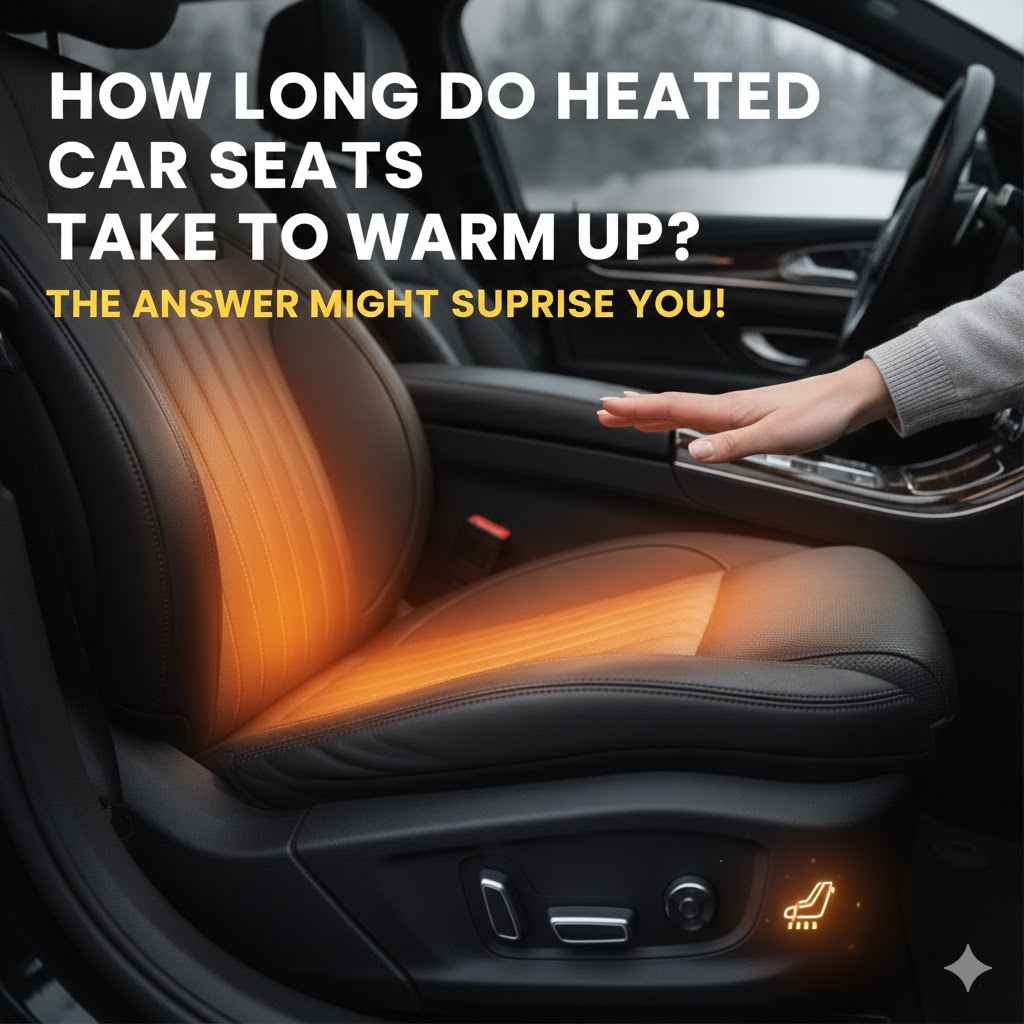
How Long Do Heated Car Seats Take to Warm Up
Wondering How Long Do Heated Car Seats Take to Warm Up? is a common question, especially when you first get a car with this cool feature or when the weather turns really cold. It can feel like a mystery how fast those comfy seats start to feel nice and toasty. Many people find it tricky to know just what to expect.
This guide will break it all down super simply, step by step. We’ll show you exactly what makes them warm up and what you can do. Get ready to understand your heated seats better and enjoy them faster.
Understanding Heated Car Seat Warm-Up Times
Many car owners get excited about the idea of warm seats on a chilly morning. But sometimes, the waiting can feel longer than expected. This section looks at why there’s a difference in how fast heated car seats get warm.
We’ll talk about the main things that affect this process so you know what’s happening behind the scenes. Understanding these parts helps you know what to expect each time you get into your car.
How Heated Car Seats Work
Heated car seats use a simple electrical system to create warmth. Inside the seat cushions and seatbacks, there are thin heating elements, often made of carbon fiber or resistive wires. When you turn on the heated seat function, electricity flows through these elements.
This flow of electricity causes resistance, and this resistance generates heat. It’s like how a toaster makes toast; electricity passing through coils makes them hot. The heat then transfers to the seat material and finally to you.
This whole process is controlled by a switch or button in your car’s dashboard or center console. Some cars have different heat settings, like low, medium, and high, which control the amount of electricity sent to the heating elements, thus regulating the temperature. This technology is designed to provide comfort quickly and efficiently.
The design of the heating elements plays a big role. Thin, flexible carbon fiber mats are often preferred because they can conform to the shape of the seat and distribute heat more evenly. These mats are less prone to breaking than traditional wires, leading to longer-lasting and more reliable heating.
The placement of these elements is also important; they are usually positioned directly beneath the surface you sit on and against your back to maximize comfort. Power output, measured in watts, also dictates how quickly and intensely the seat can heat up. Higher wattage elements can generate more heat in a shorter period.
The materials used in the seat cover can also influence how quickly heat is felt. Fabrics like leather or vinyl can feel warm to the touch faster than cloth seats because they conduct heat more readily. However, some cloth materials are designed to trap heat effectively, making the warmth last longer once the seat is heated.
The overall insulation of the seat also matters; a well-insulated seat will retain heat better, making the warmth feel more consistent, even if the initial warm-up time is slightly longer.
Electrical Current and Resistance
Electrical current is the flow of electric charge, typically electrons, through a conductor. Think of it like water flowing through a pipe. The amount of current is measured in amperes (amps).
Resistance is the opposition to this flow of current. When electric current passes through a material with resistance, some of the electrical energy is converted into heat energy. This is known as the Joule heating effect.
The higher the resistance of the material and the higher the current flowing through it, the more heat is generated. This is the fundamental principle behind how heated car seats, as well as other heating devices like electric stoves and hair dryers, work.
In heated car seats, the heating elements are made of materials with specific resistance values. These elements are designed to generate a comfortable amount of heat when a certain amount of electrical current flows through them. The car’s electrical system provides the current, and the control module regulates it.
The power delivered to the heating element is calculated by multiplying the voltage (electrical pressure) by the current. If the voltage is constant, increasing the current increases the power and thus the heat. Conversely, decreasing the current reduces the power and the heat output.
The materials used for these elements are chosen carefully. They need to be durable enough to withstand repeated heating and cooling cycles, flexible enough to be integrated into seat upholstery, and possess a consistent and predictable resistance. Carbon fiber is a popular choice because it offers good conductivity and resistance characteristics, allowing for efficient heat generation.
The length and thickness of the heating element also affect its resistance; a longer or thinner element will have higher resistance, generating more heat for the same current compared to a shorter or thicker one.
Seat Construction and Materials
The way a car seat is built and the materials used for its upholstery play a significant part in how quickly and effectively it warms up. A seat’s construction involves several layers, including foam padding, internal support structures, and the outer covering. The type of foam used can affect heat retention; denser foams may absorb and hold heat better than lighter, airier ones.
The presence of any additional insulating layers within the seat structure also contributes to how well it preserves warmth once generated by the heating elements.
The outer material, or upholstery, has a direct impact on how fast you feel the heat. Leather and vinyl are excellent conductors of heat. This means that when the heating elements beneath them get warm, the heat is transferred to the surface of the upholstery relatively quickly, and you will feel it almost immediately.
Cloth fabrics, such as polyester or woven blends, are generally poorer conductors of heat but are good insulators. While they might take a little longer to initially warm up because they don’t transfer heat as rapidly, they can hold onto that warmth for a longer time once it’s generated. This can lead to a more sustained feeling of comfort.
The way the upholstery is attached and how tightly it is fitted can also matter. A loose fit might allow heat to dissipate more easily, while a taut fit can help direct the warmth upwards towards the occupants. Some premium vehicles might even incorporate special thermal-conductive materials in their seat design to optimize the warm-up experience, ensuring that heat is felt efficiently and evenly across the seating surface.
Factors Influencing Warm-Up Speed
Several factors can influence how long your heated car seats take to become pleasantly warm. The most direct factors are the car’s electrical system’s output and the design of the heating elements themselves. Cars with more powerful electrical systems can deliver more electricity to the heating elements, allowing them to generate heat faster.
Similarly, heating elements designed for higher heat output will naturally warm up quicker. Beyond these, the external temperature plays a crucial role; on a very cold day, the heating elements have to work harder to overcome the ambient cold, potentially taking longer to reach your desired warmth.
The specific heat settings you choose on your car’s control panel are also a direct influencer. Most heated seats offer multiple levels of warmth. Using the highest setting will, of course, result in the fastest warm-up time.
After the initial rapid heating, you can often switch to a lower setting to maintain comfort without overheating. The condition of your car’s battery and alternator can also indirectly affect performance. If your car’s electrical system isn’t functioning at its peak, it might not be able to supply the optimal power to the heated seats, leading to slower warm-up times.
Finally, the time of day and whether the car has been sitting in direct sunlight or in a shaded area can make a small difference. A car parked in the sun, even on a cold day, might have slightly warmer interior surfaces to begin with, which could marginally speed up the perceived warm-up of the seats. Conversely, a car that has been in deep shade or exposed to extreme cold for an extended period might require a bit more time for the seats to reach their full warming potential.
Ambient Temperature
The temperature outside your car, known as the ambient temperature, has a significant impact on how quickly your heated car seats warm up. When it’s extremely cold outside, the heating elements in your seats have to work harder to counteract the frigid air. Imagine trying to heat a room that has its windows wide open in a blizzard; it takes a lot more energy and time to make it feel warm compared to a room with closed windows in mild weather.
The cold air constantly surrounds and cools the seat, meaning the heat generated by the elements is always being lost to the environment.
In colder conditions, the temperature difference between the heating element and the surrounding air is larger. This larger difference means that heat will transfer away from the seat more rapidly. To compensate, the heating elements need to generate heat at a higher rate to not only warm the seat material and the occupant but also to overcome this constant heat loss to the cold air.
This is why on a freezing winter morning, your heated seats might take a few extra minutes to reach their optimal warmth compared to a crisp autumn day.
Conversely, on a milder day, even if it’s still cool enough to want heated seats, the rate of heat loss is much lower. The smaller temperature difference means less energy is required to keep the seat warm, and the heat generated by the elements can more effectively raise the temperature of the seat and its occupant. Therefore, ambient temperature is one of the most significant external factors influencing the perceived speed of heated seat warm-up.
Heat Setting Selection
The heat setting you choose on your car’s climate control panel directly dictates how quickly your heated seats will warm up. Most vehicles equipped with heated seats offer at least two, and often three or four, distinct levels of warmth. These settings correspond to different power outputs from the heating elements.
The highest setting typically delivers the maximum amount of electricity to the elements, causing them to heat up as rapidly and intensely as possible. This is ideal for those times when you first get into a very cold car and want immediate comfort.
The lower settings, on the other hand, reduce the amount of electricity flowing through the heating elements. This results in less heat being generated and a slower, more gradual warming process. These lower settings are excellent for maintaining a comfortable temperature once the seat has initially warmed up.
They use less energy and can prevent you from getting too hot. Some cars also feature an “auto” setting or a timer function that adjusts the heat level automatically based on the ambient temperature or for a set duration, aiming for optimal comfort without constant manual adjustment.
Selecting the highest setting is the key to achieving the fastest warm-up. Once the seat feels comfortably warm, it is generally recommended to switch to a medium or low setting to conserve energy and prevent overheating. This strategic use of the heat settings ensures both rapid comfort and sustained enjoyment of your heated seats throughout your drive.
Typical Warm-Up Times and What Affects Them
When people ask How Long Do Heated Car Seats Take to Warm Up?, they are usually looking for a general idea of what to expect. While there’s no single answer that fits every car and every condition, we can provide a good range. Several factors, as we’ve seen, contribute to this.
Understanding these allows you to manage your expectations and enjoy your heated seats more effectively. This part will give you some common timeframes and recap the most important things that make a difference.
For most modern vehicles, you can expect to feel a noticeable warmth from your heated car seats within about 2 to 5 minutes after turning them on. This is on a moderate ambient temperature, using the highest heat setting. The sensation of warmth might be subtle at first, gradually becoming more pronounced as the heating elements reach their full operational temperature.
However, in very cold conditions, this time could extend. It might take anywhere from 5 to 10 minutes, or even slightly longer, for the seats to feel truly hot.
The type of vehicle also plays a role. Luxury cars often have more powerful heating systems and premium materials designed for quicker and more even heat distribution. Entry-level vehicles might have slightly less powerful systems, leading to a slightly longer warm-up period.
Regardless of the car, remember that the goal is comfort, and a few minutes of waiting is usually a small price to pay for that cozy feeling on a chilly drive. The key is to understand that variation is normal and to know the primary drivers behind it.
Average Warm-Up Range
On average, when you turn on your heated car seats to their highest setting on a cool day, you can expect to feel a pleasant level of warmth within approximately 2 to 5 minutes. This is the most common timeframe for many standard vehicles. The sensation might start as a gentle warmth and build to a more intense heat as the system reaches its optimal performance.
This initial period allows the heating elements to generate sufficient thermal energy and transfer it through the seat’s upholstery to your body.
During this average warm-up, the heating elements are working at their peak output. They are rapidly increasing their temperature from ambient conditions to the set point. The materials of the seat, such as foam and fabric or leather, absorb this heat and then transfer it outwards.
The speed at which this heat transfer occurs is a critical part of the overall warm-up time. Once you feel the desired warmth, many drivers will then lower the heat setting to a medium or low level to maintain comfort and prevent overheating.
It’s important to remember that this is an average. Factors like the exact temperature outside, the specific car model, and even the condition of your car’s battery can slightly alter this range. However, the 2-5 minute mark serves as a good benchmark for when to anticipate feeling that welcome warmth from your heated seats.
Impact of Extreme Cold
When the mercury drops significantly, your heated car seats will likely take longer to warm up. In extreme cold conditions, say below freezing or well into single-digit Fahrenheit temperatures, the heating elements have to work considerably harder. They are not just heating the seat itself; they are fighting against a strong influx of cold from the environment.
This means that the initial 2-5 minute timeframe might stretch to 5-10 minutes or even more.
The colder it is, the faster the heat generated by the elements will dissipate into the surroundings. This is due to a greater temperature gradient. To achieve the same level of warmth on the seat’s surface, the elements must produce heat at a higher rate to compensate for this rapid heat loss.
Imagine putting a warm towel in a freezer; it cools down much faster than if you put it in a cool room. The same principle applies to your car seats.
Furthermore, the materials within the seat, like the foam padding, will be colder and denser. This can slow down the internal transfer of heat from the elements to the seat surface. Therefore, in the most frigid weather, a bit of patience is key.
Using the highest heat setting immediately and perhaps pre-heating your car for a few minutes before you get in can help shorten this extended warm-up time. Experiencing a longer warm-up in deep cold is a normal characteristic of the system.
Differences Between Car Models
The time it takes for heated car seats to warm up can vary significantly from one car model to another. This is primarily due to differences in engineering, the quality of components used, and the overall electrical system of the vehicle. For instance, luxury vehicles often come equipped with more powerful heating systems.
They may use higher wattage heating elements and more advanced control modules designed to deliver heat quickly and efficiently. These systems are optimized for comfort and may provide a noticeable warmth within just 1-3 minutes.
On the other hand, vehicles in more budget-friendly segments might have systems designed to be cost-effective. This could mean using heating elements with lower power output or a less sophisticated control system. While these systems still effectively warm the seats, they might take a bit longer, perhaps 3-7 minutes, to reach the desired temperature.
The materials used for the seat upholstery can also differ; leather, for example, tends to feel warm more quickly than cloth due to its thermal conductivity.
Additionally, the insulation and construction of the seat itself can vary. Some seats might have better insulation, trapping heat more effectively once it’s generated, while others might allow heat to dissipate more rapidly. It’s also worth noting that aftermarket heated seat kits can have their own unique warm-up characteristics, often differing from factory-installed systems.
Therefore, while a general range exists, the exact time will depend on the specific make and model of your car.
Tips for Faster Heated Seat Warm-Up
If you’re eager to feel that cozy warmth as quickly as possible, there are a few smart things you can do. These tips are simple and can make a noticeable difference in how fast your heated car seats get comfortable. They involve how you use the settings and a little bit of preparation.
Think of them as little tricks to get the most out of your heated seats, especially when you’re in a hurry or the weather is particularly biting. These aren’t complicated, but they are effective.
The most straightforward way to speed things up is by using the highest heat setting available. Always start with the strongest option when you first get into your cold car. This allows the heating elements to reach their peak temperature as quickly as possible.
Once you feel the seat becoming warm, you can then adjust it down to a lower setting to maintain comfort. This approach ensures you get the fastest initial warmth and then can fine-tune it to your preference.
Another effective method is to pre-condition your car. If you have remote start, starting your car a few minutes before you plan to get in can allow the heating system, including the seats, to begin warming up. This means that by the time you sit down, they are already partially or fully warm.
Even without remote start, if you have a few extra minutes, starting the car and turning on the heated seats before you leave your house can help. These small actions can significantly reduce the waiting time.
Utilizing the High Heat Setting
The quickest way to get your heated car seats warm is by selecting the highest heat setting available. Every vehicle with heated seats has an adjustment dial or button, typically offering levels like Low, Medium, and High, or numerical settings. When you first get into your car on a cold day, immediately turn the setting to High.
This tells the car’s electrical system to send the maximum amount of power to the heating elements within the seats.
This surge of electricity causes the resistive wires or carbon fiber mats to heat up very rapidly. The higher power output accelerates the process of raising the temperature of the seat material. You should begin to feel a noticeable warmth within a minute or two of selecting the High setting.
It’s important to monitor this warmth; you don’t want to overheat yourself or the seat. Once the seats reach a temperature that feels comfortable for you, it is generally recommended to switch to a lower setting, such as Medium or Low.
Lowering the setting conserves energy and prevents the seats from becoming uncomfortably hot. This strategy of starting on High and then adjusting down is the most efficient way to experience quick comfort from your heated car seats. It prioritizes speed of warmth when you need it most, followed by sustained comfort and energy efficiency.
Pre-heating Your Car
If your car is equipped with a remote start feature, using it is one of the most effective ways to ensure your heated seats are warm by the time you get in. When you activate the remote start, your car’s engine begins to run, and it can also power up the climate control system. If you have your heated seat settings programmed to come on automatically or if you activate them via a connected app before you even leave your house, they will start warming up while the car is still parked.
This means that by the time you walk out to your car, the seats may already be warm or at least significantly warmer than they would be if you had just started the car manually. This significantly cuts down on the waiting time you experience once you’re seated. Even if your car doesn’t have automatic heated seat activation with remote start, simply running the engine and turning on the heated seats manually for 5-10 minutes before you get in can make a substantial difference.
This pre-heating process allows the heating elements to do most of their work while the car is stationary. The ambient temperature of the car’s interior will also be higher, which reduces the rate at which the seats lose heat. Therefore, the moment you sit down, you’ll be greeted with much warmer seats.
This simple step can transform a cold start into a much more comfortable experience.
Checking Your Car Battery and Alternator
While less common, issues with your car’s battery or alternator can indirectly affect the performance of your heated seats. The battery stores electrical energy, and the alternator generates power while the engine is running to recharge the battery and power the car’s electrical systems. If either of these components is not functioning optimally, it might not be able to supply the consistent and sufficient power needed for the heated seats to operate at their full capacity.
A weak battery or an underperforming alternator could lead to the heated seats taking longer to warm up, or they might not feel as hot as they normally do. This is because the demand from the heated seats can be quite high, especially on the highest setting. If the electrical system is struggling to keep up, the power available to the seats might be reduced.
This is more likely to be an issue with older vehicles or those that have been sitting for extended periods without use.
If you notice a consistent problem with your heated seats taking an unusually long time to warm up, and other potential factors like extreme cold don’t fully explain it, it might be worth having your car’s battery and alternator checked by a mechanic. They can perform tests to ensure these crucial electrical components are working correctly and providing adequate power to all the car’s systems, including your comfort features like heated seats.
Troubleshooting Slow Warm-Up Issues
Sometimes, despite using the highest setting and favorable conditions, your heated car seats might still feel like they are taking too long to warm up. If you suspect there’s a problem beyond normal variation, a few troubleshooting steps can help identify the cause. These aren’t about making them warm up faster in general, but about fixing a potential issue that’s making them unusually slow.
It’s like checking if something is broken rather than just trying to make it work better.
The first step is to isolate the problem. Does one seat take longer than the other? If so, the issue might be specific to that seat’s heating element or wiring.
If both seats are slow, the problem might be more systemic, related to the car’s main power supply or control unit. Also, consider if this is a new problem or if it has always been this way for your specific car model. If it’s a recent change, that’s a stronger indicator of a potential fault.
Beyond checking the obvious settings, you might need to look at the fuses associated with the heated seat system. A blown fuse can interrupt power flow. If you’re comfortable with basic car maintenance, checking the owner’s manual for the fuse box location and the specific fuses for heated seats is a good starting point.
However, for more complex electrical issues, it’s always best to consult a qualified mechanic. They have the tools and expertise to diagnose and repair electrical faults safely and effectively.
Checking Fuses and Wiring
The heating elements and control modules for your car’s heated seats are powered by fuses. Fuses are small safety devices that protect the electrical system from overcurrents. If a fuse blows, it breaks the circuit and stops the flow of electricity to the component it protects.
For heated seats, a blown fuse means they simply won’t work, or in some cases, they might work very weakly and slowly if only part of the circuit is compromised.
To check the fuses, you’ll need to consult your car’s owner’s manual. It will show you the location of the fuse box(es) and identify which fuse corresponds to the heated seats. You’ll typically need to remove the fuse and visually inspect it.
A blown fuse will have a broken metal wire inside. If you find a blown fuse, you can
The wiring connected to the heating elements and the control switch can also be a source of problems. Over time, wires can become loose, corroded, or damaged, especially in areas that experience a lot of movement or stress, like under the seats. Loose connections can lead to intermittent operation or reduced power delivery, impacting warm-up times.
Inspecting the wiring requires looking for any visible signs of damage or disconnections. If you find any issues with the wiring or are unsure about checking fuses, it’s best to have a professional mechanic inspect the system.
When to See a Mechanic
If you’ve tried all the simple solutions—using the high heat setting, ensuring good battery and alternator function, and checking visible fuses—and your heated seats are still taking an unusually long time to warm up, it’s probably time to consult a professional. Persistent slow warm-up times, especially if they’ve developed recently, can indicate a more complex electrical issue that requires specialized tools and knowledge.
A qualified automotive technician can perform in-depth diagnostics on your car’s electrical system. They have equipment to accurately measure voltage and amperage, test the resistance of the heating elements, and check the integrity of the control modules and wiring harnesses. For example, they can determine if one of the heating elements has failed or is failing, or if there’s a problem with the relay or the switch that controls the seat heaters.
Ignoring persistent issues can sometimes lead to more significant problems or costly repairs down the line. If your heated seats are a feature you rely on for comfort, especially during winter months, getting them checked by a mechanic ensures they are functioning safely and effectively. They can pinpoint the exact cause of the slow warm-up and perform the necessary repairs, restoring your seats to their optimal performance.
Frequently Asked Questions
Question: How long does it typically take for heated car seats to warm up?
Answer: On average, you can expect heated car seats to start feeling warm within 2 to 5 minutes when using the highest setting. This can be longer in very cold weather.
Question: Does the outside temperature affect how fast heated seats warm up?
Answer: Yes, extreme cold temperatures will make heated seats take longer to warm up because they have to work harder to counteract the cold air.
Question: Should I always use the highest heat setting?
Answer: It’s best to use the highest setting for the initial fast warm-up. Once the seats are warm, you can switch to a lower setting for sustained comfort and to save energy.
Question: What should I do if my heated seats are not warming up at all?
Answer: First, check the fuse for the heated seats in your car’s fuse box. If the fuse is good, the issue might be with the wiring, the switch, or the heating element itself, and you should see a mechanic.
Question: Can a car’s battery or alternator affect heated seat performance?
Answer: Yes, a weak battery or an underperforming alternator might not provide enough power, leading to slower warm-up times or less heat output.
Conclusion
Understanding How Long Do Heated Car Seats Take to Warm Up? involves knowing a few key things. Most seats get warm in 2 to 5 minutes on high. Extreme cold or different car models can change this.
Always use the high setting first for speed, then lower it. Pre-heating your car helps a lot too. If they seem unusually slow, check fuses or see a mechanic.
Enjoy your warm seats!