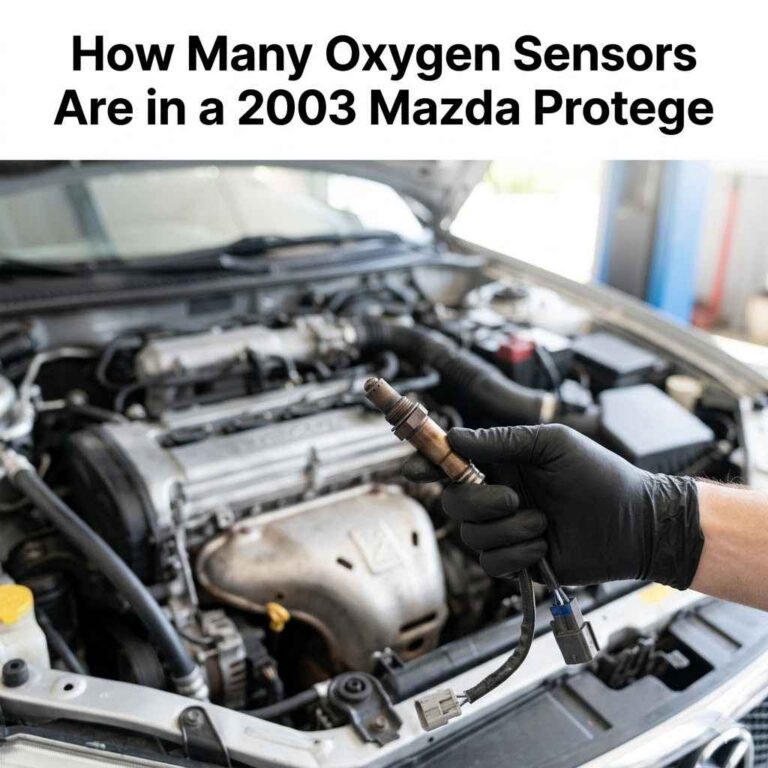
How Long Do Oxygen Sensors Last
Figuring out How Long Do Oxygen Sensors Last? can feel like a puzzle, especially if you’re new to car maintenance. You want to make sure your car runs well and saves you money on gas.
Knowing when to replace these small but mighty parts helps a lot. This guide makes it super easy to understand. We will walk through it step by step so you know exactly what to expect and when.
Get ready to get a clear picture of your oxygen sensors life.
Oxygen Sensor Lifespan Explained
Oxygen sensors are vital parts of your car’s exhaust system. They help your engine run efficiently by telling the car’s computer how much oxygen is in the exhaust gases. This information lets the computer adjust the fuel mixture for the best performance and fuel economy.
People often wonder How Long Do Oxygen Sensors Last? because their lifespan can vary a lot. Factors like driving habits and the sensor’s quality play a big role.
Knowing the typical life of an oxygen sensor can help you avoid potential problems and save money on fuel.
Typical Lifespan of Oxygen Sensors
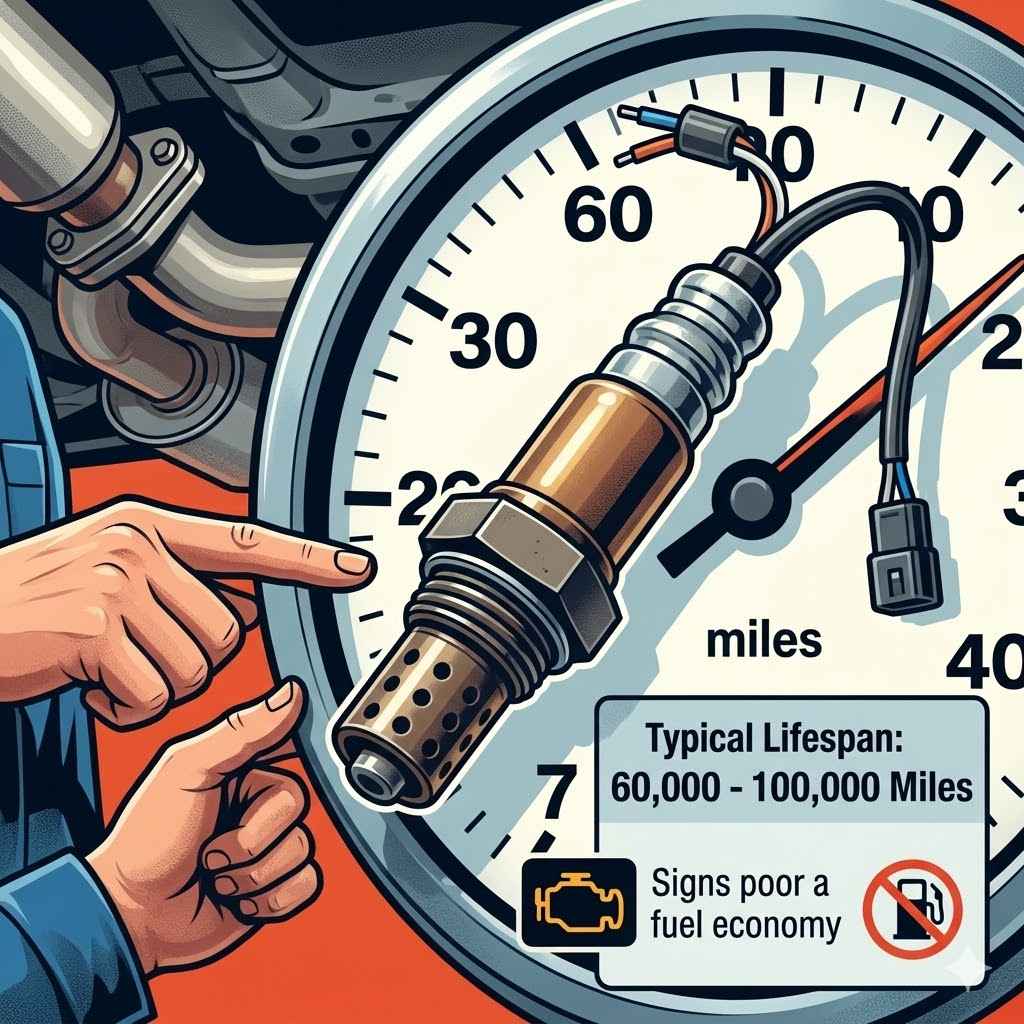
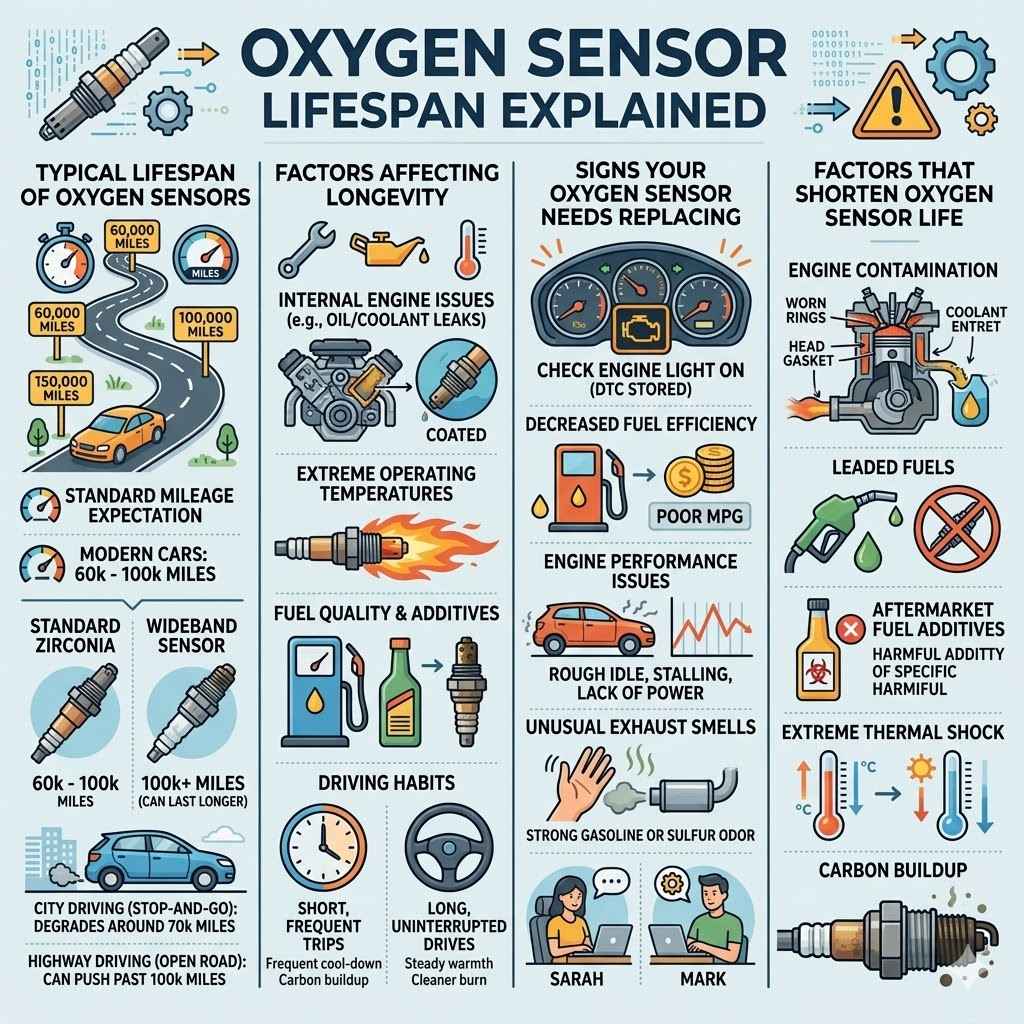
Most oxygen sensors are built to last for a good amount of time. For many modern cars, you can expect an oxygen sensor to work well for anywhere from 60,000 to 100,000 miles. Some can even go longer, perhaps up to 150,000 miles.
This is a wide range, and it’s good to know what influences it. Driving style is a big one. If you do a lot of short trips where the engine doesn’t get fully warm, it can shorten the sensor’s life.
Long highway drives are usually easier on them.
The type of oxygen sensor also matters. There are two main kinds: the older zirconium (Zirconia) sensors and the newer titanium (Titania) and wideband sensors. Zirconia sensors are very common and generally fit the 60,000 to 100,000-mile range.
Wideband sensors, often found in performance vehicles or newer cars for better precision, can sometimes last even longer, but they can also be more sensitive to contamination.
Consider this example: A car driven mostly for city commuting with frequent stop-and-go traffic might see its oxygen sensors start to degrade around 70,000 miles. On the other hand, a car that primarily travels on open highways for long distances could easily push past 100,000 miles before showing signs of wear.
Standard Mileage Expectation
For a typical gasoline-powered vehicle, a common benchmark for oxygen sensor
Factors Affecting Longevity
Several elements can shorten or extend an oxygen sensor’s life. These include exposure to contaminants like oil or coolant leaks, extreme engine temperatures, and the quality of the fuel used. Driving habits also play a significant role; aggressive acceleration and braking can put more strain on the exhaust system and its components.
Sensor Technology Differences
The technology used in oxygen sensors can influence their lifespan. Traditional zirconia sensors are robust but can be affected by leaded fuels or excessive carbon buildup. Newer wideband sensors offer greater accuracy but may require cleaner exhaust gases to perform optimally for extended periods.
Signs Your Oxygen Sensor Needs Replacing
Your car will often give you hints when an oxygen sensor is getting old or has failed. Ignoring these signs can lead to worse fuel economy, higher emissions, and even damage to other engine parts. The most common clue is the check engine light.
This light can come on for many reasons, but a faulty oxygen sensor is a frequent culprit. Your car might also start using more gas than it used to, which is a direct sign the sensor isn’t helping the engine manage fuel correctly.
You might also notice a rougher engine idle, sometimes accompanied by stalling. If your car hesitates when you press the gas pedal or seems to lack power, your oxygen sensor could be the cause. In some cases, you might even smell a rich fuel odor, indicating that too much fuel is being burned.
These symptoms are your car telling you it’s time for a closer look at your oxygen sensors.
Let’s look at some real-world scenarios. Imagine Sarah’s car started gulping gas after a long road trip. Her mechanic diagnosed a failing upstream oxygen sensor.
After replacing it, her fuel economy improved significantly, saving her money each week. Another driver, Mark, noticed his car felt sluggish on hills. A diagnostic scan revealed a faulty downstream oxygen sensor, which, when replaced, restored his car’s lost power.
Illuminated Check Engine Light
The check engine light is often the first indicator of a problem. When an oxygen sensor begins to fail, it can send incorrect data to the engine control unit (ECU), triggering this warning light. The ECU stores a diagnostic trouble code (DTC) that points to the specific sensor that is malfunctioning.
Decreased Fuel Efficiency
Oxygen sensors play a critical role in regulating the air-fuel ratio. If a sensor is not providing accurate readings, the ECU may inject too much or too little fuel, leading to wasted fuel and a noticeable drop in miles per gallon. This is one of the most common and costly symptoms of a bad oxygen sensor.
Engine Performance Issues
A failing oxygen sensor can manifest as a rough idle, engine misfires, hesitation during acceleration, or a general loss of power. These issues occur because the engine isn’t receiving the correct information to optimize combustion, affecting how smoothly and efficiently it runs.
Unusual Exhaust Smells
A strong odor of gasoline or sulfur from the exhaust can signal an issue with the oxygen sensor. This smell indicates that the fuel mixture is too rich, meaning too much fuel is being burned, and the exhaust gases are not being processed correctly.
Factors That Shorten Oxygen Sensor Life
While oxygen sensors are designed for durability, certain conditions can significantly reduce their lifespan. One of the biggest culprits is contamination from internal engine issues. If your engine is burning oil or coolant, these substances can leak into the exhaust stream and coat the sensor’s element, preventing it from accurately measuring oxygen.
This contamination effectively suffocates the sensor.
Using incorrect fuel additives or low-quality fuel can also be detrimental. Leaded gasoline, for instance, is highly toxic to oxygen sensors and can destroy them quickly. Even certain fuel system cleaners, if not used as directed or if they contain harsh chemicals, can cause damage.
Extreme temperatures and prolonged exposure to unburned fuel in the exhaust can also wear down the sensor prematurely. Driving habits, like frequent short trips that don’t allow the engine to reach optimal operating temperature, can lead to condensation and carbon buildup, which also shorten the sensor’s effective life.
Let’s consider a scenario: A car owner experienced repeated oxygen sensor failures. After several replacements, a mechanic discovered a leaking head gasket. The burning coolant was contaminating the exhaust and destroying each new sensor.
Once the head gasket was repaired, the new oxygen sensor lasted as expected. This highlights how internal engine problems directly impact sensor longevity. Another example involves a car that consistently failed emissions tests.
The root cause was found to be a faulty oxygen sensor, which, despite being relatively new, was failing due to the owner’s habit of using cheap, low-octane fuel regularly, which led to less efficient combustion and sensor fouling.
Engine Contamination
When oil or coolant enters the exhaust system due to issues like worn piston rings, valve seals, or a leaking head gasket, it can coat the oxygen sensor. This buildup insulates the sensor’s ceramic element, hindering its ability to detect oxygen and leading to inaccurate readings or complete failure.
Fuel Quality and Additives
The type of fuel you use can impact sensor life. Leaded fuels are extremely damaging. Additionally, some aftermarket fuel additives, particularly those containing silicon or certain metallic compounds, can leave deposits on the sensor.
Always use fuels recommended by your vehicle manufacturer and be cautious with additives.
Extreme Operating Temperatures
While sensors are designed to withstand high temperatures, frequent and extreme fluctuations can cause thermal shock. This can happen in older vehicles with poor cooling systems or during very aggressive driving in extreme weather conditions. Sustained high heat can also degrade sensor components over time.
Driving Habits
Short, frequent trips where the engine does not have enough time to reach its optimal operating temperature can lead to an accumulation of unburned fuel and moisture in the exhaust. This acidic environment can corrode and foul the oxygen sensor over time, reducing its effectiveness and lifespan.
When to Consider Replacing Oxygen Sensors
Knowing How Long Do Oxygen Sensors Last? is key to proactive car maintenance. It’s not just about waiting for a warning light.
Sometimes, it’s smart to think about replacement based on mileage, especially if your car is approaching the higher end of its expected sensor life. If you drive a lot or your car has high mileage, getting them checked periodically can save you trouble down the road. It’s better to replace them before they fail completely, which can lead to costly damage or failed emissions tests.
Proactive Replacement Based on Mileage
Many car manufacturers and mechanics suggest inspecting or replacing oxygen sensors around the 100,000-mile mark. Even if your car is running fine, a sensor nearing the end of its life might not be as accurate as it should be. This slight inaccuracy can lead to a gradual decrease in fuel efficiency that you might not even notice day-to-day, but it adds up over time.
Replacing them proactively, perhaps around 90,000 to 100,000 miles, can ensure your engine continues to run at peak performance and efficiency.
This proactive approach is particularly beneficial for vehicles that have a longer expected lifespan or for owners who want to maintain optimal performance. Consider a car that’s 10 years old but has only 80,000 miles. While the mileage might be below the typical replacement interval, the age of the sensor and the potential for degradation over time could warrant an inspection or replacement.
It’s about preventing potential issues before they arise.
Here’s a simple rule of thumb: if your car is nearing 100,000 miles and you haven’t replaced the oxygen sensors before, it’s a good time to consider it. This is especially true if you notice any subtle changes in performance or fuel economy. For example, if you used to get 30 miles per gallon and now you’re getting 27, and your car is over 100,000 miles, a proactive replacement is a wise investment.
High Mileage Vehicles
For vehicles that have accumulated a significant number of miles, typically 100,000 or more, proactive replacement of oxygen sensors is a smart maintenance strategy. Even if no symptoms are present, sensors can degrade over time, leading to a gradual decline in performance and efficiency.
Maintaining Optimal Fuel Economy
Oxygen sensors are directly involved in managing the air-fuel ratio, which is crucial for fuel efficiency. Replacing them around the recommended mileage ensures that the engine control unit receives accurate data, allowing for the most efficient fuel combustion and preventing unnecessary fuel waste.
Preventing Costly Repairs
A failing oxygen sensor can stress other engine components and the catalytic converter. By replacing them preventatively, you can avoid more expensive repairs down the line, such as replacing a damaged catalytic converter, which is a significantly more costly component.
When Symptoms Appear
If you start noticing any of the symptoms mentioned earlier, such as the check engine light, poor gas mileage, rough idling, or a lack of power, it’s time to get your oxygen sensors checked. Don’t wait for these issues to worsen, as they can lead to more serious and expensive problems. A mechanic can easily diagnose a faulty oxygen sensor using diagnostic tools that read trouble codes from your car’s computer.
In many cases, a single faulty sensor can affect the performance of others or cause the engine to run in a less efficient “limp mode.” For example, if the upstream sensor (the one closest to the engine) fails, it can cause the engine to run too rich, leading to increased emissions and potential catalytic converter damage. If the downstream sensor (after the catalytic converter) fails, it might not indicate a problem with the catalytic converter itself but can still affect fuel trim adjustments.
Here’s a sample scenario: You are driving your car, and the check engine light suddenly comes on. You also notice your car feels sluggish when you accelerate. A quick visit to your mechanic reveals that the diagnostic code points to the oxygen sensor in Bank 1, Sensor 1.
This indicates that the upstream oxygen sensor on one side of the engine has failed. Replacing this sensor not only clears the check engine light but also restores your car’s lost power and improves fuel economy.
Diagnostic Trouble Codes (DTCs)
When a fault is detected, the car’s computer stores a specific code. For oxygen sensors, these codes often start with P0130 through P0167, indicating issues with specific sensors (e.g., P0130 for O2 Sensor Circuit Malfunction Bank 1 Sensor 1). These codes are the most direct way to identify a faulty sensor.
Visible Signs of Damage
In rare cases, a visual inspection of the oxygen sensor can reveal damage. This might include a physically broken wire, a corroded connector, or even soot buildup on the sensor tip. However, most failures are internal and not visible without specialized testing.
Emissions Test Failures
If your vehicle fails an emissions test, a faulty oxygen sensor is a common reason. The sensor’s inability to accurately measure exhaust gases leads to an incorrect air-fuel mixture, resulting in higher levels of pollutants being released into the atmosphere.
Replacing Both Sensors at Once
For many vehicles, it’s often recommended to replace both upstream and downstream oxygen sensors at the same time, even if only one is showing signs of failure. This is because oxygen sensors tend to wear out at a similar rate. The upstream sensor is usually more critical for engine performance, while the downstream sensor monitors the catalytic converter’s efficiency.
If one is old, the other is likely not far behind.
Replacing both at once can save you money and time in the long run. You avoid a second repair visit shortly after the first, and you ensure that both critical sensors are functioning optimally. This is a common practice, especially on vehicles with more than two oxygen sensors, as replacing them in pairs is more cost-effective than dealing with individual failures over time.
Consider a car with four oxygen sensors: two upstream and two downstream. If the upstream sensor on Bank 1 fails, it’s very likely that the upstream sensor on Bank 2 is also nearing its end of life. Replacing both upstream sensors in one go is a smart move.
Similarly, if the downstream sensor on Bank 1 shows issues, the one on Bank 2 might also be aging. Replacing them as a set ensures the entire system is working efficiently and reduces the chance of another sensor failing soon after the initial repair.
Similar Wear Rates
Oxygen sensors are exposed to similar exhaust conditions and operating temperatures. Because of this, they typically degrade at a similar pace. If one sensor has reached the end of its lifespan, the other is likely experiencing similar wear and may fail soon.
Cost-Effectiveness
Labor costs can be a significant part of any repair. By replacing all relevant sensors at once, you pay for the labor only once, rather than having to pay for multiple separate visits. This can lead to substantial savings over time.
Ensuring System Efficiency
A fully functioning set of oxygen sensors ensures the engine control module receives accurate data from all points in the exhaust system. This leads to optimal fuel mixture control, improved catalytic converter efficiency, and reduced emissions, contributing to overall vehicle health.
Understanding Oxygen Sensor Types and Their Impact on Lifespan
The type of oxygen sensor your car uses plays a role in How Long Do Oxygen Sensors Last?. Different technologies have different sensitivities and operational characteristics. Understanding these differences can give you a better idea of what to expect from your vehicle’s sensors.
Zirconium (Zirconia) Oxygen Sensors
Zirconia oxygen sensors are the most common type found in older and many current gasoline vehicles. They are made from a ceramic material that generates a voltage signal based on the difference in oxygen concentration between the exhaust gas and the outside air. They work best when they are hot, which is why most have a built-in heater element to bring them up to operating temperature quickly.
These sensors are reliable and have a good lifespan under normal conditions, typically within the 60,000 to 100,000-mile range. However, they are sensitive to contamination. If oil, coolant, or excessive carbon deposits enter the exhaust, they can foul the sensor and reduce its effectiveness.
Using leaded gasoline is also a major hazard for zirconia sensors, as lead deposits can quickly damage the ceramic element.
For instance, a car that has experienced oil leaks and has not had them addressed might see its zirconia oxygen sensors fail prematurely. The oil burning creates carbon deposits that coat the sensor. A practical example involves a classic car owner who uses leaded fuel (or fuel with lead additives).
Despite regular maintenance, the oxygen sensors in such a vehicle would likely fail much sooner than in a modern car running unleaded fuel.
Operating Principle
Zirconia sensors produce a voltage signal that fluctuates between approximately 0.1 volts (lean mixture) and 0.9 volts (rich mixture). This signal is sent to the engine control unit (ECU) to fine-tune the air-fuel ratio.
Heated Operation
To function accurately and quickly, zirconia sensors are equipped with a heater element. This allows them to reach their optimal operating temperature of over 600°F (315°C) within minutes of starting the engine.
Sensitivity to Contamination
These sensors are susceptible to damage from oil, coolant, and excessive carbon buildup in the exhaust. Contaminants can coat the sensor’s ceramic element, impeding its ability to detect oxygen and leading to false readings or complete failure.
Titanium (Titania) Oxygen Sensors
Titanium or titania oxygen sensors are less common than zirconia sensors but are also used in some vehicles. Instead of generating voltage, they change their electrical resistance based on the oxygen content in the exhaust. This change in resistance is measured by the engine control unit to determine the air-fuel ratio.
Titania sensors generally do not produce their own voltage signal. They require a reference voltage from the ECU. While they can be quite durable, they are also susceptible to contamination.
Their lifespan can be comparable to zirconia sensors, generally falling within the 60,000 to 100,000-mile range, depending on operating conditions and maintenance.
A car owner might not realize their vehicle uses titania sensors. The diagnostic process for these sensors can differ slightly, and mechanics need to be aware of the specific technology to ensure accurate testing and
Resistance-Based Measurement
Unlike zirconia sensors, titania sensors alter their electrical resistance to indicate oxygen levels. The ECU monitors this resistance to adjust fuel delivery.
No Self-Generated Voltage
These sensors do not generate their own voltage signal. They rely on a constant voltage supplied by the ECU, and the ECU measures the change in resistance across the sensor.
Durability Considerations
Titania sensors can be durable, but like other types, they are not immune to contamination. Exposure to oil, coolant, and extreme exhaust temperatures can degrade their performance over time.
Wideband (Air-Fuel Ratio) Sensors
Wideband oxygen sensors, also known as Air-Fuel Ratio (AFR) sensors, are more advanced and provide a much wider range of measurement accuracy compared to traditional zirconia sensors. They are increasingly common in modern vehicles, especially those with performance-oriented engines or those designed for stringent emissions standards. These sensors can accurately measure both very rich and very lean fuel mixtures.
Wideband sensors work by using a combination of electrochemical pumping and sensing elements. They can provide a linear output signal across a much broader air-fuel ratio range, allowing the ECU to make extremely precise adjustments. While they are more robust in their measurement capabilities, their lifespan can vary.
Some sources suggest they can last between 100,000 and 150,000 miles or even more. However, they can be more sensitive to physical damage or certain types of contamination, and their cost is generally higher.
A prime example is a high-performance sports car. These vehicles often use wideband sensors to ensure the engine operates at its peak efficiency and power output under various driving conditions. If a wideband sensor on such a car fails, it can lead to significant performance degradation and potentially damage to the engine or catalytic converter if not addressed promptly.
Another scenario involves a newer economy car designed for maximum fuel efficiency. The wideband sensors in these vehicles are crucial for the precise fuel control needed to meet fuel economy targets.
According to a study by an automotive research firm, vehicles equipped with wideband oxygen sensors often see improved fuel efficiency by up to 5% compared to those with older narrowband sensors, due to their ability to maintain a more precise air-fuel ratio.
Precise Air-Fuel Ratio Measurement
Wideband sensors offer superior accuracy across a broad spectrum of air-fuel ratios, enabling more precise engine management for both performance and emissions control.
Advanced Technology
They utilize a more complex design, often involving a pumping cell and a sensing cell, to provide a linear output signal that directly corresponds to the air-fuel ratio, rather than just the oxygen content.
Extended Lifespan Potential
While generally more expensive, wideband sensors can offer a longer operational life than traditional sensors if maintained properly and not subjected to severe contamination. Their lifespan can often exceed 100,000 miles.
Maintaining Your Oxygen Sensors for Maximum Lifespan
You now have a good grasp on How Long Do Oxygen Sensors Last?. To get the most out of your sensors and keep your car running smoothly, a little proactive care goes a long way. It’s not complicated, and by following a few simple guidelines, you can help your oxygen sensors perform their best for as long as possible.
Regular Engine Maintenance
The health of your oxygen sensors is directly tied to the overall health of your engine. Regular maintenance is the most effective way to ensure your sensors have a long life. This means keeping up with oil changes, ensuring your cooling system is functioning properly, and addressing any engine performance issues promptly.
If your engine is burning oil or leaking coolant, these substances can find their way into the exhaust and foul your oxygen sensors.
For example, if your car is due for an oil change, don’t delay it. Old, dirty oil can break down and become less effective at lubricating your engine, potentially leading to increased wear and oil consumption. Similarly, a car that is overheating due to a faulty thermostat or low coolant can cause excess stress on all engine components, including the exhaust system and its sensors.
Addressing these issues during routine service can prevent minor problems from becoming major ones that impact sensor longevity.
One key statistic from the Automotive Maintenance Association states that vehicles receiving regular maintenance, including oil changes every 5,000 miles and coolant flushes as recommended, experience an average of 20% fewer major component failures compared to vehicles with sporadic maintenance.
Scheduled Oil Changes
Regular oil changes are critical for engine health. Clean oil lubricates engine parts, reduces friction, and helps carry away contaminants. If oil is not changed regularly, it can break down, leading to increased engine wear and potential oil consumption that can foul oxygen sensors.
Cooling System Integrity
An engine that overheats can cause significant stress on its components. Ensuring your cooling system is in good working order, with adequate coolant levels and a functioning thermostat, prevents excessive heat buildup that can affect sensor performance and lifespan.
Addressing Engine Misfires and Leaks
Any sign of engine misfires, rough running, or fluid leaks (oil, coolant) should be addressed immediately. These issues can lead to unburned fuel or contaminants entering the exhaust system, directly impacting the oxygen sensors.
Using Quality Fuel
The type of fuel you put in your car can have a direct impact on the lifespan of your oxygen sensors. Always use fuel that meets or exceeds your vehicle manufacturer’s recommendations. Using high-quality, unleaded gasoline is essential, as leaded gasoline is highly detrimental to oxygen sensors.
Some fuel additives can also be harmful. Be cautious of aftermarket additives that promise extreme performance gains, as they may contain chemicals that can damage sensor components. Stick to reputable brands and follow usage instructions carefully.
If you are unsure about a particular fuel additive, it’s best to consult your owner’s manual or a trusted mechanic.
For example, a car owner who consistently buys the cheapest gasoline available might be unknowingly exposing their oxygen sensors to impurities that can lead to premature failure. Over time, these impurities can build up on the sensor, reducing its accuracy and lifespan. Conversely, a driver who always opts for premium unleaded fuel from a well-known brand, even in a car that doesn’t strictly require it, is likely providing a cleaner fuel that contributes to better overall engine and sensor health.
A consumer report on fuel quality found that sensors in test vehicles using premium fuel showed significantly less carbon buildup after 50,000 miles compared to those using lower-grade fuels, suggesting a positive impact on sensor longevity.
Unleaded Gasoline Recommendation
Always use unleaded gasoline as specified by your vehicle manufacturer. Leaded gasoline contains compounds that can quickly poison and damage oxygen sensors, rendering them useless.
Choosing Reputable Fuel Brands
Opting for fuel from well-known and reputable brands can help ensure a cleaner burn and fewer harmful additives. While the difference might seem small, consistent use of quality fuel contributes to better engine health and sensor longevity.
Caution with Fuel Additives
Be discerning when using fuel additives. Some additives can contain harsh chemicals or metallic compounds that may foul or damage oxygen sensors. If an additive is not from a trusted brand or you are unsure of its contents, it’s best to avoid using it.

Frequently Asked Questions
Question: How many miles can an oxygen sensor typically last?
Answer: On average, most oxygen sensors are expected to last between 60,000 and 100,000 miles. However, this can vary based on driving conditions, sensor quality, and maintenance.
Question: What causes an oxygen sensor to fail early?
Answer: Early failure can be caused by engine contaminants like oil or coolant entering the exhaust, using leaded fuel, severe temperature fluctuations, and aggressive driving habits.
Question: Is it necessary to replace both oxygen sensors at once?
Answer: It is often recommended to replace both upstream and downstream oxygen sensors together because they tend to wear at similar rates, saving on labor costs and preventing a follow-up visit.
Question: Can a bad oxygen sensor affect my car’s fuel economy?
Answer: Yes, a failing oxygen sensor can significantly decrease your car’s fuel economy because it provides inaccurate data to the engine control unit, leading to an improper air-fuel mixture.
Question: How can I tell if my oxygen sensor needs replacing?
Answer: Signs include the check engine light coming on, noticeable drops in fuel efficiency, a rough engine idle, hesitation during acceleration, or an unusual smell from the exhaust.
Summary
Understanding How Long Do Oxygen Sensors Last? involves looking at typical mileage, common failure signs, and preventative care. While many sensors last 60,000 to 100,000 miles, factors like driving habits and engine health play a big role.
Watching for symptoms like a check engine light or poor gas mileage helps identify issues. Proactive maintenance and using quality fuel will help your sensors work their best for longer, ensuring your car runs efficiently.