How to Open a Car Window From Outside Safely
Sometimes, you might need to open a car window from the outside. Maybe you accidentally locked your keys inside, or perhaps you need to assist someone in a car. Doing this can seem tricky, especially if you’re not sure about the right way.
It’s a common problem many people face, and the good news is there are safe and simple ways to handle it. We’ll walk you through exactly what to do, step by step.
How to Open a Car Window From Outside Safely
Learning How to Open a Car Window from Outside Safely is a useful skill to have. It can be needed in emergencies or simple situations where your keys are locked inside your vehicle. Without the right knowledge, trying to force a window open could damage your car or even cause injury.
This guide will break down the common methods, explain why they work, and show you the best ways to get into your car without causing harm to yourself or the vehicle.
Understanding Your Car’s Window Mechanics
Car windows are designed with a system of tracks and motors that allow them to move up and down smoothly. These mechanisms are usually quite robust. They are housed within the door panel.
When you press a button inside the car, a small electric motor receives a signal. This motor then turns a gear that pulls a cable or moves a rack and pinion system. This system is attached to the window glass.
It guides the glass along its vertical tracks.
The tracks are typically lined with felt or rubber to reduce friction and noise. They also help to seal the window when it’s fully closed. The design aims for a balance between ease of operation and security.
Modern cars often have more advanced systems. These might include anti-pinch features. These features detect resistance and stop the window from closing on an obstruction.
Older cars usually have manual crank systems. These use a direct mechanical linkage to move the glass.
Knowing these basic mechanics helps you understand why certain methods for opening a window from the outside work. It’s about interacting with the existing systems without breaking them.
Common Scenarios Requiring Outside Access
There are several common reasons why someone might need to open a car window from the outside. One of the most frequent is accidentally locking keys inside the vehicle. This is an easy mistake to make, especially when you’re in a hurry or distracted.
Another scenario involves a child or pet locked inside the car, especially on a warm day. In such urgent situations, quick access is paramount. This emphasizes the need for safe and effective methods.
Sometimes, the car battery might be dead, preventing the electric windows from working. If the doors are also locked, you might need to find a way to get at least one window open. This can be to access the interior to connect jumper cables or to call for assistance.
In rare cases, a door lock might malfunction. If the door won’t open, but the window is slightly ajar, you might be able to reach in and manually unlock the door from the inside. This again highlights the importance of knowing how to manipulate the window.
Emergency situations, like a car submerged in water, also require quick entry. While extreme, knowing how to break or open a window can be a life-saving skill in such dire circumstances.
Tools for Safely Opening A Car Window
When you need to open a car window from the outside, having the right tools can make a big difference. The goal is always to use methods that are least likely to cause damage. Some common and effective tools include:
- Slim Jim or Wedge Tools: These are thin, strong pieces of metal, often with a hook or loop. They are designed to slide between the window glass and the door frame. The aim is to manipulate the internal locking mechanism. Professional locksmiths and tow truck drivers often use these.
- Coat Hanger (Modified): A wire coat hanger can be straightened and bent into a hook. This can be used to try and snag the interior door handle or lock mechanism. It’s a DIY option but requires care to avoid scratching.
- Inflatable Air Wedge: This is a small, deflated balloon-like tool. It’s inserted into the door seam. When inflated with a small pump, it gently widens the gap between the door and the frame. This creates enough space to insert other tools.
- Plastic Trim Removal Tools: These are often used for car interior repairs. They can be useful for carefully prying open small sections of the door panel if accessible. This might expose parts of the locking mechanism.
- Suction Cup: For some windows, especially if they are already slightly ajar, a strong suction cup can be used to pull them open further. This is less common but can be effective in specific situations.
It is important to remember that using force can lead to costly repairs. The idea is to be clever, not forceful.
Method 1 Using a Wedge and Rod
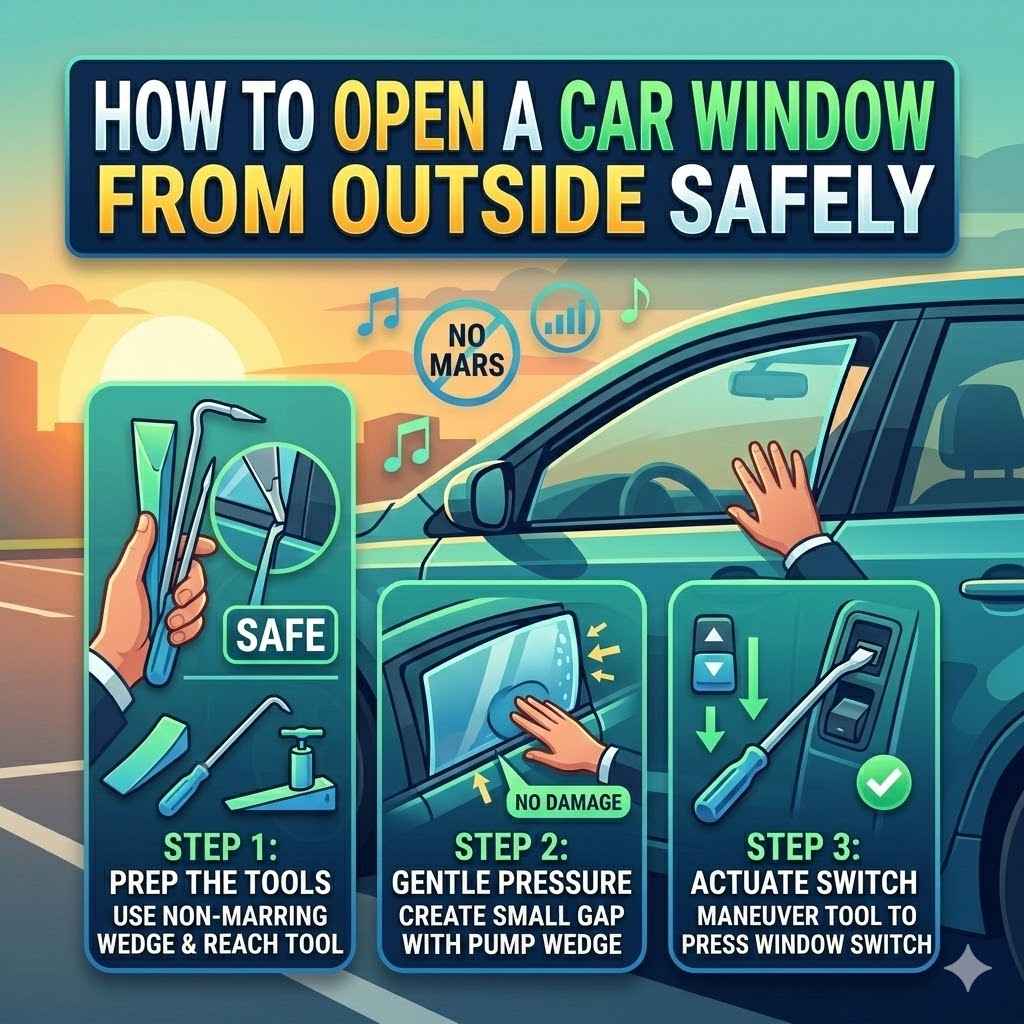
This method is widely considered one of the safest and most effective ways to gain access. It requires two main tools: an inflatable air wedge and a long, thin rod. The process is designed to create a small opening.
Then, you can use the rod to reach inside and operate the door lock or window switch.
First, you’ll need to locate a suitable spot to insert the air wedge. This is usually between the door frame and the car body, near the top corner of the window. Gently push the deflated wedge into this gap.
Next, use the pump to inflate the wedge. Do this slowly and evenly. You will see the gap between the door and the frame widen just enough to create a small opening.
Do not over-inflate, as this can damage the door or frame.
Once you have a small gap, you can insert your rod. This could be a coat hanger, a straightened wire, or a specialized tool. Guide the rod through the opening.
Your goal is to reach the interior door handle, the manual lock knob, or the power window switch.
Carefully maneuver the rod to pull the door handle, flick the lock knob up, or press the window down button. This might take a few tries and some delicate adjustments. Patience is key here.
Once the door is unlocked or the window is open, you can deflate the air wedge and remove it. This method is excellent because it uses controlled pressure, minimizing the risk of scratches or dents.
Steps for Using a Wedge and Rod
- Gently insert the deflated air wedge between the car door and the body. Choose a spot near the top of the door frame.
- Slowly inflate the air wedge with the pump. Watch as a small gap opens between the door and the frame. Stop inflating when the gap is just large enough for your tool.
- Insert a long, thin rod or wire through the gap.
- Carefully maneuver the rod to reach the interior door handle, lock, or window switch.
- Operate the chosen control to unlock the door or open the window.
- Once access is gained, deflate the air wedge and remove it.
This technique is very effective for most passenger cars. The key is precise insertion of the wedge and gentle manipulation of the rod.
Method 2 Using a Slim Jim
The Slim Jim is a tool that has been around for a long time and is well-known among automotive professionals. It’s a flat, long piece of metal, often with a hook or loop at the end. Its purpose is to slide down between the window and the door panel.
It then engages with the linkages that control the door lock or window mechanism.
When using a Slim Jim, the primary goal is to find the connecting rod between the exterior door handle and the lock. Alternatively, it can be used to manipulate the power lock actuator. The specific points of contact can vary significantly between car makes and models.
To use it effectively, you typically slide the Slim Jim down the inside of the window seal. You need to feel for the linkages. Once you locate the correct linkage, you can try to push, pull, or hook it to disengage the lock.
This method requires a good feel for the internal workings of the car door. It also needs a bit of practice. Without the right touch, you could accidentally damage the window seals, wiring, or the lock mechanism itself.
Many modern cars have more complex electronic locking systems. This can make the traditional Slim Jim less effective. For these vehicles, specialized tools or professional assistance might be more suitable.
How a Slim Jim Works
A Slim Jim works by physically interacting with the rods and cables inside your car door. These connect the exterior door handle to the latch mechanism and the lock actuator.
- Lock Rods: These are metal rods that physically move the locking mechanism when you turn the key or press the lock button. The Slim Jim can be used to push or pull these rods.
- Cable Actuators: Some cars use cables instead of rods. The Slim Jim can sometimes hook onto these cables to activate the lock or unlock function.
- Power Lock Actuators: These are small electric motors that control the locking mechanism. While harder to reach with a Slim Jim, some designs might allow for manipulation of the actuator arm.
The key is to it can physically push or pull the component that unlocks the door. This requires understanding the layout within that specific car model.
Using a Slim Jim can be very quick when done correctly by someone experienced. However, it carries a higher risk of damage if you are not familiar with the vehicle’s internal structure.
Method 3 The Wire Coat Hanger Technique
For those without specialized tools, a common household item like a wire coat hanger can be adapted. This method is more of a DIY approach. It requires patience and a bit of manual dexterity to achieve success.
First, you’ll need to straighten out a wire coat hanger. Then, bend one end into a small hook shape. This hook will be used to try and grab the interior door handle or the lock mechanism.
Similar to the wedge and rod method, you’ll need to create a small opening. You can do this by gently prying the top corner of the door frame. Use a thin, flat object like a putty knife or even a sturdy credit card.
Be very careful not to scratch the paint.
Once a slight gap is created, carefully slide the hooked end of the coat hanger into the opening. Your objective is to reach the interior door handle or the manual lock knob.
If you can reach the door handle, try to pull it upwards or outwards, depending on the car’s design. If you can reach a manual lock knob (often a small pin that pops up and down), try to hook it and pull it up.
This method is not always successful, as internal mechanisms vary greatly. It also carries a risk of scratching the paint or the window if not done with extreme care. It’s best reserved for situations where other options are not available.
Tips for Using a Coat Hanger
- Straighten Thoroughly: Make sure the coat hanger is as straight as possible before bending the hook. This allows for better reach.
- Create a Small Hook: The hook should be small enough to fit through the gap but strong enough to grab something.
- Protect the Paint: Wrap the part of the hanger that will touch the car with cloth or tape to prevent scratches.
- Be Gentle: Avoid forcing the hanger. Feel for the target object rather than pushing blindly.
- Target the Right Mechanism: Focus on the interior door handle release or the manual lock pin.
This method is a last resort. It’s important to be aware of the potential for cosmetic damage.
When to Call a Professional Locksmith
While learning How to Open a Car Window from Outside Safely can be empowering, there are times when calling a professional is the best course of action. If you’ve tried a few methods and haven’t had success, or if you’re worried about damaging your vehicle, it’s time to get expert help.
Locksmiths have specialized tools and extensive knowledge of car locking systems. They can often open your car quickly and without any damage. This saves you stress and potential repair costs.
Many locksmiths offer 24/7 roadside assistance. This means they can come to your location at any time, day or night. This is particularly helpful in emergency situations.
They also have the expertise to handle complex electronic locking systems found in newer vehicles. These systems can be very difficult to bypass without professional tools and training.
Calling a locksmith ensures that the job is done correctly. It also provides peace of mind, knowing that your car is in good hands.
Reasons to Call a Locksmith
- No Damage Guarantee: Professionals aim to open your car without scratching paint, damaging seals, or breaking glass.
- Speed and Efficiency: They are trained to open cars quickly, often in just a few minutes.
- Access to Specialized Tools: Locksmiths possess a wide array of tools, including electronic bypass devices, that are not available to the general public.
- Knowledge of Various Car Models: They have experience with countless makes and models, understanding their unique locking mechanisms.
- Emergency Situations: For urgent needs, like a child or pet locked inside, a locksmith provides a rapid solution.
The cost of a locksmith is often less than the cost of repairing damage caused by a failed DIY attempt.
Protecting Your Car During Access Attempts
When trying to open a car window from the outside, protecting your car’s finish and components is vital. Even with the best intentions, some methods can inadvertently cause scratches or dents. Being mindful of this can prevent costly repairs down the line.
One of the most common risks is scratching the paint. This can happen when inserting tools between the door and the frame. Using a soft cloth or tape around the entry point of your tool can act as a buffer.
Another concern is damaging the window seals. These rubber or felt strips are crucial for keeping water and noise out. Forcing tools past them can tear or dislodge them.
Always try to work gently and avoid excessive pressure.
The internal mechanisms of the door are also sensitive. Over-forcing a lock or linkage can break these parts. This would lead to more expensive repairs than simply calling a locksmith in the first place.
If using a metal rod or wire, ensure it’s smooth and free of sharp edges. Any rough spots can snag on interior materials.
For methods involving prying the door frame, use tools designed for car interiors. These are typically made of plastic and are less likely to mar the paint or metal.
A good rule of thumb is to always start with the least invasive method. If that doesn’t work, consider progressively more involved techniques, always prioritizing the safety of your vehicle.
Preventing Damage
- Use Protective Barriers: Wrap any metal tools used to pry or insert with cloth or tape.
- Gentle Insertion: Slide tools slowly and feel for resistance. Avoid forcing them.
- Target Specifics: If you know where the lock linkage is, aim for that directly rather than poking around blindly.
- Don’t Force It: If a method isn’t working easily, stop. You are more likely to cause damage by persisting.
- Consider the Tool Material: Plastic tools are generally safer for initial attempts than metal ones.
The goal is to get into your car, not to damage it in the process.
Legal and Ethical Considerations
It’s important to be aware of the legal and ethical implications when attempting to open a car from the outside. While most people will use these methods for legitimate reasons, like retrieving their own keys, there’s always a potential for misuse.
Attempting to open a car that does not belong to you is illegal. This constitutes a crime. Even if you have good intentions, like trying to help someone, you should always seek permission or call for official assistance.
If you find yourself in a situation where you need to help someone else whose car is locked, it’s best to first confirm they are the owner or have their explicit permission. If you’re unsure, calling the police or a professional locksmith is the safest route.
Some jurisdictions may have specific laws regarding the tools used for vehicle entry. While carrying tools like a Slim Jim for personal use or as part of your profession is generally acceptable, using them unlawfully can have serious consequences.
Always prioritize safety and legality. When in doubt, it is always better to err on the side of caution and seek professional help. This ensures you avoid legal trouble and potential damage.
Important Reminders
- Ownership Verification: Always ensure you have permission to open a vehicle.
- Avoid Damage: Even on your own car, aim for non-destructive methods.
- Legality of Tools: Be aware that possession of certain tools might be restricted in some areas if used for illegal purposes.
- Professional Help: If you are unsure or the situation is complex, a locksmith is the best option.
- Emergency Services: In critical situations involving a person or pet trapped, contact emergency services immediately.
Understanding these considerations helps you use your knowledge responsibly.
Frequently Asked Questions
Question: Can I open my car window with just a coat hanger?
Answer: Yes, it’s sometimes possible to open a car window using a modified coat hanger. You would need to straighten it, create a hook, and then carefully work it through a small gap in the door frame to grab the interior door handle or lock. However, this method requires patience and can risk scratching your car’s paint if not done carefully.
Question: Is it safe to use an air wedge to open my car door?
Answer: Using an inflatable air wedge is generally considered a safe method for opening car doors. It gently widens the gap between the door and the frame, allowing you to insert other tools to reach the lock or handle. It’s important not to over-inflate the wedge, as excessive pressure can damage the door or frame.
Question: What should I do if I lock my keys in my car?
Answer: If you lock your keys in your car, you can try methods like using an air wedge and rod, or a Slim Jim. If these DIY methods seem too risky or are unsuccessful, the safest and most efficient option is to call a professional automotive locksmith. They have the right tools and expertise to get you back into your car without damage.
Question: How do I know which tool to use?
Answer: The best tool often depends on your car’s make and model, and the specific situation. For most modern cars, an air wedge and rod is a good starting point as it’s less likely to cause damage. A Slim Jim can be effective but requires more skill.
For older cars with manual locks, a coat hanger might work in a pinch. If you’re unsure, a locksmith is always the safest bet.
Question: Will opening my car window from outside void my warranty?
Answer: Attempting to open your car window using DIY methods could potentially affect your warranty if any damage is caused. However, if you use professional services like a locksmith and no damage occurs, it’s unlikely to impact your warranty. Always refer to your vehicle’s warranty information for specifics.
Conclusion
Knowing how to open a car window from outside safely gives you a valuable skill. You’ve learned about simple tools like air wedges and rods. You also explored methods using a Slim Jim or a coat hanger.
Remember, protecting your car is key. When in doubt, calling a professional locksmith is always a smart choice.