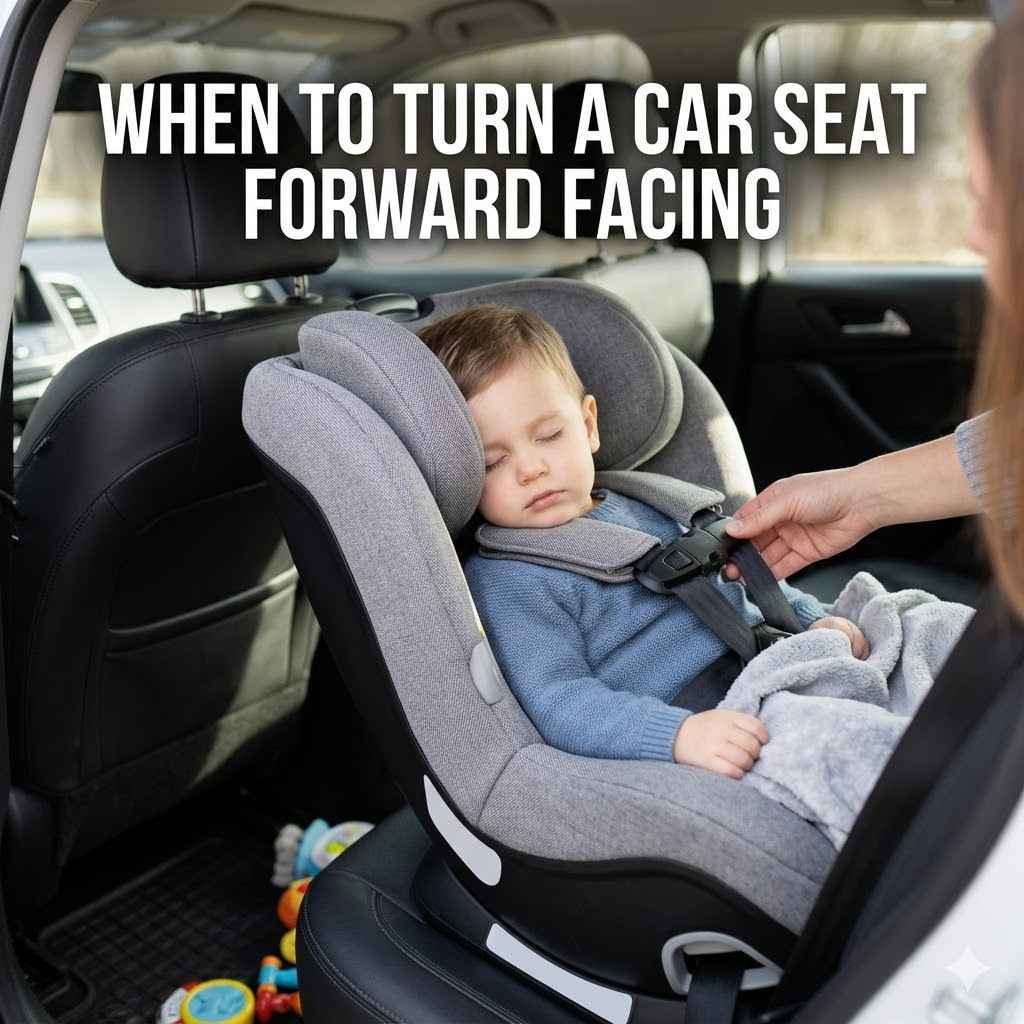
When to Turn a Car Seat Forward Facing
Figuring out when to change your child’s car seat from rear-facing to forward-facing can feel a bit tricky. Many parents wonder about the exact rules and what’s safest for their little one. It’s a common question because we all want to do what’s best for our kids.
This guide breaks down everything you need to know in simple steps. We’ll help you feel confident about When to Turn a Car Seat Forward Facing Safely so you can focus on your child’s happy travels. Get ready for clear answers and easy advice.
Key Guidelines for Forward Facing Car Seats
Guidelines for Forward Facing Car Seats
Understanding the right time to switch your car seat from rear-facing to forward-facing is super important for your child’s safety. Many parents find this a confusing step because there are rules and recommendations to follow. It’s not just about age; height and weight play a big role too.
Making the switch too early can put your child at risk in a crash. This section will walk you through the main rules and why they matter.
Understanding Rear-Facing Safety
Keeping a child rear-facing for as long as possible is the safest option. This is because a young child’s head is large and heavy compared to their body. Their neck and spine are also not fully developed.
In a crash, the force pushes their head forward. When rear-facing, the car seat shell supports the head and neck, spreading the crash forces across the entire back. This greatly reduces the stress on their delicate neck and spine.
Many safety experts agree that this is the best way to protect young children.
Think about a rear-end collision. If a child is rear-facing, their body is pushed into the seat, offering great support. If they were forward-facing, their head would snap forward, putting immense pressure on their neck.
This difference in protection is significant. It’s why safety standards recommend keeping children rear-facing well beyond the minimum age.
Why Minimum Age Isn’t Enough
The minimum age to turn a car seat forward-facing is often 2 years old, but this is just a starting point. Many parents mistakenly think that once their child hits this age, it’s automatically time to switch. However, safety guidelines and car seat manufacturers have much higher limits based on the child’s physical development.
Your child’s body needs to be strong enough to handle the forces of a crash when facing forward. Relying solely on the minimum age might mean switching your child before they are truly ready.
Children grow at different rates. Some 2-year-olds are still quite small and have not developed the neck and spine strength needed for forward-facing travel. Others might be larger.
It’s essential to look at the specific limits of your car seat and your child’s individual size. The transition should be based on reaching these limits, not just a calendar date.
Manufacturer and National Recommendations
Car seat manufacturers provide specific weight and height limits for their seats in both rear-facing and forward-facing modes. Always check the labels on your car seat for these important numbers. National safety organizations, like the American Academy of Pediatrics (AAP), also offer guidance.
They recommend keeping children rear-facing until they reach the highest weight or height limit allowed by their car seat’s manufacturer.
These recommendations are based on extensive research and crash testing. They aim to provide the best possible protection for children as they grow. Following these guidelines helps ensure your child is as safe as possible during every car ride.
It’s a proactive approach to child passenger safety.
Child Development and Safety
A child’s physical development is key to determining when they are ready to move to a forward-facing car seat. Their bones, muscles, and ligaments need to be strong enough to withstand crash forces in the forward direction. A child’s head is still quite heavy in proportion to their body, even at older ages.
The spine and neck muscles are still maturing. Until these are sufficiently developed, the support provided by a rear-facing seat is irreplaceable.
Consider the strength of a child’s neck. When rear-facing, the car seat shell absorbs the impact. When forward-facing, the harness straps and the child’s own body must manage the forces.
This is a significant difference in how impact is handled. Waiting until the child meets the higher limits of rear-facing travel ensures their body is better equipped for this transition.
When to Turn a Car Seat Forward Facing Safely
Reaching Car Seat Limits Safely
The most critical factor in deciding When to Turn a Car Seat Forward Facing Safely is reaching the car seat’s limits. Every car seat is designed with specific maximum weight and height limits for its rear-facing mode. Exceeding these limits means the seat may no longer be able to provide adequate protection.
The harness may not fit correctly, or the seat itself might not perform as intended in a crash.
It is vital to regularly check your child’s height and weight against the car seat’s manual. Don’t guess; measure your child. If your child is close to the height limit, check how much clearance there is between their head and the top of the seat shell.
If they are close to the weight limit, use a scale to get an accurate reading. Safety always comes first, and adhering to these limits is non-negotiable.
The 5-Step Test for Readiness
Beyond the weight and height limits, there’s a practical test many safety experts recommend called the 5-Step Test. This helps confirm your child is truly ready for the transition. It’s a more detailed check to ensure your child’s anatomy is suitable for forward-facing safety.
This test considers how the harness will fit and how the child’s body will react in a crash.
The 5-Step Test involves checking five specific criteria. Each step looks at a different aspect of your child’s fit in the harness and their physical readiness. Passing all five steps indicates your child is likely ready to transition.
This test is a valuable tool for parents to use in conjunction with manufacturer limits.
Five Steps to Assess Readiness
- Harness Strap Position: The harness straps should be at or slightly above your child’s shoulders when they are sitting in the car seat. This allows the harness to properly restrain them. If the straps are below the shoulders, they could slip out or not provide optimal support.
- Harness Depth: There should be no more than one finger’s width of space between the harness strap and your child’s collarbone at the shoulder. Too much slack means the harness isn’t snug enough. This is critical for keeping the child properly positioned during a crash.
- Harness Buckle Position: The chest clip should be positioned at armpit level. It should not be too low on the stomach or too high on the chest. The chest clip helps keep the harness straps from spreading apart, ensuring they stay in the correct position over the shoulders.
- Head Control and Neck Strength: Your child should be able to hold their head up independently and have good head control. This is important because when forward-facing, their head will move forward in a crash. Strong neck muscles help mitigate this movement and reduce injury risk.
- Comfort and Behavior: While not a direct safety measure, your child’s comfort is also a factor. If they are consistently uncomfortable or distressed in the rear-facing seat, it might be a sign they are outgrowing it developmentally. However, safety limits always take precedence over comfort concerns.
Each of these steps is designed to assess how well the car seat will function for your child when facing forward. If your child fails any of these steps, it indicates they are not yet ready for the transition. It’s better to be safe and keep them rear-facing longer.
The Importance of Harness Fit
The harness is the primary restraint system in a car seat. Its proper fit is paramount for safety, especially when transitioning to forward-facing. In a forward-facing position, the harness straps are responsible for holding your child securely in the seat during a crash.
If the straps are too loose, the child can be ejected from the seat or sustain severe injuries as their body moves too much.
The chest clip’s position is also crucial. It’s not a substitute for tightening the harness, but it does ensure the straps stay in the correct place over the shoulders. When the chest clip is too low, the straps can slide off the shoulders, rendering them ineffective.
This detail might seem small, but it plays a significant role in how well the harness works.
When to Consider a New Seat
Sometimes, even if your child meets the minimum age and weight for forward-facing, they might have outgrown their current convertible car seat in rear-facing mode. This means you’ll need a new seat that allows for higher rear-facing limits or is a dedicated forward-facing seat. Many convertible seats have very generous rear-facing limits, often up to 40 or 50 pounds, and some even higher.
If you’ve reached the maximum rear-facing weight or height limit of your current car seat, it’s time to upgrade. This doesn’t automatically mean you should turn them forward-facing. You should look for a new seat that allows your child to continue riding rear-facing until they reach that seat’s limits.
The goal is always to keep them rear-facing for as long as possible, even if it means getting a second, more capable car seat.
For example, a common scenario is a child outgrowing their infant car seat. Parents might then buy a convertible car seat. They should then aim to keep the child rear-facing in the convertible seat until it reaches its limits, rather than immediately switching to forward-facing just because they are out of the infant seat.
This extends the period of optimal protection.
Safety Features and Harness Systems
Safety Features and Harness Systems
Understanding the safety features of car seats, particularly the harness system, is key to knowing when and how to transition your child. The harness is designed to protect your child in various types of crashes. Its effectiveness depends heavily on proper fit and correct usage.
This section delves into the mechanics of the harness and other vital safety elements.
Safety features are not just about padding or a sturdy shell. The way your child is held within that shell during an impact is paramount. The harness and its adjustment are the direct interface between your child and the car seat’s protective capabilities.
Learning about these features empowers you to make informed decisions.
The Role of the 5-Point Harness
A 5-point harness is the standard for child safety seats. It consists of two straps over the shoulders, two straps at the hips, and one strap between the legs, all meeting at a central buckle. This design is crucial because it distributes crash forces across the strongest parts of a child’s body: their shoulders and hips.
This prevents the child from being thrown forward or sideways out of the seat during an impact.
The five points of contact ensure that the child is held securely within the protective zone of the car seat. Unlike a seatbelt designed for adults, the 5-point harness is specifically engineered for the smaller bodies and developing skeletons of children. It provides a much more secure and effective restraint.
This is why it’s a requirement for all infant, convertible, and forward-facing toddler seats.
Harness Adjustment Best Practices
Proper harness adjustment is not a one-time task. As your child grows, you’ll need to readjust the harness straps. The rule for rear-facing is that the straps should be at or below the child’s shoulders.
For forward-facing, the straps should be at or slightly above the child’s shoulders. This shoulder alignment ensures the harness can effectively manage crash forces.
You should always perform the “pinch test” to ensure the harness is snug. After buckling your child in, try to pinch the harness webbing vertically at their shoulder. If you can pinch any slack, it’s too loose.
The harness should be snug enough that you cannot fold the webbing between your fingers. A snug harness prevents excessive movement during a crash.
Understanding Harness Slots
Car seats have multiple harness slots at different heights. The slots you use depend on your child’s size and their position in the seat. For rear-facing, the lowest slots are typically used.
As the child grows, you move the harness up to the next set of slots. For forward-facing, the slots are generally higher. Using the correct slots is essential for proper harness fit and function.
It’s important to note that once your child is ready to face forward, the harness straps should indeed be at or slightly above their shoulders. This alignment helps keep their body in the correct position during a frontal impact, which is the most common type of crash. The harness can then effectively lift and distribute the forces.
The Importance of the Chest Clip
The chest clip, often called a “harness clip” or “positioning clip,” is a vital component of the harness system. Its purpose is to keep the shoulder straps positioned correctly over the child’s shoulders. When the chest clip is at armpit level, it prevents the shoulder straps from sliding off, which is critical for safety.
It’s not a locking mechanism; it’s a positioning aid.
Some parents misunderstand the chest clip and believe it’s the primary safety device. This is incorrect. The snugness of the harness straps themselves is the most important factor.
The chest clip simply ensures those snug straps stay where they belong. Always position it at the level of the child’s armpits. If it’s too low, the straps can slide off.
If it’s too high, it can interfere with breathing.
A real-life example highlights this. A child who was involved in a minor accident was found to have the chest clip too low. While the harness was snug, the low clip allowed the shoulder straps to slide off, and the child experienced a minor abrasion on their chest.
This scenario underscores the importance of the chest clip’s proper placement, even in less severe incidents.
Making the Transition Safely
Making the Transition Safely
Switching your child to a forward-facing car seat is a milestone, but it needs to be done with careful attention to safety guidelines. This isn’t just about reaching a certain age; it’s about ensuring your child’s physical development and the car seat’s fit are optimal. This section provides a step-by-step approach to making this transition with confidence.
The transition should feel like a natural progression, not a rushed decision. By following established safety protocols and understanding your car seat’s capabilities, you can ensure your child continues to travel safely. We’ll cover how to assess readiness and what to expect.
When to Switch Based on Limits
The primary driver for transitioning to forward-facing is when your child reaches the maximum rear-facing weight or height limit specified by the car seat manufacturer. Do not exceed these limits. Once these limits are met, the seat can no longer guarantee optimal protection in the rear-facing position.
However, this does not mean you should switch them forward-facing immediately after. You should keep them rear-facing until they reach the limits of another car seat designed for higher rear-facing limits if possible. The goal is to maximize the time spent rear-facing.
For instance, if your child reaches the 40-pound rear-facing limit of a convertible seat, and you have the option of a car seat that allows rear-facing up to 50 pounds, choose the latter. This extends the period of superior safety.
Physical Readiness Beyond Limits
Even if your child meets the car seat’s limits, their physical development plays a role. The 5-Step Test, discussed earlier, is crucial for assessing this readiness. It checks harness fit and neck strength.
A child needs sufficient neck and torso strength to manage the forces of a crash when facing forward. This strength develops over time.
If your child is still very wiggly and has poor head control, they may not be ready, even if they meet the weight and height criteria. The harness system works best when the child’s body is able to withstand some of the impact forces, which is not the case for very young or underdeveloped children in a forward-facing position.
Adjusting the Harness for Forward-Facing
Once you’ve determined your child is ready and you’ve made the switch, the harness adjustment rules change. For forward-facing seats, the harness straps should be at or slightly above your child’s shoulders. This orientation helps the harness correctly restrain the child during a frontal collision by lifting and cradling their body.
It’s important to remember that the harness must still be snug. Perform the pinch test. You should not be able to pinch any slack in the webbing at your child’s shoulder.
The chest clip should remain at armpit level. These adjustments ensure the harness functions as designed to protect your child.
Sample Transition Scenarios
Here are a couple of common scenarios to illustrate the transition:
-
Scenario 1: Reaching Rear-Facing Weight Limit
Liam is 3 years old and weighs 38 pounds. His convertible car seat’s rear-facing limit is 40 pounds. He is also 37 inches tall, and the seat’s rear-facing height limit is 43 inches. Liam meets the 5-Step Test for forward-facing readiness (good head control, harness fits correctly with straps at shoulders, chest clip at armpits). He is ready to transition to forward-facing in his current seat. The harness straps will now be adjusted to be at or slightly above his shoulders. -
Scenario 2: Needing a New Seat for Extended Rear-Facing
Maya is 2.5 years old and weighs 30 pounds. Her infant car seat’s rear-facing limit is 30 pounds. She has outgrown it by weight. Instead of turning her forward-facing, her parents purchase a new convertible car seat that allows rear-facing up to 50 pounds and 50 inches. Maya will continue to ride rear-facing in her new seat until she meets its rear-facing limits, which is the safest course of action.
These scenarios show how different situations require different approaches, always prioritizing extended rear-facing when possible.
Common Mistakes to Avoid
One common mistake is switching too early, often based solely on age. Another is not understanding the specific limits of the car seat being used. Parents might also fail to perform the 5-Step Test or adjust the harness correctly for forward-facing.
Over-tightening the harness can also be a concern, leading to discomfort and potential issues.
Improper use of the chest clip, such as placing it too low or not using it at all, is also a frequent error. Finally, thinking that a child is “too big” for rear-facing is a misconception. Children’s bodies benefit from rear-facing protection much longer than many parents assume.
Always consult your car seat manual and reliable safety resources.
Statistics and Expert Recommendations
Statistics and Expert Recommendations
Safety statistics and expert opinions provide a strong foundation for understanding When to Turn a Car Seat Forward Facing Safely. These insights come from extensive research, crash data analysis, and the collective experience of child passenger safety experts. They reinforce the importance of adhering to specific guidelines for child restraint use.
By looking at the numbers and listening to those who study child safety, parents can gain a clearer perspective on the best practices. This information helps underscore why certain recommendations exist and how critical they are for preventing injuries.
Crash Data and Injury Prevention
Studies consistently show that keeping children rear-facing longer significantly reduces the risk of injury in a crash. For instance, data from the National Highway Traffic Safety Administration (NHTSA) indicates that children are five times safer when riding rear-facing compared to forward-facing. This statistic alone emphasizes the protective advantage of rear-facing travel for young children.
The forces involved in a frontal crash are particularly dangerous for a child’s developing neck and spine. When rear-facing, the car seat shell absorbs and distributes these forces across the child’s back. When forward-facing, the forces are concentrated on the harness and the child’s body, putting more stress on the neck.
This fundamental difference in impact management is why extended rear-facing is so effective in preventing severe injuries, including spinal cord damage.
A detailed analysis of crash outcomes has shown that the risk of severe head and neck injuries is dramatically lower for children riding rear-facing. This is particularly true in frontal and near-frontal impacts, which are the most common and often most severe types of collisions. The protection offered by rear-facing is simply superior for children under the age of two and often beyond.
Recommendations from Safety Organizations
Leading child passenger safety organizations, such as the American Academy of Pediatrics (AAP) and the National Highway Traffic Safety Administration (NHTSA), strongly recommend keeping children rear-facing until they reach the maximum weight or height limit allowed by their car seat manufacturer. They emphasize that this limit is often well beyond the minimum age requirement.
The AAP’s policy states that children should remain rear-facing until at least age 2, and ideally until they reach the highest limits of their convertible car seat. Many other countries, like Canada and European nations, have even longer recommended rear-facing periods, sometimes up to 4 years of age. This global consensus highlights the effectiveness of rear-facing protection.
These organizations also stress the importance of proper installation and correct use of car seats. Even the safest car seat will not provide adequate protection if it is not installed correctly or if the child is not properly secured in the harness. Regular checks and understanding the seat’s features are vital.
Car Seat Types and Their Limits
There are several types of car seats, and understanding their limits is key. Infant-only seats are strictly rear-facing and typically have limits up to 22-35 pounds. Convertible seats can be used rear-facing and forward-facing, with rear-facing limits often ranging from 40-50 pounds or more.
All-in-one seats offer rear-facing, forward-facing, and booster modes, with similar rear-facing limits to convertibles.
Booster seats are for older children who have outgrown forward-facing seats. The transition from a car seat to a booster seat is a separate stage that occurs after the child has outgrown their forward-facing harness seat. It’s important to know the specific limits of your chosen seat.
For example, a seat might have a rear-facing limit of 50 pounds but a forward-facing limit of 65 pounds. The child must meet the rear-facing limit before transitioning.
| Car Seat Type | Rear-Facing Weight Limit (Typical) | Forward-Facing Weight Limit (Typical) | Primary Purpose |
|---|---|---|---|
| Infant Seat | 22-35 lbs | N/A | Rear-facing only |
| Convertible Seat | 40-50+ lbs | 40-65+ lbs | Rear-facing and forward-facing |
| All-in-One Seat | 40-50+ lbs | 40-65+ lbs | Rear-facing, forward-facing, and booster |
This table illustrates how weight limits vary by seat type. Always refer to your specific car seat manual for precise limits.
The Role of Fit and Fit Indicators
Many modern car seats have features designed to help parents assess the fit of the harness. These can include visual indicators on the harness or seat itself. For example, some seats have lines that indicate when the harness is at the correct height for rear-facing or forward-facing.
Knowing how to use these fit indicators can greatly improve the safety of your child’s restraint.
When the harness is correctly positioned, it works in tandem with the snugness of the straps and the chest clip to provide optimal restraint. A good fit means that in a crash, the forces are managed effectively, minimizing the risk of injury. If a car seat does not have clear fit indicators, relying on the shoulder position rules and the pinch test is essential.
Frequently Asked Questions
Question: What is the absolute minimum age to turn a car seat forward facing?
Answer: While some seats allow it at 1 year old, safety experts strongly recommend waiting until at least 2 years old. However, the best practice is to wait until your child reaches the highest weight or height limit for rear-facing as specified by the car seat manufacturer, regardless of age.
Question: How do I know if my child’s car seat is outgrown for rear-facing?
Answer: You will know your child has outgrown the rear-facing capacity when they reach either the maximum weight limit or the maximum height limit for rear-facing mode as stated on the car seat. Check the labels and the manual. For height, the top of their head should not be less than one inch from the top of the seat shell when rear-facing.
Question: Should I use a rear-facing car seat for my child as long as possible?
Answer: Yes, absolutely. Keeping children rear-facing for as long as possible, ideally until they reach the highest weight or height limits of their car seat, is significantly safer. This position provides superior protection for their head, neck, and spine in the event of a crash.
Question: What if my child complains about being rear-facing?
Answer: While comfort is important, safety is paramount. If your child complains, first check the harness fit to ensure it’s snug and comfortable. Ensure the straps are not twisted.
If they continue to be uncomfortable, explore options for a more comfortable rear-facing seat or ensure they are not overheating. However, never transition to forward-facing solely based on complaints if they have not met the safety limits.
Question: Can I turn my child forward facing if they are just under the weight limit but tall?
Answer: No, you must meet both the weight and height limits for rear-facing. If your child is under the weight limit but has reached the height limit for rear-facing (typically when their head is within an inch of the top of the shell), they are outgrown for rear-facing. Conversely, if they meet the height but not the weight, they should remain rear-facing.
Summary
Choosing when to turn a car seat forward facing safely involves more than just age. Always follow the car seat’s weight and height limits for rear-facing. The 5-Step Test confirms your child’s physical readiness.
Keep them rear-facing as long as possible for maximum protection. Make sure the harness is snug and adjusted correctly for the forward-facing position.