Can a Car Be Repossessed from Private Property? Breach Rules
Yes, a car can often be repossessed from private property unless the repo agent causes a breach of peace; locked garages, closed gates, and clear refusals usually stop lawful self-help. Bad repos can lead to towing disputes, damage, and legal claims. This guide explains home, driveway, garage, and gated-lot rules.
Can a car be repossessed from private property?
Yes, in many states a lender can use self-help repossession on private property after default, even without a court order. Private property does not automatically block repossession. The real questions are whether the spot was open or enclosed, and whether the agent crossed the breach-of-peace line.
How self-help repossession works after default
Self-help repossession means the lender or its agent takes the vehicle without first filing a lawsuit in many states. After a missed payment, that path is allowed in many states, but state law and the loan contract control the details. Some states also require notice before repossession and time to catch up on missed payments.
Why private property does not always block repossession
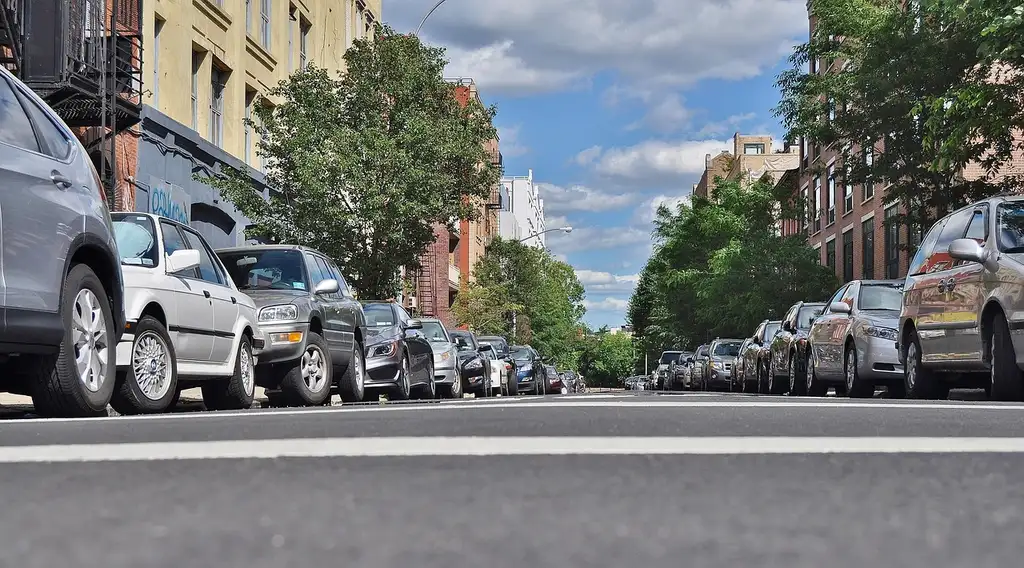
Driveways, yards, apartment lots, HOA parking areas, and leased spaces can all be private property, yet a vehicle may still be reachable there. Access rights differ from public-street towing. A lender cannot ignore property boundaries, but private property alone does not make a repossession unlawful.
Where state law and the loan contract matter most
Review both the promissory note and local rules. Some contracts spell out default remedies and recovery costs; state law then sets the outer limits. That affects notice, court orders, cure periods, and what happens after sale. Private-property access is only one part of the analysis.
What counts as a breach of peace during repossession?
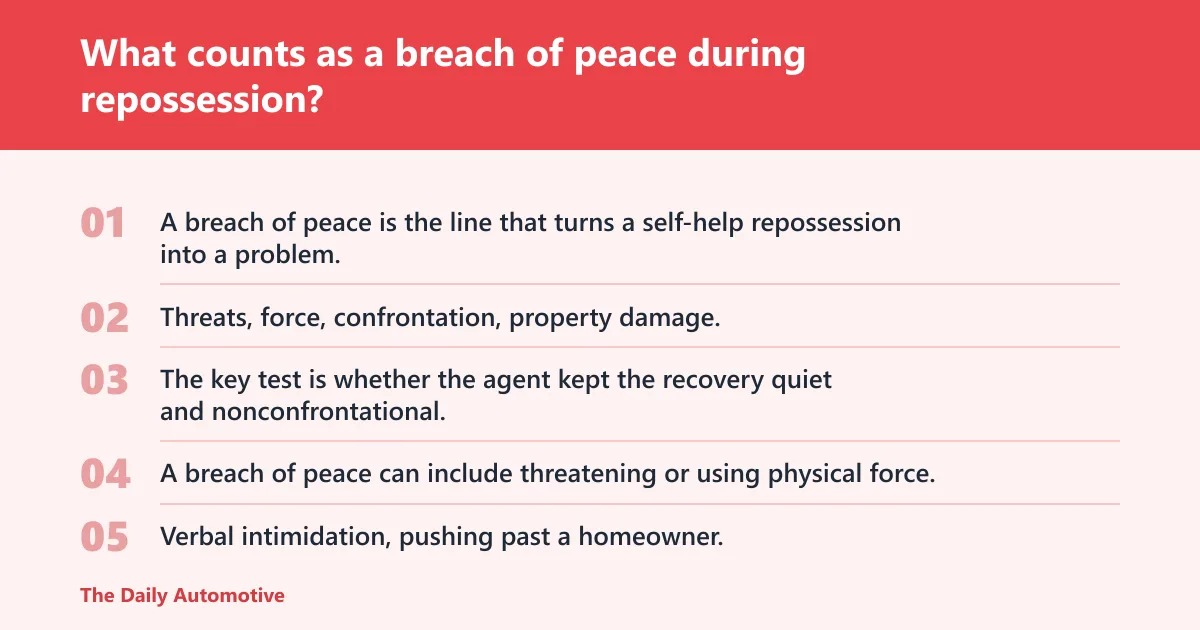
A breach of peace is the line that turns a self-help repossession into a problem. Threats, force, confrontation, property damage, or taking the car after a clear refusal can all matter. The key test is whether the agent kept the recovery quiet and nonconfrontational.
Threats, force, and confrontation
A breach of peace can include threatening or using physical force. Verbal intimidation, pushing past a homeowner, or using a vehicle to block a person can all create legal risk. The agent does not get to win an argument by escalating it.
Borrower refusal or physical resistance
Continuing repossession after the borrower resists or refuses can breach the peace. If someone says no and the agent keeps trying, the situation changes fast. Physical interference is not a good strategy, though; it can raise safety risk and complicate any later claim.
Property damage, blocked access, and disorder
Damage to a gate, garage door, fence, or other property may support a wrongful-repossession claim. So can disorder that spills beyond a quiet tow, especially when neighbors are involved. A lawful recovery should not leave broken hardware, dragged landscaping, or a scene that looks forced.
Picture a sedan parked under a carport with the driveway gate open. That is very different from a locked six-foot gate with a posted no-entry sign and no one present to grant access. The first scenario may still allow repossession; the second pushes toward a breach-of-peace problem.
Can a car be repossessed from a closed garage or gated lot?
A closed garage is generally a riskier line for repossession, and taking a vehicle from a closed garage without permission is often treated as a breach-of-peace example. Locked gates, chains, and other barriers also raise the risk sharply. Enclosed access usually changes the legal analysis.
Closed garages and enclosed spaces
A closed garage is usually treated differently from an open driveway or open-air parking space. If a repo agent opens or enters a garage without permission, the repossession may cross the line. That is true even when the car itself sits on private property.
Locked gates, chains, and access barriers
Locked gates and chains signal that access is restricted. Forcing entry through those barriers can turn a private-property repossession into trespass or unlawful entry territory. A gate that is closed but unlocked is still different from one that is locked shut, but both deserve careful fact collection.
Apartment lots, HOA parking, and leased spaces
Apartment complexes, HOA parking areas, and leased lots create extra layers because ownership, access, and parking rights may differ. The borrower may have a parking license rather than full control of the space. That does not give a repo agent free rein to break locks or ignore building rules.
A common first-timer mistake is assuming that “private lot” means “fully protected.” It does not. The better question is whether the area was open, enclosed, or blocked by a barrier that the agent had no right to defeat.
Do lenders need a court order to repossess a car?
Sometimes yes, sometimes no. In many states, self-help repossession can happen without a court order after default, but some states require extra notice or court action in certain situations. A court order may also be required when self-help would breach the peace or when federal protections apply. (consumerfinance.gov)
States that require court action or extra notice
Some states require lenders to send notice before repossession and allow time to catch up on missed payments. Others permit immediate recovery after default if the lender stays within legal limits. Because the rules vary, a private-property tow in one state may be lawful and unlawful in another.
When self-help ends and legal process begins
Once an agent starts forcing entry, ignoring a refusal, or damaging property, the case may no longer fit self-help rules. At that point, a lender may need a court order or another legal process. The answer turns on the conduct, not just the location.
How SCRA protection can change the rules
The Servicemembers Civil Relief Act bars repossessions without a court order for pre-service auto loan contracts entered into before military service. That protection matters whenever active-duty status is possible. If military service applies, verify it before assuming a self-help repossession is allowed.
What should you do if a repo company shows up at your home?
Stay calm, do not physically interfere, and document what is happening. If the agent is on an open driveway and no breach of peace is occurring, a confrontation can make things worse. If the agent is forcing entry, damaging property, or ignoring a refusal, switch to evidence collection and safety.
What to say and what not to do
State your position clearly if you object, but keep it short. Do not push, grab the truck, block the vehicle with your body, or threaten anyone. If you are asking them to leave a closed garage, locked gate, or enclosed area, say that plainly and repeat it once.
When to call police or document the scene
If there is trespass, damage, threats, or a refusal to stop after clear objection, call local police and ask for a report number. Police may not stop every repossession, but a report helps document a breach-of-peace claim. Photograph the vehicle, the access point, and any damage immediately.
How to protect people, pets, and property
Move children, pets, and bystanders away from the area. Keep hands visible and avoid crowding the agent or the tow truck. If the agent leaves with the vehicle, do not chase the truck. Preserve the scene and focus on records, not physical intervention.
Use this breach-of-peace checklist and incident log
Use a yes/no checklist to sort an open driveway case from an enclosed-access case. Save photos, video, timestamps, witness names, the tow company name, and the plate number. A clean record often matters more than memory later.
Breach-of-peace checklist
- Was the vehicle in a closed garage? Yes / No
- Was a gate, chain, or other barrier locked? Yes / No
- Did the agent enter without permission? Yes / No
- Did anyone say to stop or leave? Yes / No
- Did the agent continue after refusal? Yes / No
- Was there physical force, pushing, or blocking? Yes / No
- Was there any threat or intimidation? Yes / No
- Was any property damaged? Yes / No
- Were personal items in the car removed or withheld? Yes / No
What to photograph, video, and timestamp
Capture the vehicle from wide and close angles, the driveway or lot layout, any locked gate, the garage door, and all visible damage. Save the tow truck, plate number, and company markings if visible. Record the time, date, and the order of events as soon as you can.
| Record field | What to write down | Why it matters |
|---|---|---|
| Date and time | Exact clock time and date | Helps place the incident in sequence |
| Location | Street address, lot name, unit number | Shows whether the site was open or enclosed |
| Vehicle details | Plate number, make, model, color | Identifies the car taken or targeted |
| Tow company | Company name and truck number | Links conduct to the right agent |
| Witnesses | Names, phone numbers, brief notes | Supports your account later |
| Photos and video | File names and storage location | Preserves proof of barriers or damage |
| Personal property | List items left in the car | Supports a return demand |
Incident log template
Use a simple written log with one line per event. Keep it factual. Include who said what, whether access was blocked, and whether the agent touched anything they should not have touched.
- Time the agent arrived:
- Where the car was parked:
- Was the garage closed? Yes / No
- Was the gate locked? Yes / No
- Who was present:
- What was said when you objected:
- Any force, threats, or damage:
- Whether the car was removed:
- Personal items left inside:
- Police report number, if any:
What happens to your things, your car, and any deficiency balance?
Your belongings inside the car should be handled separately from the vehicle itself. After repossession, a borrower should contact the lender right away to arrange retrieval of personal property left in the car. The car may be sold later, and a deficiency balance can still remain after the sale.
Personal property retrieval after repossession
Borrowers should contact the lender right away to arrange retrieval of personal property left in the car. The CFPB says a lender demanded payment before returning consumers’ personal property in a public enforcement action, which is the kind of fact worth documenting. Photograph the items before they disappear from view.
Redemption and reinstatement timelines
Borrowers in some states can cure or reinstate the loan after repossession. That may require overdue payments plus repossession costs, and the timing rules vary by state. Do not assume you have the same window everywhere.
Deficiency balance, sale, and follow-up records
A deficiency balance is the difference between what is owed plus fees and the vehicle’s sale price. A repossession can stay on credit reports for up to seven years. For a public sale, the lender must notify the borrower of the sale date, time, and place, so keep every notice with the incident log.
Frequently asked questions
Can a repo man come on private property?
Often yes, but only within legal limits. Driveways, lots, and similar areas may still be reachable during self-help repossession. Locked gates, closed garages, and conduct that looks like trespass, force, or intimidation can change the result fast.
Can a car be repossessed from a closed garage?
That is a high-risk line. The CFPB flags removing a vehicle from a closed garage without permission as a breach-of-peace example. If the garage was shut and the agent entered without consent, the repossession may be unlawful or support a damages claim.
What should I do if a repo company tries to take my car at home?
Do not physically block the tow or grab the agent. State your objection, note whether the area is closed or locked, and start documenting with photos, video, and names. If there is damage, threats, or refusal to leave a closed area, call local police and preserve the record.
Products related to this article
Sponsored / affiliate links. As an Amazon Associate I earn from qualifying purchases. I may earn additional commission from eligible campaigns.