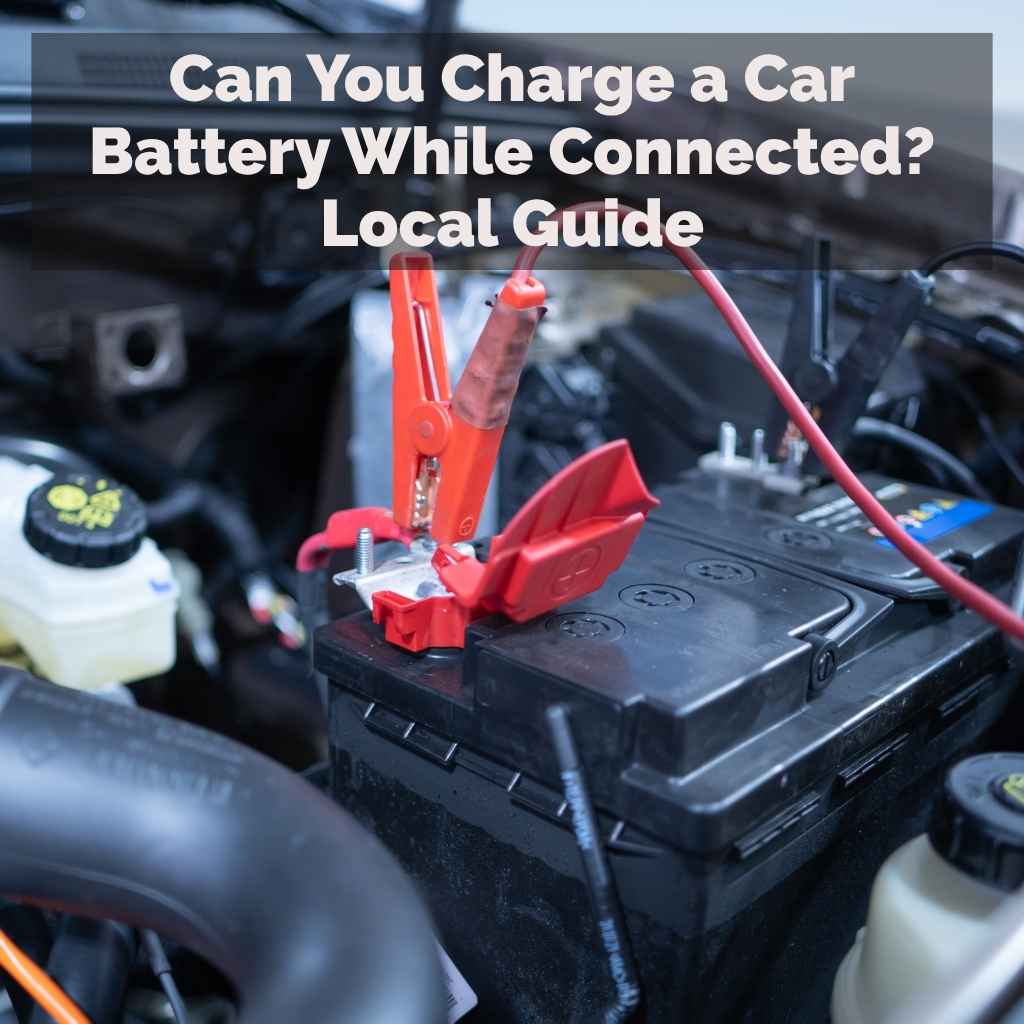
Can You Charge a Car Battery While Connected? Local Guide
Many car owners wonder if they can charge their car battery while it’s still in the car. It sounds tricky, and for beginners, figuring this out can feel a bit overwhelming. You might worry about causing damage or even danger.
But don’t fret! This guide will show you exactly how to do it safely and easily. We’ll walk through each step so you can feel confident.
Let’s get started on learning about Can You Charge a Car Battery While Connected? Local Guide.
Safely Connecting A Charger To Your Car Battery
Charging a car battery while it’s connected to your vehicle is a common task many car owners face. This section will explain the right way to hook up a charger. It’s important to follow these steps carefully to avoid any problems.
We will cover the basic setup and what you need to know before you begin. This is a key part of understanding how to charge your car battery safely without removing it.
Choosing The Right Charger
Selecting the correct charger is vital for a successful and safe charging session. Not all chargers are created equal, and using the wrong one can harm your battery or your car’s electronics. A smart charger, also known as an automatic charger or trickle charger, is generally the best choice for most car owners.
These chargers monitor the battery’s charge level and adjust the charging rate automatically, preventing overcharging, which can damage the battery and reduce its lifespan. Manual chargers, while sometimes less expensive, require more attention from the user to avoid these issues.
Smart chargers often have multiple charging modes, such as a standard charging mode for regular use, a cold weather mode, or a reconditioning mode for batteries that have been deeply discharged. Look for chargers that are compatible with your car’s battery type. Most modern cars use lead-acid batteries, but there are different types like flooded, AGM (Absorbent Glass Mat), and gel batteries.
Ensure the charger is designed to work with your specific battery chemistry. Read the charger’s manual carefully for any specific instructions or warnings related to your vehicle model or battery type.
Another important consideration is the charger’s amperage output. For typical car batteries, a charger with a 2-amp to 10-amp output is usually sufficient. Higher amperage chargers can charge a battery faster, but they also carry a greater risk of damage if not used correctly.
For a trickle charger, which is designed for long-term maintenance charging, a lower amperage (1-2 amps) is more appropriate. It provides a slow, steady charge to keep a battery topped up without overstressing it.
Essential Tools And Safety Gear
Before you start charging, gather all the necessary tools and safety gear. This ensures a smooth process and protects you from potential hazards. You’ll need safety glasses to protect your eyes from any sparks or acid splashes, and gloves to keep your hands clean and protected.
Always wear these items, even for short charging sessions.
A good set of jumper cables might be useful, though not always essential for direct charging. You will definitely need your car battery charger. Make sure it’s in good working order and that the clamps are clean and free of corrosion.
A wire brush is handy for cleaning battery terminals and cable clamps if you see any buildup. You might also need a voltmeter to check the battery’s voltage before and after charging, which helps you confirm it’s holding a charge.
Having a clean, dry workspace is also important. Ensure the area is well-ventilated, as batteries can release explosive hydrogen gas during charging. Keep any open flames or sparks away from the charging area.
It’s also a good idea to have a fire extinguisher nearby, just in case. Following these safety precautions will help you have a positive experience when charging your car battery.
Connecting The Charger Correctly
Connecting the charger correctly is the most critical step. Start by turning off your car and removing the ignition key. This prevents any electrical surges.
Locate your car battery; it’s usually under the hood, but some cars have it in the trunk or under a seat.
Next, identify the positive (+) and negative (-) terminals on your battery. They are usually marked. Clean both terminals with a wire brush if they look corroded.
Then, take the positive (red) clamp from your charger and attach it firmly to the positive terminal of the battery. Make sure it has a good connection.
Now, take the negative (black) clamp from your charger. You have two options here: attach it to the negative terminal of the battery, or to an unpainted metal surface on the car’s engine block or chassis, away from the battery. Connecting to the chassis is often recommended as it provides a good ground and helps reduce the risk of sparks near the battery, where hydrogen gas might be present.
Once both clamps are securely attached, plug in your charger and turn it on.
Understanding The Risks And Precautions
When you’re considering charging your car battery while it’s still connected, it’s wise to be aware of potential risks. While generally safe when done correctly, there are a few things to keep in mind to ensure you don’t damage your vehicle or cause harm. Understanding these risks helps you take the right steps to prevent them, making the process smooth and worry-free.
Risks Of Overcharging
Overcharging a car battery can cause significant damage. When a battery is charged for too long or with too much power, it can overheat. This heat can warp the battery’s internal plates, leading to a permanent loss of capacity.
It can also cause the electrolyte solution inside the battery to boil, releasing harmful fumes and potentially causing the battery to swell or even explode. This is why using a smart charger is so important; it prevents overcharging by automatically stopping or reducing the charge when the battery is full.
Another issue with overcharging is sulfation. When a lead-acid battery is left in a discharged state for a long time, lead sulfate crystals can form on the battery plates. While some sulfation is normal, excessive sulfation, often a result of undercharging or prolonged storage without a maintenance charger, can harden and grow, reducing the battery’s ability to accept or hold a charge.
Overcharging can sometimes exacerbate this problem or cause other forms of internal damage that are not easily visible but degrade the battery’s performance over time. A healthy battery needs a balanced charging routine.
The lifespan of your car battery can be significantly shortened by regular overcharging. A battery that is constantly being pushed beyond its capacity will degrade much faster than one that is charged appropriately. This means you’ll find yourself needing to replace your battery more often, which can be a recurring expense.
Following the manufacturer’s recommendations for charging and maintenance is the best way to ensure your battery lasts as long as possible. Always check your car’s manual for specific charging guidelines.
Protecting Vehicle Electronics
Modern cars are filled with sensitive electronic components that can be damaged by voltage spikes or surges. When charging a car battery, especially an older, non-smart charger, there’s a risk of power fluctuations. These fluctuations can send unexpected jolts of electricity through your car’s electrical system, potentially frying sensitive modules like the engine control unit (ECU), the infotainment system, or the dashboard electronics.
This is why many mechanics and manufacturers recommend disconnecting the battery’s negative terminal before performing any electrical work or charging.
However, with most modern smart chargers, this risk is significantly reduced. These chargers are designed to provide a stable, controlled current. They often have built-in surge protection and voltage regulation to ensure that the power delivered to the battery is consistent and within safe limits.
Even so, it’s always a good practice to double-check your charger’s specifications and your vehicle’s manual. If your charger doesn’t have these protective features, or if you are unsure, disconnecting the negative terminal is a safer bet for protecting your car’s electronics.
Furthermore, ensure all connections are clean and secure. Loose connections can cause intermittent power delivery, leading to voltage drops or spikes. This can confuse the car’s computer systems.
Properly tightening the clamps on the battery terminals and ensuring the charger itself is plugged into a stable power source (like a grounded outlet) helps maintain a consistent electrical environment. A stable electrical charge protects all parts of your vehicle.
Handling Battery Acid Safely
Car batteries contain sulfuric acid, which is corrosive and can cause serious burns. If you get battery acid on your skin or in your eyes, it can be very painful and damaging. Always wear protective gloves and safety glasses when working with a car battery.
If acid does come into contact with your skin, wash the affected area immediately with plenty of soap and water. If it gets into your eyes, rinse them with cool water for at least 15 minutes and seek medical attention right away.
If you accidentally spill battery acid, it’s important to neutralize it. A mixture of baking soda and water can help neutralize the acid. Apply the paste to the spilled area, and it will foam up as it reacts with the acid.
Once the foaming stops, rinse the area thoroughly with clean water. This process helps prevent further corrosion to surfaces the acid might have touched.
Hydrogen gas is another hazard. Batteries release hydrogen gas, which is highly flammable and can explode if exposed to a spark. Ensure you are charging your battery in a well-ventilated area, away from open flames, sparks, or any potential ignition sources.
Connecting the negative clamp to the car’s chassis instead of directly to the negative battery terminal can help minimize the risk of sparks near the battery itself. This precaution is especially important for older batteries that may be leaking or producing more gas.
Can You Charge A Car Battery While Connected? Local Guide Explained
This section directly addresses the main question: Can You Charge a Car Battery While Connected? Local Guide. We’ll break down the practicalities and confirm that, yes, it is generally possible and often preferred.
We will cover why this method is common and provide a straightforward process that anyone can follow, emphasizing safety and efficiency so you know exactly what to do without any guesswork.
The Convenience Of On-Car Charging
Charging a car battery while it remains in the vehicle offers significant convenience. It eliminates the need for the often heavy and awkward task of removing the battery. This saves time and physical effort, making battery maintenance accessible to more people.
For instance, if your car has been sitting for a while and the battery has lost some charge, you can simply connect a charger and let it do its work without dismantling anything. This is particularly helpful for vehicles with batteries located in hard-to-reach places, like under the passenger seat or in the trunk, which can be a real hassle to access.
Moreover, keeping the battery connected helps maintain the vehicle’s computer memory. Modern cars store settings for things like radio presets, seat positions, and engine performance parameters. Disconnecting the battery can cause these settings to be lost, requiring you to re-enter them or, in some cases, needing a diagnostic tool to reset certain systems.
By charging the battery in place, you prevent this data loss and avoid potential electronic gremlins that can pop up after a full battery disconnect. This preserves your car’s personalized settings and operational integrity.
For routine maintenance charging, especially with a trickle charger, leaving the battery connected is the standard and recommended practice. These chargers are designed to maintain a full charge without causing any harm to the vehicle’s electrical system. They provide a slow, steady flow of power that keeps the battery healthy, extending its life and ensuring your car is always ready to start.
This ease of use makes it a popular choice for many car owners.
Step-By-Step Charging Process
First, ensure your car is turned off and the keys are out of the ignition. Locate your car battery and its terminals. Clean any corrosion from the terminals using a wire brush.
You will need a battery charger, preferably a smart charger, and safety gear like gloves and eye protection.
Next, connect the positive (red) clamp of the charger to the positive (+) terminal of the battery. Then, connect the negative (black) clamp to the negative (-) terminal of the battery or to an unpainted metal part of the car’s chassis. This grounding helps prevent sparks near the battery.
After securing the connections, plug the charger into a grounded electrical outlet. Turn on the charger. Follow the charger’s instructions for the appropriate charging mode or duration.
Most smart chargers will indicate when the battery is fully charged. Once charging is complete, turn off the charger, disconnect the negative clamp first, then the positive clamp. Always unplug the charger from the outlet after disconnecting it from the battery.
When Not To Charge Connected
While charging connected is generally safe, there are a few situations where you should reconsider. If your battery is visibly damaged, cracked, leaking, or swollen, it’s best to remove it before charging. Charging a damaged battery poses a significant safety risk due to the potential for acid leaks or explosion.
In such cases, consult a professional mechanic for advice or replacement.
Another scenario to be cautious about is if your car has a complex or highly sensitive electronic system. Some high-end luxury vehicles or those with specialized electrical configurations might have specific recommendations against on-car charging to avoid any potential risk to their advanced electronics. Always refer to your vehicle’s owner’s manual for any specific guidelines or warnings related to charging the battery.
If you’re using a very old, basic charger without any smart features, the risk of overcharging or power surges increases. These older chargers lack the safety mechanisms of modern smart chargers, making it harder to control the charging process. In such cases, it might be safer to remove the battery, especially if you are unsure about the charger’s capabilities or your car’s electronic sensitivity.
Safety always comes first, so if in doubt, take the extra precaution of removing the battery.
Choosing The Right Charger For Your Needs
Selecting the appropriate charger can make all the difference in how effectively and safely you charge your car battery. Different types of chargers offer various features and functionalities. Understanding these options helps you pick one that fits your needs and ensures the longevity of your battery.
This section will explore the main types of chargers and what to look for.
Smart Chargers Versus Manual Chargers
Smart chargers, also known as automatic or intelligent chargers, are highly recommended for most car owners. They use microprocessors to monitor the battery’s voltage and temperature. This allows them to adjust the charging rate automatically, preventing overcharging.
They typically have multiple charging stages, including desulfation, bulk charging, absorption, and float modes. For example, a smart charger might detect sulfation and apply a special pulse to break down the sulfate crystals, improving battery health.
Manual chargers, on the other hand, require constant user supervision. They deliver a steady current, and you need to monitor the battery’s charge level yourself and disconnect the charger manually when it’s full. Without this vigilance, you risk overcharging the battery, leading to damage.
While sometimes less expensive, manual chargers demand more attention and carry a higher risk if not used correctly. Imagine a manual charger like an old-fashioned stove burner that you have to watch constantly to prevent burning your food.
The primary benefit of smart chargers is their safety and ease of use. They are ideal for maintaining a battery over long periods (trickle charging) or for bringing a deeply discharged battery back to life without damaging it. For anyone who isn’t an experienced mechanic or simply wants a hassle-free solution, a smart charger is the clear choice.
They offer peace of mind and better protection for your car’s battery and electronics.
Understanding Amperage And Voltage
Amperage (amps) refers to the rate at which electricity flows. For car batteries, typically 12-volt systems, you’ll find chargers with amperage ratings ranging from 1 amp to 10 amps or more. A lower amperage charger (e.g., 1-2 amps) is ideal for trickle charging or maintaining a battery over long periods.
It charges the battery slowly and gently, which is best for battery health. A higher amperage charger (e.g., 10 amps) can charge a battery much faster, but it needs to be used carefully to avoid overheating or damaging the battery.
Voltage is the electrical pressure. Standard car batteries are 12-volt. It is crucial to use a charger that matches your battery’s voltage.
Using a charger with the wrong voltage can cause serious damage to the battery and your car’s electrical system. For instance, using a 24-volt charger on a 12-volt battery would be catastrophic. Always double-check the voltage rating on both your battery and your charger before connecting them.
Consider your typical needs. If you just need to top up a slightly drained battery or maintain a car that’s not driven often, a lower amperage smart charger is perfect. If you frequently encounter deeply discharged batteries and need them charged quickly, a higher amperage charger might be considered, but only if it’s a quality smart charger with safety features.
Many multi-stage chargers can switch between different amperage rates depending on the charging phase, offering a balance of speed and safety.
Features To Look For In A Charger
When shopping for a car battery charger, several features can enhance its usability and safety. Look for automatic shut-off capabilities, which are standard in smart chargers. This ensures the charger stops when the battery is full, preventing overcharging and saving energy.
Another useful feature is reverse polarity protection. This prevents damage if you accidentally connect the clamps to the wrong terminals.
Multi-stage charging is also a significant advantage. As mentioned, these chargers go through different phases to optimize charging. For example, a desulfation mode can help revive older or neglected batteries by breaking down harmful sulfate crystals.
An LED indicator or digital display can show the charging status, battery voltage, and any error messages, making it easy to monitor the process without constant attention.
Consider the cable length. Longer cables offer more flexibility in positioning the charger away from the vehicle, which is beneficial for ventilation and convenience. Some chargers also come with additional accessories, like battery testers or extension cords.
Ultimately, the best charger for you will depend on your budget and how you intend to use it. Prioritize safety features and compatibility with your battery type.
Frequently Asked Questions
Question: Can I charge my car battery while the car is running
Answer: No, you should not charge your car battery while the car is running. The car’s alternator is designed to keep the battery charged while the engine is on. Connecting an external charger while the engine is running can create voltage conflicts and potentially damage both the car’s electrical system and the charger.
Question: How long does it take to charge a car battery
Answer: The time it takes to charge a car battery depends on the charger’s amperage, the battery’s condition, and its state of discharge. A typical 10-amp charger might take 4-12 hours to fully charge a deeply discharged battery. A trickle charger might take days or even weeks to fully charge a battery but is ideal for maintenance.
Question: Do I need to disconnect the negative terminal when charging
Answer: For most modern smart chargers, it is not strictly necessary to disconnect the negative terminal, as they have built-in safety features. However, it is still a good practice, especially with older or manual chargers, to disconnect the negative terminal to further protect your car’s sensitive electronics from potential voltage surges.
Question: What happens if I connect the charger clamps backward
Answer: If you connect the positive and negative clamps to the wrong battery terminals, you risk damaging the charger, the battery, and your car’s electronic components. Many modern chargers have reverse polarity protection, which will prevent charging and alert you to the mistake. Always double-check your connections before powering on the charger.
Question: Can I charge a completely dead car battery
Answer: Yes, you can often charge a completely dead car battery, but it might take longer and some batteries may not be recoverable if they have been dead for too long or have internal damage. A smart charger with a desulfation mode is best for attempting to revive a deeply discharged battery. If it doesn’t hold a charge after multiple attempts, the battery might need to be replaced.
Wrap Up
You can indeed charge your car battery while it’s connected, and it’s often the most convenient method. By following safety steps and using the right equipment, like a smart charger, you protect your car’s electronics and the battery itself. Always double-check connections and ensure good ventilation.
This guide empowers you to handle battery charging confidently.