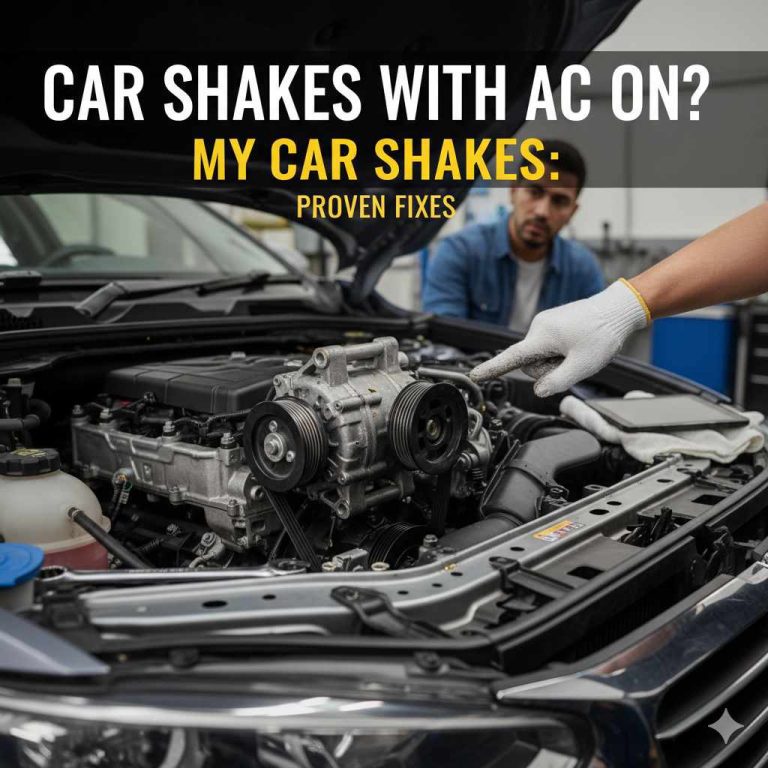
Car AC Compressor Running But Not Cooling Fixes
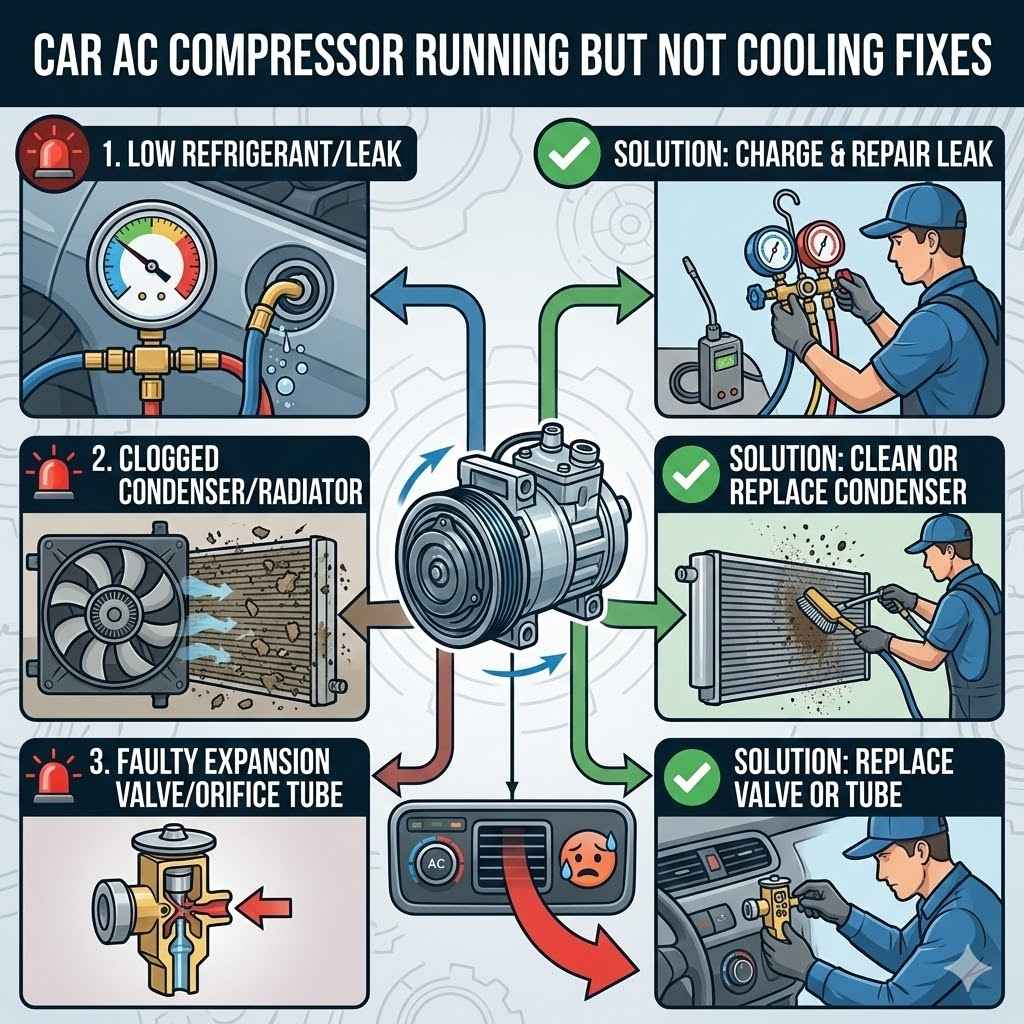
It can be frustrating when your car’s air conditioner seems to be working, but it’s not blowing cold air. This problem, where your Car AC Compressor Running But Not Cooling? Fixes are needed, is quite common.
Beginners might find it tricky because there are several reasons why this happens, and some of them require a bit of looking into. But don’t worry, we’re here to make it simple. We will guide you through the common culprits and easy-to-follow steps to get your cool air back.
Common Reasons For A Running AC Compressor No Cool Air
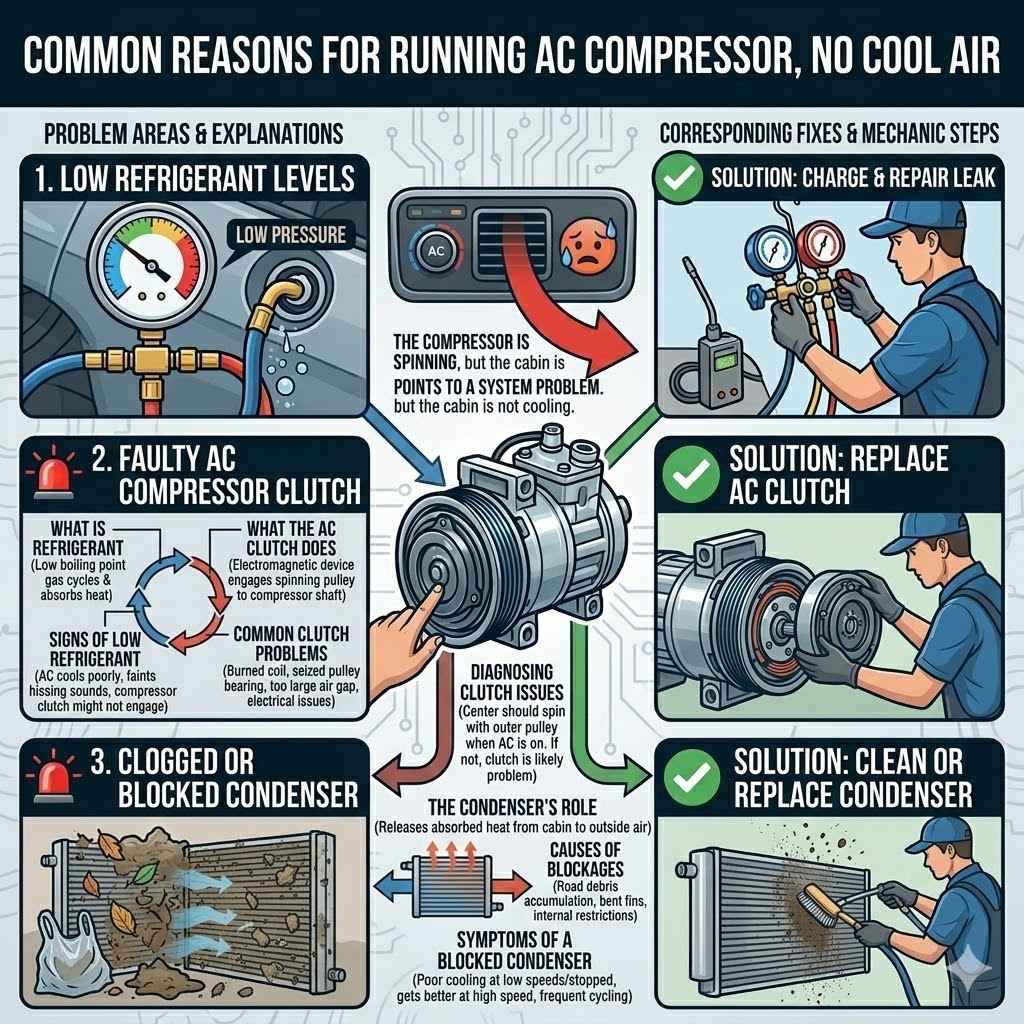
When your car’s AC compressor is spinning but not cooling the cabin, it points to a problem somewhere in the air conditioning system. This system is complex, involving many parts that work together to create that refreshing cool air. Understanding the common reasons behind this issue is the first step to fixing it.
We’ll explore the most frequent causes, explaining each part and why it might be failing. This section sets the stage for diagnosing your specific situation, helping you pinpoint where the problem lies.
Low Refrigerant Levels
One of the most frequent reasons your AC blows warm air, even with the compressor running, is a lack of refrigerant. Refrigerant, often called Freon, is the special gas that absorbs heat from your car’s cabin and releases it outside. If this gas is low, there’s nothing to cool the air.
This usually happens because of a small leak somewhere in the AC system. Tiny cracks or loose seals can let the refrigerant escape over time.
What is Refrigerant
Refrigerant is a chemical compound that has a very low boiling point. It cycles through the AC system, changing from a liquid to a gas and back again. As it changes states, it absorbs heat. In the evaporator, it turns from a liquid into a gas, absorbing heat from the air passing over it. This cooled air then circulates into your car’s cabin. The compressor then pressurizes this gas, which helps it condense back into a liquid in the condenser, releasing the absorbed heat to the outside.
How Leaks Happen
AC systems are sealed but not perfectly airtight forever. Over years of use and exposure to road vibrations, rubber hoses can harden and crack, seals can degrade, and metal components can corrode. Even a pinhole leak, too small to see, can allow refrigerant to slowly escape. Without sufficient refrigerant, the system cannot effectively transfer heat, leading to warm air blowing from the vents.
Signs of Low Refrigerant
Besides warm air, you might notice the AC system doesn’t cool as quickly as it used to. You might also hear faint hissing sounds from the AC system, which can indicate a leak. In some cases, if the refrigerant is extremely low, the compressor clutch might not engage properly, or it might cycle on and off more frequently.
Faulty AC Compressor Clutch
The AC compressor is the heart of your car’s cooling system, but it needs a clutch to engage and start working. If this clutch is damaged or not getting the right electrical signal, the compressor won’t spin, even if the engine is running and the AC is on. This can be confusing because you might hear the engine working harder, but the cooling function isn’t activated.
What the AC Clutch Does
The AC compressor clutch is an electromagnetic device. When you turn on your car’s AC, the car’s computer sends an electrical signal to the clutch. This signal energizes a coil, creating a magnetic field that pulls a plate attached to the compressor pulley. This engagement connects the spinning pulley (driven by the engine) to the compressor shaft, making the compressor itself start to pump refrigerant. If the clutch fails, the pulley spins, but the compressor stays still.
Common Clutch Problems
Clutches can fail for several reasons. The electromagnetic coil can burn out due to heat or age. The bearing in the pulley can seize up, preventing it from spinning freely or engaging the clutch. Also, the air gap between the clutch plate and the pulley can become too large, meaning the magnetic force isn’t strong enough to pull the plate in and engage the compressor. Electrical issues, like a blown fuse or a faulty relay, can also prevent the clutch from receiving the signal to engage.
Diagnosing Clutch Issues
You can often tell if the clutch isn’t engaging by looking under the hood when the AC is on. The center part of the compressor pulley should be spinning along with the outer part. If only the outer pulley is spinning and the center is still, the clutch is likely the problem. Sometimes, tapping gently on the clutch can temporarily make it work, indicating it’s on its way out.
Clogged Or Blocked Condenser
The condenser is like a small radiator for your AC system. It sits in front of your car’s main radiator. Its job is to release the heat that the refrigerant has absorbed from the cabin into the outside air.
If the condenser fins are blocked by dirt, leaves, or debris, it can’t release this heat effectively. This makes the whole AC system work harder and less efficiently, leading to poor cooling.
The Condenser’s Role
After the compressor pumps the hot, high-pressure refrigerant gas, it goes to the condenser. Here, air flows over the condenser’s fins, cooling the refrigerant. As it cools, the refrigerant condenses from a gas into a liquid. This process is similar to how a dehumidifier works; it removes moisture and heat. If airflow is restricted, the refrigerant stays hot, and the system can’t cool the car’s interior properly.
Causes of Blockages
Road debris is the most common culprit. Leaves, grass clippings, plastic bags, and even mud can accumulate on the condenser fins over time. These blockages prevent air from passing through the condenser. Other issues can include bent fins, which reduce the surface area available for heat exchange, or internal blockages within the condenser tubes themselves, though these are less common and harder to fix.
Symptoms Of A Blocked Condenser
Besides warm air, you might notice the AC working poorly when your car is stopped or moving slowly, but it gets a bit better when you’re driving at higher speeds. This is because higher speeds provide more natural airflow over the condenser. The AC system might also cycle on and off more frequently, or the pressure within the system might rise to a point where safety switches shut it down to prevent damage.
Troubleshooting Your Car AC Compressor Running But Not Cooling
Now that we understand some common causes, let’s look at how to troubleshoot your Car AC Compressor Running But Not Cooling? Fixes. This involves a systematic approach to identify the exact problem.
We’ll start with the simplest checks you can do yourself and move towards more involved steps. Following these steps can help you save time and money by pinpointing the issue before taking it to a mechanic, or even solving it yourself.
Visual Inspection Of The AC System
The first and easiest step is a thorough visual inspection. This means carefully looking at all the visible parts of your car’s AC system when the engine is running and the AC is turned on. You’re looking for obvious signs of damage, leaks, or blockages.
This can often reveal the root cause without needing special tools.
Checking For Leaks
Look for oily residue or stains on AC hoses, fittings, and the compressor itself. Refrigerant contains oil that lubricates the system. When refrigerant leaks out, it often carries this oil with it, leaving a greasy mark. Also, listen for any hissing sounds, which could indicate escaping refrigerant.
Inspecting The Condenser
As mentioned before, check the condenser, located at the front of your car. Ensure it’s free from leaves, dirt, and other debris. Gently try to clear any visible obstructions. You can use a soft brush or compressed air, being careful not to bend the delicate fins.
Examining Hoses And Belts
Check the AC hoses for cracks, bulges, or signs of wear. Also, inspect the drive belt that powers the AC compressor pulley. If the belt is loose, worn, or damaged, it might slip, preventing the compressor from spinning at the correct speed or at all.
Checking Fuses And Relays
Electrical issues are common and can easily stop the AC system from working correctly. Fuses and relays are small but vital components that control the flow of electricity to various parts of your AC system, including the compressor clutch. A blown fuse or a faulty relay can prevent the clutch from engaging, even if everything else is working fine.
Locating The Fuse Box
Your car has at least one fuse box, often under the dashboard or in the engine compartment. Consult your car’s owner’s manual to find the exact location and identify the fuses related to the air conditioning system. There might be multiple fuses for different AC components.
Inspecting Fuses
Carefully pull out the AC-related fuses one by one. Hold them up to the light and look for a broken or burnt wire inside the fuse. If the wire is broken, the fuse is blown and needs to be
Testing Relays
Relays are more complex than fuses. They act as electrical switches. Testing a relay often involves swapping it with a known working relay of the same type from another non-essential system in your car (like the horn or fog lights, if they are the same part number). If the AC starts working after the swap, the original relay was faulty. Replacement is then needed.
Testing Refrigerant Pressure (Requires Tools)
Checking refrigerant pressure is a more advanced step that typically requires a set of AC manifold gauges. These gauges connect to the high and low-pressure service ports of your AC system and show you the exact pressure of the refrigerant. Low pressure usually indicates a leak and insufficient refrigerant, while excessively high pressure can point to a blockage or overcharging.
Understanding Manifold Gauges
AC manifold gauges have two gauges, one for the low-pressure side and one for the high-pressure side of the system. They also have valves to control the flow of refrigerant and connect to the service ports on your AC lines. The readings on these gauges, when compared to manufacturer specifications, tell a trained technician a lot about the system’s health.
Interpreting Pressure Readings
For example, if the low-side pressure is very low and the high-side pressure is also low or unreadable, it strongly suggests a significant refrigerant leak. If both sides have high pressure, it could mean the condenser is blocked or there’s an issue with the expansion valve. Low pressure on the low side and high pressure on the high side can indicate the compressor is not performing efficiently.
Importance Of Professional Help
Working with refrigerant requires specialized knowledge and safety precautions. Refrigerants are under pressure and can cause frostbite. Improper handling can also be harmful to the environment. It’s generally recommended to have refrigerant pressure checks and recharges performed by a qualified mechanic who has the proper equipment and understanding of AC system diagnostics.
When To Call A Professional
While some Car AC Compressor Running But Not Cooling? Fixes can be simple DIY tasks, many issues require specialized tools, knowledge, and safety equipment. Knowing when to step back and call a professional is crucial to avoid further damage or personal injury.
Mechanics have the expertise and equipment to accurately diagnose and repair complex AC problems.
Complex Electrical Diagnoses
Sometimes, the problem isn’t a simple blown fuse. The issue could be with wiring harnesses, pressure switches, the climate control module, or even the car’s main computer. These require diagnostic scanners and a deep understanding of automotive electrical systems to trace and repair.
A mechanic can use these tools to read error codes from your car’s computer, which often point directly to the faulty component.
Diagnostic Scanners
Modern vehicles have onboard diagnostic (OBD-II) systems. These systems monitor various components and can store “trouble codes” when a problem is detected. A mechanic uses an OBD-II scanner to read these codes, which are like specific error messages that help narrow down the cause of the problem. For example, a code might indicate a specific sensor is faulty or there’s a communication issue with a particular module.
Wiring Harness Issues
The wiring harnesses are bundles of wires that carry electrical signals throughout your car. These can become damaged due to corrosion, abrasion, or rodent infestation. Tracing a fault in a complex wiring harness requires knowledge of wiring diagrams and continuity testing tools. A small break or short circuit in the wrong wire can disable entire systems, including the AC.
Sensor Problems
Modern AC systems rely on several sensors, such as pressure sensors and temperature sensors, to operate efficiently and safely. If one of these sensors malfunctions, it can send incorrect information to the car’s computer, leading to the AC not cooling. Diagnosing and replacing faulty sensors accurately is a job for a trained technician.
Refrigerant Recharge And Leak Detection
Recharging an AC system with refrigerant is not as simple as just adding more gas. It requires precise amounts of refrigerant and often involves recovering old refrigerant before refilling. Detecting small leaks can also be challenging.
Professionals use specialized equipment like UV dye or electronic leak detectors to find even the smallest refrigerant escapes.
The Importance of Precise Refrigerant Levels
Overcharging or undercharging an AC system can lead to poor cooling and can damage components like the compressor. Mechanics use manifold gauges to accurately measure the amount of refrigerant in the system and add the correct charge specified by the vehicle manufacturer. This ensures optimal performance and longevity of the AC components.
Leak Detection Methods
Mechanics often inject a fluorescent dye into the AC system. When the system is run, the dye circulates with the refrigerant and oil. If there’s a leak, the dye will escape with the refrigerant and become visible under a UV light, pinpointing the exact location of the leak, even in hard-to-reach areas. Electronic leak detectors are also highly sensitive devices that beep audibly when they detect refrigerant gas in the air.
Environmental Concerns
Refrigerants are regulated due to their impact on the environment. Professional mechanics are trained in proper refrigerant handling, recovery, and disposal procedures to comply with environmental regulations. They use recovery machines to safely remove old refrigerant before working on the system and then evacuate the system to remove moisture and air before refilling.
Internal Compressor Or System Damage
If the AC system has run low on refrigerant for an extended period, the compressor can overheat and suffer internal damage. Other internal parts like the expansion valve or receiver-drier can also fail. These are major repairs that require significant disassembly of the AC system.
Compressor Failure Signs
When a compressor fails internally, you might hear loud grinding or knocking noises coming from it. It might also seize up, preventing the engine from turning the pulley. In some cases, metal fragments from a failed compressor can circulate through the system, contaminating the entire AC loop and requiring a thorough flushing or replacement of all major components.
Other Internal Component Issues
The expansion valve, which controls refrigerant flow into the evaporator, can become clogged with debris or fail mechanically. The receiver-drier, which removes moisture from the refrigerant, can become saturated and ineffective. These issues can lead to pressure imbalances and poor cooling performance. Replacing these parts often involves draining and recharging the system.
System Flushing And Cleaning
If internal damage or contamination is suspected, the entire AC system may need to be flushed. This process involves using a special cleaning solvent to remove any debris, old oil, and contaminants from the lines, evaporator, and condenser. After flushing, the system is evacuated to remove the solvent and moisture before being recharged with new refrigerant and oil.
Preventative Maintenance For Your Car AC
To avoid the frustration of Car AC Compressor Running But Not Cooling? Fixes, regular preventative maintenance is key. Keeping your AC system in good shape can extend its life and ensure it works efficiently when you need it most.
Simple checks and services can go a long way in preventing major problems down the line.
Regular AC System Checks
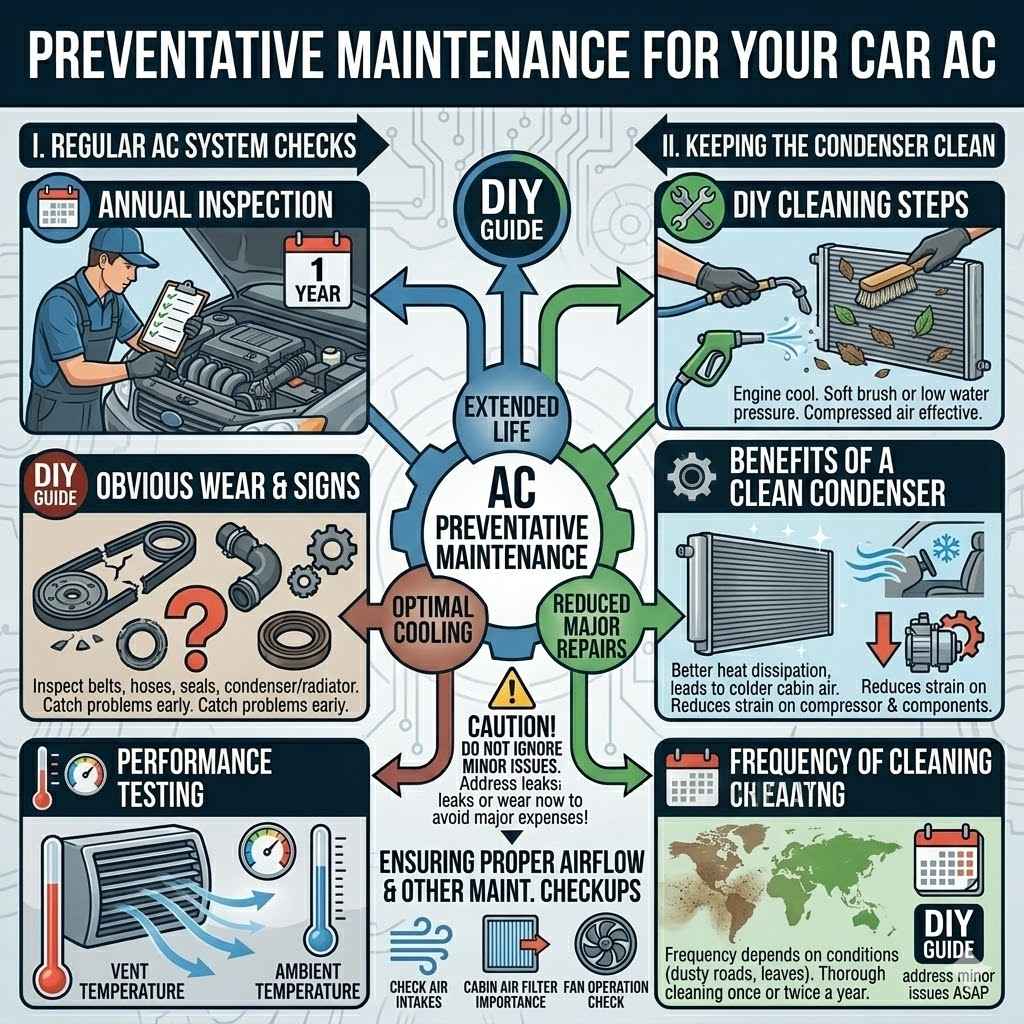
It’s a good idea to have your AC system checked by a professional at least once a year, especially before the hot summer months. During these checks, a mechanic can inspect for leaks, check refrigerant levels, and ensure all components are functioning correctly. This proactive approach can catch minor issues before they become major, expensive repairs.
Annual Inspections
A yearly inspection by a qualified technician is like a physical for your AC. They can check for any wear and tear, listen for unusual noises, and monitor system pressures. This helps ensure your system is running at peak performance and efficiency, providing consistent cooling.
Checking For Obvious Wear
Technicians will look for signs of wear on the drive belt, hoses, and seals. They will also check the condenser and radiator for blockages or damage. Catching a worn belt early can prevent it from snapping and causing other engine issues. Inspecting hoses for signs of hardening or cracking can prevent a refrigerant leak before it happens.
Testing Performance
Beyond visual checks, professionals can perform performance tests, measuring the temperature of the air coming from the vents and comparing it to ambient temperature. They can also monitor system pressures to ensure they are within the manufacturer’s specified range, indicating proper refrigerant charge and component function.
Keeping The Condenser Clean
As we’ve discussed, a clean condenser is vital for effective cooling. Regularly cleaning the condenser can significantly improve your AC’s performance and prevent it from overheating. This is a simple maintenance task that many car owners can do themselves.
DIY Cleaning Steps
When the engine is cool, use a soft brush or a hose with low water pressure to gently remove debris from the condenser fins. Avoid using high-pressure water, as it can bend or damage the fins. Compressed air can also be effective for blowing away loose dirt and leaves.
Benefits Of A Clean Condenser
A clean condenser allows for better heat dissipation, meaning the refrigerant can cool down more effectively. This leads to colder air in the cabin and reduces the strain on the AC compressor and other components. It also helps prevent the system from running at excessively high pressures, which can cause damage over time.
Frequency Of Cleaning
The frequency of cleaning depends on your driving conditions. If you frequently drive on dusty roads or through areas with lots of leaves, you might need to clean it more often, perhaps every few months. For most drivers, a thorough cleaning once or twice a year, usually in spring and fall, is sufficient.
Ensuring Proper Airflow
Good airflow is crucial not just for the condenser but also for the entire engine cooling system. Ensure that the grilles and air intakes around your vehicle are free from obstructions. This allows your AC system, and your engine, to breathe properly and operate at optimal temperatures.
Checking Air Intakes
Visually inspect the front bumper and grille areas for any large debris that might be blocking airflow to the radiator and condenser. Remove any leaves, plastic bags, or other obstructions you find. This is especially important after driving through storms or areas with fallen leaves.
Cabin Air Filter Importance
While not directly related to the compressor, a clogged cabin air filter restricts airflow into the passenger compartment, making your AC feel weaker even if the system is functioning perfectly. Replacing the cabin air filter as recommended in your owner’s manual ensures that air circulates freely inside your car.
Fan Operation Check
Your car has electric cooling fans that pull air through the condenser and radiator when the vehicle is stationary or moving slowly. Ensure these fans are operating correctly. You should hear them kick on when the AC is running, especially when the car is idling. If they aren’t working, the AC will struggle to cool effectively at low speeds.
Frequently Asked Questions
Question: What does it mean if my car AC compressor is running but not cooling?
Answer: This means the compressor is getting power and spinning, but it’s not effectively cooling the air in your car. It indicates a problem somewhere else in the AC system, such as low refrigerant, a faulty clutch, or a blocked condenser.
Question: Can I add refrigerant myself if my AC is not cooling?
Answer: While kits are available, it’s best to have a professional do it. Adding too much or too little refrigerant, or adding it incorrectly, can cause more damage. Professionals have the right tools to accurately charge the system.
Question: How often should my car’s AC system be serviced?
Answer: It’s recommended to have your AC system inspected at least once a year, ideally before the hot summer season, to ensure it’s in good working order.
Question: Why is my AC blowing warm air when the compressor is definitely on?
Answer: This usually means there’s a problem with the refrigerant charge being too low due to a leak, or there might be an issue with the condenser not being able to release heat properly, or an internal system blockage.
Question: Is it expensive to fix an AC compressor that is running but not cooling?
Answer: The cost varies greatly depending on the exact problem. Simple issues like cleaning a condenser are inexpensive, while replacing a compressor or fixing a complex leak can be more costly.
Conclusion
When your car AC compressor runs but doesn’t cool, there are several common fixes. We’ve explored low refrigerant, faulty clutches, and blocked condensers. Simple checks like visual inspections and fuse tests can often reveal the issue.
For more complex problems, professional help is usually best. Regular maintenance keeps your AC working efficiently.