Dead Key Fob? The Essential, Genius Car Start Method
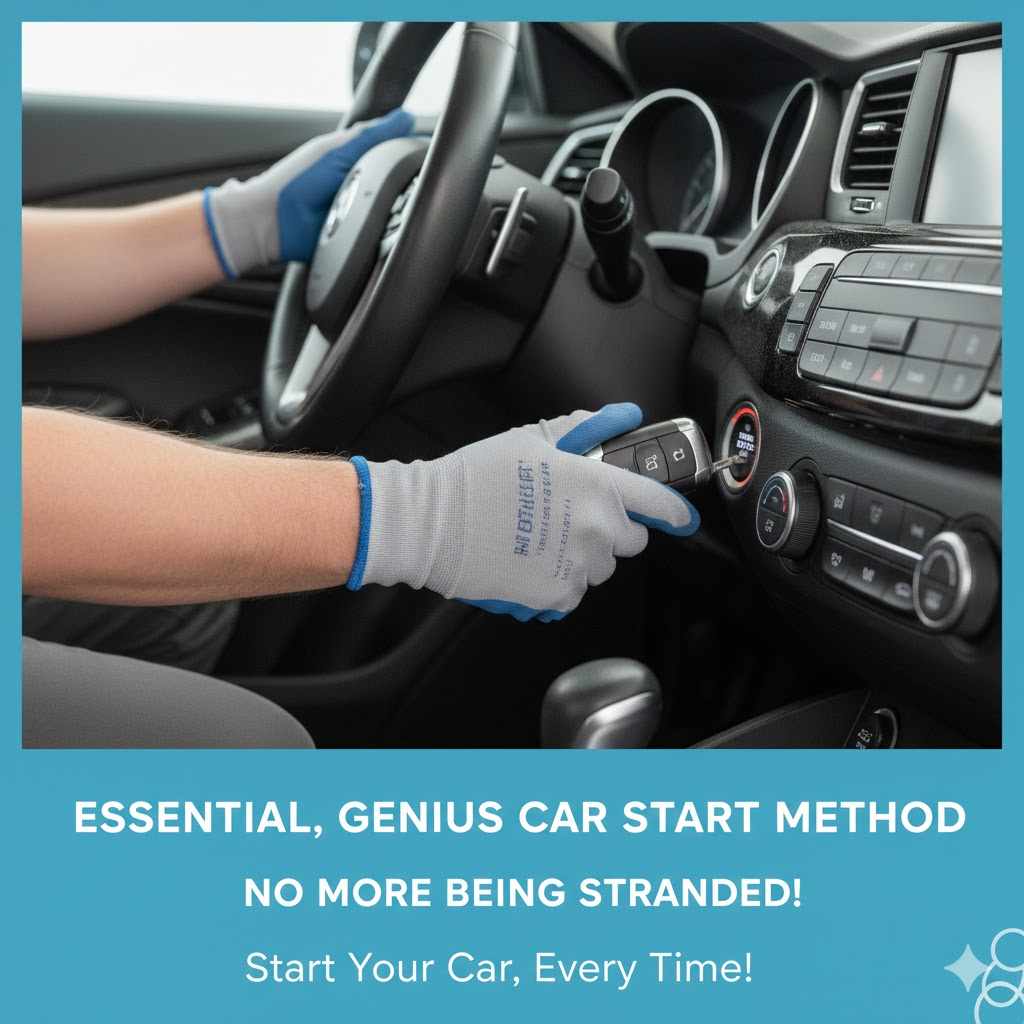
Even with a dead battery, your key fob has a backup plan. Use the hidden physical key inside the fob to unlock your door. Then, start the engine by pressing the push-to-start button directly with the key fob itself. Your car’s ignition system can read a chip inside the fob without needing battery power.
Picture this: you’re running late, you rush to your car, and you press the unlock button on your key fob. Nothing happens. You press it again. Still nothing. A wave of panic starts to set in. A dead key fob can feel like a major disaster, leaving you stranded and stressed. But what if I told you there’s a simple, genius method built right into your car to handle this exact situation? No tools, no tow truck, and no technical skills needed.
My name is Md Meraj, and I’m here to turn car confusion into confidence. Many people think a dead fob means a dead car, but that’s not true. Your car’s manufacturer included a brilliant backup plan. In this guide, I’ll walk you through the essential steps to get back into your car and start the engine, even with a completely dead key fob. Let’s get you back on the road in minutes.
Why Your Key Fob Isn’t Really Dead (Just Powerless)
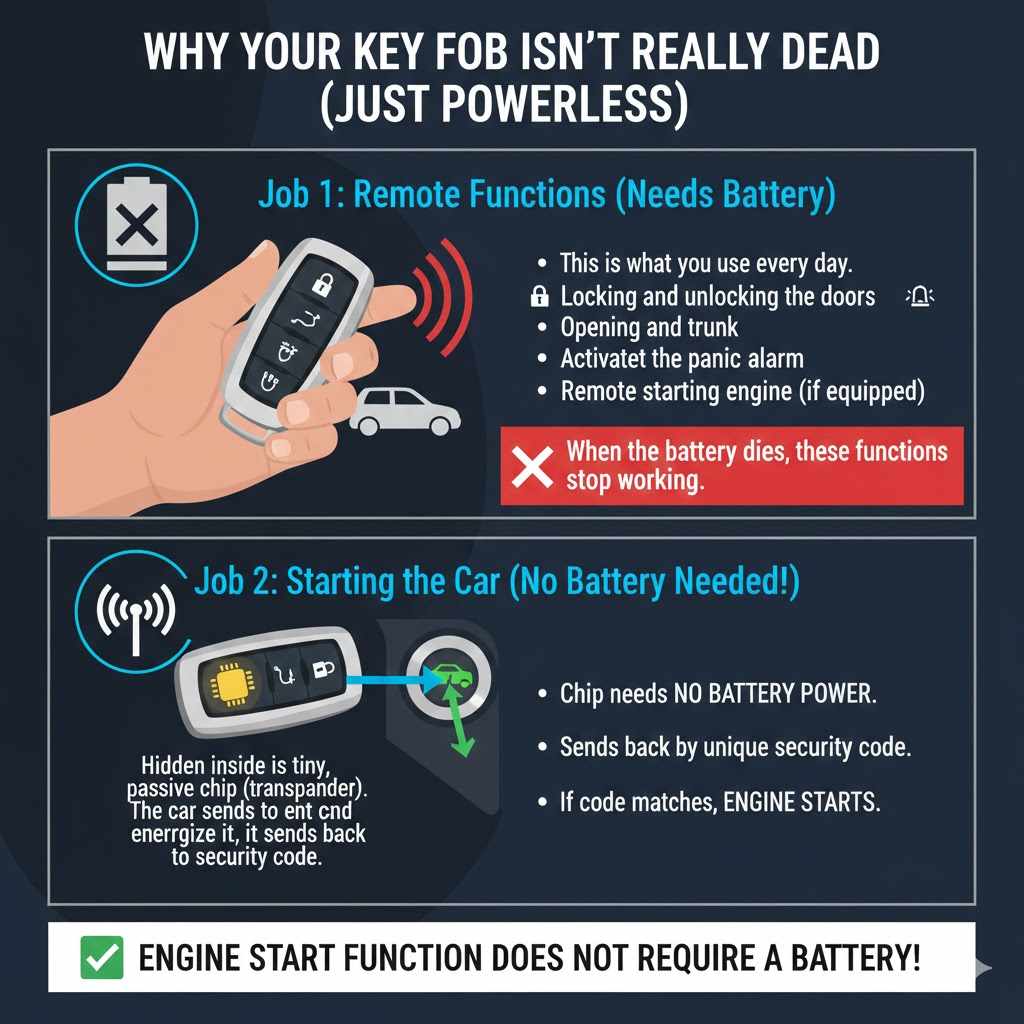
Before we jump into the solution, it’s helpful to understand a little secret about your key fob. It actually has two separate jobs, and only one of them needs battery power. This is the key to understanding why our trick works.
Job 1: Remote Functions (Needs Battery)
This is what you use every day. The battery inside your fob powers a small radio transmitter. When you press a button, it sends a signal to your car to perform an action.
- Locking and unlocking the doors
- Opening the trunk
- Activating the panic alarm
- Remote starting the engine (if equipped)
When the battery dies, these functions stop working. This is the most obvious sign of a problem, but it’s not the whole story.
Job 2: Starting the Car (No Battery Needed!)
Hidden inside your key fob is a tiny, passive chip called a transponder or RFID chip. This chip doesn’t have its own power source. Instead, it works using a technology similar to the tap-to-pay feature on your credit card.
When you bring the fob close to the car’s ignition system (usually the push-to-start button or a specific spot on the steering column), the car sends out a low-power radio signal. This signal energizes the transponder chip just long enough for it to send back a unique security code. If the code matches what the car expects, it allows the engine to start.
So, to answer a very common question: do keys with fobs used for unlocking doors require a battery to start the car? The answer is no! The remote unlocking requires a battery, but the essential engine start function does not.
The 2-Step Method to Get In and Get Going
Now that you know the “why,” let’s get to the “how.” This process is broken down into two simple stages: getting into your locked car and then starting the engine. Don’t worry, it’s easier than it sounds.
Step 1: Get Inside Your Car with the Hidden Mechanical Key
Your key fob is like a Swiss Army knife—it has a hidden tool. Tucked away inside is a traditional metal key blade. Here’s how to find and use it.
- Find the Release Latch: Look closely at your key fob. You’ll find a small button or slider latch, usually on the back or side.
- Release the Key: Press or slide this latch. The metal key blade will either pop out or you’ll be able to pull it out from the fob housing.
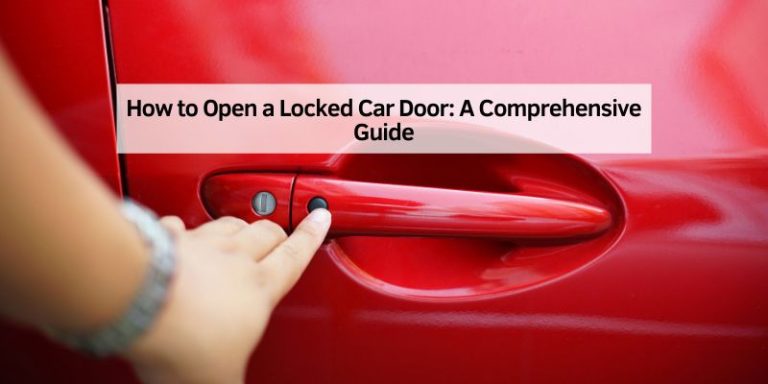
- Locate the Door Lock Cylinder: Now, look at your driver’s side door handle. You might see a traditional keyhole. However, on many modern cars, the keyhole is hidden under a small plastic cap for a cleaner look. This cap is usually at the end of the handle, separate from the part that you pull.
- Expose the Keyhole (If Necessary): If your keyhole is hidden, you need to gently pry off the cap. Use the tip of your mechanical key. Look for a small slit on the bottom of the cap, insert the key tip, and gently twist or pry upwards. The cap will pop off, revealing the lock cylinder.
- Unlock the Door: Insert the mechanical key into the lock and turn it to unlock the door. Just like the old days!
A Quick Warning: When you open the door, the car alarm may go off. This is normal. The car thinks it’s being broken into because you didn’t use the remote signal. Don’t panic! The alarm will turn off as soon as you successfully start the engine in the next step.
Step 2: Start the Engine with the Powerless Fob
You’re in! The alarm might be blaring, but you’re just moments away from starting your car. This is where the magic happens.
- Get in and Close the Door: Sit in the driver’s seat and close the door behind you.
- Press the Brake Pedal: Just as you normally would, press and hold the brake pedal (or the clutch pedal in a manual car).
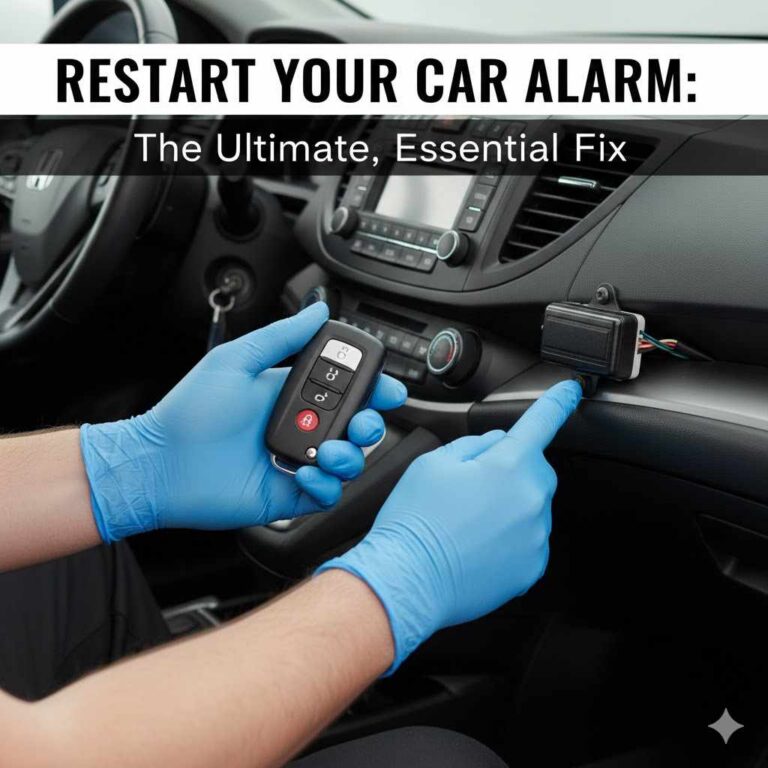
- Use the Fob to Push the START Button: Here’s the crucial part. Instead of pressing the ENGINE START/STOP button with your finger, press it directly with your key fob. Use the end of the fob (often the top part with the brand logo) to physically push the button in.
- Hold It for a Second: Hold the fob against the button for a moment. You should hear the car chime, and the dashboard will light up. The engine will then start.
That’s it! By pressing the button with the fob, you brought the internal transponder chip close enough for the car’s ignition system to read it, bypassing the need for a battery. The alarm will shut off, and you can drive away.
Finding the “Sweet Spot”: Where to Place Your Fob
While pressing the start button with the fob works for most cars (like Toyota, Honda, and Nissan), some manufacturers have a designated spot to place the fob for an emergency start. The car’s manual is the best source, but if you don’t have it handy, here are the most common locations for popular brands.
If pressing the start button doesn’t work, try holding the fob against one of these areas while you press the start button with your finger.
| Car Brand | Common Fob Location for Emergency Start |
|---|---|
| Toyota / Lexus | Press the ENGINE START/STOP button directly with the logo side of the key fob. |
| Honda / Acura | Press the ENGINE START/STOP button directly with the key fob. |
| Ford / Lincoln | Place the fob inside a dedicated slot, often found in the center console, armrest storage, or glove box. Look for an indentation shaped like a key. |
| GM (Chevrolet, GMC, Buick, Cadillac) | Look for a pocket inside the center console cup holder or inside the center armrest compartment. Place the fob in this pocket. |
| Nissan / Infiniti | Press the ENGINE START/STOP button directly with the key fob. Some older models have a dedicated key slot on the dashboard to the left of the steering wheel. |
| Hyundai / Kia | Press the ENGINE START/STOP button directly with the key fob. Some models may have a smart key slot in the center console. |
| BMW / MINI | Hold the back of the key fob flat against the key symbol printed on the side of the steering column. |
| Volkswagen / Audi | Hold the fob against the designated key symbol, which is often on the steering column or in the center console near the shifter. |
| Mercedes-Benz | Remove the push-to-start button (it often pulls straight out) to reveal a keyhole. Insert the entire fob into the slot and turn it to start. Or, hold the fob in a designated area in the center console. |
| Subaru | Press the ENGINE START/STOP button directly with the key fob. |
Remember, these are general guidelines. The exact location can vary by model and year, so a quick search online for your specific car model (e.g., “2019 Honda CR-V dead key fob start location”) can provide a precise answer.
What to Do Next: Replacing Your Key Fob Battery
Getting your car started is a huge relief, but your job isn’t done. The next step is to replace the battery in your key fob so you don’t have to repeat this process. This is a simple, inexpensive DIY task that takes less than five minutes.
Step-by-Step Battery Replacement Guide
- Identify the Battery Type: First, you need to know what kind of battery to buy. Most fobs use a flat, coin-style lithium battery. The most common sizes are CR2032, CR2025, and CR2016. You can find this information in your car’s owner’s manual or by opening the fob to see the old battery. The battery type is printed directly on it.
- Open the Key Fob Case: Look for a small slot or seam along the edge of your fob. You can often use a small flathead screwdriver, a butter knife, or even your mechanical key to gently pry the two halves of the plastic casing apart. Be gentle to avoid breaking the plastic clips.
- Remove the Old Battery: Once open, you’ll see the circular battery. Note which side is facing up (+ or -). Gently pop the old battery out with your fingernail or a small, non-metallic tool.
- Insert the New Battery: Place the new battery in the same orientation as the old one. Make sure the positive (+) side is facing the correct way. This is very important!
- Snap the Case Back Together: Align the two halves of the fob and press them firmly together until they click shut.
- Test It Out: Test the lock, unlock, and other buttons to ensure everything is working correctly. You’re all set!
Common Key Fob Battery Types
Here’s a quick reference for the most common batteries you’ll encounter. You can find these at any supermarket, electronics store, or online.
| Battery Type | Voltage | Commonly Used By | Notes |
|---|---|---|---|
| CR2032 | 3V | Toyota, Honda, Ford, GM, BMW, Hyundai, and many more | The most common type of key fob battery. |
| CR2025 | 3V | Nissan, Honda, Lexus | Slightly thinner than the CR2032. |
| CR2016 | 3V | Older models, some GM and Honda fobs | Thinner still. Some fobs stack two of these. |
| CR1632 / CR1620 | 3V | Subaru, Mitsubishi | Less common, smaller diameter batteries. |
When handling these small batteries, it’s crucial to keep them away from children. For more information on button battery safety, you can consult reliable resources like the National Safety Council.
How to Prevent This From Happening Again
Now that you’ve mastered the art of the dead fob start, let’s make sure you rarely have to use it. A little bit of prevention goes a long way.
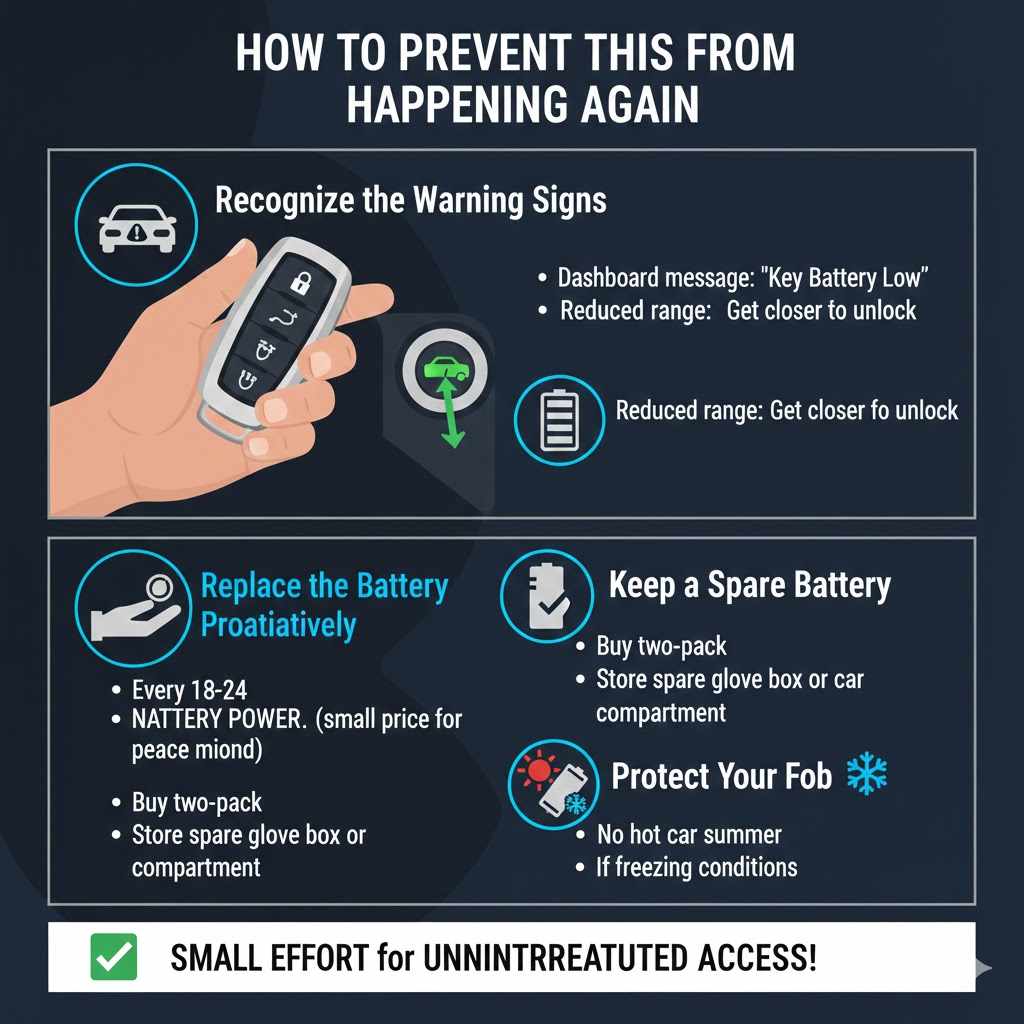
- Recognize the Warning Signs: Your car will often give you clues that the fob battery is low. You might see a dashboard message like “Key Battery Low” or “Replace Key Fob Battery.” Another sign is reduced range—if you have to get closer and closer to your car for the remote to work, the battery is on its way out.
- Replace the Battery Proactively: Don’t wait for it to die completely. Make it a habit to replace your key fob battery every 18-24 months, even if it’s still working. The batteries are cheap, and it’s a small price to pay for peace of mind.
- Keep a Spare Battery: Buy a two-pack of batteries. Use one and keep the spare in your glove box or a small compartment in your car. That way, if you’re ever caught off guard, you can swap it out on the spot.
- Protect Your Fob: Extreme temperatures can shorten battery life. Avoid leaving your key fob in a hot car during the summer or in freezing conditions for extended periods.
Frequently Asked Questions (FAQ)
1. Will this emergency start method work on all cars with a push-to-start ignition?
Yes, virtually all vehicles with a keyless ignition system have a similar backup method. The exact procedure might differ slightly (pressing the button vs. placing the fob in a slot), but the underlying principle of using the internal transponder chip is universal for these systems.
2. My car alarm went off when I used the physical key. Is that normal?
Absolutely. The car’s security system is designed to trigger if a door is opened without receiving the proper radio signal from the fob. It assumes a forced entry. As soon as you successfully start the engine with the fob, the system will recognize the valid key and the alarm will turn off.
3. How do I know for sure that my key fob battery is dying?
The most common signs are:
- A warning message on your car’s dashboard information screen.
- You have to press the buttons multiple times for them to work.
- The range of your remote is noticeably shorter than it used to be.
- The small LED light on your fob (if it has one) appears dim or doesn’t flash when you press a button.
4. Can I still lock my car with a dead key fob?
Yes, you can. After you get out of the car, you can use the physical metal key to lock the driver’s door manually. For the other doors, you can usually use the manual lock switch on the inside of each door before closing them.
5. How much does a new key fob battery cost?
It’s very inexpensive! A single CR2032 or similar coin battery typically costs only a few dollars. You can buy them at grocery stores, drugstores, hardware stores, or online. A dealership might charge more for the battery and installation, but it’s a simple DIY job that can save you money.
6. What if this emergency method doesn’t start my car?
If you’ve tried placing the fob in all the logical spots and the car still won’t start, the problem might be more than just the fob battery. It could be an issue with the car’s main 12-volt battery, the starter, or the car’s immobilizer system. In that case, it’s time to call for roadside assistance or a qualified mechanic.
7. Does the spare key fob also need a battery change?
Yes, it does. Even if you never use your spare fob, the battery inside it will slowly lose its charge over time. It’s a good idea to replace the batteries in both of your fobs at the same time every couple of years.
Conclusion: You Are Now in Control
A dead key fob can feel like a sudden, frustrating roadblock, but now you know the secret. You’re equipped with the knowledge to get into your car and start the engine without a single drop of panic. By understanding how the hidden mechanical key and the passive transponder chip work together, you’ve turned a potential crisis into a minor inconvenience.
Remember the simple steps: use the physical key to get in, and use the fob itself to press the start button. You now have the confidence to handle this common issue like a pro. Go ahead and put a spare battery in your glove box today—your future self will thank you for it. Stay safe, stay confident, and happy driving!