Do F1 Cars Use Gas: Essential Guide
Formula 1 cars do not use standard gasoline like your everyday car. They run on a highly specialized, sustainable fuel developed in partnership with their engine supplier to meet strict regulations. This custom fuel is designed for maximum performance and efficiency, not for your local gas station.
Ever wondered what powers those incredible Formula 1 machines that blur past at astonishing speeds? It’s a question many car enthusiasts, and even casual fans, ponder. You might see them at the pump filling up their everyday vehicles and think, “Does an F1 car just need super-premium gas?” The answer might surprise you – it’s a definite no! Formula 1 cars use a very specific type of fuel that’s quite different from the gasoline you’d find at your local service station. Let’s dive into what makes F1 fuel so unique and why it’s crucial for the sport.
What Exactly is F1 Fuel?
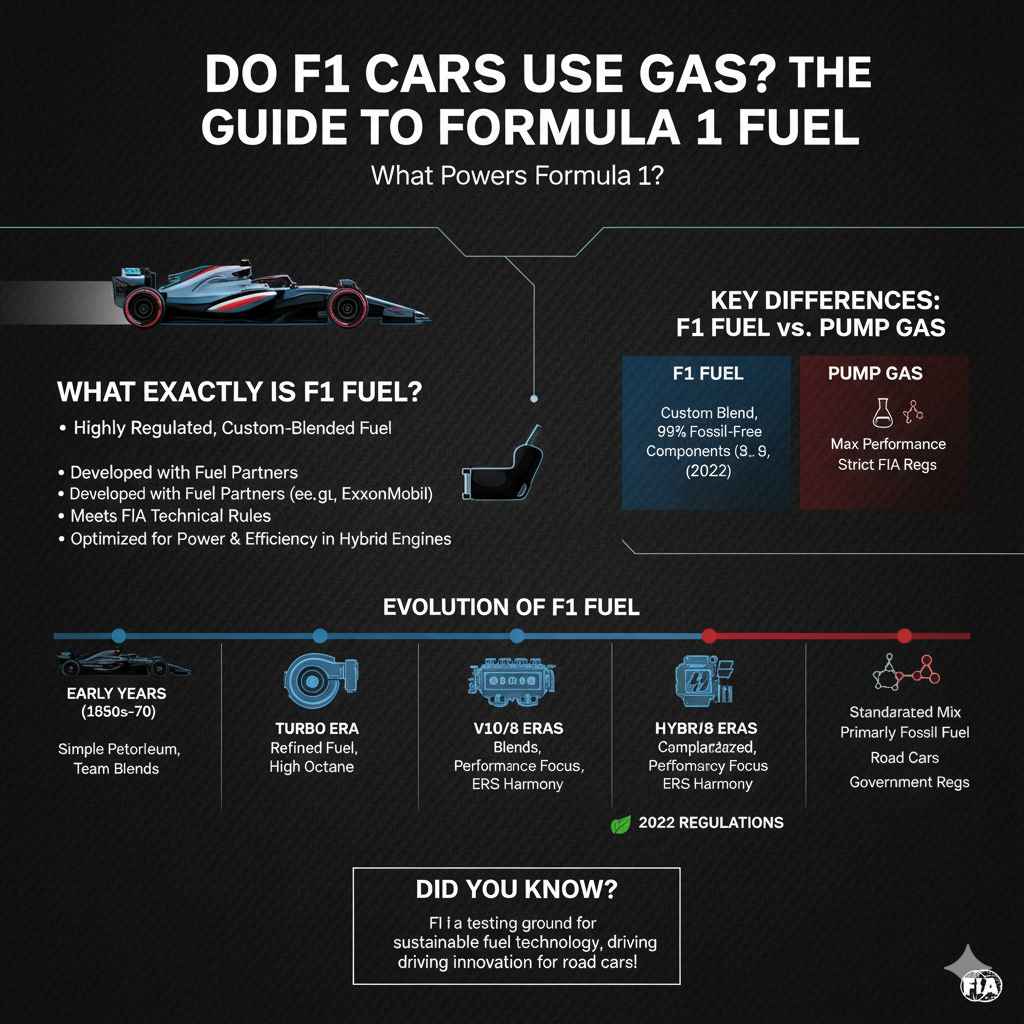
Instead of calling it “gas,” the correct term is “fuel.” Formula 1 cars use a highly regulated, custom-blended fuel. This isn’t something you can buy off the shelf. It’s developed in collaboration with specific fuel partners, like Aramco for Aston Martin or ExxonMobil for Red Bull Racing, to meet the stringent technical rules set by the Fédération Internationale de l’Automobile (FIA).
These rules are in place to ensure fair competition and to push the boundaries of sustainable technology in automotive racing. The fuels are designed to be incredibly efficient and powerful, maximizing the output from the complex hybrid power units used in modern F1 cars.
The Evolution of F1 Fuel
Fuel in Formula 1 has changed dramatically over the decades. Think back to the roaring engines of the 1970s and 80s; they used much simpler fuels, often with high octane ratings to prevent knocking in their naturally aspirated engines. As engine technology evolved, so did the fuel.
The introduction of turbochargers, different engine regulations, and more recently, hybrid power units, have all demanded significant changes to the fuel specifications. The focus has shifted from just raw power to a much more complex balance of performance, efficiency, and sustainability.
Key Milestones in F1 Fuel History:
- Early Years: Simple petroleum-based fuels, with teams often blending their own concoctions.
- The Turbo Era (1970s-1980s): Fuels became more refined, with high octane ratings to support forced induction engines.
- V10 and V8 Eras: Regulations tightened, leading to more standardized fuel compositions focused on performance and reliability.
- Hybrid Era (2014-Present): Introduction of complex hybrid power units demanded fuels that could work harmoniously with electrical energy recovery systems and improve overall efficiency.
- 2022 Regulations: A significant step forward with a focus on advanced sustainable components, aiming for a more environmentally friendly future.
What Makes F1 Fuel Different from Regular Gas?
The most significant difference lies in the composition. While your car’s gasoline is a concoction of hydrocarbons, F1 fuel is a sophisticated blend that includes a higher percentage of renewable and sustainable components. The FIA mandates that these fuels must contain a minimum percentage of such materials, pushing manufacturers and teams towards greener solutions.
Composition Differences:
Here’s a simplified look at some key differences:
| Feature | Regular Gasoline (approx.) | F1 Fuel (Mandated % Varies by Year) |
|---|---|---|
| Base Hydrocarbons | 100% Petrochemical-derived | Significant portion petrochemical, but with mandated sustainable ethanol or other bio-components. |
| Oxygenate Content | Low (e.g., up to 2.7% by volume of ethanol) | Higher, allowing for more complete combustion and higher energy density (e.g. up to 7% oxygen by molecule). |
| Additives | Lubricants, detergents, anti-knock agents | Highly specialized additives for engine protection, efficiency, and performance under extreme conditions. |
| Octane Rating | Typically 90-98 RON (Research Octane Number) | Highly tailored, often exceeding 102 RON, to prevent knocking in high-compression, high-performance engines. |
| Energy Density | Standard | Optimized for maximum energy release per unit volume and mass, considering combustion efficiency. |
The FIA sets strict limits on many aspects of the fuel’s composition, including its energy content, density, and volatility. These regulations ensure that no team gains an unfair advantage through superior fuel alone. The exact blend is a closely guarded secret between the engine manufacturer and their fuel partner. A great resource for understanding the technical regulations can be found on the official FIA website.
The Role of Sustainability in F1 Fuel
One of the most exciting developments in Formula 1 is the push towards sustainability. Since 2015, F1 fuels have been required to contain a minimum percentage of sustainable elements. This percentage has increased over time, and it’s a crucial part of F1’s long-term strategy to become Net Zero Carbon by 2030.
By mandate, Formula 1 fuels must be at least 10% sustainable components. These components can come from various sources, such as:
- Advanced Biofuels: Derived from sources like agricultural waste, non-food crops, or algae.
- Synthetic Fuels: Created in labs using processes that capture carbon dioxide and hydrogen.
The goal is to create fuels that have a significantly lower carbon footprint compared to traditional fossil fuels. This not only benefits the environment but also drives innovation in the automotive industry, potentially leading to greener technologies for road cars in the future.
Why Can’t F1 Cars Use Regular Gasoline?
There are several critical reasons why your regular pump gas just won’t cut it for an F1 car:
- Performance Requirements: F1 engines operate at extreme speeds and pressures. They require fuel with a very specific energy density and combustion characteristic that regular gasoline simply cannot provide. The precisely engineered combustion process needs a precisely engineered fuel.
- Engine Design: F1 power units are incredibly complex hybrid systems. They are designed to work in harmony with the electrical components and are tuned to extract the maximum possible energy from the specific fuel they use. Standard gasoline would likely lead to engine knock, misfires, and reduced performance.
- Regulatory Compliance: As mentioned, the FIA has strict regulations on fuel composition. Regular gasoline does not meet these specifications, and using it would result in disqualification.
- Engine Durability and Reliability: While F1 engines are built for extreme performance, they also need to last for multiple races. The specialized fuel contains additives that help protect vital engine components under immense stress and heat, ensuring reliability throughout a race weekend.
- Sustainability Mandates: The FIA’s requirement for a percentage of sustainable components means that any fuel used must meet these criteria, which standard gasoline does not.
How F1 Fuel is Developed and Tested
Developing F1 fuel is a highly scientific and collaborative process. It involves close partnership between the F1 teams, their engine manufacturers, and specialized fuel companies.
The Development Process:
- Initial Research: Fuel scientists analyze the engine’s requirements, considering factors like combustion speed, energy content, and compatibility with hybrid systems.
- Lab Blending: Multiple fuel blends are created in laboratories, experimenting with different combinations of hydrocarbons, sustainable components, and additives.
- Rigorous Testing: These blends are subjected to extensive testing on dynamometers (engine test rigs) and in simulations. This phase evaluates performance, efficiency, and its effect on engine wear.
- Track Testing: Once a promising blend is identified, it undergoes real-world testing during practice sessions at Grands Prix. Data is meticulously collected on fuel flow, engine temperatures, performance metrics, and emissions.
- Refinement: Based on the data from track testing, the fuel blend is fine-tuned to achieve the optimal balance of power, efficiency, and reliability for the specific car and race conditions.
This entire process must adhere to the FIA’s strict technical regulations, ensuring that all fuels are comparable and that performance gains are achieved through engineering brilliance rather than fuel manipulation. Reputable organizations like the U.S. Department of Energy’s National Renewable Energy Laboratory (NREL) often conduct research into sustainable fuel technologies that can inform and inspire advancements in motorsports.
F1 Fuel vs. Ethanol-Free Gas vs. High-Octane Gas
It’s easy to get confused between different types of fuels. Let’s break down how F1 fuel compares to other common gasoline types:
F1 Fuel vs. Ethanol-Free Gas:
- Ethanol-Free Gas: This is gasoline that has had ethanol removed. Some car enthusiasts prefer it for older vehicles as ethanol can be corrosive to certain rubber and plastic components.
- F1 Fuel: While F1 fuel can contain ethanol as part of its sustainable component mandate, not all of it is ethanol. The key difference is F1 fuel is a highly engineered, race-specific blend designed for maximum performance and compliance, whereas ethanol-free gas is simply a less controversial version of standard gasoline for road cars.
F1 Fuel vs. High-Octane Gas (e.g., 91, 93, 98 Octane):
- High-Octane Gas: Available at most gas stations, this fuel has a higher octane rating than regular gasoline, making it more resistant to engine knocking or “pinging” in higher-compression engines. It’s designed for performance-oriented road cars.
- F1 Fuel: F1 fuel’s octane rating is exceptionally high, often surpassing 102 RON by a significant margin. However, it’s not just about octane. F1 fuel is a far more complex blend with specific energy density, combustion properties, and sustainable components dictated by the FIA. Think of high-octane gas as a very fast sports car, while F1 fuel is a rocket ship built for a specific mission.
The Future of F1 Fuel
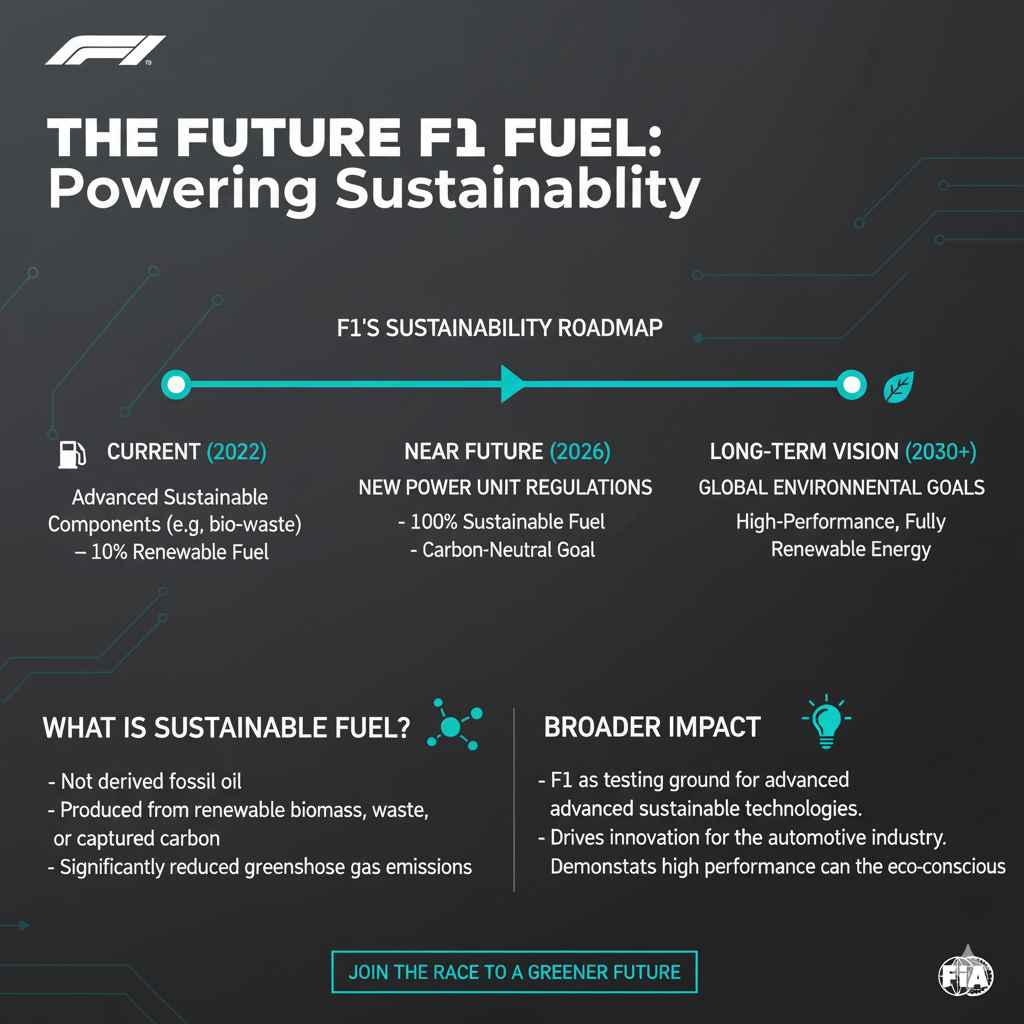
The trajectory for Formula 1 fuel is clearly towards a more sustainable future. The sport is committed to developing and using fuels that align with global environmental goals. The current regulations are just a stepping stone towards even more advanced sustainable fuels.
Plans are already in motion for the 2026 F1 season, which will see the introduction of new power unit regulations. These regulations will likely require an even higher percentage of sustainable fuel components, potentially paving the way for carbon-neutral fuels. This commitment is not just about racing; it’s about demonstrating that high-performance engines can exist in a more environmentally conscious world. This forward-thinking approach is a testament to the innovative spirit of motorsport and its ability to drive technological progress.
Frequently Asked Questions (FAQs)
Q1: Do F1 cars use regular unleaded gasoline?
No, F1 cars do not use regular unleaded gasoline. They use a highly specialized, custom-blended race fuel developed in partnership with their designated fuel supplier and governed by FIA regulations. This fuel contains a significant percentage of sustainable components.
Q2: What kind of fuel does Formula 1 use?
Formula 1 uses a bespoke racing fuel that is a blend of sustainable and petroleum-derived components. The exact composition is unique to each engine manufacturer but must adhere to strict rules set by the FIA regarding energy content, performance, and environmental impact, including currently a minimum of 10% sustainable fuel.
Q3: Is F1 fuel more expensive than regular gasoline?
Yes, F1 fuel is significantly more expensive than regular gasoline. It is a highly engineered product derived from specialized and sometimes costly sustainable sources, with extensive research, development, and testing involved. Regular gasoline is a mass-produced commodity.
Q4: Can I put F1 fuel in my road car?
Absolutely not. F1 fuel is specifically designed for the extreme conditions and unique engineering of F1 power units and cannot be used in a standard road car. Using it would likely cause severe engine damage and is illegal for road use. It also does not meet any road vehicle fuel standards.
Q5: What is the octane rating of F1 fuel?
The octane rating of F1 fuel is very high, typically exceeding 102 RON, but the precise figure is not publicly disclosed and can vary based on the specific blend and year. However, the performance of F1 fuel is determined by much more than just its octane rating; its overall chemical composition and energy release characteristics are optimized for peak racing performance.
Q6: What does “sustainable component” mean in F1 fuel?
A “sustainable component” in F1 fuel refers to a fuel ingredient that is not derived from crude oil. These can include advanced biofuels made from waste materials like agricultural residue or algae, or synthetic fuels created using renewable energy sources and captured carbon. They are designed to have a lower carbon footprint than traditional fossil fuels.
Conclusion
So, to answer the burning question: No, Formula 1 cars do not use gas in the way we understand it from our everyday vehicles. They consume a technologically advanced, highly regulated, and increasingly sustainable racing fuel. This specialized fuel is a critical component in achieving the incredible performance and efficiency seen on the track, while also serving as a testbed for the future of automotive technology.
The dedication to developing more sustainable fuels in F1 isn’t just about making the sport greener; it’s about driving innovation that can eventually benefit all drivers. As technology continues to evolve, we can expect F1 fuels to become even more advanced and environmentally conscious, paving the way for a more sustainable future for motorsports and beyond. It’s a fascinating blend of raw performance and cutting-edge green engineering!