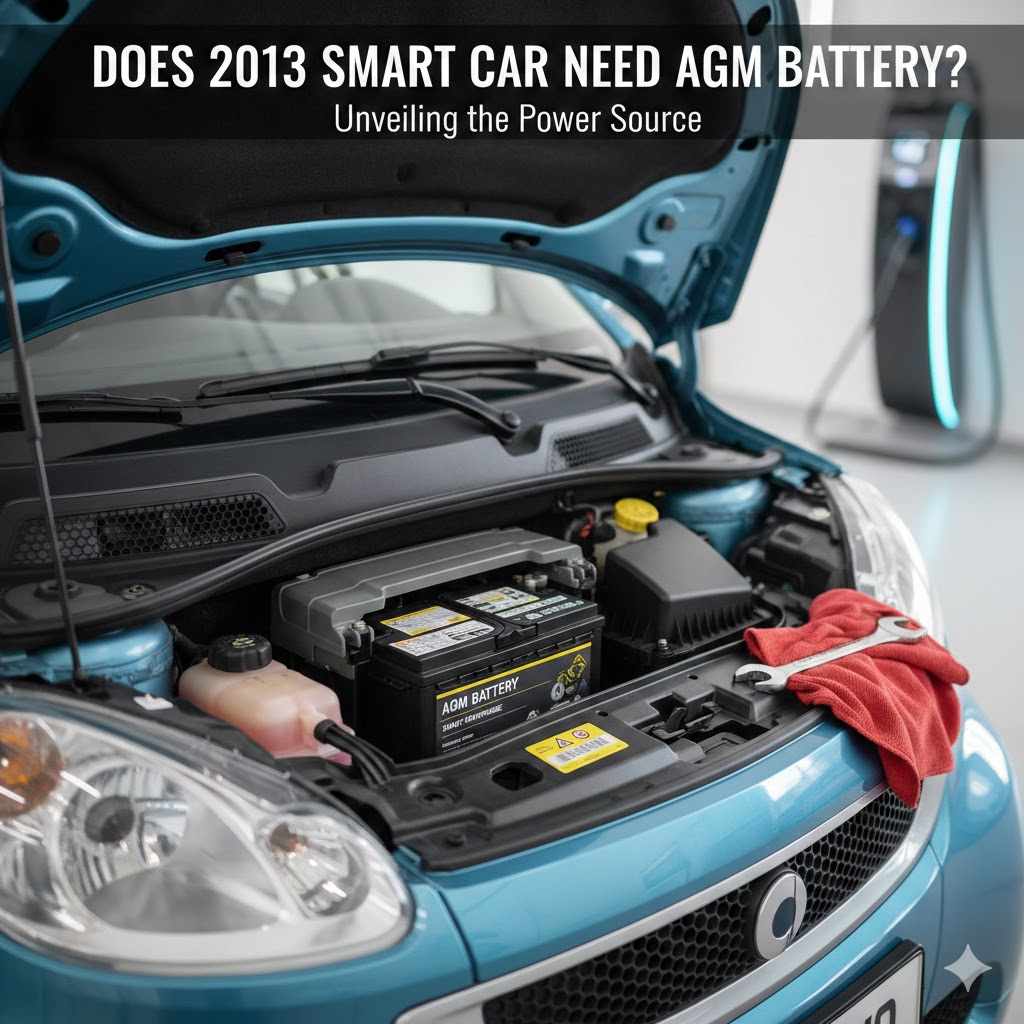
Does 2013 Smart Car Need AGM Battery?
Figuring out the right battery for your 2013 Smart Car can feel tricky, especially if you’re not used to car maintenance. Many owners wonder, Does 2013 Smart Car Need AGM or Regular Battery? It’s a common question because there are different battery types, and picking the wrong one can cause problems. Don’t worry!
We’ll walk through it step-by-step. We’ll explain the difference between AGM and regular batteries and help you decide which one is best for your little car. Let’s get your Smart Car running smoothly.
Understanding Car Batteries
Car batteries are like the heart of your vehicle. They store electrical energy to start the engine and power all the electronics. When your car is running, the alternator recharges the battery.
Over time, batteries wear out and need replacing. Knowing the different types and what your specific car needs is key to keeping it in good shape.
Types of Car Batteries
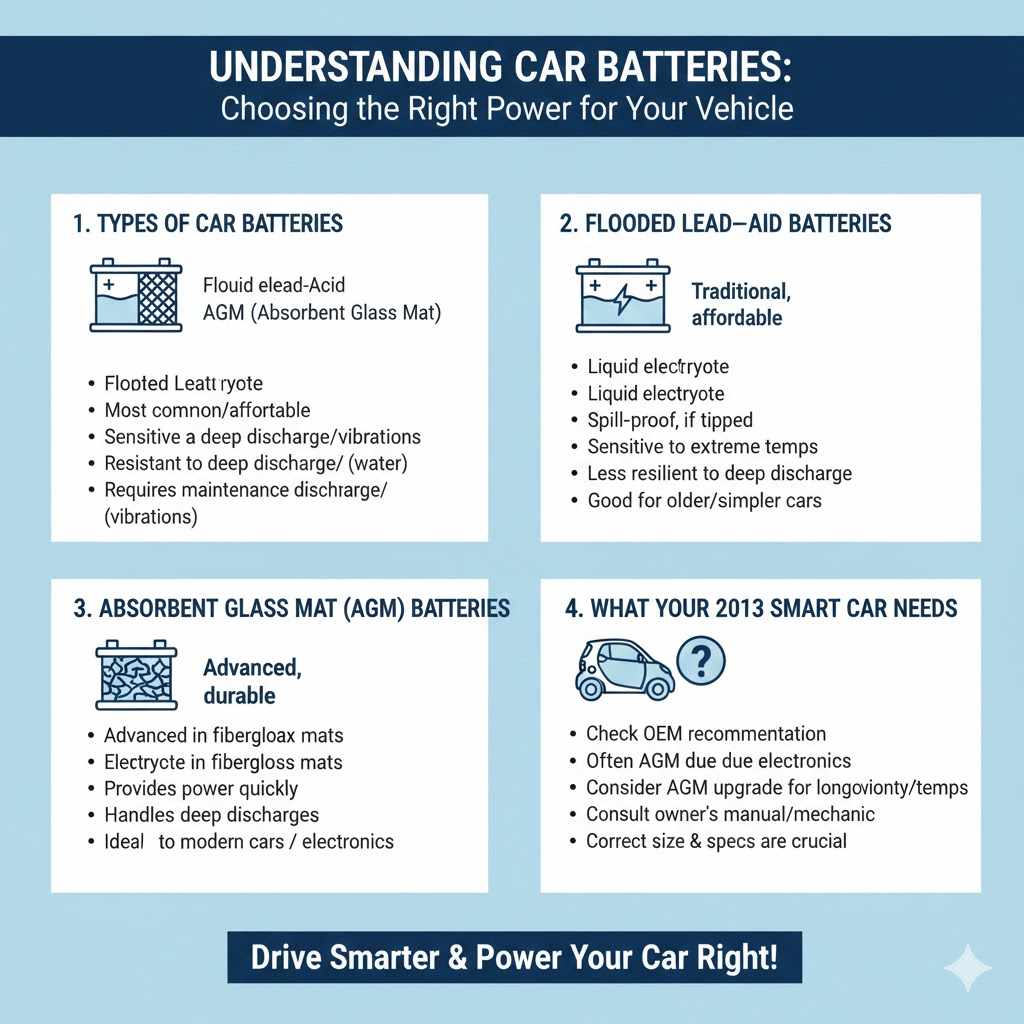
There are two main types of car batteries you’ll likely encounter: flooded lead-acid batteries (often called regular or standard batteries) and Absorbent Glass Mat (AGM) batteries. Both use lead plates and sulfuric acid to store power, but they build and contain these components differently. This difference affects their performance, lifespan, and cost.
A flooded lead-acid battery has liquid sulfuric acid that covers lead plates. These are the most common and usually the least expensive. They work well for many standard vehicle applications.
However, they can be sensitive to deep discharges and vibrations. They also require occasional maintenance, like checking the electrolyte levels.
AGM batteries, on the other hand, have the sulfuric acid absorbed in special mats made of fiberglass. This design makes them spill-proof and more resistant to vibrations. They are also designed to handle higher electrical demands and frequent deep discharges.
This makes them a popular choice for cars with lots of electronics or those that need a more robust power source.
The choice between these two types often comes down to the car’s original equipment manufacturer (OEM) specifications and its electrical system needs. Some cars are designed to work best with one type over the other, especially those with start-stop technology or regenerative braking systems.
Flooded Lead-Acid Batteries
Flooded lead-acid batteries are the traditional workhorses of the automotive world. They’ve been around for a long time and are familiar to most mechanics. Inside, the lead plates are submerged in a liquid electrolyte, typically a mixture of sulfuric acid and water.
These batteries are generally more affordable upfront, which is a big plus for budget-conscious car owners. They are also widely available and easy to find. However, they do have some drawbacks.
They are prone to leaking if tipped, and the liquid electrolyte can evaporate over time, requiring you to check and add distilled water occasionally. This is why they are called “flooded” – the plates are flooded with liquid.
Their performance can also be affected by extreme temperatures, and they are not as resilient to deep discharges as AGM batteries. If a flooded battery is drained too deeply too often, its lifespan can be significantly shortened. They also tend to be heavier and more susceptible to damage from vibrations.
For older cars or those with simpler electrical systems, a flooded battery is often perfectly adequate.
Absorbent Glass Mat (AGM) Batteries
AGM batteries represent a more advanced battery technology. In these batteries, the electrolyte is held in place by compressed mats of fine fiberglass. This construction offers several advantages over traditional flooded batteries.
One of the biggest benefits is their durability. The compressed matting makes them much more resistant to vibrations, which is great for cars that might experience rougher roads or simply have a lot of movement. They are also spill-proof, meaning you don’t have to worry about acid leaks if the battery is damaged or tipped.
This makes them safer and easier to handle.
AGM batteries are also known for their ability to provide power quickly and handle repeated deep discharges without significant damage. This is why they are often found in cars with start-stop systems or those that have a lot of electronic accessories. They can deliver more power when needed and recharge faster than flooded batteries.
While they are typically more expensive, their longer lifespan and better performance often make them a worthwhile investment.
What Your Smart Car Needs
Now, let’s talk about your 2013 Smart Car. Smart Cars are compact vehicles, but they have a surprisingly sophisticated electrical system for their size. The original equipment manufacturer (OEM) often specifies a particular type of battery for a reason, based on the car’s design and electrical load.
For many modern vehicles, including some Smart Cars, manufacturers are increasingly recommending AGM batteries. This is often due to the inclusion of features like advanced electronic stability control, multiple airbags, integrated navigation systems, and sometimes even start-stop technology (though less common in 2013 models). These systems draw more power and can be more sensitive to voltage fluctuations.
The main consideration for your 2013 Smart Car will be its original battery type. If your car came with an AGM battery from the factory, it’s usually best to
If your Smart Car originally came with a flooded battery, then replacing it with another flooded battery of the correct size and specifications is generally acceptable. However, it’s always worth considering if an AGM upgrade might offer benefits in terms of longevity and reliability, especially if you live in an area with extreme temperatures or if your car has added electronic accessories. Always check your owner’s manual or consult with a qualified mechanic to confirm the OEM recommendation for your specific vehicle.
AGM vs. Regular Battery for Your Smart Car
When deciding between an AGM and a regular battery for your 2013 Smart Car, it’s important to weigh the pros and cons based on your car’s needs and your driving habits. The type of battery that was originally installed is often the best indicator of what the car is designed for.
Smart Cars, despite their small size, have complex electrical systems. Features like climate control, advanced safety systems, and infotainment rely on a consistent and reliable power supply. An AGM battery is generally better equipped to handle these demands, especially if the car has a higher electrical load or is subjected to frequent starting and stopping.
They provide a more stable voltage output, which is crucial for sensitive electronics.
On the other hand, if your 2013 Smart Car came with a standard flooded battery and lacks advanced electronic features, a comparable flooded battery might suffice. However, even in simpler systems, the enhanced durability and longer lifespan of an AGM can be appealing. They offer better resistance to deep discharges, which can happen if you accidentally leave lights on or the car sits for extended periods.
The cost is also a factor. AGM batteries are typically more expensive than flooded batteries. However, their longer lifespan and superior performance can sometimes offset the higher initial cost.
If you plan to keep your Smart Car for a long time or want the most reliable option, the extra investment in an AGM might be well worth it. Always ensure the battery you choose has the correct physical dimensions, terminal type, and Cold Cranking Amps (CCA) rating for your specific vehicle.
Performance Differences
The performance characteristics of AGM and regular batteries differ significantly. This is primarily due to their internal construction and how they handle electrical currents.
AGM batteries excel in delivering high cranking power and maintaining a stable voltage under load. This means they can more effectively start the engine, especially in cold weather, and reliably power all the car’s electronics without voltage dips. The absorbed electrolyte and sealed design allow for better efficiency and a longer service life, even with frequent deep discharges.
They also tend to have a faster recharge rate, which is beneficial in stop-and-go traffic or when using accessories with the engine off.
Regular flooded batteries perform well for basic applications but are more susceptible to performance degradation when subjected to heavy loads or deep discharges. Their liquid electrolyte can be agitated, leading to potential issues with plate sulfation, which reduces capacity and lifespan. While they can provide sufficient power for many cars, they might struggle to consistently meet the demands of vehicles with complex electronics or those that experience significant vibration.
A key difference is also their resistance to temperature extremes. While both types are affected by heat and cold, AGM batteries generally handle these conditions with more resilience. This is important for drivers in regions with very hot summers or cold winters.
The sealed construction of AGM batteries also prevents the loss of electrolyte through evaporation, which can be a problem for flooded batteries in hot climates, further impacting their performance and lifespan.
Lifespan and Durability
When it comes to how long a battery lasts and how well it holds up to the rigors of driving, there are notable differences between AGM and regular batteries. Durability is a crucial aspect for any car owner, as replacing a battery can be a significant expense.
AGM batteries typically boast a longer lifespan than their flooded counterparts. This is attributed to their robust construction and the fact that the electrolyte is immobilized. The fiberglass mats protect the lead plates from damage caused by vibration and shock, which are common on roads.
Additionally, AGM batteries are less prone to sulfation, a process where lead sulfate crystals build up on the plates, reducing the battery’s capacity and effectiveness over time. This superior durability means an AGM battery can often last two to three times longer than a comparable flooded battery under similar conditions.
Regular flooded batteries, while cost-effective upfront, have a shorter average lifespan. They are more vulnerable to damage from vibrations, which can loosen the internal components over time. Sulfation is also a more common issue, especially if the battery is frequently discharged deeply or not fully recharged.
Maintenance, such as topping up with distilled water, is necessary to ensure optimal performance and longevity, but even with proper care, they generally won’t match the extended service life of an AGM.
Consider that a longer-lasting battery means fewer
Cost Considerations
The initial purchase price is often the most significant factor for many consumers when choosing a car battery. It’s natural to gravitate towards the option that seems to be the most budget-friendly.
Regular flooded lead-acid batteries are generally the most affordable option available. They are mass-produced and have been the standard for decades, leading to competitive pricing. You can typically find a basic flooded battery for your 2013 Smart Car at a significantly lower cost than an AGM battery.
This makes them an attractive choice for those on a tight budget or for older vehicles where a long battery life might not be as critical.
AGM batteries, on the other hand, come with a higher price tag. The advanced materials and manufacturing processes involved in creating a spill-proof, vibration-resistant battery contribute to their increased cost. While the upfront investment is higher, it’s important to consider the total cost of ownership.
The longer lifespan and enhanced performance of AGM batteries can sometimes mean that they are more cost-effective over the vehicle’s life, especially if you tend to keep your car for many years or if you have demanding electrical needs.
When evaluating cost, think about factors like expected lifespan, warranty coverage, and the potential benefits of improved reliability. For some, the peace of mind and superior performance offered by an AGM battery justify the higher initial expense.
Smart Car Electrical System Specifics
Your 2013 Smart Car, like many modern vehicles, relies on a sophisticated electrical system to manage everything from engine ignition to infotainment. The battery is the central hub for this system, providing the initial power to get things started and acting as a buffer for electrical demands.
Modern cars are equipped with numerous electronic control units (ECUs) that manage various functions. These ECUs require a stable and consistent voltage supply to operate correctly. A battery that can maintain a steady voltage, even under load, is crucial for preventing errors or malfunctions in these sensitive systems.
AGM batteries, with their internal construction, are better at providing this stable voltage compared to traditional flooded batteries.
The charging system in your Smart Car, which includes the alternator, is designed to work with a specific type of battery. If your car originally came with an AGM battery, its charging system is calibrated to charge that type of battery most efficiently. While a flooded battery might still charge, it might not be as efficient, and an AGM battery might not be charged optimally by a system designed for a flooded battery.
This is why sticking to the OEM recommendation is generally the safest approach.
Consider that the electrical demands of your Smart Car may have increased if you’ve added aftermarket accessories like a high-powered stereo, dashcam, or extra lighting. These additions put a greater strain on the battery, and an AGM battery is often better equipped to handle these extra loads. Understanding these specifics helps ensure you choose the battery that will keep your Smart Car running reliably for years to come.
Start-Stop Technology
Many newer vehicles, and even some models from around 2013, started incorporating start-stop technology. This feature automatically shuts down the engine when the car is stationary (like at a traffic light) and restarts it when the driver releases the brake or presses the accelerator. This is designed to save fuel and reduce emissions.
Start-stop systems place immense stress on the car battery. The engine is being started and stopped multiple times during a typical drive. This requires the battery to handle frequent, deep discharges and rapid recharges.
A standard flooded battery is not designed for this kind of rigorous use and will likely fail prematurely if subjected to it.
AGM batteries are specifically engineered to withstand the demands of start-stop systems. Their construction allows them to handle numerous deep discharges without significant degradation. They also recharge more quickly, which is essential to keep the start-stop system operational.
If your 2013 Smart Car has start-stop technology, it is almost certain to require an AGM battery. Using a regular battery in such a system will likely lead to system malfunctions and premature battery failure.
Even if your 2013 Smart Car does not have start-stop technology, the trend in automotive design is moving towards more complex electrical systems that benefit from the capabilities of AGM batteries. If your car has a high number of electronic accessories or if you want the most reliable power source, an AGM is often the superior choice regardless of start-stop functionality.
Power Demands
The electrical demands of a vehicle are not static; they vary based on what systems are running. Your 2013 Smart Car, even without start-stop technology, has a range of electronic components that draw power.
Think about all the systems that use electricity: headlights, interior lights, radio, air conditioning or heating, power windows, windshield wipers, anti-lock braking system (ABS), electronic stability control (ESC), and the engine control unit (ECU) itself. Each of these draws power from the battery, especially when the engine is off or at low RPMs when the alternator might not be producing its full output.
AGM batteries are designed to handle higher power demands more effectively than flooded batteries. They can deliver more power during short bursts, such as when starting the engine, and also provide a more consistent power flow to all the vehicle’s electronics. This is particularly important for sensitive electronic components that can be affected by voltage fluctuations.
If you’ve added any aftermarket accessories to your Smart Car, such as a subwoofer, amplifier, GPS tracker, or an advanced alarm system, these will further increase the car’s power demands. In such cases, an AGM battery becomes even more critical to ensure that the battery can supply enough power without being over-stressed. A regular battery might struggle to keep up, leading to reduced performance of the accessories or even draining the battery faster.
To determine the power demands, consider the original specifications of your vehicle. Your owner’s manual is the best resource for this information. It will typically outline the required CCA (Cold Cranking Amps) and reserve capacity, which are indicators of a battery’s power output and its ability to sustain electrical loads over time.
Battery Size and Fitment
One of the most practical considerations when replacing a car battery is ensuring it fits correctly. Car batteries come in various sizes and configurations, and it’s crucial to select one that is compatible with your 2013 Smart Car’s battery tray and hold-down mechanisms.
Vehicle manufacturers use standardized battery group sizes to ensure compatibility. These group sizes refer to the physical dimensions of the battery (length, width, height) and the terminal placement and type (e.g., top post, side post). For a Smart Car, the compact size of the vehicle often means it uses a smaller battery group size.
It’s important to consult your car’s owner’s manual or use an online battery finder tool from a reputable manufacturer or retailer. These tools allow you to input your car’s make, model, and year to get a list of compatible battery group sizes and specific battery part numbers. For a 2013 Smart Car, you might find it uses a group size like BCI Group 35 or a similar compact designation.
Always double-check the dimensions before purchasing.
Beyond physical size, terminal orientation is also critical. The battery terminals must align with the car’s battery cables. If the terminals are reversed or in the wrong position, the cables might not reach, or they might be stretched, which is unsafe.
AGM batteries are available in these same standardized sizes and terminal configurations, so you can often find an AGM that is a direct fit for your original battery tray.
The correct fitment ensures that the battery is securely held in place, preventing damage from vibration. It also makes connecting the battery cables straightforward and safe. Using a battery that is too large or too small can lead to fitment issues, potentially causing damage to the battery or the vehicle’s electrical system.
Always prioritize correct fitment along with the appropriate battery type and specifications.
Replacing Your Smart Car Battery
Replacing a car battery can seem like a daunting task, but it’s one of the more straightforward maintenance jobs you can do yourself. With the right tools and a little patience, you can save money and gain confidence in your automotive skills.
Before you start, make sure you have the correct
Safety is paramount when working with car batteries. They contain corrosive acid and can produce explosive gases. Always wear protective eyewear and gloves.
Ensure the car is turned off, and the parking brake is engaged. Avoid any sparks or open flames near the battery.
When you’re ready, the process generally involves disconnecting the old battery, removing it from the car, installing the new battery, and reconnecting it. It’s essential to disconnect the negative terminal first and reconnect it last to prevent accidental short circuits. We’ll walk through these steps in more detail.
Tools You’ll Need
Gathering the right tools before you begin the battery replacement process will make the job much smoother and safer. You don’t need a professional mechanic’s workshop for this task; a few common items will suffice.
The most critical tools are wrenches or a socket set. Car battery terminals are usually secured with nuts, and you’ll need the correct size wrench or socket to loosen and tighten them. Common sizes for battery terminal nuts are 10mm or 13mm, but it can vary by vehicle.
You may also need a different size for the battery hold-down clamp, which secures the battery in its tray. A basic set of combination wrenches or a socket set with a ratchet and extension should cover most needs.
It’s also wise to have a wire brush or battery terminal cleaner on hand. Over time, corrosion can build up on the battery terminals and cable clamps. Cleaning these connections will ensure a good electrical contact, which is vital for the battery to function correctly and for the car’s electrical system to receive a stable charge.
A battery terminal brush is specifically designed for this purpose.
Additionally, consider safety gear such as safety glasses and gloves. Batteries contain sulfuric acid, which is corrosive and can cause burns or eye damage. Protective gear is a small price to pay for your safety.
Some people also like to have a small amount of baking soda and water solution handy to neutralize any acid spills, although this is less of a concern with spill-proof AGM batteries.
Finally, if your car’s radio or other electronics have security codes, have those handy. Sometimes, disconnecting the battery will reset these systems, and you’ll need the code to reactivate them. A memory saver device that plugs into the OBD-II port can help prevent this, but it’s not strictly necessary if you have your codes.
Step-by-Step Replacement Process
Here is a general guide to replacing your Smart Car battery. Remember to always consult your owner’s manual for specific instructions related to your vehicle.
- Safety First: Park your Smart Car on a level surface, turn off the engine, and engage the parking brake. Open the hood and locate the battery. Ensure no smoking or open flames are near the battery. Wear safety glasses and gloves.
- Disconnect the Negative Terminal: Using your wrench or socket, loosen the nut on the clamp of the negative (-) terminal (usually black or marked with a minus sign). Gently twist and pull the cable off the terminal. Move the cable away from the battery so it cannot accidentally touch the terminal.
- Disconnect the Positive Terminal: Next, loosen and remove the clamp from the positive (+) terminal (usually red or marked with a plus sign). Again, move the cable aside to prevent contact with the battery.
- Remove the Hold-Down Clamp: Most batteries are secured by a clamp or bracket at the base or top. You’ll need to remove this using the appropriate wrench or socket. Once loosened, set the clamp and any associated hardware aside in a safe place.
- Lift Out the Old Battery: Carefully lift the old battery out of its tray. Batteries are heavy, so use proper lifting techniques or ask for assistance if needed. Be mindful not to tilt the battery excessively, especially if it’s a flooded type.
- Clean the Battery Tray and Cables: Inspect the battery tray for any corrosion or debris. Clean it with a cloth. Use your wire brush or battery terminal cleaner to clean the inside of the cable clamps to ensure good contact with the new battery terminals.
- Install the New Battery: Place the new battery into the tray, ensuring it is oriented correctly so that the positive and negative terminals align with the corresponding cables.
- Secure the New Battery: Reinstall the hold-down clamp and tighten it securely. The battery should not move around in the tray.
- Reconnect the Positive Terminal: Place the positive (+) cable clamp onto the positive terminal of the new battery and tighten the nut securely.
- Reconnect the Negative Terminal: Finally, place the negative (-) cable clamp onto the negative terminal and tighten the nut securely.
- Final Check: Ensure all connections are tight and the battery is secure. Close the hood.
After installation, start your car. If your radio or other electronics required a code, you may need to enter it now. Dispose of your old battery responsibly, as they can be recycled.
Battery Disposal and Recycling
Car batteries, whether AGM or flooded lead-acid, contain hazardous materials. It’s essential to dispose of them properly to protect the environment and comply with regulations. Simply throwing an old battery in the trash is not an option and is often illegal.
The good news is that lead-acid batteries are highly recyclable. The lead and plastic components can be reclaimed and used to manufacture new batteries or other products. Most auto parts stores, battery retailers, and service centers that sell new batteries will accept your old battery for recycling.
In many places, you may even get a small core charge back when you return your old battery, essentially a deposit that you get refunded.
When you purchase a new battery, the retailer will usually offer to take your old one. If you’re doing the replacement yourself, keep your old battery in its plastic carrier or a sturdy box to prevent spills during transport. Avoid storing old batteries indoors for extended periods, as they can release gases.
If you are unsure about where to recycle your battery, you can contact your local municipality’s waste management department or check with an automotive service center. They can direct you to the nearest battery recycling drop-off location. Responsible recycling ensures that the valuable materials in your old battery are reused and that harmful substances are kept out of landfills.
Does 2013 Smart Car Need AGM or Regular Battery? The Answer
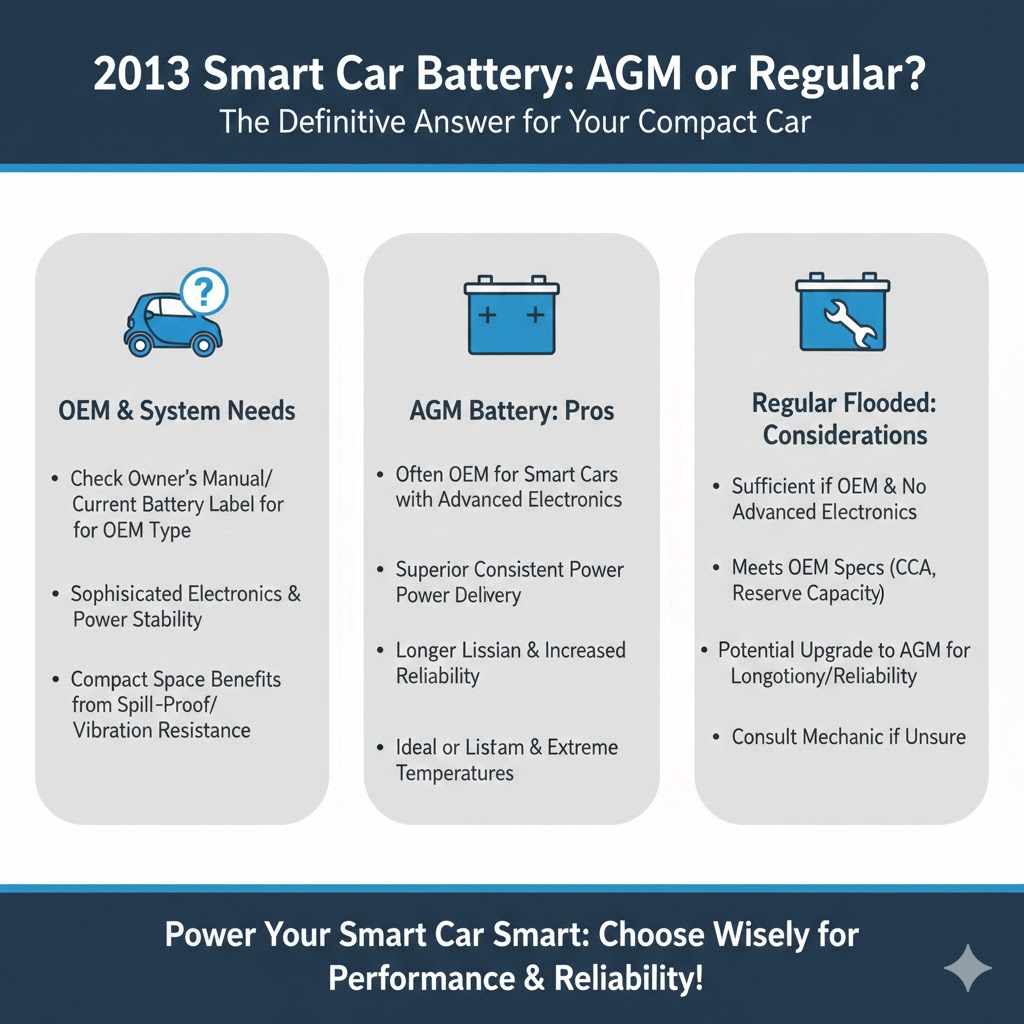
The question, Does 2013 Smart Car Need AGM or Regular Battery?, is best answered by looking at what the car manufacturer originally specified and the vehicle’s electrical system. While a regular flooded battery might technically start the car, it may not be the ideal or most reliable choice.
For a 2013 Smart Car, the answer leans heavily towards an AGM battery if the vehicle was originally equipped with one, or if it has features that demand higher power stability. Many Smart Car models, especially those from this era, feature sophisticated electronics that benefit greatly from the consistent power delivery and deeper discharge capabilities of AGM technology. The compact nature of the Smart Car also means the battery is often integrated into a smaller space, and AGM’s sealed, vibration-resistant design offers an advantage in such tight environments.
If your 2013 Smart Car came with a standard flooded battery and doesn’t have advanced electronic systems or start-stop functionality, a high-quality flooded battery that meets the OEM specifications for Cold Cranking Amps (CCA) and reserve capacity could be sufficient. However, even in these cases, upgrading to an AGM battery can offer a longer lifespan and increased reliability, especially if you live in an area with extreme temperatures or if you plan to add aftermarket electronics in the future.
Ultimately, checking your owner’s manual or the label on your current battery is the most direct way to confirm the original battery type. If unsure, consulting a professional mechanic who is familiar with Smart Cars is always a wise step. They can assess your specific vehicle’s needs and recommend the best battery solution.
For most modern vehicles, especially those with evolving electronic needs, AGM batteries are becoming the standard for a reason: they offer superior performance and longevity.
Frequently Asked Questions
Question: How do I know if my 2013 Smart Car came with an AGM battery?
Answer: Check your owner’s manual; it will specify the original battery type. You can also look for labels on your current battery or its tray. AGM batteries are often marked as such and may have a sealed design without removable caps for checking fluid levels, unlike flooded batteries.
Question: Can I put a regular battery in a car that originally had an AGM battery?
Answer: While it might fit and start the car, it’s generally not recommended. The car’s charging system and electronics are optimized for AGM performance. Using a regular battery might lead to reduced lifespan for both the battery and potentially other electrical components.
Question: Will an AGM battery improve my Smart Car’s performance?
Answer: An AGM battery can improve the reliability of your electrical system by providing more stable power, especially when multiple electronics are in use. It might also offer better cold-cranking power and a longer lifespan compared to a regular battery.
Question: How long do AGM batteries typically last in a Smart Car?
Answer: AGM batteries generally last longer than standard flooded batteries. In a Smart Car, depending on driving conditions and maintenance, an AGM battery could last anywhere from 3 to 5 years, and sometimes even longer, compared to 2 to 4 years for a flooded battery.
Question: Where can I buy a replacement battery for my 2013 Smart Car?
Answer: You can purchase
Summary
For your 2013 Smart Car, the best battery choice usually aligns with its original equipment. If it came with an AGM battery, stick with AGM for optimal performance and longevity. If it had a regular battery, an AGM upgrade offers enhanced reliability and a longer lifespan, especially given modern car electronics.
Always check your manual for exact specifications.