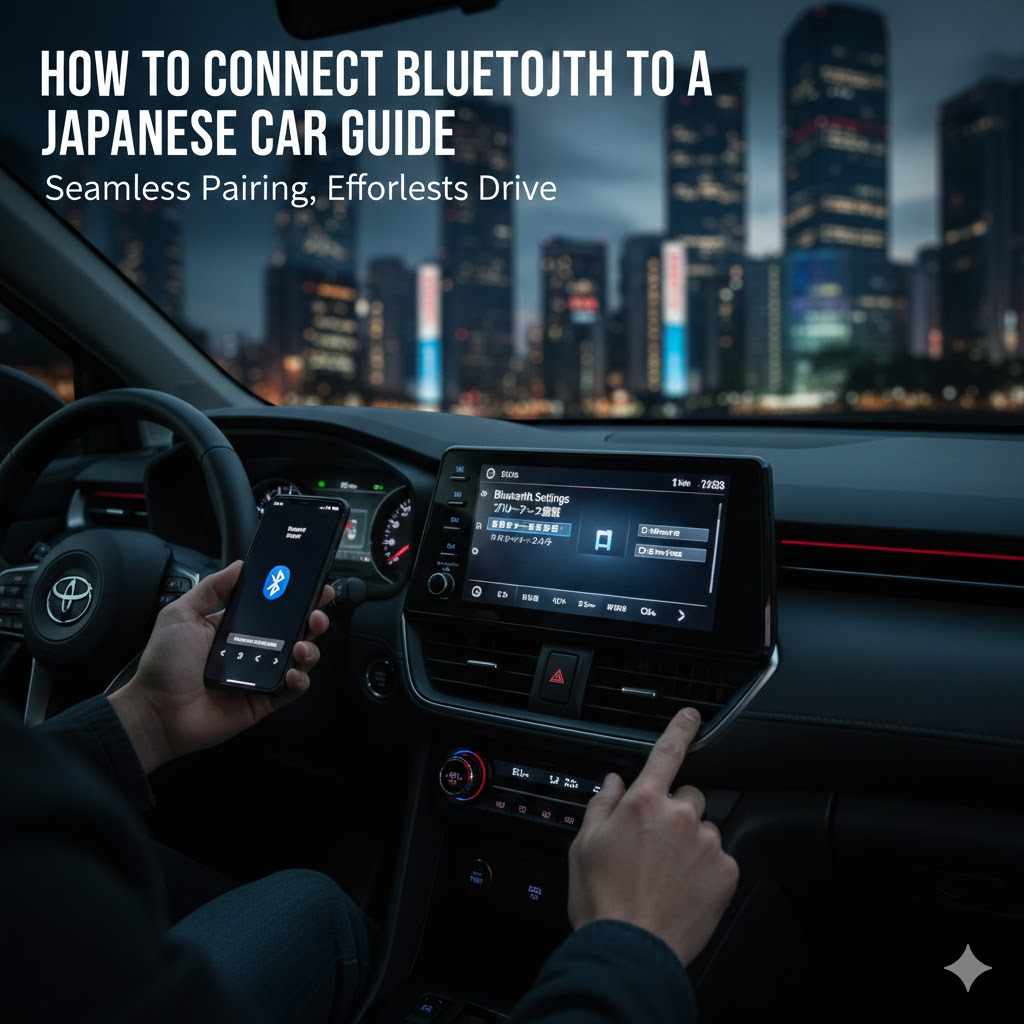
How to Connect Bluetooth to a Japanese Car Guide
Lots of folks wonder how to connect Bluetooth to a Japanese car. It seems tricky at first, especially if you’re new to car tech. You want to play your music or take calls hands-free.
Don’t worry, it’s usually not as hard as it sounds. This guide will make it simple. We’ll walk you through every step so you can pair your phone easily.
Get ready to enjoy your drive with seamless connectivity.
Connecting Your Phone How to Connect Bluetooth to a Japanese Car
This section covers the basics of getting your phone talking to your car’s Bluetooth system. We’ll go over what Bluetooth is and why it’s handy in your vehicle. You’ll learn about pairing modes and common settings you might need to adjust.
The goal is to make this a simple process, even if you’ve never done it before.
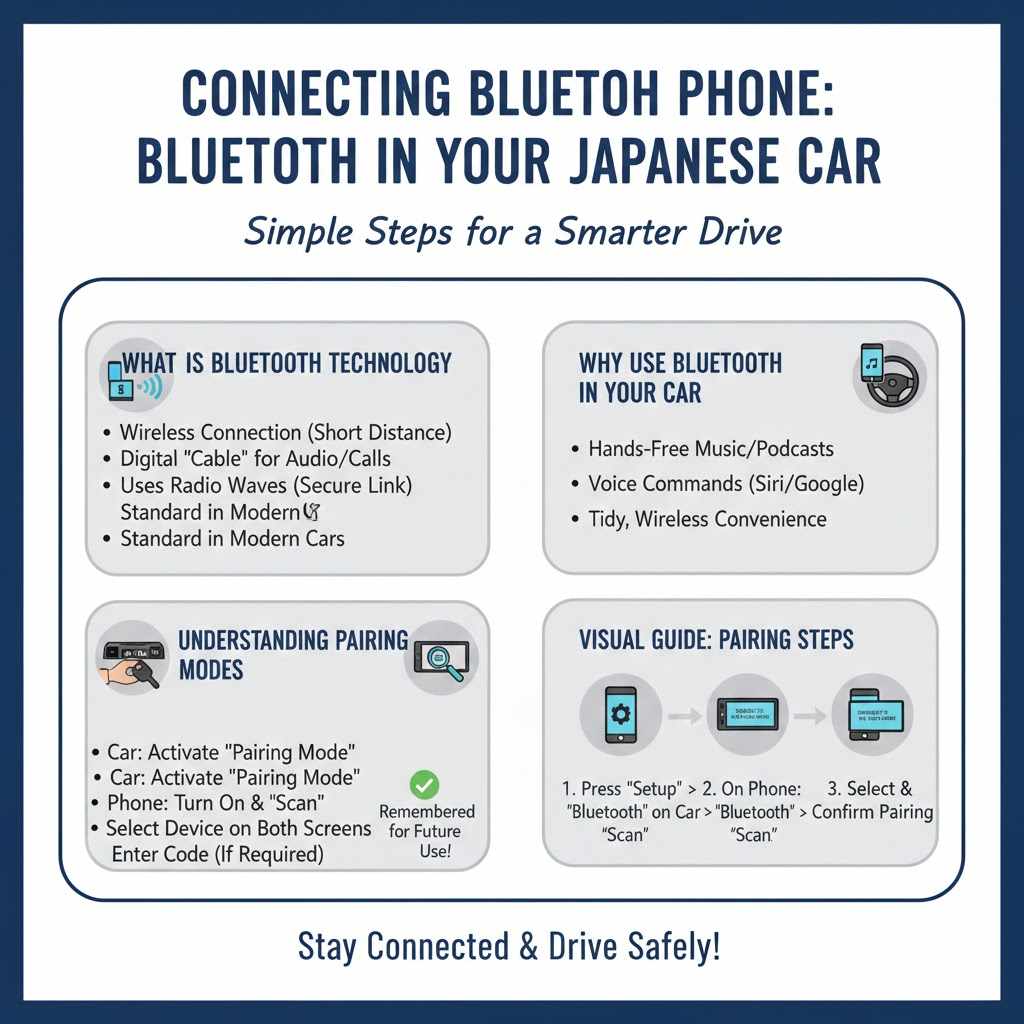
What Is Bluetooth Technology
Bluetooth is a wireless technology that lets devices talk to each other over short distances. Think of it like an invisible cable connecting your phone to your car’s stereo. It’s great for sharing data like music or phone calls without needing any wires.
This makes your car’s interior much tidier.
Bluetooth works by using radio waves in a specific frequency band. These waves are used to create a secure connection between two devices. Once paired, they can send and receive information.
This is what allows your phone to stream music to your car speakers or let you make calls using the car’s microphone and speakers.
The technology has been around for a while, and it’s become a standard feature in most modern cars. It’s designed to be easy to use and reliable. You don’t need any special apps to make it work.
Just your phone and your car’s compatible system are enough to get started.
Why Use Bluetooth in Your Car
Using Bluetooth in your car offers many benefits. The most common is listening to music or podcasts from your phone through your car’s sound system. This is much better than relying on radio stations or CDs.
You get access to your entire music library.
Another key advantage is making and receiving phone calls hands-free. This is a huge safety feature. Instead of fumbling for your phone while driving, you can answer calls with a button press or voice command.
This helps you keep your eyes on the road and your hands on the steering wheel.
Bluetooth also allows for voice commands. Many modern cars use Bluetooth to connect to your phone’s voice assistant, like Siri or Google Assistant. You can ask for directions, send texts, or control your music just by speaking.
The convenience of wireless connection is unmatched. No more tangled charging cables just to play your audio. Your phone stays in your pocket or on a mount, and the connection just works.
This simplicity adds a lot to the driving experience.
Understanding Pairing Modes
To connect your phone, your car’s Bluetooth system needs to be in “pairing mode.” This tells the car it’s ready to find and connect to a new device. Think of it like making your car visible to your phone. Most cars have a specific button or menu option to activate this mode.
Your phone also needs to be discoverable. This means its Bluetooth is turned on and set to search for other devices. Usually, you’ll go into your phone’s Bluetooth settings and select an option like “scan” or “pair new device.”
Once both devices are in pairing mode, they can find each other. Your car’s system will appear on your phone’s screen, and your phone will appear on your car’s screen. You’ll then select each other to complete the pairing process.
Sometimes, you might need to enter a code to confirm the connection.
This initial pairing is the most important step. After this, your phone and car should remember each other. In the future, they will often connect automatically whenever you get into the car and turn it on.
Step-by-Step Guide How to Connect Bluetooth to a Japanese Car
This section provides a clear, easy-to-follow method for pairing your phone. We’ll break down the process into simple steps. This is where you’ll find the practical instructions you need.
Preparing Your Phone and Car
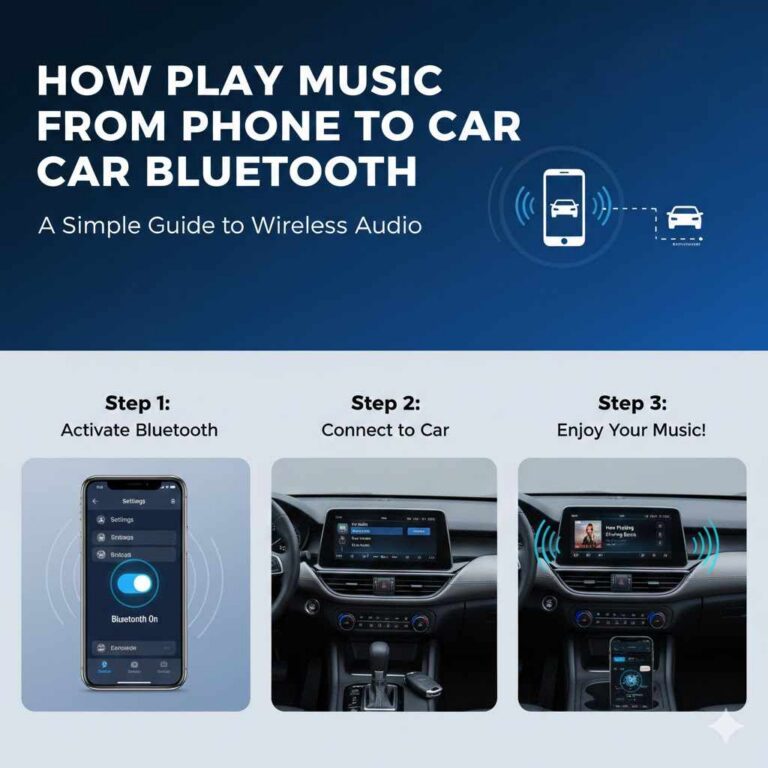
First, make sure your phone’s Bluetooth is turned on. You can usually find this in your phone’s settings menu under “Bluetooth” or “Connections.” Make sure it’s set to be discoverable. Some phones turn this off after a few minutes to save battery, so keep that in mind.
Next, start your car. Many car Bluetooth systems only work when the engine is running or the ignition is in the accessory position. This is to prevent draining the car battery.
Familiarize yourself with your car’s infotainment system. Look for buttons labeled “Phone,” “Setup,” “Settings,” or a Bluetooth symbol. You might need to consult your car’s owner’s manual if you’re unsure where to find these controls.
Having your owner’s manual handy is a good idea. It can often provide specific instructions for your car model. This preparation ensures you’re ready to move to the pairing steps smoothly.
Initiating The Pairing Process
On your car’s display screen, navigate to the Bluetooth or Phone settings. Look for an option like “Add Phone,” “Pair Device,” or “Connect New Device.” Select this option to put your car into pairing mode.
Your car’s system will likely display a message indicating it’s searching for devices or ready to pair. It might also show a unique PIN code or ask you to confirm one that appears on your phone screen.
Now, pick up your phone. Go back to your phone’s Bluetooth settings. Your car’s Bluetooth system should appear in the list of available devices.
It might be listed by the car’s make or model, or a generic name like “Car Audio.”
Tap on your car’s name on your phone’s screen. This will initiate the connection request. Your phone will then prompt you to confirm the pairing, often by asking you to match the PIN code shown on both screens or simply confirm with a button press.
Confirming The Connection
Once you tap to connect on your phone, you’ll see a confirmation prompt on both your phone and your car’s display. This is a security measure to make sure you’re connecting to the correct device and that you authorize the connection.
You might see a numerical code on both screens. Ensure these codes match exactly. If they do, select “Pair,” “Yes,” or “Confirm” on both your phone and your car’s display.
If they don’t match, cancel the pairing and start again. This helps prevent accidental connections to other nearby Bluetooth devices.
After successful confirmation, your car will usually show a message like “Paired Successfully” or “Connection Established.” Your phone should also indicate that it’s connected to your car’s Bluetooth. You can often see a Bluetooth symbol in your phone’s status bar.
Your car might also ask for permission to access your contacts and call history. Allowing this will enable features like seeing caller ID on your car’s screen and accessing your phonebook through the car’s system.
Troubleshooting Common Issues
If your phone doesn’t show up on the car’s screen, try turning your phone’s Bluetooth off and then back on. Also, restart your car’s infotainment system if possible. Sometimes, simply refreshing the connection helps.
If your car doesn’t show up on your phone, make sure your car is still in pairing mode. Many cars only stay in pairing mode for a short time, like 60-120 seconds. You might need to re-activate the pairing mode on the car.
Check if your phone is already paired with another device. Most phones and cars can only be connected to one Bluetooth audio device at a time. If your phone is connected to headphones, for example, you’ll need to disconnect those first.
If you keep getting pairing errors, try deleting any old or existing pairings for your car from your phone’s Bluetooth list. Then, do the same on your car’s system by going to its list of paired devices and removing your phone. This “forgetting” of devices can clear up connection conflicts.
Advanced Bluetooth Features and Settings
Once your car and phone are connected, there are more settings and features you can explore. These can make your experience even better.
Managing Paired Devices
Most car systems allow you to pair multiple phones. You can often see a list of all the phones that have been connected. If you have many devices listed, it might be a good idea to remove any you no longer use.
This list of paired devices can help you quickly switch between phones if you have multiple drivers or passengers using the car. You can usually select which phone to connect to from the car’s Bluetooth menu.
Some systems allow you to set a “primary” phone. This is the phone that will automatically connect whenever the car is turned on. If you share your car, you might need to change this setting depending on who is driving.
Keeping this list clean can prevent connection issues. If you’re having trouble connecting, checking the list of paired devices is often a good first troubleshooting step.
Audio Streaming and Call Quality
Once connected, you can stream audio from your phone. Open your music app or podcast player. Your car’s stereo should automatically play the sound.
You can control playback using your car’s stereo buttons for play, pause, skip, and volume.
Call quality can vary. If you notice your voice sounds muffled to the other person, make sure the car’s microphone isn’t blocked. The microphone is often located on the ceiling console or near the rearview mirror.
Conversely, if the sound from the car speakers is poor, check your phone’s volume and your car’s volume. Ensure no other audio sources are interfering. Sometimes, adjusting the equalizer settings on your phone or car stereo can improve sound quality.
For best results, try to be in an area with good cellular reception for your phone. Bluetooth itself is usually quite clear, but the quality of the call depends on the cellular network.
Using Voice Commands
Many Japanese cars with Bluetooth systems support voice commands. After pairing your phone, you can often activate your phone’s voice assistant through the car’s system. This usually involves pressing a dedicated button on your steering wheel or car stereo.
Once activated, you can speak commands. For example, you could say “Call Mom,” “Navigate to the nearest gas station,” or “Play my rock playlist.” Your car will relay these commands to your phone’s assistant.
The effectiveness of voice commands depends on your phone’s voice assistant and the car’s ability to correctly interpret your speech. Clear speech and minimal background noise help greatly.
Practicing voice commands can make them very convenient. It’s a great way to stay focused on driving while still managing tasks like communication and navigation.
Specific Settings for Japanese Car Brands
While the general process is similar across most cars, there can be slight differences between Japanese car brands like Toyota, Honda, Nissan, Subaru, Mazda, and Mitsubishi. These differences usually lie in the menu structure and button placement on the infotainment system.
For example, a Toyota might have a “Phone” button that leads directly to Bluetooth options. A Honda might place these settings under a “Settings” menu, then “Bluetooth.” Mazda cars often have a rotary dial and a few buttons to control their MZD Connect system.
Always refer to your car’s owner’s manual for brand-specific instructions. It will show you the exact menu paths and button names for your model. This is the most reliable way to find unique settings for your specific vehicle.
Some luxury Japanese models might have more advanced features, like wireless charging pads that work in conjunction with Bluetooth pairing. Others might have simpler systems with fewer customization options.
Understanding these minor variations will help you quickly locate the necessary settings and successfully connect your device.
Real-World Examples and Scenarios
Let’s look at how this works in everyday situations.
Example 1: The Commuter
Sarah drives a 2019 Honda Civic. She wants to listen to her favorite podcast on her commute to work. She turns on her car and her phone’s Bluetooth is already on.
She presses the “Phone” button on her steering wheel. The car’s screen shows “Searching for devices.” She taps on her phone’s name on the screen. A PIN code appears on both the car and her phone.
She confirms the match. Instantly, her podcast starts playing through the car speakers. She can use the volume knob to adjust the sound.
Example 2: The Road Tripper
Mark is going on a long drive in his new 2022 Subaru Outback. He needs to make important calls while on the road. Before starting the engine, he goes to his car’s “Settings” menu, then “Bluetooth.” He selects “Add Device.” His iPhone appears on the car’s screen.
He taps it. His phone asks to allow access to contacts. He taps “Allow.” Now, when a call comes in, his name and number appear on the car’s dashboard.
He answers with a button press and talks clearly using the car’s built-in microphone.
Scenario 1: First-Time Connection
You just bought a used 2017 Nissan Sentra. You want to connect your new smartphone. You start the car.
You look for a “Phone” or “Setup” button. You find it near the gear shift. Pressing it brings up a menu.
You select “Bluetooth.” Then you choose “Pair New Device.” On your phone, you go to Settings, then Bluetooth. You see “Nissan Connect” appear. You tap it.
Your phone asks for a PIN. The car shows a PIN. You confirm they match.
Your phone says “Connected for calls and audio.” Success!
Scenario 2: Reconnecting After an Update
Your car’s infotainment system recently had a software update. Now, your phone won’t connect. You go to your car’s Bluetooth menu and see your phone listed, but it says “Not Connected.” You try to tap it, but nothing happens.
You decide to remove your phone from the car’s list of paired devices. Then, you “forget” your car from your phone’s Bluetooth settings. You restart both the car and your phone.
You go through the pairing process again from the beginning. This time, it connects without any issues.
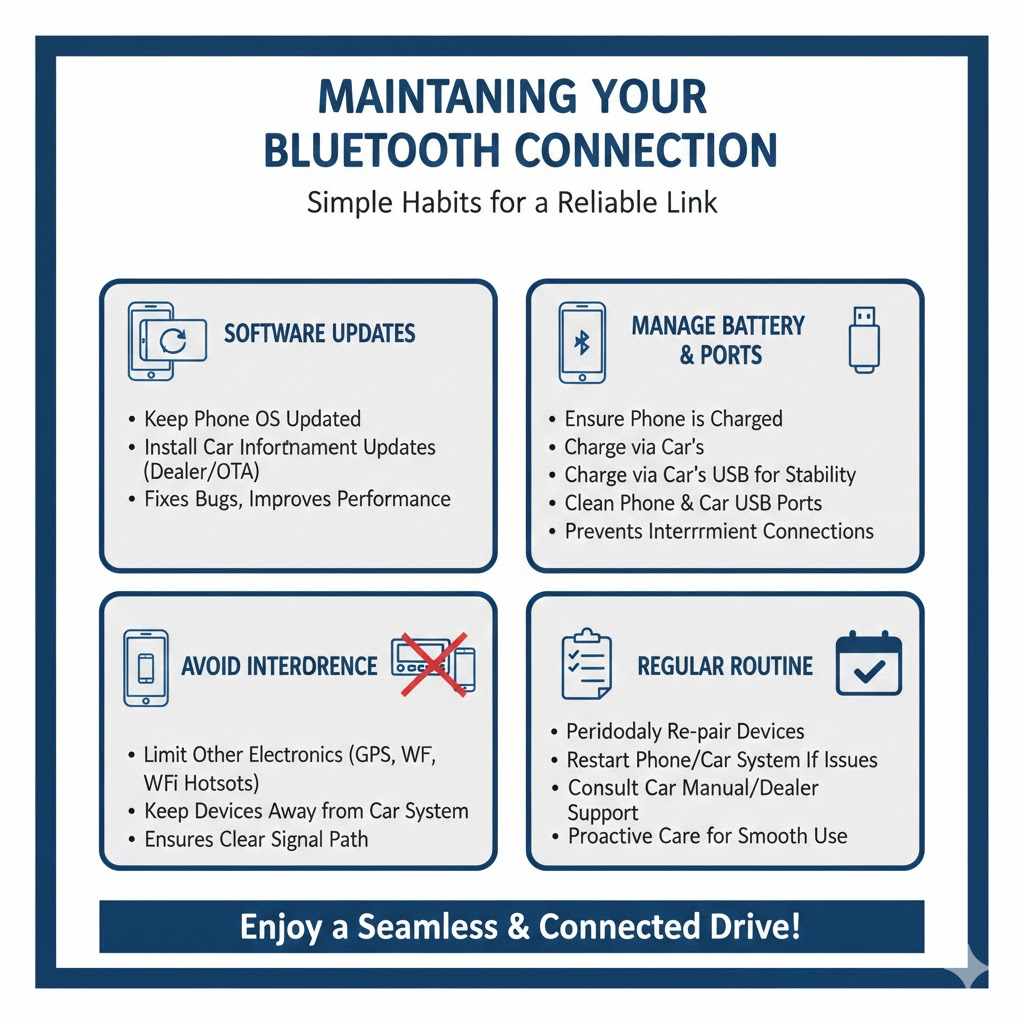
Tips for Maintaining Your Bluetooth Connection
Keeping your Bluetooth connection working smoothly involves a few simple habits. These help prevent common problems and ensure reliable performance every time you drive.
Keep Your Phone’s Software Updated
Ensure your smartphone’s operating system and Bluetooth drivers are up to date. Software updates often include fixes for connectivity bugs and improvements to Bluetooth performance. An outdated phone system can sometimes cause pairing issues with newer car systems.
Keep Your Car’s Infotainment System Updated
Just like your phone, your car’s infotainment system can also receive software updates. These updates are often done by your car dealership during service appointments or sometimes wirelessly. Check with your dealer if you suspect your car’s system could benefit from an update.
Manage Battery Power
Make sure your phone has enough battery power. Low battery levels can sometimes cause Bluetooth to disconnect or behave erratically. Using your car’s USB port to charge your phone while connected can also ensure a stable power supply.
Avoid Interference
Other electronic devices can sometimes interfere with Bluetooth signals. Keep devices like portable GPS units, Wi-Fi hotspots, or other strong radio transmitters away from your car’s infotainment system and your phone. While usually not a major issue, in dense electronic environments, it can play a small role.
Regularly Clean Your Phone’s Charging Port and Car’s USB Port
While this isn’t directly a Bluetooth setting, a clean USB port ensures stable charging and data transfer if you use your phone that way. A dirty port can lead to intermittent connections, which might be mistaken for Bluetooth problems.
Frequently Asked Questions
Question: Do I need a special app to connect my phone to my Japanese car’s Bluetooth?
Answer: No, you do not need a special app. Bluetooth is a built-in technology on both your phone and your car. You just need to use the settings menus on both devices.
Question: My car’s Bluetooth won’t find my phone. What should I do?
Answer: First, ensure Bluetooth is turned on and discoverable on your phone. Then, make sure your car is in pairing mode. Try restarting both your phone and your car’s infotainment system.
Also, check your phone is not connected to another Bluetooth device.
Question: How do I disconnect my phone from my car’s Bluetooth?
Answer: You can usually do this through your car’s Bluetooth menu by selecting your phone and choosing “Disconnect” or “Remove Device.” You can also turn off Bluetooth on your phone.
Question: Can I play music and make calls at the same time with Bluetooth?
Answer: Yes, most modern Bluetooth systems support both audio streaming and hands-free calling simultaneously. Your car system will manage switching between them when a call comes in.
Question: My car shows “Paired” but won’t connect. What’s wrong?
Answer: This often means the connection profile is corrupted. Try “forgetting” the device on both your phone and your car, then re-pair them. Ensure your phone and car software are up to date.
Summary
Connecting Bluetooth to your Japanese car is straightforward. By following these simple steps, you can easily pair your phone for music and calls. Remember to check your owner’s manual for specific details.
Enjoy a safer and more connected drive.
Products related to this article
Sponsored / affiliate links. As an Amazon Associate I earn from qualifying purchases. I may earn additional commission from eligible campaigns.