Is A Motorcycle Considered A Car? Key Differences Explained
Understanding the distinctions can save you a lot of hassle. It affects everything from how you register your vehicle to how you approach safety on the road. We’ll break down why these two seem similar but are treated very differently in many important ways.
Let’s clear this up.
A motorcycle is generally not considered a car. While both are motor vehicles used for transportation, they differ significantly in design, operation, regulation, and legal classification in the United States. Cars have four wheels and an enclosed body, while motorcycles have two wheels and an open frame. This fundamental difference leads to distinct rules for licensing, insurance, and road usage.
What Makes a Car a Car, and a Motorcycle a Motorcycle?
At its heart, a car is a vehicle designed to carry passengers. It typically has four wheels. These wheels provide stability.
Cars usually have a metal body that encloses the passengers. This body offers protection from the weather and impacts. Think about the shape of a typical sedan or SUV.
They are built for comfort and safety for multiple people.
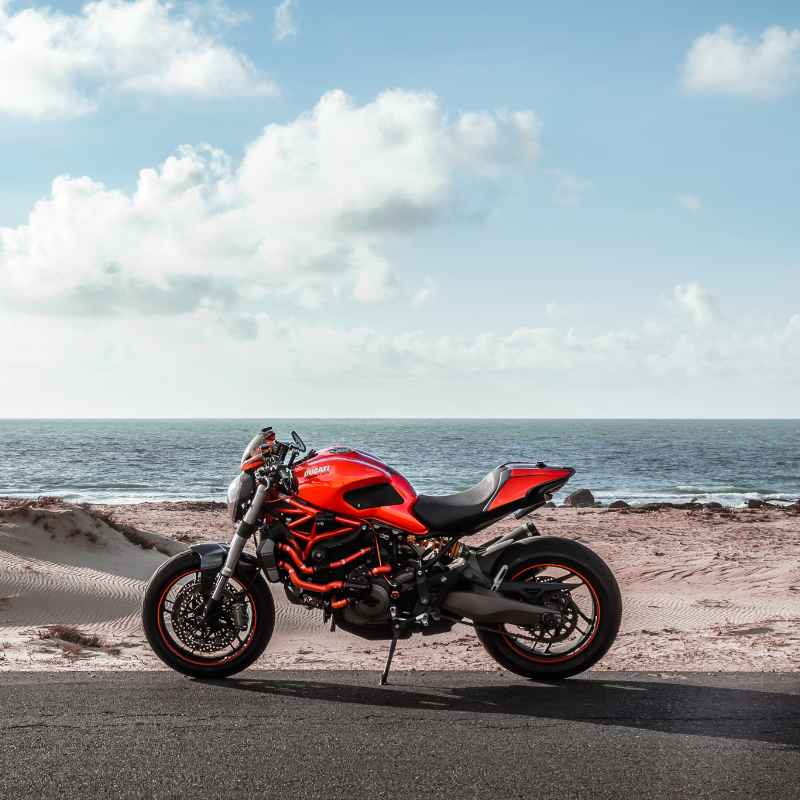
A motorcycle, on the other hand, is a two-wheeled motor vehicle. It carries one or two people. The rider straddles the machine.
They control it with handlebars and foot pedals. There’s no enclosure for the rider. This means the rider is exposed to the elements and road conditions.
The design prioritizes maneuverability and a different kind of riding experience.
The number of wheels is a big clue. Most people immediately picture a car with four wheels. Motorcycles are almost always seen with two.
Sometimes, you’ll see a motorcycle with a sidecar, giving it three wheels. But even then, it’s still fundamentally different from a car. The way you sit, steer, and interact with a motorcycle is unique.

Why the Difference Matters in the Eyes of the Law
In the United States, legal definitions are very important. They guide how laws are written and enforced. When officials talk about “motor vehicles,” they often mean both cars and motorcycles.
But when specific rules are applied, the differences become clear.
For example, driver’s licenses are a good illustration. To drive a car, you need a standard driver’s license, often with a Class D endorsement. But to ride a motorcycle, you usually need a specific motorcycle license or endorsement on your existing license.
This requires passing different tests. These tests focus on skills unique to riding a two-wheeled vehicle, like balance and control at low speeds.
Vehicle registration also shows a difference. Both cars and motorcycles need to be registered with the state. However, the fees and requirements can vary.
This is because they are classified differently. The type of license plate issued might also differ. It’s another way the system acknowledges they aren’t the same thing.
Insurance policies are another area where this distinction is critical. Insuring a motorcycle is often different from insuring a car. The risks associated with riding a motorcycle are perceived differently by insurance companies.
Factors like rider experience, the type of motorcycle, and accident statistics play a big role. You can’t just assume a car insurance policy will cover your bike.
Motor Vehicle Classifications in the U.S.
General Term: Motor Vehicle. This covers almost anything with an engine that travels on land.
Common Examples: Cars, trucks, SUVs, motorcycles, buses, RVs.
Key Distinctions: Laws often treat subclasses of motor vehicles differently. Motorcycles are a distinct subclass. This affects licensing, safety gear, and insurance.
Why it matters: Different rules help manage different risks. Riders face unique dangers that cars don’t.
How We Experience Them: Daily Habits and Practicalities
Think about how people use cars versus motorcycles in their everyday lives. Cars are often the primary family vehicle. They are used for commuting, grocery runs, and taking kids to school.
They offer protection from rain, snow, and extreme heat. You can easily haul groceries or sports equipment in the trunk or cargo area.
Motorcycles are typically used for recreation or by individuals seeking a different kind of travel experience. Many riders enjoy the freedom and connection to the road that a motorcycle provides. It’s a more visceral way to travel.
However, this also means riders are more exposed. They might need special gear like helmets, jackets, and gloves, even on a warm day.
Parking is another practical difference. In many cities, motorcycles can park in designated spots that cars cannot. Sometimes, they can even use car parking spaces more efficiently, taking up less room.
This is a practical recognition of their smaller size and different needs.
The driving style is also vastly different. Driving a car involves steering with a wheel and using pedals for gas and brakes. It’s largely about controlling direction and speed within lanes.
Riding a motorcycle requires a different set of skills. Riders constantly balance the bike. They use hand controls for throttle and brakes, and a foot control for the clutch and rear brake.
It demands more active engagement.
Safety: A World Apart
Safety is a major reason why cars and motorcycles are treated differently. The inherent design of a car provides a protective shell. It has seatbelts, airbags, and a strong frame.
These features are designed to protect occupants in a crash. Studies consistently show that cars offer a higher level of passive safety.
Motorcycles, by contrast, offer very little passive protection. The rider is the crumple zone. In an accident, a motorcyclist is at a much higher risk of serious injury or fatality.
The U.S. Department of Transportation and other safety organizations highlight these statistics. This is why safety gear is so strongly recommended, and sometimes mandated, for motorcycle riders.
The risks are not just about the vehicle. Road conditions can affect motorcycles much more severely than cars. Potholes, gravel, oil slicks, or even wet leaves can cause a car to lose traction, but for a motorcycle, these can easily lead to a fall.
This sensitivity is a key factor in how they are perceived from a safety standpoint.
Quick Scan: Car vs. Motorcycle Safety
Cars:
- Protection: Enclosed cabin, airbags, seatbelts.
- Stability: Four-wheel design offers inherent stability.
- Risk: Generally lower risk of severe injury in common accidents.
Motorcycles:
- Protection: Rider is exposed, relies on gear.
- Stability: Requires rider skill to maintain balance.
- Risk: Significantly higher risk of severe injury in accidents.
When Might They Be Considered “Similar”?
Despite their differences, there are times when motorcycles and cars might be grouped together. The most common is under the broad umbrella of “motor vehicles.” This term is often used in traffic laws. For instance, laws about drunk driving apply to both drivers of cars and riders of motorcycles.
In some legal contexts, especially when discussing vehicle emissions or fuel efficiency standards, they might be discussed in relation to each other. However, the specific standards and regulations will often differ. They are rarely treated as identical twins in these scenarios.
When you buy a car or a motorcycle, you might deal with similar processes at the dealership. You’ll sign paperwork, arrange financing, and potentially get insurance. The overall transaction might feel familiar.
But the details of the financing, the insurance quotes, and the registration will highlight the distinct nature of each vehicle type.
The Role of “Intent” in Classification
A lot of how a motorcycle is treated comes down to the specific rules or context being applied. If a law is about “passenger vehicles” that carry multiple people in an enclosed space, a motorcycle clearly doesn’t fit. If a rule is about “roadworthiness” for a motorized machine on public streets, both might fit.
Consider traffic studies. Researchers often look at vehicle miles traveled (VMT). They might group cars and motorcycles together as “motor vehicles” for general VMT calculations.
But when they analyze accident data, they will almost always separate them. The crash dynamics and injury patterns are too different to group them.
The Federal Highway Administration (FHWA) is an example of a U.S. institution. They collect data on all sorts of transportation.
Their reports often break down vehicle types. They will list passenger cars, light trucks, and motorcycles as distinct categories. This shows how government bodies recognize these differences for statistical and policy purposes.
Contrast: When They Are Grouped vs. Separated
Grouped As:
- General “Motor Vehicle”: Laws against impaired driving, rules of the road (e.g., staying in lanes).
- Transportation Planning: Broad studies of vehicle miles traveled.
Separated As:
- Licensing Requirements: Special motorcycle endorsements needed.
- Safety Regulations: Mandates for helmets and protective gear.
- Insurance Premiums: Based on distinct risk profiles.
- Accident Analysis: Different crash dynamics and injury rates.
Common Misconceptions to Clear Up
One common thought is that if it has an engine and goes on the road, it’s all the same. This is true at the most basic level. But the nuances are important.
Many people might casually refer to “cars” when they mean any vehicle. This is understandable in everyday talk.
However, when you need to understand a rule or a requirement, this casual use of language can be misleading. For instance, if a parking lot has a sign that says “Cars Only,” it’s likely meant for four-wheeled vehicles. A motorcycle might be able to fit, but it’s not technically a “car.” This can lead to tickets or towing.
Another misconception might be about speed. People sometimes assume motorcycles are always faster than cars. While some motorcycles are very fast, so are many cars.
Speed capability is not the defining factor. A slow-moving truck is still a truck, not a motorcycle or a car.
The idea that a three-wheeled vehicle might be a gray area is also common. Some three-wheeled vehicles, like certain “autocycles,” are classified as motorcycles. Others might be classified as cars depending on their design and controls.
The exact legal definition in a specific state is key here. They aren’t automatically one or the other.
A motorcycle with a sidecar adds a third wheel, but it’s still legally considered a motorcycle in most places. The primary chassis and controls are those of a motorcycle. The sidecar is an attachment.
It doesn’t transform the vehicle into a car.
What This Means for You: Practical Advice
If you own both a car and a motorcycle, or are thinking about it, remember they have different rules. Always check your local Department of Motor Vehicles (DMV) or equivalent state agency. They have the official classifications and requirements for your area.
When you buy insurance, be very clear about what you are insuring. Tell the agent you have a motorcycle, not a car. Provide all the correct details about the bike.
This ensures you have the right coverage and aren’t paying for something you don’t need, or worse, are underinsured.
If you’re traveling and need to park, pay attention to signs. “Car parking” signs usually don’t include motorcycles. Look for specific motorcycle parking areas if available.
This can prevent fines or your bike being towed.
When you’re learning to ride, remember that the skills are different from driving a car. Take a certified motorcycle safety course. These courses teach essential skills that help you stay safe.
They also often help you get your motorcycle license more easily.
Key Takeaways for Riders and Drivers
Know Your Vehicle: Understand if your state classifies your vehicle as a car or motorcycle.
Licensing: You likely need a specific motorcycle license or endorsement.
Insurance: Get separate, appropriate insurance for your motorcycle.
Parking: Obey parking signs carefully; “Car Only” usually excludes motorcycles.
Safety: Always wear appropriate safety gear when riding.
Rules of the Road: While some laws apply to all motor vehicles, others are specific to motorcycles.
The Experience of Riding: A Different Connection
I remember the first time I rode a motorcycle. It wasn’t my own; it was a friend’s old Honda. He had just finished a safety course and was showing me what he learned.
I’d driven cars for years. I thought I knew about road safety.
But sitting on that bike, the world felt completely different. The engine vibrated through my body in a way a car never does. I could feel the air temperature change on my skin.
The smells of exhaust, cut grass, and pavement were so much stronger. It was like my senses were turned up to eleven.
My friend explained how to lean into turns. He talked about using my body to help steer. It wasn’t like turning a steering wheel at all.
It was a physical conversation with the machine and the road. He stressed how much more aware I needed to be. “In a car, you have a metal cage around you,” he said.
“On this, you are the cage.” That phrase stuck with me.
The speed felt different too. Even at 30 mph, it felt faster and more intense than 30 mph in a car. This is because there’s no windshield buffering the wind, no seatbelt holding you in place.
You are completely exposed. This made me realize why those safety statistics are so stark. It’s a much riskier endeavor, but the reward is an unparalleled sense of freedom and connection.
When to Be Extra Cautious
Certain road conditions are far more dangerous for motorcycles than cars. These include wet roads, icy patches, gravel, sand, and even oily spots from previous vehicles. Cars can usually power through these with less risk, but for a motorcycle, they can mean an instant loss of traction and a fall.
Blind spots are also a bigger concern. While cars have them, motorcyclists are often less visible to car drivers. This is why it’s crucial for motorcyclists to make themselves seen.
They should use their headlights at all times. They should also try to position themselves where car drivers can easily spot them.
The aftermath of an accident is also where the distinction is critical. If a car driver is injured, they might have broken bones or soft tissue damage. If a motorcyclist is injured in a similar impact, the injuries are often much more severe.
This includes head injuries, spinal cord damage, and widespread abrasions from sliding on the pavement (road rash).
The U.S. Consumer Product Safety Commission (CPSC) doesn’t specifically classify motorcycles as consumer products in the same way they do for household goods. However, their work on safety standards for helmets and protective gear indirectly impacts motorcyclists.
The emphasis is always on mitigating the risks inherent in riding.
The Nuances of “Vehicle” Definitions
Legal definitions can get tricky. Sometimes, the specific wording of a law is what matters most. For example, a law might refer to “any vehicle, including motorcycles.” In this case, the motorcycle is explicitly included.
Other times, the law might refer to “automobiles” or “passenger cars.” A motorcycle would likely not fit these definitions.
In the state of California, for instance, the Vehicle Code defines a “motorcycle” separately from a “motor vehicle.” A “motor vehicle” is broadly defined, but when specific rules are written, “motorcycle” is used as a distinct category. This is common across most states.
This is why when you see a sign, you should interpret it based on common understanding and specific definitions. A sign saying “No Cars Allowed” in a pedestrian zone would also likely apply to motorcycles. But a sign saying “Car Show” would probably not be for motorcycles unless specified.
Final Thoughts: Respect the Differences
So, is a motorcycle considered a car? Generally, no. While both are motor vehicles, their design, operation, and associated risks are fundamentally different.
These differences are reflected in laws, regulations, and everyday practicalities across the United States.
Understanding these distinctions is key for safety, legal compliance, and clear communication. Whether you drive a car or ride a motorcycle, respecting the unique characteristics of each vehicle type makes the roads safer for everyone.
Frequently Asked Questions
Are motorcycles and cars treated the same by traffic police?
Traffic police treat them similarly under broad “motor vehicle” laws like DUI. However, specific violations, like helmet laws or lane splitting (where legal), are unique to motorcycles. Police officers are trained to recognize these differences.
Can a motorcycle driver get a regular driver’s license?
To legally ride a motorcycle on public roads, you typically need a specific motorcycle license or endorsement on your existing driver’s license. A standard car driver’s license alone is usually not sufficient.
Is insurance for a motorcycle the same as for a car?
No, motorcycle insurance is generally different from car insurance. Premiums are calculated based on different risk factors associated with riding motorcycles, which are often perceived as higher risk by insurers.
What about three-wheeled vehicles like trikes or autocycles?
Three-wheeled vehicles can be classified differently depending on their design and controls. Some are legally classified as motorcycles, while others might be considered autocycles or even cars. It’s important to check your state’s specific definitions.
Do car safety features like airbags apply to motorcycles?
No, standard car safety features like airbags and seatbelts are not present on motorcycles. Motorcycle safety relies heavily on rider skill, awareness, and protective gear like helmets and specialized clothing.
Can I park my motorcycle in a car parking spot?
While motorcycles are smaller, parking rules often specify “cars only.” It’s best to look for designated motorcycle parking or confirm if your motorcycle can use a car spot to avoid tickets or towing. Many places have specific allowances for motorcycles to park efficiently.
Products related to this article
Sponsored / affiliate links. As an Amazon Associate I earn from qualifying purchases. I may earn additional commission from eligible campaigns.