Is It Safe to Sit in Your Car While It Idles for 2 Hours?
Many people wonder about sitting in a car that’s just running in place for a long time. This question, Is It Safe to Sit in Your Car While It Idles for 2 Hours?, can seem tricky, especially if you’re new to owning a car or thinking about its inner workings. It’s a common worry, and you might feel unsure where to find simple answers.
Don’t worry, we’ll break it down step-by-step so it’s easy to understand. We’ll look at what’s happening when your car idles and what you need to know for peace of mind.
Why Cars Idle
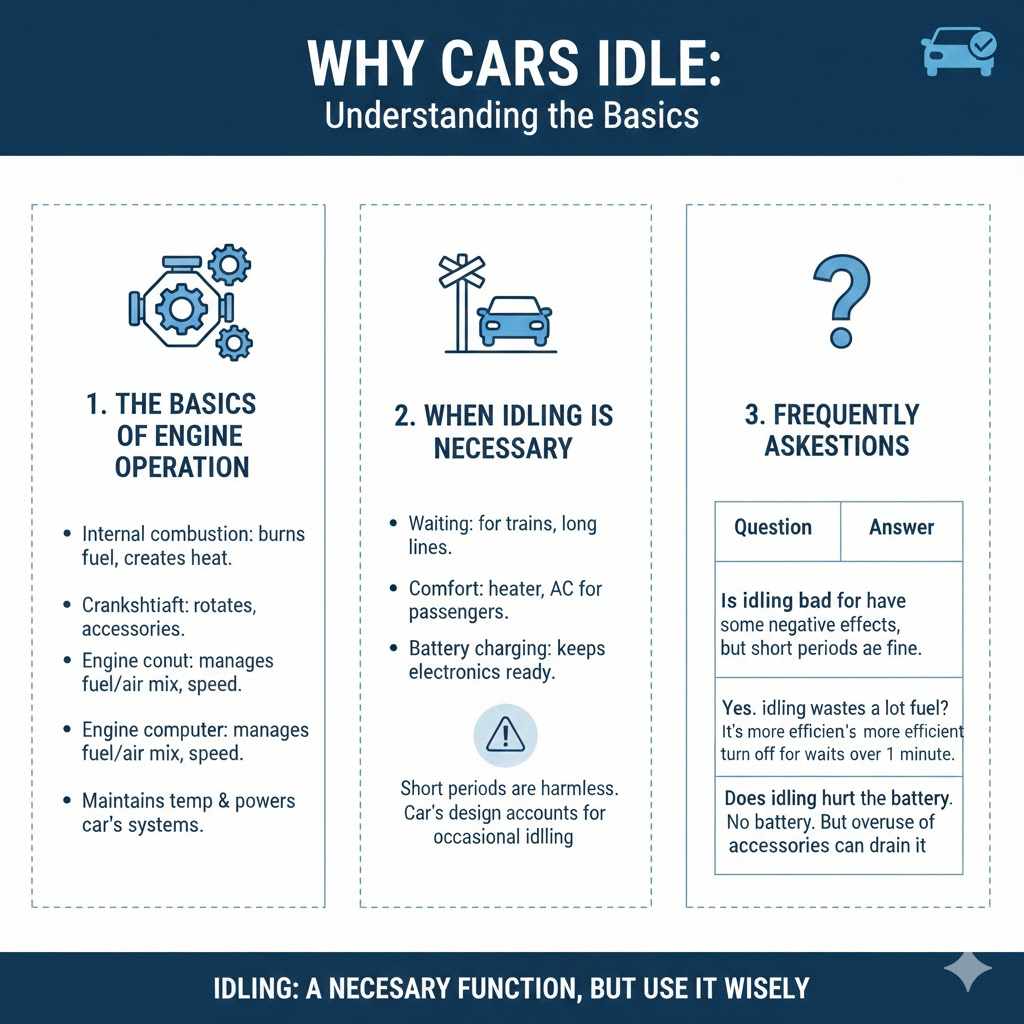
Cars idle when the engine is running but the vehicle isn’t moving. This is a normal part of how cars operate. Idling allows the engine to stay warm and ready to go.
It also powers accessories like the air conditioning or heater, and the car’s electrical system. For short periods, idling is perfectly fine. It’s a necessary function for many driving situations, like waiting in a drive-thru or letting the engine warm up on a cold day.
The Basics of Engine Operation
An internal combustion engine works by burning fuel to create power. This process generates heat. When the engine is running, it needs a steady supply of fuel and air.
The crankshaft rotates, turning the wheels when the car is in gear. Even when the car is stopped, the engine continues to run to maintain a stable operating temperature and to keep the car’s systems powered. This is why you hear the engine humming even when you’re not driving.
Understanding what’s happening inside the engine helps explain why it needs to run. The engine’s computer controls many aspects of its performance. It ensures the right mix of fuel and air is used.
It also manages the engine’s speed. This intricate system is designed to keep the car running smoothly.
When Idling is Necessary
There are several situations where idling is necessary. Think about waiting for a train to pass, or sitting in a long line at a special event. Sometimes, you might need to run the car’s heater or air conditioning for a while.
This is especially true if you have passengers who need comfort. The engine’s power is also used to charge the car’s battery. A fully charged battery is vital for starting the car and running its electronics.
Many drivers believe that idling is bad for the car. While excessive idling can have some negative effects, short periods are generally harmless. The car’s design accounts for these situations.
It’s built to handle the stresses of occasional idling.
Safety Concerns with Prolonged Idling
Sitting in a car for a long time while it’s idling can bring up some safety questions. The main concern is about the exhaust fumes. These fumes contain gases that can be harmful if breathed in large amounts.
Modern cars have emission control systems designed to reduce these harmful gases. However, in certain situations, these fumes can still enter the car’s cabin.
Carbon Monoxide Exposure
Carbon monoxide is a dangerous gas produced when fuel doesn’t burn completely. It’s colorless and odorless, making it hard to detect. If exhaust leaks into the car’s interior, carbon monoxide can build up to harmful levels.
This is why it’s important to ensure your car’s exhaust system is in good repair.
Symptoms of carbon monoxide poisoning include headache, dizziness, nausea, and confusion. In severe cases, it can lead to unconsciousness and even death. This risk is higher if you have a damaged exhaust pipe or if the car is parked in an enclosed space, like a garage.
It’s important to remember that a properly maintained car with no exhaust leaks poses a very low risk. The car’s ventilation system is designed to bring in fresh air from outside. This helps to prevent dangerous gases from accumulating inside the cabin.
In-Cabin Air Quality
Beyond carbon monoxide, other pollutants can enter the cabin. These can include particulate matter and various volatile organic compounds. These are also byproducts of fuel combustion.
While less immediately dangerous than carbon monoxide, prolonged exposure to lower levels of these pollutants can still affect your health. This is especially true for people with respiratory issues.
The air intake for your car’s climate control system usually draws air from outside the vehicle. If you are in an area with heavy traffic or industrial pollution, this air might contain pollutants. Recirculating the cabin air can help temporarily, but it doesn’t solve the problem of external pollutants.
Ventilation and Fresh Air Flow
Proper ventilation is key to maintaining good air quality inside your car. When your car is idling, it’s still moving air through its systems. The blower fan pulls air from outside the car, through the cabin air filter, and into the passenger compartment.
This system is designed to keep the air fresh.
If your car’s ventilation system is working correctly, it will constantly be bringing in fresh air. This helps to dilute any potential buildup of exhaust fumes. Using the “fresh air” setting on your climate control is generally better than recirculating air when idling for extended periods.
Factors Affecting Idle Safety
Several factors influence how safe it is to sit in your car while it idles. The condition of your vehicle plays a big role. A well-maintained car will be safer than one with known issues.
Also, where you are idling matters a lot. Being in an open area is different from being in a closed space.
Vehicle Maintenance and Exhaust Leaks
Regular maintenance is crucial for safety. This includes checking the exhaust system for any holes or damage. A damaged exhaust pipe can allow fumes to escape and enter the car.
Your mechanic can inspect this during routine service. Also, the seals around the car’s doors and windows should be in good condition to prevent fumes from seeping in.
A common issue is a worn-out muffler or a cracked exhaust manifold. These can create leaks. Even a small leak can be a problem over time.
It’s good practice to have your exhaust system inspected annually. This simple check can prevent serious health risks.
Statistics show that vehicle exhaust systems can degrade over time. A study by the National Highway Traffic Safety Administration (NHTSA) indicated that exhaust system failures are a significant contributor to carbon monoxide poisoning in vehicles. They found that older vehicles with corroded exhaust components are at a higher risk.
Environmental Conditions and Location
Where you choose to idle your car significantly impacts safety. Idling in an open, well-ventilated area, like a large parking lot, is generally safe. The fresh air will dissipate any exhaust fumes quickly.
However, idling in a confined space, such as a closed garage, is extremely dangerous. In a garage, carbon monoxide can build up to lethal concentrations very rapidly.
Heavy traffic or areas with poor air circulation can also be problematic. Even in an open space, if you are surrounded by many idling vehicles, the concentration of pollutants can increase. In such cases, turning off your engine if you plan to be stopped for more than a minute or two is often a better choice.
Duration and Frequency of Idling
The length of time you idle your car matters. Idling for 5 minutes is very different from idling for 2 hours. For short periods, the risk is minimal, especially with proper ventilation.
However, for very long periods, even small leaks or external pollutants can become a concern. The continuous exposure increases the potential for negative health effects.
Some experts suggest that idling for more than 30 seconds can use more fuel than restarting the engine. This is especially true for modern cars. While the immediate safety concern of prolonged idling is low for a healthy vehicle in good conditions, it’s good practice to minimize unnecessary idling for both environmental and fuel efficiency reasons.
The question of Is It Safe to Sit in Your Car While It Idles for 2 Hours? leans towards caution for such extended durations.
What to Do If You Must Idle for a Long Time
If you find yourself needing to idle your car for an extended period, there are steps you can take to ensure your safety. The most important is to be aware of your surroundings and the condition of your vehicle. Taking proactive measures can significantly reduce any potential risks associated with prolonged idling.
Monitor Your Vehicle’s Systems
Pay attention to any unusual smells or sounds coming from your car. If you detect a faint exhaust smell inside the cabin, it’s a clear sign that something is wrong. Do not ignore it.
Also, be aware of how your car is running. Overheating or strange engine noises could indicate underlying issues that could compromise safety.
Your car’s dashboard warning lights are also important indicators. If any lights related to the engine or exhaust system illuminate, get your car checked by a mechanic as soon as possible. These lights are designed to alert you to potential problems before they become serious.
Ensure Proper Ventilation
Always use the fresh air setting on your car’s climate control system when idling. Avoid recirculating the cabin air for extended periods. This ensures a constant supply of fresh air from outside, which helps to dilute any potential contaminants.
You might also consider slightly opening a window to further improve air circulation.
The cabin air filter plays a role too. A clean filter helps ensure the air entering your car is as clean as possible. If your filter is old and clogged, it can reduce airflow and trap pollutants.
Check your owner’s manual for recommended replacement intervals for your cabin air filter.
Choose a Safe Location
Never idle your car in an enclosed space like a garage. Always choose an open, well-ventilated area. If you are waiting for someone or something, find a parking spot in an open lot where fresh air can circulate freely.
This is the single most important step to prevent dangerous gas buildup.
Consider the surrounding environment. If you are in an area with very heavy traffic or poor air quality, even idling in an open space might expose you to higher levels of pollutants. In such situations, turning off your engine is the best option if possible.
The Environmental Protection Agency (EPA) strongly advises against idling in confined spaces due to the severe risk of carbon monoxide poisoning.
Consider this scenario: You are waiting to pick up a child from school, and the pick-up line is extremely long, requiring you to idle for 30 minutes. If you are in a well-ventilated school parking lot with the fresh air setting on, the risk is very low. However, if that same school had no ventilation and was surrounded by exhaust from hundreds of other cars, the situation would be more concerning.
Another scenario: You are working remotely and decide to run your laptop from your car for a few hours. If you are parked in a quiet, open area with your windows cracked and the fresh air setting on, the risk of prolonged idling for 2 hours is still minimal, provided your car is in good condition. However, if you were to do this in a busy city street with limited airflow, the risk increases.
For such extended periods, it might be wise to turn the car off every hour for 10-15 minutes to allow the system to rest and air to circulate.
How Long Can a Car Safely Idle?
The question of Is It Safe to Sit in Your Car While It Idles for 2 Hours? brings up the idea of limits. There isn’t a strict, one-size-fits-all answer for how long a car can safely idle. This is because so many factors are involved.
The car’s condition, the environment, and how the car is designed all play a part in determining safety.
General Guidelines and Recommendations
For most modern, well-maintained vehicles, idling for a few minutes to warm up the engine or to power accessories is perfectly fine. Many car manufacturers suggest not idling for more than 30 seconds if you plan to stop for a longer period. This is often for fuel efficiency reasons, as restarting the engine can be more efficient than idling for a minute or more.
However, if you are in a situation where you must idle, like waiting for a specific reason or in traffic, the primary concern is the exhaust. If your exhaust system is sound and you are in a well-ventilated area, idling for an hour or perhaps even two might not pose an immediate health risk. But, it’s not ideal for the car’s engine or fuel economy.
For very long durations, such as the 2-hour window in the title, it’s wise to consider turning the engine off periodically. Even a 10-minute break every hour can help reduce the buildup of fumes and give your car’s systems a rest. This approach balances the need to idle with potential risks and efficiency.
Impact on Fuel Consumption
Idling consumes fuel, though the exact amount varies greatly depending on the car’s engine size and type. A typical car can use anywhere from 0.5 to 1.5 gallons of fuel per hour while idling. For a 2-hour idle period, this could mean using 1 to 3 gallons of fuel.
This adds up quickly and is a significant waste of resources.
Fuel efficiency is a major reason why many recommend turning off the engine when stopped for more than a minute. If you are sitting for an extended period, consider if the convenience of idling is worth the cost of the fuel and the potential, however small, for increased emissions and wear. For longer waits, parking and turning off the engine is usually the most economical and environmentally friendly option.
Environmental Impact of Idling
Idling releases greenhouse gases and other pollutants into the atmosphere. These contribute to air pollution and climate change. Even one vehicle idling for a long time can have a noticeable impact.
When you multiply this by thousands or millions of cars, the effect is substantial. Regulations in many areas limit or discourage unnecessary idling to reduce air pollution.
For example, some cities have anti-idling ordinances that fine drivers for idling their vehicles for too long. These regulations are in place to protect public health and the environment. Being mindful of idling contributes to cleaner air for everyone.
Statistics from the EPA indicate that Americans waste billions of gallons of fuel each year due to idling. This waste also releases significant amounts of carbon dioxide and other harmful pollutants. Reducing idling is a simple yet effective way to contribute to environmental protection.
Alternatives to Prolonged Idling
When you anticipate needing to be stationary for a while, there are smart alternatives to prolonged idling. These options save fuel, reduce emissions, and can sometimes offer more comfort or convenience than simply letting your engine run.
Turning Off the Engine
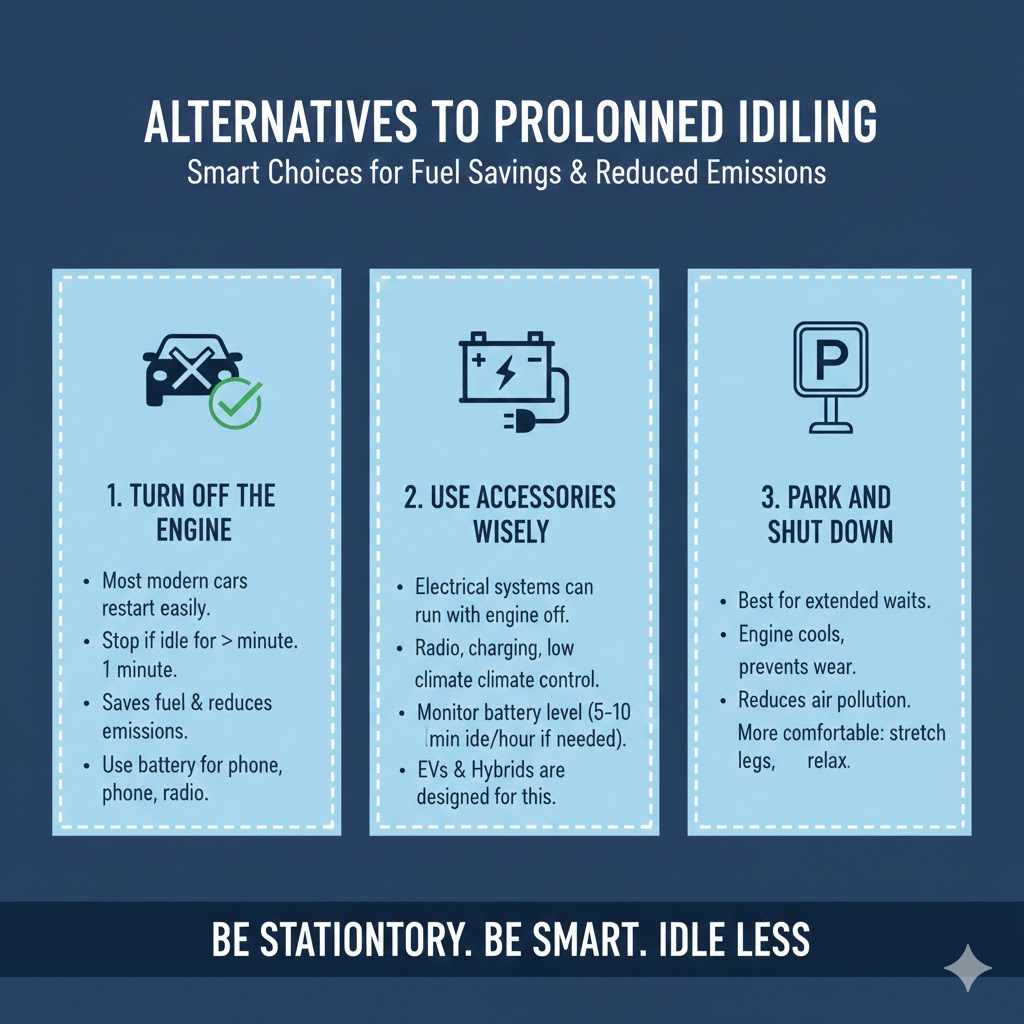
The most straightforward alternative is to turn off your engine. Most modern cars can be restarted easily and quickly without causing any harm. This is especially true if you plan to be stopped for more than a minute or two.
This practice conserves fuel and reduces emissions significantly.
If you are waiting to pick someone up, look for designated parking areas. If you are in a business waiting area, see if there are benches or other comfortable spots. For situations where you need to stay in your car, like waiting for a delivery or a long phone call, turning off the engine is the best choice.
You can use battery power for essentials like charging your phone, but the main engine can rest.
Using Vehicle Accessories Wisely
Modern cars have electrical systems designed to run for a period without the engine. You can often use the radio, charge devices, or even run the climate control on a lower setting for some time with the engine off. Be mindful of your battery level, though.
If you are unsure, a quick 5-10 minute idle every hour can help recharge it.
Consider the purpose of idling. If it’s to run the air conditioning or heater, think about whether you truly need it for that entire duration. Sometimes, opening windows for a bit or using a portable fan can be sufficient.
If you have a hybrid or electric vehicle, these concerns are largely eliminated as they are designed for efficient power usage.
Parking and Shutting Down
If you are waiting for an extended period, it is usually best to find a parking spot and turn off your car completely. This allows the engine to cool down and prevents unnecessary wear and tear. It also ensures you are not contributing to air pollution unnecessarily.
Many people find that parking in a safe, designated spot is more comfortable than sitting in an idling car. You can stretch your legs, check your phone, or simply relax without the engine noise and vibrations. This is the ideal solution for any wait longer than a few minutes.
Frequently Asked Questions
Question: How much fuel does a car use while idling for 2 hours?
Answer: A typical car can use between 1 to 3 gallons of fuel while idling for 2 hours, depending on the engine size and efficiency.
Question: Can I run my car’s heater or air conditioning while the engine is off?
Answer: Yes, you can usually run some accessories like the climate control on lower settings or the radio for a limited time using battery power, but be mindful of your battery level.
Question: What is the biggest risk of idling my car in a closed garage?
Answer: The biggest risk is carbon monoxide poisoning, as the gas can build up to lethal levels very quickly in an enclosed space.
Question: How often should I check my car’s exhaust system for leaks?
Answer: It is recommended to have your exhaust system inspected at least annually during routine maintenance to ensure it is in good condition and free of leaks.
Question: Is it better for the car to idle or to restart it if I’ll be stopped for 10 minutes?
Answer: For most modern cars, it is generally better for fuel efficiency and to reduce emissions to turn off the engine and restart it if you will be stopped for 10 minutes or more.
Conclusion
So, Is It Safe to Sit in Your Car While It Idles for 2 Hours? Generally, yes, if your car is well-maintained with no exhaust leaks and you are in a well-ventilated area. However, prolonged idling is not ideal for fuel economy or the environment. It is best to turn off your engine when stopped for more than a minute or two.
Always prioritize a safe, open location and monitor your vehicle for any unusual signs. Being aware and taking simple precautions ensures your comfort and safety.