Protect My Car vs. CarShield: Cost & Coverage Compared
Protect My Car often costs less up front, but CarShield’s stronger BBB standing can matter more if claims support and trust drive your choice. Pick the wrong plan and you may save at signup, then face denied claims, slow service, or coverage that does not fit your vehicle. This guide compares monthly price, what each plan covers, BBB standing, claims handling, and which driver each provider fits best.
| Factor | Protect My Car | CarShield: Cost & Coverage Compared | Winner |
|---|---|---|---|
| Monthly price | $68-$120 a month | $99.99-$169.99 a month | Protect My Car |
| 12-month cost | $816-$1,440 | $1,199.88-$2,039.88 | Protect My Car |
| BBB standing | C rating; not accredited | A+ rating; BBB accredited | CarShield: Cost & Coverage Compared |
| Claims workflow | File online or by phone; repairs can be done at a licensed repair facility of your choice | File online or by phone; CarShield works directly with the repair facility after approval | CarShield: Cost & Coverage Compared |
| Coverage and added benefits | Major vehicle components such as engine and transmission; 24/7 roadside assistance; rental car reimbursement | Coverage details vary by contract; transferable plans; roadside assistance and rental car benefits can vary by contract | Tie |
| Best-fit use | Budget-sensitive drivers who want the lower monthly payment | Trust-sensitive drivers who want stronger BBB signals and a more structured claims process | Tie |
| Repair-facility flexibility | Licensed repair facility of your choice | Works directly with the repair facility after approval | Protect My Car |
| Transferable plans | Not stated in the article | Transferable plans available | CarShield: Cost & Coverage Compared |
| Price vs trust tradeoff | Usually costs less each month, which helps on a tight budget or older vehicle | Stronger BBB profile may matter more when claims approval and trust are the priority | Tie |
Protect My Car vs. CarShield: the real tradeoff
Extended auto warranties cover major vehicle repairs, and price changes with make, model, year, and mileage. Protect My Car usually costs less each month, but CarShield has the stronger BBB profile, which can matter when you care about claim approval, repair authorization, and how much back-and-forth comes before work starts.
What the monthly price range suggests
Protect My Car plans run about $68-$120 a month, while CarShield runs $99.99-$169.99 a month. That gap is real, but it does not tell the whole story because deductibles, exclusions, and waiting periods can change what you pay when a repair is actually needed.
Why trust signals matter when claims are approved
A lower payment can look attractive on paper. The harder question is whether the provider’s approval rules, contract exclusions, and repair-shop coordination create extra cost later. That is where BBB standing and claims workflow become practical differences.
How much do they cost for 12 months?
Protect My Car may cost roughly $800 to $1,440 over 12 months, based on its listed monthly range. CarShield may cost roughly $1,200 to $2,040 over 12 months. Those totals are simple annualized estimates, but the real bill can rise once deductibles, excluded repairs, and waiting periods enter the picture.
Protect My Car monthly price to annual cost
Using the stated $68-$120 monthly range, a 12-month term works out to $816 at the low end and $1,440 at the high end. That is the cleaner fit if you want to keep the monthly payment down on an older vehicle or a tight budget.
CarShield monthly price to annual cost
Using the stated $99.99-$169.99 monthly range, a 12-month term works out to $1,199.88 to $2,039.88. The higher entry price can be easier to accept if the claims process and BBB profile matter more than the lowest monthly bill.
Where deductibles and waiting periods can change the bill
Monthly price is only part of out-of-pocket cost. Deductibles, contract exclusions, and waiting periods can all shift what you actually pay after a breakdown, especially if the part you need is excluded or the claim falls inside a coverage delay.
- Check the deductible before comparing quotes.
- Read the waiting period for each plan.
- Look for excluded components and maintenance-related exclusions.
- Confirm how claims must be approved before repairs begin.
What does each company cover?
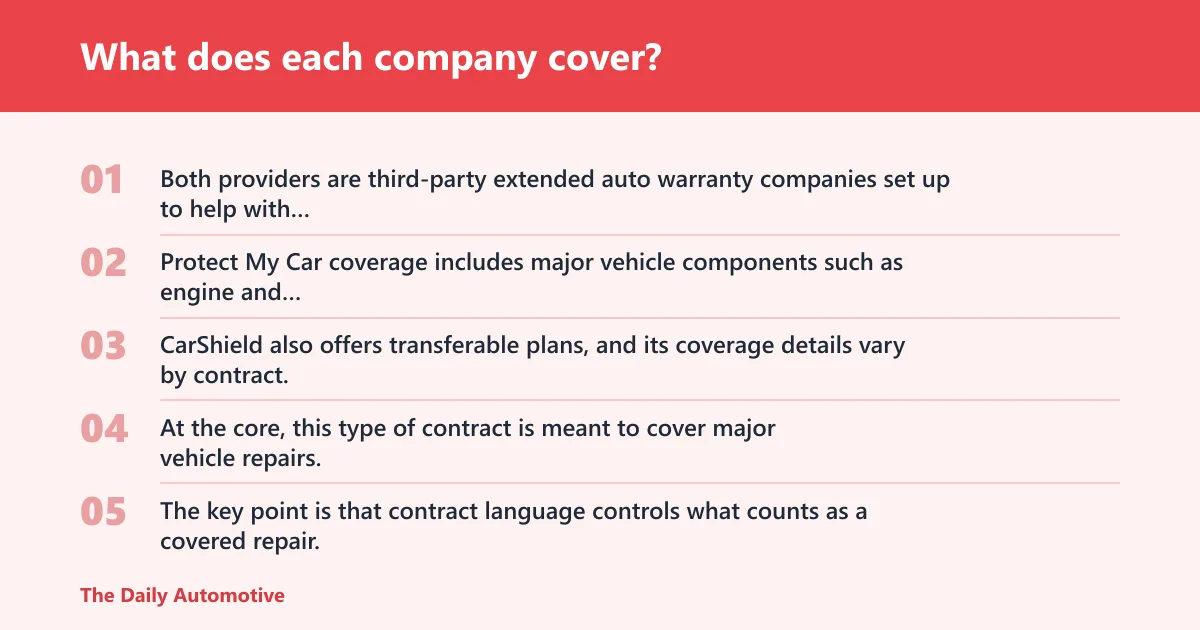
Both providers are third-party extended auto warranty companies set up to help with costly repairs. Protect My Car coverage includes major vehicle components such as engine and transmission, plus 24/7 roadside assistance and rental car reimbursement. CarShield also offers transferable plans, and its coverage details vary by contract, so the exact protection depends on the plan you buy.
Core extended auto warranty coverage
At the core, this type of contract is meant to cover major vehicle repairs, not routine maintenance. The key point is that contract language controls what counts as a covered repair, what is excluded, and whether approval must happen before the shop starts work.
Roadside assistance and rental car reimbursement
Protect My Car offers around-the-clock emergency roadside assistance and may include rental car reimbursement. That can help with flat tires, lockouts, towing, and temporary transportation during covered repairs. CarShield also markets roadside assistance and rental-related benefits, but plan details can vary, so the exact support depends on the contract.
Transferable warranty terms
CarShield offers transferable plans, which can matter if you sell the vehicle before the contract ends. A transferable warranty can add appeal for a buyer because the coverage may move with the car, subject to the provider’s transfer rules.
Contract limits and exclusions to check before you buy
Do not assume broad wording means broad payment. Check exclusions, the claims approval rule, and any waiting period that delays coverage. That is the difference between a plan that looks good in a quote and one that actually cuts repair expense.
How do claims work with each provider?
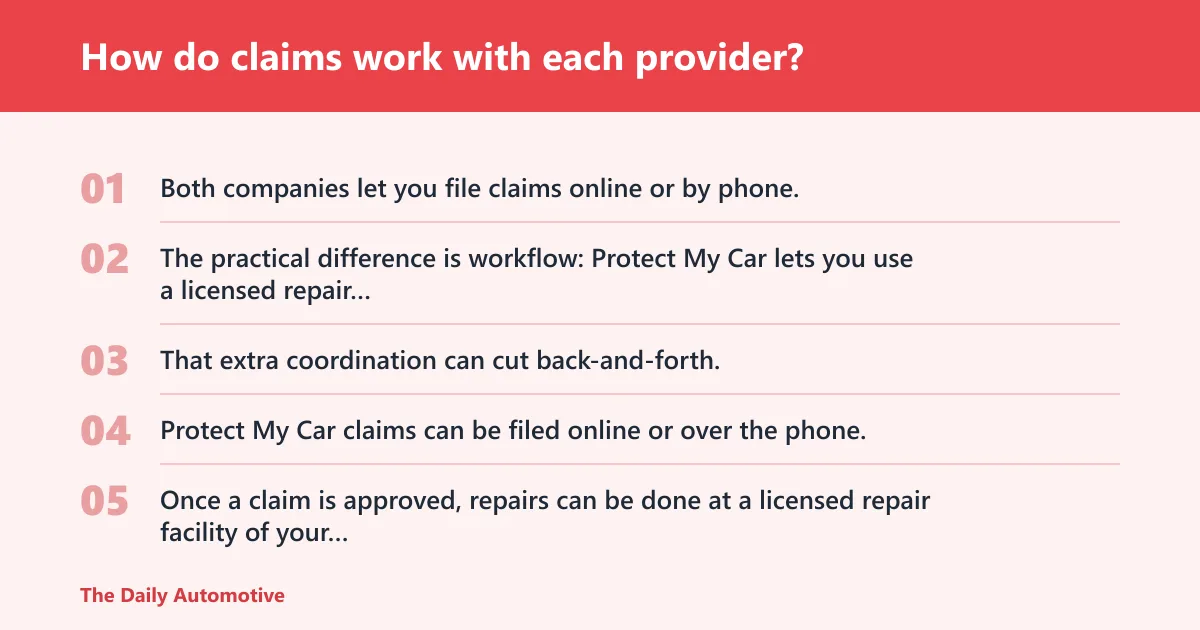
Both companies let you file claims online or by phone, and approval must happen before repairs begin. The practical difference is workflow: Protect My Car lets you use a licensed repair facility of your choice, while CarShield works directly with the repair facility after approval. That extra coordination can cut back-and-forth, which may reduce delay and out-of-pocket exposure.
Protect My Car claims by phone or online
Protect My Car claims can be filed online or over the phone. Once a claim is approved, repairs can be done at a licensed repair facility of your choice. That gives you shop flexibility, but you still need to follow the approval process closely before any work starts.
CarShield claims by phone or online
CarShield claims can be filed online or by phone. After approval, CarShield works directly with the repair facility. For some drivers, that creates a more guided process; for others, it means one more party is involved before the car is released for repair.
Repair-facility workflow and approval before repairs
Approval before repairs is the key rule for both companies. If a shop starts work too early, you can end up responsible for costs the contract might otherwise have covered. That is why claims friction matters: delays, missing documents, or unclear approvals can turn a covered repair into a larger bill.
Where claims friction can affect out-of-pocket cost
Picture a 12-year-old sedan with a slipping transmission and a warning light on the dash. If the provider wants extra documentation before authorizing work, the car may sit longer and the driver may face more towing, diagnosis, or rental exposure. That is why the claims path matters as much as the monthly price.
Does CarShield have better BBB ratings than Protect My Car?
Yes. Protect My Car carries a BBB rating of C and is not BBB accredited, while CarShield holds BBB accreditation and has an A+ rating. For many shoppers, that does not replace the contract, but it does give CarShield a stronger trust signal on paper.
BBB accreditation and rating snapshot
Protect My Car has a lower BBB rating and is not accredited. CarShield is BBB accredited and has a high BBB rating. Those are the clearest trust markers available in this comparison, and they point in different directions.
What a C rating versus an A+ rating can signal to shoppers
A C rating may make a buyer more cautious about service consistency, complaint handling, or claims support. An A+ rating and accreditation suggest a stronger BBB profile, which may matter if you value a more established claims reputation.
How to read BBB standing alongside the contract itself
BBB standing should not replace the contract. A strong rating does not change exclusions, and a weaker rating does not automatically mean every claim is denied. The contract still controls coverage, approvals, and repair payment.
Which company fits your vehicle and budget?
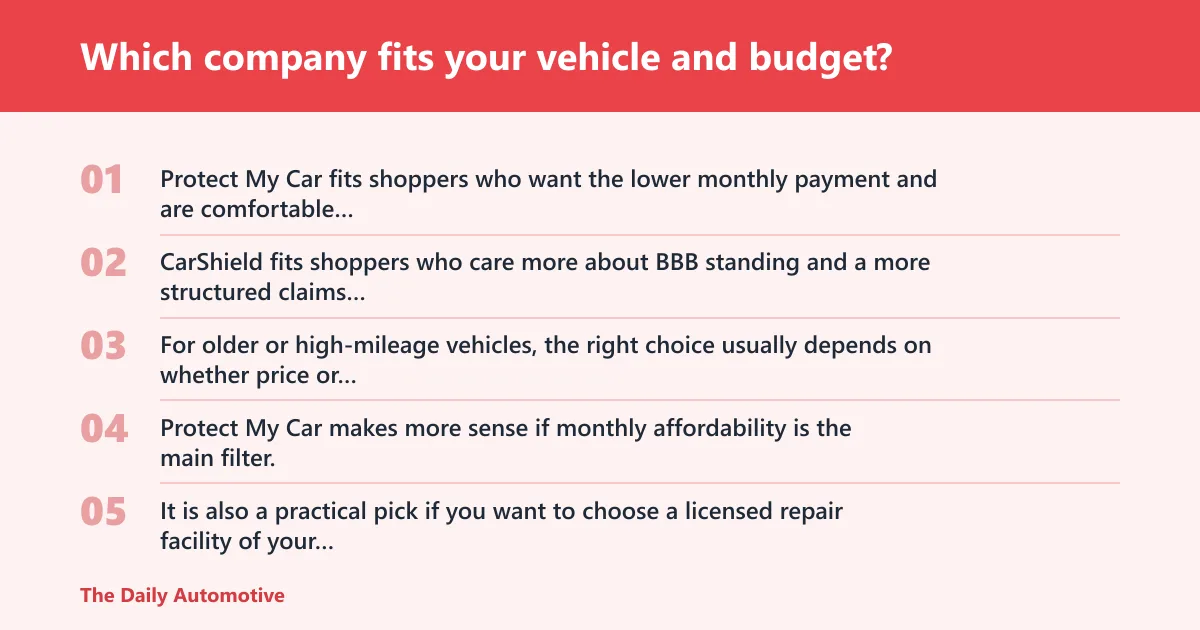
Protect My Car fits shoppers who want the lower monthly payment and are comfortable doing more contract review before buying. CarShield fits shoppers who care more about BBB standing and a more structured claims relationship, even if the monthly bill is higher. For older or high-mileage vehicles, the right choice usually depends on whether price or claims confidence matters more.
Choose Protect My Car if you want the lower monthly payment
Protect My Car makes more sense if monthly affordability is the main filter. It is also a practical pick if you want to choose a licensed repair facility of your choice and are willing to read the contract carefully before relying on it.
Choose CarShield if you care more about BBB standing and claims confidence
CarShield is the cleaner fit if BBB accreditation and an A+ rating matter to you. It also fits drivers who want a claims process that works directly with the repair facility after approval, which can reduce coordination on your side.
Best fit for high-mileage and older vehicles
High-mileage and older vehicles are where exclusions and approval rules become more important than headline pricing. If the car is already past its factory warranty, the safer choice is the plan whose contract language, claims process, and trust signals you are more likely to stick with under pressure.
Best fit for trust-sensitive shoppers
A common first-timer mistake is choosing the cheapest quote and ignoring the provider’s track record. If you are trust-sensitive, CarShield’s BBB profile gives it an edge. If you are strictly payment-sensitive, Protect My Car keeps the monthly number lower.
Choose Protect My Car if… / Choose CarShield if…
Choose Protect My Car if you want the lower monthly payment, plan to use a licensed repair facility of your choice, and are ready to read the exclusions carefully before signing. Choose CarShield if you value BBB accreditation, an A+ rating, and a claims setup that works directly with the repair facility after approval.
Suppose your SUV has 118,000 miles and the transmission warning light comes on two weeks after you buy coverage. If the plan’s waiting period or exclusion language blocks payment, the lower monthly premium will not matter much. In that case, the contract details matter more than the sticker price.
Can you transfer a CarShield warranty to a new owner?
Yes. CarShield offers transferable plans, which means a warranty can be transferred to a new owner if the vehicle is sold, subject to the plan’s transfer rules. Transferability can make a used car more appealing because the next owner may keep some coverage in place.
Transferable warranty basics
A transferable warranty is coverage that can move with the vehicle instead of ending at sale. That can be useful if you may sell the car before the contract expires, but you still need to review the transfer steps and any fees or conditions in the contract.
Why transferability matters when you sell the vehicle
Transferability can affect resale value and buyer confidence. A warranty that follows the car may help a sale move faster, especially if the buyer wants repair protection without starting from zero.
Frequently asked questions
Is Protect My Car cheaper than CarShield?
Yes, Protect My Car is cheaper on monthly price. Its listed range is $68-$120 a month, while CarShield runs $99.99-$169.99 a month. That said, lower payment does not guarantee lower total cost if deductibles, exclusions, or waiting periods make the claim less useful.
What does Protect My Car cover compared with CarShield?
Protect My Car coverage includes major vehicle components such as engine and transmission, plus 24/7 roadside assistance and rental car reimbursement. CarShield also sells extended auto warranty plans, but the exact coverage depends on the contract. In both cases, the plan wording decides what is paid.
Does CarShield have better BBB ratings than Protect My Car?
Yes. CarShield has BBB accreditation and an A+ rating, while Protect My Car has a C rating and is not accredited. That does not replace contract review, but it does give CarShield a stronger trust signal for shoppers who care about complaint handling and provider reputation.
How do Protect My Car and CarShield claims processes differ?
Both let you file claims online or by phone, and both require approval before repairs. The difference is that Protect My Car lets you use a licensed repair facility of your choice, while CarShield works directly with the repair facility after approval. That can change how much coordination you handle.
What are Protect My Car monthly prices?
Protect My Car plans run about $68-$120 a month. That puts the 12-month cost at roughly $816-$1,440 before deductibles and any excluded repair items. Vehicle details such as make, model, year, and mileage can affect the quote you receive.
What are CarShield monthly prices?
CarShield runs $99.99-$169.99 a month. Over 12 months, that equals about $1,199.88-$2,039.88. The monthly number is only part of the picture, because the contract still controls claims approval, exclusions, and any repair-shop coordination.
Which company has better roadside assistance and rental car benefits?
Protect My Car is the clearer answer from the supplied plan details because it explicitly includes 24/7 emergency roadside assistance and rental car reimbursement. CarShield also offers roadside and rental-related benefits, but the exact details can vary by plan, so you need to check the contract before buying.
Can I transfer a CarShield warranty to a new owner?
Yes, CarShield offers transferable plans. That matters if you may sell the vehicle later, because a transferable contract can add value at resale. Make sure you review the transfer rules in the contract, since eligibility and process details can affect whether the transfer is actually available.
Products related to this article
Sponsored / affiliate links. As an Amazon Associate I earn from qualifying purchases. I may earn additional commission from eligible campaigns.
 Half Car Cover SUV,Top Cover with Red Reflective Strip, Hail Protector Car Cover with Cotton Liner, Sunroof & Windshield Cover for Ice and Snow, All Weather Car Body Cover for Sun, Rain, Dust
 Roadside Assistance Emergency Kit,Vehicle Truck Car Safety Roadside Emergency Kit with Reflective Warning Triangle Tow Strap Reflective Vest etc