
Top Car Brands You’ll See on the Street
It can be a bit tricky to figure out the Top Car Brands You’ll See on the Street when you’re just starting out. You see so many different cars everywhere, and it’s easy to get lost. But don’t worry!
We’re going to break it down super simply. This guide will show you exactly what brands are most popular and why. Get ready for an easy step-by-step look at cars you’ll see all the time.
Exploring Popular Car Brands on the Road
This section helps you get to know the car brands that are most common. You see these cars every day. We will look at why they are so popular.
This includes brands known for being reliable, fun to drive, or good for families. We will also touch on why some brands appear more often than others. It’s all about understanding what makes a car brand a common sight in your neighborhood.
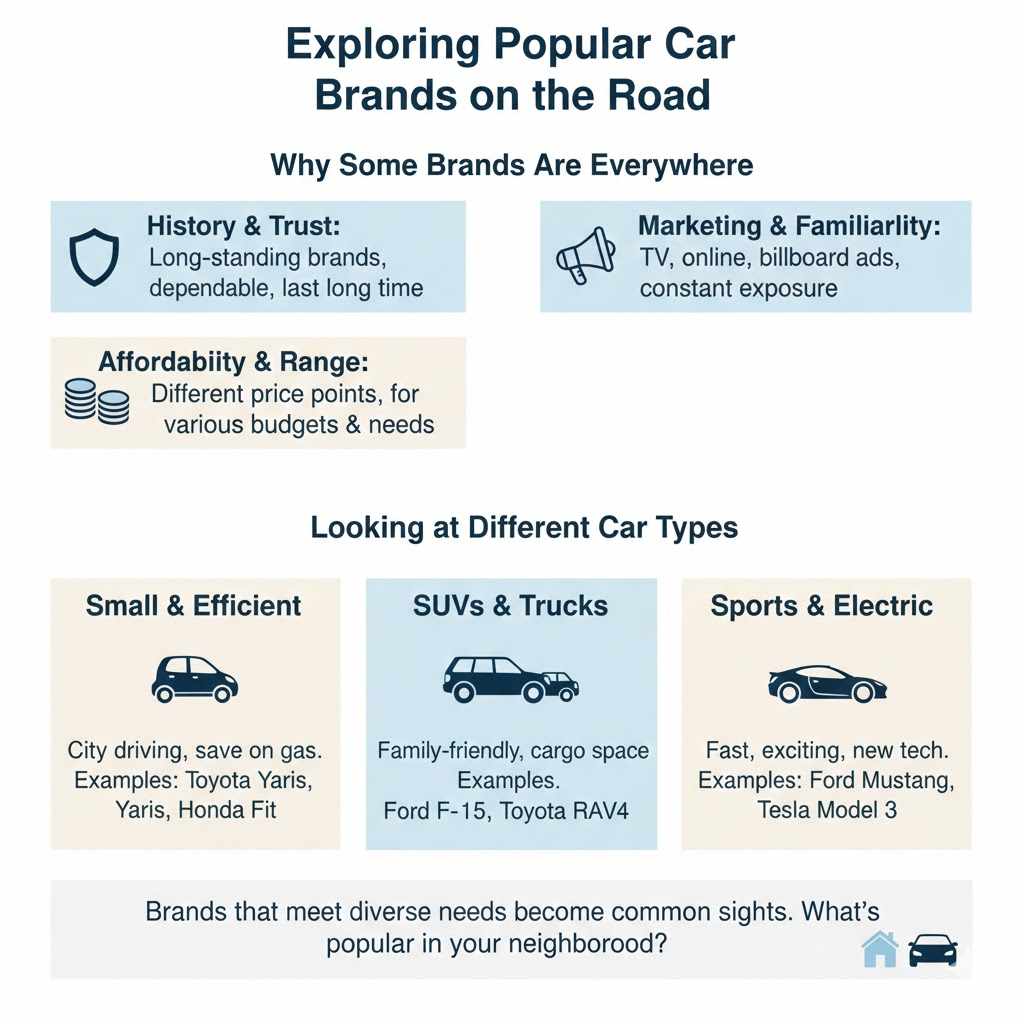
Why Some Brands Are Everywhere
Several factors make certain car brands stand out on the road. One big reason is their history of building good cars. Brands that have been around for a long time often have a strong reputation.
People trust them. They know these cars are usually dependable and last a long time. This trust makes people want to buy them again and again.
Another key point is affordability. Many of the most common car brands offer vehicles at different price points. This means more people can afford to buy them.
They might have cheaper models for first-time buyers or budget-conscious families. They also might have more expensive models for those who want more features. This wide range helps them appeal to a lot of different people.
Marketing also plays a big role. Brands that spend a lot on advertising and commercials get their names out there. You see their ads on TV, online, and even on billboards.
This constant exposure makes them familiar to everyone. When it’s time to buy a car, people often think of the brands they see and hear about the most.
Looking at Different Car Types
Cars come in many shapes and sizes. This is why you see different kinds of popular brands. Some brands are famous for their small, fuel-efficient cars.
These are great for city driving and saving money on gas. Other brands are known for their big trucks and SUVs. These are popular with families and people who need a lot of space for cargo or passengers.
Sports cars are another type you see. While not as common as sedans or SUVs, certain brands are famous for making fast and exciting sports cars. These often catch your eye.
You might also see electric cars becoming more common. Brands that are leading the way with electric technology are starting to appear more often.
Think about the needs of drivers. Some people need a car that can handle rough roads or snow. Others just need something to get them from point A to point B reliably.
The car brands that offer vehicles suited for these different needs will naturally show up more on the streets.
Major Automotive Manufacturers and Their Popular Models
This section focuses on the big companies that make cars. You’ll learn about some of the most well-known car makers and the specific car models that you see most often. We will explore what makes these particular models so popular.
This includes looking at their features, their price, and their overall appeal to drivers everywhere.
The Japanese Giants Toyota and Honda
Toyota and Honda are two of the biggest names in cars, and you see their vehicles everywhere. Toyota is famous for its reliability and practicality. Their models like the Camry and Corolla are known for lasting a very long time with fewer problems.
The RAV4, a compact SUV, is also incredibly popular. People love it for its good gas mileage and versatility for everyday use.
Honda also builds very dependable cars. The Honda Civic is a long-time favorite, offering a good balance of fuel efficiency, comfort, and a fun driving experience. The Honda CR-V is their popular SUV, similar to the RAV4, providing space for families and good performance.
Both Toyota and Honda are praised for their fuel-efficient engines and high resale value. This means they hold their worth well over time.
These brands invest heavily in research and development. They constantly work to improve their cars with new technology and safety features. This commitment to quality and innovation keeps them at the top of car sales charts year after year.
Their global presence means you find their cars on roads in almost every country.
A key reason for their widespread popularity is their focus on the average driver. They aim to make cars that are easy to own and operate. You don’t need to be a car expert to drive a Toyota or a Honda.
They offer a comfortable ride, intuitive controls, and a sense of security. This makes them a safe choice for many.
American Icons Ford and Chevrolet
In the United States, Ford and Chevrolet are two of the most recognizable car brands. Ford is well-known for its pickup trucks, especially the F-150. This truck is a bestseller and is seen on job sites, farms, and family driveways across the country.
Ford also makes popular cars like the Mustang, a classic sports car, and the Explorer, a large SUV.
Chevrolet, part of General Motors, is another major player. Their Silverado pickup truck competes directly with Ford’s F-150 and is equally popular. Chevrolet also offers a range of sedans like the Malibu and SUVs like the Equinox.
The Corvette is their iconic sports car, known for its performance and style.
These American brands often appeal to a sense of tradition and power. Their trucks are built to be tough and capable, fitting the needs of many American workers and outdoor enthusiasts. The muscle car heritage of brands like Ford and Chevrolet also holds a strong appeal for performance car lovers.
They have a vast dealer network. This means it’s easy to find a dealership for sales or service no matter where you live. This accessibility is a major advantage for consumers.
Many people also have long-standing loyalty to these brands, often passing down their preference from one generation to the next.
European Luxury and Performance Brands
While not as common as mainstream brands, European luxury brands are frequently seen and admired on the streets. Companies like BMW, Mercedes-Benz, and Audi are known for their high-quality engineering, sophisticated designs, and advanced technology. You often see their sedans and SUVs with sleek lines and a premium look.
These brands offer a driving experience that emphasizes performance and comfort. Their engines are powerful, and their interiors are often crafted with luxurious materials. They also tend to be at the forefront of automotive innovation, introducing new safety features and driver-assistance systems.
Brands like Porsche are famous for their high-performance sports cars. You might see fewer of them compared to a Toyota Camry, but they are definitely a notable presence on the road. Their distinctive designs and thrilling performance make them highly sought after by car enthusiasts.
The high price tag of these vehicles means they are owned by a smaller segment of the population. However, their strong brand image and the desire for status and performance keep them in the public consciousness and visible on upscale streets and in affluent areas.
Understanding Car Brand Popularity Factors
This section explores the deeper reasons behind why certain car brands become household names. We will look at things like how well cars hold their value, how safe they are, and the impact of new technologies. Knowing these factors will help you understand why you see the Top Car Brands You’ll See on the Street so often.
The Importance of Reliability and Durability
Reliability is a huge factor in a car’s popularity. If a car is known to break down often, people won’t buy it. Brands that consistently deliver dependable vehicles build a loyal customer base.
They earn a reputation for being trustworthy. This means people feel confident buying their cars, knowing they won’t face constant repairs.
Durability goes hand in hand with reliability. It’s about how long a car can last and still perform well. Cars that are built with strong materials and good engineering can last for many years and hundreds of thousands of miles.
This is especially important for buyers who plan to keep their car for a long time or want to sell it later for a good price.
Consumer reports and automotive publications often rank car brands based on reliability surveys. Brands that consistently score high in these reports, like Toyota and Honda, see this reflected in their sales numbers. People trust these rankings when making a major purchase.
A car’s ability to withstand wear and tear is vital. This includes how well its engine, transmission, and body hold up over time, especially in different weather conditions. A durable car means lower long-term costs for the owner, which is a major selling point for many buyers.
Safety Ratings and Features
Car safety is a top concern for almost everyone. Brands that prioritize safety in their designs and offer advanced safety features tend to be more popular. This includes things like airbags, anti-lock brakes, and stability control.
These features help prevent accidents and protect occupants if one occurs.
Organizations like the Insurance Institute for Highway Safety (IIHS) and the National Highway Traffic Safety Administration (NHTSA) test cars and give them safety ratings. Cars that receive top ratings from these groups are more attractive to buyers. Manufacturers often highlight these awards in their advertising.
Modern cars are also equipped with active safety systems. These can include automatic emergency braking, lane departure warnings, and blind-spot monitoring. These technologies help drivers avoid collisions.
As these features become more common and affordable, brands offering them are seen as more desirable.
For families, in particular, safety is often the deciding factor. Parents want to know their children are protected. A car with a strong safety record and a comprehensive suite of safety features provides peace of mind.
This is a significant reason why brands like Subaru, which has a strong reputation for safety, are so popular.
Technological Advancements and Innovation
Cars are becoming more like computers on wheels. Brands that embrace new technology and innovation attract buyers looking for the latest features. This can include advanced infotainment systems with large touchscreens, smartphone integration like Apple CarPlay and Android Auto, and sophisticated navigation systems.
The move towards electric vehicles (EVs) and hybrid technology is a major area of innovation. Brands that are leaders in this space, like Tesla, have seen their popularity surge. Even traditional automakers are investing heavily in EVs, and the models they release are becoming increasingly visible.
Driver-assistance features are also part of this technological push. This can include adaptive cruise control, which adjusts speed to maintain a safe distance from the car ahead, and parking assist systems that help you park more easily. These features make driving more convenient and can also improve safety.
The adoption of these technologies is not just about convenience; it’s also about staying current. Buyers often want the newest gadgets and features. Brands that are perceived as innovative and forward-thinking are often rewarded with higher sales and stronger brand loyalty.
Brand Image and Perception
What people think of a car brand, its image, is very important. Some brands are seen as luxurious and high-end. Others are thought of as practical and family-friendly.
Some are viewed as sporty and exciting, while others are seen as tough and rugged. This image influences who buys their cars.
Advertising and marketing campaigns play a huge part in shaping brand image. A brand might associate itself with a certain lifestyle or set of values. For example, a brand might show images of adventure and the outdoors in its ads to appeal to active people.
Customer experiences also contribute to brand perception. Positive reviews and word-of-mouth recommendations can create a strong positive image. Conversely, negative experiences or a reputation for poor customer service can harm a brand’s image significantly.
Some brands have a very long history and have built up a strong emotional connection with consumers. Think of classic cars or brands that have been around for generations. This legacy can give them an advantage in building trust and loyalty among buyers.
A Comparison of Common Car Brands
To help you better understand the Top Car Brands You’ll See on the Street, let’s compare some of them. This table will give you a quick look at how different popular brands stack up in a few key areas. It is not about one being absolutely better than another, but about what each brand typically offers.
| Brand | Typical Strengths | Common Models Seen | Target Audience |
|---|---|---|---|
| Toyota | Reliability, fuel efficiency, resale value | Camry, Corolla, RAV4, Highlander | Families, commuters, budget-conscious buyers |
| Honda | Reliability, sensible engineering, good handling | Civic, Accord, CR-V, HR-V | Young professionals, families, students |
| Ford | Trucks, capability, American muscle | F-150, Escape, Explorer, Mustang | Tradespeople, families, performance enthusiasts |
| Chevrolet | Trucks, variety of vehicles, American heritage | Silverado, Equinox, Malibu, Camaro | Truck buyers, families, general consumers |
| Nissan | Value, comfortable ride, decent fuel economy | Altima, Rogue, Sentra, Murano | Commuters, families, value seekers |
| Hyundai | Great warranty, modern features, value pricing | Elantra, Sonata, Tucson, Santa Fe | Budget-conscious buyers, families, first-time car owners |
| Kia | Stylish design, good features for the price, warranty | Forte, Optima, Sportage, Sorento | Younger buyers, families, value-oriented consumers |
| Subaru | All-wheel drive standard, safety, outdoor lifestyle | Outback, Forester, Impreza, Crosstrek | Outdoor enthusiasts, families, people in snowy climates |
| BMW | Driving dynamics, luxury, performance | 3 Series, 5 Series, X3, X5 | Luxury buyers, driving enthusiasts |
| Mercedes-Benz | Luxury, comfort, prestige, advanced technology | C-Class, E-Class, GLC, GLE | Luxury buyers, those seeking status and comfort |
This comparison shows that different brands excel in different areas. Toyota and Honda are often picked for their long-term reliability and lower running costs. Ford and Chevrolet are dominant in the truck market.
European brands like BMW and Mercedes-Benz focus on luxury and a superior driving experience.
Hyundai and Kia have risen in popularity by offering a lot of features for the money, backed by excellent warranties. Subaru stands out with its standard all-wheel drive and strong safety record, appealing to those who need extra traction or enjoy outdoor activities.
When you see these cars on the street, you can often guess a little about the owner’s priorities. A pickup truck might suggest someone who needs to haul things or enjoys rugged activities. A compact car might mean someone who values fuel efficiency.
A luxury sedan might point to someone who prioritizes comfort and status.
Popularity in Different Regions
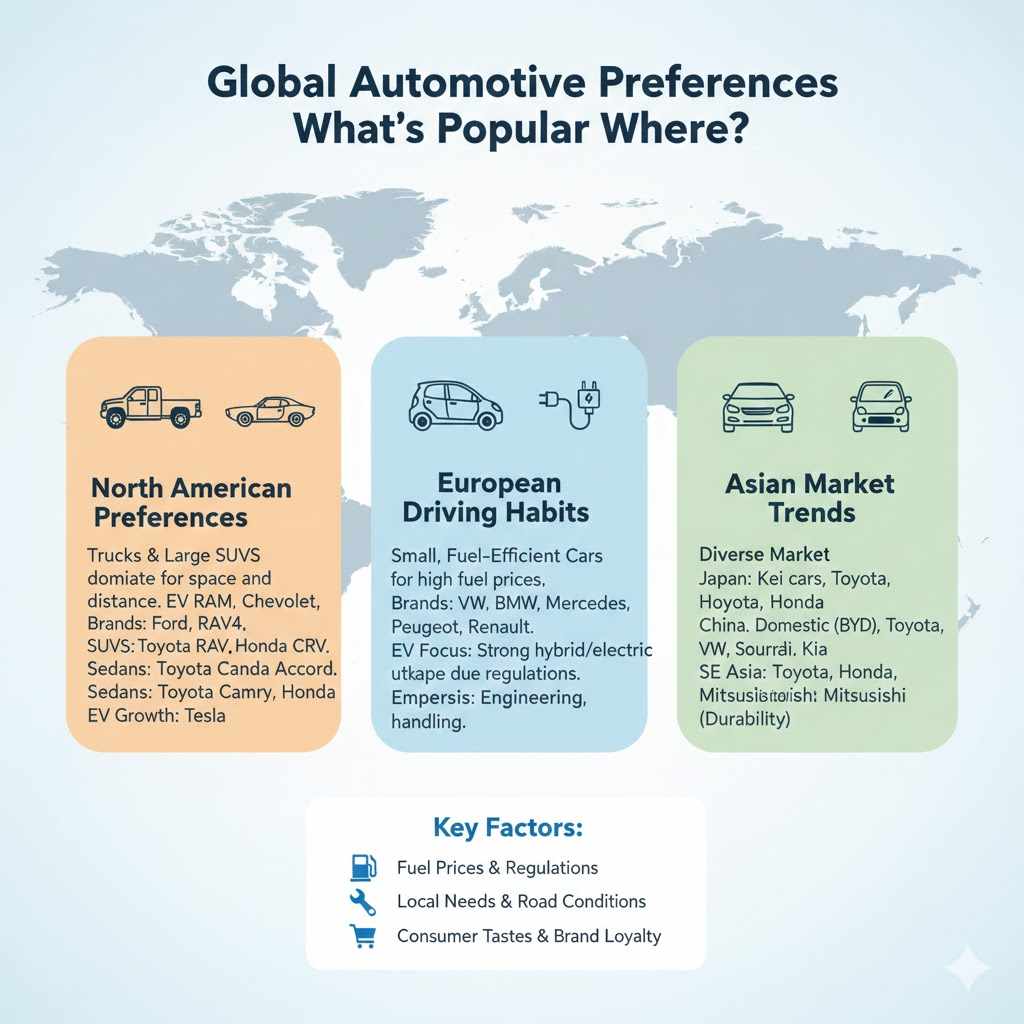
The Top Car Brands You’ll See on the Street can also change depending on where you are. Different countries and even different parts of the same country have preferences for specific car types and brands. This section will explore why this happens.
It is all about how local needs and tastes affect car sales.
North American Preferences
In North America, particularly the United States and Canada, pickup trucks and large SUVs are very popular. Brands like Ford, Chevrolet, and Ram (part of Stellantis) dominate the truck market. These vehicles are well-suited for long distances, carrying cargo, and dealing with varied weather conditions across the continent.
SUVs of all sizes are also extremely common. From compact crossovers to full-size family haulers, they offer a combination of space, comfort, and capability that appeals to many families and individuals. Toyota’s RAV4 and Honda’s CR-V are consistently among the best-selling vehicles.
Sedans are still popular, especially among commuters and those looking for fuel efficiency, but their market share has decreased as SUVs have grown. Brands like Toyota (Camry), Honda (Accord), and Nissan (Altima) are leaders in this segment. Electric vehicles are also gaining traction, with Tesla being a prominent sight in many areas.
There’s also a strong market for performance cars, with iconic models from Ford (Mustang) and Chevrolet (Camaro) having dedicated followings. European luxury brands also have a significant presence, especially in urban and affluent areas.
European Driving Habits
In Europe, smaller, fuel-efficient cars are generally more prevalent due to higher fuel prices and often narrower city streets. German brands like Volkswagen, BMW, and Mercedes-Benz are extremely popular. Volkswagen’s Golf and Polo are ubiquitous.
However, the market is diverse. French brands like Peugeot and Renault, and Italian brands like Fiat, are also very common, often offering stylish and practical compact cars. The demand for SUVs has also grown significantly in Europe in recent years.
Environmental concerns play a bigger role in car buying decisions in many European countries. This has led to a strong uptake of diesel engines in the past (though this is changing) and a rapid growth in hybrid and electric vehicle sales. Many European cities are also implementing stricter emissions regulations, encouraging a shift towards cleaner vehicles.
Luxury and performance vehicles from brands like Audi, Porsche, and even higher-end BMW and Mercedes models are also common sights, especially in major cities and wealthier regions. The emphasis is often on sophisticated engineering and dynamic handling.
Asian Market Trends
The Asian automotive market is vast and diverse, with significant regional differences. In Japan, domestic brands like Toyota, Honda, and Nissan dominate. Kei cars, which are very small, low-powered vehicles, are extremely popular in Japan due to tax breaks and ease of parking in crowded cities.
In China, the market is a mix of domestic brands and international joint ventures. Brands like BYD are rapidly growing in the electric vehicle space, challenging established players. Traditional brands like Volkswagen and Toyota also have a huge presence, often producing specific models for the Chinese market.
South Korea has seen the rise of Hyundai and Kia as major global players, and they are very popular in their home market and across Asia. Their focus on value, technology, and stylish designs has resonated with consumers.
In Southeast Asia, brands like Toyota, Honda, and Mitsubishi are extremely common, often favored for their durability and suitability for various road conditions. Small pickup trucks and fuel-efficient sedans are particularly popular in many of these countries.
Frequently Asked Questions
Question: What are the most reliable car brands?
Answer: Toyota and Honda are consistently ranked as some of the most reliable car brands. They are known for their durable engineering and long-term dependability, leading to fewer repairs over the life of the vehicle.
Question: Are electric cars becoming more common?
Answer: Yes, electric cars are becoming much more common. As battery technology improves and charging infrastructure expands, more people are choosing EVs for their environmental benefits and lower running costs.
Question: Why do I see so many SUVs on the road?
Answer: SUVs are popular because they offer a good balance of passenger space, cargo room, and a higher driving position. They are versatile for families, commuting, and can handle various road conditions.
Question: Is it better to buy a car with a manual or automatic transmission?
Answer: Most cars today come with automatic transmissions because they are easier to drive. Manual transmissions offer more control for some drivers and can be more fuel-efficient, but they are becoming less common.
Question: How do car brands decide what models to make?
Answer: Car brands study market trends, customer feedback, and predict future needs. They aim to create models that appeal to specific groups of drivers, considering factors like price, size, fuel efficiency, and features.
Summary
You now know about the Top Car Brands You’ll See on the Street. We explored why some brands are so common, looking at everything from reliability to technology. You learned about major car makers and their popular vehicles.
Understanding these factors helps you see why certain cars are everywhere. Now you can spot them with more confidence.