3 Best MAF Sensors for OE Fit (2026): We Compared
The best MAF sensor is the exact OE-matched unit for your vehicle, connector, and housing. If your sensor sits in the air tube, replace the whole assembly. If it uses a separate element, match the calibration number exactly. A wrong fit can trigger lean or rich fueling, rough idle, poor mileage, and repeated check-engine codes. This guide shows how to identify the correct part by symptoms, connector shape, housing style, and vehicle-specific calibration risk.
Quick comparison
| Product | Badge | Best for | Price | ||
|---|---|---|---|---|---|
 |
BOSCH 0280218190 Original Equipment Mass Air Flow (MAF)Bosch | Our pick | Bosch OE MAF sensor · $67.99 · Select Mercedes models | $67.99
Price as of 22 Oct 2026
|
View |
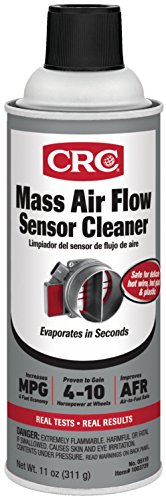 |
CRC Mass Air Flow Sensor Cleaner – Plastic Safe, FastCRC | Pair with it | CRC MAF Cleaner · 11 oz can · $14.26 | $14.26
Price as of 22 Oct 2026
|
View |
 |
ELM327 Bluetooth OBD2 Scanner – Wireless Car DiagnosticRODEDIO | Also great | ELM327 Bluetooth OBD2 scanner · iOS & Android · $16.99 | $16.99
Price as of 22 Oct 2026
|
View |
Start with the fitment path, not the brand name. The right choice depends on whether you need OE-style calibration, broad vehicle coverage, or a complete housing-and-sensor assembly.
If you already have the part number, check the connector pin count and housing shape before ordering. That step matters as much as the vehicle year on the listing.
How we chose
We compared parts on four points: fitment specificity, calibration quality, installation style, and OE cross-reference support. Those factors matter more than marketing language.
We also separated sensor-only parts from housing-inclusive assemblies. That distinction often decides whether the part fits cleanly the first time.
Delphi AF10043: best for OE-style calibration
Delphi AF10043 is the strongest fit when you want a new, not remanufactured sensor with OE-style calibration and precision. Delphi says it uses the same high standards used by top global OEMs, which makes it a good starting point for drivability complaints where calibration matters as much as physical fit.
It is best for drivers who want a complete assembly solution and want to reduce the odds of a calibration mismatch after installation. That makes it especially useful when the old unit has more than contamination damage and the vehicle is sensitive to airflow readings.
The drawback is simple: you still have to verify the exact connector, housing shape, and OE cross-reference before buying. Even a strong OE-style part can miss if the vehicle uses a different generation of housing or pin count.
Denso 197-6030: best for exact fitment
Denso 197-6030 is a vehicle-specific fit, which is the main reason it belongs on a short list for exact-match replacement work. It weighs 0.08 kilograms, and the compact package dimensions are listed in centimeters, so it is aimed at a precise OE-style swap rather than a broad universal fit.
Choose this type of part when the engine code and connector match the listing closely and you want to keep the replacement close to factory intent. That is useful when symptoms point to a true sensor issue and not a wiring or intake leak.
The limitation is fitment sensitivity. Vehicle-specific parts still need the right year, engine, and connector match, and the listing should be checked against the OE number before you order.
Hitachi MAF0031: best for OE replacement
Hitachi MAF0031 is positioned as original equipment fitment, with a goal of restoring original drivability and meeting OE performance and durability standards. That makes it a sensible pick when you want the replacement to behave like the factory sensor rather than a broader aftermarket substitute.
It suits vehicles where small calibration differences can affect idle quality, throttle response, and emissions readiness. If the car has been sensitive to airflow signal changes, OE-style replacement is often the safer route.
The drawback is the usual one for OE-targeted parts: you still need to verify exact generation, connector type, and housing format. OE fitment language does not remove the need for part-number checking.
AdvanEX GM-fit MAF sensor: best for GM applications
AdvanEX is aimed at Chevrolet, GMC, Cadillac, and Pontiac applications, with coverage that spans 1999-2007 model years. That makes it useful for GM owners who need a replacement part that fits a broad but still defined vehicle range.
Its positioning also points to improved fuel economy and reduced emissions when the old sensor is the real fault. That can matter on older GM vehicles where a poor airflow signal disturbs fueling and trims.
The caveat is that GM coverage can still split by engine, trim, and connector. Check the exact model year window, the housing style, and the OE cross-reference before buying.
OYEAUTO MAF sensor: best for broad Asian and domestic coverage
OYEAUTO is a broad coverage option for Toyota/Lexus, Ford/Lincoln/Mercury, and Nissan/Infiniti variants. The published claims include a 15 ms response time and output curve tolerance below 2%, which is the sort of calibration language that matters when you are comparing replacement sensors.
This wider coverage helps when you need an OEM-spec replacement but do not want to settle for a generic, one-size-fits-all part. It can make sense for mixed fitment needs across Asian and domestic platforms.
The downside is that broad coverage can hide small differences between engine generations. Connector verification is still mandatory, and the OE cross-reference should be checked against the exact vehicle application.
AISIN aftermarket MAF sensors: best for plug-and-play replacements
AISIN aftermarket MAF sensors are aimed at direct replacement and plug-and-play positioning, with sensor-with-housing variants available. That is a practical fit for owners who want installation simplicity and a part that arrives close to the needed configuration.
Exact listings matter here. AISIN MAFGM-00023 is positioned for Chevrolet Cruze owners and similar GM small vehicles, while AISIN MAFVG-00120 is listed for Jetta 08-13, Passat 08-10, and CC 09-17. AISIN MAFAZ-00001 is aimed at Nissan and Infiniti models.
The drawback is that fitment varies by exact model year and engine, even inside the same nameplate. Plug-and-play claims still require connector and housing checks before you buy.
Maf replacement decision table
| Symptom pattern | Likely cause | What to verify before buying | Sensor-only vs housing-inclusive |
|---|---|---|---|
| Rough idle | Dirty sensor, intake leak, wiring fault, or calibration mismatch | Check for vacuum leaks, inspect the connector pins, and match the OE cross-reference number | Use sensor-only if the housing is intact; choose housing-inclusive if the air tube or meter bore is damaged |
| Lean codes | Unmetered air, contaminated sensor element, or bad signal output | Confirm engine size, connector type, and whether the code returns after clearing | Sensor-only can work on removable-element designs; housing-inclusive is safer on integrated assemblies |
| Hesitation on acceleration | Delayed airflow reading, intake restriction, or throttle-side leak | Verify OE part number, pin count, and that the sensor shape matches the original generation | Match the assembly style first; a housing mismatch can change airflow behavior |
| Poor fuel economy | Sensor contamination, skewed airflow reporting, or fuel trim error | Check for dirty intake tract, correct connector, and OE calibration match | Choose housing-inclusive if the original housing is cracked, warped, or non-serviceable |
| Stalling after startup | Severe signal error, wiring issue, or major intake leak | Confirm connector pin count, power and ground integrity, and exact engine fitment | Housing-inclusive is often the safer path when the sensor and tube are one unit |
| Check-engine light returning after cleaning | True sensor failure, wiring fault, or air leak that cleaning cannot fix | Verify OE cross-reference, inspect the harness, and check for split boots or loose clamps | Sensor-only if the housing is reusable; complete assembly if the meter design is integral |
Cleaning can help only when contamination is the main problem. If the code returns, the fault may be wiring, intake sealing, or the sensor itself.
What is the best mass air flow sensor for my car?
A good mass air flow sensor is the one that matches your vehicle make, model, year, engine, connector, and housing style. Delphi AF10043 is the strongest OE-style pick for exact calibration needs, while Denso, Hitachi, AISIN, and the GM- and Toyota-focused options fit more specific use cases.
That answer changes when the problem is not the sensor. If a vacuum leak, damaged harness, or dirty intake tube is driving the fault, even a correct replacement may not fix the symptom.
What to check before you order
- Match the exact OE cross-reference number.
- Confirm the engine code, not just the model name.
- Check the connector pin count and plug shape.
- Decide whether you need the sensor only or the full housing.
- Look for fitment notes tied to your exact model year.
Which MAF sensor fits my exact make, model, and year?
The exact fit depends on the full vehicle application, not just the badge on the hood. Start with the OE number, then match the connector, housing, and engine version; that order prevents most wrong-part purchases.
Vehicle-specific parts like Denso 197-6030 are built for narrower fitment, while broader lines such as OYEAUTO and AISIN still need year-by-year checking. Broad compatibility lists are helpful, but they are not proof of fit.
Two quick fitment checks
Say your old sensor has a 5-pin connector and the new listing shows 4 pins. Stop there. The part may look close, but the connector mismatch alone can block installation or alter the signal.
Suppose the housing is cracked but the sensor element is still serviceable on your design. A housing-inclusive assembly is the safer buy, because a damaged tube can skew airflow even with a new sensor element.
Should I buy an OEM or aftermarket mass air flow sensor?
Buy OEM or OE-style when calibration tolerance matters most, especially on vehicles that are sensitive to airflow signal changes. Buy aftermarket when you need broader application coverage or a direct replacement that still matches the OE cross-reference and connector exactly.
The practical rule is simple: exact-fit, calibration-sensitive applications lean toward OE-style parts like Delphi, Hitachi, Bosch, or a vehicle-specific Denso listing. Broader coverage makes sense when the listing names your exact year and engine and the connector matches without compromise.
What symptoms mean my mass air flow sensor is bad?
Common symptoms include rough idle, lean codes, hesitation on acceleration, poor fuel economy, stalling after startup, and a check-engine light that returns after cleaning. Those symptoms point to airflow metering trouble, but they do not prove the sensor is the only fault.
Contamination, wiring faults, intake leaks, and calibration mismatch can look similar. A dirty sensor can hurt drivability and mileage, but repeated codes after cleaning often mean you need diagnosis, not another spray can.
Symptoms that need a second check
A rough idle with a hissing sound often points to an intake leak before it points to a failed sensor. A lean code with a loose clamp or torn boot is the same story. Fix the air leak first, then reassess the sensor signal.
Do I need a sensor with housing or just the sensor?
Choose sensor-only when the housing is removable, undamaged, and listed as serviceable for your exact vehicle. Choose housing-inclusive when the meter and tube are sold as one assembly, when the bore is damaged, or when the listing shows the sensor is not intended to transfer by itself.
That choice matters because housing shape affects airflow. Even a good sensor can report wrong values if the housing geometry or connector generation does not match the factory setup.
How do I avoid buying the wrong MAF sensor connector?
Check pin count, plug shape, locking tab design, and wire-side orientation before ordering. Connector type is not a minor detail; it is part of the fitment system, along with the housing and OE number.
For older or platform-shared vehicles, the same model can use more than one connector style across years or engines. If the listing does not name your exact generation, treat it as unverified until the OE cross-reference confirms the match.
Which MAF sensor is best for Toyota, GM, Nissan, or VW?
For Toyota and Lexus, the OYEAUTO sensor is a strong broad-coverage option when the exact application matches the listing and the 15 ms response time and below-2% output curve tolerance align with your needs. For GM, AdvanEX is the most direct fit among the listed GM-focused options, especially for 1999-2007 Chevrolet, GMC, Cadillac, and Pontiac applications.
For Nissan and Infiniti, AISIN MAFAZ-00001 is aimed at those models, while VW coverage in the list points to AISIN MAFVG-00120 for Jetta 08-13, Passat 08-10, and CC 09-17. Exact year and engine confirmation still decide the final answer.
Which one should you buy?
Choose Delphi AF10043 if you want the strongest OE-style calibration path and a new part rather than a remanufactured one.
Choose AdvanEX if your vehicle is a 1999-2007 Chevrolet, GMC, Cadillac, or Pontiac application and you want a GM-focused match. Choose OYEAUTO or AISIN when your vehicle is on their listed coverage and you need broader application support or a direct replacement with plug-and-play intent.
If your budget is tight and you only need diagnosis support, a scanner can help confirm whether the fault is real before you buy a sensor. If the harness, boot, or housing is damaged, spend on the assembly rather than trying to save a small amount on a sensor-only part.
That fix can feel close to correct for one day, then the same code returns because unmetered air is still entering the engine.
Products related to this article
Sponsored / affiliate links. As an Amazon Associate I earn from qualifying purchases. I may earn additional commission from eligible campaigns.