Why Are Nascar Tires Bald: Proven, Essential Facts
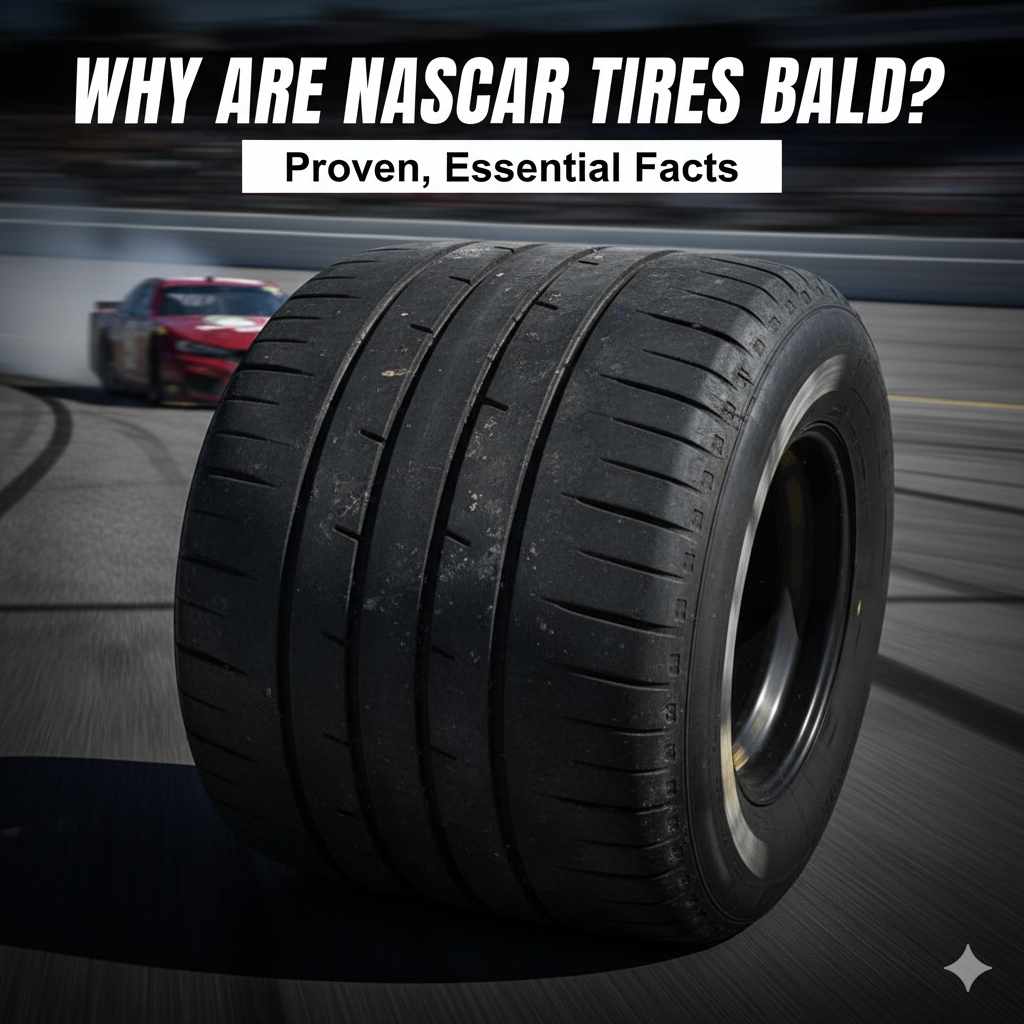
Yes, NASCAR tires are intentionally bald, meaning they have no tread pattern. This is crucial for maximizing grip and performance on the track, allowing race cars to achieve incredible speeds and cornering abilities. Unlike regular car tires designed for everyday driving and various conditions, NASCAR tires are built for one purpose: pure racing performance.
Ever watch a NASCAR race and notice those sleek, smooth tires on the cars? You might be wondering, “Why are NASCAR tires bald?” It seems counterintuitive, right? After all, the tires on our everyday cars have all those grooves to help us grip the road, especially in rain or slippery conditions. Seeing those slick tires on a race car can make any beginner driver scratch their head. Don’t worry, it’s a common question and the answer is simpler and more fascinating than you might think! It all comes down to maximizing speed and control in a high-stakes racing environment. In this guide, we’ll break down exactly why NASCAR tires are designed this way, how it benefits the drivers, and what makes them so different from the tires on your own car. Get ready to understand the science behind those bald tires and become an instant NASCAR tire expert!
The Big Question: Why Are NASCAR Tires Bald?
So, why indeed are NASCAR tires bald? The main reason is simple: maximum grip. Unlike the tires on your everyday car, which need to perform well in a variety of conditions – rain, snow, dry pavement – NASCAR tires are designed for one specific purpose: to give the race car the best possible connection to the asphalt on a clean, dry race track. This lack of tread, known as being “slick,” allows the rubber to make the largest possible contact area with the track surface.
Think of it like this: imagine trying to grip a smooth doorknob versus a ridged one. The smooth one, when pressed firmly, offers more direct contact. In NASCAR, this direct contact translates into better traction, which is absolutely essential for:
- Accelerating faster: More rubber on the track means the tires can put more power down to the ground without spinning.
- Cornering at higher speeds: When a car takes a turn, immense sideways forces are at play. Better grip helps the tires hold the road, preventing the car from sliding out.
- Braking more effectively: Maximum contact allows the brakes to work with the tires to slow the car down as quickly as possible.
Every fraction of a second matters in NASCAR, and tire performance is a huge factor in achieving those crucial wins. The bald design is a carefully engineered solution to achieve that ultimate grip.
Tread vs. Slick: A Clear Distinction for Car Owners
Understanding why NASCAR tires are bald really highlights the difference between racing tires and the tires you use every day. Your car’s tires have a tread pattern for a very practical reason: to handle the unpredictable nature of real-world driving. These grooves and sipes (small slits in the tread blocks) are designed to:
- Channel water away: This is critical for preventing hydroplaning, where a layer of water built up between the tire and the road causes a loss of traction. The treads act like tiny rivers, diverting water to the sides.
- Provide grip on various surfaces: The tread blocks themselves, along with the sipes, create edges that bite into different surfaces, offering better traction on gravel, dirt, or uneven pavement.
- Help with braking and accelerating: The pattern helps to “shred” water and provide biting edges for power application and stopping.
These tread patterns are compromises, designed to work reasonably well across many conditions. NASCAR tires, however, don’t need to worry about a sudden downpour during a race (in fact, rain races are exceptionally rare and handled differently). Their world is the meticulously cleaned and prepped asphalt of a race track, allowing for a specialized, tread-less design.
The Science Behind NASCAR Tire Design: More Than Just “Bald”
While “bald” is a common way to describe them, NASCAR tires are far more complex than just plain rubber. They are highly engineered pieces of equipment designed for extreme performance and subjected to intense scrutiny by the racing regulators. NASCAR has strict rules about tire construction and compounds to ensure fair competition and safety. Here’s a closer look:
Tire Compounds: The Secret Recipe
The actual rubber mixture, or “compound,” is a carefully guarded secret for tire manufacturers like Goodyear, the sole supplier for NASCAR. These compounds are formulated to:
- Offer incredible grip: They are made with specific blends of synthetic and natural rubbers, along with various chemicals and fillers (like carbon black) that enhance grip and wear characteristics.
- Withstand extreme heat: NASCAR tires get incredibly hot due to friction with the track. The compounds must remain stable and perform consistently at these high temperatures.
- Last a specific duration: While being bald, they are still designed to wear down predictably over a set number of laps or a specific race distance.
Different tracks and race types might call for slightly different compounds, which can affect how much grip is available and how quickly the tires wear out. Teams often strategize which compound to use based on track conditions and their car’s setup. According to NASCAR’s official regulations, a significant part of the strategy revolves around tire management.
Tire Construction: Built for Speed and Stress
Beyond the rubber itself, the internal structure of a NASCAR tire is built to handle immense forces. They feature:
- Reinforced Sidewalls: While the tread is smooth, the sidewalls are crucial for supporting the car’s weight and absorbing some shock.
- Internal Belts and Plies: Layers of high-strength materials like polyester or nylon are often used internally to maintain the tire’s shape under extreme stress and to manage heat buildup.
- Specific Pressure Requirements: Tire pressure is meticulously controlled by teams. Smaller adjustments can significantly impact how the tire deforms and where the contact patch is.
The “Contact Patch” is Key
The “contact patch” is the area of the tire that is in direct contact with the road surface at any given moment. For slick tires, this patch is larger and more uniform than it would be for a treaded tire. A larger, consistent contact patch means:
- More rubber can transfer force: This means better acceleration, braking, and cornering.
- More predictable behavior: The driver can feel the limits of grip more easily.
The Role of Aerodynamics
While the tires themselves are bald for grip, it’s worth noting that in NASCAR, aerodynamics plays a massive role in car performance. The car’s body is designed to generate downforce, pushing the car harder onto the track. This increased downward force further enhances the effectiveness of those slick tires by maximizing the pressure between the rubber and the asphalt. It’s a synergistic relationship – the bald tires leverage the track surface, and the downforce ensures they can do so with maximum effect.
Why Treaded Tires Would Be a Disaster in NASCAR
Imagine putting treaded tires on a NASCAR stock car. What would happen? It wouldn’t be pretty for the drivers or the race!
- Reduced Grip: The grooves and sipes, while great for channeling water, would actually reduce the amount of rubber in contact with the track on dry pavement. This would lead to significantly less traction.
- Slower Speeds: With less grip, acceleration, cornering speeds, and braking distances would all suffer. Cars would be much slower and less responsive.
- Unpredictable Handling: The tread blocks themselves could flex and deform in ways that are not conducive to high-speed racing. This would make the car feel less stable and harder to control, especially at the edge of its performance limits.
- Increased Risk of Tire Failure: While not the primary reason, tread patterns can be more prone to picking up debris at racing speeds, which could lead to punctures or damage.
In essence, treaded tires are built for versatility and safety in everyday driving conditions. NASCAR tires are built for absolute performance on a meticulously prepared racing surface, and that performance relies on a smooth, unbroken connection to the track.
NASCAR Tire Technology: Constant Evolution
While the concept of bald tires is simple, the technology and materials used in NASCAR tires are constantly evolving. The goal is always to achieve a better balance of grip, durability, and consistency, all within the strict rules set by NASCAR.
Goodyear’s Role
As the sole tire supplier for NASCAR’s top three series (Cup Series, Xfinity Series, and Truck Series), Goodyear plays a vital role in this evolution. Their engineers work closely with NASCAR and the race teams to develop tires that meet the demanding requirements of the sport. This includes:
- Developing new rubber compounds: They are always experimenting with new materials to improve grip and tire life.
- Testing extensively: New tire designs and compounds are put through rigorous testing on various tracks and under different conditions.
- Ensuring consistency: Every tire produced for racing must be virtually identical to ensure fair competition.
You can find more about Goodyear’s involvement and their racing tire technology on their official racing website.
Data and Feedback
Race teams and Goodyear collect vast amounts of data during practice, qualifying, and races. This data covers everything from tire temperatures and pressures to wear patterns and vehicle dynamics. This information is crucial for:
- Optimizing car setups: Teams use tire data to fine-tune their car’s suspension, alignment, and aerodynamics.
- Developing future tires: Goodyear uses team feedback and data to improve existing tire designs and develop new ones.
- Predicting tire wear: Teams need to understand how their tires will wear over a race distance to strategize pit stops and driving.
Safety Innovations
While performance is key, safety is paramount. Tire technology has also focused on improving safety over the years:
- Puncture resistance: While slick, the construction aims to resist catastrophic failures.
- Consistent performance: Tires that degrade in a predictable manner are safer than those that might suddenly lose grip.
Understanding NASCAR Pit Stops and Tires
The bald nature of NASCAR tires also significantly impacts pit stop strategy. Because tires are a critical performance component that also wears down, teams meticulously plan their tire changes.
Tire Changes: A Race Within a Race
During a pit stop, NASCAR crews aim to change all four tires in mere seconds. This incredible speed is achieved through:
- Highly trained crews: Each team member has a specific role – jacking the car, removing lug nuts, changing tires, tightening lug nuts.
- Specialized equipment: Air-powered lug nut guns and specialized jacks allow for rapid operations.
- Practice: Teams practice these routines constantly to shave off precious fractions of a second.
Strategic Tire Decisions
Teams don’t always change all four tires during every pit stop. Decisions about which tires to change, or whether to change them at all, are strategic:
- Tire Wear: If tires are wearing unevenly or are significantly worn on one side, a full set change is usually necessary.
- Fresh Grip: Sometimes, a team might opt for fresh tires to gain a grip advantage for a late-race charge, even if the current tires aren’t completely worn out.
- Fuel vs. Tires: Teams must balance the need for new tires with the amount of fuel they need to take on, all within the pit stop window allowed by race officials.
The unique properties of bald NASCAR tires mean that fresh rubber can often provide a significant performance boost, making tire strategy a critical element of race-day success.
Can You Put NASCAR Tires on Your Car?
This is a question that might pop into the minds of enthusiasts, but the answer is a resounding no. For several critical reasons, NASCAR tires are not suitable for regular road use:
- No Tread for Water: The most obvious reason is the lack of tread. Driving on wet roads with NASCAR tires would be incredibly dangerous, leading to immediate hydroplaning and a complete loss of control.
- Extreme Softness/Grip: NASCAR tire compounds are designed for maximum grip on a warm, dry track. They are often much softer than street tires. This means they would wear out incredibly quickly on regular roads, potentially in just a few hundred miles or less.
- Durability Issues: They are not built to withstand the different types of stresses and debris encountered on public roads, such as potholes, sharp objects, and varying surface textures.
- Noise: Slick tires can be significantly louder on public roads than treaded tires.
- Legality: In most places, it is illegal to operate a vehicle on public roads with tires that do not meet safety standards for all weather conditions, which would include having appropriate tread.
Think of it like using a professional chef’s knife for everyday kitchen tasks versus a standard utility knife. The chef’s knife is designed for specialized, high-performance tasks and would be unwieldy and potentially unsafe for general use. NASCAR tires are similar – specialized tools for a very specific, controlled environment.
Frequently Asked Questions (FAQ)
What is the official name for bald NASCAR tires?
The official term for bald NASCAR tires is “slick tires.” This signifies that they have no tread pattern, maximizing rubber contact with the track.
Are all NASCAR tires bald?
Yes, for dry weather racing, all NASCAR tires are intentionally bald (slick). However, NASCAR does have specific rules for rain tires, which do have a tread pattern designed for wet conditions, though these are used very infrequently.
How long do NASCAR tires last?
The lifespan of a NASCAR tire varies greatly depending on the track, race, and driver. Typically, they are designed to last between 60 to 90 “green flag” miles (miles run under normal racing conditions without caution flags). Some races might require multiple pit stops for fresh tires, while others allow for longer runs.
Why does NASCAR ban certain tire designs?
NASCAR mandates specific tire designs and compounds from its sole supplier, Goodyear, to ensure competitive fairness and safety. They ban modifications or unauthorized designs to prevent any team from gaining an unfair advantage through tire technology.
What happens if a NASCAR tire loses its grip unexpectedly?
If a NASCAR tire suddenly loses grip, it can lead to a spin or a crash, especially at high speeds. This is known as a “blowout” or “tire failure.” While rare due to extensive testing and regulation, it’s a significant risk in racing. Drivers are trained to try and control the car even if a tire failure occurs.
Are NASCAR tires expensive?
While specific costs are proprietary, NASCAR tires are specialized racing equipment and are certainly more expensive than standard consumer tires. Teams purchase them from Goodyear and they are a significant part of a racing budget. The cost is for high-performance engineering, specialized materials, and rigorous quality control, not just the rubber itself.
Do NASCAR teams use different tires for practice, qualifying, and races?
Yes, teams often use different types of tires for different sessions. Practice sessions might use tires that are designed for durability to get more laps in. Qualifying might use a softer, grippier tire for maximum speed over a couple of laps. Race tires have a specific compound designed to balance grip and wear over a longer distance.
Conclusion
So there you have it! The mystery of the bald NASCAR tires is solved. It’s not an oversight or a mistake; it’s a deliberate design choice centered entirely on achieving the highest levels of grip, speed, and control on a race track. By removing the tread, NASCAR tires maximize their contact with the asphalt, allowing race cars to perform the incredible feats of acceleration, cornering, and braking that fans love to watch. Understanding this fundamental difference between racing tires and your everyday tires helps appreciate the specialized engineering that goes into motorsport. From the carefully formulated rubber compounds to the reinforced construction, NASCAR tires are a testament to high-performance automotive technology, all designed to keep those powerful machines glued to the track, lap after exhilarating lap. Now you can watch a race with a newfound appreciation for what’s happening at ground level!