Why Do I Smell Burning Plastic After Turning Car Off
It can be a bit worrying when you turn off your car and suddenly smell burning plastic. You might wonder if something is seriously wrong. This is a common concern, especially for folks who aren’t mechanics.
It’s like a puzzle where you don’t know where to start. But don’t worry! This guide will break down why this happens and how you can figure it out easily.
We’ll go step-by-step to help you get to the bottom of that strange smell so you can feel good about your car again.
Why Do I Smell Burning Plastic After Turning Car Off Causes
That smell of burning plastic after you turn your car off is a signal that something might be a little off. It’s not always a major issue, but it’s definitely something to pay attention to. The heat from your engine and exhaust system can get pretty high, and if something plastic is too close, it can start to melt or degrade, creating that distinct odor.
It’s like leaving a plastic toy too close to a warm lamp; eventually, it’ll smell funky. Many of these causes are minor and easy to fix yourself, which is great news.
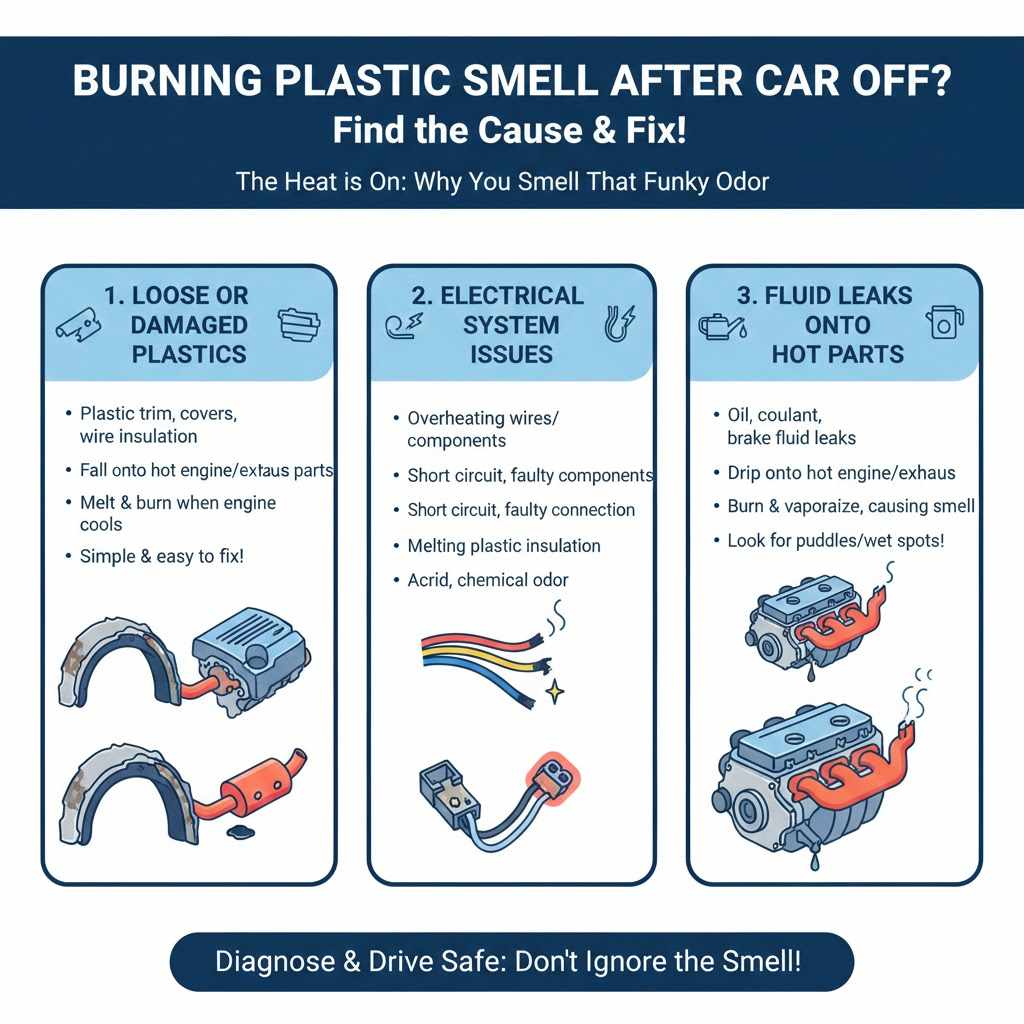
Loose or Damaged Plastic Components
Sometimes, small pieces of plastic trim, covers, or even wiring insulation can come loose. They might have been bumped during maintenance, or a clip might have broken. When the engine cools down, these parts can shift slightly.
If a loose piece of plastic falls onto a hot part of the engine or exhaust, like the manifold or catalytic converter, it will begin to melt and give off that burning smell. This is often the simplest explanation and a good starting point for diagnosis.
Think about the underside of your car. There are many plastic shields and covers that protect vital components from road debris. If one of these gets damaged or a fastener comes loose, it might sag.
When the engine is hot, this sagging plastic can droop low enough to touch the exhaust pipe. The exhaust pipe gets extremely hot, so even brief contact can cause the plastic to burn and smoke. It’s usually visible if you can get a good look underneath your vehicle.
Another common area is around the engine bay itself. Wire loom protectors, plastic engine covers, or even air intake ducting can be made of plastic. If a piece of this breaks or becomes dislodged, it might end up resting on a hot engine component.
This is especially true for parts near the exhaust manifold, which is one of the hottest parts of the engine. The smell you notice is the plastic breaking down under the intense heat.
Examples of Loose Plastic Issues
- A torn piece of fender liner hanging down and touching the exhaust pipe after hitting a pothole.
- A plastic engine cover that wasn’t secured properly after an oil change, causing it to shift onto the exhaust manifold.
- A frayed section of wiring harness protector near the exhaust that has melted.
These are everyday scenarios that can easily lead to the burning plastic smell. Often, a quick visual inspection can reveal the culprit. You might see scorch marks on the plastic or the exhaust pipe where they’ve made contact.
Repairing this usually involves re-securing or replacing the damaged plastic part, which is typically an inexpensive fix.
Electrical System Issues
Sometimes, the burning plastic smell isn’t from a physical object melting, but from an electrical problem. When wires or electrical components overheat, the plastic insulation around them can melt. This gives off a distinctive, acrid smell that is often described as burning plastic.
Electrical issues can be more serious than simple mechanical ones, so it’s important to get them checked out promptly.
Overheating wires can happen for various reasons. A short circuit, a faulty connection, or an overloaded electrical system can all cause excessive heat. This heat can melt the plastic coating on wires, leading to smoke and that unpleasant odor.
The smell might be stronger when you first turn the car off because the electrical systems are still active for a moment, generating heat.
The plastic insulation on wires is designed to withstand a certain amount of heat, but not the intense, localized heat that can come from an electrical fault. If a wire is carrying too much current, or if there’s resistance in a connection, the wire itself can get hot, and this heat transfers to the surrounding plastic. This can create a dangerous situation if not addressed, as melted insulation can expose wires and potentially lead to further electrical problems or even a fire.
Common Electrical Scenarios
- A failing alternator that is overheating and causing wires to get excessively hot.
- A short circuit in a lighting system or accessory that draws too much power.
- Corroded or loose electrical connectors that create resistance and generate heat.
These electrical problems often require a mechanic to diagnose. They have the tools and expertise to safely test electrical systems and identify the source of the overheating. Ignoring an electrical burning smell can lead to more extensive damage and costly repairs down the line, not to mention safety concerns.
Fluid Leaks onto Hot Components
Your car has various fluids, like oil, coolant, and brake fluid, that operate at high temperatures. If any of these fluids leak onto hot parts of the engine or exhaust system, they can burn and produce a smell that might be mistaken for burning plastic. While the fluid itself is burning, the smell can sometimes be similar due to the chemical reactions and the intense heat involved.
For instance, if engine oil leaks onto the exhaust manifold, it will vaporize and burn. This burning oil can create a smoky, pungent odor. Similarly, if coolant leaks onto a hot surface, it can produce a sweetish smell, but sometimes it can have undertones that mimic burning plastic, especially if it’s a synthetic-based coolant or if it mixes with other residues.
Brake fluid leaks are less common but can also be a source of unusual smells. If brake fluid drips onto a hot brake component or exhaust, it will burn. The critical thing to remember is that any fluid leak onto a hot surface is a sign that something needs fixing.
These leaks can degrade performance, cause damage, and in some cases, create a fire hazard.
Fluid Leak Examples
- Engine oil dripping from a valve cover gasket onto the exhaust manifold.
- Coolant leaking from a hose clamp onto the engine block or exhaust pipe.
- Power steering fluid or transmission fluid leaking onto hot engine components.
Identifying a fluid leak involves looking for puddles under your car or for wet spots on engine components. The color of the fluid can help determine its source: engine oil is typically brown or black, coolant is often green, orange, or pink, and brake fluid is clear or yellowish. Addressing these leaks quickly is important to prevent further damage and ensure your car runs safely.
Troubleshooting the Burning Plastic Smell
When you notice that burning plastic smell after turning your car off, it’s time to play detective. The good news is that often, you can pinpoint the issue with a bit of careful observation. Start with the most obvious places, and if you can’t find anything, consider a professional for help.
Safety first, so if the smell is very strong or accompanied by smoke, get it checked out right away.
Visual Inspection of the Engine Bay and Undercarriage
The first step in figuring out why you smell burning plastic is to look for obvious signs. Open your car’s hood and take a good look around the engine bay. Do you see any plastic parts that look melted, warped, or are touching hot engine components?
Pay close attention to areas near the exhaust manifold, the turbocharger (if you have one), and other hot surfaces. Sometimes a piece of plastic trim can simply come loose and rest on something hot.
Next, it’s important to check the underside of your car. If you can safely do so (use jack stands if you need to lift the car, never rely on just a jack), look at the underbody panels and any plastic shielding. These can get dislodged by road debris or even during routine driving.
If a piece of underbody plastic is hanging low, it might be brushing against the exhaust system. The exhaust system gets extremely hot when the car is running, and any contact with plastic will cause it to melt and smoke.
Also, take a look at the wheels and brakes. Sometimes, burning plastic smells can be misleading. A very hot brake caliper or rotor can cause certain rubber or plastic components in the wheel well to overheat and release fumes that might smell like burning plastic.
Check for any signs of melting or dripping around the wheel assembly. This is less common for a direct burning plastic smell but worth considering if other areas are clear.
What to Look For
- Melted or discolored plastic parts in the engine bay.
- Loose or dangling plastic underbody panels.
- Scorch marks on plastic components or metal surfaces where plastic might have touched.
- Signs of leaking fluids, which could be burning on hot surfaces.
If you find something obvious, like a dangling piece of plastic, try to secure it temporarily if it’s safe to do so. If it’s melted, you’ll likely need to replace the part. For electrical issues or suspected fluid leaks that you can’t easily identify, it’s best to consult a mechanic.
They have the experience and tools to diagnose complex problems safely and effectively.
Checking for Electrical System Malfunctions
If your visual inspection doesn’t reveal any obvious culprits, the problem might be in the electrical system. Electrical faults can cause wires to overheat, melting their plastic insulation and producing that burning smell. This is a more serious concern and should be investigated by a qualified technician.
However, there are a few things you can look out for that might provide clues.
Sometimes, the smell of burning plastic from electrical issues is accompanied by other symptoms. You might notice dimming headlights, flickering dashboard lights, or even a burning smell that persists for a while after the car has been turned off and is cooling down. A burning electrical smell is often sharper and more acrid than the smell of melting plastic trim.
It can also sometimes be accompanied by a faint wispy smoke.
One common electrical issue that can cause this smell is an overloaded circuit. This could be due to an aftermarket accessory that draws too much power, or a fault in an existing system like the cooling fan or the radio. When a circuit is overloaded, the wires in that circuit can become very hot.
The plastic insulation around these wires can then melt, releasing fumes. This is why it’s important to have any electrical work done by professionals who understand the proper wiring gauges and load capacities for your vehicle.
Symptoms of Electrical Problems
- Flickering or dimming lights when the engine is running.
- Dashboard warning lights that come on unexpectedly.
- Strange noises or crackling sounds from the dashboard or under the hood.
- A persistent burning smell that doesn’t seem to be related to physical plastic contact.
If you suspect an electrical issue, it’s crucial to have your car inspected by a mechanic. They can use diagnostic tools to check for fault codes and trace electrical circuits to find the source of overheating. Trying to fix electrical problems yourself without proper knowledge can be dangerous and lead to further damage.
Electrical systems in modern cars are complex, and a professional diagnosis is often necessary.
Identifying Fluid Leaks
When you turn your car off, the engine and exhaust components are still very hot. If any automotive fluids leak onto these hot surfaces, they can burn and create odors that might resemble burning plastic. It’s important to distinguish these smells from actual melting plastic.
Fluid burns often have a different character to them.
Engine oil is one of the most common culprits. Leaks can come from valve cover gaskets, oil pan gaskets, or even from a loose oil filter. When oil drips onto the exhaust manifold or catalytic converter, it will sizzle, smoke, and burn, producing a strong, acrid smell.
This smell can sometimes be confused with burning plastic, but it often has an oily component to it.
Coolant leaks are another possibility. While coolant typically has a sweet smell, when it burns on a hot engine component, the smell can change. The plastic radiator hoses or coolant reservoir could also be near hot spots, and if there’s a leak, the fluid could react with them.
It’s important to check the color of any fluid leaks; engine oil is usually brown or black, while coolant is often green, orange, or pink. Power steering fluid and transmission fluid can also leak and burn.
Steps to Identify Fluid Leaks
- Check for fluid puddles under your car after it has been parked for a while.
- Look for wet or oily spots on the engine, exhaust system, or underneath the car.
- Note the color of any visible fluid leaks to help identify the type of fluid.
- Smell the fumes carefully – a strong oily smell points to engine oil, while a sweeter smell might be coolant.
If you find evidence of a fluid leak, the source of the leak needs to be identified and repaired. A small leak can quickly turn into a larger problem, potentially leading to engine damage or other issues. A mechanic can help you pinpoint the exact location of the leak and perform the necessary repairs.
Regular checks of your fluid levels can also help you spot leaks early.
Why Do I Smell Burning Plastic After Turning Car Off Common Scenarios
Let’s look at some common situations where you might encounter the smell of burning plastic after turning your car off. These are everyday occurrences that many drivers experience. Knowing these scenarios can help you quickly identify the cause and what to do about it.
Recent Maintenance or Repairs
It’s quite common to notice a burning smell after your car has had some work done. Mechanics sometimes have to move or temporarily disconnect plastic components to access parts of the engine. If a plastic shield, a wire loom, or a plastic hose isn’t reattached perfectly, it could end up too close to a hot exhaust pipe or engine part.
This contact, however brief, can cause the plastic to melt slightly and produce that smell.
For example, if a mechanic worked on your exhaust system, a heat shield might have been bent or not replaced correctly. This shield is meant to protect other components from the extreme heat of the exhaust. If it’s out of place, the exhaust can radiate heat onto nearby plastic parts, like the underbody panels or even the brake lines, causing them to smell.
Similarly, if they worked on the engine itself, a plastic engine cover might have been left slightly ajar, allowing it to touch a hot surface.
Another possibility is something simple like a plastic bag or shop rag left behind in the engine bay. While mechanics are usually very careful, sometimes a stray item can get overlooked during a quick inspection or a busy service. If this item happens to fall onto a hot exhaust manifold, it will burn and create a smell that might be confused with burning plastic.
It’s always a good idea to give your engine bay a quick look after a service, especially if you notice any unusual smells.
Post-Service Smell Examples
- A mechanic accidentally left a plastic shop wrap too close to the engine block during an oil change.
- A plastic undertray was not fully secured after brake work and is now dragging near the exhaust.
- A wire loom protector was nudged out of place and is now touching the catalytic converter.
These types of smells usually disappear after a short period of driving, as the offending item burns off or is further dislodged. However, if the smell persists or is very strong, it’s worth investigating. The smell could indicate a more significant problem, like a wire about to short circuit or a more substantial piece of plastic melting.
It’s always better to be safe and have it checked by a professional if you’re concerned.
Driving in Extreme Conditions
Driving in very hot weather or in stop-and-go traffic can make your car’s engine run hotter than usual. The cooling system works harder to keep things at the right temperature. If there’s a slight leak in the cooling system, or if the cooling fan isn’t working efficiently, the engine can overheat.
This extra heat can cause plastic components near the engine or exhaust to get warm enough to produce a smell.
During stop-and-go traffic, there’s less airflow through the radiator to cool it down. This means the cooling fan has to do most of the work. If the fan is struggling or if there’s an obstruction near the exhaust system that traps heat, plastic parts can start to emit odors.
Think of it like being in a crowded, hot room with no ventilation – things get uncomfortable quickly. The same happens to your car’s engine components under stress.
Sometimes, debris from the road can get caught in your car’s undercarriage or stuck to the hot exhaust system. This debris can be anything from leaves and grass to small pieces of plastic that have fallen off other vehicles. When the exhaust heats up, this collected debris can smolder and burn, producing a smell that might resemble burning plastic.
This is particularly common after driving through wooded areas or construction zones.
Extreme Driving Scenarios
- A long drive in heavy city traffic on a very hot summer day.
- Driving through an area with a lot of loose debris on the road, like leaves or small branches.
- Towing a heavy load in uphill conditions, which puts extra strain on the engine.
If you only notice the smell under these specific driving conditions, it might not be a serious issue. However, it’s a good indicator that your car’s cooling system or other components are working harder than usual. If the smell becomes more frequent or starts happening even during normal driving, it’s time to have your car checked by a mechanic.
Overheating can lead to significant engine damage if left unaddressed.
Wear and Tear on Components
Over time, plastic parts in your car can become brittle and may start to degrade. This is especially true for components exposed to heat, sunlight, and vibration. A small crack can form, or a piece might break off.
If this happens near a hot engine part, it can then melt and cause that familiar burning plastic smell.
For example, the plastic housing around your headlights or taillights can become brittle over many years. If one of these starts to melt and drip near a hot bulb or engine component, it can cause the odor. The plastic engine covers and air intake systems are also subject to wear and tear.
Over time, the plastic can become brittle, leading to cracks or pieces breaking off.
Wiring insulation is another area where wear and tear can be a problem. The plastic coating around electrical wires can become hard and brittle with age and exposure to heat. This can lead to cracks, exposing the metal wire underneath.
If this exposed wire then touches another metal part of the car, it can cause a short circuit, leading to overheating and the smell of burning plastic. This is why it’s important to have your car regularly inspected by a mechanic, as they can spot these signs of aging components.
Signs of Component Wear
- Cracks or brittleness in plastic parts under the hood or on the exterior of the car.
- Frayed or damaged plastic insulation on visible wiring.
- Loose plastic trim pieces that seem to be degrading with age.
While some wear and tear is normal with age, it’s important to monitor it. If you notice plastic parts becoming excessively brittle or damaged, it’s wise to have them replaced before they cause a problem. For wiring, any signs of damaged insulation should be addressed immediately by a qualified technician to prevent electrical hazards.
When to Seek Professional Help
While many causes of a burning plastic smell are minor and fixable, some can be serious. It’s important to know when to stop troubleshooting yourself and call in the experts. If the smell is strong, persistent, or accompanied by other alarming symptoms, it’s time for a professional diagnosis.
Persistent or Strong Smells
If the smell of burning plastic doesn’t go away after a short drive or a quick check, it’s a sign that something more serious might be going on. A faint smell that only appears immediately after turning off the car might be a small piece of plastic that will burn off. But a strong smell that lingers, or one that you can smell even when the car is running, needs immediate attention.
A persistent or strong burning smell could indicate an electrical short circuit that is continuously overheating wires, or a significant fluid leak that is constantly dripping onto hot exhaust components. These issues can lead to more extensive damage to your vehicle or even pose a fire risk. It’s always better to err on the side of caution when it comes to smells that indicate something is burning inside your car.
The intensity of the smell is also a clue. If you can barely detect it, it might be a minor issue. But if the smell is so strong that it makes you want to get out of the car, it’s a clear warning sign.
This is especially true if you notice any smoke along with the smell, which indicates that something is actively burning and needs to be addressed right away.
Indicators for Immediate Attention
- The smell of burning plastic is very strong and noticeable, even when the car is running.
- The smell lingers for an extended period after you turn the car off.
- You see smoke coming from under the hood or from the exhaust system.
If you experience any of these situations, it’s best to pull over to a safe location and turn off the engine. Do not continue to drive the vehicle. Call for roadside assistance or a tow truck to take your car to a qualified mechanic.
They have the necessary tools and expertise to safely diagnose and repair the problem, preventing further damage and ensuring your safety.
Associated Warning Lights or Performance Issues
Sometimes, the burning plastic smell isn’t the only sign that something is wrong. If you notice other problems occurring at the same time, it’s a strong indicator that a more significant issue is at play. For instance, if your check engine light comes on, or if your car starts to run poorly, the burning smell is likely related to a more serious mechanical or electrical problem.
A check engine light can illuminate for a wide variety of reasons, many of which can be related to overheating components or electrical faults. For example, a problem with the cooling system could cause the engine to overheat, leading to plastic parts melting and triggering a check engine light. Similarly, an electrical short could cause a burning smell and also affect the performance of various engine systems, triggering a warning light.
If your car is experiencing performance issues like rough idling, loss of power, stalling, or unusual noises, combined with the burning plastic smell, it’s a clear sign that you should not ignore the problem. These symptoms together suggest a potentially serious issue that could damage your engine or other critical systems if not addressed promptly. A professional mechanic can connect diagnostic tools to your car’s computer to read error codes, which can help pinpoint the exact cause of the problem.
Warning Signs to Watch For
- The check engine light or other dashboard warning lights are illuminated.
- Your car is running rough, hesitating, or losing power.
- You hear unusual noises from the engine or exhaust system.
- There are noticeable changes in your car’s braking or steering performance.
When these symptoms appear alongside the burning plastic smell, it’s essential to get your car to a mechanic as soon as possible. Continuing to drive could lead to more severe damage and costly repairs. A professional diagnosis will ensure that the root cause of the problem is found and fixed correctly, restoring your car’s performance and safety.

Frequently Asked Questions
Question: Is a burning plastic smell always a sign of a serious problem?
Answer: Not always. Sometimes, it’s a minor issue like a piece of plastic trim being too close to a hot exhaust pipe, which can burn off and disappear. However, it can also indicate more serious electrical problems or fluid leaks that need immediate attention.
Question: How can I tell if the smell is electrical or just melting plastic?
Answer: Electrical burning smells are often sharper and more acrid, like burnt insulation, and may be accompanied by flickering lights or a burning odor that persists. A simple melting plastic smell might be more localized and associated with visible melted plastic.
Question: Can I drive my car if I smell burning plastic?
Answer: If the smell is faint and you can’t find a clear source, you might be able to drive it cautiously to a mechanic. However, if the smell is strong, persistent, or accompanied by smoke or warning lights, it’s best to pull over and get it towed.
Question: What is the most common cause of a burning plastic smell after turning off the car?
Answer: One of the most frequent causes is a small piece of plastic trim, a wire loom protector, or an underbody shield coming loose and making contact with the hot exhaust system.
Question: Should I try to fix the burning plastic smell myself?
Answer: For simple visual issues like a loose plastic part, you might be able to secure it. However, for electrical issues or suspected fluid leaks, it’s safer and more effective to have a qualified mechanic diagnose and repair the problem.
Wrap Up
Noticing a burning plastic smell after turning your car off can be concerning. We’ve explored many reasons, from simple loose plastic touching the exhaust to more complex electrical issues and fluid leaks. Most often, it’s a minor problem that a visual check can reveal.
If you see a dangling part, try to secure it. For stronger smells or other warning signs, a mechanic’s expertise is key. Addressing this smell promptly ensures your car stays safe and reliable.