How Many Brake Lines Does a Car Have? (4 Lines, 2 Circuits)
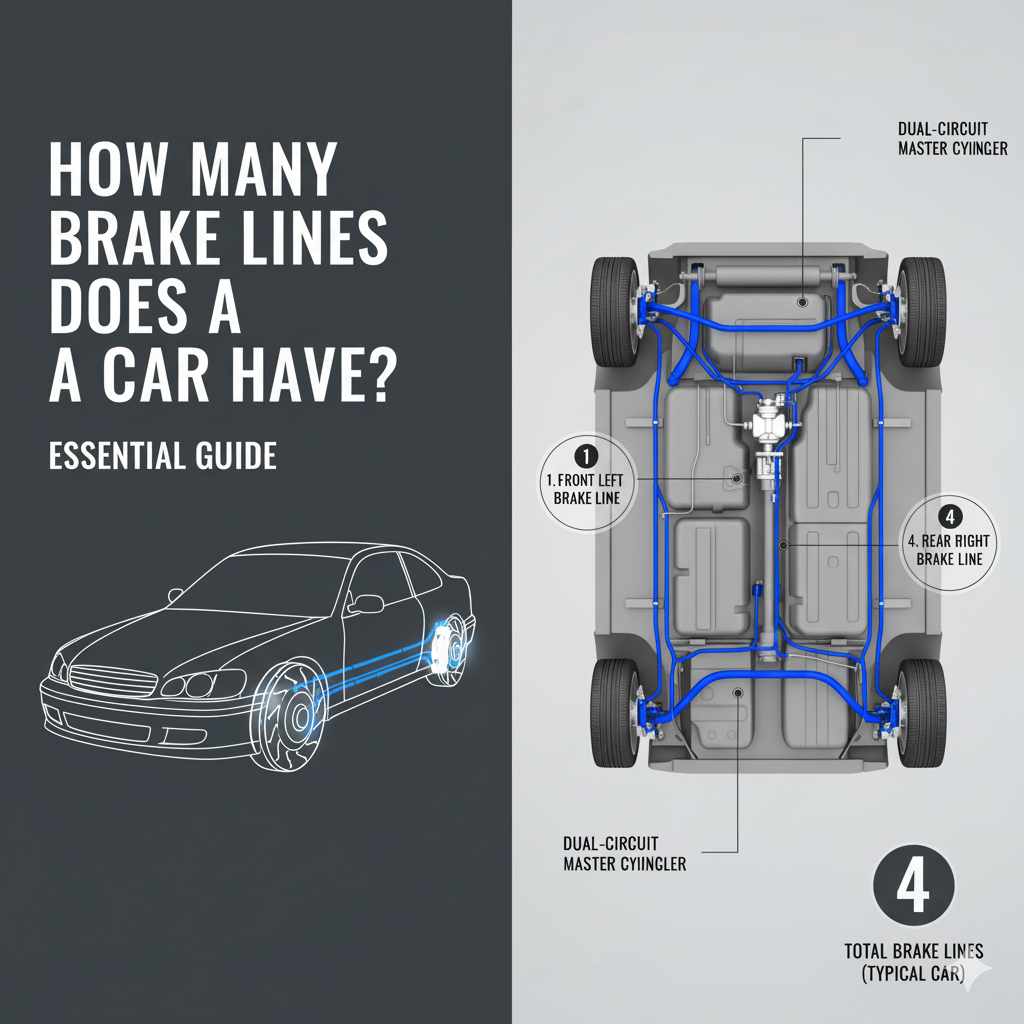
Most passenger cars have 4 brake lines — one to each wheel — split into 2 hydraulic circuits at the master cylinder, not one single line. If a circuit fails, a diagonal-split system (standard on nearly all front-wheel-drive cars since FMVSS 135) still leaves one front and one rear brake working. This guide covers rigid steel lines vs. flexible rubber hoses, diagonal-split vs. front/rear-split systems, and real warning signs of a failing line.
Note: Insert your Affiliate Disclosure reusable block here.
Quick Answer
Most passenger cars have 4 brake lines — one running to each wheel — fed by 2 separate hydraulic circuits from the master cylinder. Most front-wheel-drive cars built since 2000 use a diagonal split (front-left/rear-right and front-right/rear-left), so if one circuit fails you still have one front and one rear brake working. Rigid steel lines run along the frame; flexible rubber hoses take over at each wheel to allow for suspension and steering movement.
What Are Brake Lines and Why Do They Matter?
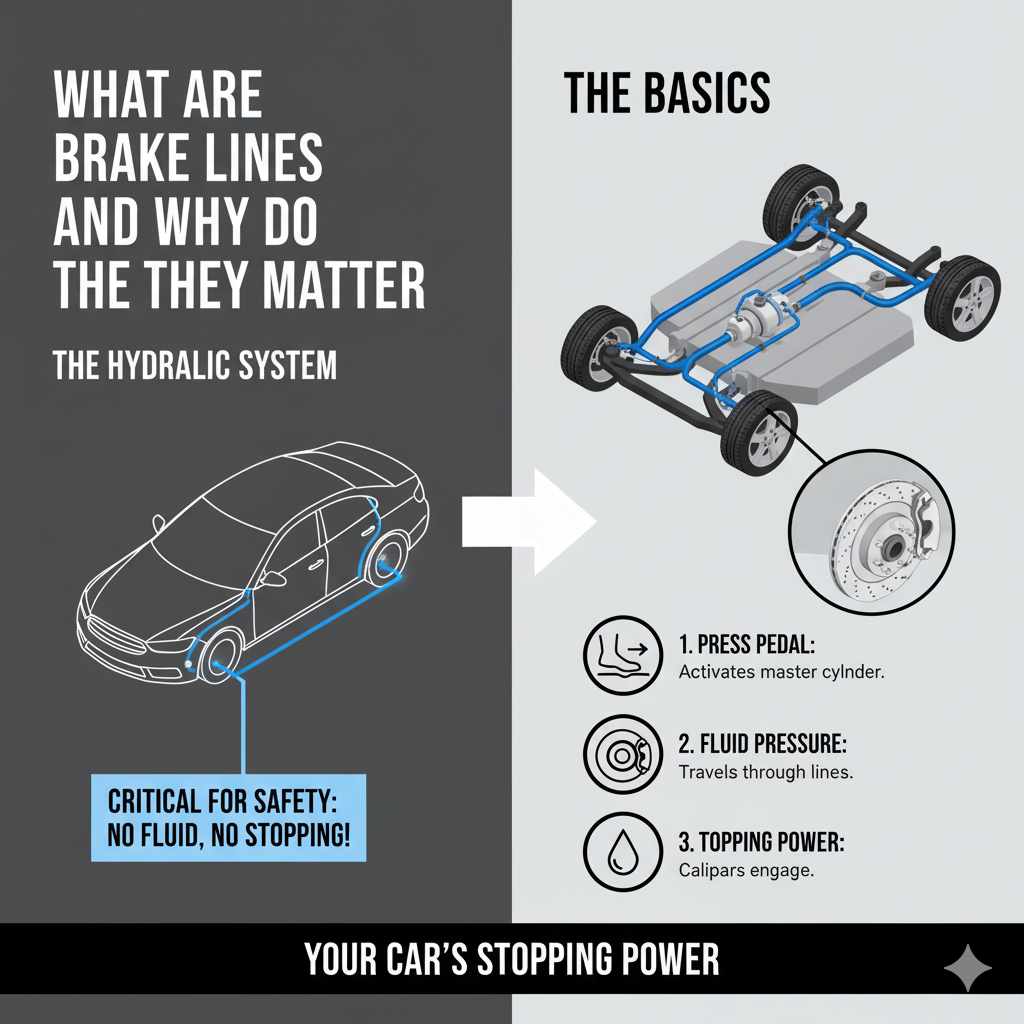
Think of your brake lines as the circulatory system for your car’s braking power. When you press the brake pedal, you’re not directly pushing the brake pads onto the rotors. Instead, you’re activating a master cylinder that forces brake fluid through a network of strong, flexible tubes – these are your brake lines. This fluid pressure travels all the way to each wheel, where it activates the calipers or wheel cylinders, ultimately causing your wheels to slow down or stop.
Without these essential lines, the hydraulic pressure wouldn’t reach your brakes, and your car wouldn’t stop. That’s why they are so critically important for your safety and the safety of everyone on the road. Any damage, leaks, or kinks in these lines can severely compromise your braking ability, making them a vital component to understand, even at a basic level.
How Many Brake Lines Does a Car Typically Have?
The exact number of brake lines in a car can vary depending on the design and features of the vehicle. However, most passenger cars commonly have between two and four primary brake lines. Some vehicles, especially those with advanced braking systems like anti-lock braking systems (ABS) or with more wheels (like trucks), might have additional lines or extensions.
Let’s break down the common configurations:
Common Brake Line Configurations
- Single Line System (Rare in Modern Cars): Very old vehicles might have had a simpler, single diagonal split system, but this is extremely uncommon today due to safety regulations.
- Dual Diagonal Split System (Most Common for Two Lines): Many cars utilize two main brake lines. In this setup, one line typically runs to the front-left and rear-right wheels (a diagonal pairing), and the other line runs to the front-right and rear-left wheels (the other diagonal pairing). This design ensures that if one line fails, you still have some braking power on diagonally opposite wheels, offering a degree of control.
- Front/Rear Split System (Also Common): Another common setup uses two lines where one line controls the front brakes and another controls the rear brakes. This is less common on modern passenger cars than the dual diagonal split but is still found.
- Four-Wheel Independent Systems: Many vehicles, especially those with ABS, have individual lines running to each wheel from a central distribution point. In this case, you’d have one line going to each of the four wheels, often connected through a central ABS module. So, while there might be four lines leading to the wheels, they all originate from a more complex network.
- Longer Vehicles and Trucks: Larger vehicles like trucks or SUVs might have more complex routing or additional lines to handle heavier loads or different braking configurations, potentially including more than four primary lines.
It’s essential to remember that these are the primary lines. There are also shorter sections of flexible hoses that connect the rigid metal brake lines to the brake assemblies at each wheel. These are often referred to as brake hoses or flexible brake lines.
How Brake Lines Connect: From Master Cylinder to Each Wheel (2 Circuits Explained)
A brake circuit is a complete hydraulic path from the master cylinder to a set of wheels — and it is not the same thing as a brake line. Most cars have 4 physical lines (one running to each wheel) but only 2 circuits, because the master cylinder has two separate fluid chambers, each one feeding one diagonal (or front/rear) pair of wheels, typically through a proportioning or combination valve that balances front-to-rear pressure.
Which pair of wheels shares a circuit depends on the split design. Here’s how the two common layouts compare:
| Split Type | How the Wheels Are Paired | What Still Works If One Circuit Fails | Common On |
|---|---|---|---|
| Diagonal Split (X-split) | Front-left + rear-right on Circuit 1; front-right + rear-left on Circuit 2 | One front wheel and the diagonally opposite rear wheel | Nearly all front-wheel-drive cars built since 2000 |
| Front/Rear Split | Both front wheels on Circuit 1; both rear wheels on Circuit 2 | Only the front brakes (which do roughly 60–80% of stopping) or only the rears | Many older and rear-wheel-drive vehicles |
The diagonal split became the modern default because it avoids a dangerous side effect of a pure front/rear split: if the front circuit fails and only the rears still work, the car pulls hard because all remaining braking is on one axle. Pairing one front wheel with the diagonally opposite rear wheel keeps braking force spread across both sides of the car, so it’s far less likely to yaw or pull sharply if a circuit is lost.
📊 Since Federal Motor Vehicle Safety Standard No. 135 was phased in for U.S. passenger cars beginning September 1, 2000, every new car sold in the U.S. has been required to use a split (dual-circuit) service brake system — a single-circuit system that could fail completely is no longer legal on new cars. Older passenger cars (roughly 1968–2000) met the similar predecessor standard, FMVSS No. 105. — Source: 49 CFR § 571.135, Cornell Law School Legal Information Institute
“A brake system consisting of two or more subsystems actuated by a single control, designed so that a single failure in any subsystem… does not impair the operation of any other subsystem.”
— 49 CFR § 571.135(S4), Federal Motor Vehicle Safety Standard No. 135 (definition of “split service brake system”)
What Still Works If One Brake Circuit Fails?
On a diagonal-split car (the most common setup today), losing one circuit still leaves one front wheel and the diagonally opposite rear wheel braking. That’s enough to stop the car, though the pedal will feel much lower and softer and the stopping distance will be noticeably longer — this is exactly the scenario the spongy-pedal and pulling-to-one-side warning signs below are trying to catch before a full failure happens. If you’re working underneath the car yourself, keep in mind the system stays pressurized even with the engine off; see our guide on how to release brake pressure when the car is off before disconnecting any line.
Understanding the Components: More Than Just Lines
Brake lines are just one part of a sophisticated system. Here’s a quick look at the other key players that work with your brake lines:
- Brake Pedal: The lever you push to initiate braking.
- Master Cylinder: Converts the force from your foot on the brake pedal into hydraulic pressure. Modern cars usually have a dual-circuit master cylinder for safety.
- Brake Fluid Reservoir: Holds the brake fluid. It’s usually attached to the master cylinder.
- Brake Fluid: The hydraulic fluid that transmits pressure through the lines.
- Brake Booster: Uses engine vacuum or electric power to reduce the effort needed to press the brake pedal.
- ABS Module (Anti-lock Braking System): A computer-controlled system that prevents wheels from locking up during hard braking, allowing the driver to maintain steering control.
- Brake Lines (Hard and Flexible): The rigid metal tubes (hard lines) and flexible rubber or braided steel hoses that carry the brake fluid under pressure.
- Calipers or Wheel Cylinders: Devices at each wheel that use the hydraulic pressure to push the brake pads (in disc brakes) or brake shoes (in drum brakes) against the rotor or drum to create friction and stop the wheel.
- Brake Pads and Rotors (Disc Brakes) / Brake Shoes and Drums (Drum Brakes): The friction components that actually slow the rotation of the wheels.
Identifying Your Car’s Brake Lines
Spotting your brake lines on your own can be a great way to get familiar with your vehicle’s mechanics. They are usually made of metal (steel, often coated to prevent rust) and run from the master cylinder area towards each wheel. You’ll often see them attached along the frame or body of the car with protective clips. Towards the wheels, they transition into flexible rubber hoses which allow for suspension movement and steering.
Where to Look:
- Under the Hood: Start near the brake fluid reservoir and master cylinder. You’ll see tubes (the hard lines) exiting this area.
- Along the Vehicle’s Undercarriage: Follow these hard lines as they run along the frame or chassis of your car.
- Near the Wheels: As the hard lines approach the wheels, look for flexible rubber hoses that connect to the brake caliper or wheel cylinder assembly.
It’s important to inspect these lines for any signs of corrosion, kinks, cracks, or leaks. A wet spot around a brake line or hose, especially with a dark, oily residue, is a strong indicator of a leak.
Why Brake Line Material Matters
The material of your brake lines is crucial for their performance and longevity. Most modern vehicles use a combination of materials to balance strength, flexibility, and cost.
| Material | Description | Pros | Cons |
|---|---|---|---|
| Steel Lines (Often Coated) | Rigid metal tubing, typically made from carbon steel with a protective coating (like zinc) to prevent rust and corrosion. This is the most common type for the majority of the run from the master cylinder. | Durable, strong, relatively inexpensive, high burst pressure. | Can rust and corrode over time, especially in harsh climates; prone to kinking during installation if not handled carefully. |
| Stainless Steel Lines | A more premium option, offering superior corrosion resistance compared to coated steel. Often found in performance vehicles or as aftermarket upgrades. | Excellent corrosion resistance, very strong, aesthetically pleasing. | More expensive than coated steel. |
| Rubber Hoses (Flexible Lines) | Flexible hoses made of layers of rubber and reinforcement cords (like nylon or polyester). They connect the rigid steel lines to the moving parts at the wheels. These must meet specific SAE J1401 standards for hydraulic brake hoses. | Allows for suspension movement and steering; absorbs vibration. | Can degrade over time due to heat, ozone, and fluid exposure; prone to blistering, cracking, or rupturing if old or damaged. |
| Braided Stainless Steel Hoses | A performance upgrade to standard rubber hoses. These have a rubber inner liner with a braided stainless steel outer sheath. | More durable and resistant to punctures and abrasion than rubber; less likely to expand under pressure, leading to a firmer pedal feel; provide excellent protection against road debris. | More expensive than standard rubber hoses; can be stiffer, making installation slightly more challenging. |
The combination of rigid steel lines for the main runs and flexible hoses at the wheels is a well-engineered solution that ensures the integrity of the system while accommodating the dynamic movements of a vehicle.
Signs of Brake Line Problems
Your car will often give you clues when something is wrong with the brake lines. Being aware of these signs can help you catch a problem before it becomes a serious safety hazard. Early detection is key!
- Spongy or Soft Brake Pedal: If your brake pedal feels unusually soft or spongy when you press it, it can indicate air in the brake lines or a leak. This means the hydraulic pressure isn’t being transmitted effectively.
- Brake Warning Light: Modern cars have a dashboard warning light that illuminates for various brake system issues, including low brake fluid levels, which often points to a leak in the lines or other components.
- Leaking Brake Fluid: You might notice puddles of brake fluid under your car, typically a light amber or brown color. This is a clear sign of a leak somewhere in the system, often originating from a damaged brake line or hose. Not sure if it’s brake fluid or something else? Our guide on how to tell what’s leaking from your car walks through how to identify fluid by color and location.
- Slower Than Usual Stopping: If you notice your car taking longer to stop than it used to, or if you have to push the pedal harder to achieve normal braking, it’s a serious warning sign.
- Pulling to One Side When Braking: If your car pulls to the left or right when you apply the brakes, it could mean one side of the braking system isn’t performing as well as the other, possibly due to a leak or blockage in one of the lines.
- Grinding or Squealing Noises: While often associated with worn brake pads, severe brake line issues can sometimes contribute to unusual noises as components don’t engage correctly.
- Rust or Corrosion on Lines: Inspecting the visible hard lines, especially in areas prone to salt and moisture, can reveal rust or corrosion. This is a precursor to potential leaks.
If you experience any of these symptoms, it’s crucial to have your braking system inspected by a qualified mechanic immediately. Your safety depends on reliable brakes.
Brake Line Maintenance and Inspection: A DIYer’s Guide
As a car owner, taking a proactive approach to maintaining your brake lines can save you money and headaches down the road. While major repairs are best left to professionals, routine inspection is something many DIYers can handle.
When to Inspect Brake Lines
Make brake line inspection a part of your regular car maintenance routine. Good times to check include:
- When you’re rotating your tires.
- When you’re changing your brake pads or rotors.
- During any service that requires you to get under the car.
- At least twice a year (e.g., spring and fall).
What to Look For During Inspection
Using a flashlight, carefully examine the visible brake lines and hoses. Look for:
- Leaks: Any sign of wetness or fluid residue on the lines, hoses, or surrounding areas.
- Corrosion: Significant rust or pitting on steel lines, especially in areas exposed to road salt. Pay close attention to any bulges or thin spots.
- Cracks or Cuts: Inspect the rubber hoses for any signs of cracking, fraying, or cuts.
- Kinks or Pinches: Ensure the lines and hoses aren’t bent sharply or pinched, which could restrict fluid flow.
- Loose Fittings or Connections: Check that all connections are secure.
- Damage from Road Debris: Look for any impact marks or damage caused by rocks or other objects.
A visual inspection is the first and most important step. If you see anything concerning, it’s best to consult a professional to determine the necessary repairs and ensure your braking system remains safe and effective.
5-Step Brake Line Inspection Checklist
Combine the “when” and “what to look for” guidance above into one repeatable routine. This checklist takes about 15–20 minutes with the car safely raised or on ramps.
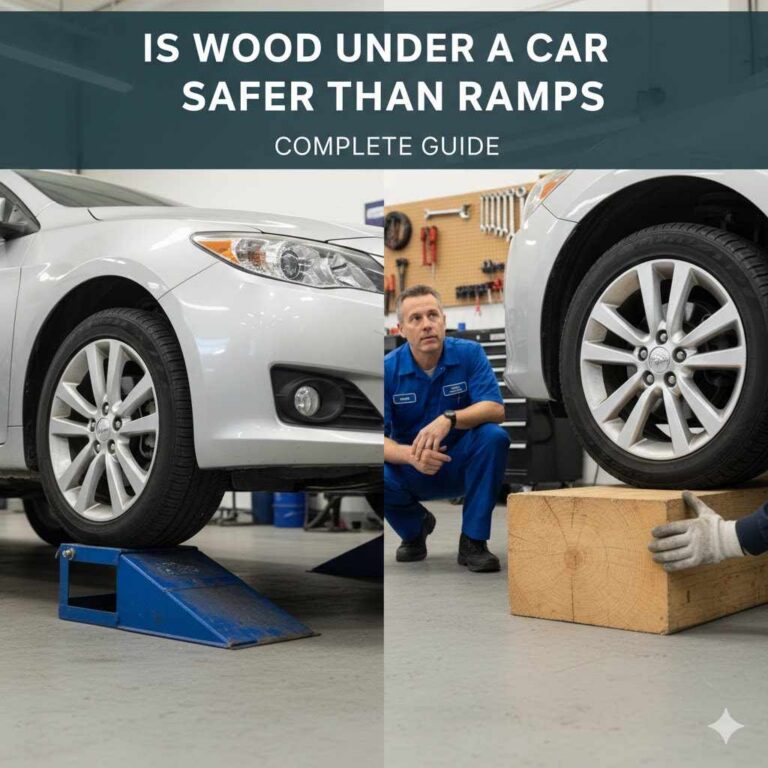
- Park on level ground and set the parking brake: Chock the wheels before raising the car or using ramps, and confirm the vehicle is stable before reaching underneath.
- Locate the master cylinder and follow the lines from under the hood: Start at the brake fluid reservoir and trace the rigid lines to where they exit the engine bay.
- Inspect the hard lines along the frame with a flashlight: Look for rust, pitting, bulges, or kinks anywhere the line runs along the undercarriage.
- Check the flexible hoses near each wheel: Look for cracking, fraying, bulging, or wet residue where the rubber hose meets the caliper or wheel cylinder.
- Record what you find and act on red flags: Note any wet spots, cracks, or heavy corrosion, and have a qualified mechanic inspect or repair anything questionable before driving further.
Best Brake Fluid Tester Pick
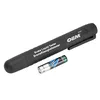
OEMTOOLS 25267 Brake Fluid Tester
A pen-style probe that reads moisture content in your brake fluid in about 5 seconds, so you know when it is time to flush before the boiling point drops too far.
- Best for: Checking moisture content between scheduled fluid flushes
- Why we picked it: Directly answers whether your brake fluid still meets DOT 3/DOT 4 boiling-point margins without a lab test
- Main drawback: Tells you moisture level, not exact boiling point — a boil-point tester is more precise but costs more
Compare more brake line and brake fluid inspection tools
 Option 1 Wagner DOT 4 ABS Blend Brake Fluid
|
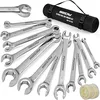 Option 2 SEDY 14-Piece Flare Nut Wrench Set
|
 Option 3 OEMTOOLS Steel Wire Brush
|
As an Amazon Associate we earn from qualifying purchases.
The Role of Brake Fluid in the System
Brake fluid is the unsung hero of your hydraulic braking system. It’s a special type of fluid designed to transmit pressure reliably. Because brake fluid is sensitive to moisture, it’s important to understand its properties and maintenance needs.
Brake fluid is hygroscopic, meaning it absorbs moisture from the atmosphere over time. This absorbed water can:
- Lower the boiling point of the fluid: During heavy braking, the friction generates a lot of heat. If the fluid’s boiling point is too low, it can boil, creating vapor bubbles. Air (or vapor) in the lines is compressible, leading to a spongy pedal and significantly reduced braking performance – a dangerous situation. The U.S. Department of Transportation (DOT) sets standards for brake fluid. DOT 3 fluid has a dry boiling point of at least 401°F (205°C) and a wet boiling point of at least 284°F (140°C). DOT 4 fluid is even higher, with a minimum dry boiling point of 446°F (230°C) and a minimum wet boiling point of 311°F (155°C), per the same FMVSS No. 116 fluid specification. You can find more information on these standards from organizations like the National Highway Traffic Safety Administration (NHTSA).
- Cause corrosion: The absorbed water can lead to rust and corrosion within the brake lines, master cylinder, and ABS components, potentially causing leaks and system failures.
Because of this, most manufacturers recommend replacing brake fluid every 2 to 3 years as a preventative maintenance measure. This process is often called “flushing” the brake system and replenishes the system with fresh fluid that has a higher boiling point and less moisture content. Brake lines themselves don’t wear on a fixed mileage schedule the way friction parts do — see our guide on how often to replace your car brakes for the components that do.
When to Call a Professional
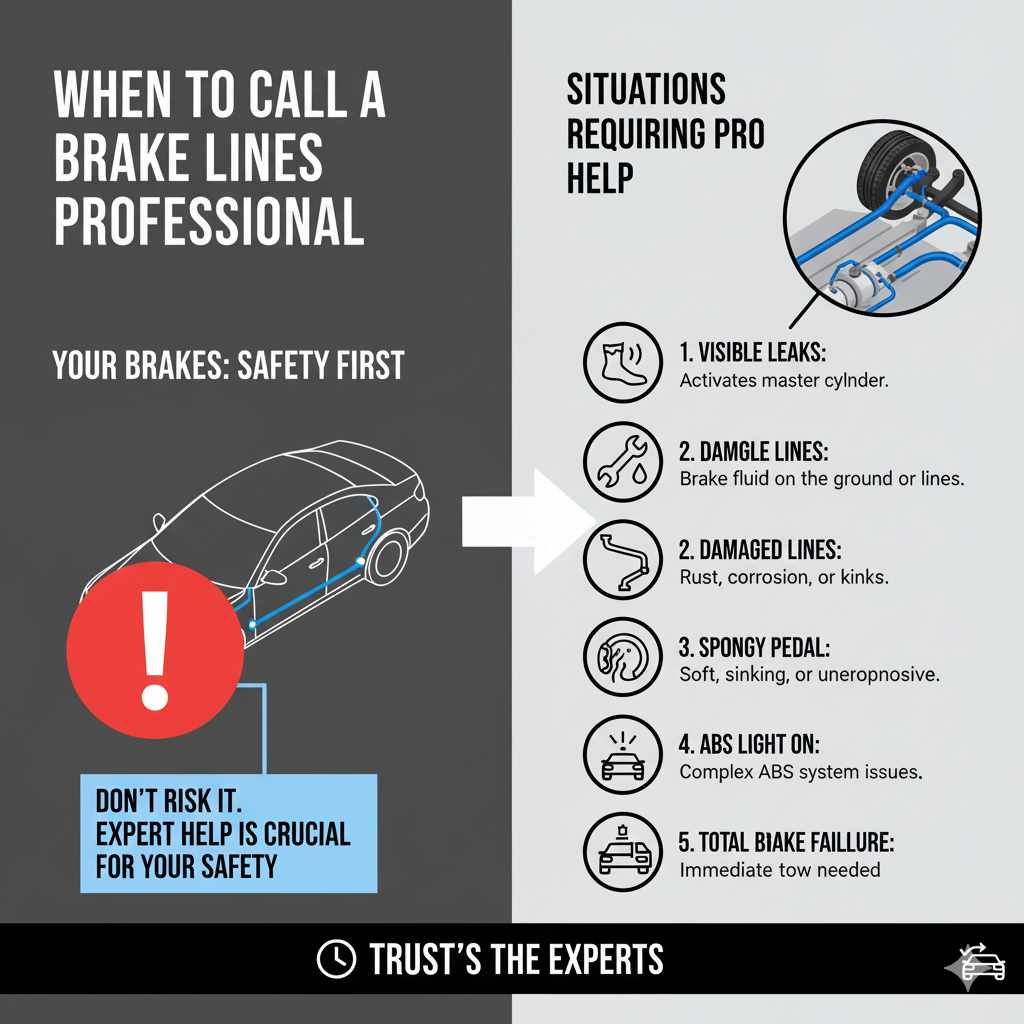
While understanding your car’s brake lines is empowering, there are definitely times when you should leave the work to the experts. Attempting complex brake repairs without the proper tools, knowledge, and experience can be dangerous.
Situations Requiring Professional Help:
- Visible leaks: If you see brake fluid leaking, especially from the rigid lines or their connections.
- Damaged hard lines: If the metal lines are significantly rusted, corroded, or kinked.
- Brake pedal issues: A very soft, spongy, or sinking pedal often indicates a leak or air in the system that needs bleeding, which can be tricky.
- ABS light is on: ABS systems are complex. Problems with ABS lines or modules are best diagnosed and repaired by a specialist.
- Complete loss of braking: If your brakes fail entirely, stop driving the vehicle immediately and call for a tow.
- Replacing hard lines: Running and flaring new metal brake lines requires specialized tools and skills that most home mechanics don’t have.
A professional mechanic has the specialized tools, diagnostic equipment, and experience to safely and effectively repair your braking system. They can also ensure all components are correctly installed and bled properly, which is critical for brake performance.
Frequently Asked Questions (FAQ)
How many brake lines are on a typical car?
Most standard passenger cars have at least two and commonly four brake lines. The exact number depends on the vehicle’s design, often utilizing a dual diagonal split system or individual lines to each wheel, especially with ABS.
What happens if a brake line breaks?
If a brake line breaks, you will likely experience a sudden loss of braking power on the wheels connected by that line. This can lead to a soft or spongy brake pedal and a significant safety risk. If your car has a dual-diagonal system, you’ll still have some braking on the other two wheels.
Can I see my brake lines easily?
Yes, you can usually see the rigid metal brake lines running along the underside of your car and the flexible rubber hoses near the wheels. They are typically made of steel, often coated to prevent rust.
Are brake lines expensive to replace?
Replacing flexible rubber brake hoses is generally more affordable than replacing the rigid metal lines. The cost of replacing hard lines can vary significantly depending on the length of the line, the vehicle, and the labor involved, as it requires specialized tools for bending and flaring the metal.
How often should brake lines be replaced?
Brake lines, especially the flexible rubber hoses, don’t have a fixed replacement interval like brake pads. They should be inspected regularly, and replaced if they show signs of cracking, blistering, corrosion, leaks, or damage. Metal lines can last a very long time if properly cared for but can corrode in harsh climates.
Do all four wheels have their own brake line, or do they share circuits?
Both, in most modern cars. There are usually 4 physical lines — one running to each wheel — but they are fed by only 2 hydraulic circuits from the master cylinder. On a diagonal-split car, the front-left and rear-right wheels share one circuit while the front-right and rear-left wheels share the other, so a single circuit failure never leaves you with zero working brakes.
Is it safe to drive with a leaking or damaged brake line?
No. A leaking or visibly damaged brake line should be treated as a stop-driving issue, not a schedule-it-for-later repair. A slow leak can progress to a sudden loss of an entire hydraulic circuit with no warning, and low fluid can trigger the brake warning light right before pedal feel deteriorates sharply. Have the vehicle towed or inspected by a qualified mechanic rather than driving on a known leak.
The short version: 4 lines, 2 circuits, and a diagonal split on most modern cars that keeps you braking on one front and one rear wheel even if a circuit fails. Rigid steel lines do the heavy lifting along the frame, flexible hoses take over the last few inches at each wheel, and a soft pedal, a puddle underneath, or a car that pulls to one side are the three signs worth acting on immediately rather than waiting for the next scheduled service.
Products related to this article
Sponsored / affiliate links. As an Amazon Associate I earn from qualifying purchases. I may earn additional commission from eligible campaigns.