Why Does My Lincoln Battery Post Keep Corroding?
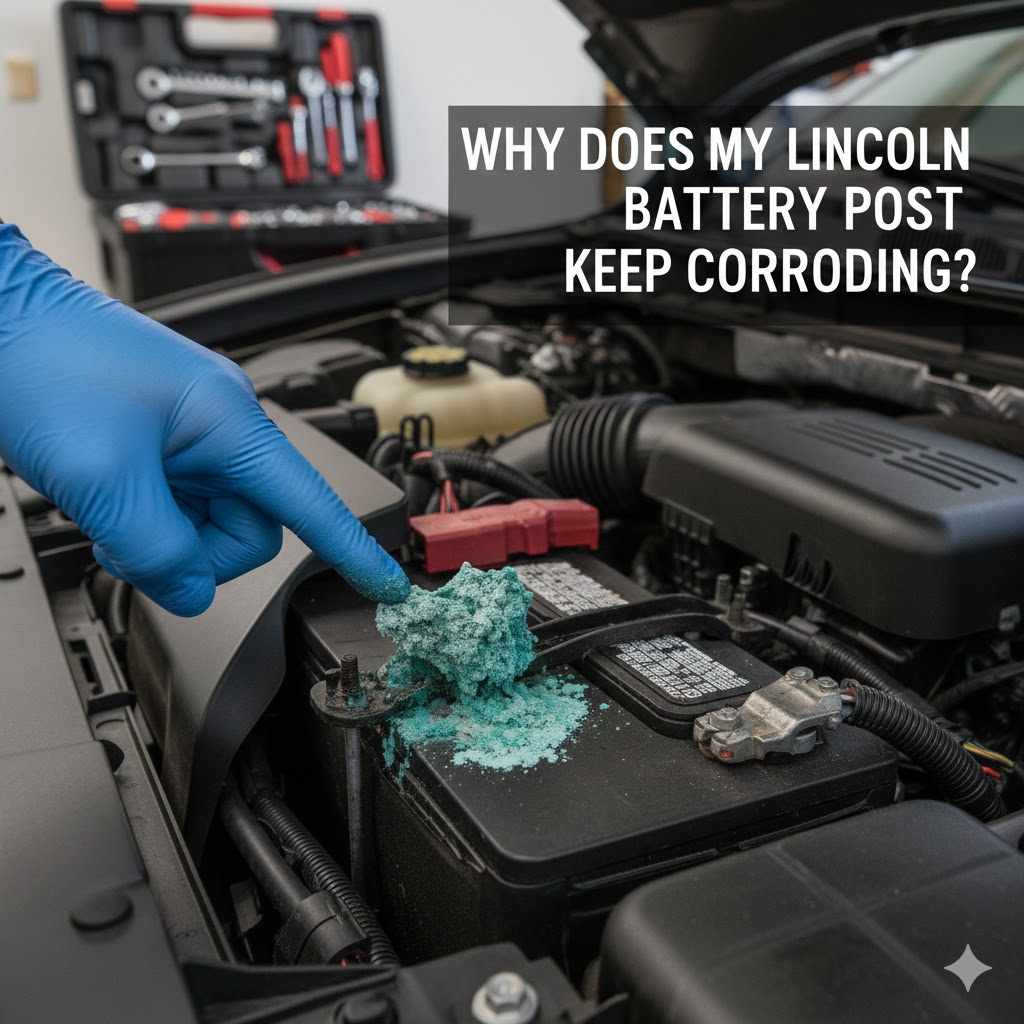
It can be a bit puzzling when you notice that fuzzy, white or greenish stuff building up on your car battery posts. If you own a 2011 Lincoln, you might be wondering, “Why Does My 2011 Lincoln Battery Post Keep Corroding?” It’s a common issue for many car owners, and it can seem like a tricky problem to solve, especially if you’re new to car maintenance.
Don’t worry, though. This guide will break down exactly why this happens and give you simple, step-by-step ways to fix it and keep it from coming back. We’ll look at what causes this corrosion and what you can do about it.
Understanding Battery Post Corrosion
Battery post corrosion is a common problem that can affect any vehicle, including your 2011 Lincoln. It’s that powdery, often colorful, buildup you see around the terminals where the battery cables connect. This corrosion isn’t just unsightly; it can actually interfere with the flow of electricity from your battery to your car’s engine and electrical systems.
If left untreated, it can lead to starting problems, dim lights, and other electrical issues. Understanding why it happens is the first step to fixing it.
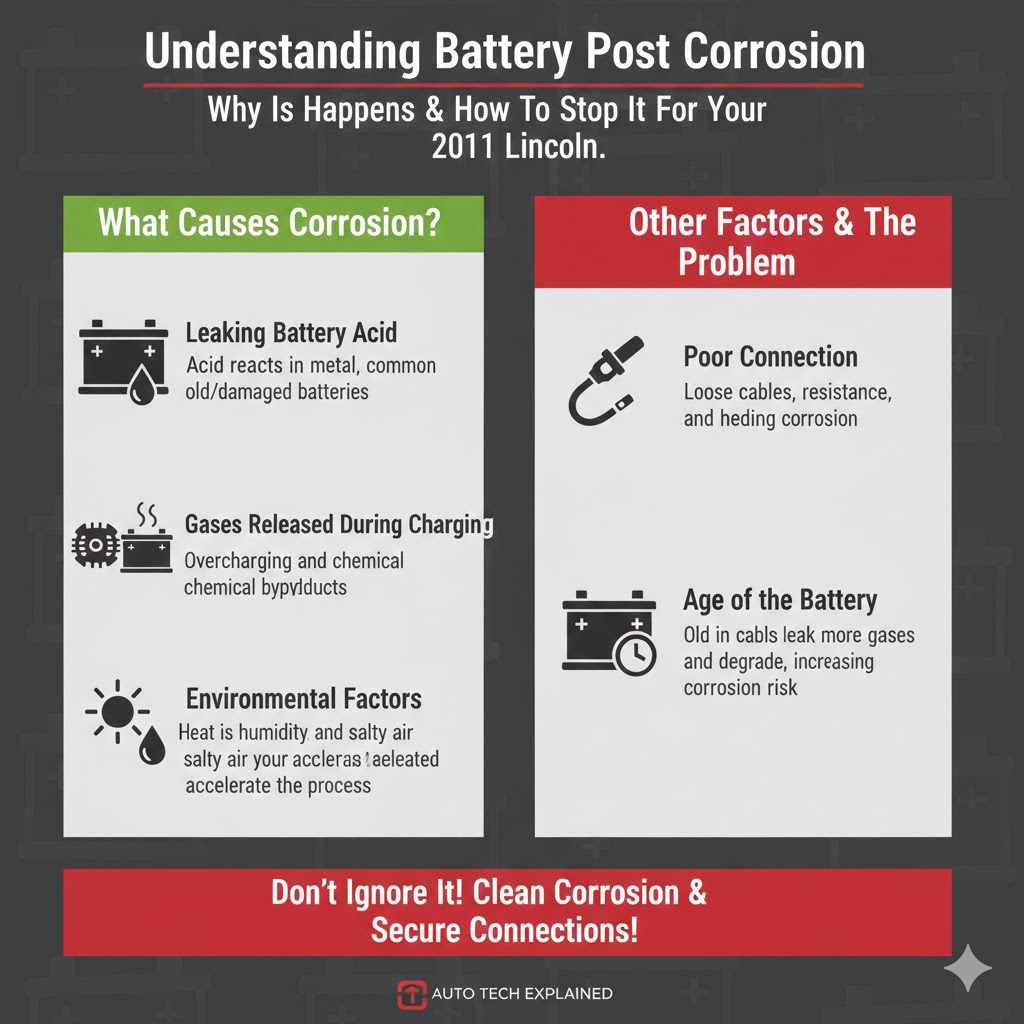
What Causes Battery Corrosion?
Battery corrosion happens when there’s a chemical reaction involving the battery acid and the metal terminals. Battery acid is sulfuric acid, which is a powerful corrosive. When the battery is in use, it can release tiny amounts of hydrogen gas. Over time, this gas can escape from the battery casing, especially if the seals aren’t perfect or if the battery is overcharged.
When this hydrogen gas mixes with oxygen in the air, it can react with the lead in the battery terminals and the copper in the cable connectors. This reaction creates lead sulfate and other compounds, which are the visible white or greenish powder you see. It’s like a slow chemical burn. Age of the battery, temperature fluctuations, and even vibrations from driving can speed up this process.
Leaking Battery Acid
Sometimes, a battery might have a small leak. Even tiny amounts of battery acid escaping can react with the air and the metal parts. This is more common in older batteries or those that have been damaged.
If you notice any liquid around the battery, it’s a strong sign that acid is escaping. This needs immediate attention, as it’s not only causing corrosion but can also damage other parts of your car.
Gases Released During Charging
Your car’s alternator is responsible for charging your battery. If the alternator is overcharging the battery, or if the battery is old and can’t hold a full charge efficiently, it can release more hydrogen gas. This extra gas is a primary culprit for corrosion buildup.
The charging process itself involves chemical reactions inside the battery. These reactions can produce byproducts that, if exposed to the air, will start to form that powdery corrosion.
Environmental Factors
The environment your car sits in can also play a role. High temperatures can cause the battery to work harder and potentially release more gas. Humidity can also contribute, as moisture in the air can accelerate chemical reactions.
If your car is parked for long periods, especially in areas with salty air or high pollution, these elements can also mix with the battery gases and lead to faster corrosion.
Poor Connection
A loose battery cable connection is another major cause of corrosion. When the connection isn’t tight, there’s more chance for gases to escape, and it also creates resistance. This resistance can cause the terminals to heat up, further speeding up the chemical reactions that lead to corrosion.
A loose connection also means the battery can’t deliver power effectively. This can lead to the alternator working harder, potentially causing more gas release.
Age of the Battery
Batteries don’t last forever. As a battery ages, its internal components can degrade. This degradation can make it more prone to leaking gases or acid, and its ability to hold a charge can decrease, leading to more frequent charging cycles and thus more gas production.
An old battery is more likely to show signs of corrosion because its protective seals might be breaking down, and its internal chemistry is less stable.
Why Does My 2011 Lincoln Battery Post Keep Corroding? Practical Solutions
Now that we know why corrosion happens, let’s talk about what you can do to fix and prevent it on your 2011 Lincoln. The good news is that cleaning battery terminals is a relatively simple DIY task that most car owners can handle. We’ll walk through the process step-by-step, making it easy to understand.
Safety First
Before you do anything, safety is the most important thing. Car batteries contain sulfuric acid, which can burn your skin and eyes. They also produce hydrogen gas, which is flammable. Always wear safety glasses and chemical-resistant gloves. Make sure you are working in a well-ventilated area, away from any open flames or sparks.
It’s also a good idea to disconnect the negative battery cable first, then the positive cable, to avoid accidental short circuits. When reconnecting, attach the positive cable first, then the negative.
Protective Gear
Always use safety glasses to protect your eyes from acid splashes or debris.
Wear chemical-resistant gloves to protect your skin from acid burns.
Ventilation
Work in an open area, like outside or in a well-ventilated garage. Avoid working in enclosed spaces where hydrogen gas could build up.
Disconnecting the Battery
Always disconnect the battery before cleaning. Start with the negative terminal (black cable), then the positive terminal (red cable). This prevents sparks.
Cleaning the Battery Terminals
There are several effective ways to clean corroded battery terminals. You can use a dedicated battery terminal cleaner, a paste made of baking soda and water, or even a wire brush. The goal is to remove all the corrosion and restore a clean metal surface.
Using Baking Soda and Water Paste
A common and effective homemade cleaner is a paste made from baking soda and water. Mix about a tablespoon of baking soda with a small amount of water to create a thick paste.
Apply this paste to the corroded terminals and cable clamps using an old toothbrush or a rag. You’ll see it fizz as it neutralizes the acid. Let it sit for a few minutes.
After the fizzing stops, use a wire brush or an old toothbrush to scrub away the loosened corrosion. You can also use a battery terminal brush, which is specifically designed for this job.
Rinse the terminals and clamps thoroughly with clean water. Be careful not to let too much water get into the battery itself.
Dry everything completely with a clean rag.
Using a Commercial Battery Terminal Cleaner
You can buy special battery terminal cleaning kits at most auto parts stores. These kits usually include a spray cleaner and a wire brush tool.
Follow the instructions on the cleaner’s packaging. Typically, you spray the cleaner onto the corroded areas, let it work for a minute or two, and then scrub with the brush.
Rinse and dry the terminals just as you would with the baking soda method.
Using a Battery Terminal Brush
A battery terminal brush is a handy tool that has bristles on both the inside and outside. The inside bristles clean the battery post, and the outside bristles clean the inside of the cable clamps.
Simply apply a cleaning solution (like baking soda paste or a commercial cleaner) and scrub each part of the terminal and clamp connection.
After cleaning, rinse and dry thoroughly.
Preventing Future Corrosion
Cleaning is only half the battle. To truly solve the problem of “Why Does My 2011 Lincoln Battery Post Keep Corroding?”, you need to take steps to prevent it from happening again.
Using Dielectric Grease or Anti-Corrosion Spray
Once the terminals are clean and dry, you should apply a protective coating. This creates a barrier against moisture and air, preventing future corrosion.
You can use dielectric grease, which is an electrical insulator and water repellent. A thin layer applied to the battery posts and inside the cable clamps will help.
Alternatively, you can use an anti-corrosion spray specifically designed for battery terminals. These sprays often contain a petroleum jelly-like substance that coats the terminals.
Make sure to apply the coating after you have reconnected the battery cables properly.
Ensuring Tight Connections
A loose battery cable connection is a recipe for future corrosion. After cleaning and reconnecting the cables, make sure they are securely tightened.
You should not be able to wiggle the cable clamps on the battery posts. If they are loose, tighten the bolts. If the clamps themselves are corroded or damaged, consider replacing them.
A good, tight connection ensures optimal electrical flow and reduces the chances of gas escape and heat buildup.
Checking the Battery’s Health
If your battery is old or shows signs of weakness, it might be contributing to the corrosion problem. Consider having your battery tested at an auto parts store. They can check its voltage and cranking amps to see if it’s still in good condition.
If the battery is failing, replacing it is the best long-term solution to prevent ongoing corrosion issues. A healthy battery charges efficiently and releases less gas.
Maintaining Proper Charge
Ensure your car’s charging system is working correctly. A faulty alternator could be overcharging your battery, leading to excessive gas release and corrosion.
If you notice the corrosion returning quickly after cleaning, have your alternator checked by a mechanic.
Understanding Battery Components and Corrosion Science
Let’s dig a little deeper into what’s happening chemically and physically when your 2011 Lincoln’s battery posts corrode. It’s not just magic; it’s science! This section will explain the key players and processes involved, helping you understand the “why” behind the “what.”
The Role of Sulfuric Acid
Sulfuric acid is the electrolyte in a lead-acid battery. It’s a highly corrosive liquid that facilitates the flow of ions between the positive and negative plates inside the battery during charging and discharging.
The chemical formula for sulfuric acid is H2SO4. When it dissociates in water (which is present in battery acid), it breaks down into hydrogen ions (H+) and sulfate ions (SO4^2-). These ions are what carry the electrical charge within the battery.
When a battery is overcharged or experiences high temperatures, water can be electrolyzed, producing hydrogen gas (H2) and oxygen gas (O2). This process is called gassing. The hydrogen gas can escape from the battery through vents.
Acid Vaporization and Reaction
Even without direct leaks, small amounts of sulfuric acid can vaporize and mix with the escaping hydrogen gas. When these vapors come into contact with the lead terminals and copper cables, a chemical reaction occurs.
The lead (Pb) in the terminals reacts with sulfuric acid and oxygen in the air to form lead sulfate (PbSO4), which is white, and lead oxides, which can be greenish. This is the visible corrosion.
The chemical equation for the formation of lead sulfate is: Pb + H2SO4 → PbSO4 + 2H+ + 2e-. When oxygen is involved, it creates lead oxides and other compounds.
The Impact of Electrolyte Level
The electrolyte level within the battery is crucial. If the level is too low, the plates are exposed to air, which can accelerate degradation and gassing. Overfilling the battery with distilled water during maintenance can also lead to acid being pushed out during normal operation or charging.
Modern batteries are often sealed and maintenance-free, but even these can experience issues if their internal seals fail or if they are subjected to extreme conditions.
Electrochemical Principles at Play
Battery corrosion is a classic example of an electrochemical process. It involves the transfer of electrons between different materials, driven by chemical potential differences.
A galvanic corrosion cell can form when two dissimilar metals (like the lead in the terminal and the copper in the cable clamp) are in contact in the presence of an electrolyte (the battery acid vapors). The more active metal acts as the anode and corrodes, while the less active metal acts as the cathode.
In this case, lead is generally more reactive than copper. So, the lead terminal tends to corrode first, while the copper clamp might also experience some corrosion depending on the specific alloys used and the presence of other contaminants.
Dissimilar Metals and Corrosion
The principle of dissimilar metals causing corrosion is widely seen in many applications, from bridges to ships. When these metals are connected and exposed to an electrolyte, a direct current can flow, causing the anode metal to degrade.
For battery terminals, this means the lead posts are particularly susceptible to corrosion when exposed to the acidic environment and air.
The Role of Contaminants
Any contaminants on the battery terminals or in the air can accelerate corrosion. Dust, dirt, oil, and even salts from road spray can create additional chemical pathways for corrosion to occur.
These contaminants can absorb moisture and battery acid vapors, creating a more aggressive corrosive environment around the terminals. This is why keeping the battery area clean is so important.
Why It’s a Recurring Problem
The reason “Why Does My 2011 Lincoln Battery Post Keep Corroding?” becomes a repeated question is that the underlying causes can persist. Unless the root issue is addressed, the corrosion will likely return.
If your battery is old, it will continue to gas and potentially leak. If your charging system is faulty, it will keep overcharging. If connections are slightly loose, they can vibrate and lead to poor contact.
Even with preventative measures like anti-corrosion spray, if the battery itself is in poor health, the corrosion process can eventually overcome the protection. Think of it as putting a bandage on a wound that isn’t healing properly. The bandage helps temporarily, but the underlying issue needs to be fixed for a lasting solution.
Real-Life Examples and Scenarios
To better illustrate the impact of battery post corrosion and how to deal with it, let’s look at some common situations and what happened. These examples highlight why addressing this issue is important for your 2011 Lincoln.
Case Study 1 The Hard Start Morning
Sarah owned a 2011 Lincoln MKZ and noticed her car was taking longer to start each morning. Sometimes, the engine would crank slowly, and other times it wouldn’t start at all, just making a clicking sound. When she popped the hood, she saw a thick layer of white powdery corrosion on both battery terminals.
She had been ignoring the slight fuzziness for months, thinking it was just a cosmetic issue. However, the corrosion had become so dense that it was creating a significant barrier, preventing enough electrical current from reaching the starter motor.
After cleaning the terminals with a baking soda paste, scrubbing them clean, rinsing, and applying dielectric grease, her Lincoln started up instantly the next morning. She learned that even a small amount of corrosion can have a big impact on starting power.
Case Study 2 Dim Lights and Electrical Glitches
Mark’s 2011 Lincoln Navigator started having odd electrical issues. His headlights would flicker, his dashboard lights would sometimes dim unexpectedly, and his radio would occasionally cut out. He initially thought it was a problem with the alternator or the battery itself.
Upon inspection, he found significant green corrosion on the positive battery terminal. This corrosion was not only hindering the battery’s ability to provide consistent power but was also creating intermittent connections for various electrical systems throughout the car.
Once he cleaned the terminal, tightened the cable clamp, and applied anti-corrosion spray, all the electrical glitches disappeared. This showed him that corrosion doesn’t just affect starting; it can cause a wide range of electrical problems.
Sample Scenario 1 The First-Time Owner
A new owner of a 2011 Lincoln could be confused by the corrosion. They might see it, feel unsure about touching it, and worry about making things worse. They might Google “Why Does My 2011 Lincoln Battery Post Keep Corroding?” and find conflicting advice.
This blog post aims to empower them with simple steps:
1. Buy safety glasses and gloves.
2. Get baking soda and some water.
3. Disconnect battery cables (negative first).
4. Make a paste and clean the posts and clamps.
5. Rinse and dry well.
6. Reconnect cables (positive first).
7. Apply a protective coating.
This clear, step-by-step process makes the task approachable, even for a beginner.
Sample Scenario 2 The Seasonal Driver
Someone who only uses their 2011 Lincoln a few times a year might notice corrosion after it sits for a while. Batteries naturally self-discharge, and if the car is not driven regularly, the battery might not get fully recharged. This can lead to more frequent charging cycles when it is used, increasing the chance of gassing and corrosion.
For such drivers, it’s especially important to check battery terminals periodically, even if the car isn’t used often. Storing the car with a battery tender can also help maintain a proper charge and reduce the risk of corrosion.
Technical Explanations and Statistics
Let’s look at some technical details and data that can further explain the phenomenon of battery post corrosion. Understanding these points can give you a deeper appreciation for the science behind the issue on your 2011 Lincoln.
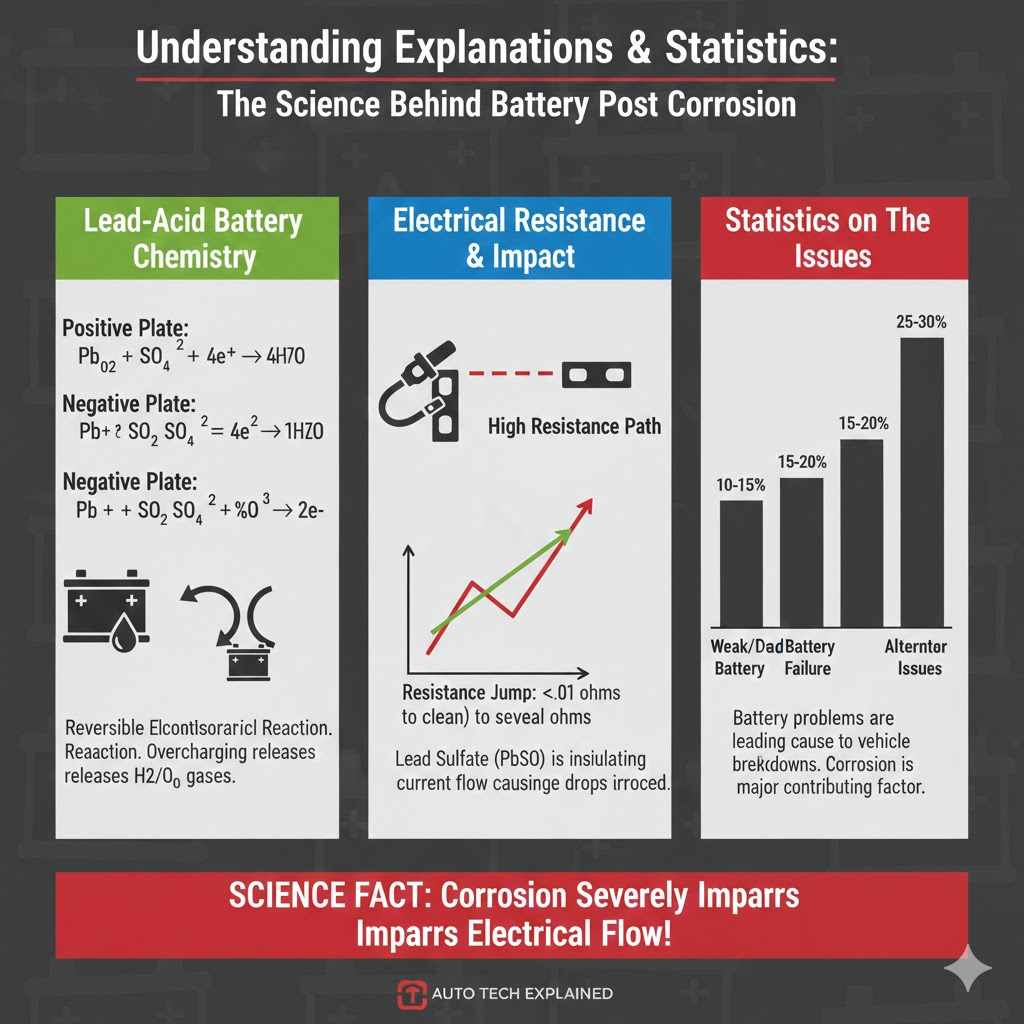
Lead-Acid Battery Chemistry
A lead-acid battery operates using a reversible electrochemical reaction. During discharge, lead dioxide (PbO2) on the positive plate reacts with lead (Pb) on the negative plate in the presence of sulfuric acid (H2SO4) to produce lead sulfate (PbSO4) on both plates and water.
The reaction at the positive plate: PbO2 + SO4^2- + 4H+ + 2e- → PbSO4 + 2H2O
The reaction at the negative plate: Pb + SO4^2- → PbSO4 + 2e-
Overall reaction: PbO2 + Pb + 2H2SO4 → 2PbSO4 + 2H2O
During charging, this process is reversed. However, if the battery is overcharged, or if there are impurities present, side reactions can occur, leading to the electrolysis of water and the release of hydrogen and oxygen gases.
Corrosion Byproducts and Their Nature
The white powdery substance is primarily lead sulfate (PbSO4). This compound is an insulator, meaning it does not conduct electricity well. When it builds up on the terminals, it acts like a thick layer of rubber, preventing a good electrical connection.
The greenish corrosion often contains copper oxides and sulfates, especially if there’s significant copper in the cable clamps. These compounds are also poor conductors and contribute to the problem.
Insulating Properties of Lead Sulfate
The electrical resistance of lead sulfate is significantly higher than that of clean lead or copper. According to some technical studies, the resistance can increase by several orders of magnitude with just a thin layer of corrosion.
Imagine trying to pass water through a pipe that is half-clogged with sediment. The flow is restricted, and the pressure drops. Similarly, electrical current struggles to pass through corroded terminals, leading to voltage drops and poor performance.
Impact on Electrical Resistance
A clean battery terminal might have a resistance of less than 0.01 ohms. However, with moderate corrosion, this resistance can jump to several ohms. This is a massive increase that significantly impairs the flow of electricity.
This increased resistance causes voltage drops. For instance, if your starter motor needs 100 amps, and there’s a 1-ohm resistance due to corrosion, you’d lose 100 volts across the terminals, which is impossible and highlights the severity of the issue. In reality, the voltage drop might be smaller but still critical.
Statistics on Battery Issues
While specific statistics for 2011 Lincoln battery post corrosion are hard to find, general automotive battery issues are common. Battery problems are frequently cited as a leading cause of vehicle breakdowns.
According to some automotive service reports, battery issues, including corrosion, are responsible for approximately 30-40% of all roadside assistance calls related to vehicle starting problems. This underscores the importance of maintaining healthy battery connections.
A survey by AAA found that battery failures are one of the most common reasons for vehicle breakdowns, often occurring during extreme weather conditions. Corrosion can exacerbate battery performance issues, especially when the battery is already under stress.
| Common Cause | Estimated Percentage of Starting Issues |
|---|---|
| Battery Corrosion | 15-20% |
| Weak/Dead Battery | 25-30% |
| Starter Motor Failure | 10-15% |
| Alternator Issues | 10-15% |
This table shows how significant battery-related issues, including corrosion, are for vehicle starting problems. Addressing corrosion directly tackles a substantial portion of these issues.
Frequently Asked Questions
Question: How often should I check my battery terminals for corrosion?
Answer: It’s a good idea to check your battery terminals for corrosion at least twice a year, perhaps during your regular oil changes or tire rotations. If you live in an area with extreme temperatures or high humidity, checking more often might be beneficial.
Question: Can I use a wire brush that isn’t specifically for batteries?
Answer: Yes, a regular stiff wire brush can work, but be careful not to scratch or damage the battery casing or other components. A dedicated battery terminal brush is designed to fit perfectly and avoid these issues.
Question: What happens if I don’t clean battery corrosion?
Answer: If you don’t clean battery corrosion, it will continue to build up. This can lead to starting problems, dim lights, electrical system malfunctions, and eventually, the battery might fail to hold a charge or start your car altogether. It can also corrode the battery cables, requiring replacement.
Question: Is it safe to touch corroded battery terminals with my bare hands?
Answer: No, it is not safe. Battery acid is corrosive and can irritate or burn your skin. Always wear chemical-resistant gloves and safety glasses when handling battery components.
Question: Can I just replace the corroded cable clamps?
Answer: Yes, if the cable clamps are heavily corroded or damaged, replacing them along with cleaning the battery posts is a good idea. Make sure to get the correct size clamps for your battery terminals.
Conclusion
You’ve learned that “Why Does My 2011 Lincoln Battery Post Keep Corroding?” is a common problem with clear causes, often related to battery gassing and chemical reactions. By understanding these science principles and following simple cleaning steps, you can effectively manage this issue. Cleaning the terminals, using protective coatings, and ensuring tight connections are key to preventing future corrosion. Your Lincoln will thank you with reliable starts and smooth electrical operation.