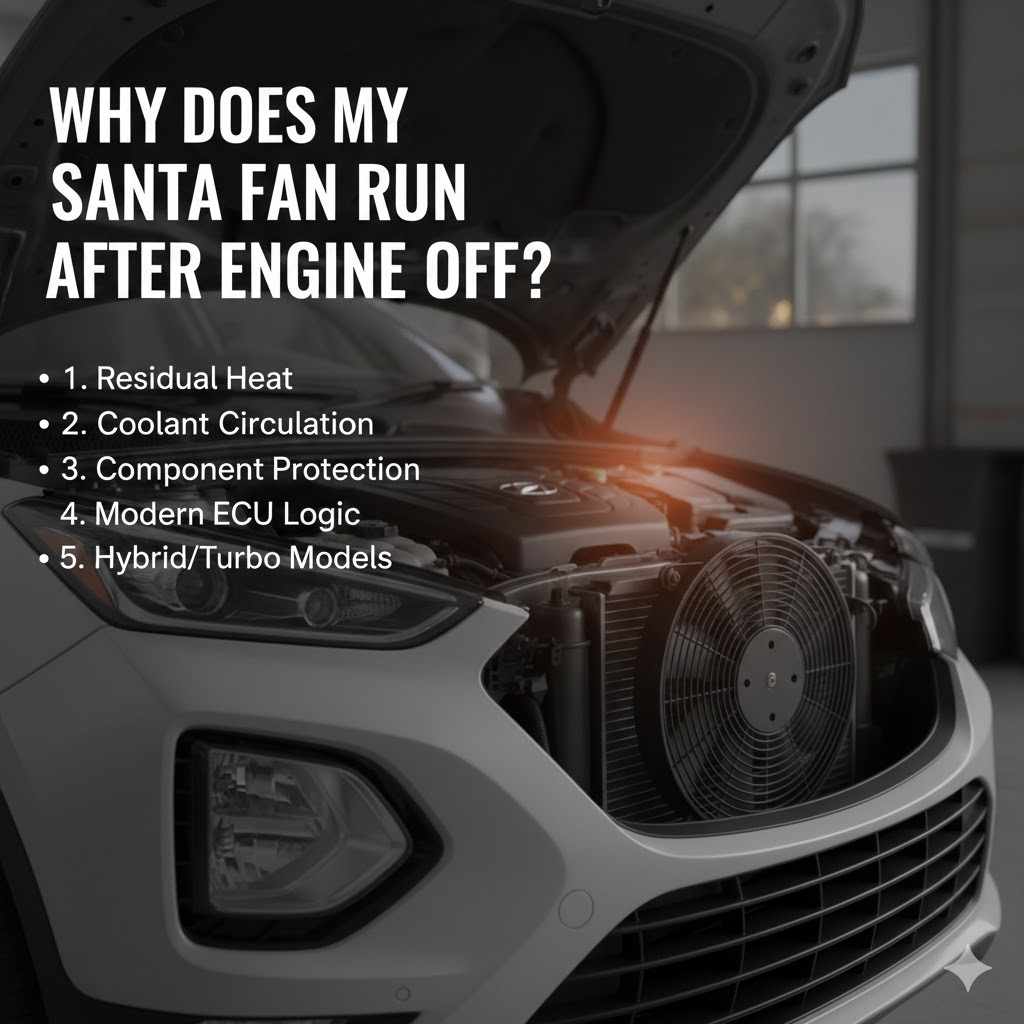
Why Does My Santa Fe Fan Run After Engine Off?
It can be a little surprising and even a bit worrying when you turn off your Hyundai Santa Fe and the cooling fan keeps running. You might wonder, Why Does My Santa Fe Fan Run After Engine Off? This is a common question, especially for those new to car maintenance. It’s not usually a sign of a serious problem, but it’s good to know what’s happening.
This guide will break down why this happens in a simple way and give you easy steps to understand it better. Let’s figure out what that fan is doing.
Understanding Your Santa Fe’s Cooling Fan System
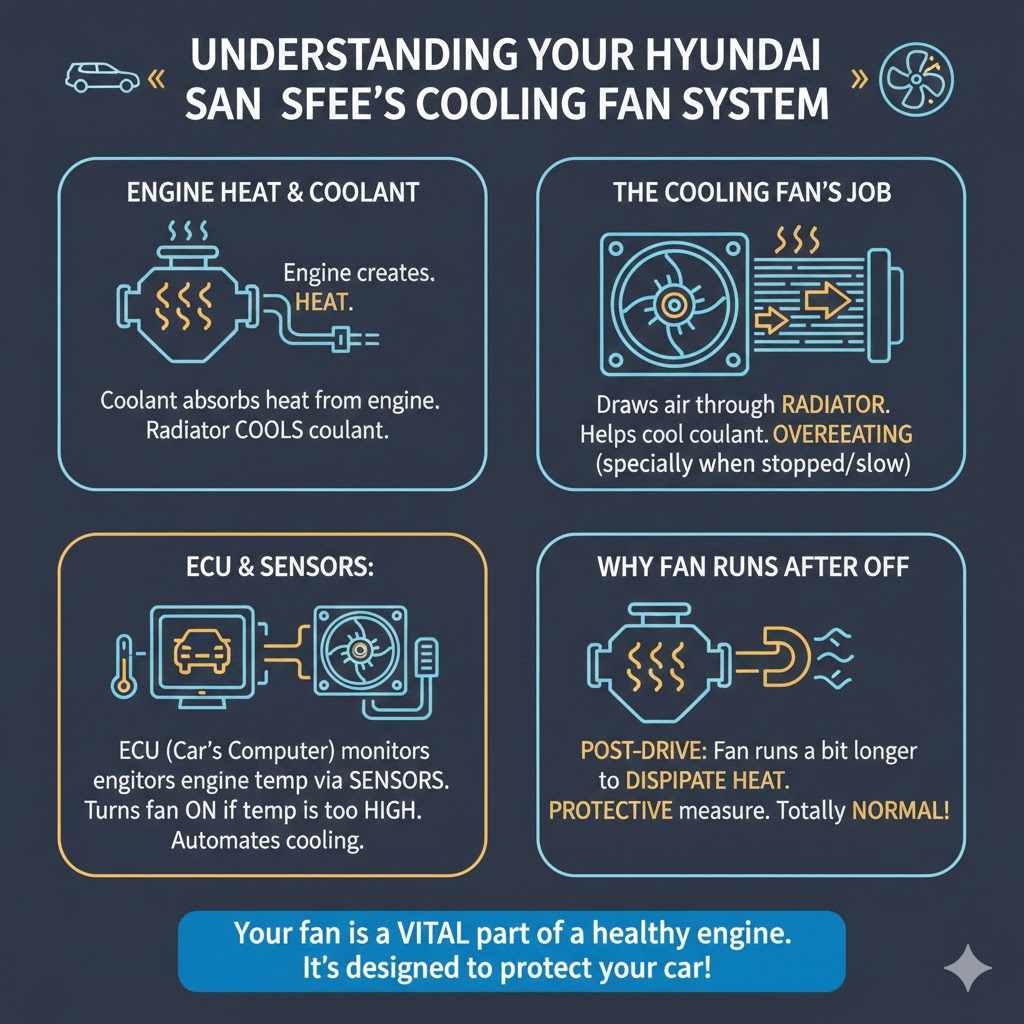
Your Hyundai Santa Fe’s cooling fan is a really important part of keeping your engine from overheating. When your engine is running, it creates a lot of heat. The radiator helps cool the engine’s coolant, but sometimes that’s not enough, especially when your car is stopped or moving slowly.
That’s where the cooling fan comes in. It pulls air through the radiator to help cool the coolant down even more. This system works hard to protect your engine.
The fan has a job to do: keep the engine temperature just right. It’s controlled by your car’s computer, which gets information from sensors. These sensors tell the computer if the engine is getting too hot.
If it is, the computer turns on the fan to help cool things down. This happens most often when the engine is hot, like after driving for a while or when it’s a warm day.
How the Cooling Fan Works
The cooling fan in your Santa Fe is usually an electric fan. This means it’s powered by electricity from your car’s battery and charging system. It’s not directly connected to the engine’s rotation like older fans were.
This electric setup allows the fan to run even when the engine is off, if it needs to. It’s controlled by the engine control unit (ECU), which is like your car’s brain.
The ECU monitors the engine’s temperature using a coolant temperature sensor. If the sensor tells the ECU that the coolant is too hot, the ECU will turn on the electric cooling fan. This helps lower the temperature of the coolant passing through the radiator.
This is a smart system designed to prevent damage to your engine. Without this system, your engine could overheat very quickly.
The Role of the Radiator and Coolant
The radiator is like a heat exchanger. It has many small tubes and fins that allow air to pass through them. Hot coolant from the engine flows into the radiator.
As air moves over the radiator’s surface, it carries heat away from the coolant. This cooled coolant then flows back into the engine to absorb more heat. The entire process is a continuous cycle to maintain a safe operating temperature.
Coolant, also known as antifreeze, is a mixture of water and chemicals. It has a lower freezing point and a higher boiling point than water alone. This helps your engine run smoothly in both cold and hot weather.
It also contains additives that prevent corrosion and lubricate the water pump. Keeping the coolant at the right level and condition is vital for the cooling system to work properly. Low coolant levels can cause the fan to work harder or not at all.
Why the Fan Runs After the Engine Is Off
So, why does the fan continue to spin after you’ve turned off your Santa Fe? This is a normal operation for many modern cars, including your Santa Fe. When you shut off the engine, there’s no longer any airflow through the radiator from driving.
If the engine was hot when you turned it off, the coolant inside the radiator and engine is still very warm.
To prevent this residual heat from causing damage or making the engine too hot, the car’s computer might decide to keep the cooling fan running for a while. This is called “after-run” or “post-run” operation. It’s a safety feature.
The fan pulls air through the radiator, even with the engine off, to continue cooling the coolant and lower the overall engine temperature to a safe level.
Coolant Temperature Sensors and ECU Control
The engine control unit (ECU) plays a key role here. It receives signals from the coolant temperature sensor. If the sensor indicates a high temperature, even after the ignition is off, the ECU can command the cooling fan to stay on.
This ensures that the engine temperature doesn’t rise to a critical point when the vehicle is parked.
This feature is especially active in hot weather or after hard driving. For example, after a long highway drive or climbing a steep hill, the engine will be very hot. Turning off the ignition doesn’t instantly cool everything down.
The fan’s continued operation is a deliberate action by the ECU to protect your engine from heat soak. This is a normal function, not a malfunction.
Heat Soak and Preventing Engine Damage
Heat soak is what happens when a hot engine continues to absorb heat even after it has been turned off. This trapped heat can cause various issues, including the breakdown of engine oil and lubricants. It can also lead to increased pressure within the cooling system.
The fan running after the engine is off is a direct countermeasure to heat soak.
By continuing to circulate air through the radiator, the fan dissipates excess heat. This brings the engine temperature down to a more stable range. It’s a smart system that helps extend the life of your engine components and prevents potential problems that could arise from extreme heat.
Think of it as your car taking a few extra minutes to cool down safely after a workout.
Common Triggers for the Fan Running After Shutoff
There are several situations that commonly trigger the cooling fan to run after you turn off your Santa Fe. One of the most frequent is simply driving in hot weather. When the ambient temperature is high, the cooling system has to work harder.
This means components will remain hotter for longer periods after the engine is shut down.
Another common trigger is aggressive driving. If you’ve been accelerating rapidly, driving at high speeds, or going up steep hills, your engine will generate more heat. This extra heat will linger in the cooling system.
When you then turn off the engine, the residual heat is significant, prompting the fan to continue its work.
Driving in Hot Weather
On a hot summer day, the air outside is already warm. This makes it harder for the radiator to dissipate heat effectively. The cooling fan helps compensate for the lack of airflow from driving.
Even at idle after you stop, the fan ensures that enough air passes through the radiator to keep the coolant temperature down.
If you park your Santa Fe after a drive on a very hot day, you’ll likely hear the fan running for a while. This is completely normal. The system is designed to manage these conditions.
The goal is to bring the engine back to a safe temperature before the next start. It’s a sign that the cooling system is functioning as intended.
Idling and Stop-and-Go Traffic
When you’re stuck in traffic or idling for extended periods, your car isn’t moving much. This means there’s very little natural airflow through the radiator. The engine is still running and producing heat, but without forward motion, the radiator relies heavily on the fan.
This is one of the main reasons why the fan might come on even when the car is stationary.
If you turn off your engine after a long period of idling in traffic, the heat built up within the engine and cooling system might still be high. The ECU detects this residual heat and can activate the fan to cool it down. This prevents the engine from becoming excessively hot while parked.
It’s a proactive measure.
Recent Heavy Engine Load
Any activity that puts a significant load on your engine will generate more heat. This includes towing a trailer, driving with a heavy payload, or climbing steep inclines. When the engine is working harder, the coolant temperature rises considerably.
This extra heat needs to be managed.
After such strenuous use, even if you drive for a short distance afterward, the engine and cooling system will remain very hot. The ECU anticipates this and may engage the cooling fan to run after the engine is turned off. This ensures the system cools down properly and prevents potential damage from prolonged high temperatures.
It’s a sign of a well-functioning protective system.
When to Be Concerned About the Fan Running
While the fan running after the engine is off is usually normal, there are times when it could indicate a problem. You should pay attention if the fan runs for an unusually long time or if you notice other symptoms along with it. If the fan doesn’t seem to turn on at all when the engine is hot, that’s also a concern.
It’s always a good idea to listen to your car. If something sounds different or the behavior of a component changes significantly, it’s worth investigating. Sometimes, what seems like a minor issue can be a sign of a bigger problem developing.
Fan Runs Continuously or for Too Long
If your Santa Fe’s cooling fan runs non-stop for more than 10-15 minutes after you’ve turned off the engine, or if it seems to run much longer than usual, it might be a cause for concern. This could mean the cooling system isn’t dissipating heat efficiently on its own. It might also indicate an issue with the fan control system itself.
One possibility is a stuck relay or a faulty temperature sensor. These components might be telling the ECU that the engine is hotter than it actually is, causing the fan to remain active longer than necessary. While not an immediate emergency, this warrants a check by a mechanic to prevent potential battery drain or stress on the fan motor.
Unusual Noises from the Fan
While the fan is running, listen for any unusual noises. Grinding, squealing, or rattling sounds coming from the fan area could indicate that the fan motor is failing or that something is obstructing its rotation. A worn-out fan bearing is a common cause of such noises.
These noises suggest that the fan itself might be damaged or nearing the end of its lifespan. Ignoring them could lead to the fan failing completely, which would then result in overheating issues when you drive. Prompt attention to these sounds can save you from more costly repairs down the line.
Overheating Symptoms When Driving
The most critical sign that something is wrong with the cooling system, including the fan’s operation, is if your car starts to overheat while you are driving. This means the temperature gauge on your dashboard rises into the red zone, or your car displays a warning light for engine temperature. This is a serious issue.
If you experience overheating while driving, pull over safely as soon as possible. Continuing to drive with an overheating engine can cause severe and expensive damage, such as a blown head gasket or a warped cylinder head. This indicates that the cooling fan system, or another part of the cooling system, is not working correctly when it needs to most.
This is the time to get it checked immediately.
Troubleshooting Steps for Your Santa Fe
If you’re experiencing the fan running after engine shutdown, or if you suspect there might be an issue, there are a few things you can check yourself. Simple checks can sometimes help diagnose the problem or confirm that everything is normal.
Always ensure you are comfortable and knowledgeable enough to perform these checks. If you are unsure about any step, it is best to consult a qualified mechanic to avoid causing further damage or personal injury.
Checking Coolant Levels
The most basic and important check you can do is to verify your coolant level. When the engine is cool, locate the coolant reservoir. It’s usually a translucent plastic tank located near the radiator.
Check the level against the “MIN” and “MAX” marks on the side of the reservoir.
If the coolant level is low, this could be a reason why the fan is running longer. Low coolant means the system can’t cool itself as effectively. You may have a leak somewhere in the system that needs to be found and repaired.
If the level is consistently low, add the correct type of coolant as recommended in your owner’s manual. Never open the radiator cap when the engine is hot, as pressurized hot coolant can spray out and cause severe burns.
Inspecting the Cooling Fan Itself
With the engine completely off and cool, you can visually inspect the cooling fan. Look for any obvious damage to the fan blades or the fan shroud. Ensure that nothing is obstructing the fan’s rotation, like leaves, debris, or loose wires.
You can also try to gently spin the fan blades by hand. They should move freely without excessive resistance or making grinding noises. If the blades are bent, cracked, or if the fan feels stiff or wobbly, it might need to be replaced.
This is a direct indicator of a potential fan motor issue.
Checking Fuses and Relays
Your cooling fan is powered by electricity, and like any electrical component, it has fuses and relays that can fail. Your Santa Fe’s owner’s manual will show you the location of the fuse box and identify which fuse and relay are for the cooling fan. You can visually inspect the fuse for a broken wire inside.
Relays are a bit harder to test without specialized tools, but sometimes swapping a known good relay of the same type from another non-critical circuit can help diagnose a faulty relay.
A blown fuse or a faulty relay will prevent the fan from operating at all, or it could cause it to operate erratically. If you find a blown fuse,
The Role of the Engine Control Unit (ECU)
The Engine Control Unit, or ECU, is the computer that manages many of your car’s functions, including the cooling fan. It receives data from various sensors throughout the engine and uses this information to make decisions about how the engine should run. For the cooling fan, the primary sensor is the coolant temperature sensor.
When the coolant temperature sensor detects that the engine is too hot, it sends a signal to the ECU. The ECU then decides whether to activate the cooling fan. This decision is based on pre-programmed parameters for your specific vehicle model.
The ECU also controls how long the fan runs after the engine is shut off. It’s essentially the brain of the cooling operation.
Sensors and Their Importance
Sensors are the eyes and ears of the ECU. The coolant temperature sensor is crucial because it provides the ECU with real-time information about the engine’s temperature. If this sensor is faulty, it can send incorrect readings to the ECU.
This can lead to the fan running when it shouldn’t, or not running when it should.
Other sensors can also indirectly affect the cooling system. For example, a mass airflow sensor or a throttle position sensor might influence engine load, which in turn affects engine temperature. The integrity and accuracy of these sensors are vital for the proper functioning of the entire cooling system and for preventing issues like the fan running excessively.
ECU Software and Updates
Just like computers and smartphones, your car’s ECU has software that can be updated. Manufacturers sometimes release software updates to improve performance, fix bugs, or optimize the operation of various systems, including the cooling fan control. If your Santa Fe is experiencing persistent cooling fan issues, a software update from the dealership might be a solution.
These updates can fine-tune how the ECU interprets sensor data and controls components like the cooling fan. For instance, an update could adjust the temperature thresholds at which the fan engages or the duration it runs after the engine is off. It’s a more advanced troubleshooting step, typically performed by a dealership.
Understanding Specific Santa Fe Models
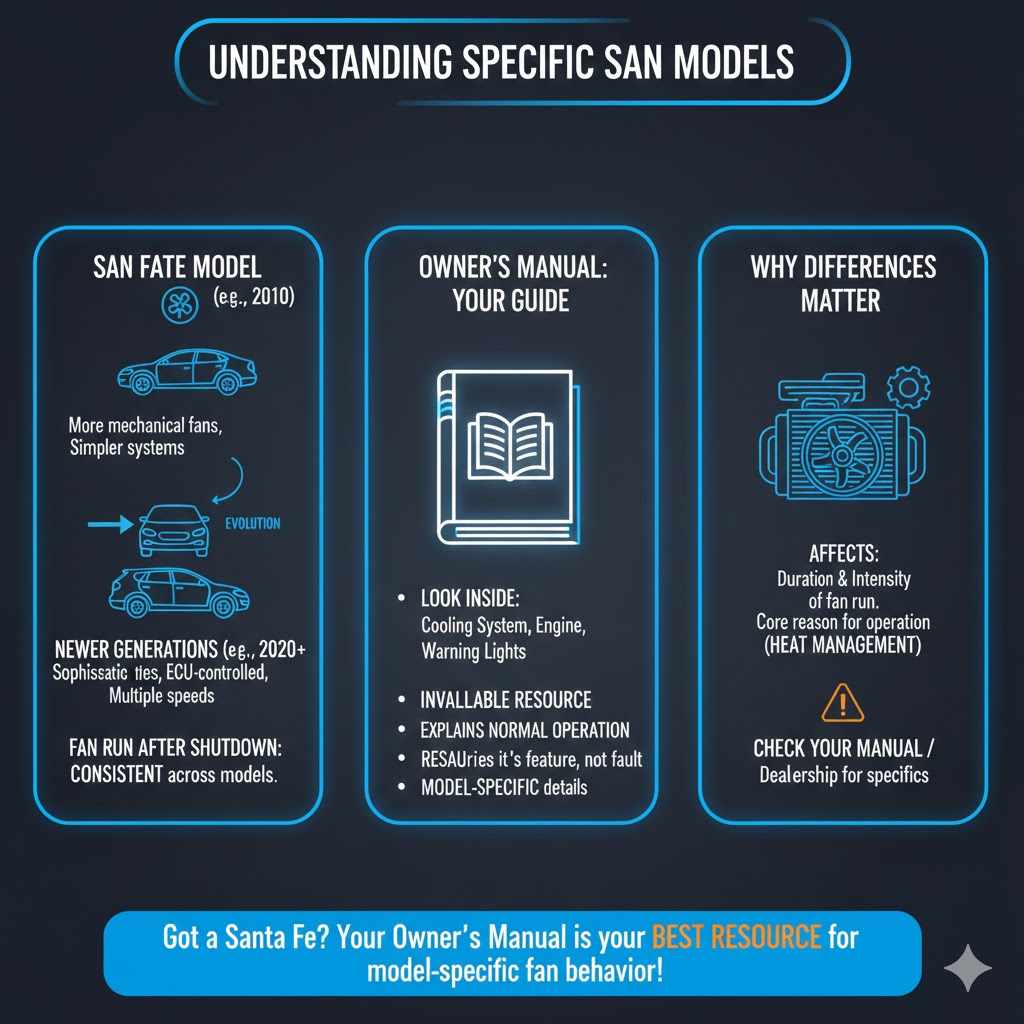
Hyundai has produced the Santa Fe for many years, and different model years might have slightly different cooling fan systems. However, the fundamental principle of the fan running after engine shutdown to manage residual heat remains consistent across most modern vehicles.
If you have a specific model year, checking your owner’s manual or consulting with a Hyundai dealership can provide details unique to your vehicle. Knowing the specifics of your Santa Fe can help you better understand its behavior.
Differences Between Generations
Older Santa Fe models might have had more mechanical cooling fans driven by the engine belt, though electric fans have been common for quite some time. Newer generations are more likely to have sophisticated electric fan systems controlled by the ECU with multiple fan speeds. The precise logic for after-run operation can vary based on the technology integrated into each generation.
For example, a 2010 Santa Fe might have a simpler system compared to a 2020 model, which could feature more advanced thermal management strategies. This doesn’t change the core reason for the fan running, but it can affect the duration and intensity of its operation.
Owner’s Manual Information
Your Santa Fe’s owner’s manual is an invaluable resource. It often contains specific information about the cooling system and can explain normal operating procedures. Look for sections related to the engine, cooling system, or dashboard warning lights.
It might explicitly mention the cooling fan’s behavior after the engine is turned off.
If your manual addresses the fan running after shutdown, it will likely reassure you that this is a normal function. It may also offer advice on what to do if you suspect a problem. Always refer to your owner’s manual as the primary source of information for your specific vehicle.
Frequently Asked Questions
Question: Is it normal for my Santa Fe fan to run after I turn off the engine?
Answer: Yes, it is often normal for your Hyundai Santa Fe’s cooling fan to run for a period after you turn off the engine, especially if the engine was hot. This is a safety feature to help cool down the engine and prevent overheating.
Question: How long should the Santa Fe fan run after the engine is off?
Answer: The fan typically runs for a few minutes, usually between 3 to 10 minutes, depending on how hot the engine was. If it runs for much longer than that, it might be worth investigating.
Question: What should I do if my Santa Fe fan doesn’t run at all when the engine is hot?
Answer: If your fan doesn’t come on when the engine is hot, this could be a problem. You should get it checked by a mechanic immediately to prevent engine damage from overheating.
Question: Can a faulty thermostat cause the fan to run excessively?
Answer: Yes, a faulty thermostat that isn’t opening properly can cause the engine to overheat, which would then trigger the cooling fan to run more often and for longer periods, even after the engine is shut off.
Question: Do I need to worry about my car battery if the fan runs after the engine is off?
Answer: Generally, no. The system is designed to manage battery power. The fan runs on the car’s electrical system and is usually programmed to shut off before it significantly drains the battery.
However, if the fan runs for an excessively long time, it could eventually impact the battery.
Summary
Your Hyundai Santa Fe’s cooling fan running after the engine is off is usually a normal function. It’s a smart system designed to prevent overheating and protect your engine. This post explained how sensors and the car’s computer control this feature.
You learned common reasons like hot weather and heavy driving. If you notice unusual noises or overheating, it’s time for a check. Keeping an eye on coolant levels is also key.
Your car is designed to manage its own cooling.