When to Circulate Air in Car: Recirculate vs Fresh Air
Use recirculation for short, specific jobs: cooling a hot cabin, sitting in slow traffic, or blocking a smell for a few minutes. Use fresh air the rest of the time. Honda tells drivers to keep the system in fresh air mode in normal situations, and Kia warns that long recirculation can fog glass and cause drowsiness. This guide gives a situation-by-situation chart, explains what AUTO mode does, and says what to do if you smell exhaust.
When to Use Air Recirculation in a Car: The Short Answer
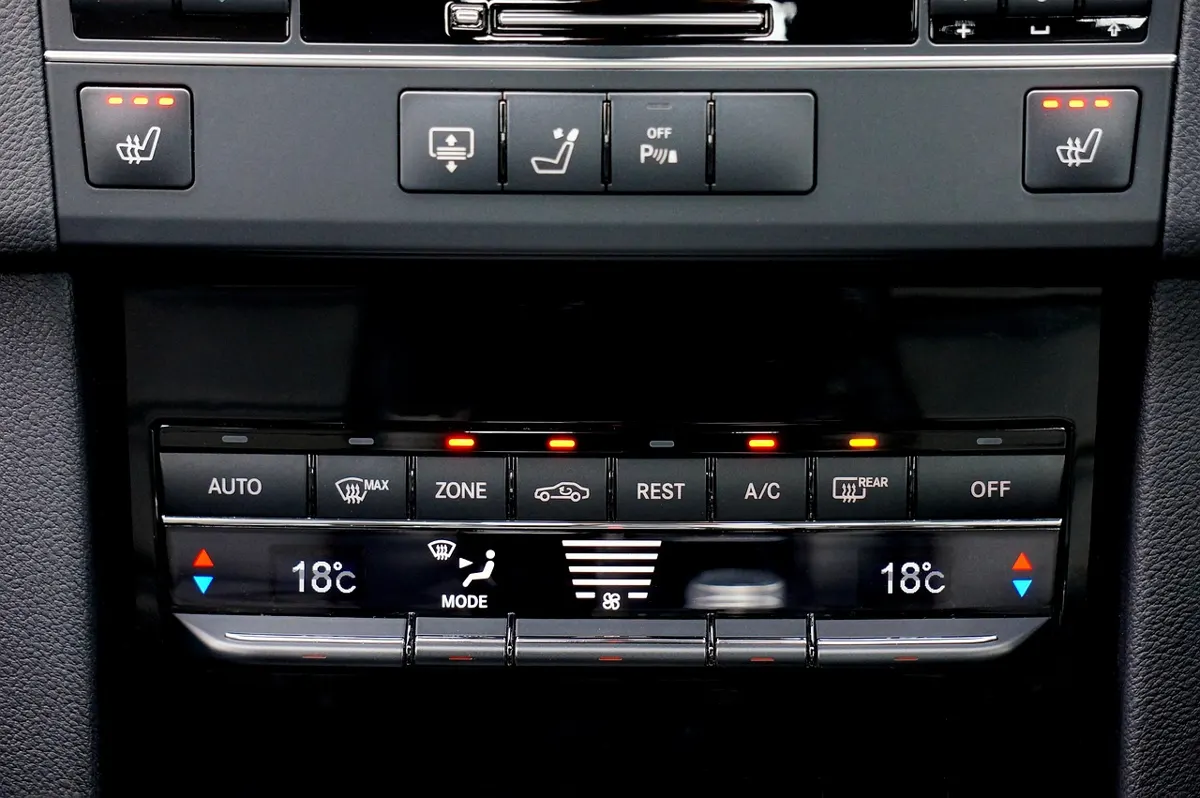
The recirculation button closes the outside-air intake and re-cools or re-heats the air already inside the cabin. The Honda 2023 CR-V climate control guide describes it in one line each: recirculation mode “recirculates air from the vehicle’s interior through the system,” while fresh air mode “maintains outside ventilation.” Recirculated air is easier to cool and keeps outside air out, but it also keeps your breath and moisture in.
If you want the control explained button by button, see our button-by-button guide to the recirculation button. This page is the decision guide: which setting for which situation, and when the answer changes because of safety.
Best Portable CO Alarm Pick
|
Kidde Carbon Monoxide Detector, AA Battery Powered, Portable for Travel or Home, 85 dB Alarm: $23.47 The CDC advises battery-operated or battery backup CO detectors near sleeping areas. This is a low-cost alarm of that type, and the listing says it is meant for home or travel use.
|
As an Amazon Associate we earn from qualifying purchases. Spec-based pick from the listing, not a hands-on test. Price checked October 13, 2026 and may change.
Recirculate or Fresh Air: A Situation-by-Situation Chart
Most articles say “it depends.” This chart turns that into a lookup: the setting each maker or agency source points to, and its reason.
| Situation | Setting | Why, per the source | Source |
|---|---|---|---|
| Hot cabin after parking in the sun | Fresh air with windows partly open first, then recirculation | Honda: open the windows partly, set AUTO and a low temperature, and use recirculation until the cabin cools | Honda 2023 CR-V guide |
| Normal daily driving | Fresh air | Honda: keep the system in fresh air mode in normal situations | Honda 2023 CR-V guide |
| Windows fogging from the inside | Fresh air, A/C on, front defrost | Kia: A/C dehumidifies the air, and defrost clears the glass; Honda: defrost switches the system to fresh air | Kia manual, Honda guide |
| Heater on, A/C off, in cold weather | Fresh air | Kia warns that long heater use on recirculation can fog the windshield and side windows and leave the air stale | Kia manual |
| Long drive, feeling sleepy | Fresh air | Kia warns that continued recirculation can cause drowsiness and says to set intake to outside air as much as possible while driving | Kia manual |
| Stuck behind heavy trucks or in slow traffic | Recirculation, with a working cabin air filter | EPA: recirculation reduces outdoor particle concentrations in vehicles with a properly working cabin filter | EPA 2014 FAQ |
| Someone smoking in the car | Neither fixes it | EPA: recirculation may not reduce concentrations in vehicles where people are smoking | EPA 2014 FAQ |
| Exhaust smell inside the cabin | Neither: get fresh air and stop | CDC: a small exhaust leak can let carbon monoxide build up inside the car; see the safety section below | CDC |
A note on the “10 to 15 minutes” rule you will see repeated online: none of the owner’s manual pages or agency pages we read give a timer. Any exact interval for switching back is a rule of thumb, not a maker specification.
When to Circulate Air in a Car: The Cases Where Recirculation Helps
A hot cabin on a hot day
This is the case with the clearest maker instruction. The Honda 2023 CR-V climate control guide says that if the interior is very warm you can cool it faster by partly opening the windows, turning the system on AUTO, and setting the temperature low, then changing from fresh air to recirculation “until the temperature cools down.” The order matters: push the hot air out first, then re-cool the cabin air. Once it is comfortable, go back to fresh air, which the same guide calls the normal setting.
Slow traffic and heavy trucks
The best agency source here is the EPA near-roadway air pollution FAQ (EPA-420-F-14-044, August 2014). It says in-vehicle air quality is influenced by surrounding vehicles, that studies generally report higher pollutant concentrations when following heavy-duty trucks or cars with visible tailpipe emissions, and that tailgating or stopping very close to the vehicle ahead in a jam can raise pollution in the following car. It adds that with windows closed, the ventilation settings matter more than almost anything else, that outside-air mode lets outdoor air in rapidly, and that the recirculation setting reduces that turnover. For cars with “properly functioning cabin air filters,” it says recirculation reduces particle concentrations from outdoors.

The EPA also says the benefit may not hold where people are smoking tobacco in the vehicle, and it gives no timer. A reasonable reading is to recirculate while you are in the dense, slow section and return to fresh air once traffic clears.
Tunnels, smoke, dust and strong smells
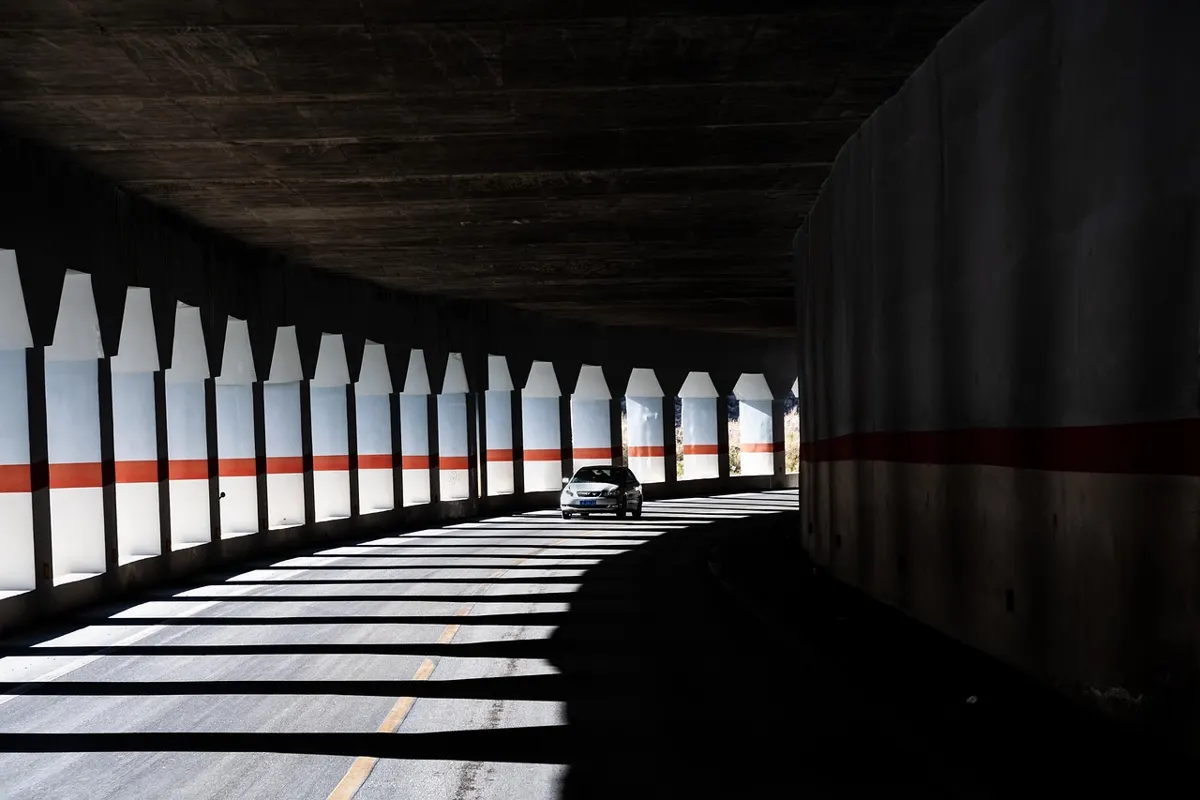
Short stretches with bad outside air are the other common reason drivers press the button: a road tunnel, a smoky patch, a dusty gravel road, a truck with a strong smell ahead. We did not find an owner’s manual page we could read that lists these cases by name, so treat this as our application of the EPA’s general statement rather than a maker rule. The logic is simple: closing the intake keeps bad outside air out, and you reopen it once the problem is behind you.
When Not to Circulate Air in a Car: Fog, Drowsiness and Stale Air
Fog on the inside of the glass
Fogging is the most documented downside, and the manuals agree with each other. A Kia owner’s manual warns that continued use of the climate control system in the recirculated air position “may allow humidity to increase inside the vehicle, which may fog the glass.” It specifically says that prolonged heater operation in the recirculated position without A/C selected may cause fogging of the windshield and side windows and make the air in the passenger compartment stale. Honda says the same thing in its 2023 CR-V guide: if you keep the system in recirculation mode after defrosting, the windows may fog up from humidity, which impedes visibility.
The fix in both makers’ wording is to move to fresh air. Kia’s defrost instructions suggest running the A/C with the temperature set high to dehumidify the air before it enters the cabin, and selecting front defrost if the windshield fogs. Honda says its windshield defroster button turns the A/C on and automatically switches the system to fresh air mode. For more on the fog problem itself, see our guide to stop car windows from fogging up.

Long drives and drowsiness
Kia is the one maker whose manual we read that connects recirculation to alertness. Its warning says continued use of the climate control system in the recirculated air position can cause drowsiness or sleepiness, and it links that to a possible loss of vehicle control. Kia’s instruction is to set the air intake control to the outside air position as much as possible while driving. The manual does not quantify the effect and gives no threshold, and neither do we. The practical point is that on a long highway drive, recirculation is a setting to use briefly, not to leave on.
AUTO Mode and the A/C Button: What the Car Decides for You
On a car with automatic climate control, you pick a temperature and the system chooses the fan speed, the air mix and the outlets. The Honda 2023 CR-V climate control guide describes the automatic system as one that “maintains the interior temperature you select,” selecting the mix of heated or cooled air that gets there “as quickly as possible.” It also notes that the fan may not start immediately after you press AUTO, to avoid blowing cold air in from outside.
The detail most drivers miss is what happens when you touch another button. Honda’s guide says that if you press any button while the system is in auto, the function of the button you pressed takes priority, the AUTO indicator goes off, and the functions you did not touch stay automatic. In plain terms: pressing recirculation in AUTO is a manual override of the air source only. The guide does not say which air source AUTO chooses by itself, and that varies by car, so check your own manual before assuming the system is recirculating or bringing in outside air.
If the air coming out is the problem rather than the setting, that is a mechanical fault, covered in our piece on why a car A/C blows cold, then warm. Our comparison of manual air conditioning versus automatic climate control covers the dial-versus-automatic trade-offs.
Cabin Air Filter: Why It Decides How Useful Recirculation Is
The EPA’s particle benefit comes with a condition: the vehicle needs a properly functioning cabin air filter. A clogged or missing filter changes that. We did not find a maker or agency page we could read that gives a replacement interval that applies to every car, so we are not going to quote a mileage here. Your owner’s manual lists the interval for your model. For what the filter does and how it differs from the engine filter, read our guide to the cabin air filter and engine air filter.
Exhaust Smell, Headache or Dizziness: When Air Settings Are the Wrong Fix
This is the safety section, and it matters more than every comfort tip above. Recirculation and fresh air are comfort and fog controls. They are not a defense against carbon monoxide.
The CDC carbon monoxide page says common CO symptoms include headache, dizziness, weakness, upset stomach, vomiting, chest pain and confusion, often described as “flu-like,” and that breathing in a lot of CO can cause fainting or death. It also says people who are asleep or intoxicated can die before they show symptoms. For vehicles, it advises having a mechanic check the exhaust system every year, because a small leak can cause CO to build up inside the car, and says that in an SUV or car with a tailgate you should open vents or windows when the tailgate is open, otherwise exhaust CO can be pulled into the vehicle. The sources we read do not say the recirculation button creates carbon monoxide; they say leaks and exhaust are the source.
- If you smell exhaust in the cabin, or anyone has a headache, dizziness or nausea that started during the drive, pull over when it is safe, turn the engine off, open the doors and get everyone out into fresh air.
- Do not keep driving with the windows down to “ventilate it.” Treat an exhaust smell inside the car as a fault that needs a mechanic before the next trip. That is our safety precaution, in line with the CDC advice to have the exhaust system checked.
- If symptoms appear, the EPA advises getting fresh air immediately and going to an emergency room and telling the doctor you suspect carbon monoxide poisoning. Do not ignore symptoms, especially if more than one person has them.
- Never run a car or truck inside a garage attached to a house, even with the garage door open, says the CDC. For a detached garage, open the door to let in fresh air.
A battery-powered CO alarm, as in the product pick above, is a separate layer for the places where you sleep: the CDC advises battery-operated or battery backup detectors near every sleeping area and checking the batteries when you change clocks in spring and fall. We have no source showing an alarm is suited to use inside a moving vehicle.
Common Mistakes and Myths About Recirculation
- Mistake: leaving recirculation on after defrosting. Honda says the windows may fog from humidity if you stay in recirculation after defrosting.
- Mistake: heater on, A/C off, recirculation on in the cold. Kia flags exactly this combination for fogging and stale air.
- Mistake: treating an exhaust smell as a ventilation problem. It is a repair problem and a health risk. See the section above.
Frequently Asked Questions
When should I use recirculation in my car?
For short jobs: cooling a very hot cabin after opening the windows first (Honda), and slow, heavy traffic with a working cabin air filter (EPA). Use fresh air for normal driving.
Is it bad to leave the recirculation setting on all the time?
The manuals we read advise against it. Kia warns of fogged glass, stale air and drowsiness, and Honda says to keep fresh air mode in normal situations.
Should I use recirculate or fresh air to defog the windshield?
Fresh air, with the A/C on and front defrost selected. Honda says its defroster button turns on the A/C and switches to fresh air.
Can recirculating air make you sleepy while driving?
The Kia manual says continued use in the recirculated position can cause drowsiness or sleepiness. It gives no time threshold.
Does recirculation protect me from exhaust or carbon monoxide?
No source we read says it does. The CDC says a small exhaust leak can let carbon monoxide build up inside a car. If you smell exhaust or feel dizzy, get into fresh air and have the exhaust checked.
What does AUTO mode do with the recirculation button?
Honda says pressing any button in auto gives that button priority and leaves the other functions automatic. Which air source AUTO picks varies, so check your manual.
Bottom Line
Fresh air is the default, recirculation is the short-term tool, and an exhaust smell is a stop-and-repair problem rather than a setting. Use the chart near the top when you are unsure, and check your own owner’s manual for button names, since they differ from car to car. This page reflects the manual and agency pages we read as of October 13, 2026.
Products related to this article
Sponsored / affiliate links. As an Amazon Associate I earn from qualifying purchases. I may earn additional commission from eligible campaigns.