Will a Plugged Emission Canister Make Engine Run Rich?
If your car is acting up, you might wonder, Will a Plugged Emission Canister Make Engine Run Rich? It’s a common question, especially for those just starting with car care. This problem can seem tricky, but we’ll break it down. We’ll show you exactly what’s happening and how to fix it, step by step.
Let’s find out what’s going on with your car and get it running smoothly again.
Understanding the Evaporative Emission Control System
The Evaporative Emission Control system, or EVAP, is a vital part of your car’s pollution control. It stops fuel vapors from escaping into the air. These vapors can be harmful.
The system captures them and sends them back to the engine to be burned. This process helps keep our air cleaner. It’s a clever system that works behind the scenes.
When it’s working right, you don’t even notice it.
What Is an Emission Canister?
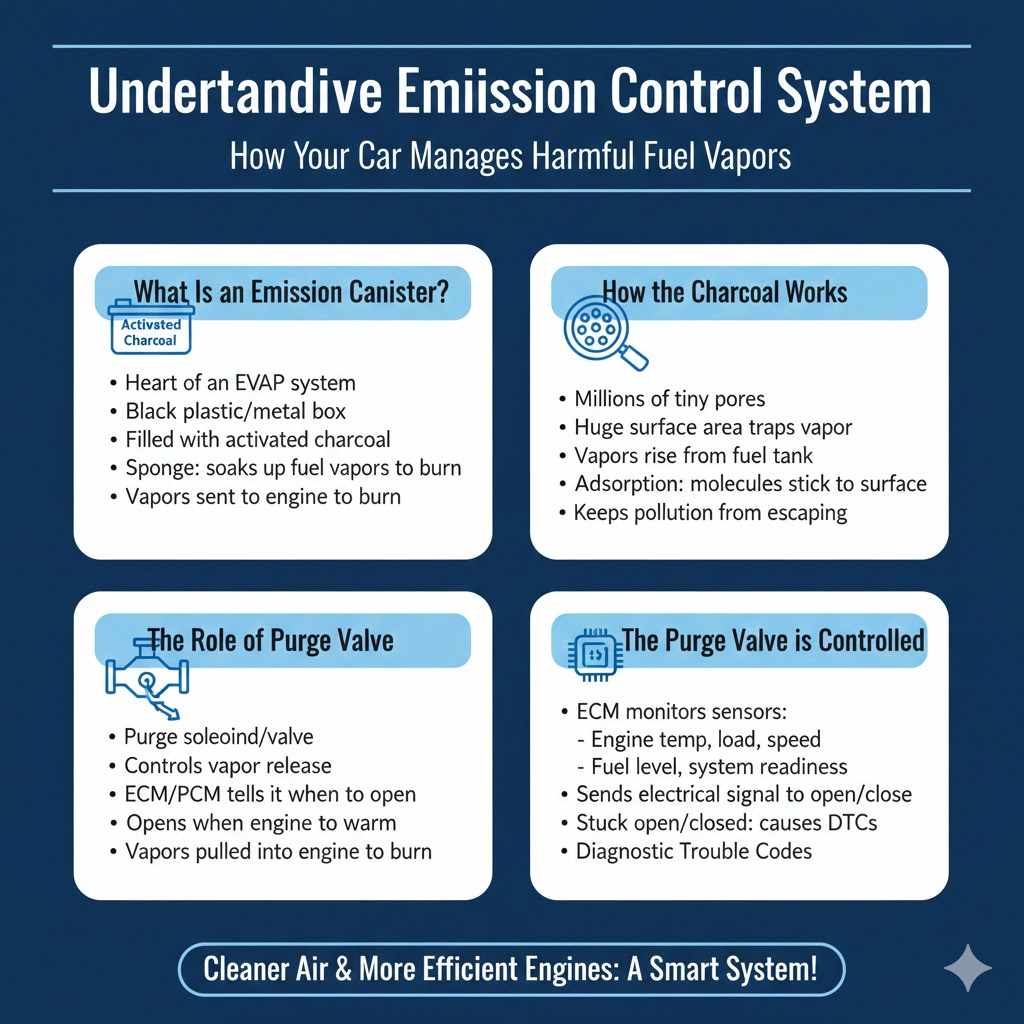
The emission canister is the heart of the EVAP system. It’s usually a black plastic or metal box. It’s filled with activated charcoal.
This charcoal acts like a sponge. It soaks up fuel vapors from the gas tank. Think of it like a filter for gasoline smells.
When your engine is off, or when it needs fuel vapors, the system opens a valve. This valve lets the stored vapors go into the engine. They mix with air and are then burned during normal combustion.
This means no fuel vapor is wasted and no pollution escapes.
How the Charcoal Works
The activated charcoal inside the canister has millions of tiny pores. These pores are what give it a very large surface area. This huge surface area is perfect for trapping the tiny molecules of fuel vapor.
When fuel heats up, especially in a warm gas tank, it creates vapors. These vapors rise from the fuel. Instead of letting them escape through the gas cap, the EVAP system directs them to the canister.
The charcoal adsorbs these vapors. Adsorption is different from absorption. With absorption, a liquid soaks into a material, like a sponge soaking up water.
With adsorption, the vapor molecules stick to the surface of the charcoal. The fuel vapor molecules are held onto the surface of the charcoal particles. This keeps them from reaching the atmosphere.
The Role of the Purge Valve
The purge valve, also called the purge solenoid, is another key component. It controls when the fuel vapors are released from the canister. The car’s computer, the Engine Control Module (ECM) or Powertrain Control Module (PCM), tells the purge valve when to open.
This usually happens when the engine is warm and running smoothly.
When the valve opens, it allows a vacuum from the engine’s intake manifold to pull the fuel vapors from the canister. These vapors are then mixed with the incoming air and fuel. They are burned in the cylinders.
This process is called purging. It’s how the stored vapors are cleaned up.
How the Purge Valve is Controlled
The ECM monitors many sensors to decide when to open the purge valve. It looks at engine temperature, load, and speed. It also considers how much fuel is in the tank and the overall readiness of the EVAP system.
The ECM sends an electrical signal to the purge valve. This signal opens or closes the valve.
If the purge valve is stuck open, vapors might be purged too often or at the wrong time. If it’s stuck closed, vapors can build up in the canister. The ECM uses diagnostic trouble codes (DTCs) to detect problems with the purge valve.
These codes help mechanics diagnose issues.
Will a Plugged Emission Canister Make Engine Run Rich?
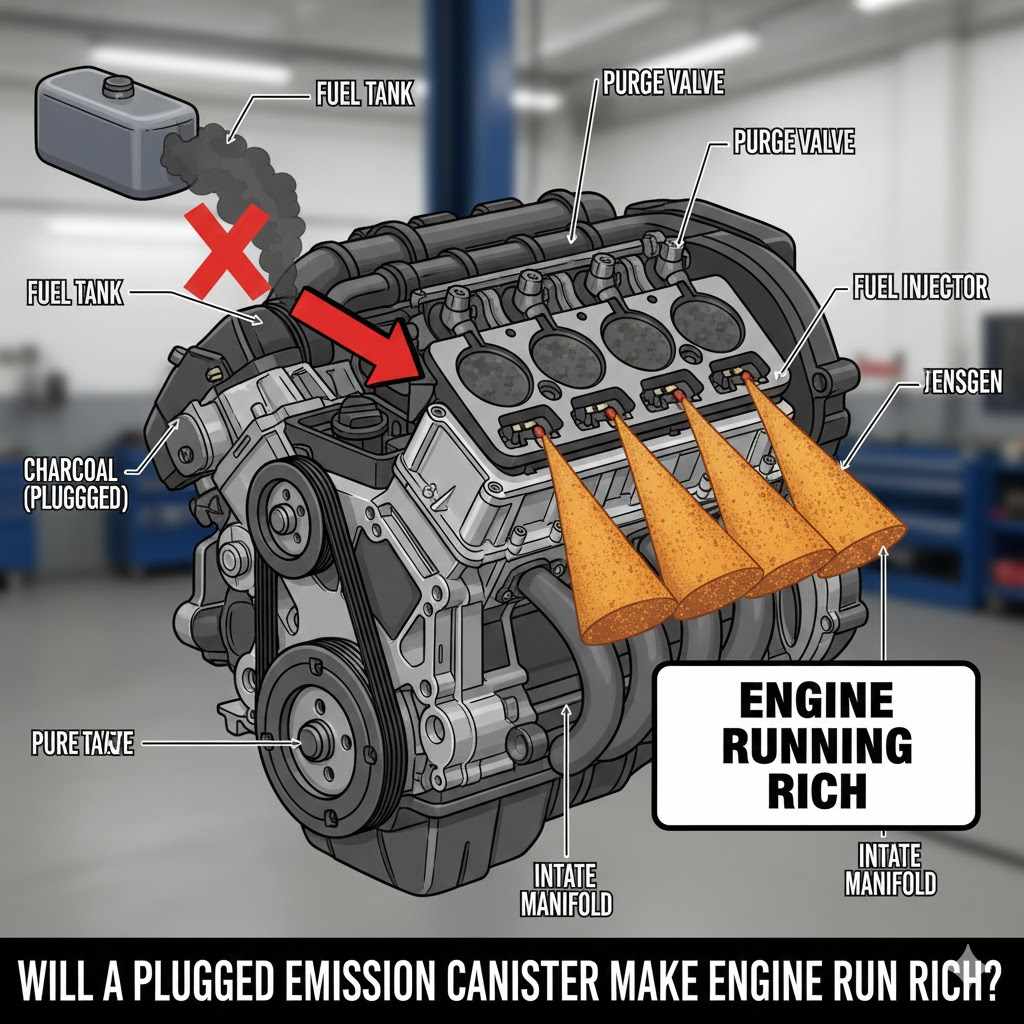
So, to answer the main question directly, yes, a plugged emission canister can absolutely make your engine run rich. This happens because the system that’s supposed to manage fuel vapors gets blocked. Let’s look at how this blockage causes problems.
How a Blockage Affects Fuel Delivery
When the emission canister is plugged, fuel vapors cannot be properly released. The charcoal inside becomes saturated. It can no longer effectively trap new vapors.
These trapped vapors need somewhere to go. They start to build up pressure in the fuel tank and lines.
In a healthy system, the vapors are drawn into the engine to be burned. If the canister is plugged, this purging process cannot happen. The engine’s computer expects a certain amount of fuel vapor to be available for purging.
It doesn’t know the canister is blocked. It might still try to send signals to the purge valve, but no vapors can get through.
The Rich Condition Explained
A rich engine condition means there is too much fuel in the air-fuel mixture. The ideal ratio is about 14.7 parts air to 1 part fuel. When the mixture is rich, there is less air or more fuel than there should be.
With a plugged canister, fuel vapors can’t be purged. Instead, they might find other ways to escape. Some systems have a vent valve.
If this vent valve gets stuck closed, pressure builds up. This pressure can force fuel vapors into the intake manifold even when the purge valve is supposed to be closed. This extra fuel vapor in the intake air is like adding more fuel to the engine.
This extra fuel makes the air-fuel mixture richer. The oxygen sensors in the exhaust will detect this. They send signals to the ECM.
The ECM might try to compensate by reducing the amount of fuel it injects. However, if the source of the extra fuel is from the EVAP system’s vapors, the ECM might not be able to correct it effectively. This leads to poor engine performance.
Symptoms of a Rich Running Engine
When your engine runs rich, you’ll notice several things. The most common sign is a decrease in fuel economy. You’ll be using more gas than usual.
The exhaust smell might also change. You might notice a strong smell of gasoline.
The car might also run rough. You could feel a hesitation when you accelerate. The engine might even stall.
The check engine light will likely come on. This light is your car’s way of telling you something is wrong.
Common Check Engine Light Codes
A plugged EVAP canister can trigger various diagnostic trouble codes (DTCs). Some common ones include:
- P0440 Evaporative Emission System Malfunction
- P0442 Evaporative Emission System Leak Detected (Small Leak)
- P0446 Evaporative Emission System Vent Control Circuit Malfunction
- P0455 Evaporative Emission System Leak Detected (Gross Leak)
These codes indicate that the EVAP system isn’t working as it should. The exact code depends on the specific issue detected by the car’s computer. For example, P0446 often points to a problem with the vent control, which is directly related to the canister.
Troubleshooting a Plugged Emission Canister
Finding out if your emission canister is plugged involves a few steps. It’s important to be systematic. This helps pinpoint the problem accurately.
Inspecting the Canister and Lines
The first thing to check is the canister itself and the hoses connected to it. Look for any obvious signs of damage. This could include cracks, holes, or disconnections.
The canister should be securely mounted.
The hoses are often made of rubber or plastic. They can become brittle over time. They might crack or split.
Also, check that all connections are tight. A loose hose can cause a leak in the EVAP system.
What to Look For
When inspecting, pay close attention to the vent hose. This hose allows fresh air to enter the canister during purging. If it’s blocked with dirt or debris, it can cause issues.
Also, check the lines leading to and from the purge valve.
Sometimes, critters can chew on the hoses. This creates holes. You might also find that the canister itself is damaged from road debris.
If you see any physical damage, it’s a strong indicator that this part needs to be replaced.
Testing the Purge Valve
The purge valve is critical for EVAP system function. It can get stuck open or closed. This can lead to vapor control issues.
You can test it to see if it’s working correctly.
With the engine off, you can try to blow through the valve. If you can blow through it easily, it might be stuck open. A working purge valve should be closed when not energized.
If you can’t blow through it at all, it might be stuck closed. Some mechanics use a vacuum pump to test the valve. They apply vacuum and check if it holds.
How to Test the Purge Valve
Many purge valves can be removed from the vehicle for easier testing. Disconnect the electrical connector and the hoses.
- Check for free air flow when the valve is de-energized. You should not be able to blow through it easily. It should feel closed.
- Apply battery voltage to the terminals of the purge valve. You should hear a click. This indicates the solenoid is activating.
- Once energized, try to blow through the valve again. Now you should be able to feel air passing through.
- Remove the voltage. The valve should close again, and you should not be able to blow through it.
If the valve behaves differently than this, it likely needs to be replaced. Faulty purge valves are a common cause of EVAP system problems.
Canister Vent Solenoid Test
The vent solenoid controls the fresh air intake for the EVAP system. It’s often located near the canister. This valve must open to allow air in during purging.
If it’s stuck shut, it can prevent the system from working.
Similar to the purge valve, the vent solenoid can be tested. Its function is to open and close based on signals from the ECM. If it’s constantly stuck closed, it can lead to pressure buildup.
This can force vapors out through other, unintended pathways.
Symptoms of Vent Solenoid Issues
A stuck-closed vent solenoid can cause a P0446 code. This code specifically points to a problem with the vent control circuit. It means the car’s computer can’t control the venting of the system.
Another symptom can be difficulty refueling your car. If the vent is blocked, pressure can build up in the fuel tank. This can make the gas pump nozzle shut off prematurely.
You might have to “trickle fill” your tank.
Performing a Smoke Test
A smoke test is one of the most effective ways to find leaks in the EVAP system. A special machine fills the system with a harmless vapor. This vapor looks like smoke.
If there are any leaks, the smoke will escape from them. This makes it easy to see exactly where the problem is. You can spot cracks in hoses, faulty seals, or even small holes in the canister.
How a Smoke Test Works
A technician connects the smoke machine to the EVAP system, usually at a port near the canister. They then inject smoke. While the system is filled with smoke, they carefully inspect all the hoses, connections, and the canister itself.
The smoke will clearly show any escape points. This is much more precise than just looking for visible damage. It can reveal very small leaks that might otherwise be missed.
For instance, a tiny crack in a rubber hose might only be visible when it’s under pressure from the smoke.
According to industry data, EVAP system leaks are responsible for a significant portion of evaporative emissions. A study by the EPA indicated that a substantial number of vehicles have EVAP system faults. A smoke test is the go-to diagnostic tool for these issues.
Replacing a Faulty Emission Canister
If your diagnostic tests point to a bad emission canister, replacement is usually the solution. This is often a straightforward repair.
Steps for Canister Replacement
The exact steps can vary slightly between vehicle models. However, the general process is similar.
- Safely lift and support the vehicle.
- Locate the emission canister. It is usually found under the vehicle, near the fuel tank.
- Disconnect any hoses and electrical connectors attached to the canister. Note their positions to ensure correct reinstallation.
- Remove any mounting brackets or bolts holding the canister in place.
- Carefully remove the old canister.
- Install the new canister, making sure it is securely fastened.
- Reconnect all hoses and electrical connectors. Ensure they are properly seated.
- Lower the vehicle.
- Clear any stored diagnostic trouble codes using a scan tool.
- Perform a system test, often by driving the vehicle, to ensure the EVAP system is functioning correctly and the check engine light stays off.
It’s important to get the correct canister for your specific car model and year. Using the wrong part can cause further problems.
Cost of Replacement
The cost to replace an emission canister can vary. It depends on the make and model of your car. It also depends on whether you do the work yourself or take it to a mechanic.
A new canister itself might cost anywhere from $50 to $200. Labor costs for a mechanic could add another $100 to $300, depending on their hourly rate and how long the job takes. For many DIY mechanics, this is a job that can be completed in an hour or two.
Can the Engine Run Rich Without a Faulty Canister?
While a plugged canister is a common culprit for a rich engine, it’s not the only cause. Many other issues can lead to the same symptoms.
Problems with the fuel injectors can cause them to leak or spray too much fuel. A faulty mass airflow (MAF) sensor can send incorrect air readings to the ECM, leading to an improper air-fuel mixture. A bad oxygen sensor can also misreport exhaust gas conditions, causing the ECM to adjust the fuel mixture incorrectly.
Other Causes of a Rich Condition
Other components that could cause a rich running condition include:
- A leaking fuel pressure regulator. This device helps maintain the correct fuel pressure for the injectors. If it fails, pressure can become too high, forcing more fuel through the injectors.
- A malfunctioning throttle position sensor. This sensor tells the ECM how open the throttle is. If it’s giving incorrect readings, the engine might receive too much fuel.
- Issues with the ignition system. While less direct, problems like fouled spark plugs or weak spark can lead to incomplete combustion, which can sometimes mimic a rich condition or be a consequence of one.
It’s essential to perform thorough diagnostics. This ensures you address the root cause of the rich running condition. Simply replacing parts without confirming they are faulty can be costly and ineffective.
The Importance of a Functional EVAP System
A properly working EVAP system is crucial for your car’s health and the environment. It’s not just about passing emissions tests. It’s about overall vehicle performance and reducing harmful pollutants.
Environmental Impact
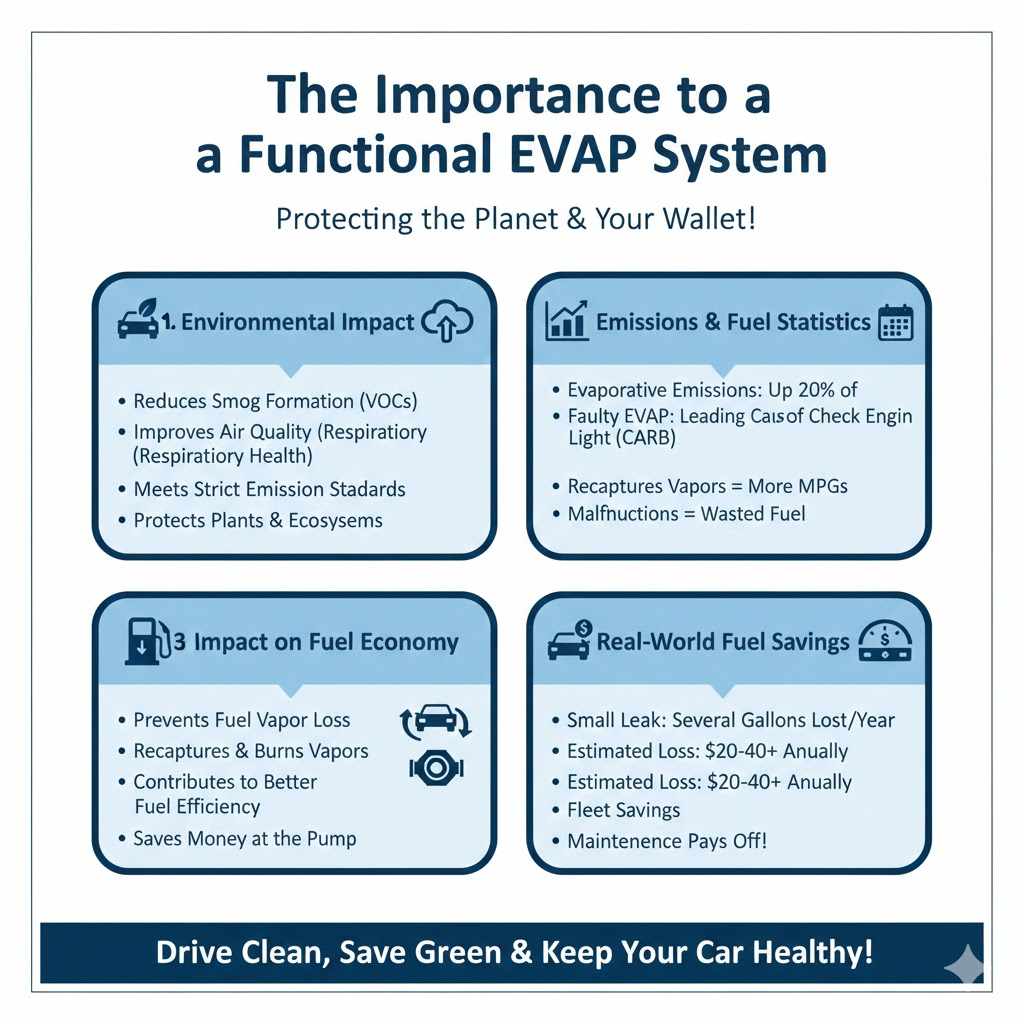
Fuel vapors contain volatile organic compounds (VOCs). These VOCs contribute to smog formation. Smog can cause respiratory problems.
It can also damage plants and ecosystems. By trapping these vapors, the EVAP system significantly reduces air pollution.
Modern vehicles are designed with strict emissions standards. The EVAP system is a key part of meeting these standards. Without it, cars would release much more harmful pollutants into the atmosphere.
Statistics on Emissions
According to the Environmental Protection Agency (EPA), evaporative emissions can account for a significant percentage of a vehicle’s total hydrocarbon emissions. For example, in some older vehicles, evaporative losses could be as high as 20% of the total hydrocarbon emissions. This highlights the importance of a functioning EVAP system.
A study from the California Air Resources Board (CARB) found that faulty EVAP systems are a leading cause of check engine lights in many vehicles. Addressing these issues promptly is key to maintaining low emissions.
Impact on Fuel Economy
When fuel vapors are not properly managed, they can be lost. This means the fuel you pay for is essentially disappearing into the air. A well-functioning EVAP system recaptures these vapors and sends them back to the engine for combustion.
This recapturing process contributes to better fuel economy. If your EVAP system is malfunctioning, especially if it’s causing a rich condition, you are likely burning more fuel than you need to. This directly impacts your wallet at the gas pump.
Real-World Fuel Savings Example
Consider a scenario where a car experiences a slight leak in its EVAP system. This leak allows a small amount of fuel vapor to escape daily. Over a year, this seemingly minor loss could add up to several gallons of lost fuel.
If fuel costs $4 per gallon, that’s a direct loss of $20-$40 or more annually.
For a fleet of vehicles, the savings from properly functioning EVAP systems would be substantial. This demonstrates the practical, financial benefit of maintaining the EVAP system.
Frequently Asked Questions
Question: Can a clogged EVAP canister cause my car to stall?
Answer: Yes, a severely clogged EVAP canister can cause pressure buildup and force fuel vapors into the engine unexpectedly. This can disrupt the air-fuel mixture and lead to the engine stalling, especially at idle or low speeds.
Question: How long does it take to replace an EVAP canister?
Answer: For many vehicles, replacing an EVAP canister is a relatively quick job. A DIYer might take 1-2 hours. A professional mechanic could perform the job in about an hour.
Question: Will a faulty EVAP canister affect my car’s performance?
Answer: Yes, a faulty EVAP canister can significantly affect performance. It can cause a rich fuel mixture, leading to poor acceleration, reduced fuel economy, rough idling, and even engine stalling.
Question: Is it safe to drive with a plugged emission canister?
Answer: It is generally not recommended to drive for extended periods with a severely plugged emission canister. While the car might still run, it will be less efficient, pollute more, and could lead to further damage or more costly repairs down the line.
Question: How often should the EVAP system be inspected?
Answer: There isn’t a strict schedule for EVAP system inspections, but it’s a good idea to have it checked if you notice symptoms like a check engine light, poor fuel economy, or a fuel smell. Many mechanics will inspect it during routine maintenance.
Summary
Yes, a plugged emission canister absolutely can make your engine run rich. This happens when fuel vapors get trapped and can’t be purged properly, overwhelming the engine’s air-fuel balance. Addressing EVAP system issues ensures better performance, fuel economy, and cleaner emissions.