BMW Code 12408 Fix: What It Means and How to Clear It
You’re driving, and suddenly the dashboard lights up like a Christmas tree. The battery warning glows amber. Maybe the car goes into limp mode. You plug in your scanner, and there it is: BMW code 12408 fix is what you searched, but the code itself reads something about the charging system or voltage supply. It’s a common fault on E90, F30, and even newer G-series models.
This code usually points to a problem with the intelligent battery sensor (IBS) or the charging circuit. It doesn’t always mean your alternator is dead. In many cases, the fix is simpler and cheaper than you’d expect. This article walks you through what the code means, how to test the parts yourself, and the exact order of operations to clear it and keep it from coming back.

ANCEL
ANCEL BM700 PRO Fit for BMW Scanner…
- BM700 Upgraded Smart Scan – Saves Time & Hassle: As the upgraded BM700, the fit for BMW scanner diagnostic tool uses AUTO VIN to a…
- Deep Diagnosis For BMW – Avoid Costly Repairs: Full-system diagnosis covers ECM, ABS/DSC, transmission, airbag, EPS, AC, security,…
- 20+ Service Available – All Unlocked Free: The obd2 scanner diagnostic tool packed with 20+ popular fit for BMW maintenance functi…
You’ll leave here knowing how to distinguish a bad battery from a bad sensor, when to register a new battery, and what tools actually make the job easier.
A dedicated BMW scanner like the ANCEL BM700 PRO saves you a ton of guesswork here. It reads the specific 12408 fault, shows live voltage data from the IBS, and handles the battery registration step that a generic OBD2 reader cannot do. You can check the current price on Amazon if you want to see if it fits your budget.
What Does BMW Fault Code 12408 Actually Mean?
Code 12408 is a manufacturer-specific fault. It translates roughly to “Power management, terminal 15: excessive current draw” or a related voltage supply issue, depending on the exact model year and control module that logs it. The car’s power management system monitors the battery voltage and the current flowing through the IBS (the little black box clamped onto the negative battery terminal).
When the system sees voltage drop below a threshold (often around 11.5 volts under load) or detects a current draw that doesn’t match expected values, it logs 12408. It is rarely a standalone failure. You usually see it alongside other codes like 002A7B (battery current sensor) or 002E1A (alternator plausibility).
Here is the part most people get wrong: the code does not automatically mean the alternator is broken. The alternator can be charging perfectly fine, but a faulty IBS sensor sends bad data to the engine computer. The computer then assumes the battery is dying and sets the code. I have seen this exact scenario play out on a 2026 328i where the alternator output was a healthy 14.2 volts, but the sensor was reading 11.8 volts.
Common Root Causes
- A failing 12-volt battery that is over three years old or has a dead cell.
- A corroded or loose negative battery terminal connection.
- A faulty IBS sensor that misreads voltage or current.
- Parasitic draw from an aftermarket accessory (dash cam, alarm system, stereo).
- A worn alternator voltage regulator that only fails when hot.
Diagnosing the Problem Before You Replace Anything
Do not throw parts at this code. You will waste money. A proper diagnosis takes about 20 minutes with a multimeter and a decent scanner.
Step 1: Check the battery voltage at rest. Let the car sit overnight. Measure the voltage across the battery terminals. A fully charged battery should read 12.6 volts or higher. If it reads below 12.4 volts, the battery is not holding a full charge. If it reads below 11.8 volts, the battery is likely sulfated or has a shorted cell.
Step 2: Test the alternator output. Start the engine and measure voltage at the battery again. You want to see between 13.8 and 14.5 volts. If you see under 13.5 volts, the alternator is undercharging. If you see over 15.0 volts, the voltage regulator is failing and overcharging, which boils the battery acid.
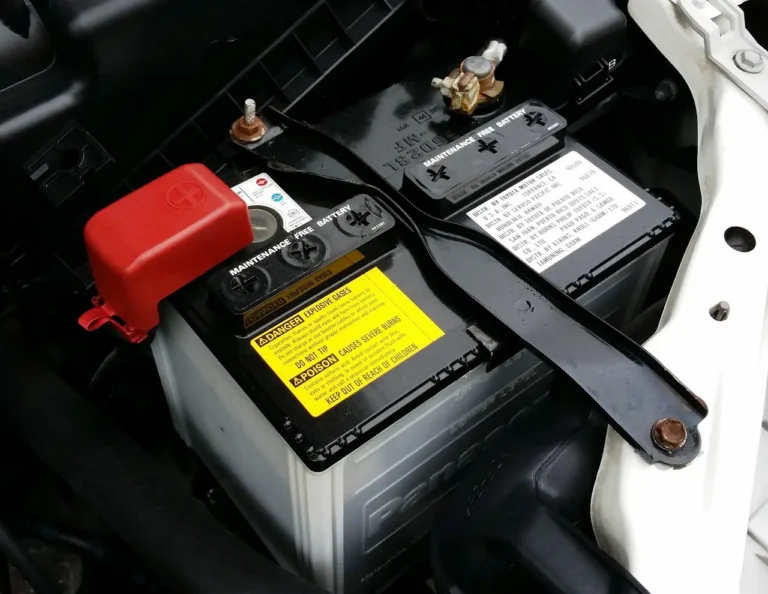
Step 3: Inspect the negative battery terminal and IBS. The IBS is the plastic module clamped around the negative cable. Look for green or white corrosion. Wiggle the cable. A loose connection here is a leading cause of 12408 because the sensor cannot get a stable reference.
Step 4: Measure parasitic draw. This is the trickiest part. With the car off and locked, wait 30 minutes for the modules to sleep. Set your multimeter to amps and connect it in series between the negative battery post and the negative cable clamp. A normal draw is under 50 milliamps (0.05 amps). If you see 200 milliamps or more, start pulling fuses one at a time until the draw drops. That circuit is your culprit.
How to Fix Code 12408: The Step-by-Step Process
Once you know the root cause, the fix is usually straightforward. Here is the order I recommend, from cheapest to most expensive, because it is the order of likelihood.
Fix 1: Clean and Tighten the Battery Connections
Disconnect the negative terminal first, then the positive. Clean the posts and the inside of the clamps with a wire brush until they shine. Reconnect positive first, then negative. Make sure the negative clamp is snug against the IBS. This fixes a surprising number of 12408 cases, especially after winter.
Fix 2: Replace the Battery (and Register It)
If the battery fails the resting voltage test, replace it. Use an AGM battery if the car originally came with one. Standard flooded batteries work in a pinch but will not last as long in a BMW with heavy electrical loads.
Here is the critical step most DIYers miss: you must register the new battery with the car’s computer. Registration tells the power management system the battery is new and resets the charging algorithm. Skipping this step means the car still thinks the old battery is dying, and the code will return within a week. A generic OBD2 scanner cannot do this. You need a BMW-specific tool like the ANCEL BM700 PRO, which has a dedicated battery registration menu.
Fix 3: Replace the IBS Sensor
If the battery is healthy and the connections are clean, the sensor is the likely culprit. The IBS costs around $50 to $80 for an OEM-quality part. It is a 10-minute swap. Disconnect the negative battery cable, remove the old sensor from the cable, install the new one, and reconnect. Clear the code and take a test drive. The new sensor usually does not require registration, but clearing the fault codes is necessary.
Fix 4: Address the Alternator
If your alternator output test showed under 13.5 volts, the alternator or its voltage regulator is failing. Replacing the full alternator is the common route, but you can often buy just the regulator/brush pack for a fraction of the cost. This is a more involved job that requires removing the alternator from the car. If you are not comfortable with belt and pulley work, this is the point where a shop makes sense.
Comparing Your Repair Options
| Approach | Cost Range | Time Needed | Difficulty | Success Rate for 12408 |
|---|---|---|---|---|
| Clean battery terminals | $0 – $10 | 15 minutes | Easy | Moderate (if corrosion is present) |
| Replace and register battery | $200 – $400 | 1 hour | Moderate | High (if battery is old) |
| Replace IBS sensor | $50 – $100 | 30 minutes | Easy | High (if battery is healthy) |
| Replace alternator/regulator | $300 – $700 | 2 – 4 hours | Advanced | High (if voltage output is low) |
| Dealer diagnostic + repair | $500 – $1,200 | 1 – 2 days | None (you wait) | High, but overpriced for simple fixes |
Notice the pattern. The cheapest fix (cleaning) is only sometimes the answer. The most common fix is the battery replacement with registration. The dealer charges a premium for the same diagnostic steps you can perform with a $100 scanner and a multimeter.
Why Battery Registration Matters for This Code
BMW’s power management system tracks battery age and charging cycles. When you install a fresh battery, the system needs to know. Battery registration resets the charge state to 100% and adjusts the charging voltage curve based on the battery type (AGM vs. flooded).
If you skip registration, the car continues to overcharge or undercharge the new battery. Overcharging boils out the electrolyte and kills a good battery in 12 months. Undercharging causes chronic low voltage, which brings back code 12408. This is not an optional step. It is a mandatory part of the repair.
Related reading: if you are dealing with other electrical gremlins, check out this guide on battery discharge issues to see if your problem is actually a slow drain rather than a charging fault. And if you have airbag warnings alongside the battery light, the driver restraint system article covers a separate but often confused fault path.
Frequently Asked Questions
Can I drive my BMW with code 12408?
You can drive for a short while, but you are risking a dead battery and a stranded car. If the code is caused by a failing alternator, the car will eventually lose all electrical power and shut off. If it is just a bad sensor, the car may drive fine but will show false warnings. Get it diagnosed before a long trip.
Will disconnecting the battery clear code 12408 for good?
Disconnecting the battery clears the code temporarily, but it will return if the underlying fault remains. The power management system re-runs its checks every drive cycle. If the voltage is still low or the sensor is still faulty, the code comes back within a few minutes or miles.
Do I need to replace the battery if the code says ‘excessive current draw’?
Not necessarily. Excessive current draw usually points to a parasitic load, not a dead battery. A trunk light stuck on, a glovebox light, or a failing door lock actuator can draw enough current to trigger the fault. Test the parasitic draw as described above before buying a battery.
Is code 12408 the same as a bad alternator?
No. It is a charging system fault, but the alternator is only one of four possible causes. Battery, connections, sensor, and alternator all feed into the same system. Diagnose first. Replacing an alternator when the issue was a $60 sensor is a common and expensive mistake.
Can a standard OBD2 scanner clear this code?
A generic scanner can clear the code, but it cannot perform battery registration. If you replace the battery and clear the code with a generic tool, the code will return because the system still sees the old battery data. You need a BMW-specific scanner for the full repair. The ANCEL BM700 PRO mentioned earlier handles both reading and registration.
What to Do Next: Practical Advice
- Start with the free checks: clean the terminals and measure resting voltage before buying any parts.
- Test alternator output at the battery with the engine running. Anything below 13.5 volts points to the alternator.
- If the battery is over four years old, just replace it. The time spent diagnosing an old battery is usually wasted.
- Always register a new battery. Skipping registration guarantees the code returns and shortens battery life.
- Keep a BMW-capable scanner in the car. It pays for itself the first time you avoid a dealer diagnostic fee.
- Check for parasitic draw if the battery is new and the code persists. Look at aftermarket electronics first.
- If you replace the IBS sensor, clear all fault codes and drive at least 30 minutes so the system can relearn the new values.
Products related to this article
Sponsored / affiliate links. As an Amazon Associate I earn from qualifying purchases. I may earn additional commission from eligible campaigns.