1981 BMW 733i Specs: The E23 Sweet Spot Explained
1981 BMW 733i (E23) Overview: The First-Generation 7 Series
You found a clean 1981 BMW 733i for sale, but the seller’s description is thin. Maybe you’re trying to decide between this and a Mercedes from the same era. Or you just bought one and want to know what you’re actually dealing with under that long hood.
This article walks through the complete 1981 733i spec sheet, but more importantly, it covers what those numbers mean when you drive the car. You’ll learn about the M30 engine’s real-world behavior, how the 1981 model differs from the years around it, and what ownership looks like today. No fluff, just the details that matter.

If you’re planning to work on one of these, a factory repair manual is worth having on the shelf. The BMW 733i repair manual covers the 1978-1982 E23 chassis in detail, which saves you from guessing at torque specs and wiring diagrams.
Engine and Performance Specs: The M30 Inline-Six
The 1981 733i uses the M30B32, a 3.2-liter inline-six with Bosch Motronic fuel injection. This engine family has a reputation for durability, and it’s deserved. The block is cast iron, the internals are overbuilt, and the timing chain is far more robust than the rubber belts BMW used on smaller engines later.
Horsepower, Torque, and Acceleration (0-60 mph)
For the 1981 model year, the U.S.-spec M30 produced 197 horsepower at 5,500 rpm and 206 lb-ft of torque at 4,000 rpm. That’s the number with all the emissions equipment bolted on. European versions made more, but you’re not getting those here.
Acceleration is respectable but not thrilling by modern standards. A 1981 733i with the manual transmission hits 60 mph in about 8.5 seconds. The automatic adds roughly half a second to that. Top speed is around 130 mph, though you’ll work to get there.
The torque curve is what makes this engine feel special. It pulls smoothly from 2,000 rpm, and there’s enough low-end grunt that you rarely need to downshift in normal driving. It’s a relaxed, long-legged cruiser, not a rev-happy screamer.
Transmission Options: 4-Speed Auto vs. 5-Speed Manual
BMW offered two gearboxes in 1981. The four-speed automatic (ZF 4HP22) was the common choice, and it suits the car’s character. Shifts are soft but decisive, and the gearing works well with the engine’s torque.
The five-speed manual (Getrag 260) transforms the car. It’s a genuine driver’s transmission with a precise, mechanical feel. The clutch is heavy by modern standards, and the shifter has a long throw, but you get used to it. Manual cars are rare, so if you find one, it’s worth a premium.
One thing to check on any 1981 733i: the automatic transmission fluid. If it smells burnt or looks dark, walk away. Rebuilding that ZF unit costs more than the car is worth.
Chassis, Suspension, and Braking: How It Handles
The E23 uses MacPherson struts up front and a semi-trailing arm rear suspension. That rear layout is the weak point. On rough roads, the rear wheels can step out unexpectedly mid-corner, especially if you lift off the throttle. It’s a quirk you learn to anticipate, but it keeps the car from feeling fully planted.
Steering is recirculating ball, not rack and pinion. It’s vague around center and requires constant small corrections on the highway. The steering wheel itself is large, which helps, but this is a car that demands attention. You won’t be driving one-handed.
Brakes are four-wheel discs with dual-circuit hydraulics. Stopping power is adequate, but the original calipers are prone to seizing if the car sat for years. Rebuilt calipers are cheap and easy to install. Do that before you trust the car in traffic.
The ride quality is where the 733i shines. It absorbs bumps with a supple, controlled motion that modern luxury sedans still struggle to match. It’s not floaty like a Lincoln; it’s firm but never harsh. This is a car that eats highway miles without wearing you out.
Dimensions, Weight, and Fuel Capacity
The 1981 733i stretches 197.2 inches long, rides on a 110-inch wheelbase, and stands 56.5 inches tall. Curb weight is approximately 3,460 pounds. That’s heavy for a sedan of this era, and you feel it in the way the car carries its mass through corners.
The fuel tank holds 22.5 gallons. Expect around 16-18 mpg in mixed driving and up to 22 mpg on the highway if you keep it under 70 mph. That’s the price of a 3.2-liter inline-six from 1981. Fuel injection helps, but there’s no getting around the displacement.
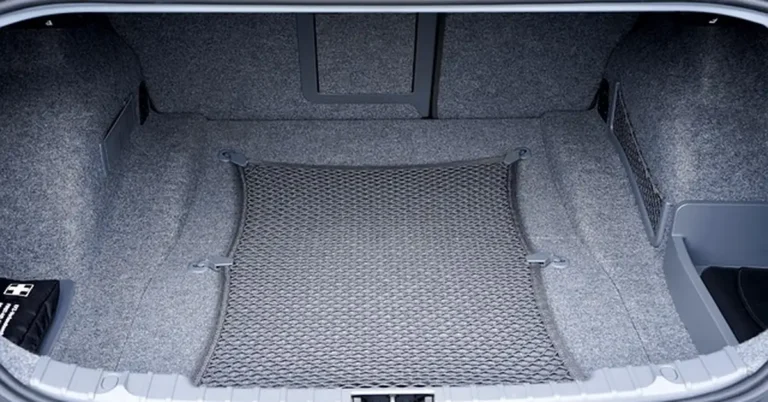
Trunk space is generous at 15 cubic feet. The spare tire lives under the trunk floor, and there’s room for a full set of golf clubs plus luggage. The rear seat folds down, but only as a single piece, and the opening is small.
1981 Model Year Changes vs. 1980 and 1982
The 1981 model year is a genuine sweet spot in E23 production. Here’s what changed:
- Bumpers: The 1981 cars got the slim, body-colored bumpers that replaced the massive chrome units from 1978-1980. They look far better and reduce visual bulk.
- Emissions: BMW re-tuned the Motronic system for 1981 to meet stricter U.S. standards. The result is smoother idle and better cold-start behavior than the 1980 model.
- Interior trim: The dashboard gained a redesigned center stack with simpler switchgear. The seats also got revised cushioning that’s noticeably more comfortable on long drives.
- 1982 changes: The following year brought minor cosmetic updates but no mechanical improvements. Some 1982 cars also had early versions of the digital service indicator that’s more prone to failure.
If you’re comparing years, the 1981 is the one to target. It has the better bumpers, the refined emissions tuning, and none of the early digital electronics that fail.
Interior and Luxury Features: What You Got for the Money
The 1981 733i was a $30,000 car in its day, which translates to roughly $100,000 today. You got a lot for that.
Standard equipment included leather upholstery, power windows, power locks, power mirrors, cruise control, and a premium stereo. The front seats are electrically adjustable in multiple directions. The rear seats have a center armrest and reading lamps.
The dashboard layout is logical, with all controls within reach. The climate control system is fully automatic, but it’s notoriously finicky. Vacuum-operated flaps fail, and the temperature sensor in the dash can drift. If the system blows hot air all the time, it’s usually a vacuum leak, not a dead compressor.
The build quality is generally excellent, but the interior plastics from this era are brittle. The dash cracks, the door pulls break, and the center console tabs snap off. Replacement parts exist but are expensive. Treat the interior with care and keep the car out of direct sun when possible.
1981 BMW 733i vs. Mercedes-Benz 280SE and Jaguar XJ6
In 1981, the 733i competed directly with the Mercedes-Benz W126 280SE and the Jaguar XJ6 Series III. Here’s how they stack up:
| Attribute | 1981 BMW 733i | 1981 Mercedes 280SE | 1981 Jaguar XJ6 |
|---|---|---|---|
| Engine | 3.2L I6, 197 hp | 2.8L I6, 142 hp | 4.2L I6, 176 hp |
| 0-60 mph | 8.5 sec | 11.2 sec | 9.5 sec |
| Handling | Sporty, rear steps out | Stable, understeer | Excellent, but fragile |
| Ride comfort | Firm, controlled | Plush, isolated | Smooth, soft |
| Reliability | Very good | Excellent | Poor |
| Parts availability | Good | Excellent | Fair |
The BMW is the driver’s car. The Mercedes is the cruiser. The Jaguar is the one you buy with your heart, not your head.
If you want a car that rewards an engaged driver, the 733i wins. If you want the most bulletproof, low-stress ownership experience, the 280SE is the safer bet. The Jaguar is beautiful and sounds incredible, but it will test your patience and your wallet.
Common Problems and Ownership Considerations for the M30 Engine
The M30 is a tough engine, but it has known weak points.
The timing chain is the big one. It’s a chain, not a belt, so it doesn’t need routine replacement. But the guides wear out over time. Listen for a rattling noise on cold start. If you hear it, replace the guides and tensioner immediately. A failed guide can jump the chain and destroy the engine.
The cooling system is another concern. The original radiator is prone to clogging, and the water pump impeller can fail. Overheating is the fastest way to kill an M30. Replace the radiator, water pump, thermostat, and all hoses as a preventive measure. It’s a few hundred dollars in parts and a weekend of work.
Oil leaks are common. The valve cover gasket, oil pan gasket, and rear main seal all weep with age. None of these are catastrophic, but they make a mess. Check the oil level every other fill-up. The M30 burns a little oil as it ages, and it’s not unusual to add a quart between changes.
Parts availability is actually good. The M30 was used in many BMW models, so the aftermarket supports it well. You can find everything from gaskets to complete engines without much trouble. Prices are reasonable compared to other European classics.
Insurance is another factor. Classic car insurance policies are cheap, often under $300 per year for agreed value coverage. Regular insurance on a 40-year-old car is a waste of money.
Fuel economy is what it is. You’ll visit the gas station often, but that’s part of the experience. If you want efficiency, buy a Honda. If you want a 3.2-liter inline-six that sounds like a sewing machine at idle and roars at 5,000 rpm, this is the car.
Final Verdict: Is the 1981 733i a Good Classic Buy?
Yes, with caveats.
- Buy the 1981 model year specifically for the better bumpers and refined emissions tuning.
- Prioritize a manual transmission car if you can find one. It’s a completely different driving experience.
- Budget for cooling system and timing chain preventive maintenance. Plan $1,500 to $2,500 for peace of mind.
- Accept the fuel economy. You’re buying a classic, not a commuter.
- Check the rust. The rear wheel arches, trunk floor, and jacking points are the problem areas.
- Join a BMW forum or club. The community knowledge for these cars is deep and generous.
- Get a 1983 BMW 733i comparison if you’re considering the later model year.
The 1981 733i is not a car you buy for practicality. It’s a car you buy because you appreciate analog engineering, a torquey inline-six, and a ride quality that modern cars have lost. It’s not perfect, but it’s honest. And in a world of touchscreens and driver assists, that honesty is refreshing.
For more BMW ownership insights, check out BMW service requirements or explore the 1995 BMW 325i specs to see how the brand evolved.
Products related to this article
Sponsored / affiliate links. As an Amazon Associate I earn from qualifying purchases. I may earn additional commission from eligible campaigns.