1998 Honda Civic MPG: Real Numbers, Owner Reports, and How to Restore Them
You’re looking at a 1998 Honda Civic and wondering what it actually costs to drive. The EPA says one thing. Your neighbor with a 25-year-old Civic says something else entirely. The truth sits somewhere in between, usually closer to the owner than the government.
This guide breaks down the real 1998 Honda Civic MPG numbers across every trim, what owners actually report getting, and why the HX model stands apart. You’ll also get a clear picture of annual fuel costs and a practical maintenance checklist that brings a tired Civic’s efficiency back to spec. No guesswork, just numbers you can use.

BULLY DOG
Bully Dog- 40410 GT Gas Tuner-50 State…
- Wide make & model fit - Works with select Ford, Lincoln, Dodge, Chrysler, Jeep, Chevrolet, GMC, Cadillac, Nissan applications. Ent…
- 50 state compliant - Meets emission requirements in all 50 states with dyno-proven tunes that add power, torque and fuel economy
- Heads up display - Monitor over 15 performance parameters at a glance with a dynamic LCD display mounted on a pillar, window, or d…
If you want to push your Civic’s efficiency further without changing the car, a device like the Bully Dog GT Gas Tuner can help. It’s a 50-state compliant tuner with preloaded tunes that adjust engine parameters, which some owners use to improve throttle response and fuel economy on compatible vehicles. Just verify fitment for your specific model before buying.
1998 Honda Civic MPG: The Real-World Numbers
The 1998 Civic came with two engine options: the 1.6-liter 4-cylinder in most trims and the lean-burn VTEC-E version in the HX. The EPA ratings from 1998 were measured under the old testing procedure, which was more forgiving than today’s standards. That matters because the official numbers look optimistic compared to what a modern test would show.
Here are the official EPA estimates from the 1998 model year for the most common configurations:
- DX/LX/EX with manual transmission: 32 city / 37 highway / 34 combined
- DX/LX/EX with automatic transmission: 29 city / 36 highway / 32 combined
- HX with manual transmission (lean-burn): 35 city / 43 highway / 38 combined
Those numbers were respectable in 1998. Today, a modern subcompact like the Honda Fit or Toyota Yaris posts similar or slightly better figures, but the 1998 Civic still holds its own, especially the HX trim.
The fuel tank on all 1998 Civics holds 11.9 gallons. That gives you a realistic driving range of roughly 380 to 450 miles per tank, depending on your trim and driving style. The HX can stretch past 500 miles on a highway trip if you keep your foot light.
EPA Ratings vs. What Owners Actually Get
Here’s where the 25-year-old reality sets in. Owner reports on forums like Honda-Tech and Reddit consistently show lower numbers than the EPA. A 1998 Civic in good shape with a manual transmission typically returns 28-31 mpg in mixed driving, not the 34 combined the EPA claimed. Automatic versions often land around 26-29 mpg.
The gap comes from several factors. Old fuel injectors get dirty. Oxygen sensors wear out and send wrong readings. A clogged catalytic converter adds backpressure. And the original timing belt, if never replaced, can cause the engine to run slightly retarded, hurting combustion efficiency.
One owner on a Honda forum reported 38 mpg highway in his 1998 HX with 210,000 miles, but he had just replaced the O2 sensors, spark plugs, and done a valve adjustment. Another owner with a 1998 EX automatic complained about 24 mpg until he discovered a stuck thermostat keeping the engine cool. After replacing it, he jumped to 29 mpg.
The lesson is simple: the EPA numbers are achievable, but only in a car that’s been properly maintained. A neglected Civic will underperform by 10-15 percent without any obvious mechanical failure.
Why the HX Trim Beats the Rest
The HX is the fuel economy king of the 1998 lineup, and it’s not close. Its 1.6-liter VTEC-E engine uses a lean-burn combustion strategy that allows the engine to run with a very high air-to-fuel ratio under light throttle. That means the engine sips fuel during steady cruising.
The catch is that lean-burn operation only activates under specific conditions: light throttle, steady speed, and when the engine is fully warmed up. The moment you accelerate hard or climb a steep grade, the engine switches to a normal fuel mixture. So the HX’s impressive highway numbers depend heavily on driving style. A lead-footed HX owner will see numbers closer to a standard DX or LX.
HX models also came with different gearing and lighter wheels, which further reduce drivetrain losses. If you’re shopping for maximum efficiency in a 1998 Civic, the HX with a manual transmission is the only real choice.
Manual vs. Automatic Transmission Differences
The manual transmission consistently beats the automatic in the 1998 Civic, but the gap is smaller than you might think. The EPA said the manual was 3 mpg better in the city and 1 mpg better on the highway. In real-world driving, the difference is often larger, especially in stop-and-go traffic.
Why? The 1998 Civic’s automatic is a four-speed unit with a torque converter that slips at low speeds. That slippage wastes energy as heat. A manual transmission locks the engine to the wheels directly, so more power reaches the pavement.
Manual owners also have the advantage of choosing their shift points. Shifting at 2,500 rpm instead of 3,500 rpm can improve city fuel economy by 2-3 mpg. An automatic doesn’t give you that control. If you’re deciding between two otherwise identical 1998 Civics, the manual will cost you less at the pump every single week.
1998 Civic MPG vs. Modern Subcompacts
It’s fair to ask how a 1998 Civic stacks up against a new car. The answer is mixed. Modern subcompacts benefit from direct injection, variable valve timing on both intake and exhaust cams, and continuously variable transmissions that keep the engine in its sweet spot.
A Honda Civic with the 2.0-liter engine gets 31 city / 40 highway / 34 combined. A 2026 Toyota Corolla gets 32 city / 41 highway / 35 combined. These numbers are slightly better than the 1998 Civic’s official ratings, and much better than what a worn-out 1998 Civic actually delivers.
But there’s a catch. Modern cars are also heavier, more complex, and far more expensive to repair. The 1998 Civic weighs around 2,400 pounds. A new Civic weighs nearly 3,000. The old car’s simplicity means fewer things to break, and its fuel economy is still respectable for a 25-year-old design.
If you’re comparing a $2,000 1998 Civic to a $25,000 new car, the fuel savings of the new car will never pay for its purchase price. You’d need to drive hundreds of thousands of miles just to break even on the difference.
Annual and 5-Year Fuel Cost Breakdown
Let’s put real dollars on this. Using a national average fuel price of $3.50 per gallon and 12,000 miles driven per year, here’s what each trim costs to fuel:
| Trim / Transmission | Real-World MPG | Annual Fuel Cost | Cost Per Mile | 5-Year Total |
|---|---|---|---|---|
| DX/LX/EX Manual | 30 | $1,400 | $0.117 | $7,000 |
| DX/LX/EX Automatic | 27 | $1,556 | $0.130 | $7,778 |
| HX Manual (lean-burn) | 36 | $1,167 | $0.097 | $5,833 |
Those numbers assume a well-maintained car. If your Civic is running poorly and getting 24 mpg in an automatic, your annual cost jumps to $1,750 and your 5-year total to $8,750. That’s a $1,000 difference over five years just from maintenance neglect.
The HX trim saves you roughly $233 per year compared to a standard manual Civic, and $389 per year compared to an automatic. Over five years, that’s $1,165 to $1,945 in your pocket. If you can find a clean HX, it’s worth paying a slight premium.
How to Maximize Your 1998 Civic’s Fuel Economy
You don’t need to replace the engine to get better mileage. Most of the efficiency loss in an old Civic comes from a handful of cheap, straightforward fixes. Here’s the order I recommend:
- Replace the oxygen sensors. The 1998 Civic has two O2 sensors. A worn front sensor can drop fuel economy by 15 percent because the engine runs rich. A new sensor costs $30-50 and takes 20 minutes to install.
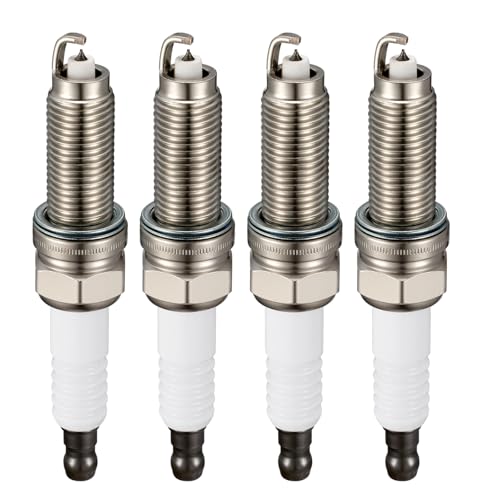
- Change the spark plugs and wires. Old plugs with wide gaps cause misfires that waste fuel. Use NGK plugs (the factory spec) and new wires. This is a $40 job that often restores 2-3 mpg.
- Check the thermostat. A stuck-open thermostat keeps the engine cold. The ECU runs a richer fuel mixture to warm it up, and it never stops. Replacing a thermostat is a $15 part and one hour of work.
- Clean or replace the air filter. A clogged filter restricts airflow, forcing the engine to work harder. A new filter is $15 and takes five minutes.
- Do a valve adjustment. The 1.6-liter engine has mechanical lifters that tighten over time. Tight valves reduce compression and hurt efficiency. A valve adjustment costs $150-200 at a shop and is worth every penny on a high-mileage car.
Pro tip: check your tire pressure monthly. Under-inflated tires increase rolling resistance. Just 5 psi below spec can cost you 1-2 mpg. The door jamb sticker on the driver’s side lists the correct pressures for your car.
Common Maintenance Fixes That Restore MPG
The most common issue I see on high-mileage 1998 Civics is a failing front oxygen sensor. The engine computer relies on that sensor to adjust the air-fuel ratio. When it gets slow or lazy, the computer defaults to a rich mixture to protect the engine. That’s safe, but it burns more fuel.
Another frequent problem is a dirty mass airflow sensor. The 1998 Civic uses a hot-wire MAF sensor that gets coated in oil and dirt over time. Cleaning it with MAF cleaner spray costs $8 and often smooths out idle and improves throttle response, which translates to better city mileage.
Don’t forget the fuel filter. A partially clogged filter reduces fuel pressure, which makes the injectors spray a poor pattern. The engine compensates by opening the injectors longer, wasting fuel. A new filter is $25 and takes 30 minutes to replace on this car.
Full 1998 Civic Trim Comparison (DX, LX, EX, HX)
Here’s the complete breakdown of the 1998 Civic lineup so you know exactly what each trim offers and how it affects efficiency:
| Trim | Engine | Transmission | EPA MPG (City/Hwy) | Key Features |
|---|---|---|---|---|
| DX | 1.6L 4-cylinder | 5-speed manual or 4-speed auto | 32/37 (M), 29/36 (A) | Base model, manual windows, no AC |
| LX | 1.6L 4-cylinder | 5-speed manual or 4-speed auto | 32/37 (M), 29/36 (A) | Adds AC, power mirrors, cruise control |
| EX | 1.6L VTEC 4-cylinder | 5-speed manual or 4-speed auto | 32/37 (M), 29/36 (A) | Adds sunroof, alloy wheels, ABS, VTEC power |
| HX | 1.6L VTEC-E 4-cylinder | 5-speed manual only | 35/43 | Lean-burn engine, lightweight wheels, no sunroof |
The EX is the most popular trim because it has the VTEC engine and better standard features. But that VTEC system doesn’t improve fuel economy. It’s tuned for performance, so the EX gets the same MPG as the DX and LX. The HX is the only trim specifically engineered for efficiency, and it shows.
One thing to watch: the HX was only sold with a manual transmission. If you need an automatic, the HX isn’t an option. You’ll have to settle for the DX, LX, or EX automatic, all of which return identical fuel economy.
Frequently Asked Questions
What is the actual gas mileage of a 1998 Honda Civic?
In good condition, expect 28-31 mpg in mixed driving for manual transmission models and 26-29 mpg for automatics. The HX trim can reach 35-38 mpg with steady highway driving. These numbers are lower than the EPA’s 1998 estimates because the car is now 25 years old and components wear out.
Why is my 1998 Civic getting worse gas mileage than usual?
The most common culprits are a failing oxygen sensor, old spark plugs, a stuck-open thermostat, or low tire pressure. Start with the cheapest fixes first. Clean the air filter, check tire pressure, and replace the spark plugs. If that doesn’t help, test the O2 sensors with a multimeter or have a shop scan the ECU for codes.
Can I improve the 1998 Civic’s fuel economy with bolt-on parts?
Not really. Cold air intakes and exhaust systems on these cars usually shift power to higher RPMs and can actually hurt city fuel economy. The best returns come from maintenance, not modifications. Keep the engine stock and well-tuned, and you’ll get the best mileage.
How many miles can a 1998 Civic go on a full tank?
With an 11.9-gallon tank, a standard Civic gets about 350-400 miles per tank in mixed driving. The HX can stretch to 450-500 miles on a highway trip if you drive conservatively. Always fill up before the low-fuel light comes on to avoid sucking sediment from the bottom of the tank into the fuel pump.
Is the 1998 Civic HX worth buying for fuel economy?
Yes, if you can find one. The HX is rare because most were driven as commuters and either wore out or were modified. A clean HX with a manual transmission will save you $200-400 per year in fuel compared to other trims. Just make sure the lean-burn system is working properly, since a faulty VTEC-E solenoid or O2 sensor will disable lean-burn and drop efficiency to normal Civic levels.
Final Verdict: Is the 1998 Civic Still Fuel-Efficient Today?
Yes, but with caveats. A well-maintained 1998 Civic still returns respectable numbers that rival many modern subcompacts. The HX trim, in particular, remains one of the most efficient gasoline cars ever sold by Honda. The problem is that most 1998 Civics on the road today have been neglected for years.
If you’re willing to spend a weekend on basic maintenance, you can restore most of that original efficiency. The parts are cheap, the car is simple to work on, and there’s no shortage of forum guides to walk you through it.
Here are the takeaways to remember:
- The 1998 Civic’s real-world MPG is 28-31 for manuals, 26-29 for automatics, and 35-38 for the HX.
- The HX trim is the fuel economy champion, but only with a manual transmission and gentle driving.
- Annual fuel costs range from $1,167 (HX) to $1,556 (automatic) at $3.50 per gallon and 12,000 miles.
- Replacing O2 sensors, spark plugs, and the thermostat restores 5-15 percent efficiency on a high-mileage car.
- Manual transmissions are 2-4 mpg better than automatics in real-world driving.
- Modern subcompacts are slightly more efficient, but the 1998 Civic’s low purchase price offsets any fuel savings.
- Keep tires inflated, shift early, and avoid hard acceleration to squeeze out another 2-3 mpg.
The 1998 Civic isn’t the most efficient car on the road anymore. But for a car you can buy for the price of a good dinner, it’s still one of the smartest fuel economy investments you can make.
Products related to this article
Sponsored / affiliate links. As an Amazon Associate I earn from qualifying purchases. I may earn additional commission from eligible campaigns.