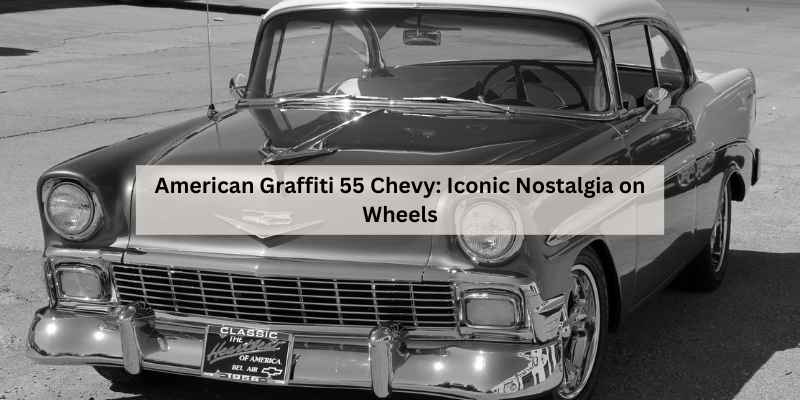
American Graffiti 55 Chevy: The Real Story Behind Bob Falfa’s Hot Rod
Most people remember the yellow ’32 Ford Deuce coupe. That’s John Milner’s car, the star of American Graffiti. But the car that actually steals the final race, the one with the rumbling exhaust and the flat black paint, is a 1955 Chevy. Harrison Ford drove it as Bob Falfa, and for decades, people have mixed up the two vehicles.
This guide sorts out the facts. You’ll learn exactly what powered the film car, what happened to it after production wrapped, and how to tell a real tribute from a dressed-up clone. If you’re shopping for a 1955 Chevy inspired by the movie, you’ll also get a realistic budget breakdown and a checklist to avoid overpaying.
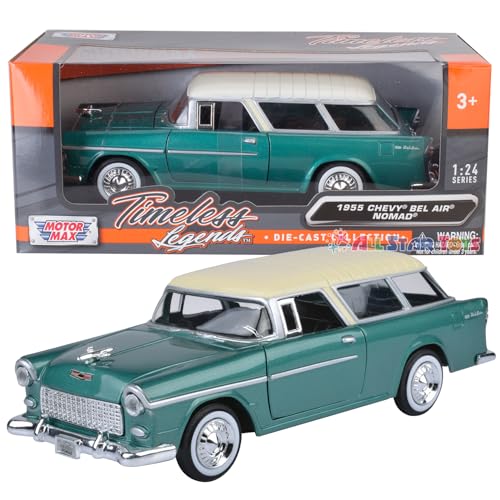
Motormax
MOTORMAX 1955 Chevrolet BEL AIR Nomad Wagon…
- from_supplier_minineopet
- feel free to contact us solve your problem, please attach product information --- MOTORMAX 73248 1955 55 CHEVY BEL AIR NOMAD WAGON…
For a quick visual reference, the American Graffiti 55 Chevy guide covers the One-Fifty model differences. A diecast model like the MOTORMAX 1955 Chevrolet Bel Air Nomad Wagon in green won’t help you verify a real car’s VIN, but it’s a solid way to study the body lines and proportions up close without traveling to a car show.
The 1955 Chevy in American Graffiti: More Than a Background Car
The ’55 Chevy plays the antagonist. Falfa shows up halfway through the film, challenges Milner to a race, and spends the final act chasing him through the streets of Modesto. The car’s look—black paint with red primer patches—was a deliberate choice. It signaled that Falfa was a serious drag racer, not a cruiser.
It’s worth noting the car wasn’t a Bel Air. The film car was a 210 sedan, the mid-trim model. You can spot the difference by the lack of chrome trim on the side and the simpler rear window treatment. Many tributes get this wrong and use a Bel Air, which changes the silhouette.
Bob Falfa’s ’55: Specs, Sound, and Screen Time
Engine and Transmission Details
The production car was a standard 1955 Chevrolet. That meant a 265 cubic inch V8, the first-generation small block, paired with a two-speed Powerglide automatic. The 265 made around 162 horsepower in its base form. It was quick for its day, but nothing exotic.
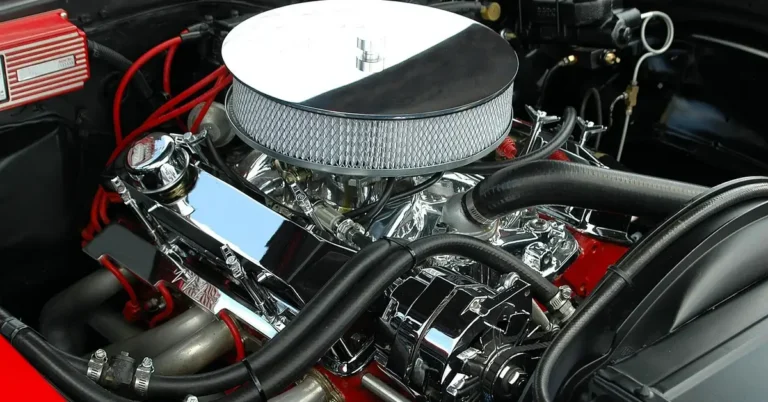
Modern tributes almost always swap in a 383 stroker. That’s a 350 block with a longer stroke crank, giving you 383 cubic inches. With a decent cam and aluminum heads, you’re looking at 400 horsepower or more. Most builders pair it with a four-speed manual transmission, usually a Muncie M20 or M21. The film car’s actual drivetrain was lost to time, but the sound in the movie—that deep, throaty idle—suggests a camshaft upgrade was at least part of the original build.
The Famous Black Paint and Red Primer Look
The paint scheme is the defining feature. The car appears to be flat black with red oxide primer on the doors, trunk, and hood. Some say it was a quick paint job done for the film. Others claim the red was actual primer showing through after the black paint was sanded off.
For a tribute, you have two choices. You can paint it properly with a matte clear coat over black base, then mask and spray the red sections. Or you can use real primer, which will fade and weather like the original. Most owners go with the first option—it’s easier to maintain and doesn’t leave rust-colored dust on your garage floor.
The Real Fate of the Film Cars
Here’s the part most articles skip: there wasn’t just one car. Universal Pictures used at least two, possibly three, identical ’55 Chevys for the production. One was the hero car for close-ups. Another was a stunt car for the racing scenes. The hero car was reportedly sold after filming and disappeared for years.
A car claiming to be the actual Falfa ’55 surfaced at a classic car auction in the late 2000s. It had been repainted and modified, and its provenance was shaky. Experts couldn’t verify it against any production records. The stunt car, if it survived, likely ended up in a junkyard or was crushed. The truth is that no confirmed, documented example of the film car exists today. Any car you see labeled as the original is almost certainly a tribute.
American Graffiti Tribute Cars: What to Look For
If you’re in the market, you need to separate a well-built tribute from a parts-bin special. The market is full of cars that look right in photos but fall apart on inspection.
VIN and Chassis Verification
Start with the VIN. A real 1955 Chevy has the VIN stamped on the driver’s side door pillar, not on the dashboard. The format begins with V55, followed by a letter for the assembly plant and then the sequence number. For a 210 sedan, the body style code will be 1051 or 1053 depending on the model year specifics.
Check the title against the VIN plate. Many tributes start with a Bel Air hardtop because they’re more common. Converting a hardtop to a sedan is a major project involving the roof and quarter panels. If you see a car advertised as a 210 sedan, confirm the VIN plate matches a sedan body code. A mismatch means you’re looking at a clone, and the value drops significantly.
Common Modifications (383 Stroker, 4-Speed, Posi)
Beyond the body, look at the drivetrain. A 383 stroker is the standard engine swap. Verify the casting numbers on the block. A genuine 383 block will have a four-bolt main cap and specific casting numbers like 14093638 or 10066036. If the seller doesn’t know the casting number, walk away.
A four-speed manual is the desired transmission. The Muncie M20 is the wide-ratio version, good for street driving. The M21 is closer-ratio, better for racing. Both are fine. The rear end should be a Positraction unit, usually a 10-bolt with 3.55 or 3.73 gears. You can test this by jacking up the rear and spinning one wheel. If the other wheel spins the same direction, it’s a posi. If it spins opposite, it’s an open diff.
Interior details matter too. The film car had a basic bench seat and a column shifter, but most tributes use bucket seats and a floor shifter. That’s fine for comfort, but it’s not accurate. Also check for fender skirts. The film car didn’t run them, but many builders add them for a different look. If you want accuracy, they should be absent.
American Graffiti vs. Two-Lane Blacktop: Two ’55s, Two Personalities
The other famous ’55 Chevy in film is the gasser from Two-Lane Blacktop (1971). Both cars are black, but they’re built for different purposes. The American Graffiti car is a street machine. It’s lowered, runs street tires, and looks like it could cruise the boulevard.
The Two-Lane Blacktop car is a full-on gasser. It has a straight axle front end, huge rear slicks, and a tunnel ram intake with dual quads. The hood is fiberglass with a massive scoop. It’s a race car first, a street car second. The movie is also different—it’s a slow, existential road film, not a nostalgic comedy. If you’re building a tribute, decide which personality you want. The gasser look is more aggressive and expensive to build. The American Graffiti look is simpler and more practical for regular driving.
Building Your Own Tribute: Budget and Parts Guide
Building a tribute isn’t cheap, but you can control costs with a clear plan. Here’s a rough breakdown of what to expect.
- Donor car: $8,000 to $15,000 for a solid 210 sedan or Bel Air with no rust. A running car with a stock drivetrain is ideal.
- Engine and transmission: $6,000 to $10,000 for a 383 stroker crate engine and a rebuilt Muncie four-speed. You can save money with a stock 350, but you’ll lose the sound and the power.
- Paint and body: $3,000 to $7,000 for a DIY flat black and primer job. A professional paint booth and finish will run $8,000 or more. The key is the prep work—any rust must be cut out and replaced.
- Suspension and brakes: $2,000 to $4,000 for lowering springs, new shocks, and a disc brake conversion up front. The stock drums are dangerous with modern traffic.
- Interior: $1,500 to $3,000 for new seat covers, carpet, and a headliner. A full custom interior with buckets and a console will push this higher.
A driver-quality tribute you can enjoy on weekends will land around $20,000 to $30,000 total, assuming you do some of the work. A show-quality trailer queen with a perfect paint job and a detailed engine bay will easily exceed $50,000. The difference is in the labor and the parts quality.
Here’s a quick comparison of the two build paths:
| Build Path | Total Cost | Drivetrain | Paint | Best For |
|---|---|---|---|---|
| Driver Tribute | $20k – $30k | 350 or mild 383, 4-speed | Single-stage flat black, rattle-can primer | Weekend cruises, local shows |
| Show Quality | $45k – $60k+ | 383 stroker, Muncie M21, posi | Base/clear matte black, custom-mixed red oxide | Judged competitions, trailer transport |
| Gasser Clone | $35k – $50k | Big block or 383, straight axle | Flat black, fiberglass hood | Drag strip, vintage racing events |
Where to Buy and What to Pay
You’ll find these cars on classic car auction sites, dedicated Chevy forums, and sometimes at local swap meets. The price of a finished tribute varies wildly. A rough car with a tired engine might sell for $15,000. A clean, well-sorted tribute with a 383 and a four-speed typically asks $35,000 to $45,000. Anything under $25,000 is usually a project, not a driver.
Don’t ignore the smaller details. Check the louvered hood—the film car had a stock hood, but many tributes use a louvered one for a hotter look. Check the wheels. The film car ran steelies with dog dish hubcaps. If you see aftermarket chrome wheels, the builder prioritized style over accuracy.
If you’re not ready for a full build, a diecast model is a low-cost way to study the design. The Chevy wiring guides won’t help with the body, but they’re useful if you plan to rewire your own project later.
Frequently Asked Questions
Was the American Graffiti ’55 Chevy a Bel Air?
No. The film car was a 210 sedan. The 210 was the mid-range trim below the Bel Air. It had less chrome and a simpler interior. Many tributes use Bel Airs because they’re more common, but the body lines are slightly different.
What engine did Bob Falfa’s car have?
The production car likely had the stock 265 cubic inch V8 with a Powerglide automatic. The sound in the film suggests a performance camshaft. Modern tributes almost always use a 383 stroker with a four-speed manual.
Did the original car survive?
No documented example exists. Multiple cars were used during filming. The hero car was sold after production and its whereabouts are unknown. The stunt car was likely scrapped. Any car claiming to be the original should be treated with suspicion.
What is a gasser?
A gasser is a style of drag racing car from the 1960s. They have a raised front end, a straight axle, and often a big engine with a tunnel ram intake. The ’55 Chevy in Two-Lane Blacktop is a famous example. The American Graffiti car is not a gasser; it’s a street machine.
How much does it cost to build an American Graffiti tribute?
A driver-quality build costs between $20,000 and $30,000, including the donor car. A show-quality build with a 383 stroker, perfect paint, and a detailed interior will run $45,000 or more. The biggest variable is the bodywork and paint.
What to Remember Before You Buy or Build
- The film car was a 210 sedan, not a Bel Air. Verify the VIN body code.
- No original film cars survive. Every car for sale is a tribute or a clone.
- Look for a 383 stroker with a four-speed Muncie and a posi rear end.
- Flat black paint with red primer patches is the signature look, but real primer requires maintenance.
- Driver-quality tributes start around $20k. Show cars exceed $45k.
- Steel wheels with dog dish caps are accurate. Chrome wheels are not.
- Check the ignition wiring diagram before you buy a project car; a bad harness can turn a budget build into a nightmare.
Products related to this article
Sponsored / affiliate links. As an Amazon Associate I earn from qualifying purchases. I may earn additional commission from eligible campaigns.