Chevy Engine Swap Compatibility Chart: Bellhousing & Transmission Guide
Understanding Chevy engine swap compatibility involves knowing which V8 engines fit which chassis, the transmission needs, and common modifications required for successful integration. This guide covers popular swaps for classic trucks and modern vehicles to help you plan your project.
Quick Answer
Small-block, big-block, and LS Chevy V8s all share the same basic bellhousing bolt pattern (unchanged since 1955), so most bolt to the same transmissions. The catch: LS engines have a flush crankshaft flange, while older small- and big-blocks sit 0.400″ further out — so bolting an LS to an older transmission (Powerglide, TH350, TH400, early 700-R4) needs a spacer at the flexplate. LS swaps into 1998+ transmissions (4L60E and later) skip this issue entirely.
Chevy Engine Swap Basics: What You Need to Know
Swapping an engine means putting a new motor into a vehicle that didn’t originally come with it. People do this for many reasons. A common goal is to add more horsepower.
Older trucks might get a modern V8. Or, a builder might want a specific look with an older engine. Whatever the goal, you need to know if it will work.
Not all engines fit all cars or trucks easily.
There are key things to think about. First is the physical fit. Will the new engine actually sit in the engine bay?
You need to measure. You also need to think about the engine mount locations. These might need to be changed.
Then comes the transmission. Does your old transmission bolt up to the new engine? Or do you need a new one?
This is super important.
Fuel systems are another hurdle. Newer engines need more fuel pressure. Older cars might not have this.
You might need new fuel lines and a new fuel pump. Electrical systems are also tricky. Modern engines have complex computers.
You need to make sure the engine’s computer can talk to the car’s existing wiring. Sometimes, a whole new wiring harness is needed. This can get complicated fast.
Think about exhaust too. The exhaust manifolds on the new engine might not line up with your old exhaust system. You might need custom exhaust pipes.
Suspension and brakes are also factors. A heavier engine can change how your car handles. You might need stronger springs or better brakes.
It’s a lot to consider, but planning helps a lot.
Chevy has made many great engines over the years. The small-block V8 is a legend. The big-block V8 is known for brute strength.
Even their inline-six engines have their fans. Each has its own size and weight. Each also has different mounting points and power outputs.
Knowing these details helps match an engine to your project car.
For instance, a classic Chevy C10 truck is a popular swap candidate. People often put newer LS engines into them. These LS engines are powerful and efficient.
They also have a lot of aftermarket support. But fitting an LS engine into a C10 needs specific parts. You might need new engine mounts.
You will likely need a new transmission. And the cooling system will need attention.
Let’s dive into some popular swaps. We will look at common engine families and the vehicles they often go into. This will give you a clearer picture of what’s possible.
Remember, every swap is a little different. Your specific vehicle and chosen engine will have their own quirks. But by understanding the general rules, you can start your journey with more confidence.
Understanding Engine Families: Small Blocks vs. Big Blocks
When talking about Chevy engines, two main families come to mind for many car enthusiasts: the small-block V8 and the big-block V8. These aren’t just names; they describe fundamental differences in size, design, and power potential. Understanding these differences is crucial for any engine swap project.
The small-block Chevy V8 engine is perhaps one of the most iconic and versatile engines ever produced. Introduced in the late 1950s, it was designed to be compact, relatively light, and powerful. Engines like the 283, 327, 350, and 400 cubic inches fall into this category.
They are known for their flexibility. You can build them for mild street use or high-performance racing.
A key feature of small-blocks is their engine block dimensions. They share a common deck height and bore spacing. This means many parts are interchangeable.
You can often swap cylinder heads, intake manifolds, and even crankshafts between different small-block V8s. This modular design made them very popular with mechanics and DIYers.
The big-block Chevy V8 engines, on the other hand, are designed for maximum power and torque. These include engines like the 348, 396, 402, 427, and 454 cubic inches. They are physically larger and heavier than small-blocks.
Their cylinders are spaced further apart, and the blocks are taller and wider.
Big-blocks were often used in performance cars and heavy-duty trucks where raw power was needed. They produce more torque at lower RPMs than most small-blocks. This makes them great for towing or for muscle cars that need strong acceleration.
However, their size and weight can make them harder to fit into smaller engine bays.
When considering an engine swap, the choice between a small-block and a big-block often comes down to the target vehicle and desired outcome. A small-block is generally easier to swap into many classic cars and trucks. They offer a good balance of power and practicality.
A big-block swap is usually for those seeking extreme power and are willing to modify their vehicle’s chassis and suspension to accommodate the larger engine.
Modern Chevy LS engines, while technically small-block architecture, represent a significant evolution. They are more compact and lighter than older small-blocks. They also feature advanced technology like aluminum blocks and heads, fuel injection, and sophisticated engine management systems.
LS engines are incredibly popular for swaps due to their power, efficiency, and relative ease of integration with modern electronics.
The physical dimensions are critical. A small-block typically measures around 28-30 inches long. A big-block can be around 32 inches long.
The width and height also differ. This is why checking dimensions against your target vehicle’s engine bay is the very first step. A few inches can make a big difference.
Consider the exhaust port locations and starter motor position. These can affect exhaust and chassis clearance. The transmission bolt pattern is also important.
While both small-blocks and big-blocks can bolt up to many Chevy transmissions, there are differences. For example, most small-blocks use a common 3-bolt pattern for the bellhousing. Big-blocks might use a slightly different pattern, though many transmissions have evolved to handle both.
Ultimately, understanding the core differences between these engine families will guide your choices. Are you building a street rod that needs a classic V8 rumble? A small-block might be perfect.
Do you need serious towing power for a truck? A big-block or a high-output LS might be the way to go. Each has its own strengths and challenges.
Engine Family Quick Guide
Small-Block Chevy V8
- Common Engines: 283, 327, 350, 400
- Key Features: Compact, light, versatile, good power-to-weight ratio.
- Best For: General street performance, classic car restoration, most trucks.
- Swap Considerations: Easier fit, readily available parts and mounts.
Big-Block Chevy V8
- Common Engines: 396, 427, 454
- Key Features: Larger, heavier, high torque, maximum power potential.
- Best For: Muscle cars, heavy-duty towing, drag racing.
- Swap Considerations: Requires more chassis modification, heavier duty components.
LS (Gen III/IV) V8
- Common Engines: LS1, LS2, LS3, LS6, LM7, LQ4
- Key Features: Modern tech, aluminum, fuel-injected, powerful, efficient.
- Best For: Restomods, performance upgrades, modern swaps.
- Swap Considerations: Electronic integration is key, often requires specific mounts and wiring.
Chevy Engine Bellhousing & Transmission Compatibility Chart
This is the actual compatibility question most swap guides gloss over: which bellhousing bolts to which transmission, and where the exceptions are. Chevy kept the small-block/big-block bellhousing bolt pattern essentially unchanged since 1955 — the real complication is the crankshaft flange position, not the bolt pattern itself.
| Engine Family | Bellhousing Bolt Pattern | Bolts to Old Auto (TH350/TH400/Powerglide/early 700-R4)? | Bolts to 1998+ Auto (4L60E/4L80E)? | Key Note |
|---|---|---|---|---|
| Small-Block (283-400) | Standard SBC/BBC pattern | Yes, direct | Yes, direct | Same pattern since 1955 |
| Big-Block (396-454) | Same standard SBC/BBC pattern | Yes, direct | Yes, direct | Shares bellhousing with small-block |
| LS (Gen III/IV) | SBC pattern + extra 12 o’clock bolt | Yes, but needs a 0.400″ spacer at the flexplate | Yes, direct (bellhousing updated for LS in 1998) | Flush crank flange vs. 0.400″ recessed on older engines |
Our Pick: Fix the LS Crank-Flange Gap First
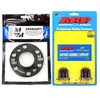
Michigan Motorsports LS Crankshaft Adapter Flexplate Spacer Kit
Best for: LS swaps using an older TH350/TH400/Powerglide/early 700-R4 transmission
Why we picked it: Solves the exact 0.400″ crank-flange gap explained above — the #1 reason an LS engine won’t bolt flush to an older automatic.
Main drawback: Not needed if you’re using a 1998+ 4L60E or 4L80E — check your transmission generation first.
View Our Pick on Amazon
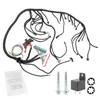 Standalone LS Wiring Harness (97-06 GM LS1/Vortec 4.8/5.3/6.0L)Avoids splicing into the donor vehicle’s factory harness, the step most builders find hardest.Check on Amazon → |
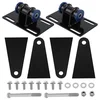 maXpeedingrods Universal LS Swap Motor Mount Conversion KitAdapter plates position the LS engine correctly without custom fabrication.Check on Amazon → |
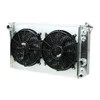 Smileracing 3-Row Aluminum Radiator with Fan Shroud (LS Swap)3-row aluminum core plus fan shroud addresses the cooling-capacity issue this guide flags as a common swap mistake.Check on Amazon → |
As an Amazon Associate, we earn from qualifying purchases.
The Iconic Small-Block Chevy Swap: A Classic Choice
The small-block Chevy V8 engine family is a legend for a reason. For decades, it powered everything from humble sedans to fierce muscle cars. Today, it remains one of the most popular choices for engine swaps, especially into classic cars and trucks.
If you’re looking for a reliable, powerful, and relatively easy-to-install V8, the small-block is hard to beat.
Think about the Chevrolet 350 cubic inch V8. It’s probably the most common small-block. It was produced in huge numbers from the late 1960s all the way into the early 2000s.
Because of this, used 350 engines are everywhere and affordable. They are also very well understood by mechanics. Parts are plentiful and cheap.
When you swap a small-block into a vehicle, you’re often upgrading an even older engine. This could be an inline-six or an earlier V8. The dimensions of most small-blocks are similar enough that they can often
Older vehicles might have frame-mounted engine mounts. Newer engines like the LS series often use side mounts on the engine block itself. This means you’ll need conversion engine mounts.
These are special brackets that bolt to the engine and then to the original frame mounts. Many aftermarket companies sell these kits for popular vehicles like classic Chevy C10 trucks or early Camaros.
The transmission is another major piece of the puzzle. Small-block Chevys can bolt up to a variety of transmissions. The classic Muncie four-speed manual is a popular choice for period-correct builds.
For automatic transmissions, the Turbo-Hydramatic 350 (TH350) and Turbo-Hydramatic 700R4 (4L60/4L60E) are very common. The 700R4 and its successors are great because they offer overdrive gears, which means better fuel economy on the highway.
If you’re putting a small-block into a vehicle that originally had a manual transmission, you’ll need to consider the clutch linkage and flywheel. If it had an automatic, you’ll need the correct flexplate and possibly a transmission crossmember that fits the new transmission. The driveshaft might also need to be shortened or lengthened.
Fuel delivery is often different too. Older cars might have had carburetors. Modern small-blocks, especially the LS series, are fuel-injected.
If you’re sticking with a carbureted small-block, you can use the existing fuel system or upgrade it for better performance. If you’re using an LS with its factory fuel injection, you’ll need a high-pressure fuel pump and lines. The fuel tank might also need an in-tank pump.
Wiring is a big step. Carbureted engines have simpler electrical needs. You need power for the ignition and the starter.
Fuel-injected engines, especially LS engines, require a complex wiring harness. This harness connects the engine computer (ECU), sensors, injectors, and ignition coils. Many companies offer custom wiring harnesses designed for specific swaps.
This makes the process much smoother. You might also need to integrate the engine’s computer with your vehicle’s existing gauge cluster.
Exhaust systems are almost always custom with engine swaps. Small-block Chevy exhaust manifolds or headers will likely not line up with your old exhaust pipes. You’ll need to figure out where the mufflers and tailpipes will go.
Many shops can fabricate custom exhaust systems. Some kits are available for popular swap combinations.
I remember working on a friend’s 1955 Chevy Bel Air. It had a tired old inline-six. We decided to swap in a 350 small-block.
The engine bay was tight. We used special engine mounts to get the 350 to sit right. The old transmission tunnel had to be massaged a bit for the TH350 automatic.
The biggest headache was the wiring. We spent a whole weekend just figuring out the spark plug wires and the starter solenoid. But once it was running, the sound was incredible.
It felt like a whole new car.
One of the biggest benefits of the small-block Chevy is its size. They are relatively narrow and not excessively tall. This allows them to fit into a surprisingly wide range of vehicles.
From compact sports cars to full-size trucks, the small-block has proven its adaptability. This is why it’s such a go-to for builders.
Even the more modern LS engines, which are technically small-block architecture, have a similar physical footprint to older small-blocks. This makes them excellent candidates for swaps into vehicles that originally housed smaller engines. The main difference is the electronic complexity and the need for more robust cooling and fuel systems.
When planning your small-block swap, do your homework on the specific engine year and model. Some later model small-blocks, especially the Vortec series, have slightly different bolt patterns or sensor locations that might affect parts compatibility. Always double-check part numbers and specifications.
The simplicity of a carbureted small-block swap makes it very appealing for those who want to avoid complex electronics. However, the power and efficiency of fuel-injected LS engines are hard to ignore. It really comes down to your budget, your technical skill level, and the desired outcome for your project.
Small-Block Swap Essentials
- Engine Choice: Chevrolet 350 is most common and affordable.
- Engine Mounts: Often require adapter mounts for chassis fitment.
- Transmission: TH350, TH700R4 (4L60E), Muncie M22 are popular.
- Fuel System: Carburetor setup is simpler; fuel injection requires high-pressure pump and lines.
- Wiring: Carbureted is basic; LS engines need specific ECU and harness.
- Exhaust: Almost always custom headers and piping.
- Cooling: Larger radiator and fan likely needed.
The Big-Block Chevy Swap: For Uncompromising Power
When you think of raw, unadulterated power in a Chevy, the big-block V8 often comes to mind. These engines are designed for serious performance. They produce massive torque and horsepower.
If your goal is maximum grunt for a project car, a big-block swap might be what you’re after. However, this type of swap comes with its own set of challenges.
The most common big-block engines are the 396, 427, and 454 cubic inch V8s. These engines are physically larger and heavier than their small-block cousins. Their engine blocks are taller and wider, with cylinders spaced further apart.
This gives them more displacement and the potential for higher power output.
The primary challenge with a big-block swap is fitting it into the engine bay. Many classic cars and trucks, especially those originally designed for small-blocks or inline-six engines, will require significant modifications to accept a big-block. This can include notching the frame rails, modifying the firewall, or even relocating the steering box.
Engine mount placement is different for big-blocks. They typically use side mounts that bolt to the engine block. These will need to align with your vehicle’s frame or crossmember.
You’ll likely need specific big-block engine mount brackets, which can be harder to find than small-block adapters.
The transmission choice is also important. Big-block Chevys can bolt up to many of the same transmissions as small-blocks, but you need to ensure the transmission can handle the increased torque. A Turbo-Hydramatic 400 (TH400) is a very robust automatic transmission that pairs well with big-blocks.
For manual transmissions, a heavy-duty Muncie or a Tremec TKO is often used.
The driveshaft will need to be strong enough to handle the power. You’ll also need to ensure the correct length after the transmission swap. U-joints on the driveshaft should be upgraded if you plan on serious performance.
Fuel delivery is straightforward if you plan to use a carburetor. Big-blocks are well-suited to large carburetors. You’ll need a fuel pump that can supply enough volume and pressure, and appropriately sized fuel lines.
If you consider fuel injection for a big-block, it becomes much more complex and expensive.
Wiring for a carbureted big-block is similar to a carbureted small-block. You’ll need ignition, starter, and charging system connections. The main difference is that a big-block will likely have a more powerful alternator to keep up with its demands.
If you opt for a rare fuel-injected big-block, the wiring becomes as complex as an LS swap.
Exhaust systems for big-blocks are usually custom. Headers need to be specifically designed for big-block engines and the chassis they are going into. The sheer size of the exhaust ports and the pipes required means careful planning for ground clearance and routing.
Dual exhaust systems are almost a must to let these engines breathe.
I recall helping a friend put a 454 big-block into a 1970 Chevelle. The original engine was a 350 small-block. The difference in size was apparent immediately.
The big-block’s heads were much wider. We had to slightly trim the inner fender wells. The engine mounts were a direct bolt-in for that specific Chevelle model, thankfully.
But the exhaust headers were a nightmare. They hung low and we had to reroute the steering linkage to make them fit. It was a tight squeeze, but the roar of that 454 was worth it all.
It felt like a true muscle car.
Suspension and brakes are critical for big-block swaps. The extra weight of a big-block can sag the front end of a car. You’ll likely need heavier-duty springs.
The increased power means you’ll need better brakes to stop safely. Upgraded front disc brakes are almost always recommended.
Consider the weight distribution. A big-block is significantly heavier than a small-block. This can affect the car’s handling characteristics.
If you’re putting one into a lighter car, it can make the front end feel very heavy. This is why many big-block swaps are done into cars that were originally offered with them, like Chevelles, Camaros, and El Caminos.
The availability of parts for big-blocks is still good, but not as widespread as for small-blocks. You’ll find plenty of performance parts like intake manifolds, camshafts, and cylinder heads. However, finding specific swap-related components like engine mounts or headers might require more searching.
Many companies specialize in big-block swap parts for popular classic Chevy chassis.
When choosing a big-block, pay attention to the specific casting numbers. This will help you identify the exact model and its original application. Some big-blocks were designed for heavy-duty use and might have stronger internal components from the factory.
Researching the history of the engine can save you surprises down the road.
For those who crave the sound and feeling of a classic American V8, the big-block offers an unmatched experience. It’s a swap for those who want to make a statement and are prepared for the engineering challenges that come with putting serious horsepower into a chassis.
Big-Block Swap Considerations
- Engine Choice: 396, 427, 454 are common.
- Chassis Fitment: Major modifications often needed (frame notching, firewall).
- Engine Mounts: Specific big-block mount kits required.
- Transmission: TH400 is a strong automatic; heavy-duty manual is needed.
- Cooling System: large radiator and fan are essential.
- Suspension/Brakes: Upgrade springs and brakes to handle weight and power.
- Exhaust: Custom headers and dual exhaust are typically necessary.
The Modern Marvel: LS Engine Swaps
The LS engine family, born from Chevrolet’s Gen III and Gen IV small-block designs, has revolutionized engine swapping. These aluminum V8 engines offer incredible power, impressive fuel economy, and modern technology. They’ve become the go-to choice for builders looking to update classic vehicles or boost performance in newer ones.
LS engines started appearing in production vehicles in the late 1990s. Models like the LS1 in the Corvette and Camaro, the truck-based LM7 and LQ4 (6.0L), and the high-performance LS6 and LS2 are prime examples. The LS3 and L99 are common in later models.
The sheer variety means there’s an LS for almost any budget and power goal.
One of the biggest advantages of LS engines is their aluminum construction. This makes them lighter than traditional iron-block small-blocks and big-blocks. This weight savings can significantly improve a vehicle’s handling and braking.
Their physical dimensions are very similar to older small-blocks, making them surprisingly adaptable to many chassis that originally housed smaller engines.
However, the complexity of LS swaps lies in their electronics. LS engines are fully computer-controlled. They use a sophisticated Engine Control Unit (ECU) that manages fuel injection, ignition timing, idle speed, and more.
To get an LS engine running in a different vehicle, you need to make this ECU communicate with the new environment.
This often means using a standalone wiring harness. These harnesses are designed to power the engine’s sensors, fuel injectors, and ignition coils. They also include connections for the ECU and can often be integrated with factory or aftermarket gauges.
Many companies offer pre-made harnesses for common swap applications.
You’ll also need an ECU programmed to run the engine. Sometimes, you can use the factory ECU from the donor vehicle. For more custom builds, you might need a tuned ECU or even a standalone aftermarket engine management system.
This is where expertise really comes into play.
Fuel systems for LS engines are another key consideration. They require a high-pressure fuel system, typically around 58 PSI. This means you’ll need a high-pressure fuel pump and fuel lines that can handle this pressure.
Many swap kits include modified fuel tanks with integrated pumps or external pumps and regulators.
Transmission compatibility is generally excellent. LS engines use a standard GM transmission bolt pattern. This means they can bolt up to a wide range of GM transmissions, both automatic and manual.
Popular choices include the 4L60E/4L70E automatic, the 4L80E heavy-duty automatic, and manual transmissions like the T56 Magnum.
Engine mounts for LS swaps are abundant. Aftermarket companies have developed specific mount kits for popular classic vehicles like Camaros, Novas, Chevelles, and C10 trucks. These kits use adapter plates or custom brackets to position the LS engine correctly in the engine bay and allow it to bolt to the chassis mounts.
Cooling systems are also critical. LS engines, especially performance versions, generate a lot of heat. You’ll typically need a larger radiator than the vehicle originally had, along with electric cooling fans.
Many swap kits include radiator and fan packages designed for specific applications.
I did an LS swap into a 1967 Chevy C10 pickup a few years back. The original engine was a 327 small-block. The LS1 I chose was a complete crate engine package.
The biggest learning curve was definitely the wiring and the ECU. The standalone harness was a lifesaver. We got it connected, fired up the engine on the stand, and it idled so smoothly.
The power difference was night and day. It felt like driving a brand-new truck, but with all the classic styling I loved. The fuel injection made it driveable in traffic, which was a huge bonus.
Exhaust on LS swaps often involves custom headers. The exhaust ports on LS heads are in a different location than traditional small-blocks. Headers designed for the specific engine and chassis combination are usually required.
Stainless steel exhaust systems are a good choice for longevity and performance.
When considering an LS swap, research is paramount. Know the specific LS engine you’re getting. Is it a truck engine (LQ4, LM7) or a car engine (LS1, LS2)?
Truck engines often have different intake manifolds and accessory drives. Car engines are generally more performance-oriented from the factory. Understanding these differences helps you select the right parts.
One of the unique aspects of LS swaps is the sheer volume of aftermarket support. From superchargers and turbochargers to camshafts and internal upgrades, the performance potential of these engines is nearly limitless. This makes them a fantastic choice for builders who want to push the boundaries of power and performance.
While the electronics can seem daunting, the rewards of an LS swap are significant. You get a modern, powerful, and efficient engine in a classic package. It combines the best of both worlds: timeless style with cutting-edge performance.
With careful planning and the right parts, an LS swap can transform your vehicle.
LS Swap Checklist
- Engine Choice: LS1, LS2, LS3, LM7, LQ4 are popular.
- Wiring Harness: Standalone harness is essential.
- ECU: Tuned ECU or standalone management system needed.
- Fuel System: High-pressure pump and lines required.
- Transmission: Many GM automatics (4L60E, 4L80E) and manuals (T56) work.
- Engine Mounts: Specific swap kits available for many vehicles.
- Cooling: Upgraded radiator and electric fans are a must.
- Accessories: Power steering and AC systems need careful planning.
Swapping into Classic Trucks: C10s, S-10s, and More
Classic pickup trucks, especially from Chevrolet, are incredibly popular platforms for engine swaps. The venerable C10 (and its predecessors like the Task Force trucks) and the smaller S-10 are prime examples. They offer a sturdy chassis and a large engine bay, making them ideal for V8 conversions or engine upgrades.
For the C10 trucks, particularly those from the 1960s and 1970s, the most common swap is into a chassis originally equipped with a small-block V8 or an inline-six. This is where the versatility of the small-block Chevy shines. Swapping in a later model 350 or a powerful LS engine is a very popular modification.
If you’re putting an LS engine into a C10, you’ll find a wealth of swap kits available. These kits often include:
- Engine mounts that bolt the LS engine to the truck’s frame.
- Transmission crossmembers designed to work with popular LS-compatible transmissions like the 4L60E or 4L80E.
- Oil pans that provide enough ground clearance.
- Power steering and AC bracket kits.
These kits make the process much smoother. Without them, you’d be fabricating a lot of parts yourself. The goal is to make the engine sit correctly, allow for exhaust clearance, and maintain the vehicle’s drivability.
Fuel systems for LS swaps into C10s typically involve either using the original fuel tank with an added high-pressure pump, or installing a new fuel tank designed for EFI. Stainless steel braided lines are a common choice for reliability and aesthetics.
For C10s that originally came with manual transmissions, swapping to an automatic like a 4L60E is very common. This adds the convenience of overdrive for highway driving. The driveshaft will likely need to be shortened or
The S-10 pickup is another popular swap candidate, especially for those looking for a more compact and nimble truck. S-10s originally came with four-cylinder engines or smaller V6s. Swapping in a V8, whether it’s a traditional small-block or an LS, offers a significant performance upgrade.
Swapping a V8 into an S-10 is more challenging than into a C10 due to the smaller engine bay. The frame rails are narrower, and the steering linkage can get in the way. However, dedicated swap kits exist for common V8s like the 4.3L V6 (which shares many parts with small-blocks), traditional small-blocks, and even LS engines.
These S-10 V8 swap kits often include:
- Narrowed engine mounts to fit between the frame rails.
- Modified oil pans to clear the steering components.
- Custom exhaust manifolds or headers designed to snake around the chassis.
- Transmission adapter plates or mounts.
When swapping a V8 into an S-10, you’ll likely need to upgrade the front suspension components. The extra weight of a V8 can put a lot of stress on the stock S-10 suspension. Heavy-duty springs and possibly upgraded control arms might be necessary.
Brakes are another critical area. The stock S-10 brakes are often not up to the task of stopping a V8-powered truck, so an upgrade to larger discs is highly recommended.
Wiring for S-10 V8 swaps follows the same principles as other LS or small-block swaps. You’ll need to integrate the engine’s computer and wiring harness with the truck’s electrical system. The S-10’s factory wiring can be complex, so many builders opt for a completely separate wiring harness for the engine and a simplified harness for the truck’s lights and accessories.
I worked on a friend’s S-10 project where we installed an LS1. It was a tight fit! We used a specialized kit that relocated the steering box.
The exhaust was a custom job that had to wrap around the frame. We also swapped in the entire front suspension from a later model Blazer, which gave us better brakes and disc rotors. The truck became a completely different animal.
It handled well and had surprising acceleration for its size. It was a testament to how much you can transform a small truck with the right engine.
Other classic Chevy trucks, like the older Stepside or Fleetside models, or even panel vans, can also be candidates for engine swaps. The core principles remain the same: assess the engine bay size, transmission needs, cooling, fuel, and electrical systems. For any truck swap, consider the intended use.
If it’s for hauling, torque is important. If it’s for cruising, highway gears and overdrive are beneficial.
The aftermarket support for truck engine swaps is robust. Many companies specialize in these applications. This means you can often find bolt-in solutions or well-documented conversion parts.
Planning is key. Measure twice, cut once, as they say. Understanding the specific dimensions and requirements of both the engine and the truck chassis will save you a lot of headaches and money.
Truck Engine Swap Highlights
- C10 Trucks: Ideal for small-block and LS swaps. Many kits available.
- S-10 Trucks: Smaller bay, more challenging but doable with specialized kits.
- Key Components for Trucks: Frame mounts, transmission crossmembers, oil pans, exhaust.
- Suspension/Brakes: Often need upgrading for V8 power and weight.
- Fuel System: EFI upgrades are common for LS swaps.
- Gearing: Rear end gearing and transmission choice impact performance.
Common Swap Challenges and How to Overcome Them
Even with the best planning, engine swaps rarely go perfectly smoothly. There are always little hurdles to jump over. Understanding these common challenges can help you prepare and avoid unexpected problems.
This is where a bit of experience really pays off.
One of the biggest headaches is fitment. While we talk about engines fitting, “fitting” can mean many things. It’s not just about the engine going between the fenders.
It’s about clearance for the hood, the firewall, the exhaust manifolds, and all the accessories like the alternator, power steering pump, and AC compressor.
To overcome this, measure everything multiple times. Use masking tape on your engine or mock-up parts to check clearances. Online forums and swap meet conversations are gold mines for this type of information.
Someone has likely tried the exact swap you’re planning.
Transmission compatibility is another major hurdle. As mentioned, not all transmissions bolt directly to all engines. Even if they bolt up, the length of the transmission tailshaft and its mounting points might not align with your vehicle’s original crossmember.
You might need a different transmission, an adapter plate, or a custom crossmember.
For transmission issues, look for common pairings. For example, LS engines with 4L60E or 4L80E automatics are a very common and well-supported combination. If you’re going manual, the T56 or its stronger variant, the T56 Magnum, are popular choices that pair well with many GM V8s.
Electrical and wiring problems can be incredibly frustrating. Modern engines, especially LS engines, have complex computer systems. Getting the engine to run often requires integrating the engine’s computer (ECU) and its wiring harness with the vehicle’s existing electrical system.
This can be a daunting task if you’re not experienced with wiring.
The best way to tackle this is often to use a standalone engine wiring harness and ECU package. These are designed to simplify the process. If you’re using a factory ECU and harness, ensure you get all the necessary components from the donor vehicle.
Seek out wiring diagrams specific to your engine and vehicle. Companies like Painless Performance or Speartech offer excellent wiring solutions.
Cooling system issues are common. A more powerful engine generates more heat. The original radiator might be too small.
You might need a larger radiator, electric cooling fans instead of belt-driven ones, and possibly an external oil cooler or transmission cooler.
For cooling, don’t skimp. It’s crucial for engine longevity. Always upgrade to a radiator and fan setup that can handle the engine’s potential heat output.
Aluminum radiators are lighter and more efficient. Electric fans can be controlled by the ECU for optimal cooling.
Fuel delivery is another area where problems arise. Older vehicles might have carburetors and low-pressure mechanical fuel pumps. Modern fuel-injected engines need high-pressure electric fuel pumps and fuel lines rated for higher pressures.
You may need to upgrade your fuel tank, add a high-pressure pump, and run new fuel lines.
When upgrading fuel systems, always use parts rated for the correct pressure. Using the wrong components can lead to leaks or even fires. Many swap kits include fuel tank sender units with integrated pumps, which simplifies this process.
I remember a friend who was swapping a small-block into a classic pickup. He used the original fuel tank and a cheap electric fuel pump. Within a week, the pump failed, leaving him stranded.
He ended up having to buy a proper high-pressure pump and new fuel lines. It was a lesson learned: always use components designed for the job, especially with fuel and high-pressure systems. It’s much cheaper to do it right the first time.
Exhaust system routing can be tricky. Headers might interfere with the frame, steering, or brake lines. You need to ensure proper clearance for the exhaust pipes and mufflers to avoid rattles, leaks, or ground clearance issues.
Custom exhaust work is often a necessary part of an engine swap. A good exhaust shop can fabricate the pipes and mounts needed to integrate the new exhaust system seamlessly with the chassis. Consider the sound you want, too.
Mufflers greatly influence the engine’s tone.
Accessory drives, like power steering and air conditioning, can add another layer of complexity. Newer engines might have integrated accessory drives, but fitting them into an older chassis can be a challenge. You might need special brackets or even a different power steering pump or AC compressor.
Many LS swap kits include bracket systems for power steering pumps and AC compressors that use either factory truck accessories or aftermarket ones. This ensures that your power steering and AC will function correctly and fit within the engine bay. Planning for these items upfront is crucial.
Common Swap Roadblocks
- Fitment Issues: Engine dimensions, hood clearance, firewall, accessories.
- Transmission Mismatch: Bolt patterns, lengths, mounting points.
- Electrical Complexity: Engine computer (ECU) and wiring integration.
- Cooling Capacity: Original radiator often insufficient.
- Fuel System Needs: Carburetor vs. high-pressure EFI requirements.
- Exhaust Routing: Interference with chassis, steering, and brakes.
- Accessory Drive Placement: Power steering, AC, alternator fitment.
Transmission Choices for Your Swap
Choosing the right transmission is just as important as picking the engine itself. The transmission connects the engine’s power to the drive wheels. The wrong choice can leave you with poor performance, or worse, a transmission that can’t handle the engine’s power.
Chevy’s transmission history offers many great options.
For small-block and LS engine swaps, several transmissions are popular. Let’s look at automatics first.
The Turbo-Hydramatic 350 (TH350) is a very common automatic transmission for older small-block swaps. It’s compact, relatively light, and easy to rebuild. It’s a good choice for moderate power levels.
However, it doesn’t have an overdrive gear, meaning it’s less fuel-efficient on the highway.
The Turbo-Hydramatic 700R4 (4L60) and its electronic successor, the 4L60E, are fantastic for swaps. These transmissions offer four speeds plus overdrive. This is a huge benefit for highway driving, greatly improving fuel economy.
They are widely used in many GM vehicles and can handle a good amount of power, especially when built properly. The 4L60E is computer-controlled, so it needs to be integrated with an ECU.
For more heavy-duty applications or higher horsepower LS engines, the Turbo-Hydramatic 400 (TH400) is a workhorse. It’s a very strong, three-speed automatic transmission. It’s built to take abuse.
It doesn’t have overdrive, but its sheer durability makes it a favorite for big-block swaps and high-performance small-blocks.
The 4L80E is the heavy-duty, electronic version of the TH400. It offers four speeds and overdrive. This makes it incredibly versatile for powerful LS engine swaps.
It’s robust enough for truck applications and high-performance street cars. Like the 4L60E, it requires electronic control.
Now, for manual transmissions:
The classic Muncie four-speed transmissions (M20, M21, M22 “Rock Crusher”) are popular for period-correct builds of classic muscle cars. They offer a raw, engaging driving experience. However, they are often not as strong as modern transmissions and lack overdrive.
The Tremec T5 is a five-speed manual transmission that was used in many GM vehicles. It’s a decent upgrade over a four-speed, offering an overdrive gear. It’s suitable for moderate power small-block swaps but might not be robust enough for high-horsepower applications.
The Tremec T56 and its successor, the T56 Magnum, are modern, strong, six-speed manual transmissions. They are excellent choices for LS engine swaps and high-performance small-block or big-block builds. They offer a wide gear ratio spread, including two overdrive gears, making them ideal for both stoplight-to-stoplight acceleration and relaxed highway cruising.
When choosing a transmission, consider these factors:
- Engine Torque: The transmission must be able to handle the torque output of your engine.
- Vehicle Use: Will you be cruising on the highway, towing, or racing?
- Gear Ratios: Overdrive gears are essential for fuel economy on the highway.
- Physical Size: Will the transmission fit in your vehicle’s tunnel?
- Electronics: Do you want a fully electronic transmission, or a more mechanical one?
I recently helped a friend put an LS3 engine into a 1969 Camaro. We chose the T56 Magnum manual transmission. The car was originally a four-speed manual.
The T56 Magnum fit well after some minor tunnel modification. The overdrive gears made a huge difference on the highway. We could cruise at 70 mph with the engine just barely working.
The engine felt so much more responsive with the extra gears. It truly unlocked the performance of the LS3. It was a perfect match.
Don’t forget the supporting components. You’ll need a proper driveshaft that’s the correct length and strength for your new transmission. You’ll also need the correct flexplate or flywheel and clutch kit for your engine and transmission combination.
Transmission crossmembers might need to be fabricated or purchased as part of a swap kit.
It’s always a good idea to research transmission swap kits for your specific vehicle. Many manufacturers offer bolt-in crossmember solutions and adapter plates that simplify the installation process. This can save you a lot of fabrication time and ensure a solid, reliable installation.
Popular Transmission Choices
- Automatics:
- TH350: Compact, good for moderate power, no overdrive.
- 4L60E: Four-speed with overdrive, computer-controlled, popular for LS.
- TH400: Robust, three-speed, excellent for high torque.
- 4L80E: Heavy-duty, four-speed with overdrive, ideal for powerful LS.
- Manuals:
- Muncie 4-speed: Classic choice, no overdrive.
- T5/T56: Five or six-speed with overdrive, popular for modern swaps.
- T56 Magnum: Strong six-speed, excellent for high performance.
What This Means for Your Chevy Engine Swap
So, what does all this information mean for your Chevy engine swap project? It means that with careful planning and the right knowledge, almost any combination is possible. The core of a successful swap lies in understanding compatibility and having a clear vision.
If you have a classic truck like a C10, and you want reliable power with modern features, an LS engine swap is a fantastic option. You’ll get great performance, decent fuel economy, and a huge aftermarket support system. The availability of swap kits makes it more accessible than ever.
If you’re building a pure muscle car, aiming for that classic V8 rumble and brute force, a big-block Chevy swap might be your calling. Be prepared for more significant chassis modifications, but the payoff in terms of raw power and sound is undeniable.
For a more straightforward upgrade or restoration project, a traditional small-block Chevy, like a 350, is often the easiest and most cost-effective choice. It offers a great balance of power, reliability, and relative simplicity, especially if you stick with a carbureted setup.
It’s important to know when to seek professional help. While many swaps can be done by skilled DIYers, complex electrical systems or major chassis modifications might be best left to experienced mechanics or specialized shops. Don’t be afraid to ask for help or hire out specific tasks.
The key takeaway is that Chevy’s engine families are highly adaptable. The parts interchangeability, especially within the small-block and LS families, is a huge advantage. This allows for a wide range of customization and performance tuning.
Consider your budget realistically. Engine swaps can be expensive. Factor in the cost of the engine, transmission, necessary swap kits, wiring, fuel system upgrades, cooling system, exhaust, and potentially upgrades to suspension and brakes.
It often costs more than you initially estimate.
Also, think about the emissions and legality in your area. Some states have strict regulations on engine swaps, especially concerning emissions controls. Research your local laws before you start cutting and bolting.
Ultimately, an engine swap is a journey. It’s about taking a vehicle you love and making it perform and feel exactly how you want it to. Whether you’re aiming for more horsepower, better fuel efficiency, or just that classic V8 sound, understanding the compatibility between Chevy engines and your vehicle is the first and most critical step.
Enjoy the process!
Quick Fixes and Tips for Your Swap
Sometimes, the simplest advice can save you the most time and trouble. Here are a few quick tips that can make your Chevy engine swap go a bit smoother.
- Research Extensively: Before buying anything, spend time on forums, watch videos, and read build logs for your specific vehicle and engine combination.
- Get a Swap Kit: For popular combinations (like LS into C10), swap kits are invaluable. They bundle essential parts like engine mounts, crossmembers, and oil pans.
- Wire Smart: If doing an LS swap, invest in a quality standalone wiring harness. It will save you immense frustration.
- Cooling is Crucial: Never reuse an old, small radiator. Always upgrade to an oversized aluminum radiator with electric fans.
- Fuel Pump Power: Ensure your fuel pump can supply the correct pressure and volume for your chosen engine, especially for EFI.
- Measure Twice, Cut Once: This old adage is never more true than during an engine swap. Small errors in measurement can lead to big problems.
- Consider Power Brakes: If your vehicle had manual brakes, adding power brakes is often necessary for safe stopping with a more powerful engine.
- Drive-Shaft Balance: After modifying or replacing your driveshaft, ensure it’s properly balanced. An unbalanced shaft can cause severe vibrations.
Frequently Asked Questions About Chevy Engine Swaps
Can I swap any Chevy V8 into any Chevy vehicle?
Not easily. While Chevy engines share some common architecture, physical size, transmission bolt patterns, and electrical systems differ significantly. Swaps require specific considerations for fitment, mounts, transmission, and wiring.
Some combinations are far easier than others.
What is the easiest Chevy engine swap for a classic truck?
For classic Chevy trucks like the C10, swapping in a later model small-block Chevy (like a 350) or a modern LS engine is often considered the easiest. Many swap kits are available that simplify the process for these popular combinations.
Do I need a new transmission for a Chevy engine swap?
Most likely, yes. While some engines might bolt to a very similar transmission, the power output, torque, and electronic controls often necessitate a different transmission. Overdrive transmissions are highly recommended for highway driving.
How difficult is wiring for an LS engine swap?
LS engine wiring can be complex due to the engine’s computer control. However, using a dedicated standalone wiring harness designed for swaps significantly simplifies the process. Research and proper diagrams are key.
What are the biggest challenges in a big-block Chevy engine swap?
The biggest challenges are fitting the physically larger and heavier big-block engine into the chassis, which often requires frame modifications. Ensuring adequate cooling, exhaust clearance, and chassis support for the weight are also major hurdles.
Can I swap an engine from a newer Chevy into an older one?
Yes, this is very common, especially with LS engines. However, it requires careful attention to integrating the newer engine’s fuel injection, computer, and electrical systems with the older vehicle’s chassis and potentially existing systems.
How much does a Chevy engine swap typically cost?
Costs vary widely. A basic small-block swap might cost a few thousand dollars for the engine and essential parts. A full-blown LS swap with a built transmission, custom wiring, and supporting systems can easily run $10,000-$20,000 or more, not including labor.
Conclusion
Taking on a Chevy engine swap is a rewarding but challenging project. Understanding the compatibility between different engine families, transmissions, and your vehicle’s chassis is the first step. Whether you choose the versatile small-block, the brute force of a big-block, or the modern performance of an LS, careful planning and research will set you up for success.
Embrace the process, learn as you go, and soon you’ll be enjoying the thrill of your newly powered Chevy.
Products related to this article
Sponsored / affiliate links. As an Amazon Associate I earn from qualifying purchases. I may earn additional commission from eligible campaigns.