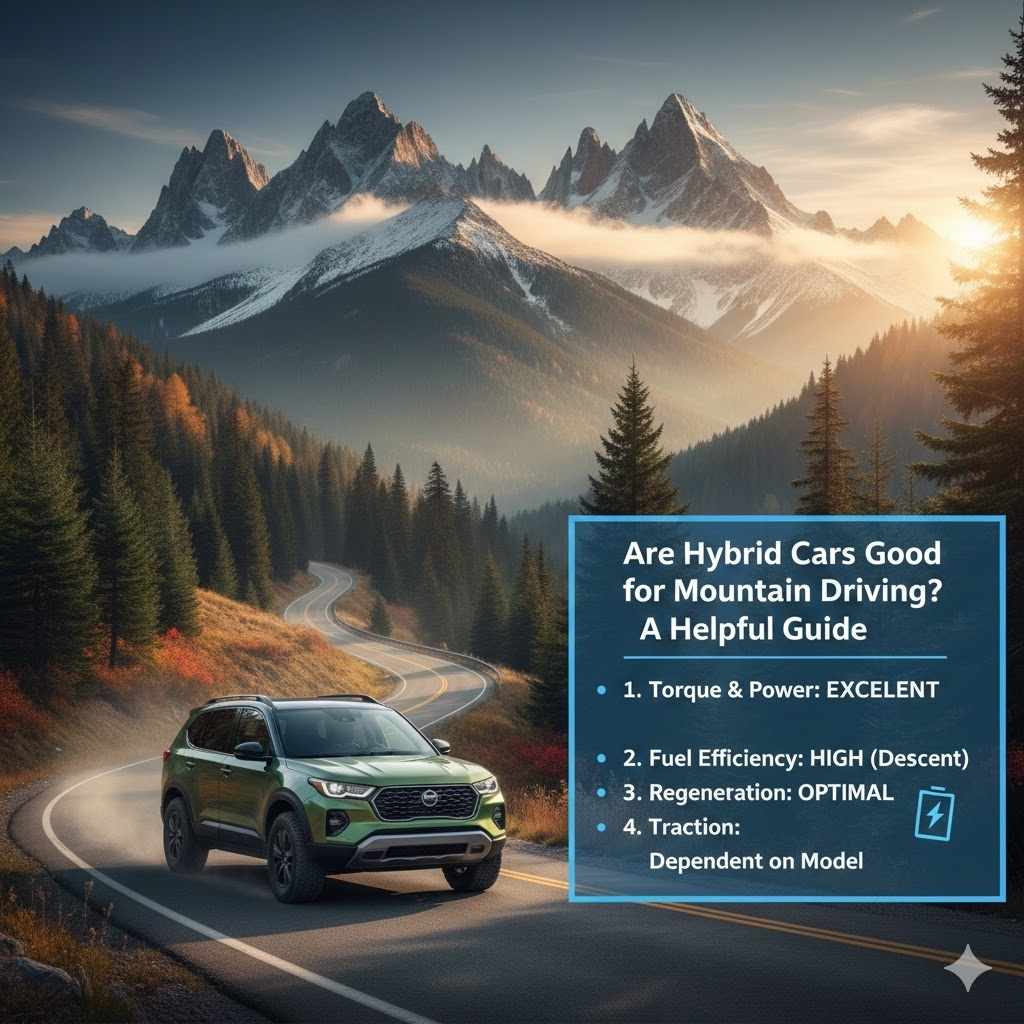
Are Hybrid Cars Good for Mountain Driving? A Helpful Guide
Thinking about a hybrid car and mountain drives? That’s great! It’s a common question, especially for those new to hybrids or driving in hilly areas. You might be wondering if a hybrid can handle those steep roads. The answer isn’t always simple, and there are many factors to consider. Don’t worry, though; it’s easy to grasp. We’re going to explore the question, Are Hybrid Cars Good for Mountain Driving? step-by-step, making sure everything is clear and straightforward. Let’s get started!
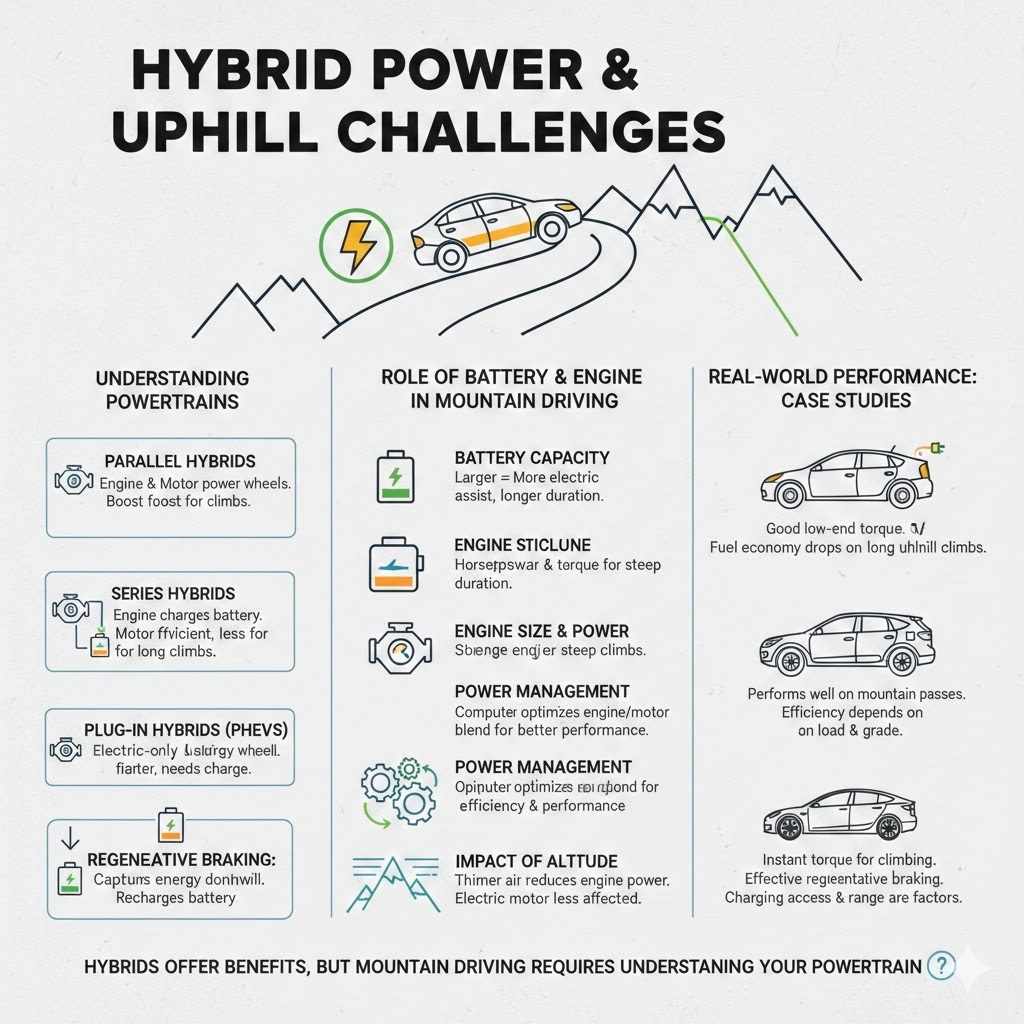
Hybrid Power and Uphill Challenges
Hybrid vehicles combine a gasoline engine with an electric motor and battery. This setup can provide many benefits, especially in city driving where regenerative braking helps to recharge the battery. However, mountain driving brings unique demands. Steep inclines require a lot of power, and prolonged uphill climbs can strain any car’s engine and battery system. This can lead to questions about a hybrid’s ability to maintain performance and efficiency in such conditions. We’ll explore how these systems interact and if hybrids are a good choice for those who love to explore the mountains.
Understanding Hybrid Powertrains
The core of a hybrid vehicle lies in its powertrain. There are several types, including parallel hybrids (where the engine and motor work together), series hybrids (where the engine charges the battery), and plug-in hybrids (which can be charged externally). Each type has its strengths and weaknesses, which affect their performance on mountain roads. The electric motor provides instant torque, which can be useful when accelerating uphill. But the battery’s capacity and the engine’s power output are critical factors when tackling long, steep climbs. Learning the basics of these systems is a great place to start.
- Parallel Hybrids: In this common design, the gasoline engine and electric motor can both power the wheels. The electric motor assists the engine, providing extra power for acceleration or uphill climbs, and increasing fuel efficiency. This blend helps when ascending challenging mountain roads, as the electric motor can provide a boost when needed, especially when combined with the gasoline engine.
- Series Hybrids: These hybrids use the gasoline engine mainly to generate electricity for the electric motor. The wheels are driven only by the electric motor. While efficient in city driving, these may struggle with prolonged uphill climbs, as the engine’s ability to keep up with the electricity demand could be a concern. This highlights the importance of matching the hybrid type to your driving environment.
- Plug-in Hybrids (PHEVs): PHEVs combine the best of both worlds, offering electric-only driving for short distances and a gasoline engine for longer trips. On mountain roads, the electric motor’s initial torque can be a benefit, and the gasoline engine kicks in when more power is needed. This dual system offers versatility but depends on battery charge and engine performance.
- Regenerative Braking: A key feature in hybrids, regenerative braking captures energy during deceleration and converts it back into electricity to charge the battery. Downhill mountain driving is ideal for this. However, this system’s effectiveness is limited by battery capacity and braking demands. This means that a continuous downhill slope may not allow for full battery recharge, but it still contributes to overall efficiency.
The Role of Battery and Engine in Mountain Driving
The engine and battery work together, but their roles change based on the situation. On flat roads or gentle slopes, the electric motor might do most of the work, saving fuel. When facing an uphill climb, the engine can provide the extra power needed, sometimes assisted by the electric motor. The battery’s size, or capacity, impacts how long the electric motor can offer assistance and how much power it has available. Therefore, the blend of engine and battery performance directly influences a hybrid’s performance in mountainous terrain.
- Battery Capacity: A larger battery provides more electric power, allowing the electric motor to assist the engine for a longer duration. When going uphill, a larger battery ensures the motor provides sufficient assistance when extra power is required.
- Engine Size and Power: The gasoline engine is a critical factor, especially on steep climbs. The engine’s horsepower and torque determine its ability to maintain speed and power as you go up hills. A stronger engine handles the demands of mountain driving, working with the electric motor to achieve the necessary power.
- Power Management: The car’s computer system carefully manages the power distribution between the engine and the electric motor, using sensors to track driving conditions, making adjustments to maximize efficiency and performance. How the power is managed affects how well the hybrid handles steep roads and challenging driving conditions.
- Impact of Altitude: The air is thinner at higher altitudes, which reduces the engine’s power output. This is a factor for any gasoline engine, affecting how well it performs. The electric motor’s performance is less impacted by altitude, which provides another advantage.
Real-World Performance: Case Studies
Let’s look at a few examples to see how hybrid cars fare in the mountains. These examples highlight real-world performance, showing how various hybrid models and driving styles affect the driving experience. They can help offer a practical comparison of what to expect when considering a hybrid for mountain driving.
- Toyota Prius on Mountain Roads: A popular choice for its fuel efficiency, the Toyota Prius has been tested on mountain roads. While it might not have the power of a larger SUV, its electric motor provides useful low-end torque for getting up inclines. Drivers typically report a noticeable drop in fuel economy during prolonged uphill driving, especially when compared to city driving. Its performance depends on driving style and road conditions.
- Ford Escape Hybrid in the Rockies: The Ford Escape Hybrid is another option. Some tests show this model performs pretty well on mountain passes, offering good fuel efficiency. The ability of the engine to work with the electric motor makes the climb manageable. However, the overall driving experience differs when fully loaded, or when facing very steep grades.
- Tesla Model 3 on High Altitudes: A Tesla Model 3, being an electric vehicle, showcases a different type of performance in the mountains. Instant torque helps with climbing, and its regenerative braking is quite effective on downhill stretches. However, factors like charging access and battery range significantly impact the driving experience.
Fuel Economy and Hybrid Efficiency in Mountainous Areas
Hybrid vehicles are known for their fuel efficiency, but how do they stack up in the mountains? Uphill driving and frequent braking influence a hybrid’s fuel economy. The efficiency benefits depend on driving style, the hybrid system, and the terrain. Comparing fuel consumption in mountainous areas can help drivers make informed decisions about their travel plans. It’s essential to understand how factors like regenerative braking and engine power work to affect the overall fuel efficiency of a hybrid in a mountainous environment.
Uphill Driving and Fuel Consumption
When going uphill, the gasoline engine works harder to provide power, and fuel consumption increases in a hybrid car. The electric motor can assist, reducing the engine’s workload, but its contribution is limited by battery capacity. The steeper the grade, the greater the demand on the engine, potentially reducing the fuel economy. The hybrid system’s design influences how effectively it manages power during uphill climbs, and the driver’s throttle input is also critical. These considerations are key when evaluating a hybrid’s performance in the mountains.
- Engine Load: The engine works harder to maintain speed or climb a hill. This results in greater fuel consumption. The electric motor helps to reduce the engine’s load, offering some fuel-saving advantages.
- Electric Motor Assistance: The electric motor provides extra power, making it easier for the vehicle to climb inclines. This assistance reduces reliance on the gasoline engine, improving fuel efficiency to some extent. The degree of assistance depends on the battery charge.
- Battery Drain: The battery provides power to the electric motor, and this can be consumed faster during uphill driving. If the battery is depleted, the gasoline engine becomes the primary power source.
- Driving Style: Aggressive driving, with rapid acceleration and deceleration, can decrease fuel economy. Smooth driving, maintaining a steady speed, helps preserve fuel. These habits significantly impact how efficiently you use fuel on mountain roads.
Regenerative Braking and Downhill Efficiency
Regenerative braking is a key benefit of hybrid vehicles, especially on downhill sections. It captures energy during braking and converts it back into electricity, recharging the battery. This system helps improve fuel economy by reusing energy that would otherwise be lost. The effectiveness of regenerative braking depends on the steepness and length of the downhill section and the battery’s charge level. The potential to enhance fuel efficiency and how often you can get a battery recharge will greatly improve how far you can drive in the mountains.
- Energy Capture: During downhill driving, regenerative braking helps capture energy. This energy goes back to recharge the battery.
- Battery Charging: Downhill sections give opportunities to recharge the battery. The amount of charge depends on the grade of the descent and the braking frequency.
- Braking Efficiency: The regenerative braking system decreases reliance on the vehicle’s friction brakes, extending the life of the brakes.
- Driving Conditions: The environment can impact regenerative braking, for example, on wet roads, where traction is limited. The system may reduce its regenerative capability to maintain stability.
Comparing Fuel Economy: Gas vs. Hybrid vs. Electric
Comparing fuel economy allows you to see how different types of vehicles perform in the mountains. This helps drivers assess the long-term cost-effectiveness and sustainability of each type. Gas cars typically suffer a significant drop in fuel efficiency when climbing hills. Hybrid cars usually perform better, thanks to the combined engine and electric motor. Fully electric cars have different considerations, such as range anxiety and charging availability. The results of these comparisons can help determine which is the best vehicle for specific needs and the most cost-effective option.
| Vehicle Type | Uphill Fuel Efficiency | Downhill Fuel Efficiency | Overall Performance |
|---|---|---|---|
| Gasoline Car | Significantly reduced | Moderate | Dependent on engine size |
| Hybrid Car | Reduced, but typically better than gas | Good, due to regenerative braking | Balances performance and efficiency |
| Electric Car | Impacted by battery drain | Excellent, due to regenerative braking | Dependent on range and charging availability |
According to the U.S. Department of Energy, hybrid cars can achieve fuel savings of up to 30% in city driving. However, the fuel economy benefits of a hybrid diminish on highways and steep grades.
Driving Techniques and Best Practices in Mountainous Terrain
How you drive a hybrid in the mountains matters as much as the car itself. Employing certain techniques helps maximize performance and fuel efficiency, while also ensuring safety. Learning to handle steep inclines, manage regenerative braking, and monitor performance will offer a better mountain driving experience. These driving practices help drivers adapt to varied road conditions and get the most out of their vehicle.
Optimizing Performance on Uphill Climbs
When going uphill, managing the hybrid system effectively is vital. You should use techniques like gentle acceleration to avoid excessively taxing the engine. Monitoring the car’s power delivery system can help you balance performance and efficiency. Being aware of the battery’s state and anticipating upcoming inclines enables you to maintain optimal performance and fuel economy while ascending a mountain. Applying these methods can help you drive up hills effectively and responsibly.
- Gentle Acceleration: Avoid quick acceleration, as this demands a lot of power. Smooth and gradual acceleration optimizes the engine and electric motor’s efficiency.
- Power Meter Management: Monitor the power meter (if your car has one) to stay in the most efficient zone. This feedback helps in balancing performance and fuel consumption, letting you maximize efficiency.
- Battery Level Awareness: Keep an eye on the battery level. If the battery is low, the engine will need to work harder. Planning to use the electric motor’s help when it’s charged is important.
- Gear Selection: If your hybrid has a manual mode or a gear selection, choose a gear that maintains the right balance between power and engine speed. This can optimize the car’s performance.
Making the Most of Regenerative Braking
Downhill driving provides a chance to make the most of regenerative braking. Anticipating turns and using the brakes smoothly helps to recover energy and recharge the battery. Being aware of road conditions and adjusting your driving style improves safety and efficiency. These practices also extend the life of brake components and helps to enhance fuel economy.
- Anticipatory Braking: Anticipate turns and downhill stretches. Applying the brakes gently helps capture energy.
- Smooth Braking Technique: Avoid abrupt braking. Use smooth and controlled braking actions for better regenerative performance and driver safety.
- Using ‘B’ Mode: Some hybrids have a “B” mode, which increases regenerative braking. Utilizing this mode on downhill sections maximizes energy capture.
- Road Condition Awareness: Always consider road conditions. Reduce braking in slippery conditions to avoid losing control of the vehicle.
Monitoring Performance and Adjusting Driving
Regularly monitoring your car’s performance provides information that helps make adjustments to your driving style. Keep an eye on your fuel economy and battery levels and engine temperature. This information can reveal driving habits or mechanical issues that influence efficiency and vehicle performance. By staying informed and making needed corrections, you can enjoy a safe, efficient, and reliable driving experience in the mountains.
- Fuel Economy Tracking: Monitor your fuel economy to see how your driving affects consumption. This data is useful to adjust your driving.
- Battery Level Monitoring: Keep an eye on the battery level, paying attention to how it impacts your driving range and performance. A low battery influences fuel efficiency and the assistance from the electric motor.
- Engine Temperature: Watch the engine temperature gauge. This can warn you of any issues that affect performance, especially during prolonged uphill climbs.
- Vehicle Maintenance: Always keep up with scheduled maintenance, making sure your car runs at its peak performance. Routine upkeep will affect how your vehicle works in every situation, including mountain driving.
Maintenance and Considerations for Mountain Driving
Taking care of your hybrid, particularly when you frequently drive in the mountains, will help ensure its longevity and reliable performance. Mountain driving can be hard on a car, and you may need to take special steps to get the best performance and prevent potential problems. Maintaining your car’s components, understanding its limitations, and preparing for mountain driving are all essential parts of car ownership.
Essential Maintenance for Hybrid Vehicles
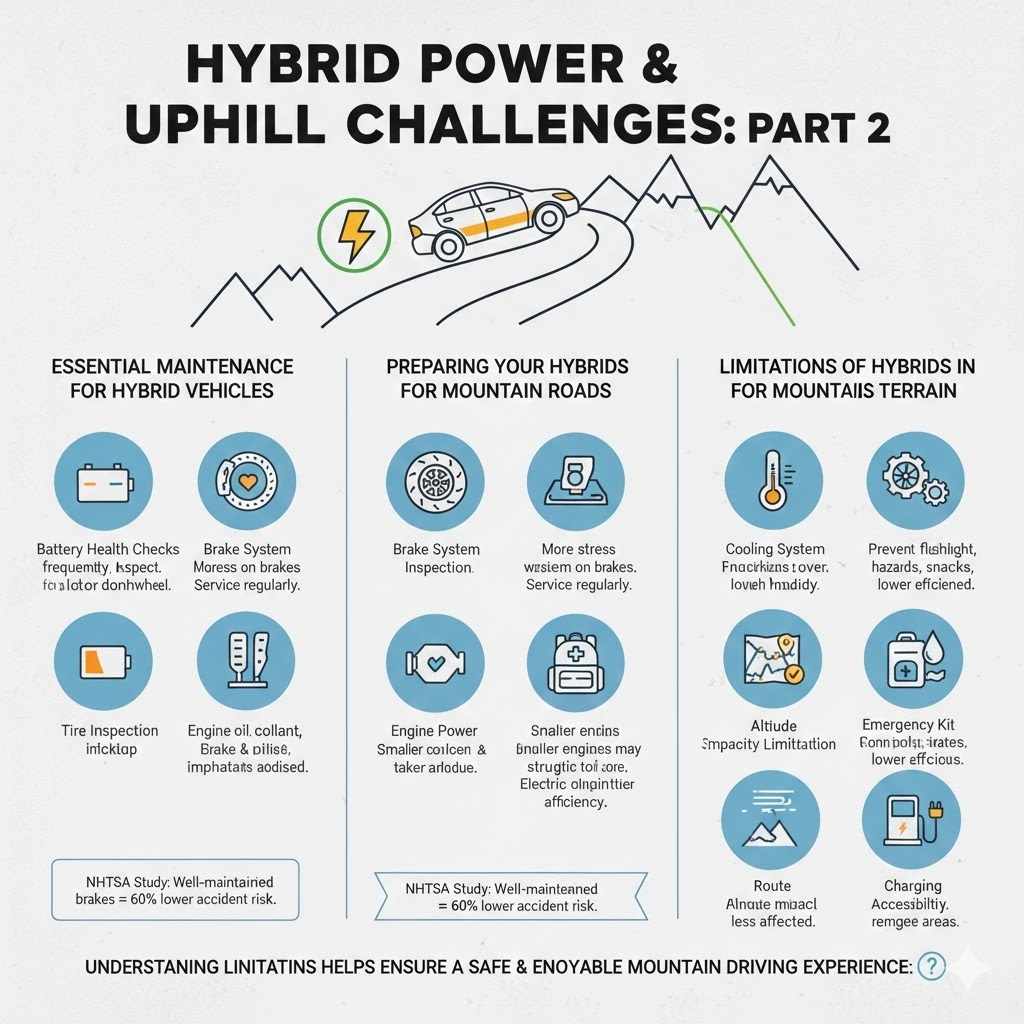
Regular maintenance is important for any car, but for hybrids, some elements need extra care, especially if you drive them in the mountains. Routine maintenance includes fluid checks, regular inspections of your brakes, and battery health checks. Following these suggestions can improve both the driving experience and the lifespan of your hybrid.
- Battery Health Checks: Inspect the hybrid battery frequently. The battery’s health affects electric motor performance, which is important for climbing mountain roads.
- Brake System Inspection: Mountain driving puts more stress on brakes. Be sure to have your brake pads, rotors, and the braking system checked and serviced regularly.
- Cooling System Check: Mountain driving can cause the engine and the hybrid system to heat up. Check your cooling system, and make sure that it’s working well and can keep the engine at a safe operating temperature.
- Fluid Checks: Regular checks of all fluids, like engine oil, coolant, and brake fluid, are important for overall performance. Be sure to use the proper fluids as advised by the manufacturer.
Preparing Your Hybrid for Mountain Roads
When you prepare your hybrid for mountain driving, you can reduce any risks. You can get the most out of your car and reduce any potential for problems. This includes looking over the tire condition, making sure your brakes are operating correctly, and packing emergency supplies. These simple steps will help you enjoy safer and more enjoyable mountain drives.
- Tire Inspection: Before your mountain trip, check your tires for wear and inflation. Appropriate tires are very important for handling mountain roads safely, especially in changeable weather.
- Brake System Checkup: Be sure your brakes are in good working order. Have a mechanic check them before your mountain adventure, as mountain driving can be hard on brakes.
- Emergency Kit: Always pack an emergency kit with items like a first-aid kit, a flashlight, water, and some snacks. Also include any car tools you may need.
- Route Planning: Plan your route. Know where the charging stations are and any potential hazards on the road. This will help you manage your battery life and give you a more relaxed driving experience.
A recent study by the National Highway Traffic Safety Administration (NHTSA) showed that vehicles with well-maintained brakes have a 60% lower risk of being involved in an accident.
Limitations of Hybrids in Mountainous Terrain
While hybrids offer many advantages, they have limitations when driving in the mountains. Battery capacity limitations, engine power, and the effects of altitude and charging access can influence performance. Understanding the limitations helps drivers to adjust expectations and plan their routes. It can also help to avoid potential problems during driving. Recognizing these factors will provide a safe and positive experience.
- Battery Capacity Limitations: The battery offers limited electric power. On long uphill climbs, the battery may deplete. The engine takes over, decreasing overall fuel efficiency.
- Engine Power: Some hybrid engines are smaller than traditional gasoline engines. The engine may struggle with prolonged or steep ascents, limiting performance.
- Altitude Impact: High altitudes reduce engine performance, which influences how well the car climbs hills. Electric motors are less affected, but overall power may still be affected.
- Charging Accessibility: Charging stations are not always readily available in remote or mountainous areas. This may limit the ability to fully take advantage of the electric motor.
Frequently Asked Questions
Question: Are hybrid cars good for long uphill climbs?
Answer: Hybrids can handle uphill climbs, but the performance depends on the type of hybrid, the engine’s power, and the battery capacity. Plug-in hybrids often perform well, as they can rely on both electric and gasoline power. However, prolonged climbs can decrease fuel efficiency.
Question: Does altitude impact a hybrid car’s performance?
Answer: Yes, altitude can impact performance. The engine’s output may decrease in higher altitudes. Electric motors are less affected, but overall performance might still be limited, especially if the battery is depleted.
Question: How does regenerative braking work on downhill sections?
Answer: Regenerative braking captures energy when you slow down or coast downhill. This energy is then converted back into electricity and used to recharge the battery. This helps improve fuel economy.
Question: What maintenance is important for hybrids in mountain driving?
Answer: Essential maintenance includes regular battery health checks, brake system inspections, cooling system checks, and fluid checks. Mountain driving puts added stress on these systems, so more frequent inspections are wise.
Question: Are there any limitations to driving a hybrid in the mountains?
Answer: Yes. Limitations include battery capacity, engine power, the effects of altitude on engine performance, and the availability of charging stations in certain areas.
Final Thoughts
So, Are Hybrid Cars Good for Mountain Driving? The answer is complex, but in many cases, yes. The benefits of fuel efficiency and regenerative braking can be very helpful, especially on the descent. Hybrids offer a great mix of power and efficiency, which can make them a great choice. But the type of hybrid, the specific engine, and driving habits can influence the experience. Keep in mind any limitations, such as potential decreases in performance on very steep, continuous inclines. Before you go, be sure to plan your route, know the conditions, and prepare your car for any adventure. By doing this, you can better enjoy the journey.