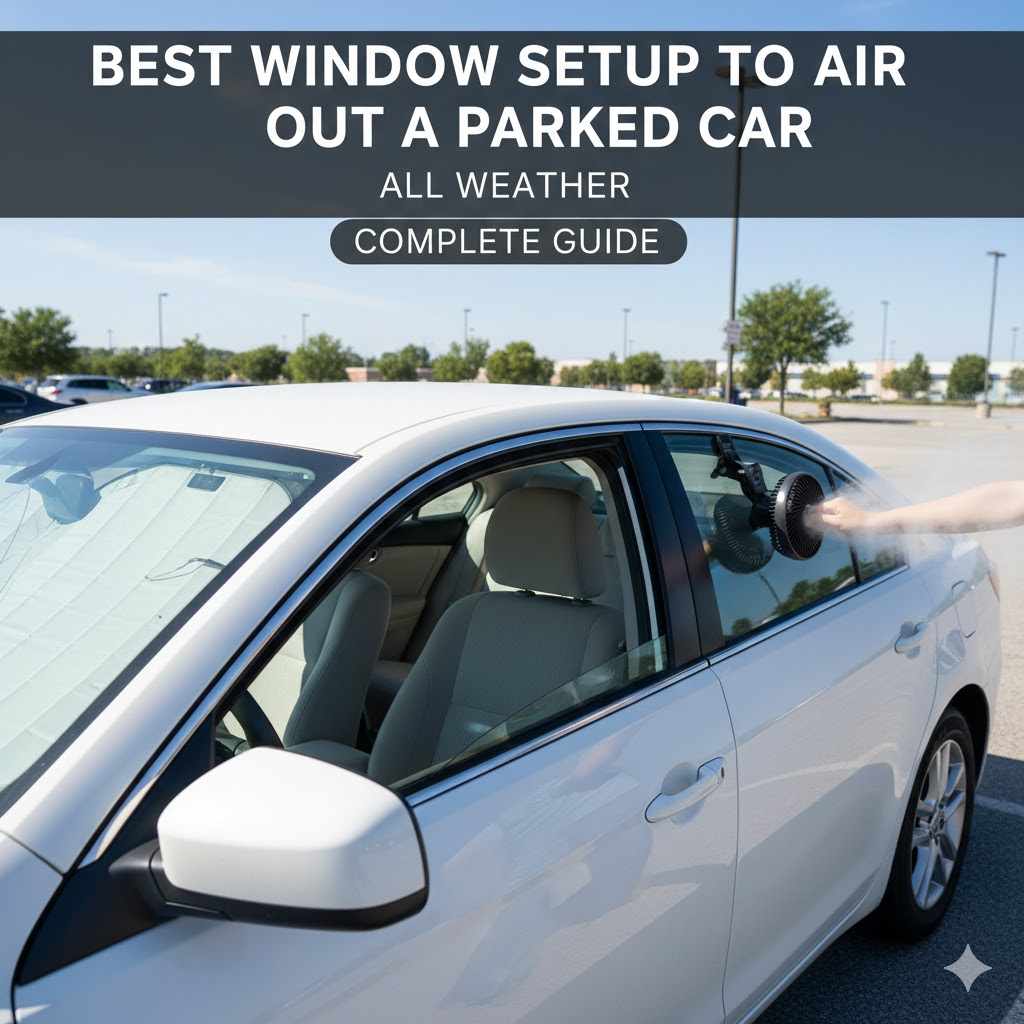
Best Window Setup to Air Out a Parked Car
Figuring out the best window setup to air out a parked four-door car can feel tricky when you first start. You want to let out that hot air quickly, but you’re not sure if all windows should be open or just a crack. It’s like a small puzzle many people wonder about.
Don’t worry, this is super common, and we’ll show you a simple way to get it right. We’ll make it easy to understand so your car cools down fast. Let’s explore the best way to do this.
How To Set Up Your Car Windows
This section explains the most effective way to open your car windows to let out hot air. We will cover the science behind why certain setups work better than others. You’ll learn the basic principles of airflow and how they apply to your vehicle.
This knowledge will help you make your car more comfortable on hot days.
Understanding Airflow Principles
When a car sits in the sun, the air inside gets trapped and heats up. This trapped air expands and becomes less dense, creating a greenhouse effect. To cool the car down, you need to
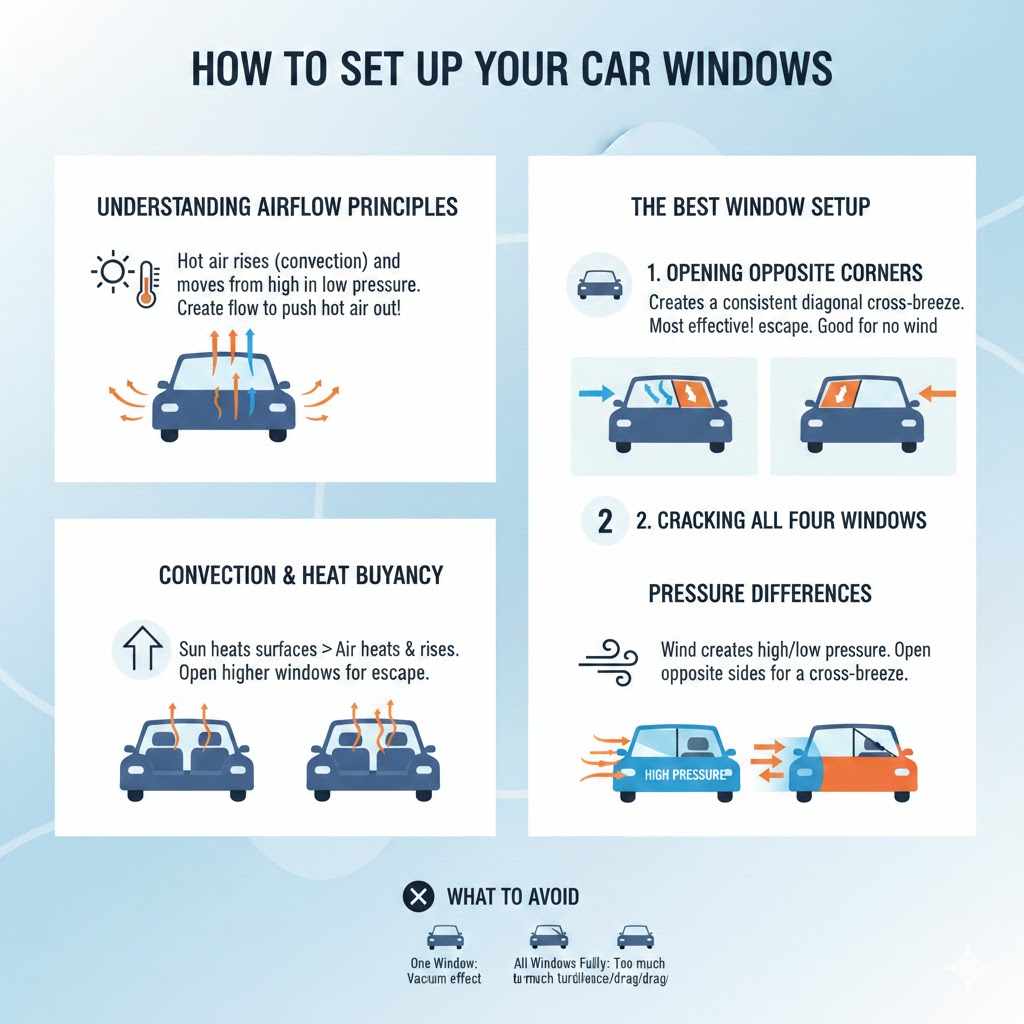
Air tends to move from areas of high pressure to areas of low pressure. When you open windows, you create pathways for air to move. The goal is to create a consistent flow that pushes hot air out and draws cooler air in.
Think of it like opening a door and a window in a room. The air will naturally move through the room, helping to circulate and refresh it. In a car, the same idea applies, but the limited space and shapes of the windows create unique challenges.
Convection and Heat Buoyancy
Heat makes air rise. This is called convection. Hot air inside your car rises towards the ceiling.
When you open windows, especially higher ones, this hot air has an escape route.
The sun heats the car’s interior surfaces, like the seats and dashboard. These surfaces then heat the air around them. This warm air then rises.
If there’s an opening above, the hot air can escape naturally due to its lower density compared to cooler air.
This natural rising of hot air is a powerful force. By strategically opening windows, we can take advantage of this phenomenon to ventilate the car more effectively. It’s a simple physics principle that makes a big difference.
Pressure Differences
Wind outside can also play a role. Even a slight breeze can create pressure differences around your car. This can help push air through your open windows.
If there’s a wind, the side of the car facing the wind will have slightly higher pressure. The side away from the wind will have lower pressure. Air will naturally flow from the high-pressure side to the low-pressure side if there are openings.
This means if you open windows on opposite sides of the car, you can create a cross-breeze. This cross-breeze actively pulls air through the car, helping to clear out stagnant hot air faster than just letting it rise.
The Best Window Setup Explained
The most effective method involves a combination of window openings. It’s not always about opening everything wide open. Sometimes, a more strategic approach works best.
Opening Opposite Corners
The top recommendation is to open the two windows diagonally opposite from each other. For example, open the front passenger window and the rear driver-side window.
This setup takes advantage of both convection and pressure differences. The hot air rising will naturally exit through the higher rear window. Any breeze will help push air through the front window, creating a flow.
This creates a gentle but consistent airflow. It pulls the hot air out and brings cooler air in without creating too much turbulence. This method is often more efficient than opening all windows or just one side.
Cracking All Four Windows
Another good option, especially if there’s no wind, is to crack all four windows just a tiny bit. This allows for a steady escape of the hottest air at the top of the car.
Even a gap of a centimeter or two can make a difference. It allows the warmest air, which is at the top of the car’s interior, to escape. This is especially helpful if you have a sunroof and can crack that slightly too.
While not as dynamic as the opposite corner method, cracking all windows provides a consistent, passive ventilation. It prevents the inside from becoming an oven. It’s a simple, low-effort way to improve comfort.
What to Avoid
Avoid opening just one window, especially on a windy day. This can sometimes create a vacuum effect, trapping hot air inside. It can also make the car noisy if you’re driving.
Opening all windows fully wide open might not be the most efficient. It can create too much wind resistance if you’re moving. It might also let in more dust or rain if the weather is unpredictable.
The key is to create a controlled flow. You want air to move through the car, not just swirl around or be blocked.
Factors Affecting Ventilation
Several things can influence how well your car ventilates. Understanding these can help you adjust your strategy for the best results.
Car Design and Window Size
The size and shape of your car’s windows matter. Larger windows offer more surface area for air to pass through. The angle of the windows also affects airflow.
Slightly angled windows, common in modern cars, can help direct airflow. Think of how a boat’s hull cuts through water; similar principles apply to air moving around a car.
A car with a more aerodynamic design might also experience different airflow patterns compared to a boxier vehicle. The overall shape of the car body influences how wind interacts with the windows.
Sunroof and Vents
Many cars have sunroofs or roof vents. These can be excellent tools for ventilation. A slightly open sunroof can allow hot air to escape from the highest point of the cabin.
These features are designed to aid in cabin ventilation. They work by creating an additional exit point for air. If your car has one, consider using it in conjunction with your window setup.
For instance, cracking the sunroof and one or two windows can create a very effective cooling system. The sunroof acts as an exhaust, while the windows provide the intake.
External Conditions
The weather outside your car greatly impacts how well it ventilates. Wind speed and direction are major factors.
On a calm day, you rely more on convection (hot air rising). On a windy day, you can use the wind to create a cross-breeze.
Even temperature matters. If the outside air is already very hot, opening windows helps, but the incoming air is also warm. The goal is to create airflow to prevent it from getting even hotter inside.
Wind Speed and Direction
When there’s a strong wind, opening windows on the side facing the wind and the opposite side can create a powerful draft. This will clear the hot air out very quickly.
If the wind is coming from the front, opening the front windows slightly and the rear windows slightly can help. The wind will push air in through the front.
However, if the wind is very strong, you might want to keep openings smaller to avoid too much noise or instability.
Car Color and Interior Material
While not directly related to window setup, a car’s color and interior materials affect how quickly it heats up. Darker cars absorb more solar radiation.
Lighter-colored interiors also reflect more sunlight, staying cooler. Materials like leather can get much hotter than fabric.
Even with the best window setup, a black car on a sunny day will still get very hot. Ventilation helps, but reducing heat absorption in the first place is also key.
Practical Scenarios and Examples
Let’s look at some real-world situations and how to apply the best window setup. These examples show how the principles work in practice.
Scenario 1 Waiting in a Parking Lot
You’ve just parked your four-door car at the grocery store on a sunny afternoon. The sun is beating down, and you’ll be back in about an hour. You want to ensure the car isn’t an oven when you return.
Action: Open the front passenger window about two inches and the rear driver-side window about two inches. This diagonal setup creates a small but effective airflow. It allows hot air to escape from the top rear and cooler air to enter the front.
This prevents the car from reaching extreme temperatures while you shop.
Scenario 2 Leaving Kids or Pets Safely
You need to run into a store for just a few minutes, and you can’t take your dog or child with you. Leaving the car running with AC is an option, but you prefer to rely on ventilation if possible. You are concerned about safety.
Action: If the temperature is very high and you are concerned about extreme heat buildup, consider cracking all four windows about one inch each. Also, slightly crack the sunroof if available. This provides maximum passive ventilation.
However, it’s crucial to monitor the temperature closely. For extended periods or very hot weather, using the AC or finding shaded parking is safer. Never leave children or pets unattended in a car, even with windows open.
Example 1: The Power of Cross-Breeze
Sarah parked her car in a breezy beach parking lot. She opened her front driver-side window halfway and her rear passenger-side window halfway. The steady ocean breeze came in the front and flowed through the car, exiting the rear.
Within 30 minutes, the interior felt significantly cooler than if she had just opened one window. The air felt fresh, not stuffy. She noted the airflow was noticeable but not uncomfortably windy.
Example 2: Calm Day Ventilation
John was in a downtown area with very little wind. He decided to try cracking all four windows of his sedan just a finger’s width. He also slightly tilted his sunroof.
Even without wind, the hot air trapped at the top of the car found its escape through the higher openings. The car still got warm, but it wasn’t as stifling as it would have been with all windows closed. This passive ventilation helped prevent extreme heat buildup.
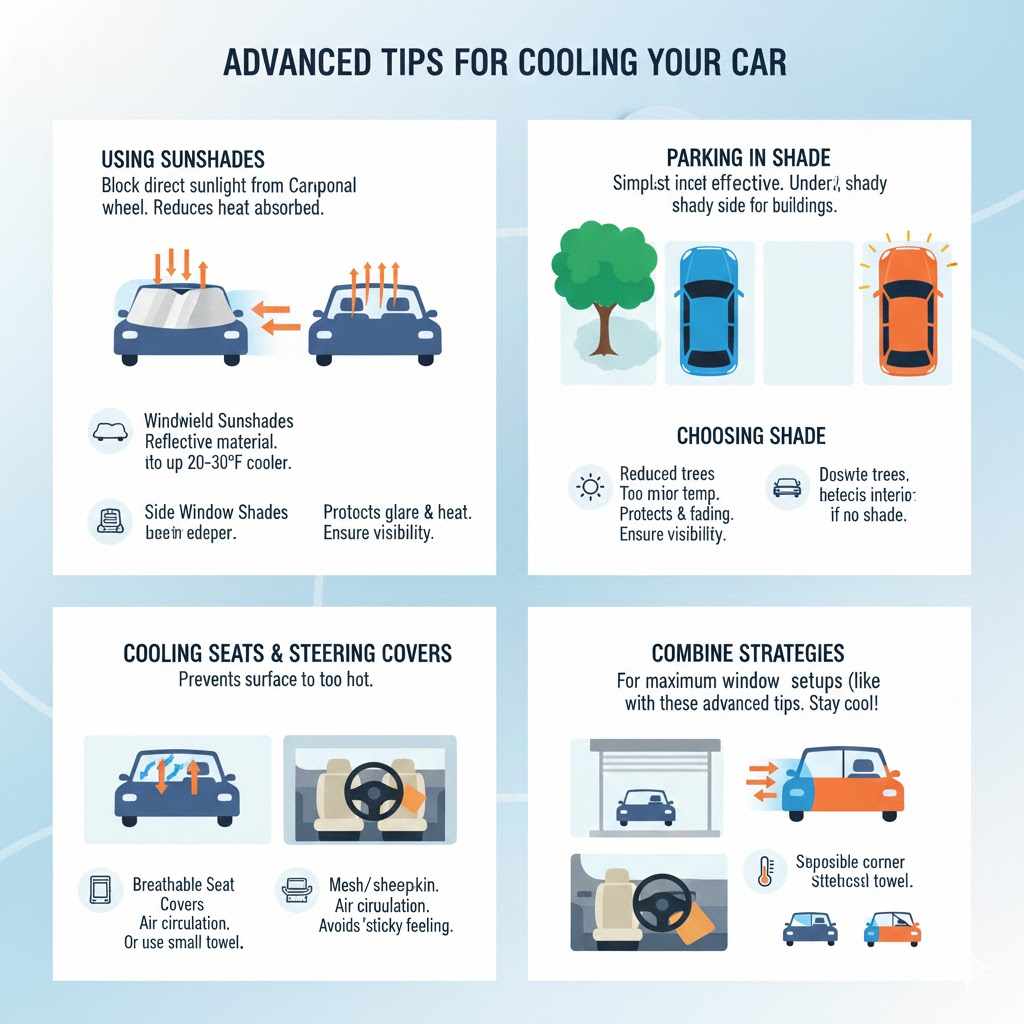
Advanced Tips for Cooling Your Car
Beyond just opening windows, there are other strategies to help keep your car cooler. These tips can work in conjunction with your window setup.
Using Sunshades
A good quality sunshade for your windshield is a must. It blocks direct sunlight from hitting your dashboard and steering wheel. This is one of the most effective ways to reduce the heat absorbed by your car’s interior.
Some people also use shades for side windows. These can be particularly helpful for passengers. They reduce glare and heat buildup.
Windshield Sunshades
These shades are typically made of reflective material. They are designed to fit snugly inside your windshield. They reflect sunlight away from the car.
Statistics show that using a windshield sunshade can reduce interior temperatures by up to 20-30 degrees Fahrenheit. This is a significant difference.
Side Window Shades
These can be mesh or solid. Mesh shades allow some visibility while blocking sun. Solid shades offer more complete blockage.
When choosing side window shades, ensure they are safe and do not obstruct your view while driving. For parked cars, this is less of a concern, but always check local regulations.
Parking in Shade
This is the simplest and most effective method. If possible, always choose a shaded parking spot. Under trees, in a parking garage, or on the shady side of a building makes a huge difference.
Even a few degrees difference in ambient temperature can drastically reduce how hot your car gets. It also reduces wear on your car’s interior from constant sun exposure.
Benefits of Shaded Parking
Reduced interior temperature is the most obvious benefit. This means less time needed for cooling down the car once you get back in.
It also protects your car’s interior from fading and cracking. Prolonged exposure to direct sunlight can degrade plastics, leather, and fabrics over time.
Choosing the Best Shade
Look for mature trees that offer dense canopies. Parking garages provide complete protection. If no shade is available, consider using reflective window shades diligently.
Cooling Seats and Steering Wheel Covers
Specialized seat covers can help. Some are made of breathable materials like sheepskin or mesh. Others have cooling gel inserts.
A steering wheel cover can prevent it from becoming too hot to touch. This makes getting back into the car more comfortable.
Breathable Seat Covers
These covers are designed to allow air circulation. They can prevent that sticky feeling you get from sitting on hot vinyl or leather seats.
Mesh covers are widely available and are generally affordable. They can significantly improve comfort on hot days.
Steering Wheel Covers
These can be made of fabric, leather, or other materials. They create a barrier between your hands and the hot steering wheel.
Some drivers even keep a small towel handy to wipe down hot surfaces before driving.
Frequently Asked Questions
Question: Should I open all windows for the best setup to air out a parked four-door car
Answer: While opening all windows can help, the diagonal corner method (e.g., front passenger and rear driver-side) is often more efficient. Cracking all four slightly is also a good option, especially on calm days.
Question: Does wind direction matter for the best window setup
Answer: Yes, wind direction is very important. Open windows on opposite sides to create a cross-breeze. If there’s a strong wind, a strategic opening can significantly speed up cooling.
Question: How much should I open the windows
Answer: For the best window setup to air out a parked four-door car, a few inches is usually enough. Even a small crack can create effective airflow. Avoid opening them fully unless necessary.
Question: Can cracking windows prevent a car from getting dangerously hot
Answer: Cracking windows significantly helps reduce heat buildup, making the car much more bearable. However, on extremely hot days, it might not prevent dangerously high temperatures. Always monitor the heat.
Question: Is the sunroof useful for ventilation
Answer: Yes, a sunroof is very useful. Cracking it allows hot air to escape from the highest point of the car, which is where the hottest air collects. It works well with other window openings.
Summary
Achieving the best window setup to air out a parked four-door car is simple. Focus on creating airflow using diagonal window openings or cracking all windows slightly. Consider wind, car design, and using sunshades to further reduce heat.
With these tips, your car will be cooler and more comfortable.