Can A Passenger Smoke Weed In A Car? Essential Answer
In almost all US states and under federal law, it is generally illegal for a passenger to smoke or consume cannabis in a moving or parked vehicle, regardless of whether the driver is partaking. Laws treat open consumption in a vehicle like open containers of alcohol. Consult local laws immediately.
It’s a common question that pops up as laws change across the country: If I’m just a passenger, can I legally smoke weed in the car? This can be confusing, especially when you’re trying to enjoy a trip without breaking the law. When it comes to vehicles, rules are often much stricter than they are in your home. Getting this wrong can lead to fines, legal trouble, or even vehicle seizure.
Don’t worry! As your trusted automotive guide, I’m here to break down these complex rules into simple, easy-to-understand steps. We will look at the federal standards, common state variations, and what you need to know to keep your ride safe and legal, no matter who is riding shotgun. Let’s clarify exactly when and where consumption in a vehicle is a bad idea.
Why Vehicles Have Special Cannabis Rules
You might wonder why smoking in the passenger seat is treated differently than smoking in your own backyard, especially if you are not the driver. The reason comes down to public safety and established legal precedents that treat cars differently than static locations.
The Vehicle as a “Public Place”
In many legal interpretations, a vehicle—even when parked on private property—is treated similarly to a public space because it is easily accessible to the public or travels on public roadways. Law enforcement often views open consumption inside a car, even by a passenger, as creating a risk of impaired driving or public nuisance.
The “Open Container” Analogy
The most crucial comparison drivers need to understand is the “open container” rule, usually associated with alcohol. Even if a passenger opens a beer and doesn’t drink it, if you are driving, it is often illegal to have an open container in the passenger compartment. Cannabis laws often mirror this structure. The mere presence of an actively consumed product (smoking) in the vehicle cabin is usually prohibited for everyone, not just the operator.
Federal Law: The Unchanging Rule
Before diving into state specifics, it’s vital to understand the highest authority: the U.S. Federal Government. As of today, cannabis remains classified as a Schedule I controlled substance under the Controlled Substances Act. This means that federal law prohibits its use, sale, or possession anywhere in the country, regardless of what state laws say.
This federal prohibition has major real-world consequences for vehicle use:
- Interstate Travel: If you cross state lines, even if cannabis is legal where you started, you are breaking federal law by having it in the car.
- Federal Property: Traveling on federal land (like national parks or near military bases) means federal rules apply, making passenger consumption illegal.
- Airline Travel: If you drive to an airport, federal jurisdiction takes over immediately on airport grounds.
State Laws: The Deciding Factor for Passengers
Since marijuana has been legalized for recreational or medicinal use in many states, the specific rules for passengers vary widely. Generally, state laws focus on two main areas: Where the car is, and what the driver is doing.
Scenario 1: Consumption While the Car is Moving
This is the most straightforward scenario, and the answer is almost universally No everywhere, even in fully legal states like Colorado or California.
If the vehicle is operating (even slowly driving to a parking spot), consumption by anyone is treated as public consumption or, worse, as a factor contributing to impaired driving conditions. The passenger smoking can result in a citation for the passenger and potentially a more severe charge for the driver if the officer suspects impairment or illegal transfer.
Scenario 2: Consumption While Parked (State Variations)
This is where the confusion often lies. Does the legality change if you are pulled over in a private parking lot? It depends entirely on the state’s definition of “public use” or “open container.”
Here is a look at how some progressive states handle open consumption in a parked car:
| State Example | General Passenger Rule (Parked) | Reasoning/Key Factor |
|---|---|---|
| Colorado | Generally Prohibited | Consumption in a vehicle is often treated the same as open containers of alcohol—illegal in the passenger area. |
| California | Generally Prohibited | Possession and consumption in a vehicle are illegal under vehicle codes, even if parked, unless in specific licensed transport situations. |
| Washington | Generally Prohibited | Similar to alcohol, open consumption is banned in automobiles. The focus is on preventing odor and public visibility. |
| New York | Strictly Prohibited (Even Odor) | New York has strict rules focusing on preventing detectable use inside the vehicle cabin. |
Source Note: State laws change frequently. Drivers must always check the specific vehicle code for the municipality they are visiting. For official state statute comparisons, you can sometimes check legislative resource sites like those maintained by state universities (though always verify with local police or legal counsel for definitive advice).
The Role of the Driver: Responsibility Remains
Even if the passenger is the one holding and lighting the product, the driver holds ultimate responsibility for everything that happens inside their vehicle. If a passenger smokes, here is what can happen to the driver:
- Accessory to the Crime: If the driver knows the passenger is consuming cannabis in the car, they can be cited as an accessory to illegal consumption in a vehicle, even if they were sober.
- Impaired Driving Perception: The scent of smoke inside the car instantly creates reasonable suspicion for law enforcement. If an officer smells smoke, they are legally justified in investigating everyone further, questioning the driver’s sobriety, and potentially asking everyone to exit the vehicle.
- Vehicle Impoundment: In some jurisdictions, the use of a vehicle to facilitate the commission of a drug offense (even minor consumption) can lead to temporary seizure or impoundment of the car.
Understanding “Open Consumption” Laws
The concept of “open consumption” or “open use” is the legal barrier preventing passengers from smoking. This law is designed to maintain order and prevent public nuisances.
What legally constitutes “consumption” in a vehicle?
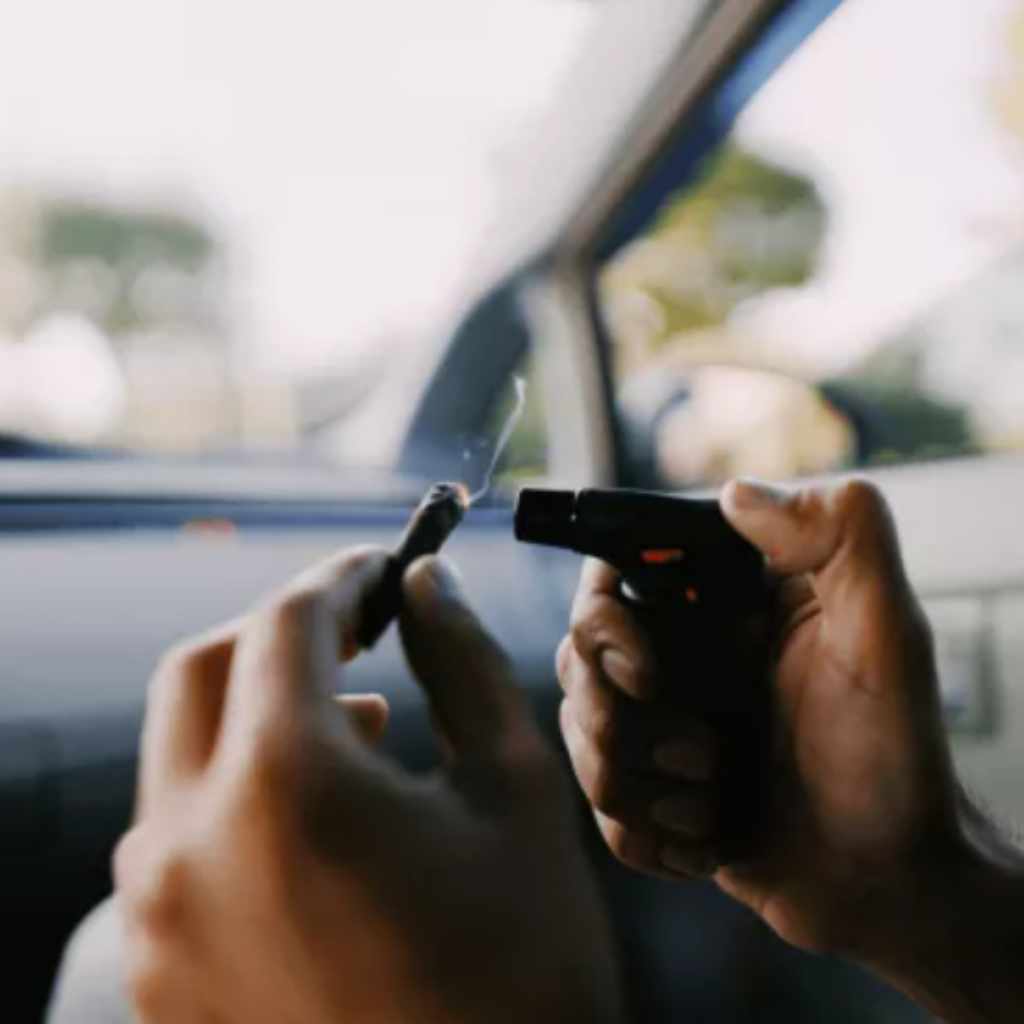
- Smoking: Lighting up any cannabis product (flower, cigarillo, etc.) is the most obvious violation.
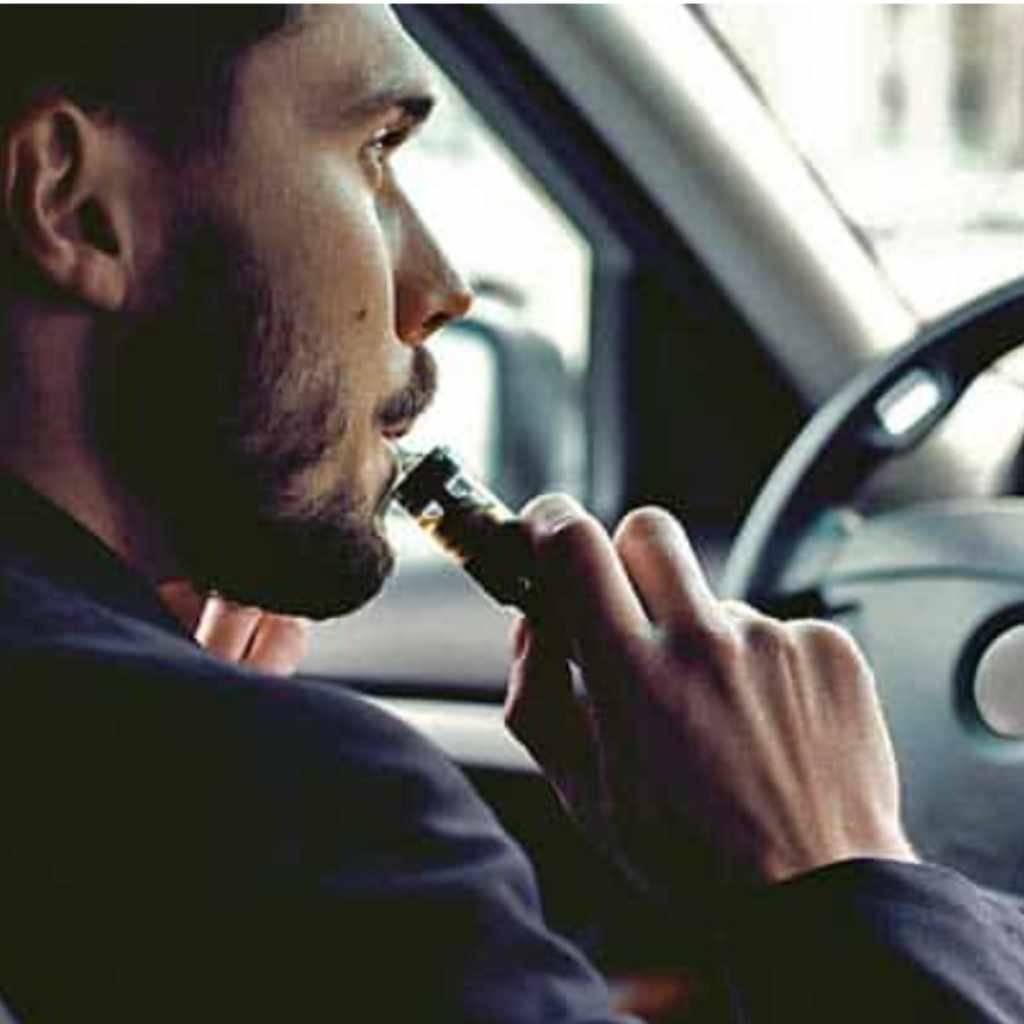
- Vaping: In many places, vaping within the car cabin triggers the same restrictions as smoking, as it releases visible aerosols or strong odors associated with cannabis.
- Edibles/Tinctures: Generally, eating an edible or taking a tincture while parked and sober is less likely to draw immediate legal action than smoking, provided an open container law for cannabis products doesn’t exist in that state, and the driver is not impaired. However, even edibles can be problematic if the driver is consuming them or if the packaging is open and easily accessible.
Practical Steps for Passengers to Stay Safe and Legal
If you are a passenger and want to enjoy cannabis legally (where permitted), you must remove the act of consumption from the vehicle environment entirely. Here is the safest protocol:
Step 1: Plan Ahead
Know the laws of your destination state before you leave. If you know you plan to use, ensure you have secured it legally (e.g., in a sealed, tamper-proof bag). See a good resource like the NORML State-by-State Legal Guide for the latest updates on where you are traveling.
Step 2: Designated Consumption Area
Never consume inside the car. If you are taking a break during a road trip in a legal state, pull over completely and exit the vehicle.
- Parking Location: Park in a designated private lot if possible, or a secluded, legal public area away from traffic.
- Away from the Car: Step a safe distance away from the vehicle before consuming. If an officer approaches, there should be absolutely no smoke, vapor, or direct evidence of consumption near the car.
Step 3: Secure Storage
When the cannabis is not actively being used, it must be stored securely. Follow these storage best practices:
- Closed Container: Place products in their original, sealed, child-resistant packaging.
- Trunk/Hatchback: The safest place for any non-medical cannabis stored during transit is the trunk or a locked container far from the passenger compartment. This mimics the storage rules for alcohol containers.
- No Accessibility: Ensure the product cannot be reached by the driver or any passenger while the car is operational.
Impact on Vehicle Insurance and Driving Records
Even a minor citation involving cannabis consumption in a vehicle—even if it’s just for the passenger—can have long-term consequences that affect you as a driver or vehicle owner.
Insurance Implications
If a police stop escalates—perhaps because the driver seems slightly off, or if the officer mistakenly believes the passenger’s activity is related to the driver’s state—any resulting charge can be flagged on your record. Insurance companies often view drug or alcohol-related driving incidents very seriously. Having any drug-related infraction tied to your vehicle activity, even as a passenger, could potentially lead to premium increases down the line if the incident involved the driver in any way.
The Importance of Sobriety for the Driver
The most important element here is the driver’s sobriety. If the driver is impaired, the passenger smoking weed in the car makes an already illegal situation exponentially worse. Even if the driver passed a sobriety test, the presence of active consumption gives officers much stronger grounds for further investigation.
Remember, keeping the driver safe and ensuring the vehicle is treated legally is everyone’s job in the car, not just the person behind the steering wheel.
Medical Marijuana Cardholders: Are There Exemptions?
If a passenger has a valid medical marijuana (MMJ) card, they might assume they have more leeway. However, the MMJ card usually exempts the cardholder from state possession limits or decriminalizes use in private residences—it almost never overrides vehicle consumption laws.
Here is the general rule of thumb for MMJ cardholders:
- Driving Impairment: MMJ cards do NOT legalize driving under the influence (DUI/DWI).
- Consumption in Public/Vehicle: Most states explicitly forbid MMJ cardholders from consuming cannabis in public spaces, which includes the interior of a motor vehicle, regardless of whether the car is moving or parked.
- State Specifics: A few specific local jurisdictions might offer very narrow exceptions for a medically authorized passenger to consume inhaled products while the car is legally parked and turned off, but these are rare and highly publicized. Assume NO unless you have read the specific municipal statute confirming it.
What About Odor Sealing? Does it Matter?
Some drivers wonder, “If I seal the bag perfectly in an airtight container, can the passenger still smoke?”
Yes, they can, and this is where you need to separate storage from consumption.
A sealed bag prevents the cannabis from being considered an “open container” or readily accessible—this is good for storage. However, if the passenger lights up, the smoke and odor are released into the cabin immediately, violating public consumption rules.
The legal point is not just the containment of the product, but the act of combustion or vaporization inside the car.
| Action | Legal Risk Level (Even if Parked) | Why? |
|---|---|---|
| Passenger smoking in the moving car | Very High | Violation of consumption laws AND highly suspicious regarding the driver’s sobriety. |
| Passenger smoking in a legally parked car (engine off) | High | Violation of public consumption ordinances in most states. |
| Passenger consuming an edible in a parked car | Moderate to Low | Depends heavily on state ‘open container’ rules for edibles; usually less risky than smoking, but still frowned upon. |
| All products securely sealed and stored in the trunk | Very Low | This is the safest legal practice for in-transit storage. |
FAQ: Quick Answers for Drivers and Passengers
Q1: If the driver is sober, can a passenger smoke weed in the back seat?
A: In nearly every jurisdiction, no. Smoking in a vehicle cabin is usually considered public consumption or violates vehicle codes, regardless of the driver’s sobriety.
Q2: Does it make a difference if the car is parked on private property?
A: Often, no. Local ordinances usually define consumption within a vehicle as prohibited, whether the vehicle is actively moving or parked, because the vehicle can easily move into public view.
Q3: If I am a medical marijuana patient, can I smoke as a passenger?
A: Generally, no. Medical cards usually exempt possession laws, but they do not exempt you from vehicle consumption restrictions, which are tied to public safety codes.
Q4: What is the biggest risk if a passenger smokes weed in the car?
A: The biggest risk is that it provides law enforcement with probable cause to investigate the driver for impairment, even if the driver hasn’t consumed anything. It also puts a drug-related violation on the vehicle’s record.
Q5: Can the driver get in trouble even if they didn’t smoke?
A: Yes. The driver is responsible for the activities in their vehicle. They can be cited for allowing open consumption or as an accessory to a violation, depending on the state’s specific laws.
Q6: Where should cannabis products be stored during a drive?
A: To maximize safety and compliance, all cannabis products should be stored in a closed, sealed container located in the trunk or rear cargo area, completely inaccessible from the passenger compartment while driving.
Q7: Does vaping count as “smoking” in the car?
A: In most states that have updated their laws, yes. Vaping is treated the same as smoking because it releases visible vapor/aerosols and strong odors into the enclosed space of the vehicle.
Conclusion: Keeping Your Ride Legal and Comfortable
Navigating cannabis laws while traveling can feel like a minefield, but the core principle for vehicle safety is simple: keep consumption outside the car.
For both drivers and passengers, treating the interior of a moving or parked car as a strictly non-consumption zone is the best way to avoid fines, uncomfortable interactions with law enforcement, and potential issues with your insurance or driving record. As your automotive guide, my goal is to make sure you handle your vehicle safely and legally. By following the best practice of designated outdoor consumption areas and ensuring all products are securely stored in the trunk, you can enjoy your journey with peace of mind. Always check the local laws for the specific city or county you are visiting, as local rules can always be stricter than state guidelines.