Navigating Road Trips: Adventure Tips for Drivers
Plan a road trip around one main route, one backup route, and an overnight stop roughly every few hundred miles. That keeps fatigue, weather, and detours under control. Skip that structure, and delays, breakdowns, or drowsy driving can turn a flexible trip into an expensive rescue. This guide covers route choice, vehicle prep, packing, fuel and lodging budgets, driver fatigue, pet and family needs, and backup plans.
How do you plan a road trip route?



Start with a fixed start point and endpoint, then set a daily driving target that fits the trip length. A workable plan keeps the route flexible, includes scenic stops, and leaves room for weather, traffic, and last-minute changes without forcing a rushed arrival.
Set the start point, endpoint, and daily driving target
Build the trip day by day. The Road Trip Expert gives a 10-hour driving example for a 3-4-day trip, a 20-hour example for a 6-7-day trip, and a 30-hour example for a 10-14-day trip. That gives you a useful planning range before you lock in stops.
For most drivers, a safer approach is to think in overnight segments first, then fill in the miles. If the day feels too long to repeat twice in a row, the schedule is too tight.
Choose highways, back roads, or a mix
Highways usually cut drive time and make directions simpler. Back roads usually bring slower traffic, more turns, and more stops. A mix works well for many trips, highways for the long transfer days, then local roads when you want views or short side stops.
That tradeoff matters because every scenic detour has a cost. If the route includes mountain roads, small-town fuel stops, or seasonal closures, add more time than you think you need.
Build in scenic stops and detour buffer time
Scenic stops work best when they are scheduled pauses, not surprises. Put them between longer driving blocks, then leave open time after each one. That way, a missed overlook or a crowded trailhead does not disrupt the whole day.
A common first-timer mistake is listing six attractions for one day and treating them as guaranteed. Weather, road work, and parking can easily cut that list in half.
Use a flexible itinerary instead of a minute-by-minute schedule
The Road Trip Expert advises creating a day-by-day itinerary with start and end points. That is the right level of control. You want anchors, not a stopwatch. A flexible plan lets you shift lunch, shorten a leg, or add an extra stop without losing the thread of the trip.
What should you check on your car before leaving?

Check the battery, belts, hoses, fluids, filters, lights, brakes, tires, and the spare before departure. Prioritize items that can strand you or make the car unsafe to drive. If any of those are weak, fix them before loading luggage and heading out.
Battery, belts, and hoses
The battery should start the car reliably and hold a charge well enough for repeated starts. Belts and hoses should show no cracking, swelling, fraying, or wet spots. If the car has been sitting or the battery is old, have it tested before the trip.
Fluids, filters, lights, and electrical equipment
Check engine oil, coolant, brake fluid, washer fluid, and transmission fluid if the vehicle uses a dipstick or service schedule that allows a check. Make sure filters are not overdue. Confirm that headlights, brake lights, turn signals, hazard lights, USB ports, and charging outlets work.
Brakes, tires, and the spare
Brakes should not pull, grind, or pulse in a way that suggests wear or warped rotors. Tires need proper inflation, legal tread, and no visible damage. Do not ignore the spare tire, jack, and lug wrench. A good spare is useless if you cannot reach the tools.
Quick go/no-go items before departure
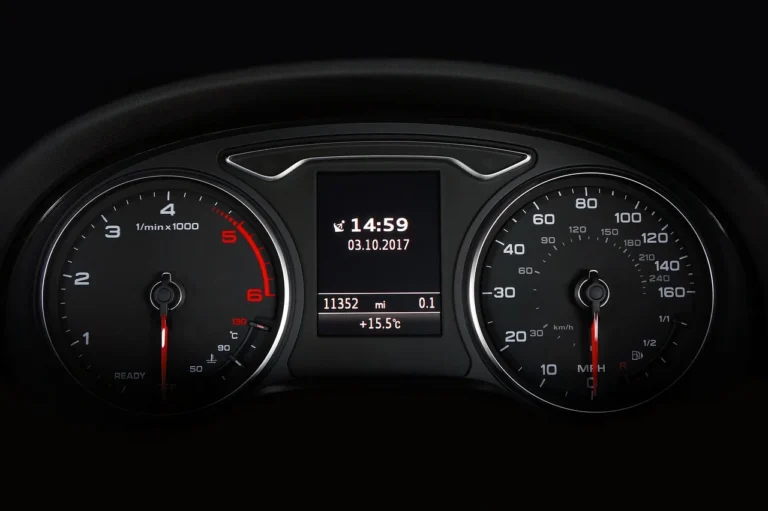
- No active warning lights on the dash.
- No fluid leaks under the vehicle.
- No tire bulges, cords, or low tread.
- No brake noise that suggests a service problem.
- No battery issue that makes starting unreliable.
If a couple or more of those items are uncertain, the trip should wait until a shop checks the car. That is cheaper than calling for help from the shoulder.
Google Maps or Roadtrippers: which planning workflow fits your trip?
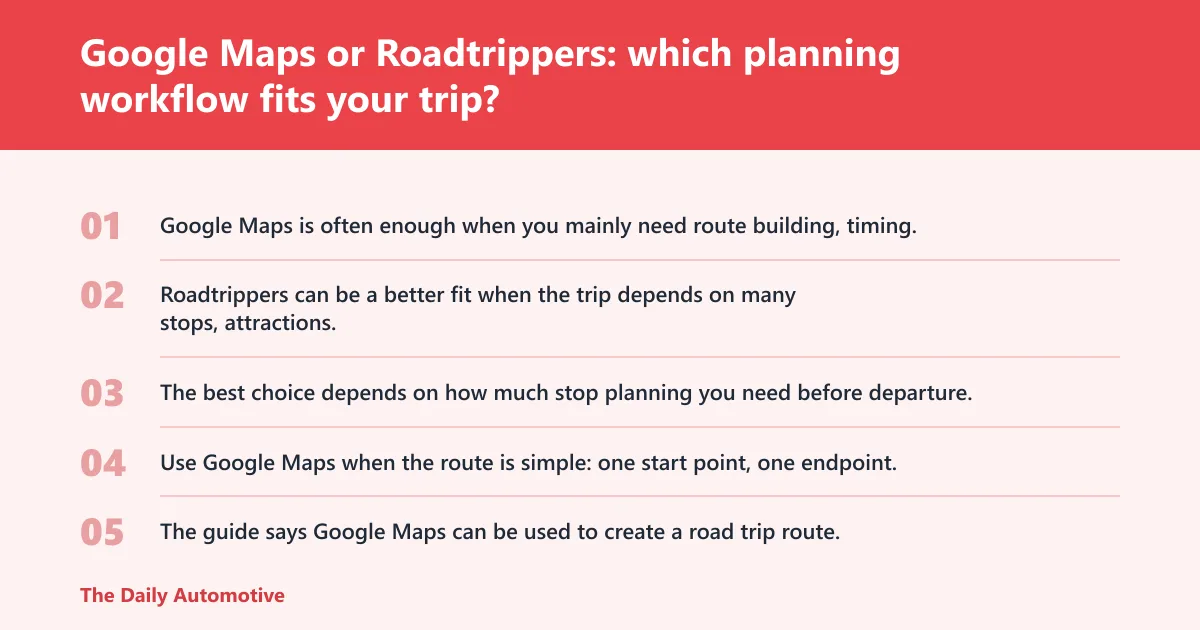
Google Maps is often enough when you mainly need route building, timing, and turn-by-turn guidance. Roadtrippers can be a better fit when the trip depends on many stops, attractions, or a route that changes often. The best choice depends on how much stop planning you need before departure.
When Google Maps route building is enough
Use Google Maps when the route is simple: one start point, one endpoint, and a few known fuel or meal stops. The guide says Google Maps can be used to create a road trip route, which makes it a practical base tool for daily driving plans and back-up directions.
If you are traveling through areas with weak signal, download offline maps before you leave. That protects you when the phone loses service in mountains, deserts, or rural corridors.
When Roadtrippers is better for stop planning
The Road Trip Expert recommends the Roadtrippers app for route planning. It works well when the trip centers on attractions, scenic detours, and multiple overnight stops. Use it to see stop clusters, rough drive legs, and side attractions that fit your route without major backtracking.
How to pin stops and keep an offline backup
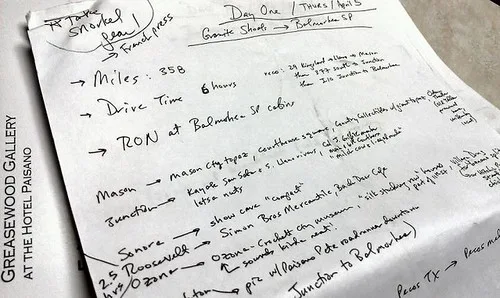
Pin every major stop: lodging, fuel, food, scenic pulls, and repair-friendly towns. Then export or write down the day’s main addresses. The Road Trip Expert also recommends using Google Sheets or a notepad to organize plans, with Trello and Evernote as alternatives.
Do not rely on one app alone. Signal can fail at the wrong moment. Keep a paper list or offline note with the next three stops, the hotel address, and one backup fuel stop.
How to avoid dead zones when signal is weak
Before you leave an area with coverage, load the next segment while the map still works. Save map pins, hotel confirmations, and any route notes. If the route crosses sparse regions, plan where to refuel earlier than usual and keep the next exit or town in view.
Use a road-trip readiness matrix before you roll
A readiness matrix turns trip prep into a simple scorecard. Rate route risk, vehicle condition, rest stops, and contingency supplies before departure. If the total is weak, improve the weakest category first. That is more useful than a vague sense that the trip feels “mostly ready.”
| Category | Score 1 | Score 2 | Score 3 |
|---|---|---|---|
| Route risk | Mountain roads, weather risk, sparse fuel | Mixed roads, some traffic, a few detours | Direct route, frequent services, easy exits |
| Vehicle condition | Warning light, overdue service, weak tire or battery | Service current, minor wear, needs one check | All checks pass, spare and tools ready |
| Rest stops | No firm stops planned | Stops planned, but long stretches remain | Stops spaced for fuel, food, and breaks |
| Contingency supplies | Little more than a phone charger | Basic kit packed, some gaps remain | First aid, flashlight, water, tools, backup info |
A simple go/no-go threshold is straightforward: if any category is clearly weak, fix it before leaving. If two categories score 2, add time, supplies, or route changes until the plan reaches a safer margin. That keeps a flexible trip from becoming a rescue job.
Adjust the matrix for solo, family, pet, and car-camping trips
Solo drivers should give more weight to fatigue, communication, and roadside access. Family trips need more rest stops, snack access, and easier bathroom planning. Pet trips need water, leash control, and temperature awareness. Car-camping setups should score higher for storage access and overnight comfort.
What should go in your road-trip emergency kit?
Your emergency kit should cover first aid, light, tire trouble, and basic roadside needs. Keep it reachable from the cabin, not buried under luggage. Add pet or child supplies only if those passengers are on board, so the kit stays easy to find under stress.
First aid supplies and a flashlight
Pack a basic first aid kit with bandages, antiseptic wipes, gauze, medical tape, pain relief you are allowed to carry, and any personal medications. Add a flashlight with fresh batteries or a charged built-in light. These items handle the most common small problems fast.
Spare tire and roadside basics
Bring the spare tire, jack, lug wrench, tire gauge, jumper cables or a jump pack, and a warning triangle or reflective vest if available. Make sure the car’s tools fit the spare. A flat tire is only manageable when the right hardware is in the vehicle.
Keep essentials within easy reach in the cabin
Store the kit where it can be reached without unloading the trunk. Put the phone charger, printed route notes, water, and flashlight in the front area. If the car carries kids or pets, separate their items so you do not have to dig through the main bag at a stop.
How do you budget a road trip without guessing?
Start with fuel, lodging, and food, then add random expenses, tolls, and parking. Use reward programs before you leave, and lean on free activities where they fit. A realistic budget has a buffer, because weather, detours, and extra nights change the math quickly.
Estimate fuel, lodging, and food first
Fuel depends on distance, route type, and vehicle efficiency. Lodging depends on how many nights you need and where the route ends each day. Food can be trimmed by bringing your own meals; Greatist recommends bringing your own food to cut costs.
Greatist also suggests using rewards programs before leaving. That can reduce lodging or fuel pressure without changing the route.
Add random expenses and tolls
Build a separate line for parking, tolls, convenience-store stops, laundry, extra water, and anything that appears because the route changed. Those costs are easy to ignore during planning and annoying to absorb later. A small miscellaneous fund prevents a minor change from breaking the budget.
Use free activities where they fit
Free overlooks, public beaches, walking paths, and museum grounds can fill a day without adding much cost. They also help if you need to cut spending mid-trip. A flexible itinerary makes those swaps easier.
Build a buffer for weather or route changes
If weather forces a longer drive or an extra overnight stay, the budget should still hold. Keep enough margin for one unplanned lodging night and a couple of extra meals. That is the difference between a schedule change and a financial scramble.
How long should you drive each day on a road trip?
Plan a day that leaves room for breaks, food, weather, and one unexpected delay. For many trips, overnight stops every 250 to 300 miles keep the pace sane. If the route demands more than that, the trip should either grow longer or get split into more days.
Use trip length to set a daily target
The Road Trip Expert’s examples help frame the target: 10 hours of driving for 3-4 days, 20 hours for 6-7 days, and 30 hours for 10-14 days. Those totals do not force a single pace, but they give you a planning ceiling for each trip length.
Keep fatigue in the plan
Breaks, hydration, sleep, music, and audiobooks matter because alertness fades before many drivers notice it. Stop sooner than later if the eyes feel heavy, the lane position drifts, or the same mile markers start to blur together. Fatigue is a planning problem, not a willpower test.
Use changeable days instead of rigid ones
If a day runs short, keep the extra time. If a day runs long, cut one attraction. A changeable itinerary protects the rest of the trip from one bad traffic jam or a slow lunch stop.
Frequently asked questions
How do I plan a road trip route with scenic detours?
Choose one primary route, then add detours that fit between overnight stops instead of squeezing them into a packed day. Keep buffer time for traffic, weather, and parking. Scenic stops work best when they are optional, timed, and close enough to rejoin the main route without long backtracking.
What should I check on my car before a road trip?
Check the battery, belts, hoses, fluids, filters, lights, brakes, tires, and the spare tire before leaving. Focus first on anything that can strand the car or make it unsafe. If one of those systems is questionable, get it inspected and repaired before the trip starts.
What should I pack for a road trip emergency kit?
Pack first aid supplies, a flashlight, jumper cables or a jump pack, a spare tire, a jack, a lug wrench, and basic roadside items. Keep the kit accessible in the cabin or within easy reach. If children or pets are traveling, add their specific needs separately.
Should I use Google Maps or Roadtrippers for planning?
Use Google Maps if the route is simple and you mainly need navigation and timing. Use Roadtrippers if the trip depends on many attractions, scenic stops, or route-side planning. The best workflow often combines both: build the route in one app, then save offline notes and pins.
What’s the best way to budget for a road trip?
Estimate fuel, lodging, and food first, then add tolls, parking, and a cushion for random expenses. Greatist recommends bringing your own food to cut costs and using rewards programs before leaving. Free activities help too, especially when weather or route changes alter the plan.
Products related to this article
Sponsored / affiliate links. As an Amazon Associate I earn from qualifying purchases. I may earn additional commission from eligible campaigns.