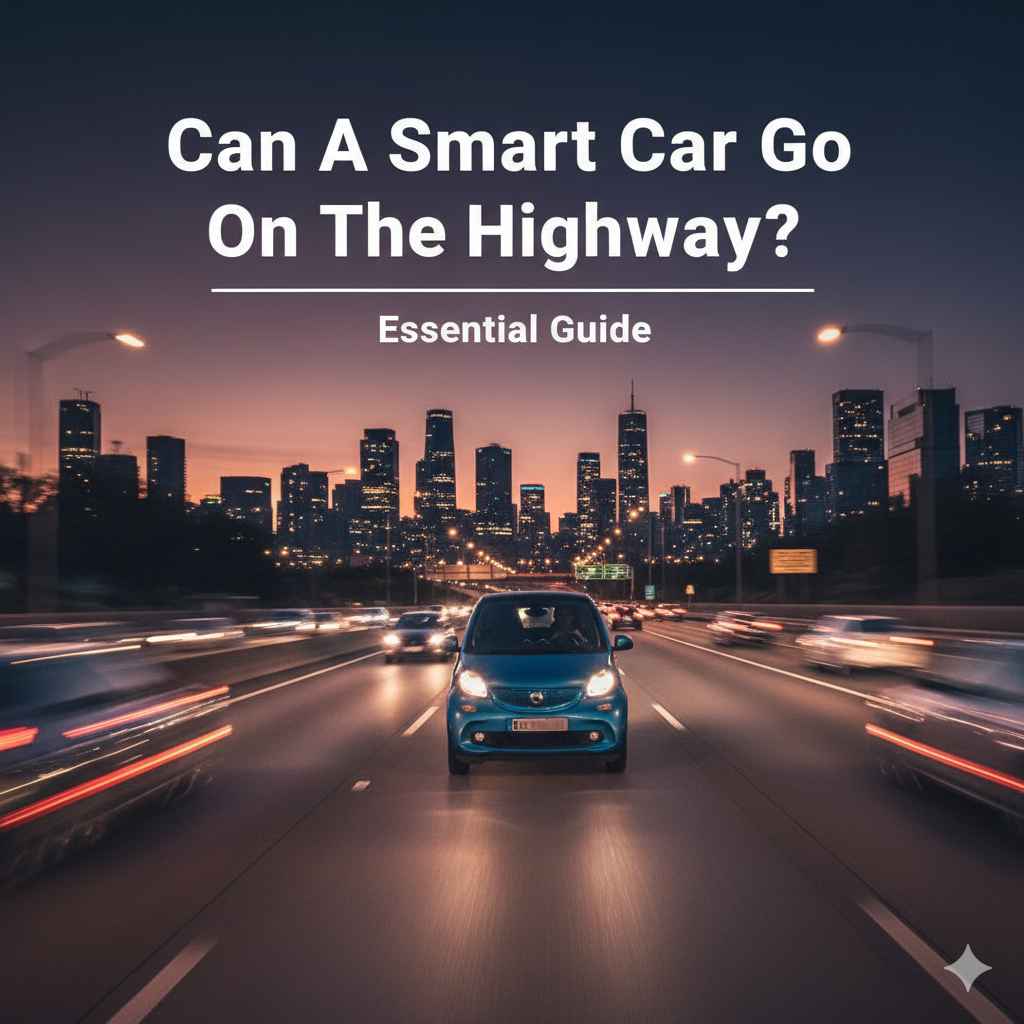
Can A Smart Car Go On The Highway? Essential Guide
Yes, most Smart cars can go on the highway, but with considerations. While designed for urban agility, many Smart models meet highway speed requirements and are legally permitted on highways. However, their small size, horsepower, and specific features mean you should be aware of their limitations for a safe and comfortable experience.
Navigating highways can feel daunting, especially if you’re new to driving or driving a smaller car. You might look at your zippy Smart car and wonder, “Is this little guy meant for the open road?” It’s a common question, and it’s smart to ask! Many drivers worry if their compact vehicle has the power or stability for highway speeds. This guide is here to clear up all your doubts. We’ll break down exactly what you need to know to drive your Smart car on the highway safely and confidently. Get ready to understand how your Smart car handles faster speeds and what to watch out for.
Understanding Smart Cars and Highway Driving
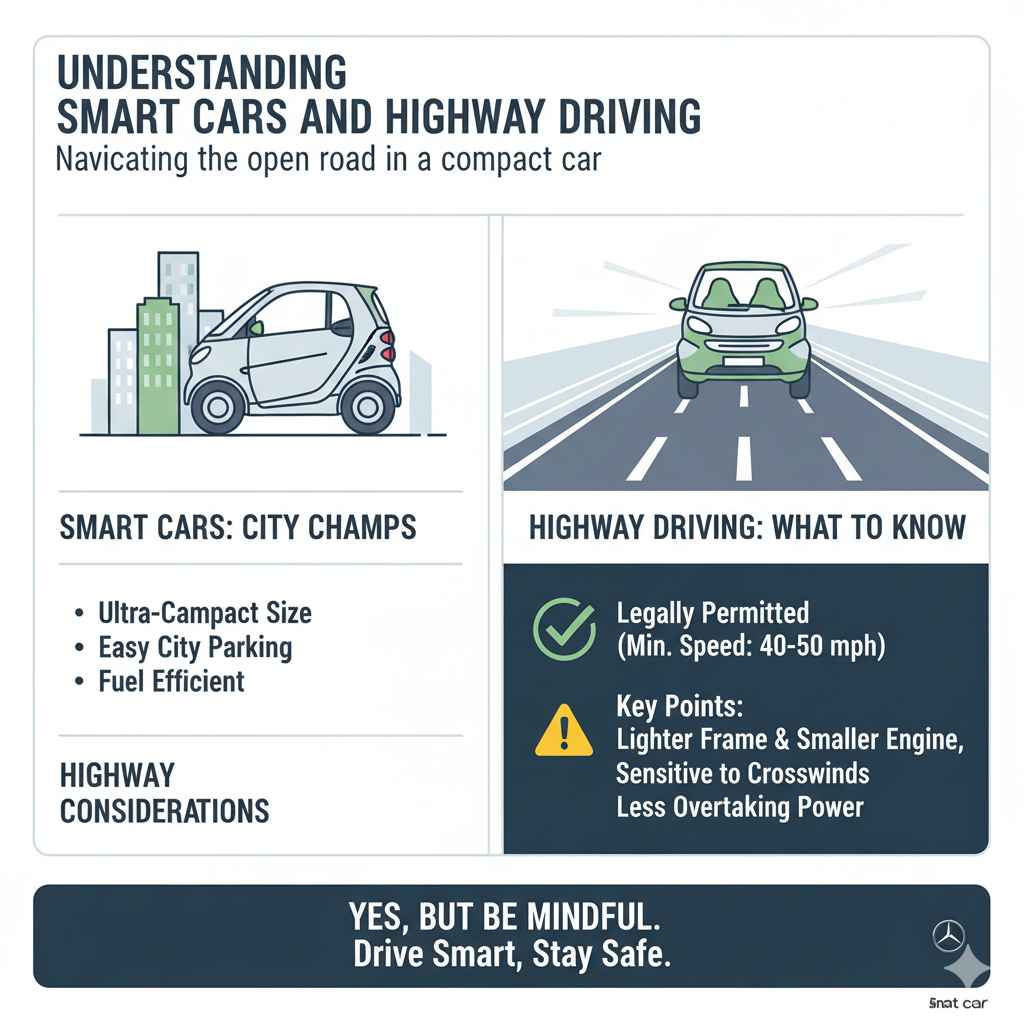
Smart cars are famously compact, making them champions of city parking and tight maneuvers. But when you think about highway driving, you often picture larger sedans or SUVs. The image is one of speed and sustained performance. So, the question naturally arises: can a car so small and distinct really handle the demands of highway travel? The answer is generally yes, but it comes with a few important points to consider.
Smart Fortwo models are the smallest, typically seating only two people. This compact nature means they have a smaller engine and a lighter frame compared to most vehicles on the highway. This doesn’t automatically disqualify them from highway use, but it does influence how they perform and feel at higher speeds. Legally, if a Smart car can reach and maintain the minimum highway speed limit (which varies by state but is typically around 40-50 mph and can go up to 70-85 mph on some roads), it’s usually permitted.
The key is understanding how your Smart car performs and what adjustments you might need to make for a safe journey. We’ll explore the factors that allow them on highways and the things to be mindful of.
Smart Car Models and Highway Capability
Smart has produced several models over the years, and their highway capabilities can vary slightly. The most common are the Smart Fortwo and the Smart Forfour.
Smart Fortwo: This is the iconic, two-seater model. These cars are characterized by their extremely small size and focus on urban convenience. When it comes to the highway, most modern Fortwo models (especially those from the 451 and 453 generations onwards) are equipped with engines sufficient to reach and legally maintain highway speeds. For instance, the generation found in the early 2010s and newer often features engines like a 1.0-liter turbocharged gasoline engine, capable of around 70-89 horsepower. These are generally adequate for highway cruising. They are also designed with safety features that make them road-legal on highways.
Smart Forfour: Though less common in some markets, the Forfour is a four-seater Smart car. Because it’s slightly larger and often shares powertrain options with similar compact cars, the Forfour generally exhibits better stability and performance on the highway than the Fortwo. It offers a bit more presence on the road, which can contribute to a feeling of security at higher speeds.
It’s crucial to check the specific model and year of your Smart car. The owner’s manual is your best friend here, as it will detail performance specifications, including top speed and recommended driving conditions. Even if a car can technically go on the highway, its design may make it less comfortable or feel less stable than a larger vehicle.
Factors to Consider for Highway Driving
When you decide to take your Smart car on the highway, there are a few specific aspects that influence your experience and safety.
Engine Power and Acceleration
Smart cars, particularly the Fortwo, often have smaller engines designed for fuel efficiency and city driving. This means their acceleration from a standstill or when merging onto a highway might not be as rapid as a larger car.
Merging: Merging onto a highway requires reaching the speed of the traffic already on the road. You’ll need to be patient and time your merge carefully. Ensure there’s a sufficient gap in traffic and that you can accelerate safely to match the flow.
Overtaking: Overtaking slower vehicles on the highway can also be a slower process. Plan your overtakes well in advance, ensuring you have plenty of space and time.
Vehicle Size and Stability
The small footprint of a Smart car means it is lighter and has a shorter wheelbase. This can have implications for stability, especially in certain conditions.
Crosswinds: Strong crosswinds can affect a Smart car more significantly than a heavier, larger vehicle. You might need to adjust your grip on the steering wheel and be prepared for the car to be nudged.
Large Vehicles: When large trucks or buses pass you, they can create air turbulence. Be ready to make small steering corrections to maintain your lane.
Road Surface: Uneven road surfaces or bumps can feel more pronounced in a smaller car with a shorter wheelbase.
Safety Features
Despite their size, Smart cars are engineered with safety in mind and often come with a surprising array of safety features.
Tridion Safety Cell: Smart cars pioneered their distinctive “Tridion Safety Cell,” a rigid passenger compartment designed to absorb impact energy and protect occupants.
Airbags: Modern Smart cars are equipped with multiple airbags.
Electronic Stability Control (ESC): Most Smart cars have ESC, which helps prevent skids and rollovers, a vital feature for highway driving.
ABS (Anti-lock Braking System): Standard on newer models, ABS helps you maintain steering control during emergency braking.
It’s always a good idea to familiarize yourself with the specific safety features of your Smart car model. For more details on automotive safety, the National Highway Traffic Safety Administration (NHTSA) offers comprehensive information on vehicle safety equipment.
Preparing Your Smart Car for the Highway
Before you embark on a highway journey in your Smart car, a little preparation goes a long way. Ensuring your car is in top condition will enhance your safety and driving experience.
Essential Checks
1. Tires: This is paramount. Ensure your tires are properly inflated to the PSI recommended in your owner’s manual or on the sticker inside your driver’s door. Check the tread depth – worn tires are dangerous, especially at highway speeds.
2. Brakes: Listen for any unusual noises when braking and check if the pedal feels spongy. If you have any doubts, get them inspected by a professional.
3. Fluids: Check your engine oil, coolant, brake fluid, and windshield washer fluid levels. Ensure they are at the correct marks on their respective reservoirs.
4. Lights: Make sure all your exterior lights (headlights, taillights, brake lights, turn signals) are working correctly. This is crucial for visibility and signaling at higher speeds.
5. Wipers & Washer Fluid: Ensure your wipers are in good condition and the washer fluid reservoir is full. You might encounter unexpected weather, and clear visibility is essential.
What to Pack
While not strictly car maintenance, having a few items in your car can be a lifesaver on any journey, especially a longer one:
Emergency Kit: This should include jumper cables, a first-aid kit, a flashlight, basic tools, and a reflective triangle or flares.
Tire Repair Kit or Spare Tire: Ensure you know how to use it and that it’s in good condition.
Phone Charger: Essential for navigation and in case of emergencies.
Water and Snacks: For longer trips, these are always a good idea.
Tips for Driving Your Smart Car on the Highway
Driving a Smart car on the highway requires a slightly different approach than driving a larger vehicle. Here are some practical tips to ensure a safe and comfortable ride:
Maintaining Speed and Lane Position
Choose your speed wisely: Drive at a speed that feels comfortable and stable for your car, while also adhering to the speed limit. If the highway is very busy with high-speed traffic, you might consider sticking to the right-hand lanes and maintaining a speed that allows you to blend in safely without feeling pressured.
Right lane is often best: For smaller, less powerful vehicles, the right lane (or the slow lane) is generally the safest place to be on a multi-lane highway. This gives you more buffer space and reduces the need for frequent lane changes.
Be aware of your surroundings: Constantly check your mirrors and be aware of the placement of larger vehicles around you.
Safe Following Distance
Increase your distance: Because your Smart car might have less responsive braking than larger vehicles, and because you are more susceptible to air turbulence from other cars, it’s vital to maintain a larger following distance. Aim for at least a 3-second gap between you and the car in front, and extend this to 4-5 seconds if conditions are poor or you are behind a large truck.
Handling Other Vehicles
Be visible: Ensure your headlights are on, even during the day, for better visibility to other drivers.
Watch for wind turbulence: As mentioned, larger vehicles can create significant air currents. Be prepared for your car to rock slightly when a truck passes. Keep a firm grip on the steering wheel and make only small, smooth corrections.
Avoid blind spots: Larger vehicles have bigger blind spots, and your Smart car is small. Make sure you can see the headlights of the car behind you in your rear-view mirror before you consider changing lanes.
Planning Your Route
Consider the distance: While many Smart cars can handle highways, extremely long journeys might be more fatiguing due to their size and potentially firmer ride. Consider if significant portions of your route are on non-highway roads where your Smart car truly excels.
Check weather forecasts: High winds, heavy rain, or snow can be more challenging in a smaller vehicle.
When a Smart Car Might Not Be Ideal for the Highway
While most modern Smart cars are capable of highway travel, there are certain situations or circumstances where it might be less ideal or require extra caution.
Older Models
Earlier generations of Smart cars might have had lower top speeds or less advanced safety systems compared to current models. Always verify the specifications for your specific year and model.
Extreme Weather Conditions
As touched upon, strong winds, heavy rain, or snow can make highway driving more precarious in a small, lightweight vehicle. If conditions are severe, it might be safer to postpone your trip or find an alternative route with lower speeds.
Long-Distance Travel vs. Occasional Use
For a daily commute of a few miles on the highway, a Smart car is generally fine. However, for very long road trips (e.g., cross-country), the driver might experience more fatigue due to the car’s compact size, potentially firmer suspension, and increased exposure to road noise and wind. Comfort is a significant factor for extended journeys.
Carrying Significant Cargo or Passengers
The Smart Fortwo, by definition, is limited to two occupants. Even the Forfour has less interior space than many conventional cars. If you’re traveling with a lot of luggage, gear, or multiple passengers, a larger vehicle might offer more practicality and comfort.
Performance Expectations
If you expect rapid acceleration for frequent overtaking or a supremely smooth, quiet ride at high speeds, a Smart car might not meet those expectations compared to larger, more powerful sedans or SUVs.
Smart Fortwo vs. Smart Forfour on the Highway
The distinction between the Fortwo and Forfour blurs some common perceptions about Smart cars on the highway.
| Feature | Smart Fortwo | Smart Forfour |
|---|---|---|
| Seating | 2 passengers | 4 passengers |
| Wheelbase | Shorter | Longer |
| Weight | Lighter | Slightly heavier |
| Stability | More sensitive to crosswinds/turbulence | More stable due to longer wheelbase |
| Engine Options | Smaller, efficiency-focused | Similar or slightly more powerful, shared with compact cars |
| Cargo Space | Very limited | Slightly more practical for small loads |
The Smart Fortwo excels in its intended urban environment. On the highway, it’s perfectly capable for legal speeds but requires conscious awareness of its size and weight. The Smart Forfour offers a slightly more conventional driving experience on the highway due to its longer wheelbase and size, providing a bit more stability and passenger capacity, making it a more comfortable option for longer highway stretches.
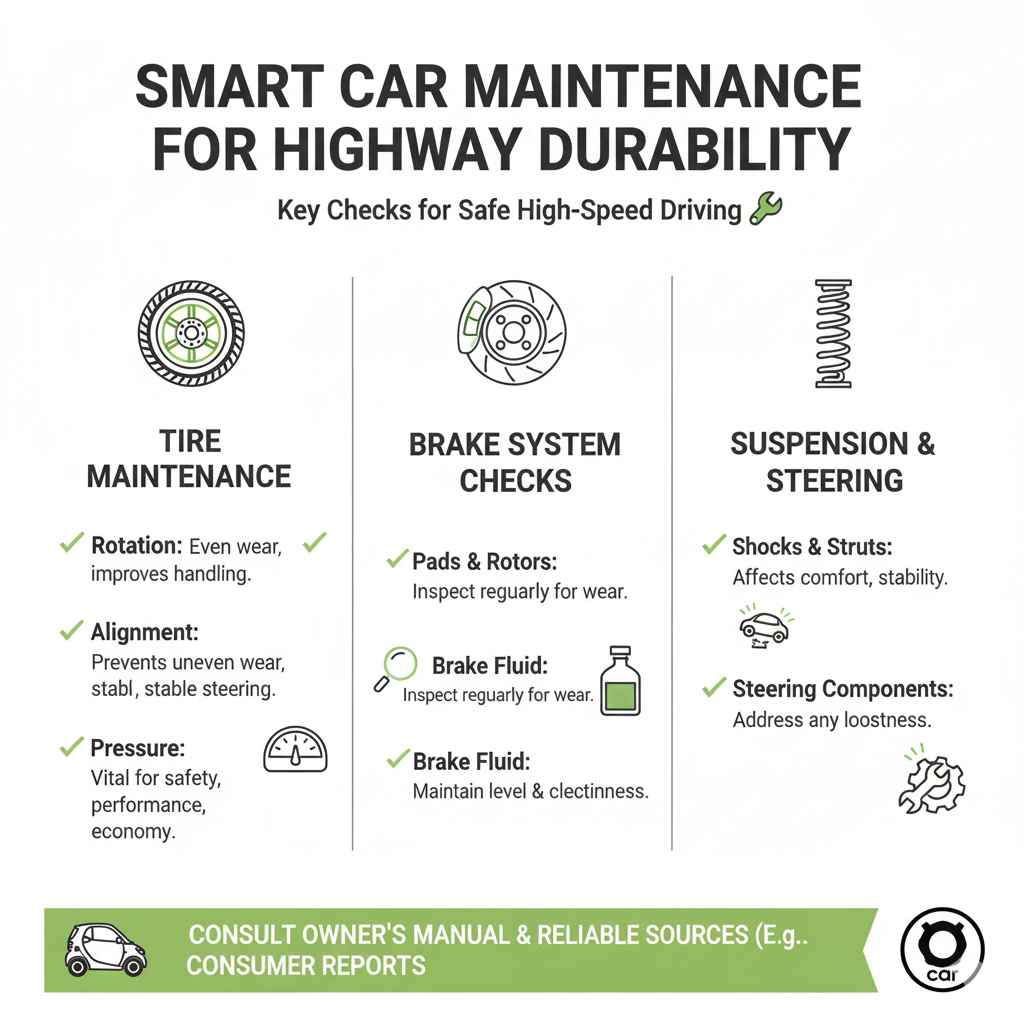
Smart Car Maintenance for Highway Durability
Regular and thorough maintenance is key to ensuring your Smart car is ready for any type of driving, including highway use. Some aspects are even more critical for sustained higher speeds.
Tire Maintenance
Rotation: Regular tire rotation ensures even wear, which is important for handling, braking, and tire longevity.
Alignment: Poor wheel alignment can cause uneven tire wear and affect steering stability, especially crucial at highway speeds. If you notice your car pulling to one side, get the alignment checked.
Pressure: As mentioned, correct tire pressure is vital for performance, safety, and fuel economy.
Brake System Checks
High-speed driving puts more demand on your braking system.
Brake Pads and Rotors: Have them inspected regularly for wear.
Brake Fluid: Ensure the brake fluid is at the correct level and clean. Old or low brake fluid can compromise braking performance.
Suspension and Steering
The suspension and steering components are vital for maintaining control.
Shocks and Struts: Worn shocks and struts can affect ride comfort and handling stability, making your car more prone to bouncing over bumps or being affected by crosswinds.
Steering Components: Any play or looseness in the steering system should be addressed promptly by a qualified mechanic.
For detailed maintenance schedules, always consult your Smart car’s owner’s manual. Reputable sources like Consumer Reports also offer great advice on general car maintenance best practices.
Frequently Asked Questions About Smart Cars on the Highway
Here are some common questions beginner drivers often have about taking their Smart car on the highway.
Can a Smart car legally be driven on the highway?
Yes, in most places, if a Smart car can meet the minimum speed requirements for a particular highway, it is legally permitted to drive on it. Laws vary by region, but commonly the minimum speed is around 40-50 mph.
Are Smart cars safe on the highway?
Modern Smart cars are designed with safety features like a strong safety cell, airbags, and electronic stability control, making them safe for highway use when driven responsibly. However, their small size means they are more affected by larger vehicles and wind than bigger cars. Always drive defensively and be aware of your surroundings.
What is the top speed of a Smart car?
Top speeds vary by model and year, but most recent Smart Fortwo models can reach speeds of around 90 mph (145 km/h), and some may go slightly higher. This is generally sufficient for highway speed limits.
Is it comfortable to drive a Smart car long distances on the highway?
For short to moderate highway trips, they can be fine. However, due to their compact size, shorter wheelbase, and often firmer suspension, long-distance highway driving can be less comfortable than in a larger vehicle. You might experience more road noise and fatigue.
What should I do if a large truck passes me and causes turbulence?
Maintain a firm grip on the steering wheel, keep your car centered in the lane, and make only small, smooth corrections to stay on course. Avoid sudden steering movements. Ensure you have a good following distance before and after the truck passes.
Does my Smart car need special tires for highway driving?
No, not special highway* tires per se. What’s crucial is that your tires are in good condition, suitable for the speeds you’ll be driving, properly inflated, and have adequate tread depth. Your owner’s manual will specify the correct tire type and size.
Conclusion
So, can a Smart car go on the highway? Absolutely! With its compact size and unique design, a Smart car can legally and safely travel on highways, provided you understand its characteristics and drive mindfully. These vehicles are built with robust safety features, and newer models possess adequate speed capabilities for most highway environments.
The key to a successful highway journey in your Smart car lies in preparation, awareness, and a slightly adjusted driving style. Always ensure your car is well-maintained, especially its tires and brakes. When you’re on the road, be conscious of your surroundings, maintain a safe following distance, and be ready for how wind and larger vehicles might affect your car. By following these tips, you can confidently navigate the open road in your Smart car, enjoying the independence and practicality it offers, whether you’re cruising through the city or venturing beyond. Happy driving!