Can You Shoot Someone Stealing Your Car in PA? (Law Explained)
No. Under Pennsylvania law, you cannot legally shoot someone for stealing your car. Deadly force is not justified to protect property alone — it is only justified when you reasonably believe it is immediately necessary to protect against death, serious bodily injury, kidnapping, or forced sexual assault.
This article explains the general legal framework under Pennsylvania’s Crimes Code. It is for informational purposes only and is not legal advice. If you are facing a real situation involving a car theft, a break-in, or the use of force, contact a licensed Pennsylvania criminal defense attorney or call 911 — do not rely on this article to make an in-the-moment legal decision.

Seeing someone try to steal your car is frightening, and it’s natural to want to stop it however you can. But Pennsylvania’s self-defense statutes are specific about when deadly force is legally justified — and simply watching a thief break into or drive off with an unoccupied car does not meet that standard, no matter how angry or violated you feel in the moment.
Below is a breakdown of what Pennsylvania’s Crimes Code actually says, where the “Castle Doctrine” does and doesn’t apply to vehicles, and what the real legal risks are if you use a firearm to stop a car theft.
What Pennsylvania Law Says About Self-Defense (18 Pa.C.S. § 505)
Pennsylvania’s self-defense rules are set out in 18 Pa.C.S. § 505 — Use of Force in Self-Protection. The general rule allows you to use reasonable force when you believe it is immediately necessary to protect yourself from another person’s unlawful use of force.
Deadly force is treated differently and held to a much higher standard. Under § 505, deadly force is only justified if you reasonably believe it is immediately necessary to protect yourself (or someone else) against:
- Death
- Serious bodily injury
- Kidnapping
- Sexual intercourse compelled by force or threat
A car theft, by itself, does not fall into any of those categories. If a thief is not threatening you directly and you are not in danger of serious harm, the statute simply doesn’t authorize deadly force — even though the theft itself is obviously a crime.
Can You Use Deadly Force to Protect Property in PA? (18 Pa.C.S. § 507)
Pennsylvania addresses force used specifically to protect property in a separate statute: 18 Pa.C.S. § 507 — Use of Force for the Protection of Property. This section does allow you to use non-deadly force to prevent someone from taking your movable property, like a car, under certain conditions (for example, asking them to stop, or physically blocking a theft in progress without a weapon).
Deadly force to protect property is treated very narrowly, and it’s tied almost entirely to your dwelling — not a vehicle. Under § 507, deadly force for property protection is only justifiable if someone has entered your dwelling, you have no reason to believe the entry is lawful, and you have no reason to believe non-deadly force would be enough to stop it (or the person is trying to dispossess you of your home, or committing a felony inside it). None of that language extends to a car sitting in a driveway or parking lot. In practice, this means Pennsylvania’s property-protection statute does not authorize shooting someone over a car theft.
Does the Castle Doctrine Cover Your Car? Occupied vs. Unoccupied Vehicles
This is the part of Pennsylvania law that causes the most confusion, and it’s the key to understanding this whole topic. In 2011, Pennsylvania expanded its Castle Doctrine (as part of § 505) to include a legal presumption that you reasonably feared death or serious injury — and that deadly force was justified — in certain situations involving your dwelling, residence, or vehicle.
That presumption applies when someone is unlawfully and forcefully entering (or has entered and is present in) your occupied vehicle, or is trying to forcibly remove you from it against your will. In plain terms: this protection is built around carjacking — a scenario where you are inside the car and someone is forcing their way in or trying to drag you out, not a scenario where your car is parked, empty, and someone is breaking into it or driving away with it while you’re not inside.
That distinction matters a lot legally:
- Occupied vehicle, forced entry or removal (carjacking): the Castle Doctrine presumption can apply, because the threat is directed at you as a person, not just your property.
- Unoccupied vehicle, simple theft or break-in: the presumption does not apply. You’re witnessing a property crime, not a threat to your life, so the standard self-defense rules in § 505 — which require an immediate threat of death or serious injury — still govern, and they aren’t met by theft alone.
The presumption also doesn’t apply in several other situations: if the person taking action has a legal right to be in the vehicle (a co-owner, for example), if you were the initial aggressor, if you were using the vehicle to further criminal activity, or if the person you used force against was a police officer performing official duties.
Pennsylvania’s Stand Your Ground Law
The same 2011 legislation also added a Stand Your Ground provision to § 505. It removes the general legal duty to retreat before using force in a place you have a right to be — including your car — as long as you’re not the initial aggressor and aren’t otherwise disqualified (for example, by being engaged in illegal activity).
It’s important to understand what Stand Your Ground actually changes: it removes the duty to retreat. It does not lower the bar for when force is justified in the first place. If deadly force wasn’t legally justified under § 505 to begin with — because there was no threat of death or serious injury — Stand Your Ground doesn’t make it justified. It only matters once the underlying use-of-force standard has already been met.
What Happens If You Shoot Someone Stealing Your Car in PA Anyway?
Using deadly force against a car thief when the legal standard isn’t met can expose you to serious criminal and civil consequences, including:
- Criminal charges ranging from aggravated assault to manslaughter or murder, depending on the outcome and the specific facts
- Loss of any self-defense claim if the prosecution can show the threat didn’t rise to the level required by § 505
- Civil liability — the thief (or their family, in a fatal case) can potentially sue you for damages even if you’re not criminally convicted
- Loss of firearm rights if you’re convicted of a disqualifying offense
Courts and prosecutors weigh whether the force used was necessary and proportionate to the actual threat. A stolen car can be replaced or covered by insurance; the legal system does not treat it as equivalent to a threat on your life, and a self-defense or Castle Doctrine claim built on protecting the vehicle alone is very unlikely to hold up.
What to Do Instead If Someone Is Stealing Your Car
If you see someone breaking into or driving off with your car, the safest and legally sound response is the same one law enforcement recommends:
- Get to a safe location and call 911 immediately — do not approach or confront the person yourself.
- Give the dispatcher your car’s make, model, color, and license plate number, plus your exact location.
- Note any details you can safely observe (direction of travel, number of people, clothing) without putting yourself at risk.
- Let responding officers handle the situation and follow their instructions.
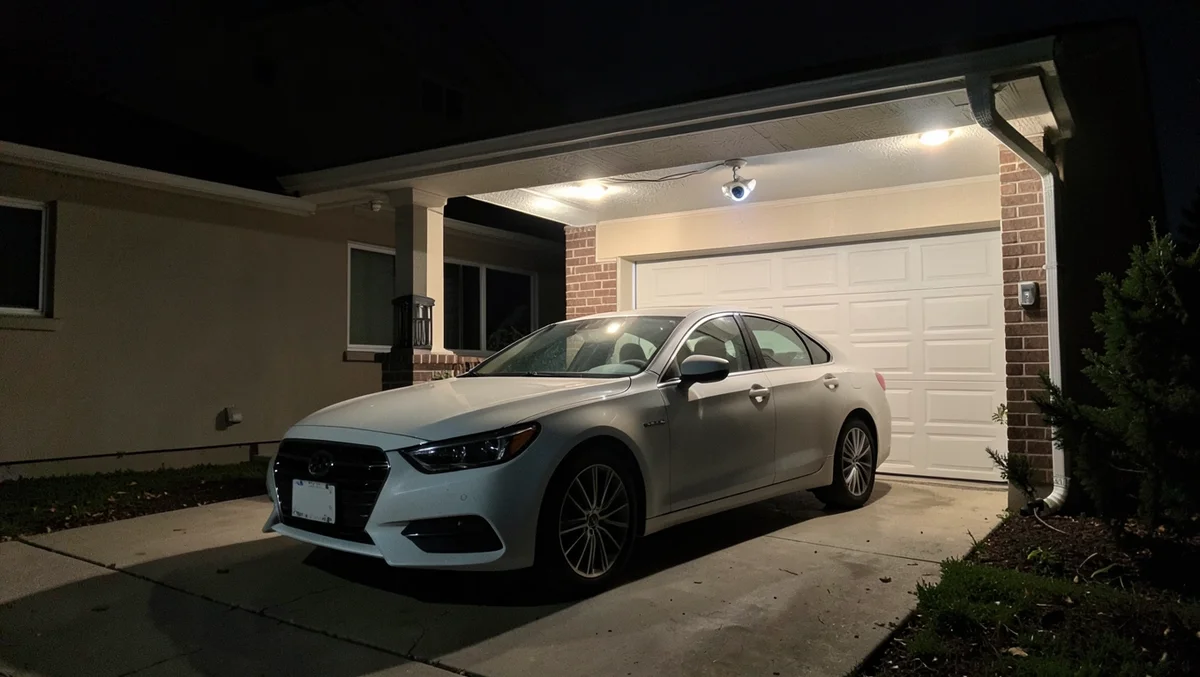
You can also reduce the odds of theft in the first place with steering wheel locks, GPS trackers, a monitored car alarm, and simply parking in well-lit areas and never leaving your vehicle running unattended. Motion-activated lighting and a visible security camera near where you park can also discourage an opportunistic thief before it becomes a confrontation at all.
If you’re separately researching whether it’s legal to keep a firearm in your car in Pennsylvania at all — a related but different legal question — see our guide on whether it’s legal to have a gun in your car.
Frequently Asked Questions
Is It Legal to Shoot Someone Stealing Your Car in PA?
No. Pennsylvania law does not allow deadly force to protect property alone. Deadly force is only justified when you reasonably believe it is immediately necessary to prevent death, serious bodily injury, kidnapping, or forced sexual assault — a car theft by itself doesn’t meet that standard.
Does Pennsylvania’s Castle Doctrine Cover Your Car?
Only in a limited way. The Castle Doctrine’s vehicle presumption under 18 Pa.C.S. § 505 applies when someone is forcibly entering or trying to remove you from an occupied vehicle — essentially, a carjacking. It does not apply to an unoccupied, parked car that’s being broken into or stolen while you aren’t inside it.
Is Carjacking Treated Differently Than Simple Car Theft Under PA Law?
Yes. Carjacking involves force or the threat of force directed at a person who is present, which can trigger the same self-defense analysis used for any threat to your safety. Simple car theft — taking an unattended, unoccupied vehicle — is a property crime with no direct threat to a person, so it does not justify deadly force under Pennsylvania law.
What Happens If You Shoot Someone Stealing Your Car in PA?
You could face criminal charges — up to and including manslaughter or murder charges, depending on the outcome and circumstances — as well as civil liability, even if you believed you were justified. Prosecutors and courts evaluate whether the threat you faced actually met the legal standard for deadly force, and property loss alone generally does not.
What Should You Do If Someone Is Stealing Your Car in PA?
Get to safety and call 911 immediately. Give police your car’s make, model, color, and license plate number, and let law enforcement handle the situation. Do not confront the thief yourself or use force, as it is unlikely to be legally justified and could put you in serious danger.
Does PA’s Stand Your Ground Law Let You Use a Gun to Stop a Car Thief?
No. Stand Your Ground only removes the duty to retreat once the use of force is already legally justified — it doesn’t lower the standard for when deadly force is allowed in the first place. Since protecting property alone doesn’t meet that standard, Stand Your Ground doesn’t change the answer for a simple car theft.
The Bottom Line
Pennsylvania law draws a clear line between defending your life and defending your property. A stolen car, no matter how upsetting, does not create the kind of immediate threat to your safety that Pennsylvania’s self-defense statutes require before deadly force is legally justified. The safest and legally sound response to a car theft in progress is the same one law enforcement recommends: get to safety, call 911, and let police handle it.
Disclaimer: This article summarizes general principles of Pennsylvania’s Crimes Code (18 Pa.C.S. §§ 505 and 507) for informational purposes only. It is not legal advice and should not be treated as a substitute for consulting a licensed Pennsylvania attorney about your specific situation. Laws can change, and how they apply depends heavily on the exact facts of a case.
Products related to this article
Sponsored / affiliate links. As an Amazon Associate I earn from qualifying purchases. I may earn additional commission from eligible campaigns.