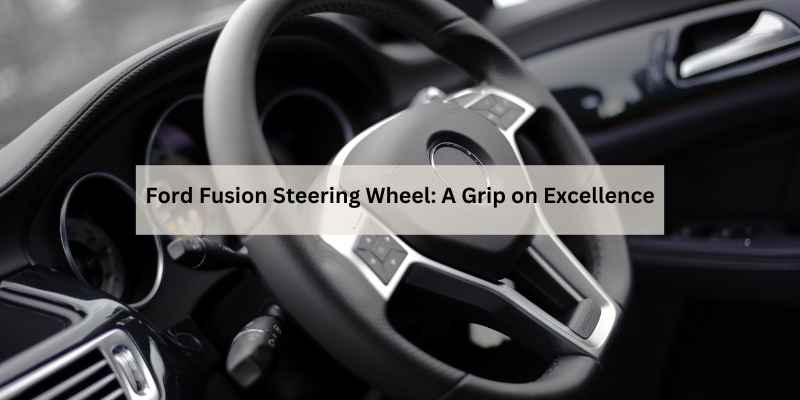
Ford Fusion Steering Wheel: The Complete Buyer’s and Installer’s Manual
You know that moment when you grip your Ford Fusion’s steering wheel and it just feels off? Maybe the leather has worn smooth, the heated function stopped working last winter, or you’re simply tired of looking at a wheel that feels a decade older than the rest of your car. The steering wheel is the one part of your car you touch for the entire drive. When it’s worn, cracked, or missing features you want, it drags down the whole driving experience.
This guide is the buyer’s and installer’s manual I wish I had when I swapped the wheel on my 2026 Fusion. I’ll walk you through which wheels fit which years, the critical airbag and wiring differences between generations, how to install a new wheel safely (including torque specs), and how to troubleshoot common problems like heated wheel failure and dead paddle shifters. You’ll also get a straight cost comparison between a full replacement, a custom wrap, and a steering wheel cover, so you can decide where your money is best spent.

Ouzorp
Ouzorp Car Steering Wheel Cover, Microfiber Leather…
- High-Quality Microfiber Leather: Crafted with a fine microfiber leather outer layer, this steering wheel cover boasts meticulous s…
- Perfect Fit for Standard Steering Wheels: Designed to fit standard steering wheels with a diameter of 14.5 to 15 inches (37 to 39…
- Durable and Protective Design: The inner side is made of rubber with an anti-slip lining, this steering wheel cover provides excel…
Before we get into the technical weeds, if you’re looking for a quick, affordable way to improve grip and protect your factory wheel, a quality cover goes a long way. The Ouzorp Car Steering Wheel Cover uses microfiber leather with an anti-slip rubber lining. It fits standard wheels sized 14.5 to 15 inches, which covers the Fusion’s factory diameter, and it installs in about three minutes once you warm it up. It’s not a replacement for a full wheel swap, but it’s a solid stopgap that protects against sun damage and sweat.
Why Upgrade or Replace Your Ford Fusion Steering Wheel?
There are three main reasons owners pull their factory wheel. The first is wear. The factory leather on 2026-2026 models tends to peel and become sticky after about 80,000 miles, especially at the 9 and 3 o’clock positions where your hands rest. The second reason is feature envy. You might have a base model without cruise control or audio buttons, and swapping in a wheel from an SEL or Titanium trim adds those controls without needing an aftermarket module. The third reason is purely aesthetic. A flat-bottom wheel or one wrapped in Alcantara changes the character of the cabin completely.
Whatever your reason, know this: a steering wheel swap on a Fusion is a weekend project for a competent DIYer. It requires basic hand tools, a torque wrench, and patience. The hardest part isn’t the physical removal. It’s dealing with the airbag and the wiring harness correctly.
Ford Fusion Steering Wheel Compatibility: Year-by-Year Guide (2026-2026)
This is where most online advice goes wrong. The Fusion spans two distinct generations here, and they are not interchangeable without significant work.
First Generation (2026-2026): These wheels use a different airbag module and a different clock spring connector than later models. The steering wheel spline (the teeth on the column shaft) is the same, so the wheel physically fits, but the electrical connectors for the horn, cruise control, and audio switches are different. If you want to install a 2026+ wheel on a 2026 car, you’ll need to re-pin the harness or buy an adapter, which is a fiddly job.
Second Generation (2026-2026): This is the more common platform for swaps. The 2026-2026 wheels share the same connectors. The 2026-2026 facelift models changed the design slightly, but the electrical connections for the switches and heated element remained compatible. A 2026 wheel will physically bolt onto a 2026 column. The airbag connectors also match, though the airbag cover shape changed, so you must use the airbag that matches the wheel you install.
Airbag and Wiring Differences Between Generations
Never mix a 2026-2026 airbag with a 2026+ wheel. The mounting tabs are positioned differently, and the electrical connector pins are not the same shape. Forcing it can damage the clock spring, which controls the horn and the steering angle sensor. If the clock spring breaks, you’ll get a warning light and a non-functional horn.
For the wiring, the 2026-2026 cars use a standard set of pins for the audio and cruise controls. The heated steering wheel uses two thicker gauge wires that carry higher current. If you’re swapping a non-heated wheel into a car that has the heated wiring, you’ll just leave those pins empty. That’s fine. The reverse situation—installing a heated wheel into a car without the factory heated wiring—is a much bigger job. You need a new clock spring, new wiring looms, and a BCM (Body Control Module) reprogramming. Most owners skip this and just buy a non-heated wheel.
OEM vs. Aftermarket: Which Steering Wheel is Right for You?
You have two paths here. OEM (Original Equipment Manufacturer) wheels are pulled from junkyards or bought new from Ford parts counters. Aftermarket wheels come from brands like NRG, MOMO, or Sparco, and they usually require a hub adapter to fit the Fusion’s spline.
For a daily driver, I strongly prefer OEM. The factory wheel integrates with the airbag, the cruise control, and the audio switches without any guesswork. You can find a used 2026 Titanium wheel with paddle shifters and heating for a reasonable price on eBay or at a local pick-and-pull. The downside is that used wheels often show wear, and new OEM wheels can be surprisingly expensive.
Aftermarket wheels look great and offer better grip materials, but they almost always delete your airbag. That’s a dealbreaker for a street car. Removing the factory airbag means the SRS light stays on, and your insurance company might not pay out if you’re in an accident. If you track your Fusion and have a full cage and harnesses, an aftermarket wheel is fine. For everyone else, stick with OEM or a high-quality used take-off.
Material Matters: Leather, Alcantara, and Carbon Fiber Compared
The material you choose changes the feel, the maintenance, and the longevity of the wheel. Here’s how they stack up.
| Material | Grip | Heat Resistance | Durability | Maintenance | Best For |
|---|---|---|---|---|---|
| Factory Leather | Good, but slippery with gloves | Poor—gets hot in summer sun | Moderate—peels after 60-80k miles | Condition every 3 months | Daily commuting |
| Alcantara / Suede | Excellent—very tacky | Poor—retains heat | Low—wears flat on high-contact points | Brush and clean often; oils ruin it | Track days, canyon driving |
| Carbon Fiber (with leather sides) | Good—depends on grip areas | Excellent—doesn’t store heat | Very high—doesn’t degrade | Wipe clean; no conditioning needed | Show cars, weekend cars |
| Microfiber Leather (Cover) | Good—improves over factory | Moderate—blocks direct sun | High—protects original wheel | Wipe with damp cloth | Budget protection |
My honest take: Alcantara feels amazing for about six months, then it starts to mat down and look dirty unless you’re obsessive about cleaning it. Leather is the best all-rounder for a car you drive daily. Carbon fiber is for looks, not function, unless you also live somewhere with brutal summers where leather becomes a hand-burning hazard.
How to Install a New Steering Wheel on a Ford Fusion
This procedure applies to the 2026-2026 models. The 2026-2026 cars follow the same steps, but the airbag release clips are located at different angles. Set aside two hours for your first attempt.
Safety First: Disconnecting the Battery and Airbag
Disconnect the negative battery terminal and wait at least 15 minutes before touching anything. This is not optional. The airbag capacitor holds a charge that can deploy the bag even with the battery disconnected. Waiting allows that charge to dissipate.
Next, look behind the wheel. You’ll see two small holes on the backside of the steering wheel housing, one at roughly the 9 o’clock position and one at the 3 o’clock position. Insert a flathead screwdriver into each hole and push the spring clip inward. This releases the airbag module. Pull the airbag straight out toward you. It will still be attached by wires—unplug the yellow airbag connector and the horn wire.
Now, use a 21mm socket to loosen the center bolt. Do not remove it yet. Turn the wheel so the front wheels point straight ahead, then mark the bolt and the steering column spline with a paint pen. This ensures you reinstall the new wheel in the exact same orientation, keeping the steering wheel straight when you drive.
Torque Specs and Wiring Connections
Remove the center bolt completely. Gently rock the wheel side to side while pulling toward you. If it’s stuck, spray a little penetrating oil on the spline and wait five minutes. Do not hammer on the column shaft—you can damage the steering angle sensor inside the clock spring.
Once the old wheel is off, transfer the clock spring and the switch modules to the new wheel if they aren’t already attached. Align the new wheel using your paint marks, then install the center bolt. The torque spec for this bolt is 35 lb-ft. Use a torque wrench; guessing here can strip the threads or leave the wheel loose.
Plug in the airbag connectors, press the airbag module back into place until you hear the clips click, and reconnect the battery. Start the car and check for warning lights. Turn the wheel lock-to-lock to calibrate the steering angle sensor, then test the horn, cruise control, and paddle shifters.
Troubleshooting Common Steering Wheel Issues
Even with a clean install, problems happen. Here’s how to diagnose the two most common ones.
Heated Steering Wheel Not Working
If the button lights up but the wheel stays cold, the heating element wire inside the wheel is likely broken. This happens most often on 2026-2026 models where the leather has worn thin at the top of the wheel. The fix is a new wheel, not a repair—the element is embedded under the leather and isn’t serviceable.
If the button doesn’t light up at all, check the fuse first. It’s a 15-amp fuse in the interior fuse box, located under the dashboard on the driver’s side. If the fuse is fine, the issue is the clock spring. A failed clock spring will also disable the horn and the cruise control, so if those still work, the clock spring is probably okay.
Paddle Shifters Not Responding
Paddle shifters fail for two reasons. The first is a broken wire in the clock spring. The second is a software issue—if you installed a wheel from a different trim level, the car may not recognize the paddles. You’ll need to use a tool like FORScan to enable the paddle shifter function in the BCM. This is a common step when swapping a base wheel for a Titanium wheel.
If you’re getting no response from one paddle but the other works, the switch inside the paddle module itself is probably dead. You can buy the paddle switch assembly separately and replace it without swapping the whole wheel.
Cost Breakdown: Replacement, Wrap, or Cover?
Your budget dictates the best path. Here’s what you’ll actually spend.
- Full OEM Replacement: A used wheel from a junkyard runs $150-$300. A new OEM wheel from a dealer can cost $400-$700. Add $50 for a new airbag if yours is damaged, and $30 for a clock spring if you need one. This is the most expensive route but the most reliable.
- Custom Wrap: A professional shop will re-cover your existing wheel in new leather or Alcantara for $200-$400. You remove the wheel and ship it to them, or they do it in-house. This preserves your factory airbag and wiring. The downside is the downtime—you’re without a steering wheel for a week.
- Steering Wheel Cover: A quality cover like the Ouzorp cover costs $20-$40. It takes ten minutes to install, protects the factory leather from further wear, and adds grip. It won’t fix a broken heated element or add paddle shifters, but it’s the cheapest way to make a worn wheel feel acceptable again.
My recommendation: if your wheel is mechanically fine but ugly, get a cover or a wrap. If you want new features like heating or paddles, swap the wheel. If your wheel is physically damaged or the leather is peeling into your hands, replace it.
Frequently Asked Questions
Will a Ford Fusion steering wheel fit a Ford Mondeo?
Yes, for the 2026-2026 models. The Mondeo and Fusion share the same platform and steering column spline. A Mondeo wheel with shift paddles will bolt onto a Fusion. Just make sure you’re matching the same generation to avoid the airbag connector mismatch.
Can I install a heated steering wheel without the factory heated option?
Technically yes, but it’s a major project. You need the heated wheel, a heated clock spring, the wiring harness, and a BCM flash. The parts alone can exceed $500. Most owners decide it’s not worth it and buy a non-heated wheel instead.
How do I know if my 2026 Fusion has the heated steering wheel option?
Look for a button on the left side of the steering wheel, near the cruise control buttons. It has an icon of a steering wheel with wavy lines rising from it. If you don’t see the button, you don’t have the factory heated wheel.
Why is my steering wheel hard to turn after installing a new one?
This is usually a clock spring issue. If the clock spring isn’t seated correctly on the column, it can bind and cause resistance. Recheck the alignment of the clock spring tabs. If the problem persists, check the power steering fluid level—the swap shouldn’t affect it, but it’s worth ruling out.
Does removing the steering wheel void my car’s warranty?
It can, if the dealership can prove your modification caused the failure. For example, if you damage the clock spring during installation and the airbag light comes on, that repair won’t be covered. If you install a used wheel and the audio controls don’t work, that’s on you. A simple cosmetic swap usually doesn’t void the powertrain warranty, but it’s a gray area.
What to Do Next
- Measure your current wheel diameter before buying anything—the Fusion uses a 15-inch wheel, so a cover sized 14.5-15 inches fits correctly.
- Check the back of your current wheel for the airbag release holes to confirm your generation before ordering a replacement.
- Disconnect the battery and wait 15 minutes before touching any airbag components.
- Mark the steering column spline with paint before removing the center bolt.
- Torque the center bolt to 35 lb-ft, not by feel.
- If you add a used wheel with features you didn’t have, budget for a FORScan session to enable them.
- For a quick refresh without the install work, a microfiber cover protects your factory wheel and improves grip for under $40.
If you run into power steering issues after a swap, check our guide on fixing power steering assist faults before you panic. And if you’re weighing protection options, our roundup of comfort-focused steering wheel covers covers the alternatives. The right wheel is out there—you just have to match it to your year and your needs.
Products related to this article
Sponsored / affiliate links. As an Amazon Associate I earn from qualifying purchases. I may earn additional commission from eligible campaigns.