Ford Car Lights Won’t Turn Off: Causes & Fixes
Ford car lights won’t turn off? This can be a frustrating issue, potentially draining your battery and even raising security concerns. Understanding the common culprits behind this electrical problem is the first step toward finding a resolution.
This post will break down the most frequent reasons your Ford’s lights are staying on, offering practical solutions and troubleshooting tips to get your vehicle back to normal.
Simply put, if your Ford car lights won’t turn off, the issue likely stems from a faulty headlight switch, a malfunctioning body control module (BCM), a stuck relay, or an issue with the door ajar sensor. Diagnosing the exact cause is key to a swift and effective repair.
Key Takeaways
- A malfunctioning headlight switch is a very common cause for Ford car lights staying on.
- Problems with the Body Control Module (BCM) can disrupt various electrical functions, including lighting.
- Stuck relays or blown fuses are simple yet frequent culprits for persistent lighting issues.
- A faulty door ajar sensor can trick the car into thinking a door is open, keeping interior lights on.
- Check for aftermarket accessory wiring as it can sometimes interfere with factory systems.
What is Causing My Ford Car Lights Not To Turn Off?
There are several potential reasons why your Ford car lights may refuse to switch off. These issues can range from simple electrical glitches to more complex component failures. Identifying the specific problem is crucial for effective troubleshooting. The problem might be with the primary control for the lights, or it could be a related system that’s signaling the lights to stay on incorrectly.
One of the most straightforward, yet often overlooked, causes is a faulty headlight switch. This switch is the direct command center for your headlights and other exterior lights. If its internal mechanisms become worn or damaged, it might fail to send the correct “off” signal to the lighting system, even when you’ve turned the knob or pulled the lever to the off position. This can lead to lights remaining on day and night.
Another common area to investigate is the body control module (BCM). This is a crucial computer that manages a wide array of electronic functions in your Ford, including the lighting system, power windows, locks, and more. If the BCM experiences a software glitch or hardware failure, it can send incorrect commands to various systems, resulting in lights that stay on or other unexpected electrical behavior. Diagnosing BCM issues can be more complex, often requiring specialized diagnostic tools.
Common Electrical Faults Leading to Persistent Lights
- Headlight Switch Failure: Worn contacts or internal short circuits can cause the switch to fail in the “on” position.
- Body Control Module (BCM) Malfunction: Software glitches or hardware issues within the BCM can lead to incorrect lighting commands.
- Stuck Relays: A relay that doesn’t disengage properly can keep the circuit for the lights powered.
- Blown Fuses (Less Common for “Stuck On”): While a blown fuse usually means lights don’t work at all, a partially fused or corroded fuse could cause erratic behavior.
- Wiring Harness Issues: Damaged, frayed, or shorted wires in the lighting system’s harness can create a permanent circuit.
- Door Ajar Sensor Problems: A faulty sensor might constantly signal that a door is open, triggering interior lights and sometimes exterior courtesy lights.
Troubleshooting the Headlight Switch
The headlight switch is often the first component to check when your Ford car lights won’t turn off. It’s a mechanical and electrical device that can wear out over time. Symptoms of a failing switch might include intermittent operation, flickers, or in this case, the lights being stuck in the “on” position.
To diagnose a faulty headlight switch, you can sometimes test its functionality directly. With the car off, try cycling the switch through all its positions. Listen for distinct clicks and observe if the lights respond as expected. If the lights remain on regardless of the switch position, it’s a strong indicator the switch itself is the culprit.
Replacing a headlight switch is usually a moderately difficult DIY task, depending on the Ford model. It often involves removing trim panels around the steering column or dashboard to access the switch assembly. If you’re not comfortable with automotive electrical work, it’s best to have a qualified mechanic perform the replacement. They can also perform more in-depth electrical tests to confirm the switch is indeed the problem.
Signs of a Failing Headlight Switch
- Headlights, parking lights, or interior lights remain on even when the switch is in the “off” position.
- Lights flicker or dim unexpectedly while driving.
- The switch feels loose, stiff, or doesn’t engage properly.
- Other lighting functions controlled by the switch (like fog lights or dash illumination) are also malfunctioning.
| Headlight Switch Test Scenarios | Expected Outcome (Good Switch) | Observed Outcome (Suspect Switch) |
|---|---|---|
| Switch in “Off” Position | All exterior lights are off. | Exterior lights remain on. |
| Switch in “Parking Lights” Position | Parking lights and tail lights illuminate. | May be the same as “Off” or only some lights illuminate. |
| Switch in “Headlights” Position | Headlights, parking lights, and tail lights illuminate. | May behave erratically, or lights remain on when switched off. |
A faulty headlight switch often presents as lights that remain on, regardless of the switch’s position.
The Role of the Body Control Module (BCM)
The Body Control Module (BCM) is essentially the brain for many of your Ford’s convenience and safety features, including the entire lighting system. It receives input from various sensors and switches and then controls actuators, such as the light bulbs. If the BCM malfunctions, it can send incorrect signals, causing lights to stay on when they should be off.
BCM issues are more complex to diagnose than a simple switch. They often require a scan tool capable of communicating with the BCM and reading its diagnostic trouble codes (DTCs). These codes can point to specific circuit failures or communication errors within the BCM. Sometimes, a BCM can be reprogrammed or reset, but in many cases, a faulty BCM needs to be replaced.
This is a common area of failure in many modern vehicles, as these modules manage so many interconnected systems. A glitch in one part of the BCM can have ripple effects on other functions. For instance, a faulty signal related to the door locks might inadvertently keep the interior lights on. According to RepairPal, the average cost to replace a Ford BCM can range from $450 to $1,000, depending on the specific model and labor rates.
Potential BCM-Related Lighting Problems
- Lights not turning off automatically with the ignition or when commanded.
- Interior lights staying on even after all doors are closed and locked.
- Exterior lights activating randomly or not deactivating.
- Inability to control lights via the remote key fob.
- Dashboard warning lights related to the lighting system.
Important: Diagnosing BCM issues should generally be left to professional mechanics. They have the specialized tools and knowledge to properly test and replace the BCM without causing further electrical damage. Incorrectly tampering with the BCM can lead to more significant problems.
Checking Relays and Fuses
Relays and fuses are critical components of your Ford’s electrical system. Fuses protect circuits from overcurrents, while relays act as electrically operated switches to control higher-current circuits. If a relay responsible for the lighting system becomes “stuck” in the closed position, it can keep the lights powered on even when the primary switch is off.
To check relays, you can often swap a suspect relay with an identical relay from a non-critical system (like the horn or A/C clutch) to see if the problem moves. If the lights now turn off, the original relay was faulty. You can also sometimes hear a relay click when it’s engaged or disengaged; a relay that stays constantly energized without command might be the issue.
Fuses are easier to check. Locate your Ford’s fuse box (there’s usually one under the hood and one inside the cabin) and consult your owner’s manual to find the fuse(s) for your headlights and parking lights. Visually inspect the fuse for a broken or melted wire inside. If a fuse is blown, it typically means there was a short circuit or overload elsewhere, so simply replacing it might not fix the root cause if the underlying issue isn’t addressed. The total number of fuses in a modern car can exceed 50, so identifying the correct ones is key.
Steps to Inspect Fuses and Relays
- Consult Owner’s Manual: Identify the fuse box locations and the specific fuses and relays related to your headlights and parking lights.
- Visually Inspect Fuses: Remove each relevant fuse and hold it up to the light. Look for a broken filament inside. If damaged, replace it with a new fuse of the exact same amperage rating.
- Test Relays (Swap Method): Locate suspect relays. If there are identical relays in the box controlling less critical functions, temporarily swap them. If the lights now turn off and the swapped-from system malfunctions, the original relay was likely faulty.
- Listen for Relay Operation: With the ignition on and the light switch in various positions, listen for the clicking sound of relays engaging and disengagethrough. A relay that is stuck “on” might not click or may stay energized.
- Check Relay Socket: Ensure the relay socket is clean and free from corrosion.
- Replace if Necessary: If a relay is confirmed faulty, replace it with an exact match.
Door Ajar Sensor Issues
An often-overlooked cause for interior lights staying on, and sometimes even exterior courtesy lights, is a malfunctioning door ajar sensor. These sensors tell the car’s computer whether a door is open or closed. If a sensor is faulty or its wiring is damaged, it can send a constant “door open” signal to the BCM.
The BCM then interprets this signal as if a door is open, triggering the interior dome lights and possibly approach lights. Some vehicles also have a feature where certain exterior lights might stay on for a short period after the car is parked and locked if a door is perceived as open, or they might remain on continuously.
Diagnosing a door ajar sensor issue involves checking each door sensor individually. This might require removing door panels to access the sensor and its wiring. You can also often get a visual cue on your dashboard’s message center if a specific door is being detected as open when it’s not. Testing the sensor’s continuity or voltage output with a multimeter can confirm its functionality. Many Ford models use a simple plunger-type switch or a magnetic sensor.
Troubleshooting Door Ajar Sensors
- Dashboard Indicator: Check if your car’s dashboard displays a “door open” warning for any specific door, even when all doors are firmly shut.
- Interior Light Behavior: Observe if the interior dome lights, map lights, or vanity mirror lights stay on persistently.
- Listen for Door Lock Actuators: Some systems link door status to lock/unlock cycles.
- Inspect Door Jambs: Look for any visible damage to the sensors or their wiring in the door jamb area.
- Test Sensor Continuity: With the door open and closed, test the electrical continuity of the sensor using a multimeter to see if it responds correctly.
- Clean and Lubricate: Sometimes, dirt or lack of lubrication can cause sensors to stick.
| Door Status | Expected Sensor Output (Closed) | Expected Sensor Output (Open) | Faulty Sensor Behavior |
|---|---|---|---|
| Door Closed | No signal / Open circuit (or Grounded signal, depending on system) | Signal sent / Closed circuit (or Voltage signal) | Continuously sends “open” signal even when door is closed. |
| Door Open | No signal / Open circuit | Signal sent / Closed circuit | Does not send “open” signal when door is open. |
A door ajar sensor that continuously signals an open door can cause interior lights to remain on.
Wiring Harness and Connection Issues
The intricate network of wires that make up your Ford’s wiring harness is responsible for carrying electrical signals throughout the vehicle. Damage to this harness, whether from age, corrosion, physical abrasion, or improper installation of aftermarket accessories, can lead to electrical faults, including lights that won’t turn off.
A short circuit within the wiring harness is a common cause of lights staying on. This occurs when the insulation around a wire is damaged, allowing it to come into contact with another wire or a metal part of the car’s chassis. This creates a bypass in the intended circuit, which can keep a light or multiple lights permanently powered.
Inspecting the wiring harness requires patience and a good understanding of automotive electrical systems. You’ll need to trace the wires from the light source back to their control module or switch, looking for any signs of damage. Pay close attention to areas where the harness passes through bulkheads, flexes with door openings, or is secured to the chassis. According to studies by AAA, faulty wiring is a significant contributor to vehicle electrical issues.
Areas to Inspect for Wiring Problems
- Door Jambs and Hinges: Wires here flex constantly and can break or chafe.
- Under the Dashboard: Look for loose connections or damaged wires near the steering column and fuse box.
- Engine Bay: Wires here are exposed to heat, moisture, and vibration, which can degrade insulation.
- Wheel Wells: Wires routed here are susceptible to damage from road debris and impacts.
- Trailer Hitch Wiring (if applicable): Improperly installed or damaged trailer wiring can cross-talk with vehicle lighting circuits.
- Aftermarket Accessory Connections: Any added lights, alarms, or stereo systems can interfere with factory wiring if not installed correctly.
Warning: Working with vehicle wiring can be dangerous. Always disconnect the battery before performing any electrical work to prevent short circuits and potential injury. If you are unsure about any aspect of wiring inspection or repair, consult a qualified automotive electrician.
Aftermarket Accessory Interference
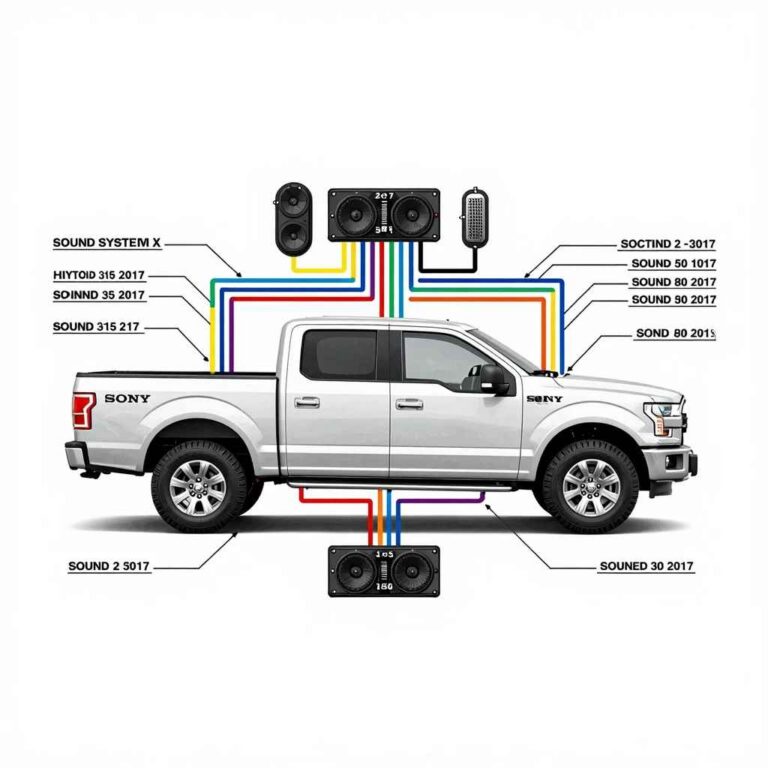
If you’ve recently had any aftermarket accessories installed in your Ford, such as a new stereo system, alarm, remote start, or additional lighting, they could be the source of your lighting problem. Aftermarket installations often require tapping into the vehicle’s existing wiring, and if this is done improperly, it can create electrical faults.
An incorrectly wired accessory can create a parasitic draw (draining the battery) or can inadvertently create a closed circuit for your lights. For instance, a poorly installed remote start system might interfere with the BCM’s ability to signal the headlights to turn off. Similarly, some lighting modifications, if not properly integrated with the factory system, can override the normal switching functions.
It’s crucial to have aftermarket installations performed by reputable professionals who understand automotive electronics. If your lights started acting up after an installation, that’s the first place to look. Sometimes, simply disconnecting the aftermarket device can resolve the issue, confirming it as the source of the problem.
Common Aftermarket Additions Causing Light Issues
- Remote Start/Alarm Systems: These systems often interface directly with the vehicle’s ignition and lighting circuits.
- Custom Lighting (LED Strips, Underglow): Improper wiring can cause these to remain powered or affect factory lights.
- Stereo/Audio Upgrades: Large audio systems can sometimes draw excessive power or have grounding issues that affect other circuits.
- Dash Cams or GPS Trackers: If wired directly to constant power without a proper cutoff, they can cause parasitic drains or electrical interference.
- Electronic Trailer Brake Controllers: If not installed correctly, these can sometimes interfere with the vehicle’s tail light signals.

Frequently Asked Questions
What is the most common reason Ford car lights won’t turn off?
The most frequent cause is a faulty headlight switch. This component is directly responsible for controlling the vehicle’s exterior lights, and wear or internal damage can prevent it from sending the correct “off” signal.
Can a blown fuse cause my lights to stay on?
Generally, a blown fuse will cause lights not to work at all, rather than stay on. However, a partially blown or corroded fuse, or a fuse holder issue, could potentially lead to intermittent or persistent lighting problems. It’s still worth checking.
How do I reset my Ford’s Body Control Module (BCM)?
Resetting the BCM typically involves disconnecting the vehicle’s battery for a period of 30 minutes to an hour, or performing a specific sequence of operations, which can vary by model. However, for persistent issues, a professional diagnostic scan is recommended as a reset may not resolve underlying hardware faults.
Is it safe to drive with my Ford’s lights stuck on?
While it’s generally safe to drive in terms of immediate control, leaving your lights on constantly will significantly drain your car’s battery, potentially leaving you stranded. It can also be a distraction to other drivers if the lights are excessively bright or malfunctioning, and it reduces the battery’s lifespan over time.
How much does it cost to fix Ford car lights that won’t turn off?
The cost can vary widely. Replacing a headlight switch might cost between $100-$300 including parts and labor. A more complex issue like a BCM replacement could range from $450-$1,000 or more.
Checking fuses and relays is typically the least expensive repair, often just the cost of the parts.
Final Thoughts
Dealing with Ford car lights that won’t turn off can be a puzzling issue, but by systematically checking the common culprits like the headlight switch, BCM, relays, fuses, and door sensors, you can often pinpoint the problem. If DIY troubleshooting doesn’t resolve the issue, don’t hesitate to consult a trusted mechanic. Addressing this problem promptly will save your battery and ensure your vehicle’s electrical system functions as intended.
Products related to this article
Sponsored / affiliate links. As an Amazon Associate I earn from qualifying purchases. I may earn additional commission from eligible campaigns.