Ford Raptor 2026 MPG: Real Numbers, Real Driving, and What the Sticker Doesn’t Tell You
You’ve just dropped serious money on a 2026 Ford Raptor. The dealer handed you the keys, you fired up that twin-turbo 3.5L EcoBoost V6, and for the first week you didn’t care about fuel economy. Then you hit the pump for the third time in ten days and started doing the math in your head. That math rarely works out in your favor.
The EPA says the 2026 Raptor gets 15 mpg city and 18 mpg highway. Those numbers are optimistic at best. Real-world driving tells a different story, and it depends almost entirely on how you treat the throttle and which of the ten drive modes you’re in. This article breaks down what you’ll actually see at the pump, why the official ratings miss the mark, and what you can do about it without parking the truck.
You’ll walk away knowing the specific conditions that drain the tank, the one driving mode that genuinely helps, and whether the 36-gallon tank option is worth hunting for.
Before diving into the numbers, a quick note on gear. A quality tire pressure monitoring system is one of the cheapest ways to protect your Raptor’s fuel economy and tire life. Under-inflated tires on a truck this heavy can silently cost you 1-2 mpg. Check the current price on Amazon for a reliable TPMS kit if you don’t already have one installed.
The EPA Numbers vs. Reality: Where the Ratings Go Wrong
The 2026 Raptor’s official ratings come from a lab test that doesn’t account for the truck’s personality. The EPA test runs a fixed cycle with gentle acceleration. Nobody buys a Raptor to accelerate gently.
Here’s what real owners report across forums and fuel logging apps:
- Mixed suburban driving: 13.5-14.5 mpg is the norm. Stop-and-go traffic kills the EcoBoost’s efficiency because the turbos spool up every time you pull away from a light.
- Pure highway at 65 mph: You can hit 17-18 mpg if you set cruise control and leave it alone. The 10-speed automatic keeps the engine low in the RPM range, which helps.
- Highway at 75-80 mph: Expect 14-15 mpg. The Raptor is a brick aerodynamically, and wind resistance doubles roughly every 10 mph above 55.
- Off-road or towing: Single digits. 8-10 mpg is typical when you’re in the dirt or pulling a trailer over 5,000 pounds.
The gap between the sticker and reality isn’t a conspiracy. It’s physics. The Raptor sits 10 inches taller than a standard F-150, wears aggressive all-terrain tires, and weighs nearly 5,500 pounds. Every one of those factors fights against fuel economy.
Driving Modes: The Secret to Better MPG Nobody Reads About
Most owners flip through the drive modes once and forget them. That’s a mistake. The mode selector changes more than throttle response; it changes how the transmission shifts and how often the turbos build boost.
Normal mode is the default, but it’s not the most efficient. It keeps the transmission in a middle ground that encourages boost usage during acceleration.
Sport mode is the thirsty one. It holds gears longer, keeps the RPMs up, and makes the turbos spool constantly. You’ll see your range estimate drop visibly within minutes.
Eco mode is the one most owners ignore. It softens throttle response and upshifts earlier, keeping the engine in its most efficient band. In testing, Eco mode delivers about 1-1.5 mpg improvement over Normal in mixed driving. That doesn’t sound like much, but over a full tank of gas it’s roughly 20-30 extra miles of range.
The trade-off is real. Eco mode feels sluggish off the line. The pedal gets numb and you have to push harder to get the same acceleration. For daily commuting, it’s worth it. For merging onto a highway with traffic coming fast, you’ll want Normal mode back.
Fuel Tank Size and Range: The Math That Matters More Than MPG
The 2026 Raptor comes standard with a 26-gallon fuel tank. A 36-gallon tank was optional, and it’s worth every penny if you can find one.
Here’s why the tank matters more than the MPG number. At 14 mpg average, the 26-gallon tank gives you about 364 miles of range. That’s roughly 5 hours of highway driving before you’re hunting for a station. The 36-gallon tank pushes that to 504 miles, which means you can cross most states without stopping for fuel.
Owners with the smaller tank report a particular annoyance: the low fuel light comes on early, often with 3-4 gallons still in reserve. That’s by design, but it means you’re visiting the pump more often than the math suggests.
One more thing worth knowing. The Raptor requires premium fuel for full power. The EcoBoost engine will run on regular, but you’ll lose about 10-15 horsepower and gain a slight drop in efficiency. The manual says premium is recommended, not required. Most owners run premium because the power difference is noticeable, especially when towing.
Myth-Busting: The Diesel Rumor and the ‘Break-In’ Fallacy
Two misconceptions follow the 2026 Raptor around like a bad smell. Let’s settle both.
Myth one: There was a diesel Raptor option. There wasn’t. The 2026 Raptor came exclusively with the 3.5L EcoBoost V6. The diesel engine in the standard F-150 lineup was never offered in the Raptor. If someone tells you they have a diesel Raptor, they either swapped the engine themselves or they’re lying.
Myth two: Fuel economy improves significantly after the engine breaks in. This one has a grain of truth but gets overstated. The engine does loosen up over the first 10,000 miles, and you might see a 0.5-1 mpg improvement. But that’s the engine management system learning your driving habits, not the metal parts seating. If you drive the same way at 20,000 miles as you did at 1,000 miles, the MPG difference will be minor.
The bigger variable is your right foot. A Raptor driven gently gets 15 mpg. The same truck driven aggressively gets 11 mpg. That 4 mpg swing is entirely within your control.
Comparison Table: 2026 Raptor vs. Other Performance Trucks
To put the Raptor’s numbers in perspective, here’s how it stacks up against other trucks you might be cross-shopping. These are real-world averages from owner reports, not EPA figures.
| Truck | Engine | EPA City/Highway | Real-World Average | Notes |
|---|---|---|---|---|
| 2026 Ford Raptor | 3.5L EcoBoost V6 | 15/18 | 13-14 mpg | Requires premium for full power |
| 2026 Ram 1500 Rebel | 5.7L Hemi V8 | 15/21 | 14-15 mpg | MDS cylinder deactivation helps highway |
| 2026 Toyota Tundra TRD Pro | 5.7L V8 | 13/17 | 12-13 mpg | No turbo, just displacement |
| 2026 Chevrolet Silverado Z71 | 5.3L V8 | 15/21 | 14-16 mpg | AFM system shuts off cylinders |
The Raptor isn’t the worst in its class, but it’s not the best either. The Ram Rebel with the Hemi gets similar real-world numbers with a more traditional V8 soundtrack. The Raptor’s advantage isn’t efficiency; it’s the off-road capability that no other factory truck matches.
Frequently Asked Questions
What is the actual highway MPG for a 2026 Ford Raptor?
At a steady 65 mph with cruise control, you’ll see 17-18 mpg. Push it to 75 mph and that drops to 14-15 mpg. The truck’s tall stance and aggressive tires create significant drag at higher speeds.
Does the 2026 Raptor require premium fuel?
Ford recommends premium for maximum power output. The engine will run on regular gasoline without damage, but you’ll lose roughly 10-15 horsepower and might see a slight drop in fuel economy. If you’re towing, use premium.
How far can a 2026 Raptor go on a full tank?
With the standard 26-gallon tank and an average of 14 mpg, you’re looking at 364 miles of range. With the optional 36-gallon tank, that jumps to about 504 miles. Real-world range varies with driving conditions and terrain.
Can I improve the 2026 Raptor’s fuel economy?
Yes, but the gains are modest. Use Eco mode for commuting, keep tires at the recommended pressure, and avoid jackrabbit starts. You might gain 1-2 mpg over aggressive driving habits. Installing a bed cover can also reduce aerodynamic drag slightly.
Is the 2026 Raptor’s MPG better than the older 6.2L V8 version?
Yes, significantly. The previous generation Raptor with the 6.2L V8 got 11 mpg city and 14 mpg highway on a good day. The EcoBoost V6 is roughly 20-25% more efficient while producing similar power. That’s the main reason Ford switched engines.
What I’d Tell a Friend Before They Buy
The 2026 Raptor is not a fuel-efficient vehicle. It’s a high-performance off-road truck that happens to be more efficient than its predecessor. If you’re shopping for one, go in with realistic expectations.
- Budget for 14 mpg average, not the EPA’s 15/18. Anything better is a bonus.
- Hunt for a truck with the 36-gallon tank. It transforms road trips.
- Use Eco mode for daily commuting. It’s worth the sluggish pedal response.
- Run premium fuel if you plan to tow or push the truck hard.
- Check tire pressure monthly. The difference in MPG is small but real.
- Don’t expect a major MPG improvement after break-in. Maybe 0.5 mpg at most.
- The diesel Raptor doesn’t exist. Don’t pay a premium for one.
If you’re still deciding between a Raptor and a standard F-150, the efficiency gap is about 3-4 mpg. That’s roughly $500-600 per year in fuel costs at current prices. The Raptor’s suspension, wide stance, and Fox shocks are what you’re paying for. Fuel economy is the price of admission.
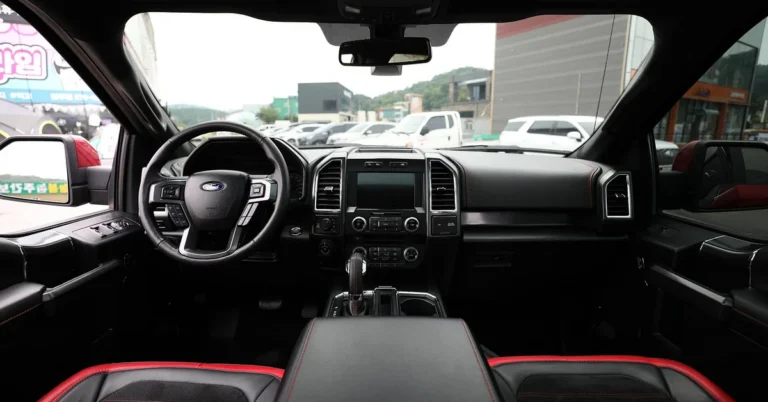
For more details on the cabin and tech features, check out the 2026 Raptor interior breakdown. If you’re shopping in a specific region, this Raptor for sale guide covers what to look for. And if you’re curious about the truck’s physical footprint, here’s the Raptor height specs.
Products related to this article
Sponsored / affiliate links. As an Amazon Associate I earn from qualifying purchases. I may earn additional commission from eligible campaigns.