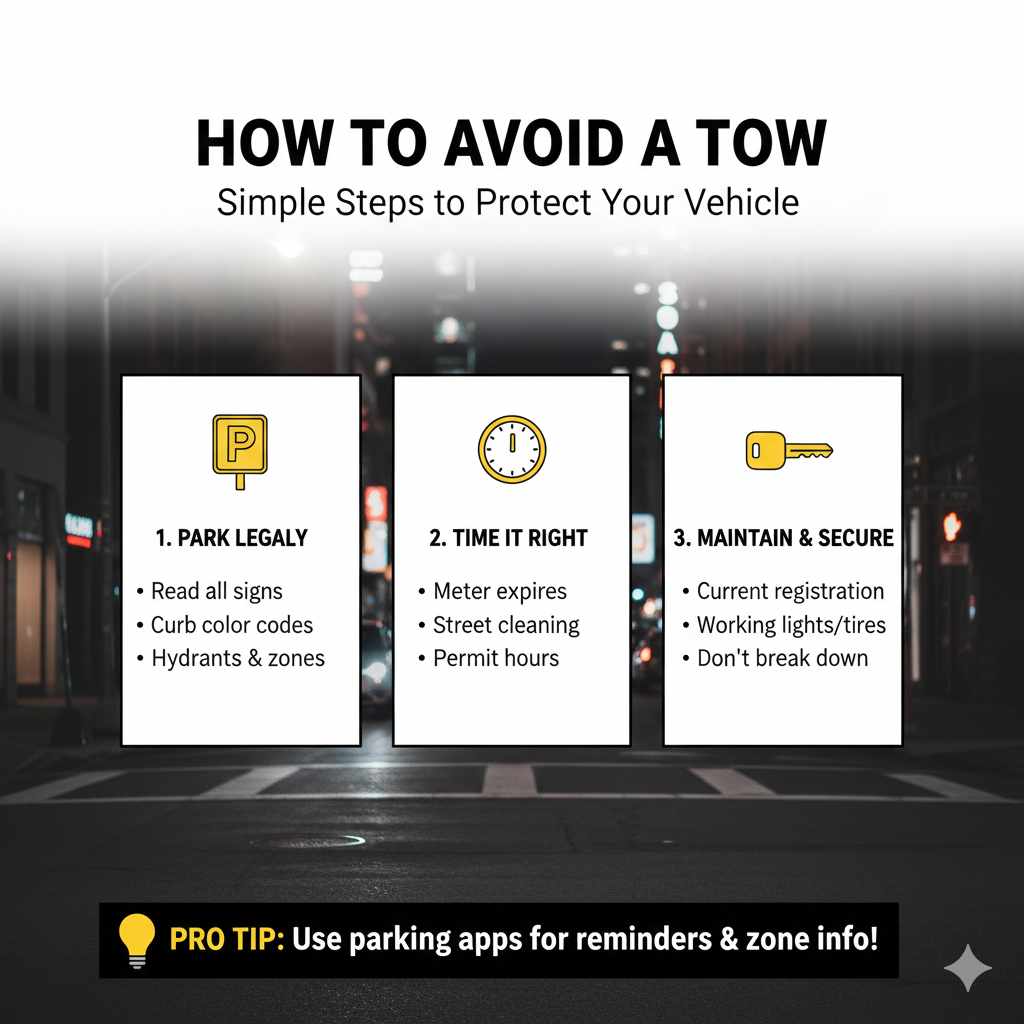
How to Avoid a Tow: Simple Steps to Protect Your Vehicle
Getting your car towed can be a real headache, and it’s something many drivers worry about. For new drivers, or those unfamiliar with parking rules, it can seem tough to avoid. The good news is, avoiding a tow is usually simple once you know the rules. This guide will provide easy-to-follow steps to help you learn How to Prevent Your Car From Being Towed, keeping your car safe and your mind at ease. Let’s get started!
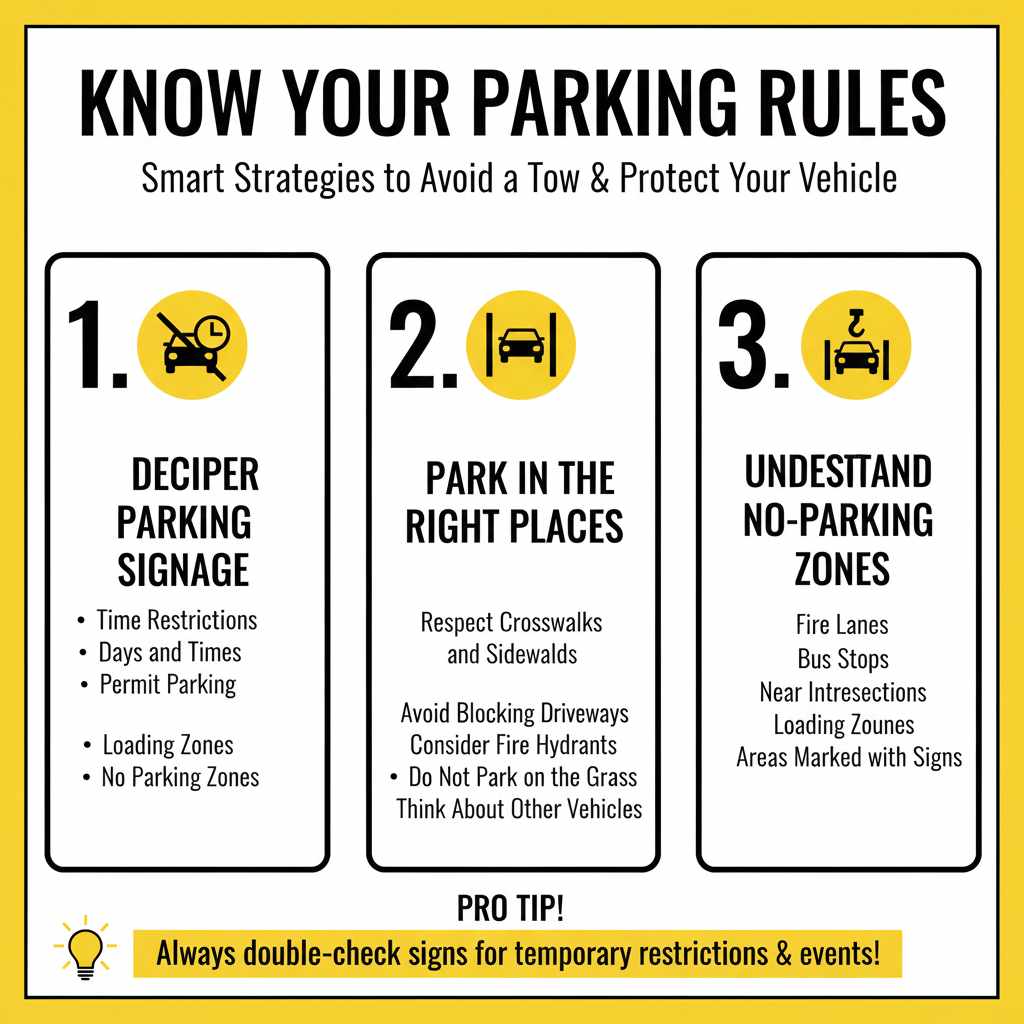
Know Your Parking Rules
The first step in safeguarding your vehicle from a tow truck is to become well-acquainted with parking regulations. Parking laws vary significantly from city to city, and even within different areas of the same city. Ignoring these rules can quickly lead to a towed car and a hefty fine. Often, drivers get caught out by small details such as not noticing signage or understanding the time restrictions. Therefore, always carefully read parking signs, checking for restrictions like time limits, days of the week, and permit requirements. Educating yourself on parking ordinances protects you from unexpected costs and inconveniences.
Deciphering Parking Signage
Parking signs can sometimes seem confusing, especially when there’s a lot of information crammed onto a single sign. Learning how to properly read parking signs is essential. Begin by looking for general information like time limits (e.g., “2-hour parking”). Then, check for days of the week when parking is restricted (e.g., “No parking Tuesdays”). Also, look for signs indicating permit-only parking, which is common in residential areas and near universities. Be particularly aware of signs that indicate “No Parking” zones, which are often enforced in areas to facilitate traffic flow. Take your time to read each sign and clarify any ambiguities before leaving your vehicle.
- Time Restrictions: Note the allowable parking time limits. Exceeding the allowed time is a common reason for a tow.
- Days and Times: Be mindful of which days and times parking restrictions apply. This is important on holidays and weekends.
- Permit Parking: If a sign indicates “Permit Parking Only,” be certain you have the right permit for the area.
- Loading Zones: Never park in loading zones unless you are actively loading or unloading.
- No Parking Zones: These zones are strictly enforced, often including fire hydrants and crosswalks.
Parking regulations are in place to ensure public safety and traffic flow. A basic grasp of these rules is your first defense against unnecessary complications. Ignoring these signs can lead to major disruptions, including car retrieval expenses and a lot of waiting. Make it a habit to look for signs to keep your car where it should be.
Parking in the Right Places
Choosing the right spot to park is as important as understanding the signs. Illegal parking can lead to a tow, no matter how briefly you’re away from your vehicle. Avoiding a tow also comes down to awareness and consideration. To stay safe, always park in designated areas, ensuring your car is fully within the marked lines and doesn’t obstruct any traffic lanes or pedestrian walkways. Parking too close to an intersection or a crosswalk can also lead to a tow, because these spots are typically considered hazardous. Prioritizing these details helps to avoid fines and keeps traffic moving smoothly. Check for special circumstances that may affect parking.
- Respect Crosswalks and Sidewalks: Make sure you never block crosswalks or sidewalks.
- Avoid Blocking Driveways: Always make sure you do not block driveways, even if it is your own.
- Consider Fire Hydrants: Never park within a certain distance of fire hydrants.
- Do Not Park on the Grass: Avoid parking on grassy areas or landscaped areas unless explicitly permitted.
- Think About Other Vehicles: Always make sure you are not obstructing other vehicles.
Parking smartly means choosing spots that are both legal and safe. Even if a spot seems like a good fit, double-check that your car won’t be in the way of anyone else. A quick check can save you a lot of hassle.
Understand No-Parking Zones
No-parking zones are put in place for specific reasons, such as emergency access or traffic management. They are strictly enforced, and you can face penalties for parking in these areas. Familiarizing yourself with these common zones is key to avoiding a tow. Common no-parking areas include fire lanes, bus stops, and areas near intersections. Fire lanes are designated for emergency vehicles, so parking in them is an especially serious offense. It is very important to always adhere to the rules in these areas.
- Fire Lanes: Never park in a fire lane. This endangers emergency services.
- Bus Stops: Avoid bus stops. They are marked to allow buses to pick up and drop off passengers safely.
- Near Intersections: Parking too close to an intersection can obstruct visibility.
- Loading Zones: Do not park in these areas unless you are loading or unloading.
- Areas Marked with Signs: Always pay attention to signs indicating “No Parking” or similar restrictions.
A good understanding of no-parking zones can prevent a lot of problems. These zones exist for the safety of people and the efficient operation of public services. Always make it a practice to respect them.
How to Prevent Your Car From Being Towed: Parking Enforcement and Your Rights
Even if you try your best, there may be times when parking enforcement comes into play. Knowing how parking enforcement works, what circumstances can lead to a tow, and what rights you have as a driver is vital. This knowledge can help you challenge a tow that you believe is unfair and also to better prepare for unavoidable situations. Understand the process from start to finish. Understanding the policies helps you deal with these situations with confidence and understanding.
Common Reasons for Towing
Understanding the common reasons for towing can help you be more aware of your parking habits. Several situations often lead to your car being towed. Many tows happen because the vehicle is parked in a restricted zone or exceeds time limits. Also, parking in a way that blocks traffic or obstructs other vehicles is another leading cause. Additionally, unpaid parking tickets and unpaid parking fees can also result in a tow. Knowing these causes helps you to avoid them. Staying aware of these common causes will help you make better decisions when parking.
- Expired Parking Meters: Always ensure you pay for your parking to avoid running into issues.
- Parking Violations: If you violate the parking regulations, your car can be towed.
- Blocking Traffic: This includes blocking a lane of traffic or blocking another vehicle’s access.
- Unpaid Tickets: Outstanding parking tickets can lead to your car being towed.
- Vehicle Abandonment: Leaving your car in the same spot for a long period can be seen as abandonment.
These scenarios emphasize the importance of awareness and adherence to parking regulations. Being careful in these areas decreases the likelihood of any unpleasant surprises, like a missing car. The simple solution is to consistently pay attention to parking signs and meters.
Challenging a Tow: Your Options
If you believe your car was towed unfairly, you have the right to challenge it. However, it is essential to act quickly. Your first step is to gather any evidence that supports your case, such as photos of the parking sign or meter, or witness statements. Contact the towing company immediately to find out what happened and where your car is. In many instances, you may need to file a formal complaint with the local authorities. Always make sure you know what to do if you think a tow was wrong.
- Gather Evidence: Take photos of the parking signs or meter if you feel you were towed wrongfully.
- Contact the Towing Company: Find out why your car was towed and its location.
- File a Complaint: Make an official complaint to the appropriate local agency, such as the Department of Transportation.
- Seek Legal Advice: If necessary, you may want to consult with a legal professional.
- Document Everything: Keep a record of all communications, and save any receipts.
Knowing your rights and the procedures for challenging a tow can save you money. Always gather evidence to support your claims and follow the appropriate processes. A well-prepared and timely response can help you resolve the situation and keep your car and your money.
Dealing With Parking Enforcement
Meeting parking enforcement can be a stressful time, but remaining calm and respectful can help make the process easier. Even if you believe a parking ticket is unjust, getting into a confrontation is not likely to help. Instead, politely ask for explanations and gather information. Make sure you get the details, and take notes. When dealing with parking enforcement, remember to be polite. Respecting the process can sometimes lead to a more favorable outcome. Also, you should have all the necessary documents available.
- Stay Calm: Maintain a calm demeanor to help de-escalate any tension.
- Be Respectful: Use polite language and show respect to the parking enforcement officers.
- Collect Information: Ask for a full explanation of the violation and details.
- Document the Encounter: Take notes of the conversation and any specifics.
- Know the Appeals Process: Learn how to appeal the ticket.
Handling interactions with parking enforcement with composure and respect is key. Your response may play an important role in how the case is handled. Keep in mind that a positive, respectful approach can often produce better outcomes.
Using Technology to Avoid a Tow
In the digital age, technology provides valuable tools to assist in keeping your vehicle safe from towing. Various applications and devices are now available to help you find parking, monitor your parking time, and avoid violations. These tools range from simple phone apps to sophisticated parking sensors. The use of technology can greatly improve your ability to deal with parking problems and keep your car where it belongs. Understanding your options and using them makes it easy to avoid issues. These tools bring convenience and efficiency.
Parking Apps and Services
Parking apps and services provide real-time information on parking availability, parking rates, and nearby parking regulations. This technology removes many of the usual parking challenges. Applications such as ParkMobile, SpotHero, and others give you access to a wide range of parking choices. They provide detailed maps that point to open parking spots and allow you to pay for parking directly from your phone. Using parking apps makes it easy to find parking, check prices, and pay without needing cash. There are many options available.
- Real-Time Parking Availability: Check and find open spots.
- Payment Options: Pay for parking through the app.
- Rate Comparisons: Compare rates to get the best deals.
- Parking Reminders: Get reminders about when your parking time is up.
- Navigation: Navigate to your chosen parking spot directly from the app.
Parking apps enhance the parking experience by offering a number of features that improve your ability to park quickly and easily. Whether it is finding a good deal on parking or getting alerts about the time, these apps make parking more practical and safer.
Parking Sensors and Monitoring Devices
Parking sensors and monitoring devices offer another way to reduce the risk of towing. These devices can assist you in finding suitable parking spots, especially in crowded areas. Some systems alert you if you are parked illegally or if your parking meter time is coming to an end. Parking sensors are also useful. This lets you monitor your car’s safety and your parking situation. These resources will enable you to find safe parking locations.
- Parking Sensors: Help with accurate parking, and fit well in tight spaces.
- Time-Based Alerts: Reminders that your parking meter time will expire soon.
- Location Tracking: Track your vehicle’s location and parking spot.
- Illegal Parking Alerts: Alerts if the vehicle is parked somewhere it shouldn’t be.
- Integration with Apps: Integrate with parking applications to offer seamless parking management.
Parking sensors, along with devices, create a detailed solution to parking. They are very useful in keeping your car in legal parking zones. The use of sensors makes parking easier. The result is fewer chances of getting towed.
Understanding Parking Meter Apps
In addition to broader parking applications, using specific parking meter apps is another way to avoid issues. These specialized apps let you pay for parking directly from your phone. They allow you to add time remotely. Users can get alerts about when their parking is about to end. These apps eliminate the need to use coins or to hurry back to the meter. They provide a lot of convenience, and they are usually very easy to use.
- Digital Payment: Pay for parking using your phone.
- Time Extension: Extend your parking time remotely.
- Alerts and Notifications: Get alerts before your time expires.
- Location Services: Locate nearby parking meters easily.
- Receipts and Records: Manage your parking history with digital records.
Using parking meter apps can make managing parking much easier. You can control parking from anywhere and avoid the need to go back to the meter. This will save you time and decrease the chance of being towed. It is all about the convenience.
How to Prevent Your Car From Being Towed: Additional Tips
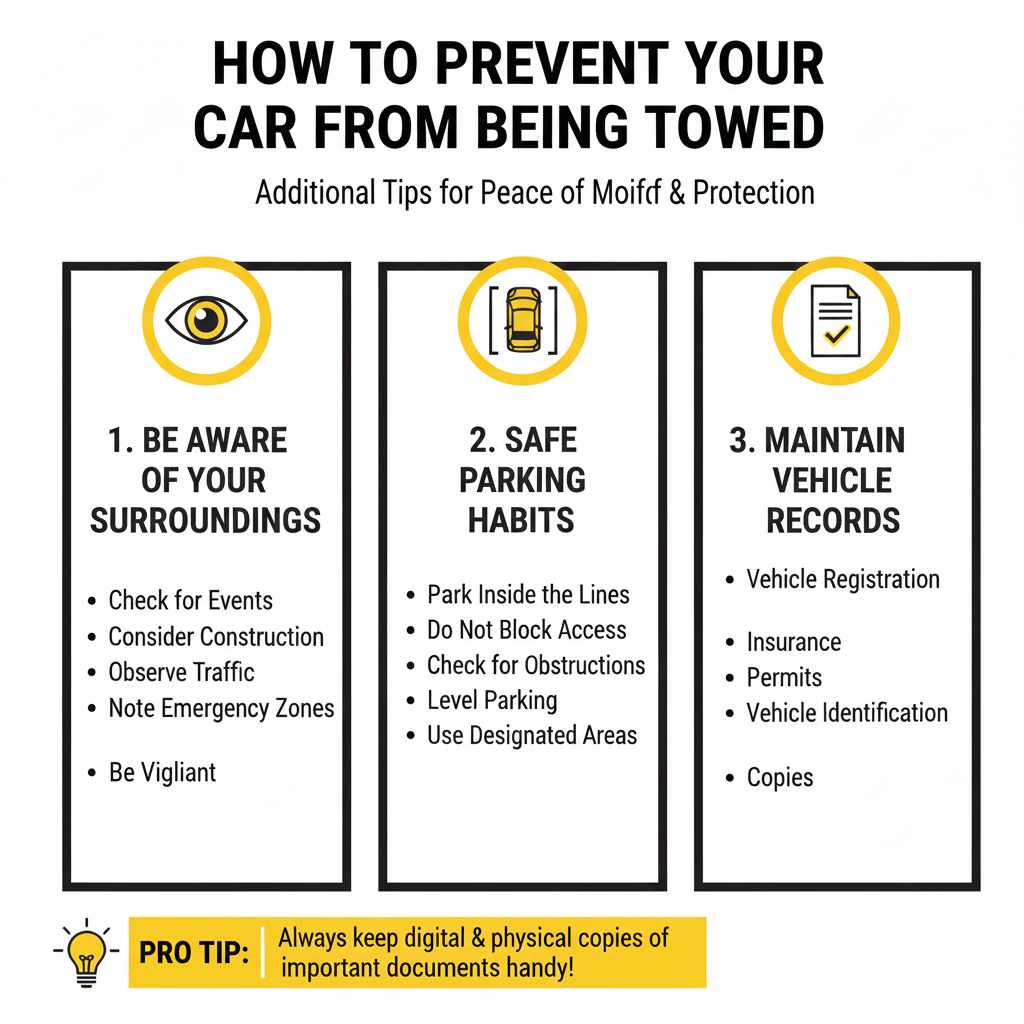
Beyond the fundamental tips discussed, there are additional steps you can take to protect your car. These strategies include being aware of your surroundings, utilizing safe parking practices, and always keeping your vehicle’s registration and other records up to date. Making these habits a part of your routine will significantly lower the chances of your car being towed. They are all small, easy steps, but they have major impact. Staying informed and alert is key.
Being Aware of Your Surroundings
Always staying aware of your surroundings is an important step in avoiding vehicle towing. Paying attention to what is going on will help you stay out of trouble. Take note of your surroundings as you park. Make sure the parking spot is clear. Check for any signs. Be aware of any activities or events going on around you. Knowing what is going on in an area will help you avoid problems, such as a temporary no-parking zone. A little observation can prevent problems. This protects you from complications.
- Check for Events: If an event is scheduled, check for parking restrictions.
- Consider Construction: Be aware of nearby construction sites.
- Observe Traffic: Watch out for how traffic moves in the area.
- Note Emergency Zones: Always be mindful of emergency zones and access points.
- Be Vigilant: If something seems off, it probably is.
Being attentive to your surroundings reduces the chance of falling into a trap. Looking closely at everything gives you a better chance to see any possible problems. It also lets you deal with them before they happen.
Safe Parking Habits
Developing safe parking habits is essential for preventing your car from being towed. Safe parking means paying attention to details like parking completely within the marked lines and avoiding blocking access for other vehicles or pedestrians. It means making sure you are never parking somewhere you are not supposed to be. Always check that the area is safe before you leave your car. This attention to detail will help you avoid unwelcome towing surprises. Making these habits part of your routine keeps your vehicle where it belongs.
- Park Inside the Lines: Ensure your car is fully within the marked parking space.
- Do Not Block Access: Make sure you do not block driveways, alleys, or crosswalks.
- Check for Obstructions: Confirm that your car does not block any views.
- Level Parking: Try to choose a reasonably flat parking surface to avoid issues.
- Use Designated Areas: Always use permitted parking zones, never parking randomly.
Safe parking practices contribute to road safety and help you avoid legal issues. Paying attention to these habits will help you avoid the inconvenience of a tow. They improve your parking experience and help keep your car where it belongs.
Maintaining Vehicle Records and Documentation
Keeping your vehicle records up to date is a practical way to avoid potential problems. Make sure your vehicle’s registration, insurance, and any required permits are up-to-date. This makes it easier to deal with issues if your car is ever towed. Maintaining up-to-date documents gives authorities the information they need quickly. Always keep a copy of your documents in the car and at home. You should always be able to quickly produce the proper information when needed. These simple steps keep you prepared. They give you a smoother time if any problems arise.
- Vehicle Registration: Keep your registration current.
- Insurance: Always have your insurance information in your car.
- Permits: Keep all required parking permits current.
- Vehicle Identification: Keep your VIN easily accessible for verification.
- Copies: Always carry copies of these documents.
Having all of your vehicle’s documents organized and up to date is a good practice. It speeds up processes when there are problems, such as a towed car. Keeping everything up to date will ensure you can take care of any issues right away.
Here are some real-life scenarios to illustrate some of the points above.
- A driver parks in a no-parking zone near a fire hydrant. The car is quickly towed due to the obstruction of the hydrant, which creates a safety risk. The driver needs to pay towing and storage fees.
- A driver parks in a spot with a two-hour parking limit. He is not back within the allotted time, and his car is towed. The driver is given a ticket and faces towing and storage fees.
Here are some examples of what might happen.
- Imagine you park your car for a short time to run an errand, only to find it gone when you return. You see that your car has been towed because you parked in a spot with a new, temporary parking restriction that you did not see. You have to contact the towing company and pay the fee.
- Picture this: You come back to your car, and it has been towed because you parked at a metered parking spot. You were not paying attention, and your time had run out. You would have to pay to get your vehicle back, plus any storage fees.
| Parking Rule | Consequence of Violation |
|---|---|
| Parking in a No Parking Zone | Immediate Tow |
| Exceeding Time Limits | Ticketing and Potential Tow |
| Blocking Driveways | Tow and Fines |
| Parking without Permit (if required) | Ticketing and Possible Tow |
| Parking in a Fire Lane | Immediate Tow and High Fines |
Frequently Asked Questions
Question: How can I tell if a parking sign is still valid?
Answer: Always check the sign for dates and times that indicate when the restriction applies. If the posted dates or times are over, then the rule is no longer in effect.
Question: What should I do if my car is towed?
Answer: First, stay calm. Contact the local police, or the towing company, to find out the location of your vehicle and the reason for the tow. Have your vehicle information ready.
Question: Can I dispute a parking ticket?
Answer: Yes, in many locations you have the right to dispute a parking ticket. Gather evidence, like photographs, and find out about the process for doing it.
Question: Are all parking violations grounds for towing?
Answer: Not all parking violations will cause a tow. However, some violations, such as parking in a fire lane or blocking traffic, will likely result in a tow.
Question: How often are cars towed for parking violations?
Answer: Towing rates vary by location and the severity of the violation, but it’s a common practice where parking regulations are heavily enforced. For example, some cities tow thousands of vehicles monthly, emphasizing the importance of parking correctly.
Final Thoughts
Safeguarding your vehicle from being towed is easier when you know the rules and make a habit of following them. From understanding parking signs to using technology and knowing your rights, each step plays a part in keeping your car where you left it. Being informed about parking regulations, choosing parking spots carefully, and staying aware of your surroundings form the foundation of defense. Remember to stay updated with your vehicle records and to remain calm and respectful when dealing with parking enforcement. By putting these practices into action, you can significantly lower the risk of having your car towed and avoid the stress and expense it involves. Now you are well-equipped to keep your vehicle safely parked and to have peace of mind. Drive safely and wisely!