How to Calculate Interest Rate on a Car Loan (With Real Examples)
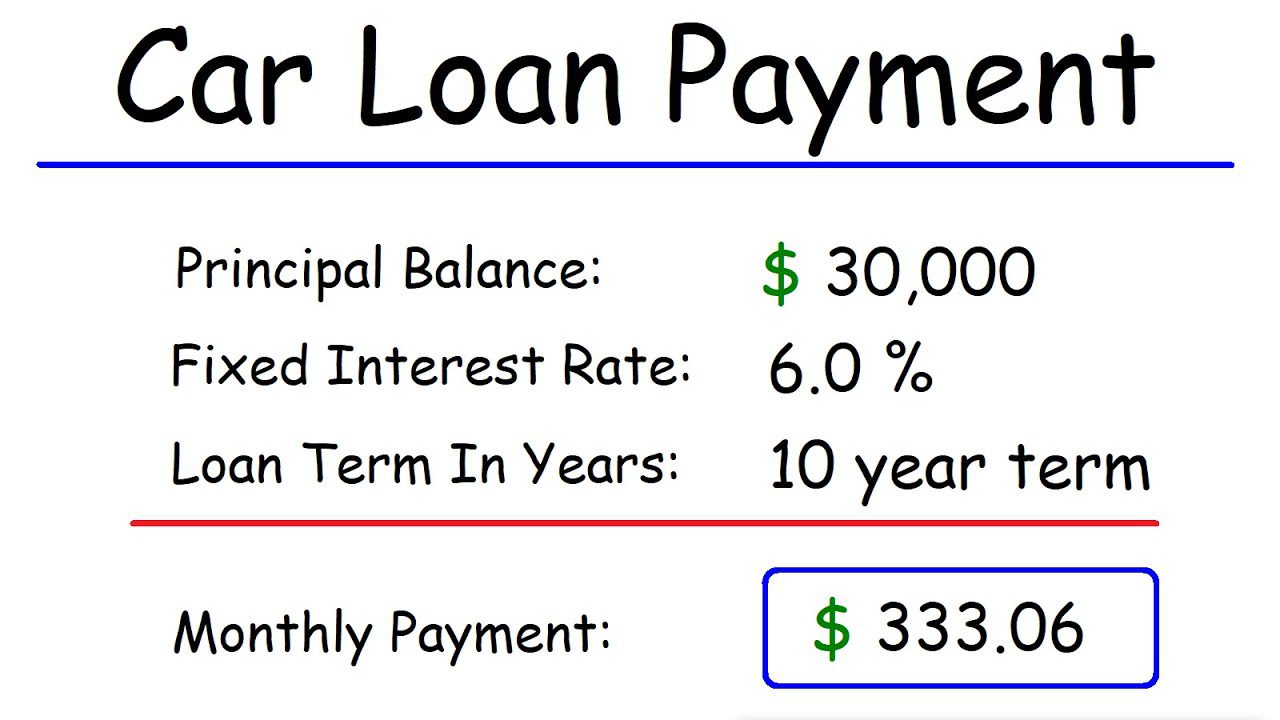
To calculate the interest rate on a car loan, lenders use the amortization formula, not a flat Principal × Rate × Time calculation. On a $10,000 loan at 5% APR for 36 months, that means about $789 in total interest — not the $1,500 a simple flat formula would suggest.
Most guides to car loan interest repeat two formulas — simple interest and compound interest — and apply them the same way you’d apply them to a savings account. Neither one is actually how a car payment gets calculated. Below is the real formula lenders use, a corrected worked example, and current 2026 average rates by credit score so you can tell if the rate you were quoted is actually good.
Key Terms You Need First
- Principal: The amount you borrow — the car’s price minus your down payment and any trade-in.
- APR (Annual Percentage Rate): The yearly cost of the loan, expressed as a percentage, including the interest rate and most lender fees.
- Term: How long you have to repay the loan, in months (commonly 36, 48, 60, 72, or 84).
- Monthly payment: The fixed amount you pay each month; part goes to interest, part goes to paying down the principal.
- Credit score: The single biggest factor lenders use to set your rate — higher scores get lower rates.
How Car Loan Interest Is Actually Calculated
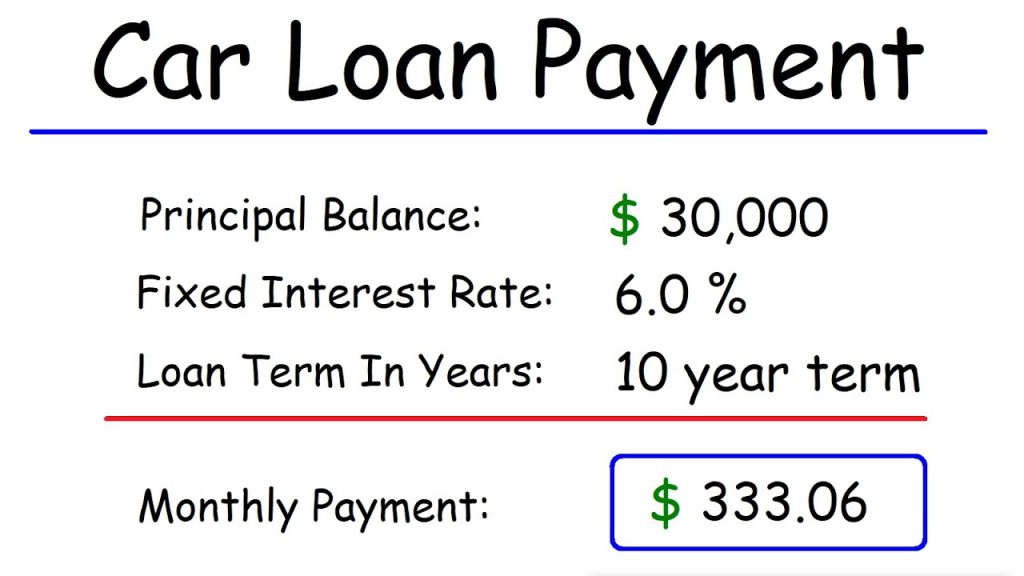
Nearly every car loan in the U.S. is a simple interest, fully amortizing loan. That phrase gets misunderstood constantly — “simple interest” does not mean you calculate interest once, up front, on the full loan for the whole term. It means interest accrues daily on whatever principal balance you still owe, and every payment you make first covers that period’s interest, with the rest going toward the balance. As the balance shrinks, less of each payment goes to interest and more goes to principal.
The formula lenders actually use to set your fixed monthly payment is the loan amortization formula:
M = P × [ r(1 + r)n ] ÷ [ (1 + r)n – 1 ]
- M — your fixed monthly payment
- P — the principal (loan amount)
- r — your monthly interest rate (APR ÷ 12)
- n — the total number of monthly payments (the term in months)
Worked Example
Say you borrow $10,000 at 5% APR for 36 months. Your monthly rate is 5% ÷ 12 = 0.4167%. Plugging that into the formula above gives a fixed monthly payment of $299.71. Over 36 payments, you pay a total of $10,789.52 — which means your total interest cost is $789.52, not thousands more.

A Common Mistake: Why “Interest = Principal × Rate × Time” Overstates What You’ll Pay
A lot of car-loan explainers hand you the basic simple-interest formula — Interest = Principal × Rate × Time — and apply it to the entire loan at once. Using the same numbers as above ($10,000 at 5% for 3 years), that formula gives:
Interest = $10,000 × 0.05 × 3 = $1,500
That’s nearly double the real cost. The flat formula assumes you owe interest on the full $10,000 for all three years, but you don’t — you’re paying the balance down every month, so interest is only ever charged on what’s left. The real, amortized total is $789.52, as shown above. This flat formula is fine for understanding the concept of simple interest in general, but it will always overstate what you actually owe on a monthly-payment car loan.
The other formula that shows up in car-loan guides is the compound interest formula (A = P(1 + r/n)nt), which is how a savings account or a loan with no payments during its term grows. That’s also not what happens with your car payment — you’re not letting interest pile up untouched for three years and then paying it all at once. If you ever see a car loan article treat your loan like a lump-sum compounding balance, that’s a sign the math doesn’t match how your actual bill works.
2026 Average Car Loan Interest Rates by Credit Score
According to Experian’s State of the Automotive Finance Market report for the first quarter of 2026, the average new-car loan APR was 6.39% and the average used-car loan APR was 11.43%. Your actual rate depends heavily on your credit tier:
| Credit Tier | Score Range | Avg. New-Car APR | Avg. Used-Car APR |
|---|---|---|---|
| Superprime | 781+ | 4.55% | 6.30% |
| Prime | 661–780 | ~6–7% | ~9–10% |
| Nonprime | 601–660 | ~9–10% | ~14–15% |
| Subprime | 501–600 | ~13–14% | ~19–20% |
| Deep subprime | 300–500 | 16.01% | 21.77% |
Figures are rounded averages based on Experian’s Q1 2026 data; your specific offer will vary by lender, loan term, and vehicle age. If your quote is well above the range for your credit tier, that’s your cue to shop other lenders before signing.
How to Work Out Your Own Rate or Payment
You have two common situations:
You know your APR and want the payment: Plug your principal, monthly rate, and term into the amortization formula above, or use a lender’s online calculator — enter the loan amount, APR, and term, and it does the math instantly.
You know your payment and want to check your effective rate: This is the reverse problem — there’s no simple one-line formula for it, since the rate is buried inside the exponent. In practice, you either use a financial calculator’s rate-solving function, an online auto loan calculator’s “find the rate” mode, or try a few rates in the amortization formula until the resulting payment matches what you were quoted. This is worth doing any time a dealer quotes you a monthly payment without a clearly stated APR — a longer term can hide a higher rate behind a payment that still looks affordable.
If you want a full month-by-month breakdown of exactly how much of each payment goes to interest versus principal, see our companion guide on how to calculate interest on a car loan manually.

Factors That Affect Your Car Loan Interest Rate
Credit score. This is the single largest factor. As the table above shows, moving from deep subprime to superprime can cut your new-car APR by more than 11 percentage points.
Down payment. A larger down payment lowers the amount you finance and can signal lower risk to a lender, which sometimes helps your rate. Aim for at least 10–20% if you can.
Loan term. Shorter terms (36–48 months) usually carry lower rates than longer terms (72–84 months), and you pay far less total interest even before accounting for the rate difference, since you’re borrowing the money for less time.
New vs. used. Used-car loans carry meaningfully higher average rates than new-car loans across every credit tier, partly because used vehicles are riskier collateral for the lender.
Tips for Getting the Best Interest Rate
- Check your credit report first. Fix any errors before you apply — a wrong late payment on your report can bump you into a worse tier.
- Get pre-approved before you shop. A pre-approval from your bank or credit union gives you a real APR to compare against the dealership’s financing offer, and gives you negotiating leverage.
- Rate-shop within a short window. Multiple auto loan inquiries within about 14–45 days (depending on the credit scoring model) typically count as a single inquiry, so comparing several lenders won’t tank your score.
- Compare the APR, not just the monthly payment. A lower payment stretched over a longer term can still mean a higher rate and more total interest — always ask for the APR in writing.
- Consider a co-signer with strong credit if your own score puts you in a higher-rate tier; this shifts some of the lender’s risk and can meaningfully lower your quoted rate.

Conclusion
The rate that matters is the APR, and the math that matters is the amortization formula — not a flat interest calculation over the full loan term. Once you know your APR, term, and principal, you can work out exactly what you’ll pay, compare it against current 2026 averages for your credit tier, and spot a bad deal before you sign.
Frequently Asked Questions
What Formula Do Lenders Use to Calculate a Car Loan Payment?
Lenders use the loan amortization formula, M = P × [r(1+r)^n] ÷ [(1+r)^n – 1], where P is the loan amount, r is the monthly interest rate (APR ÷ 12), and n is the number of monthly payments. This spreads interest across the declining balance instead of charging it all up front.
How Do I Calculate My Effective Interest Rate If I Already Know My Payment?
There’s no single-step formula for this, since the rate sits inside an exponent. Use an online auto loan calculator’s rate-solving tool, a financial calculator’s rate function, or test a few APRs in the amortization formula until the resulting payment matches your actual monthly payment.
What Is the Payment on a 60-Month, 2.99% Car Loan for $40,000?
The monthly payment is about $718.57. Over the full 60 months you’d pay roughly $3,114 in total interest on top of the $40,000 principal.
What Is a Good Interest Rate for a 72-Month Car Loan in 2026?
Based on Experian’s Q1 2026 data, superprime borrowers (781+ credit score) averaged around 4.55% APR on new-car loans; a similarly strong score on a 72-month term typically lands in roughly the same range, though longer terms sometimes carry a small rate premium over 60-month loans. Anything meaningfully above that for excellent credit is worth shopping against other lenders.
Why Is My Real Interest Cost Lower Than the Simple Interest Formula Predicts?
Because you’re paying down the loan every month instead of owing interest on the full original amount for the entire term. The simple-interest formula (Principal × Rate × Time) assumes the whole balance sits untouched until the end of the loan, but an amortizing car loan reduces the balance — and the interest charged on it — with every payment.
Products related to this article
Sponsored / affiliate links. As an Amazon Associate I earn from qualifying purchases. I may earn additional commission from eligible campaigns.
 4G GPS Tracker Car Anti-Theft Long Battery Life 20000mAh Real Time GPS Tracking Device Magnet No Geographic Restriction Car Tracker with Alerts, Geo Fence, History Playback TK905C
 GF09 Mini GPS Tracker Car Locator Real Time Tracking Location Voice Recording Anti-Lost Positioner Device for Child Pet Dog