How to Find Your Car Trim Level From VIN and Sticker
Find a car’s trim by checking three sources: the VIN, the certification label on the driver’s door frame, and the Monroney label on the window. If any two disagree, treat the listing as unverified. Wrong trim can change equipment, tow ratings, parts fitment, insurance, and resale value. This guide shows how to read each source, spot conflicts, and confirm the exact trim before you buy or sell.
How to find your car trim level from the VIN
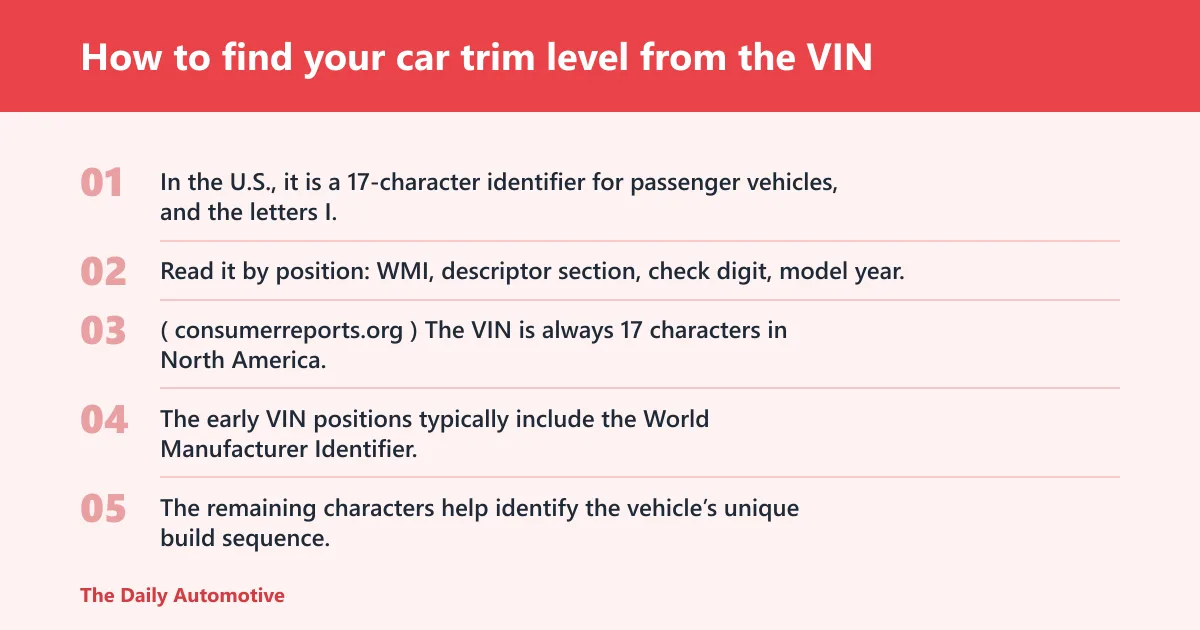


Start with the VIN, but do not stop there. In the U.S., it is a 17-character identifier for passenger vehicles, and the letters I, O, and Q never appear in it. Read it by position: WMI, descriptor section, check digit, model year, and plant code can narrow the trim, but exact trim often needs a second source. (consumerreports.org)
Read the 17-character VIN in order
The VIN is always 17 characters in North America. The early VIN positions typically include the World Manufacturer Identifier, the Vehicle Descriptor Section, the check digit, the model year, and the assembly plant. The remaining characters help identify the vehicle’s unique build sequence.
That structure matters because VINs are not read like a serial number. Each segment carries different information, and the code meaning changes by manufacturer. A decoder may identify body style and engine, then label a trim from a brand-specific code table. Another decoder may stop at a broader series name.
Why VIN decoders can disagree on trim
VIN decoding can reveal who built the vehicle, where, when, and roughly how it was equipped. It can also help determine which safety features a car has and identify EPA-rated fuel economy. But trim codes are not universal, so one decoder may call the same build “base” while another calls it a higher series with option content.
Say your VIN points to a midsize sedan with a 2.5-liter engine and the seller listing says top trim. If the VIN’s descriptor section only supports the lower series, the listing is not proof. A package can add wheels, a spoiler, or a larger screen without changing the trim name.
Where to look for the VIN on the car and paperwork
You can find a VIN at the lower corner of the windshield on the driver’s side and on the certification label on the driver’s door frame. It also appears on the title, registration, dealer paperwork, and many marketplace listings. If you are checking a used car online, a listing VIN is enough for a first pass, but not for final trim confirmation.
Cardog states the VIN appears at the base of the windshield and on the driver’s door-frame sticker. The same number should match across the car and the paperwork. If it does not, pause. A mismatch can point to a data-entry error, a replaced body section, or a car whose paperwork does not match the vehicle in front of you.
📊 The VIN is always 17 characters in North America. Source: VIN Decoder Guide: What Your Vehicle Identification Number….
Can the VIN tell you the exact trim level?
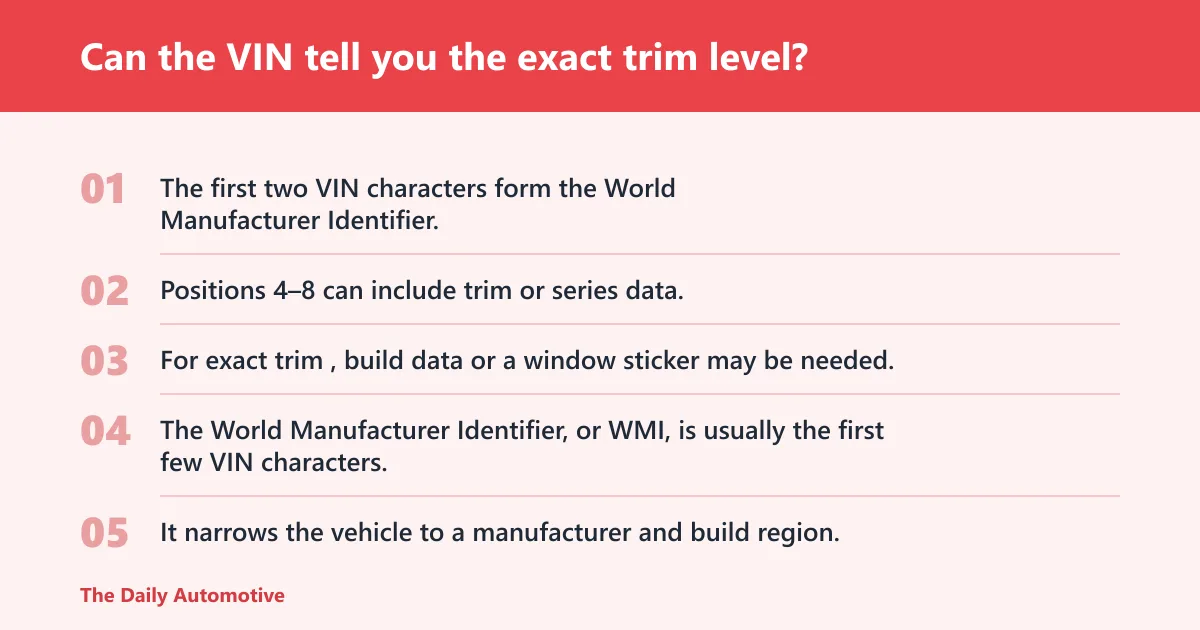
Sometimes, but not reliably on its own. The first two VIN characters form the World Manufacturer Identifier, which tells you the manufacturer and region. Positions 4–8 can include trim or series data, and position 11 identifies the assembly plant, but those codes are brand-specific. For exact trim, build data or a window sticker may be needed.
What the World Manufacturer Identifier tells you
The World Manufacturer Identifier, or WMI, is usually the first few VIN characters. It narrows the vehicle to a manufacturer and build region. That is useful for filtering search results, but it does not tell you whether the car is an entry model or a higher-series version with added equipment.
What the Vehicle Descriptor Section can encode
The Vehicle Descriptor Section is the middle of the VIN, often positions 4–8. Cardog states those positions can include trim or series. On some brands they also encode body style, engine, restraint system, and drivetrain. On others, the same characters only identify a family of models, leaving exact trim unresolved.
When you need dealer build data
If the VIN decoder gives you a broad series but not a clear trim, you may need a dealer build sheet or manufacturer lookup. That is especially common when option packages blur the line between trims. A lower trim with a premium package can look like a higher trim from the curb.
Picture a compact SUV with 19-inch wheels, heated seats, and a panoramic roof. Those items may look like a top trim, but they can also be standalone options. A VIN decoder may not separate “appearance package” from “trim level” unless the manufacturer’s build data does.

How to use the window sticker to confirm trim
The Monroney label is the best source for trim confirmation on newer vehicles. It is the new-car sticker, lists equipment and build details, and shows where the car was built. If the VIN is ambiguous, the window sticker usually spells out the exact trim name and the equipment that came with it.
Find the trim name and standard equipment
The trim name is usually printed prominently on the window sticker near the model description. Beneath that, the sticker lists standard equipment, packages, and options. Those details let you separate factory trim content from dealer-added accessories and from features installed later.
Check options that change trim appearance
Look for packages that can mimic a higher trim. Wheels, body kits, upholstery, infotainment screens, and driver-assist features often change the way a car looks and feels. But appearance is not proof. The sticker shows whether those items were part of the trim or added as options.
Use build and assembly details to match the VIN
New-car window stickers show where the car was built. Match that detail to the VIN’s plant code and the rest of the build data. If the window sticker says one assembly plant and the VIN points somewhere else, the documents do not belong together or the vehicle records need another check.
For a shopper, the window sticker is the fastest way to confirm whether a car is really the sport package, midgrade trim, or top trim. For an older used car, though, that sticker may be gone. In that case, use the doorjamb label and paperwork together.
How to use the driver’s-side doorjamb sticker as a cross-check
The driver’s-side door-frame certification label is a useful verification point, not a trim badge. It can confirm final assembly location and may include tire and weight data, plus certification information. When the window sticker is missing, it helps confirm that the VIN and the vehicle’s physical identity still line up.
Assembly location and certification data
The doorjamb sticker is stamped or affixed on the door jamb. It often carries certification text and factory data tied to the completed vehicle. That makes it helpful when a vehicle has replacement panels, aftermarket badging, or paperwork that does not look clean.
Tire and weight information
Many door labels also list tire sizes, rim specifications, and weight data. Those details can help confirm whether a vehicle is equipped as expected. They do not prove trim by themselves, but they can expose a mismatch when a seller claims a higher trim with different factory hardware.
What to do when the window sticker is missing
If the Monroney label is gone, use the VIN plus the doorjamb sticker and any factory paperwork. Then compare that information to the vehicle’s visible equipment. If the car has badges or features that do not fit the build data, keep checking before you accept the trim name.
What’s the difference between VIN, door jamb sticker, and window sticker for trim lookup?
They do different jobs. The VIN identifies the build family and key coded details, the doorjamb sticker verifies the completed vehicle and factory compliance data, and the window sticker spells out trim, equipment, and options. For exact trim, the window sticker is strongest, but the other two are valuable checks when it is missing.
| Source | What to look for | Trim clue value | Common failure cases |
|---|---|---|---|
| VIN position clues | WMI in positions 1–3, VDS in positions 4–8, check digit at 9, model year at 10, plant at 11 | Can narrow manufacturer, series, engine, body style, restraint, drivetrain, and sometimes trim | Brand-specific codes, decoder disagreement, older vehicles with incomplete databases |
| Driver’s-side doorjamb sticker | Final assembly location, certification text, tire and weight data | Confirms the completed vehicle matches the VIN and factory build | Missing label, faded print, swapped doors or body sections, mislabeled paperwork |
| Window sticker | Trim name, standard equipment, options, build details, where built | Best source for exact trim on newer vehicles | Missing on used cars, dealer copies only, aftermarket additions mixed in with factory content |
- Read the VIN and decode positions 1–11.
- Check whether the code set narrows the car to one trim or only a series.
- Match the VIN to the driver’s-side doorjamb sticker.
- Use the window sticker to confirm trim and option content if available.
- If two sources disagree, stop and verify with a dealer build sheet or manufacturer lookup.
Yes means the VIN family, doorjamb label, and window sticker all line up. No means the vehicle needs another check. Treat a mismatch as a signal, not a verdict. That is the safest way to avoid buying a car that looks like a higher trim but is built as something else.
How do I decode a 17-character VIN to find trim?
Decode it by position, not by guesswork. Start with the WMI in positions 1–3, then read the Vehicle Descriptor Section in positions 4–8, skip the check digit in position 9, read the model year in position 10, and the assembly plant in position 11. Then compare those results with the sticker data.
The key point is that the same position can mean different things by brand. Position 4 may identify a safety system on one vehicle and a trim series on another. That is why a decoder result should be treated as a lead, not the final answer.
Can I find trim level if I only have the registration or title?
Yes, but only as a starting point. Registration and title documents usually give you the VIN, which lets you decode the vehicle and cross-check the model year, plant, and series. They do not usually list the exact factory trim package, so you still need a sticker or build sheet to confirm it.
If you only have paperwork, run the VIN through a lookup, then compare the result against the vehicle’s visible equipment and any seller listing. If the car is already sold or the sticker is gone, ask for a manufacturer build sheet or dealer record before you rely on trim for pricing or parts.
Why does my VIN decoder show the wrong trim?
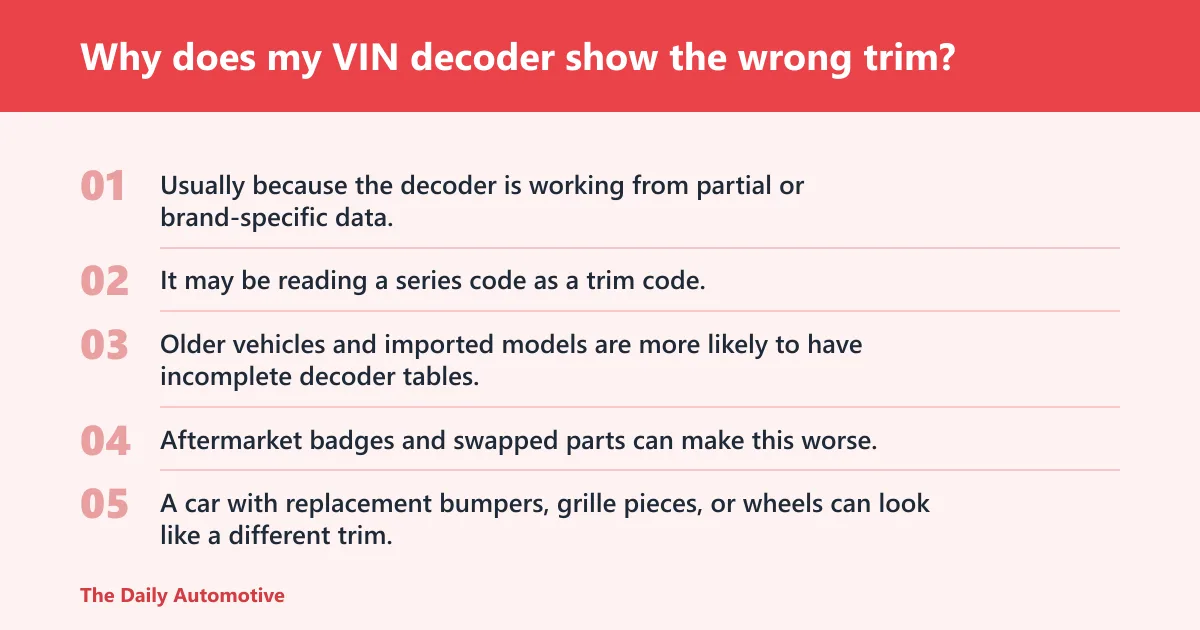
Usually because the decoder is working from partial or brand-specific data. It may be reading a series code as a trim code, or it may be missing a special package that changes appearance without changing the trim name. Older vehicles and imported models are more likely to have incomplete decoder tables.
Aftermarket badges and swapped parts can make this worse. A car with replacement bumpers, grille pieces, or wheels can look like a different trim. Mismatched paperwork, listing errors, and copy-pasted dealer descriptions also cause false trim labels. Keep checking until the physical car matches the documents.
How do I find trim level on a used car without the window sticker?
Use the VIN and the doorjamb sticker first, then compare both to the visible equipment. If the window sticker is missing, the trim can still be confirmed when the VIN decoding, assembly data, and factory-style features all line up. If they do not, ask for a build sheet or dealer lookup before calling it exact.
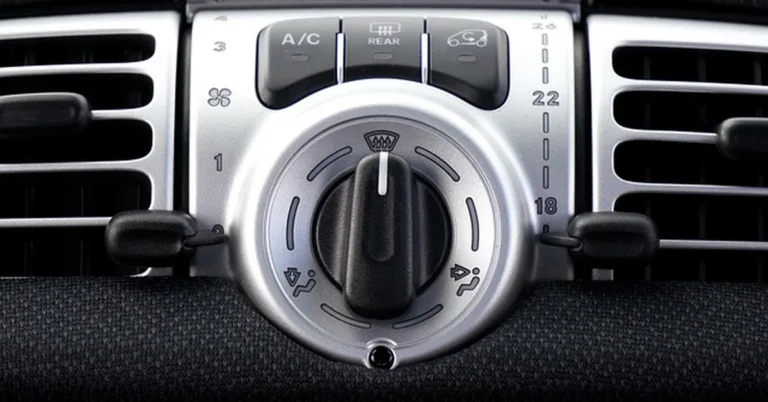
A common first-timer mistake is trusting the badges on the hatch or fenders. Those pieces are easy to replace. A more reliable approach is to compare seat material, wheel size, climate controls, infotainment layout, and safety equipment against the VIN and door label. If the package looks too good for the code, it may be an option set, not a higher trim.
Frequently asked questions
How do I find my car’s trim level from the VIN?
Read the VIN by position and then compare it with the doorjamb label and window sticker. The VIN can narrow the manufacturer, model family, engine, body style, and sometimes trim, but exact trim often depends on brand-specific codes. If the decoder result is broad, use build data to confirm.
Where is the trim level on the window sticker?
The trim name is usually near the model description at the top of the window sticker. Standard equipment, optional packages, and factory-installed features appear below it. That layout lets you separate the trim from dealer accessories and from upgrades added later.
Can the VIN tell me the exact trim level?
Sometimes, but not always. The VIN can point to a trim or series, especially through the descriptor section, yet that code varies by manufacturer. If a decoder is vague or disagrees with the car’s equipment, confirm with the window sticker or a dealer build sheet.
Products related to this article
Sponsored / affiliate links. As an Amazon Associate I earn from qualifying purchases. I may earn additional commission from eligible campaigns.