How To Get Car Insurance Online: The Essential Guide
To get car insurance online, first gather your personal, vehicle, and driving history information. Next, use comparison websites or visit individual insurer sites to get multiple quotes. Finally, compare the coverage options and prices, choose the best policy for your needs, and complete the purchase online to receive instant proof of insurance.
Hello, friend! It’s Md Meraj here. I know that dealing with car insurance can feel like a huge headache. The forms, the strange words, the fear of paying too much—it’s a lot. Many people feel overwhelmed and just stick with what they have, even if it’s not the best deal. But what if I told you there’s a simpler, faster way to handle it, all from your own home?
Shopping for car insurance online puts you in the driver’s seat. It gives you the power to compare, choose, and save money without ever talking to a salesperson. It might sound tricky, but I promise it’s not. I’m here to walk you through every single step. Together, we’ll turn this confusing task into a simple, confidence-building win. Let’s get started!
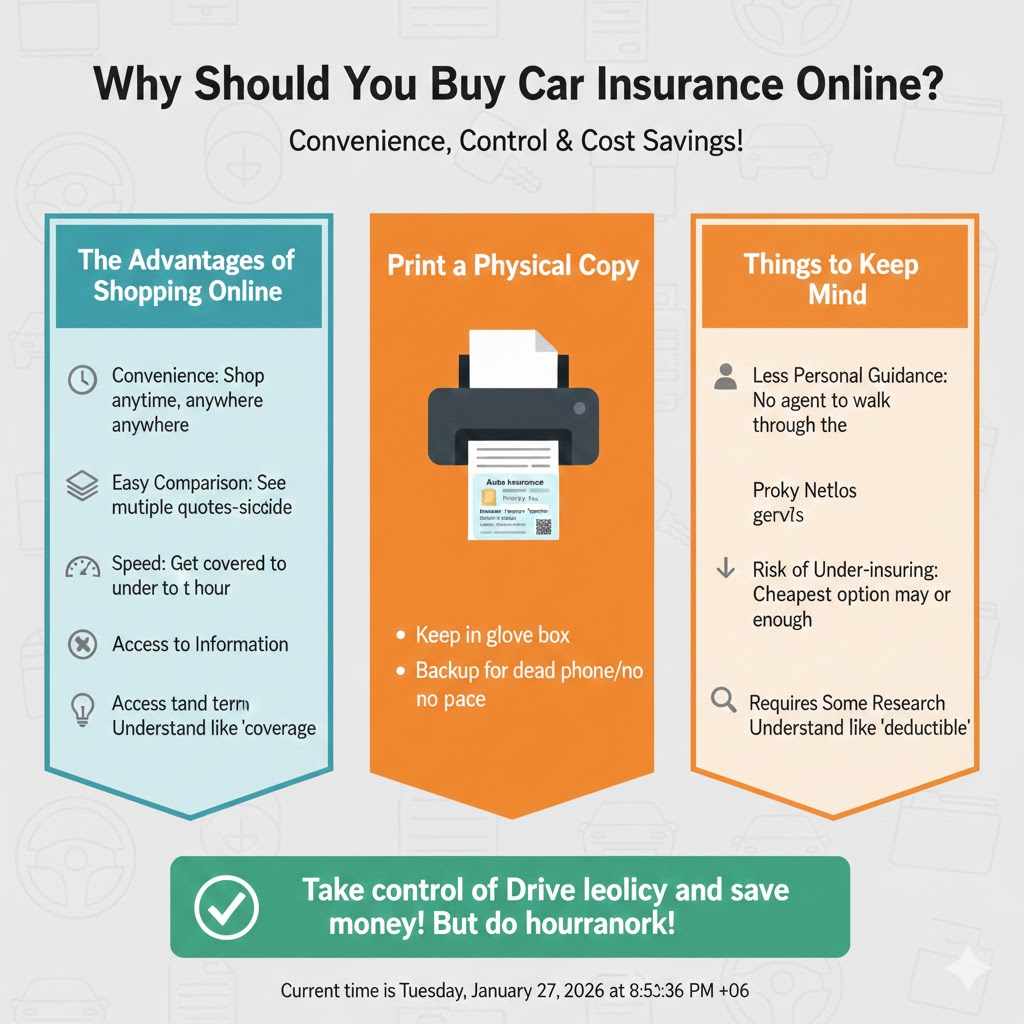
Why Should You Buy Car Insurance Online?
Before we dive into the “how,” let’s talk about the “why.” Buying insurance online has changed the game for drivers. It offers a level of convenience and control that was unheard of just a few years ago. Of course, like anything, it has its good points and a few things to watch out for. Understanding these helps you make the best choice for you.
The Advantages of Shopping Online
- Convenience: You can shop anytime, anywhere. Whether it’s late at night or during your lunch break, you don’t have to worry about an agent’s office hours. All you need is an internet connection.
- Easy Comparison: Online tools let you see quotes from multiple companies side-by-side in minutes. This makes it incredibly easy to spot the best deal and find the right coverage for your budget.
- Speed: The entire process, from getting a quote to having proof of insurance in your email, can take less than an hour. If you need coverage fast, online is the way to go.
- No Sales Pressure: You can take your time to review policies and make decisions without a salesperson trying to upsell you. You are in complete control of the process.
- Access to Information: Insurance company websites are packed with information, guides, and tools to help you understand different types of coverage and what they mean.
Things to Keep in Mind
- Less Personal Guidance: If you have a complex situation or love having an agent guide you, the online process might feel a bit lonely. You’re responsible for understanding the policy details yourself.
- Risk of Under-insuring: Without an expert advising you, it can be tempting to just pick the cheapest option. This might leave you without enough coverage when you really need it.
- Requires Some Research: To make a smart choice, you need to do a little homework on what terms like “deductible” and “liability” mean. Don’t worry, we’ll cover that!
Step 1: Gather Your Information Before You Start
Think of this like gathering ingredients before you start cooking. Having everything ready makes the whole process smooth and fast. You don’t want to be running around searching for documents in the middle of filling out a form. Grab a pen and paper or open a notes app, and let’s make a checklist.
Here’s what you’ll typically need for every driver you want on the policy and every vehicle you want to insure:
-
Personal Information:
- Full names, addresses, and dates of birth for all drivers in your household.
- Driver’s license numbers and the state they were issued in.
- Your marital status and occupation.
-
Vehicle Information:
- The Vehicle Identification Number (VIN) for each car. You can find this on your car’s dashboard (driver’s side, visible through the windshield), on the driver’s side doorjamb sticker, or on your vehicle registration or title.
- The year, make, and model of each vehicle.
- An estimate of the miles you drive each year.
- Whether you own, finance, or lease the vehicle.
-
Driving History:
- Information about any accidents, claims, or traffic tickets for any driver on the policy within the last 3-5 years. Be honest here—insurers will check!
- Details on any defensive driving courses you’ve completed, as this can sometimes earn you a discount.
-
Current Insurance Information (if you have it):
- The name of your current or previous insurance provider.
- Your current coverage limits. This is helpful as a starting point for your new policy.
Once you have all this collected, you’re ready to start shopping like a pro. The hardest part is already done!
Step 2: Understand Your Coverage Needs
This is the most important step. Choosing the right coverage is like choosing the right tools for a job. You need to protect yourself, your family, and your finances. While every state has minimum insurance requirements, these are often not enough to fully protect you in a serious accident. Let’s break down the main types of coverage.
Most states require you to have at least liability coverage. You can find your state’s specific requirements at your local Department of Motor Vehicles (DMV) website or through resources like the Insurance Information Institute.
Key Types of Car Insurance Coverage
Here is a simple table explaining the most common coverage options. Think about your car’s value and your personal financial situation to decide what’s right for you.
| Coverage Type | What It Does in Simple Terms | Who Usually Needs It |
|---|---|---|
| Liability Coverage | Pays for the other person’s medical bills and vehicle repairs if you cause an accident. It does not cover you or your car. | Everyone. This is required by law in nearly every state. |
| Collision Coverage | Pays to repair or replace your car if it’s damaged in a collision with another object (like a car, tree, or pole), regardless of who is at fault. | Anyone with a newer or valuable car, or if your auto loan or lease requires it. |
| Comprehensive Coverage | Pays to repair or replace your car if it’s stolen or damaged by something other than a collision (like hail, fire, vandalism, or hitting an animal). | Anyone with a newer or valuable car, or if your auto loan or lease requires it. Often bundled with collision. |
| Uninsured/Underinsured Motorist | Protects you if you’re in an accident caused by someone who has no insurance or not enough insurance to cover your costs. | Highly recommended for everyone, as it protects you from irresponsible drivers. |
| Personal Injury Protection (PIP) | Helps pay for your and your passengers’ medical expenses after an accident, no matter who was at fault. It can also cover lost wages. | Required in some “no-fault” states. A good idea for extra medical protection. |
A “full coverage” policy usually means you have liability, collision, and comprehensive. If you have a loan on your car, your lender will almost certainly require you to have full coverage.
Step 3: Compare Quotes from Multiple Insurers
Now for the fun part—seeing the numbers! You would never buy the first car you see without looking at others, right? The same goes for insurance. Prices can vary by hundreds or even thousands of dollars per year for the exact same coverage from different companies.
You have two main ways to get quotes online:
- Directly from Insurance Company Websites: You can visit the websites of individual insurers like GEICO, Progressive, State Farm, or Allstate and fill out their quote forms one by one. This is a good approach if you already have a few companies in mind.
- Using an Online Comparison Tool: Websites like The Zebra or Insurify allow you to fill out one form and get quotes from many different insurance companies at once. This is often the fastest and most efficient way to see a wide range of options.
When comparing, make sure you are looking at “apples-to-apples” quotes. This means the coverage limits, deductibles, and types of coverage should be the same for each quote you review. A super cheap quote might look great, but it could be because it offers much less protection.
Step 4: Dive into the Details and Look for Discounts
Once you have a few good quotes, don’t just pick the cheapest one and click “buy.” Take a few minutes to look closer. The best policy is a mix of good price, great coverage, and a company you can trust.
Understanding Key Policy Terms
Insurance policies use some specific words. Knowing them will make you a much smarter shopper.
| Term | Simple Explanation |
|---|---|
| Premium | This is the amount you pay for your insurance policy. It can be paid monthly, every six months, or once a year. |
| Deductible | This is the amount of money you have to pay out of your own pocket for a claim before the insurance company starts paying. A higher deductible usually means a lower premium. |
| Policy Limit | This is the maximum amount of money the insurance company will pay for a single claim or accident. Make sure your limits are high enough to protect your assets. |
Don’t Forget About Discounts!
Insurance companies offer dozens of discounts, but they don’t always apply them automatically. As you fill out your online forms, keep an eye out for these common ways to save:
- Multi-Policy Discount: Bundling your auto insurance with home or renters insurance from the same company.
- Good Driver Discount: For having a clean driving record with no accidents or violations.
- Good Student Discount: For young drivers in high school or college who maintain a certain GPA (usually a B average or higher).
- Vehicle Safety Features: Having anti-lock brakes, airbags, or an anti-theft system can lower your rate.
- Low Mileage Discount: If you don’t drive very often (for example, you work from home).
- Pay-in-Full Discount: Paying your entire 6-month or 1-year premium upfront instead of in monthly installments.
- Automatic Payments/Paperless Billing: Signing up for auto-pay or receiving documents electronically.
Step 5: Choose Your Policy and Complete the Purchase
You’ve done the research, compared your options, and found the perfect policy. It’s time to make it official. The online purchasing process is usually very straightforward.
- Finalize Your Coverage: Double-check that all the coverage types, limits, and deductibles are what you want.
- Enter Payment Information: You’ll need a credit card, debit card, or bank account information to make your first payment. This is often called a “down payment.”
- Choose a Policy Start Date: You can usually choose for the policy to start immediately or on a future date. If you already have insurance, set your new policy to start the same day your old one ends to avoid any gap in coverage. A lapse in coverage can cause your rates to go up in the future.
- Review and Sign Electronically: Read the final documents carefully. You’ll be asked to “e-sign” to confirm that everything is correct and that you agree to the terms.
Once your payment goes through, congratulations—you’re insured! The company will immediately send you confirmation documents via email.
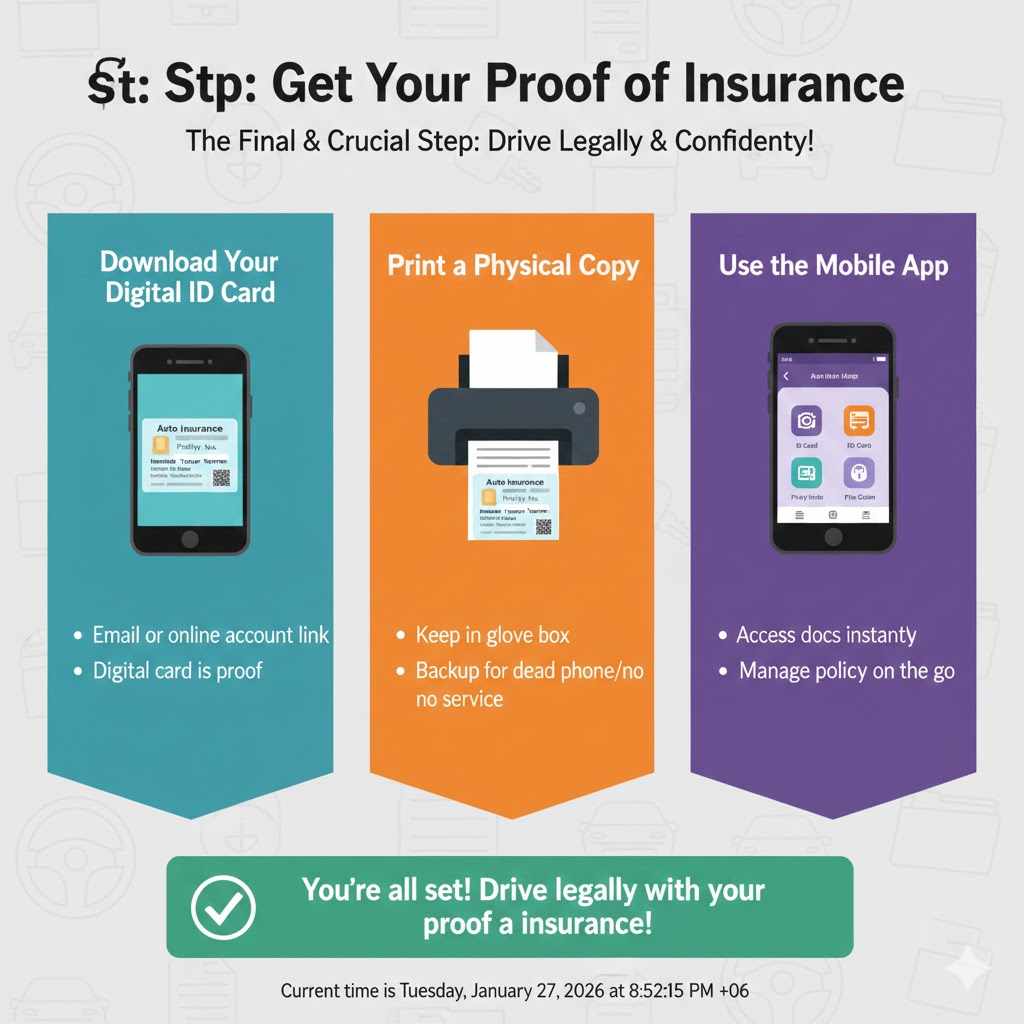
Step 6: Get Your Proof of Insurance
This is the final and crucial step. You must have proof of insurance with you anytime you drive. After you buy your policy online, the insurance company will provide you with digital copies of your documents right away.
- Download Your ID Cards: Look for an email with attachments or a link to your online account. You should find a digital insurance ID card.
- Print a Copy: It’s always a good idea to print a physical copy of your insurance card and keep it in your glove box. Your phone battery could die, or you might be in an area with no service when you need it.
- Use the Mobile App: Most major insurers have a mobile app that allows you to access your ID cards, policy information, and even file a claim directly from your phone.
And that’s it! You’ve successfully navigated the world of online car insurance. You did your homework, made a smart choice, and likely saved yourself some money in the process.
Frequently Asked Questions (FAQ)
Is it safe to buy car insurance online?
Yes, it is very safe as long as you are using the official website of a reputable insurance company or a trusted comparison site. These sites use encryption to protect your personal and financial information. Just be sure the website address starts with “httpss://” to ensure it’s a secure connection.
Can I get car insurance instantly online?
Absolutely! In most cases, you can get a quote, purchase a policy, and receive your proof of insurance via email all within about 15-30 minutes. Your coverage can start the very same day.
What is a VIN and why do I need it?
VIN stands for Vehicle Identification Number. It’s a unique 17-digit code for your specific car, like a fingerprint. Insurance companies use it to know the exact make, model, year, and manufacturing details of your vehicle, which helps them give you a very accurate quote.
How much car insurance do I actually need?
At a minimum, you need to meet your state’s legal requirements. However, experts often recommend more than the minimum. A good rule of thumb is to have enough liability coverage to protect your assets (like your savings and home). If your car is new or valuable, you should also have collision and comprehensive coverage.
Will getting insurance quotes online affect my credit score?
No. When you get an insurance quote, insurers may perform a “soft pull” on your credit history. This is used to generate an insurance score, which helps predict risk. Unlike a “hard pull” (like when you apply for a loan), a soft pull does not affect your credit score at all.
Can I switch car insurance companies anytime?
Yes, you can switch at any time, not just when your policy is up for renewal. If you find a better rate, you can buy the new policy and then contact your old insurer to cancel. They should refund you for any unused portion of your premium.
What’s the difference between an insurance quote and a policy?
A quote is an estimate of what your insurance premium will be based on the information you provide. It’s not a contract. A policy is the actual contract you sign with the insurance company that provides you with coverage once you have paid for it.
You’re in Control Now
See? That wasn’t so bad! Buying car insurance online is all about preparation and comparison. By taking the time to gather your information, understand what you need, and look at different options, you’ve taken a huge step toward becoming a more confident and savvy car owner.
You no longer have to feel stuck with a policy that’s too expensive or doesn’t fit your needs. The power is in your hands to find the right protection at the right price. Remember to revisit your insurance every year or so—as your life changes, your insurance needs might change, too. Keep driving safely, and know that you’ve made a smart choice to protect yourself and your vehicle.