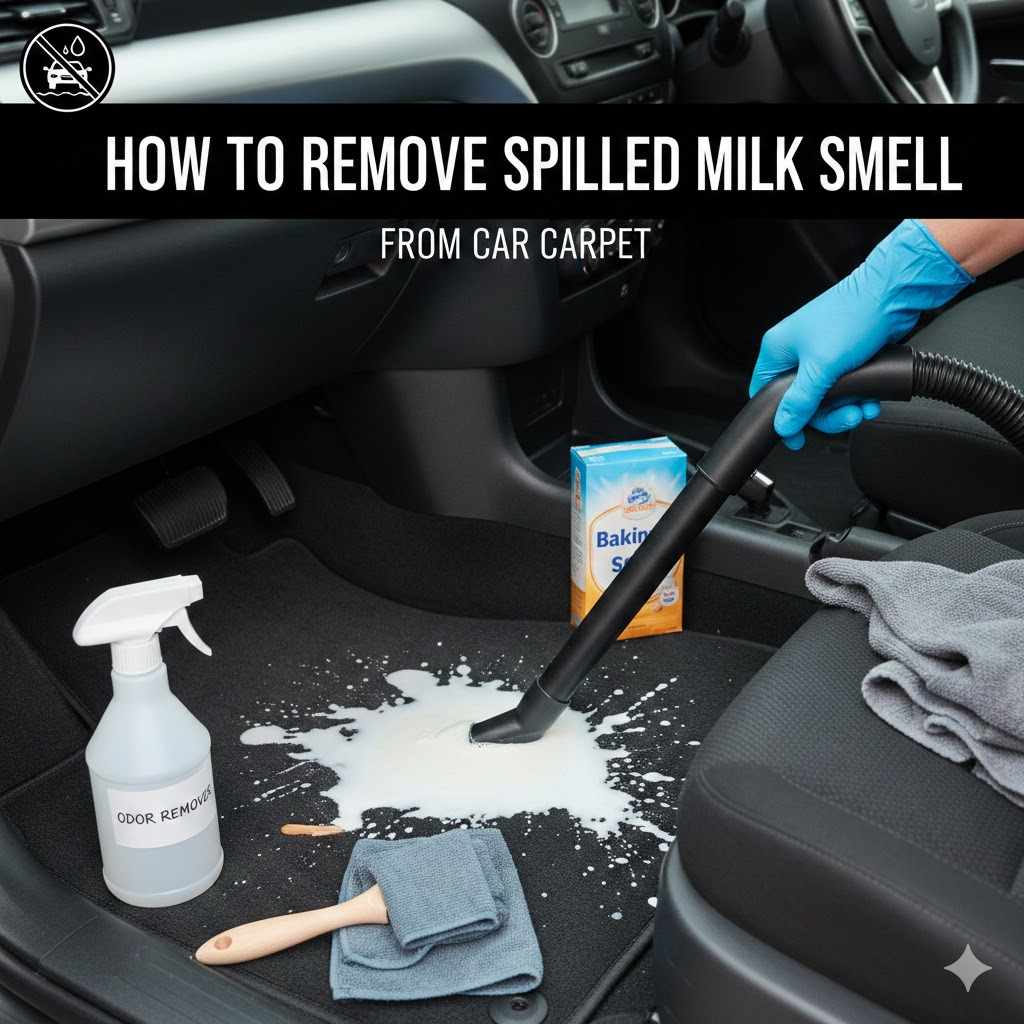
How to Remove Spilled Milk Smell from Car Carpet
It happens to the best of us. A quick sip turns into a spill, and suddenly your car smells like a dairy farm. Getting rid of that lingering milk odor from car carpet can feel like a big challenge, especially if you’re new to car cleaning.
But don’t worry! This guide breaks down How to Remove Spilled Milk Smell from Car Carpet into simple steps anyone can follow. We’ll show you exactly what to do to make your car smell fresh again, fast.
Why Milk Stains Are Tricky
Milk might seem like a simple spill, but it’s a bit of a sneaky culprit when it comes to lingering smells in your car’s carpet. When milk spills, its proteins and sugars don’t just sit on top of the fabric; they soak deep into the fibers. These organic materials are a perfect food source for bacteria.
As these bacteria multiply, they break down the milk components, releasing a strong, unpleasant odor. This smell gets worse over time, especially in the warm, enclosed environment of a car, making it a common and frustrating problem for many car owners.
The Science Behind the Stench
Understanding why milk smells so bad is key to tackling it. Milk contains fats, proteins, and lactose (sugar). When exposed to air and warmth, these components start to break down.
Bacteria naturally present in the environment, and on the carpet itself, feast on these. This process is called decomposition or putrefaction. The byproducts of this bacterial activity are volatile organic compounds (VOCs), which are molecules that easily turn into gas and travel through the air, creating that distinct sour, spoiled smell.
The longer milk sits, the deeper it soaks, and the more the bacteria can work their magic, embedding the smell deep within the carpet fibers.
Common household cleaners that work well on other stains might not be enough for milk. They might clean the visible stain, but they don’t always kill the bacteria or neutralize the odor-causing compounds effectively. This is why, even after wiping up a spill, the smell can return or even intensify a day or two later.
For beginners, this can be confusing and discouraging, as the usual cleaning methods don’t seem to work.
Dealing with Bacteria Growth
Bacteria thrive in environments rich with organic matter and moisture. Car carpets, with their porous nature and tendency to trap spills, are ideal breeding grounds. When milk spills, it provides a nutrient-rich feast for these microscopic organisms.
-
Bacterial Action and Odor Production
The bacteria break down the complex molecules in milk, such as proteins and fats, into simpler compounds. This metabolic process releases gases that are highly pungent and unpleasant. These gases are what we perceive as the “spoiled milk” smell. The deeper the milk penetrates, the more surface area there is for bacteria to colonize and produce odor. -
Moisture Trapping
Car carpets are designed to be absorbent to provide comfort and quiet. However, this absorbency also means they can hold onto moisture from spills for extended periods. If the moisture isn’t completely dried out, it creates a humid environment perfect for bacterial growth, allowing the odor to persist and even worsen. -
Surface Area and Fiber Structure
The weave and texture of car carpet create a large surface area. This means a spilled liquid can spread out and become absorbed into many individual fibers. Each fiber surface can host bacteria, significantly increasing the total amount of odor-producing activity compared to a smooth surface.
Essential Cleaning Supplies
Before you start tackling that milk smell, gathering the right supplies is important. Having everything ready makes the cleaning process much smoother and more effective. You don’t need fancy or expensive products for this.
Simple items found in most homes can do the job. This preparation ensures you can act quickly once you begin, which is vital for preventing the smell from setting in.
Gathering Your Arsenal
To effectively remove spilled milk smell from car carpet, you’ll need a few key items. These tools will help you clean, neutralize odors, and dry the area properly. Think of these as your go-to items for a fresh-smelling car.
-
Absorbent Materials
Paper towels, clean rags, or an old towel are crucial for soaking up as much of the spilled milk as possible. The more liquid you can remove upfront, the less there is for bacteria to work on. Blotting is more effective than wiping, as it lifts the liquid out of the carpet fibers rather than spreading it further. -
Cleaning Solution
A mild solution is often best. A mixture of white vinegar and water is a fantastic natural odor neutralizer and cleaner. Alternatively, a specialized enzyme cleaner designed for pet stains or organic odors can be very effective. These cleaners contain enzymes that break down odor-causing molecules. -
Water Source
You’ll need clean water for rinsing. A spray bottle filled with water can help you rinse without over-saturating the carpet. Having a bucket of water nearby is also useful for rinsing rags. -
Drying Tools
Good ventilation is key. Open car doors and windows. A fan, especially a portable one or a hair dryer on a cool setting, can speed up the drying process significantly. Thorough drying is essential to prevent mold and mildew, which can create their own unpleasant odors.
White Vinegar A Natural Wonder
White vinegar is a powerhouse in natural cleaning. Its acidic nature helps to break down the alkaline residues left by milk and other organic substances. More importantly, vinegar is an excellent odor neutralizer.
-
Acidic Properties
Vinegar’s acetic acid reacts with the ammonia compounds that often form as milk spoils. This reaction neutralizes the odor molecules, rather than just masking them. It’s a chemical reaction that effectively eliminates the source of the smell. -
Antimicrobial Action
While not a disinfectant in the same way as bleach, vinegar does have some antimicrobial properties. It can help to inhibit the growth of odor-causing bacteria, further contributing to odor removal. This is why it’s a preferred choice for tackling organic spills. -
Safety and Accessibility
White vinegar is readily available at any grocery store and is very inexpensive. It’s also non-toxic and safe to use around children and pets once dried and aired out, making it a popular choice for home cleaning tasks.
Enzyme Cleaners Explained
Enzyme cleaners are specifically designed to break down organic matter. They use natural enzymes, which are proteins that speed up chemical reactions. In cleaning, these enzymes target and digest the molecules that cause stains and odors.
-
Biological Breakdown
These cleaners contain specific enzymes that are programmed to break down proteins, fats, and carbohydrates found in organic spills like milk. For instance, proteases break down proteins, lipases break down fats, and amylases break down starches. -
Targeting the Source
Unlike many conventional cleaners that just mask odors, enzyme cleaners work at a molecular level to eliminate the source of the smell. They essentially ‘eat’ away at the organic residue causing the odor, leaving the carpet clean and fresh. -
Effectiveness on Tough Odors
Enzyme cleaners are particularly effective for stubborn odors that have had time to soak in, such as those from pet accidents or, in our case, spilled milk. They are often recommended for situations where other cleaning methods have failed to fully remove the smell.
Step-by-Step Cleaning Process
Now that you have your supplies, let’s get to work. Following these steps carefully will help you remove even the most stubborn milk smells from your car’s carpet. The key is to be thorough at each stage.
Immediate Action for Fresh Spills
If the milk has just spilled, speed is your greatest ally. The sooner you can address the spill, the easier it will be to prevent the smell from becoming permanent. Quick action can save you a lot of effort down the line.
-
Blot, Don’t Rub
As soon as you notice the spill, grab your absorbent materials like paper towels or clean rags. Gently blot the affected area. Press down firmly to absorb as much liquid as possible. Avoid rubbing or scrubbing, as this can spread the milk further into the carpet fibers and make the stain harder to remove. Keep blotting with fresh towels until no more liquid is being absorbed. -
Apply a Cleaning Solution
Once you’ve absorbed the bulk of the liquid, it’s time to clean. Lightly spray the area with your chosen cleaning solution, such as a 1:1 mixture of white vinegar and water, or an enzyme cleaner. Allow the solution to sit for a few minutes to start breaking down the milk proteins and odor. -
Blot Again
After the solution has had time to work, blot the area again with clean, dry towels. This step helps to lift both the cleaning solution and any remaining milk residue from the carpet. You might be surprised how much more comes out. -
Rinse Thoroughly
Using a spray bottle filled with clean water, lightly mist the area. Then, blot it thoroughly with dry towels again. This rinsing step is important to remove any cleaning solution residue that could attract dirt later or leave a faint scent of its own. -
Dry Completely
This is a critical step. Open all car doors and windows to allow for maximum ventilation. If possible, place a fan near the wet area to speed up the drying process. Ensure the carpet is completely dry before closing the car up. Dampness will encourage new bacterial growth and a return of the odor.
Dealing with Older, Set-In Stains
If the milk spill isn’t fresh and the smell has already set in, you’ll need to be a bit more persistent. Older stains require a deeper approach to ensure the odor-causing culprits are eliminated.
-
Identify the Affected Area
Try to pinpoint exactly where the milk spilled. Sometimes it can spread further than you initially think, especially if it was a large spill or soaked through to the padding beneath the carpet. -
Saturate with an Enzyme Cleaner
For older stains, an enzyme cleaner is often the most effective. Generously spray a high-quality enzyme cleaner directly onto the affected area and a few inches beyond its borders. Ensure the cleaner penetrates deeply into the carpet fibers and padding, where the odor-causing bacteria and residue might be hiding. -
Allow Dwell Time
Enzyme cleaners need time to work their magic. Follow the product’s instructions for dwell time, which can range from several hours to overnight. You might want to cover the treated area with plastic wrap or a damp towel to keep it moist, as the enzymes work best in a damp environment. -
Blot and Rinse
After the dwell time, blot the area thoroughly with clean, dry towels to absorb the enzyme cleaner and dissolved residue. Then, rinse the area by lightly misting with water and blotting again. -
Repeat if Necessary
For very stubborn or old odors, you may need to repeat the enzyme cleaning process. It’s better to do multiple treatments than to settle for a lingering smell. Patience is key here.
The Vinegar and Baking Soda Method
This classic combination is highly effective for neutralizing odors, including that persistent milk smell. Baking soda is a natural absorbent and deodorizer, while vinegar provides the acidic punch to break down the odor-causing compounds.
-
Clean Up Excess
If there’s any residual moisture, blot it up as much as possible with dry towels. -
Apply Baking Soda
Generously sprinkle a thick layer of baking soda over the entire affected area. Make sure it covers the spot completely. Baking soda works by absorbing moisture and odors from the carpet fibers. -
Spray with Vinegar Solution
In a spray bottle, mix equal parts white vinegar and water. Lightly spray the baking soda-covered area. You will see it fizz as the vinegar reacts with the baking soda. This fizzing action helps lift the odor and any remaining residue from the carpet. Don’t saturate the carpet; just make the baking soda damp. -
Let It Sit
Allow the mixture to sit and work for at least a few hours, or even overnight. The longer it sits, the more effective it will be at absorbing and neutralizing the smell. -
Vacuum Thoroughly
Once the mixture is completely dry, vacuum the area thoroughly to remove all the baking soda residue. You might need to go over it a few times to ensure it’s all gone. -
Repeat if Needed
If a faint odor persists, you can repeat this process. Sometimes, older or deeper spills require a second application to fully eliminate the smell.
Why Baking Soda Works Wonders
Baking soda, also known as sodium bicarbonate, is a mild alkali that is incredibly effective at absorbing and neutralizing odors. Its unique crystalline structure allows it to trap odor molecules.
-
Odor Absorption
The porous nature of baking soda allows it to absorb unpleasant smells by trapping odor molecules within its structure. It doesn’t just mask odors; it chemically neutralizes them. -
Neutralizing Acidity
When used with an acidic substance like vinegar, baking soda’s alkalinity helps to neutralize a wider range of odors. The chemical reaction between the acid and alkali creates a more stable compound, effectively canceling out the bad smell. -
Moisture Control
Baking soda also has a natural ability to absorb moisture. This is helpful in cleaning up spills, as it can draw out residual dampness from the carpet fibers, further preventing bacterial growth and odor development.
Deep Cleaning and Deodorizing Techniques
Sometimes, a simple surface clean isn’t enough. For deeply ingrained milk smells, you might need to go the extra mile with more intensive cleaning methods. These techniques aim to reach deeper into the carpet and padding to eliminate the source of the odor.
Steam Cleaning for Odor Elimination
Steam cleaning uses hot water vapor to clean and sanitize. The heat can help break down odor-causing compounds and kill bacteria. If you have access to a steam cleaner, this can be a very effective method for tackling persistent milk smells.
-
Hot Water Extraction
A steam cleaner essentially sprays hot water (often mixed with a cleaning solution) onto the carpet and then immediately extracts it along with any loosened dirt and odor-causing residues. The high temperature of the water is crucial for its effectiveness. -
Penetration Power
The steam can penetrate deep into the carpet fibers and even the padding beneath, reaching areas that surface cleaning might miss. This deep cleaning action is essential for removing embedded milk residue and bacteria. -
Sanitizing Effect
The heat generated by steam cleaning has a sanitizing effect, helping to kill bacteria and other microorganisms that contribute to odors. This makes it a powerful tool for refreshing and deodorizing your car’s interior.
When using a steam cleaner for milk smells, consider using a cleaning solution specifically designed for pet stains or organic odors. These often contain enzymes that work in conjunction with the steam to break down the odor-causing molecules more effectively. Always ensure the carpet is thoroughly dried afterward, perhaps with fans, to prevent any new moisture-related odors from developing.
Ozone Generators (Use with Caution)
Ozone generators are powerful devices that can eliminate strong odors. They work by producing ozone gas, which oxidizes and breaks down odor molecules.
-
Oxidation Process
Ozone (O3) is a highly reactive molecule. When it comes into contact with odor-causing compounds, it breaks them down into odorless molecules. This is a powerful chemical process that can tackle very stubborn smells that other methods can’t. -
Effective for Persistent Odors
Ozone generators are often used in professional cleaning services for cars, homes, and businesses to eliminate smoke, mold, mildew, and other deeply embedded odors. They are particularly effective for smells that have permeated materials. -
Safety Precautions
It is absolutely critical to use ozone generators with extreme caution and follow all manufacturer instructions. Ozone gas can be harmful to humans, pets, and plants at certain concentrations. The vehicle must be completely unoccupied during treatment and thoroughly aired out afterward before anyone re-enters.
A common scenario for using an ozone generator is after a significant spill that has been untreated for a while, or if other methods have failed to completely remove the milk smell. The process typically involves placing the generator in the car, sealing it up, and running it for a specified period. Afterward, the car needs to be aired out for several hours to allow the ozone to dissipate.
While highly effective, this is usually a last resort due to the safety considerations involved.
Preventing Future Milk Spills and Odors
The best way to deal with spilled milk smell is to avoid it altogether! Taking a few simple preventative measures can save you a lot of cleaning effort in the future. These habits are easy to adopt and can keep your car smelling fresh for longer.
-
Use Spill-Proof Containers
Invest in travel mugs with secure lids that prevent leaks and spills. For children, sippy cups or bottles with tight-fitting caps are essential. This is the most direct way to prevent milk from ever reaching your car’s carpet. -
Limit Drinks in the Car
Try to limit bringing open containers of milk or milk-based drinks into the car, especially for children who are more prone to accidents. If it’s necessary, ensure drinks are sealed and stored securely. -
Keep Cleaning Wipes Handy
Always have a pack of car-friendly cleaning wipes or a small towel and a spray bottle of water in your car for immediate clean-ups of minor spills. Quick attention can prevent a small spill from becoming a big odor problem.
Common Mistakes to Avoid
When you’re trying to get rid of that unpleasant milk smell, it’s easy to make a few missteps that can actually make the problem worse. Knowing these common mistakes can help you clean more effectively and avoid frustration.
Over-Saturating the Carpet
One of the biggest mistakes is using too much liquid when cleaning. While it might seem like more cleaning solution will get the job done faster, it can actually prolong drying time and lead to other issues.
-
Promoting Mold and Mildew
When car carpets become overly saturated, they take a very long time to dry completely. This damp environment is perfect for mold and mildew to grow, which can create their own musty, unpleasant odors. These can be even harder to remove than the original milk smell. -
Damaging the Padding
Excessive moisture can seep through the carpet and into the foam padding beneath. This padding is difficult to dry thoroughly, and trapped moisture can lead to rot, mold, and structural damage to the car’s interior over time. -
Extending Cleaning Time
While you might think you’re cleaning more effectively, over-saturating means you’ll spend a lot more time trying to dry the area. This can be inconvenient and may require bringing in fans or even professional drying equipment.
The key is to use cleaning solutions sparingly. Lightly misting the area or applying cleaner to your cloth and then blotting is much more effective than dousing the carpet. Always follow up with thorough blotting to remove excess moisture.
Masking Odors Instead of Eliminating Them
Many people reach for air fresheners or strong perfumes when dealing with odors. While these might temporarily cover up the smell, they do nothing to address the root cause.
-
Temporary Fixes
Air fresheners and perfumes simply add a stronger scent that masks the bad smell for a short period. As soon as the freshener wears off, the original milk odor will likely return, often mixed with the freshener scent for an even more unpleasant combination. -
Ignoring the Source
The real problem is the bacteria and residue left behind by the milk. These need to be broken down and removed. Masking the odor allows these problems to persist and potentially worsen over time. -
Potential for Chemical Reactions
Some air fresheners can react with the lingering odor molecules, potentially creating new, even more unpleasant chemical smells. It’s always better to neutralize or eliminate the odor source rather than cover it up.
Focus on cleaning solutions that neutralize odors, like vinegar or enzyme cleaners, and ensure the area is completely dry. This approach provides a lasting solution rather than a temporary band-aid.
Not Drying the Area Completely
As mentioned before, thorough drying is non-negotiable. Leaving the carpet damp after cleaning is an invitation for more problems.
-
Bacterial Resurgence
Dampness is the perfect breeding ground for the very bacteria you’re trying to eliminate. If the carpet isn’t completely dry, those bacteria will quickly become active again, and the milk smell will reappear. -
Mold and Mildew Development
Beyond just smells, persistent dampness can lead to mold and mildew growth, which can damage the carpet and padding and pose health risks. Mold has a distinct, unpleasant odor that is very difficult to remove. -
Long-Term Damage
Trapped moisture can lead to the degradation of carpet backing and padding, potentially causing the carpet to become brittle or discolored. This can permanently damage your car’s interior.
Always use fans, open windows, or even a hair dryer on a cool setting to ensure the carpet is bone dry. You can test this by pressing a dry paper towel firmly into the area; if any moisture transfers, it’s not dry enough.
Real-Life Examples and Scenarios
Let’s look at how these methods have worked for others. These examples show the practical application of cleaning strategies for spilled milk smell in cars.
Scenario 1 A Toddler’s Milk Mishap
Sarah was driving home from the grocery store when her toddler, Leo, managed to knock over his sippy cup of milk. It wasn’t a huge spill, but enough to soak into the passenger side floor mat. By the time she got home, a faint sour smell had already started.
- Sarah immediately grabbed some paper towels from her glove compartment and blotted up as much milk as she could.
- She then got a spray bottle with a 1:1 white vinegar and water solution and lightly misted the area. She let it sit for about 10 minutes.
- After blotting again, she opened all the car doors and used a small portable fan to aim at the spot, letting it dry completely for several hours.
- The next day, the smell was completely gone. Sarah was amazed at how simple it was with quick action.
This scenario highlights the effectiveness of immediate action and the power of a simple vinegar and water solution for fresh spills.
Scenario 2 The Forgotten Milk Carton
Mark went on a weekend camping trip and forgot to take a half-empty carton of milk out of his car. When he returned a few days later, the smell was overpowering and seemed to be coming from under the driver’s seat.
- Mark first removed the floor mat and tried to locate the exact source. He discovered the milk had leaked through the mat and onto the carpet beneath.
- He purchased a good quality enzyme cleaner and liberally sprayed it onto the affected carpet and padding, ensuring it was well-saturated.
- He let the enzyme cleaner work overnight, covering the area with a plastic sheet to keep it moist.
- The next day, he blotted the area thoroughly, rinsed it with water, and blotted again. He then used a car detailing fan to dry the area completely for the rest of the day.
- The initial smell was significantly reduced, but a faint odor remained. Mark repeated the enzyme cleaning process a second time, and this time, the smell was completely eliminated.
Mark’s experience shows that for older, more stubborn odors, enzyme cleaners and repeat treatments are often necessary. Patience is key.
Scenario 3 A Pungent Discovery
Jessica noticed a persistent, unpleasant odor in her car for weeks. She had tried air fresheners, but they only offered temporary relief. She finally decided to investigate further and realized the smell was strongest near the back seat.
She found a dried-up, crusty spot on the carpet that she suspected was old milk.
- Jessica decided to try the baking soda and vinegar method, as she had these items at home.
- She sprinkled a thick layer of baking soda over the dried spot and then sprayed it with a 50/50 vinegar and water solution until it fizzed.
- She let the mixture sit and dry completely overnight.
- The next day, she vacuumed up the dried baking soda. The immediate result was a much fresher smell, but a very faint trace of the odor was still detectable when she put her nose close to the carpet.
- Jessica repeated the baking soda and vinegar process once more. After vacuuming for the second time, the smell was gone.
Jessica’s situation illustrates how common household items can be effective, and that sometimes, a second application of a treatment is needed to fully conquer a stubborn odor.
Frequently Asked Questions
Question: How long does it take for a milk smell to disappear from car carpet?
Answer: It can vary greatly. For fresh spills cleaned immediately, the smell can disappear within hours with proper drying. For older spills or those not cleaned promptly, it might take several days of treatment and airing out for the odor to completely vanish.
Question: Can I use regular household cleaners on car carpet for milk spills?
Answer: Some mild household cleaners might work for fresh spills, but they often don’t break down the proteins and bacteria that cause the odor. It’s best to use specialized enzyme cleaners or natural solutions like vinegar for a more effective and lasting result.
Question: Is it safe to use a steam cleaner on car carpet?
Answer: Yes, steam cleaning can be very effective for odors. However, ensure you use an appropriate cleaning solution with the steam and, most importantly, dry the carpet thoroughly afterward to prevent moisture issues.
Question: What should I do if the milk smell is still present after cleaning?
Answer: If the smell persists, it means the odor-causing agents are still present. You may need to repeat your cleaning treatment, try a different method (like an enzyme cleaner or baking soda), or consider using an ozone generator with extreme caution.
Question: Can spilled milk damage my car’s carpet permanently?
Answer: If left untreated, spilled milk can lead to permanent staining and odor issues. However, with prompt and thorough cleaning, permanent damage can usually be avoided. The key is to address the spill quickly and ensure the area is properly cleaned and dried.
Wrap Up
Removing spilled milk smell from car carpet is achievable with the right approach. Quick blotting, using effective cleaning agents like vinegar or enzyme cleaners, and ensuring complete drying are your best tools. Don’t get discouraged if the smell lingers; repeat treatments often solve the problem.
Keep your car ventilated to aid drying and prevent future odors.