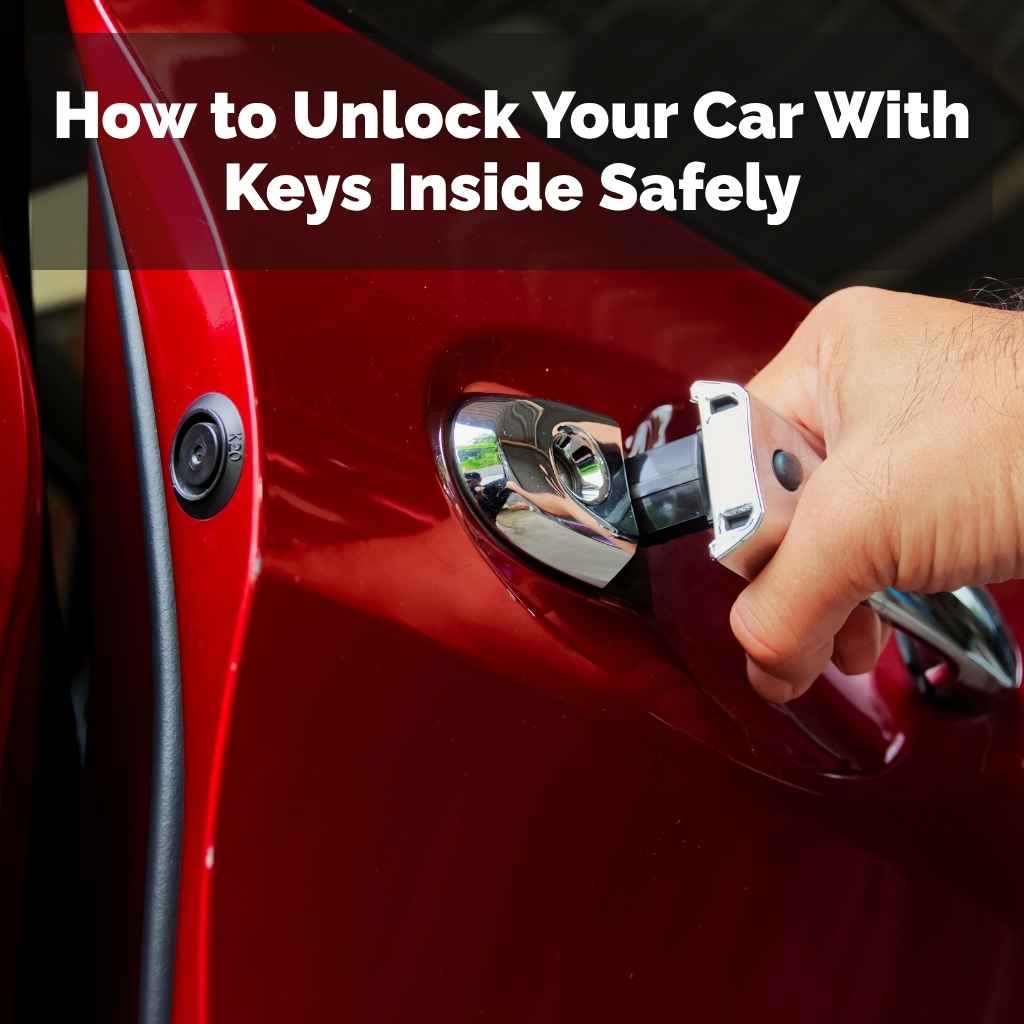
How to Unlock Your Car With Keys Inside Safely
It happens to everyone at some point. You’re rushing, you’re thinking about a million things, and suddenly you realize your car keys are locked inside your car. It’s a frustrating moment, and for beginners, figuring out how to unlock a car with keys inside safely can feel like a big challenge.
Don’t worry, this guide is here to help. We’ll walk you through simple, easy steps to get your keys back without causing any damage. Get ready to learn how to handle this common problem step by step.
When You Lock Keys In Your Car
Getting locked out of your car with the keys inside is a very common problem. People often do it when they are distracted or in a hurry. It can be stressful, but knowing what to do can make it much easier.
This section talks about why this happens and the first things you should think about.
Common Reasons for Lockouts
Many things can lead to locking your keys inside your car. Sometimes, it’s as simple as a child pressing a lock button after you’ve gotten out. Other times, it’s a habit of placing your keys on the seat or in a bag and then closing the door too quickly.
Modern cars have very sensitive locking systems, and a quick movement can sometimes trigger the locks before you realize your keys are still inside. It’s easy to blame yourself, but these situations are more common than you think.
Think about your daily routine. Are you often in a rush when you leave your car? Do you have young children who might play with the door locks?
Are you carrying many items that might make you less aware of where you put your keys? Identifying these patterns can help you avoid future lockouts. For example, always having a designated spot for your keys, like a hook by the door or a specific pocket, can be a lifesaver.
Sometimes, a car’s own systems can cause unexpected lockouts. This might happen if the battery is low or if there’s a glitch in the electronic locking mechanism. While less common, these issues can also leave you stranded.
It’s good to be aware of any strange behavior your car’s locks might be showing.
Assessing the Situation
Before you try anything, take a deep breath and look around. Are you in a safe place? Is it daytime or nighttime?
Are there any immediate risks, like traffic nearby? Your safety is the most important thing. If you are in a dark or unsafe area, it’s better to call for professional help rather than try to force your way into your car.
Check if you have any other ways to get into your car. Do you have a spare key at home? Could a family member or friend bring it to you?
Sometimes, the easiest solution is just waiting for a spare key. Also, look at your car’s windows. Are any slightly open?
Even a small gap might give you an opening to try something.
Consider the type of car you have. Newer cars often have more advanced security features that can make them harder to open without the key. Older cars might be easier to work with using simpler tools.
Knowing your car model can help you understand what might work best.
Immediate Steps to Consider
If you’re in a safe spot and feel comfortable trying a DIY method, the first thing to consider is your spare key. If it’s not too far away, having someone bring it to you is the safest and easiest option. This avoids any potential damage to your car and saves you time and stress.
If a spare key isn’t an option right away, think about calling a locksmith or roadside assistance. Many insurance policies or car clubs offer lockout services. This is often the quickest way to get back into your car without risking damage.
They have the right tools and know-how to handle various car models safely.
If you’re determined to try a temporary fix yourself, make sure you are using methods that are known to be safe for car doors and windows. Avoid anything that could scratch paint, bend metal, or break glass. The goal is to get your keys, not to create more problems.
How to Unlock a Car with Keys Inside Safely Using Simple Tools
When you find yourself in the situation of locking your keys inside your car, don’t panic. There are several simple ways to unlock your car with keys inside safely. These methods often use common household items or tools you might have in your car’s emergency kit.
We will explain how to use these tools carefully to avoid damaging your vehicle.
The Wire Hanger Method
This is a classic method that works on many older car models. You’ll need a wire coat hanger. First, straighten it out as much as possible.
Then, make a small hook at one end. This hook will be used to grab the lock or unlock button inside your car door.
You’ll need to create a small gap between the car door and the frame. You can do this carefully using a door wedge or a thin, flat object like a ruler. Once you have a small gap, slide the hooked end of the wire hanger into the car.
Your goal is to reach the unlock button or lever. This takes patience and a gentle touch. Try to loop the hook around the lock mechanism and pull it up.
-
Prepare the Hanger
This step involves taking a regular wire coat hanger and carefully bending it. You want to make it as straight as possible, except for the hook you will create at the end. This hook needs to be small enough to maneuver inside the car but strong enough to catch onto the locking mechanism. Sometimes, using pliers can help create a cleaner, more effective hook. Avoid making the hook too large, as it might get stuck or damage the car’s interior. -
Create a Door Gap
Gently insert a door wedge or a sturdy, flat object into the top corner of the car door, between the door and the frame. The aim is to create just enough space to slide the wire hanger through. Be very careful not to force it, as this could bend the door frame or damage the paint. A small, controlled gap is all you need. Some people use a thin piece of wood or even a strong plastic card for this purpose. -
Maneuver the Hanger
Once the gap is made, carefully slide the hooked end of the wire hanger into the car. You will need to guide it towards the inside of the door where the locking mechanism is located. This part requires good vision and a steady hand. Look for the manual lock button or the interior door handle. Try to hook the wire around the lock button and pull it upwards to unlock the door. If you’re aiming for the automatic lock switch, the technique might vary depending on your car model.
It is important to note that this method works best on older cars with exposed lock knobs or levers. Newer cars with electronic locking systems might not have accessible mechanisms for a wire hanger to engage. If you can’t see or reach the lock easily, it’s time to consider another option.
Always prioritize not damaging your car’s interior or exterior.
The Shoelace Trick
This method is another clever way to open a car door if the lock is accessible from the inside. You’ll need a shoelace. Make a slip knot in the middle of the shoelace, creating a loop.
The knot should be tight enough that it doesn’t easily slide open but loose enough to be adjusted.
Similar to the wire hanger, you’ll need to create a small gap between the car door and the frame. Use a door wedge or a similar tool. Once the gap is open, carefully slide the shoelace into the car through the gap.
Guide the loop downwards, aiming to fit it over the lock knob or the interior door handle. Once the loop is around the lock or handle, pull both ends of the shoelace upwards and tighten the slip knot. This action should lift the lock knob or open the door.
-
Forming the Slip Knot
Take a standard shoelace and tie a loop in the middle. This loop is the key to the trick. You need to make sure the knot is secure so that when you pull, it tightens around the lock mechanism. Practice tying a slip knot beforehand to get the feel for it. A well-made slip knot will allow you to adjust the size of the loop and then cinch it down effectively. -
Accessing the Interior
Just like with the wire hanger, a small gap is necessary. You can use a rubber wedge or a thin, strong card. The goal is to create just enough space to thread the shoelace through the top corner of the door. Be gentle and avoid forcing the door, as this can cause damage to the seals or the frame itself. -
Engaging the Lock
Carefully guide the loop of the shoelace down and around the lock button or the interior door handle. This might take a few tries, especially if the angle is tricky. Once the loop is in place, gently pull both ends of the shoelace. This action should tighten the loop around your target and, with steady upward pressure, lift the lock knob or pull the handle, unlocking the door.
The shoelace trick is particularly effective for cars that have a prominent lock knob on the door. It requires a bit of dexterity and patience. If your car has a recessed lock or a very flat handle, this method might be more challenging.
Success often depends on the specific design of your car’s interior lock mechanisms. Remember to keep the shoelace clean to avoid transferring dirt into your car.
Using a Slim Jim or Similar Tool
A slim jim is a specialized tool designed by car manufacturers and locksmiths for unlocking car doors. It’s a long, flat piece of metal with a hook or notch at the end. These tools are designed to slide between the window and the door panel and manipulate the internal locking rods or levers.
To use a slim jim, you’ll need to insert it into the car door, usually through the weather stripping at the top of the window. Once inside, you carefully maneuver it to find the vertical locking rod that connects the exterior lock cylinder to the interior locking mechanism. With precise movements, you can then hook and pull this rod upwards, unlocking the door.
It’s important to use a slim jim with extreme care, as improper use can damage the car’s electrical wiring, window mechanisms, or interior panels.
-
Understanding the Tool
A slim jim is a flat, thin metal strip. It’s designed to reach inside the car door and interact with the internal locking rods. Different slim jims have various shapes at the end, like hooks or notches, which are made to grab onto specific parts of the locking system. Their effectiveness depends on knowing the car’s internal structure. -
Strategic Insertion
The tool is typically the window slides up and down. This channel is lined with rubber or felt to protect the window. Inserting the slim jim requires a delicate touch to avoid scratching the glass or damaging the weather stripping. The goal is to slide the tool down without forcing it, moving it past the window and into the door cavity. -
Locating and Actuating the Lock Rod
Once inside, the user must carefully probe to find the vertical rod that controls the lock. This rod connects to the door handle and the lock button. By maneuvering the hook or notch of the slim jim to catch this rod, the user can then pull it upward. This upward motion disengages the lock, opening the car door. This requires a good sense of touch and an understanding of car mechanics.
Using a slim jim is often seen as a professional method. While it can be effective, it carries a higher risk of damage if not performed correctly. Many people who are not trained in its use can accidentally damage their car.
Statistics show that improper use of such tools can lead to costly repairs for damaged wiring harnesses or linkage systems within the door panel. It’s generally advisable to reserve this method for professionals or if you have significant experience.
When DIY Isn’t the Best Option
Sometimes, trying to unlock your car yourself can lead to more problems than it solves. This is especially true for newer cars with advanced security features or if you are not comfortable with mechanical tasks. In these situations, knowing when to call for help is key to ensuring your car remains undamaged and you get access to your keys quickly.
Risks of DIY Methods
Attempting to force your car door open or using improvised tools can easily cause damage. You might scratch the paint, bend the door frame, or even break the glass. Interior damage is also a common problem; wires, sensors, and locking mechanisms can be easily broken if you don’t know exactly what you’re doing.
These repairs can be very expensive and time-consuming.
For example, trying to pry open a door might damage the seals, leading to water leaks or wind noise later. Using a thin wire or a slim jim incorrectly can sever wires connected to the car’s computer system. This could disable power windows, door locks, or even the car’s alarm system.
The cost of fixing these issues often far outweighs the expense of a professional lockout service.
Another risk is causing your car’s alarm system to go off, attracting unwanted attention or causing a disturbance. Some modern cars also have complex locking systems that can be engaged by external forces, making them even harder to open without the key. The frustration of being locked out can lead to hasty decisions, increasing the chances of causing accidental damage.
When to Call a Professional
If your car is a newer model, especially one with advanced electronic locking systems, it’s usually best to call a professional. These cars are designed with security in mind, and DIY methods are less likely to work and more likely to cause damage. Professional locksmiths and roadside assistance services have specialized tools and knowledge specific to various car makes and models.
Another sign it’s time to call for help is if you’ve tried simple methods and they haven’t worked. Continuing to struggle can only increase the risk of damage. If you are in a remote location or the weather is bad, calling for assistance ensures you get help faster and more safely.
Don’t hesitate to call if you feel uncomfortable or unsure about any step you are taking.
Consider the value of your time. While DIY might seem like a money-saving option, the time spent struggling could be used for more important tasks. For many people, the peace of mind and guaranteed success that comes with professional help is well worth the cost.
Professionals can often unlock your car in a matter of minutes.
Choosing the Right Professional Service
When you need to call for help, there are a few options. The first is your car insurance provider or a roadside assistance program. Many of these services include lockout assistance as part of their coverage.
Check your policy or membership details to see what’s covered. They can often dispatch a technician quickly.
Another option is a local locksmith. Look for a reputable locksmith with good reviews and experience with automotive lockouts. It’s a good idea to get a quote over the phone before they arrive to avoid unexpected charges.
Make sure they are licensed and insured. They should be able to provide proof of their credentials if asked.
When you call, be prepared to give them specific information about your car, including the make, model, and year. Also, be ready to confirm your location. This information helps them bring the right tools and estimate the arrival time.
Asking about their typical response time can also be helpful, especially if you are in a hurry.
How to Unlock a Car with Keys Inside Safely: Advanced Tips
While simple tools can work in many situations, sometimes you need a bit more expertise or a different approach, especially with modern vehicles. This section covers advanced techniques and considerations for how to unlock a car with keys inside safely, focusing on methods that minimize risk and maximize success for various car types.
Understanding Modern Car Security
Modern cars are equipped with sophisticated security systems. These often include electronic locking mechanisms, keyless entry, and engine immobilizers. Unlike older cars with simple mechanical linkages, these systems are controlled by complex computer modules.
Attempting to force entry on these vehicles can easily trigger alarms or even disable the car’s systems.
The keyless entry system, for instance, relies on radio frequency signals to communicate with the car. While convenient, these systems can sometimes be prone to glitches. Immobilizers are designed to prevent the car from starting unless the correct transponder key is detected.
If the car’s computer detects unauthorized entry or manipulation, it can prevent the engine from starting, even if you manage to get inside.
Some advanced cars also have door handle sensors that detect when a key fob is nearby. If the key fob is locked inside, these sensors might not register its presence, leaving the doors locked. Understanding these electronic components is crucial for knowing that brute force or basic tools are unlikely to succeed and could cause significant electronic damage.
The Importance of Professional Tools and Techniques
Professional automotive locksmiths and roadside assistance technicians use specialized tools that are designed to bypass these modern security features without causing damage. These tools include electronic lock picks, long-reach tools that can manipulate interior door handles or unlock buttons through small gaps, and bypass tools that can communicate with the car’s computer system.
For example, a long-reach tool is a flexible rod that can be inserted through a slightly opened window or door. It has a camera and a manipulator at the end, allowing the technician to see inside and precisely grab the unlock button or door handle. This requires significant skill and practice to operate without touching sensitive components.
Some services may even use diagnostic tools to access the car’s computer. This allows them to temporarily disable the security system or trigger the unlock mechanism electronically. These methods are highly technical and require specific software and hardware that are not available to the general public.
This is why calling a professional is the safest bet.
-
Specialized Reach Tools
These are long, thin, and often flexible rods with a camera or a small hook at the end. They are inserted into the car through a slightly opened window or a specially created small gap in the door frame. Their purpose is to reach the interior door handle or the unlock button. The technician uses visual feedback from the camera to carefully manipulate these controls. -
Electronic Lock Picks and Decoders
For vehicles with electronic locking systems, specialized devices can be used. These tools might read or even mimic the signals used by the car’s key fob. Some can also interface with the car’s central locking system to send an unlock command. This is a complex process that requires detailed knowledge of the car’s electronic architecture. -
Weather Stripping Manipulation
Instead of forcing the door, professionals might carefully work with the weather stripping around the door frame. By gently loosening or manipulating the seals, they can create a larger but still contained access point. This allows them to insert specialized tools more easily and safely, minimizing the risk of bending or tearing the seals permanently.
The effectiveness of these advanced techniques lies in the technician’s training and the precision of their tools. Attempting to replicate these methods without the proper equipment and knowledge could lead to expensive damage to the car’s electronics, interior, or exterior. Professionals are insured and trained to handle these situations, providing a level of security that DIY attempts cannot match.
When to Involve Roadside Assistance
Roadside assistance services are often the most efficient and safe way to handle car lockout situations, especially with modern vehicles. They are equipped to deal with a wide range of issues, including lockouts, dead batteries, and flat tires. Their technicians are trained to use professional tools and techniques to open your car door without causing any damage.
If you have a roadside assistance plan through your car insurance, a motor club membership, or even a credit card perk, this should be your first call. They typically offer 24/7 service and have a network of technicians ready to help. The cost is often covered by your plan, making it a cost-effective solution.
When you contact roadside assistance, provide them with your location, vehicle make and model, and a description of the problem. They will dispatch a technician who will arrive equipped with the necessary tools to safely unlock your car. This ensures that the job is done correctly and that no damage occurs to your vehicle.
Their expertise means a faster resolution and peace of mind.
-
Contact Your Provider
Call your roadside assistance provider or your auto insurance company’s helpline. Have your membership or policy number ready. -
Provide Details
Give the dispatcher your exact location, the make, model, and year of your car, and clearly state that your keys are locked inside. -
Await Technician Arrival
The provider will dispatch a technician. They can usually give you an estimated time of arrival. -
Unlock Service
The technician will use professional tools to safely unlock your car door, allowing you to retrieve your keys.
Remember to always verify the identity of the technician before allowing them to work on your car. Professional services will have identification and company vehicles. This ensures you are dealing with a legitimate service provider.
Frequently Asked Questions
Question: Can I use a credit card to unlock my car?
Answer: Using a credit card can sometimes work on older cars by sliding it into the door frame to depress the lock button. However, it’s a risky method that can damage your card, the door frame, or the paint. It’s not recommended for most modern vehicles.
Question: What if my car has electronic locks and the battery is dead?
Answer: If your car’s battery is dead and your keys are locked inside, accessing the car can be very difficult. Some vehicles have a manual key override, often hidden near the door handle or under the car. Otherwise, you will likely need professional assistance from a locksmith or roadside service.
Question: Will using a slim jim void my car’s warranty?
Answer: If you use a slim jim improperly and cause damage, it could potentially void certain parts of your warranty related to the door’s internal mechanisms or electronics. It’s generally safer to let professionals handle it to avoid such issues.
Question: How long does it usually take a locksmith to unlock a car?
Answer: For most standard lockouts, a professional locksmith can unlock your car in 5 to 15 minutes once they arrive. However, the total time depends on their travel time to your location and the complexity of your car’s locking system.
Question: What is the safest way to get my keys if I lock them in the car at night?
Answer: At night, safety is paramount. The safest option is to call a reputable roadside assistance service or locksmith. They are trained to work efficiently and safely in various conditions, and you can wait in a secure location for their arrival.
Avoid trying DIY methods in the dark.
Conclusion
When your keys are locked inside, staying calm is the first step. Simple tools can work for older cars, but newer vehicles often require professional help. Always prioritize your safety and your car’s condition.
Knowing when to call for roadside assistance or a locksmith ensures you get your keys back without causing damage. You now have the knowledge to handle this common problem.