Where to Dispose Old Car Seats: Easy Ways to Recycle and Reuse
Take an expired, damaged, or crash-involved child car seat to a local recycling drop-off, retailer trade-in, or landfill only if no recycling option exists; reusable seats can go to a trusted family member or charity only when the seat is still allowed by its instructions. Bad disposal can leave a recalled, expired, or unsafe seat in circulation, or send plastic, foam, and strap parts to the trash. This guide shows where to dispose each seat based on condition, plus the reuse limits, recycling routes, and store programs that actually accept them.
Car seat disposal decision table
Start with condition. Do not start with convenience. The safest path changes if the seat is expired, crash-involved, missing parts, or simply too worn to verify. Check the manufacture date on the shell or base, compare it with the brand’s expiration label or manual, and run the recall check before you pick a disposal route.
| Seat condition | Safest option | Likely acceptance at donation / trade-in / recycling | Estimated effort or time |
|---|---|---|---|
| Unexpired, no crash history, complete, clean enough to inspect, and within the maker’s instructions | Reuse or donate only if the manufacturer allows transfer and the recall check is clear | Donation: possible. Trade-in: possible. Recycling: optional if you prefer not to pass it on | About 15 to 30 minutes for inspection and recall check is a common rule of thumb. |
| Expired but otherwise intact | Recycle locally, trade it in if the event accepts expired seats, or trash only if no better route exists | Donation: no. Trade-in: sometimes. Recycling: often the best route where available | About 30 to 90 minutes, plus travel or event wait time, is a common rule of thumb. |
| Crash-involved, even if the shell looks fine | Do not reuse or donate; follow the manufacturer and NHTSA criteria for whether any minor-crash use remains possible, then recycle or trash if reuse is ruled out | Donation: no. Trade-in: sometimes. Recycling: often possible after removal from service | About 15 to 45 minutes for inspection, plus disposal time, is a common rule of thumb. |
| Missing parts, broken shell, frayed strap, or cracked foam | Recycle only if a program accepts dismantled parts; otherwise trash | Donation: no. Trade-in: sometimes. Recycling: possible for parts streams, not always for the full seat | About 45 to 120 minutes if you dismantle it is a common rule of thumb. |
| Dirty, sun-faded, or sticky but otherwise complete and unexpired | Clean enough to inspect, then decide by recall status, age, and crash history | Donation: maybe. Trade-in: maybe. Recycling: yes if reuse is not allowed | About 30 to 60 minutes for cleaning and inspection is a common rule of thumb. |
Most child seats contain a plastic shell, foam, cloth cover, metal parts, and straps. Those materials do not all follow the same path, so “recycle the seat” usually means separating what a recycler can use from what still belongs in the trash.
How do you check if the seat is still safe?
Check the manufacture date, expiration label, and recall status before you decide anything else. Expiration varies by brand and seat style, and many makers place the date on the shell or base. If the seat is recalled, crash-involved, or beyond its usable period, stop here and move to recycling or trash instead of reuse.
Find the manufacture date
Look on the shell, base, or underside for a sticker or molded date code. That date matters because the usable period is set by the maker, not by how new the seat looks. A seat that appears clean can still be past its limit if the label says otherwise.
Check the expiration label or manual
Car seats can have an expiration date that varies by style and brand. Always confirm the exact date in the manual or on the label.
Run the recall check
Use NHTSA’s recall lookup by entering the child seat’s brand and model information, or search by the seat’s model number if the label lists one. If you do not have the model number, check the shell, base, or registration card before you reuse, donate, or pass on any seat. A recall does not always mean the seat must be thrown away, but it does mean you need the maker’s fix instructions before anyone uses it again.
Decide whether damage rules out reuse
Crash involvement can make a seat unsafe to reuse, and damaged or expired seats should not be resold. NHTSA guidance can allow continued use after certain minor crashes if the seat and vehicle meet the stated conditions, so do not assume every fender-bender destroys the seat. If there is doubt, keep it out of circulation.
Say your infant seat is 7 years old, the base label has passed, and the shell shows no cracks. Even then, the expiration date wins. The seat is no longer a donation candidate, and recycling or trade-in becomes the safer path.
Can you donate an old car seat?
Donate a car seat only if it is unexpired, uncrashed, complete, clean enough to inspect, and allowed by its instructions. Do not donate a seat with a recall you have not resolved, a broken strap system, missing inserts, or unknown crash history. If any of those apply, skip donation.
When donation is allowed
Donation makes sense for a seat that is still within its life span, has all required parts, and has a clear recall check. A trusted family member or charity can accept it only if the seat still meets the current instructions. That includes infant seats, convertible seats, and boosters.
When to skip donation
Skip donation if the seat is expired, crash-involved, recalled without a fix, heavily worn, or missing a strap set, base, buckle, or insert needed for correct use. “Looks good” is not enough. A seat can be clean and still fail the rules that make reuse safe.
What to do with missing parts or heavy wear
A seat with a missing cover, torn strap, or cracked foam is usually not a donation candidate. Some local recycling programs may still take the shell or metal pieces after dismantling, though many will not accept a full seat in that condition. If no parts program exists, landfill disposal may be the last step.
Suppose a booster seat is spotless but the belt guide is cracked. That is enough to block donation, because a missing or broken part can change how the child restraint fits and holds. Recycling the pieces, if accepted, is better than passing it on.
Where can you take a car seat for trade-in?
Trade-in events can be a practical exit for an unusable seat, especially when you want a quick handoff and a store incentive. Target may offer car-seat trade-in events, and the incentives may include cash back or store credit. Availability is seasonal and location-specific, so check the current event page or store notice before you load the seat.
Target trade-in events
Target is a named example of a retailer that has run car-seat trade-in events. The event may only happen during certain seasons or at specific stores, and the offer can change from year to year. Treat it as a periodic disposal option, not a standing service.
Seasonal store promotions
Retailer promotions often line up with spring or fall store events, but the schedule is not universal. Some locations accept old seats for a limited window, then convert them into a coupon, store credit, or similar incentive. Check the store’s current program details before driving over.
What incentives usually look like
Incentives may include cash back or store credit, but the value and rules vary by event. Some programs want the seat intact, while others accept only complete shells. Keep the seat clean enough for staff to inspect, and bring the parts the event asks for.
Why event timing matters
Retailer events can be the fastest route for a seat that cannot be reused. But if you wait for the next promotion, a seat that is already expired or crash-involved should stay out of use in the meantime. Move it to storage where no one can mistake it for a usable restraint.
Where can you recycle a car seat locally?
Local recycling is often the best route for expired or non-reusable seats, but the options are location-specific. Some cities, counties, and state DOT programs host drop-off sites or seasonal events, while others do not. Confirm the acceptance rules before you travel so you know whether the seat must arrive whole or dismantled.
City or county drop-off programs
Some municipalities run special collection days for bulky plastic items or child seats. Availability varies by county and by season. Some state and local transportation or environmental agencies also post occasional collection sites or events, but those examples do not mean every state offers the same service.
State or regional recycling events
Regional events are often better for seats that can be broken down into separate material streams. A recycler may want cloth, foam, plastic, and metal handled separately. If the event page is vague, ask whether the seat can be brought intact or whether you need to dismantle it first.
How to confirm acceptance before you go
- Read the event or drop-off rules carefully.
- Confirm whether intact seats are accepted.
- Ask whether straps belong in trash or in a separate stream.
- Confirm whether the site wants plastic, metal, foam, and cloth separated.
- Ask about hours, appointment rules, and any fee.
Local acceptance can change quickly. A site may take a convertible seat but not an infant base, or it may want boosters sorted differently from seats with built-in straps. Call ahead if the listing does not spell out the rules.
How do you break down a car seat for recycling?
Break down the seat only if a recycler or event asks for separated parts. One recommended route is dismantling the car seat and recycling its parts. Work in a well-ventilated garage or outdoor area, and use a screwdriver set, wire cutters or pliers, and a utility knife only as needed for the model in front of you.
Remove cloth and foam
Pull off the cover and padding first if the seat design allows it. Cloth usually goes to textile trash or a special textile stream, not ordinary plastics recycling. Foam can be accepted by some recyclers, but many sites treat it as trash because it does not fit standard curbside systems.
Separate plastic and metal
The plastic shell and smaller plastic pieces may go to a plastics recycler if the program accepts that resin type. Metal clips, screws, and frames usually belong in metal recycling. Keep the streams clean and separate, since mixed parts can get rejected.
Deal with strap sets
Strap sets are often the hardest part to place. Some programs do not want them in metal or plastic bins because the material blend is awkward to process. If the recycler does not accept straps, cut them off only for the disposal route you are using, then follow the site’s instructions for where they belong.
What usually goes to trash
Foam, dirty fabric, broken inserts, and mixed small parts often end up in the trash unless a special recycler takes them. The shell, metal bits, and some hard plastics have better odds of recovery. If a piece is contaminated with dirt, adhesive, or mixed materials, it may be rejected.
A common first-timer mistake is stripping the cover off a booster, then assuming the rest is all recyclable. If the shell is a mix of plastic and embedded foam, the recycler may still reject it unless the program clearly accepts that material mix.
How should you trash an unusable seat?
Trash disposal is the last choice for seats that are expired, badly damaged, or unwanted by local programs. If you have to put one in the trash, slash or cut the strap system before curb pickup so the seat is less likely to be reused intact. Check local pickup rules first, since some areas limit bulky-item disposal.
Cut the strap system first
Cutting the straps reduces the chance that someone will pull the seat from the curb and try to use it. That is especially important for expired or crash-involved seats that should not return to service. Make the cut only after the seat is already out of reuse.
Prevent curbside reuse
Manufacturers do not recommend setting an intact used seat out on the curb. If the seat is headed to trash, make it visibly unusable.
Check local pickup rules
Some cities treat child seats as bulk waste, while others want them broken down or scheduled separately. Follow the vehicle and product manual. If the trash route is unclear, call the hauler before curb day.
Frequently asked questions
Where can I dispose of an old car seat near me?
Look first for a local recycling drop-off, a seasonal retailer trade-in event, or a city or county bulky-item program. Some state or local agencies run occasional collection events, and some stores host limited trade-ins. If none of those exist nearby, landfill disposal may be the last option after the strap system is cut.
Can I recycle an expired car seat?
Yes, often through a local recycling program, retailer event, or dismantling route that accepts separated parts. Expired seats should not be reused or donated. If the site accepts only some materials, follow the site’s instructions for whether the seat should be brought intact or taken apart.
Can I donate an old car seat if it still looks good?
Only if it is unexpired, uncrashed, complete, clean enough to inspect, and allowed by its instructions. Looks alone do not make it safe. A seat with hidden wear, missing parts, or an unresolved recall should not be passed on, even if it appears tidy.
What should I do with a car seat after a crash?
Do not assume every crash ends the seat’s life, but do stop using it until you compare the incident with the maker’s manual and NHTSA’s minor-crash criteria. If the seat does not qualify for continued use, recycle it or trash it. Do not donate or resell it.
Do Target and Walmart still do car seat trade-in events?
Target may offer car-seat trade-in events, but the timing and terms are seasonal and location-specific. Incentives may include store credit or cash back. Check the current store notice before you go, because the program may not be active at every location or during every season.
What parts of a car seat can be recycled?
The main parts are the plastic shell, metal components, cloth cover, foam, and strap sets. Metal and some plastics are the most likely recovery streams. Cloth and foam are often harder to recycle and may go to trash unless the local program specifically accepts them.
Should I cut the strap system before putting a car seat in the trash?
Yes, if trash is the final route. Cutting or slashing the strap system helps prevent someone from taking the seat from the curb and using it again. Check local pickup rules first, because some haulers want the seat intact for collection while others require it to be disabled.
Products related to this article
Sponsored / affiliate links. As an Amazon Associate I earn from qualifying purchases. I may earn additional commission from eligible campaigns.
 Coverado Car Seat Covers Front Seats, Luxury Leather Car Seat Covers, Automotive Mesh Seat Covers 2 Pack, Airbag-Compatible, Black Gray Seat Covers for SUV Sedan Truck
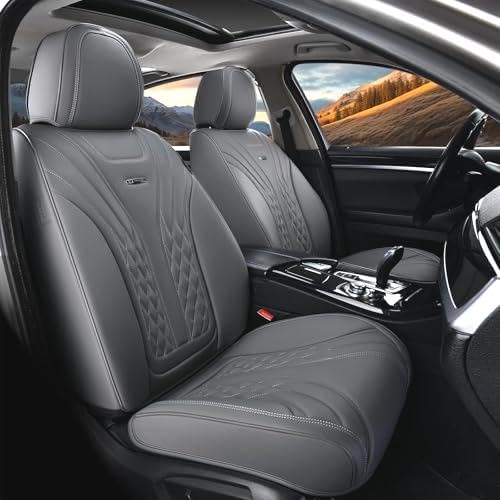 Coverado Car Seat Covers, Car Seat Covers Front Seats, 2-Pack Front Seat Cover, Nappa Leather Waterproof Seat Covers, Car Seat Protectors, Automotive Seat Covers Universal Fit for Most Vehicles