Is Cartesi A Good Investment? Proven Strategy
Is Cartesi a good investment? Cartesi shows promise as a unique blockchain scalability solution, but like all crypto investments, it carries risks. A proven strategy involves understanding its technology, market potential, and investing only what you can afford to lose, focusing on long-term growth and diversification.
Hey there! Ever stare at your car’s dashboard and feel a little lost when a strange light pops on? Or maybe you’ve wondered if that strange noise is something serious, but the thought of a mechanic’s bill makes your eyes water. You’re not alone! Most car owners feel the same way. It’s totally normal to want to understand your car better, save some cash on repairs, and feel more confident behind the wheel. That’s exactly why I’m here. Think of me as your friendly guide to all things automotive. I’ll break down those confusing car topics into simple, bite-sized pieces, just like explaining how to check your tire pressure or what that weird smell might mean. We’ll tackle common car hiccups together, making sure you have the clear, step-by-step advice you need without all the baffling jargon. Ready to feel more in control of your car? Let’s get started!
Understanding Cartesi: The Blockchain Linux Angle
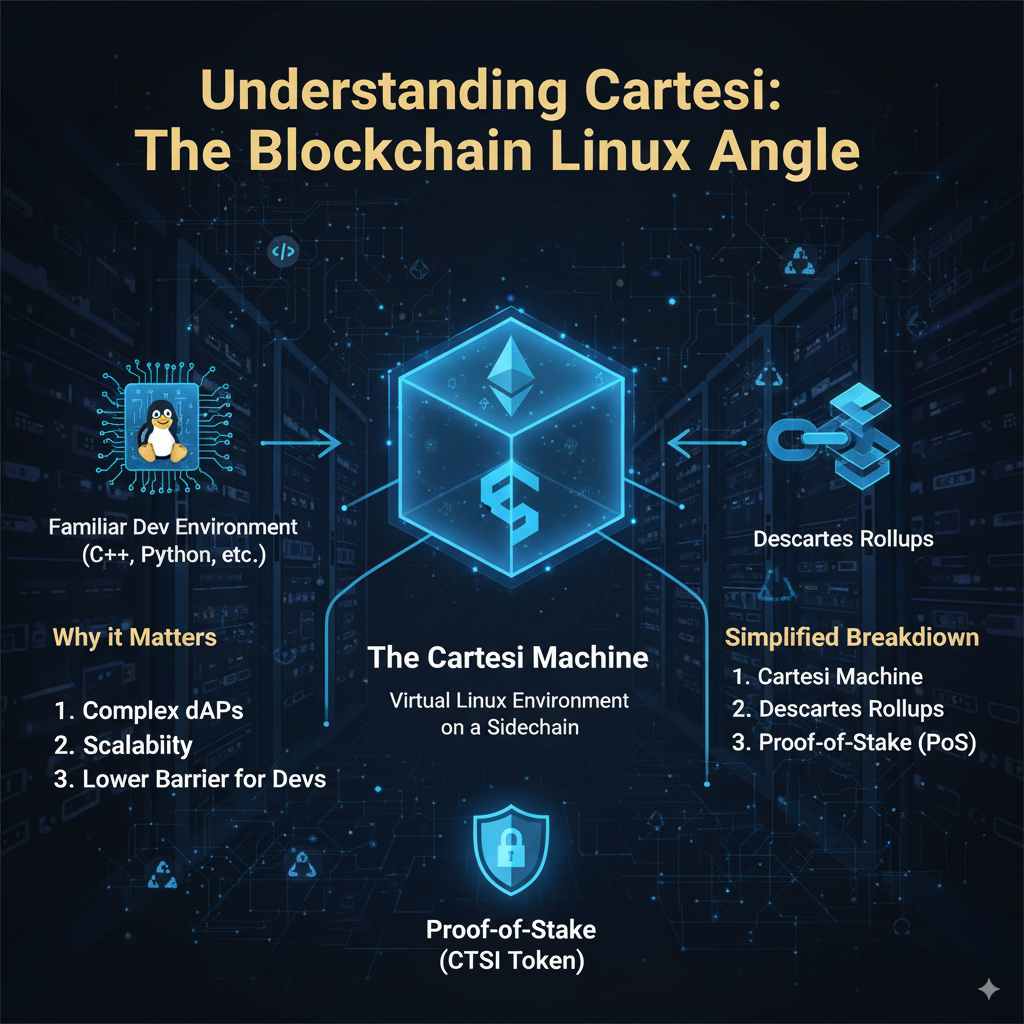
When we talk about investing in crypto, it’s easy to get overwhelmed by all the different projects. One that often pops up is Cartesi. Unlike many cryptocurrencies that focus on just being digital money, Cartesi aims to solve a big problem in the blockchain world: making it easier and more efficient for smart contracts to run complex applications. Think of it as bringing the power of a regular computer operating system, like Linux, to the blockchain.
Why is this important? Well, blockchains are great for security and transparency, but they can be slow and expensive when you try to do complicated tasks. Cartesi’s idea is to create a layer that allows developers to build decentralized applications (dApps) using standard programming languages like C++, Python, and others that you’d use for everyday software. This is a pretty big deal because it lowers the barrier to entry for developers who might not be blockchain experts.
How Does Cartesi Work? Simplified
At its core, Cartesi is building a decentralized operating system. It uses a technology called a “sidechain” which is connected to a main blockchain (like Ethereum initially, but adaptable). This sidechain, called the “Cartesi Machine,” can run Linux environments. This means developers can write their dApps using familiar tools and languages, and then deploy them almost as if they were running on a normal computer.
Here’s a simple breakdown of the key components:
- Cartesi Machine: This is the virtual Linux environment where your dApps will run. It’s isolated from the main blockchain, allowing for more computational power and flexibility.
- Descartes Rollups: These are a way to bundle up computations done in the Cartesi Machine and then prove their correctness to the main blockchain. This makes the process much more efficient and cost-effective.
- Proof-of-Stake (PoS) Consensus: Cartesi uses its own token, CTSI, for staking. Stakers help secure the network and are rewarded for their participation.
The goal is to enable complex computations and data processing off-chain while still maintaining the security and verifiability of the blockchain. This is often referred to as “blockchain scaling.”
Is Cartesi a Good Investment? Key Factors to Consider
Deciding if Cartesi (CTSI) is a good investment involves looking at several angles. It’s not just about picking a coin; it’s about understanding the project’s potential, its team, and the overall market. Let’s break down the pros and cons to help you make a more informed decision.
Potential Upsides (The “Good” Signs)
- Developer Friendliness: This is Cartesi’s biggest selling point. By allowing developers to use standard programming languages, it opens up blockchain development to a much wider audience. This could lead to more innovative dApps being built on its platform.
- Scalability Solution: The blockchain space is constantly looking for ways to handle more transactions faster and cheaper. Cartesi’s architecture offers a unique approach to scaling, which is a critical need for widespread blockchain adoption.
- Real-World Use Cases: Cartesi isn’t just theoretical. Projects are actively being built on its platform. For example, its technology can be used for decentralized gaming, AI, complex data analytics, and decentralized advertising.
- Strong Technology Foundation: The core technology, the Cartesi Machine and its rollup solutions, is technically innovative. It tackles a fundamental limitation of many blockchains.
- Partnerships and Ecosystem Growth: A healthy project often has growing partnerships and a community of developers building on it. Cartesi has been working to expand its ecosystem.
Potential Downsides (The “Risks” to Watch)
- Competition: The blockchain space is highly competitive. Many other projects are also working on scalability solutions, and some are already more established. Cartesi needs to prove its technology can outperform and out-innovate others.
- Adoption Curve: Getting developers and users to switch to a new platform takes time and effort. Even with great technology, adoption is not guaranteed.
- Market Volatility: Like all cryptocurrencies, CTSI is subject to extreme price swings. The crypto market is influenced by many factors, including news, regulations, and broader economic trends.
- Technical Complexity: While Cartesi aims to simplify development, the underlying technology is still complex. Understanding how it truly works can be challenging, and any technical flaws could impact its value.
- Regulatory Uncertainty: The regulatory landscape for cryptocurrencies is still evolving. New regulations could impact the entire crypto market, including Cartesi.
A Proven Strategy for Investing in Cartesi (CTSI)
There’s no guaranteed “get rich quick” scheme in investing, especially in cryptocurrency. But there are strategies that can help you approach an investment like Cartesi with more confidence and less risk. Think of it like planning a long road trip: you need a map, the right tools, and a good understanding of the journey.
Step-by-Step Investment Approach
Before you even think about buying CTSI, let’s lay the groundwork. This is about building a solid foundation for your investment decision.
Step 1: Do Your Homework (The “Why” Behind the “What”)
This is the most crucial step, and it’s ongoing! You need to understand what Cartesi is trying to achieve, why its technology is important, and what problems it solves. Dive deep into their whitepaper (though it can be technical!), read blog posts from the official Cartesi team, and follow reputable crypto news sources that cover Cartesi.
Key questions to ask yourself:
- Do I understand the core technology behind Cartesi?
- Does this technology address a significant need in the blockchain space?
- Who are the main competitors, and how does Cartesi differentiate itself?
- What are the potential real-world applications and use cases?
Step 2: Assess the Team and Community
Who is behind Cartesi? A strong, experienced, and transparent team is vital for any project’s success. Also, look at the community. Is there active engagement on social media (like Twitter, Telegram, Discord)? Are developers actively contributing to the project? A vibrant community and an active development team are good indicators of a project’s health.
Step 3: Understand the Tokenomics (CTSI)
Every cryptocurrency has a token with specific uses. For CTSI, it’s used for staking, governance (voting on proposals), and paying for services within the Cartesi ecosystem. Understanding its utility helps you gauge its potential demand. Also, look at the total supply, circulating supply, and how tokens are (or were) distributed. This helps you understand potential inflation or scarcity.
Here’s a simplified look at CTSI token utility:
| Utility | Description |
|---|---|
| Staking | Users can stake CTSI to help secure the network and earn rewards. This is part of Cartesi’s Proof-of-Stake mechanism. |
| Governance | CTSI holders can participate in the governance of the Cartesi ecosystem, voting on proposals for network upgrades and changes. |
| Platform Fees/Incentives | CTSI might be used to pay for certain computational services or as incentives for developers and validators within the dApps built on Cartesi. |
Step 4: Evaluate Market Potential and Risk Tolerance
Every investor is different, and so is their comfort with risk. Cartesi, like any altcoin, especially one focused on cutting-edge tech, carries significant risk. Are you comfortable with potentially losing your entire investment? If not, Cartesi might not be the right fit, or you should invest only a very small portion of your portfolio.
Consider Cartesi’s position within the broader crypto market. Is it a niche project, or does it have the potential for mass adoption? Its success is tied to the overall growth and acceptance of blockchain technology.
Step 5: Set a Realistic Investment Goal and Strategy
Don’t invest on a whim. Decide why you are investing in Cartesi. Are you looking for long-term growth, hoping that its unique tech will make it a leader in the future? Or are you trying to make a quick profit (which is much riskier)?
A common and effective strategy for beginner crypto investors is:
- Dollar-Cost Averaging (DCA): Instead of investing a large sum all at once, you invest a fixed amount of money at regular intervals (e.g., $50 every week). This helps reduce the risk of buying at a market peak and averages out your purchase price over time. It’s a patient approach.
- Long-Term Holding (HODLing): This strategy involves buying CTSI and holding it for an extended period (months or years), believing that its value will increase significantly over time as the technology matures and adoption grows.
- Diversification: Never put all your eggs in one basket. Even if you believe strongly in Cartesi, it’s wise to invest in other cryptocurrencies or asset classes. This protects you if Cartesi doesn’t perform as expected.
Step 6: Secure Your Investment
Once you decide to invest, how you store your CTSI is important. While many exchanges offer wallets, for longer-term holding, consider using a hardware wallet. These devices keep your private keys offline, significantly increasing security and protecting you from exchange hacks or failures.
Reputable hardware wallets include those from Ledger and Trezor. For more information on how they work and how to choose one, you can always check resources like those from the Federal Trade Commission on avoiding online scams, which often extend to securing digital assets.
Cartesi’s Ecosystem and Development
A project’s ecosystem is its environment where applications are built and used. Cartesi’s success hinges on its ability to foster a vibrant ecosystem of developers creating dApps that leverage its unique capabilities.
Key Areas of Development and Potential Use Cases
- Decentralized Gaming: Imagine complex game logic running off-chain, making games faster and more immersive, while still having on-chain verification for ownership of in-game assets. Cartesi’s tech is well-suited for this.
- DePIN (Decentralized Physical Infrastructure Networks): These networks rely on real-world hardware and software. Cartesi’s ability to run complex computations could be valuable for managing and orchestrating these networks. Think of IoT devices, sensor data processing, and more.
- AI and Machine Learning: Training and running sophisticated AI models is computationally intensive. Cartesi could enable dApps that utilize AI for various purposes, from predictive analysis to content generation, with verifiable computation.
- Data Analytics and Oracles: Processing large datasets or retrieving specific real-world data efficiently is a challenge for blockchains. Cartesi’s technology can help improve these functionalities, making blockchain data more robust.
- Decentralized Advertising: Projects are exploring how to build transparent and efficient advertising platforms on the blockchain, and Cartesi’s computational power can be a key enabler.
The growth of these areas within the Cartesi ecosystem would be a strong indicator of its increasing value and adoption.
The CTSI Token: Price and Market Performance
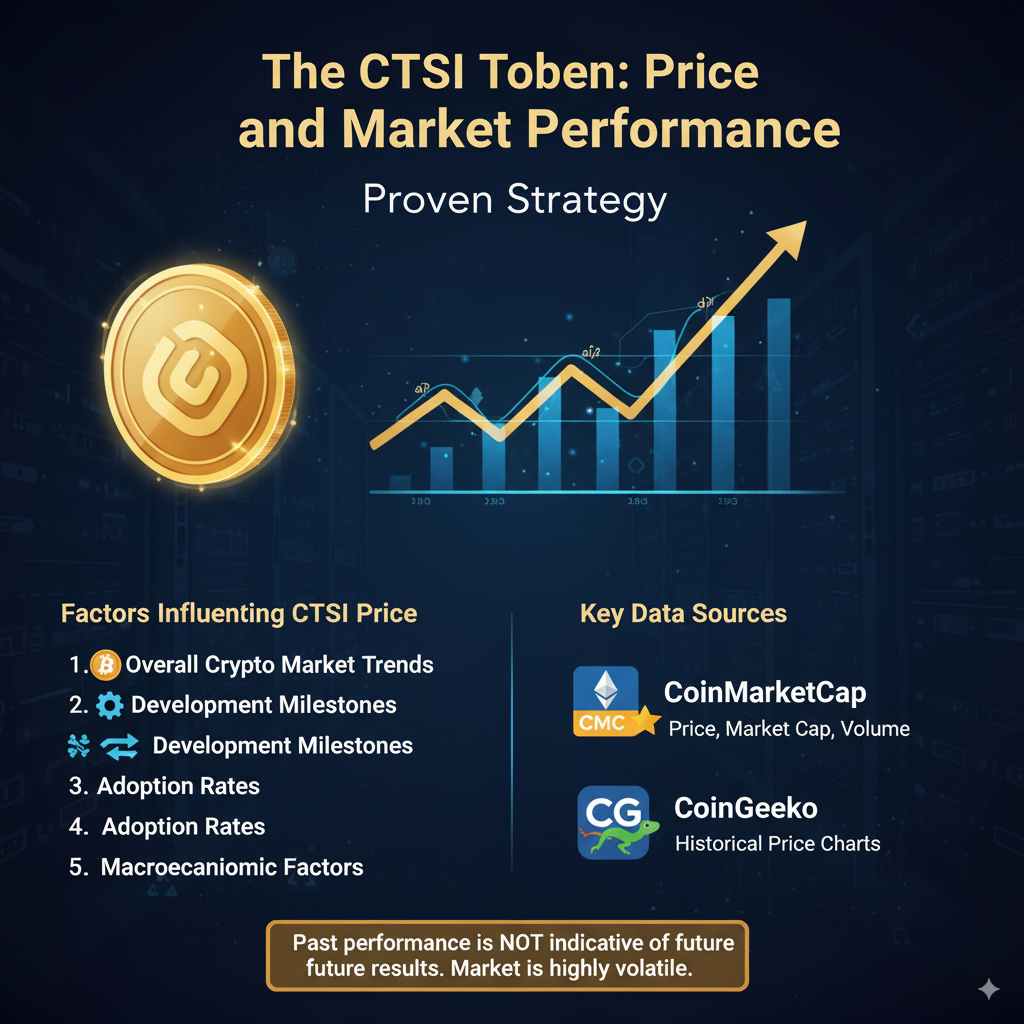
When evaluating if Cartesi is a good investment, looking at the CTSI token’s price history and current market performance is essential. However, it’s crucial to remember that past performance is not indicative of future results. The crypto market is highly volatile.
Factors Influencing CTSI Price
- Overall Crypto Market Trends: When Bitcoin and Ethereum are performing well, the broader market tends to follow. Conversely, a crypto winter can drag down even strong projects.
- Cartesi Development Milestones: Significant updates, successful partnerships, or major dApp launches on the Cartesi network can positively impact the CTSI price.
- Adoption Rates: As more developers build on Cartesi and more users engage with dApps, the demand for CTSI could increase, potentially driving up its price.
- Trading Volume and Liquidity: How easily CTSI can be bought and sold on exchanges, and the volume of trades, affects its price dynamics.
- Macroeconomic Factors: Inflation, interest rates, and global economic stability can influence investor appetite for riskier assets like cryptocurrencies.
It’s always wise to check reliable cryptocurrency data sites like CoinMarketCap or CoinGecko for up-to-date price information, market cap, and trading volume for CTSI. These sites also provide historical price charts that can help you visualize its performance.
FAQ: Your Cartesi Investment Questions Answered
Here are some common questions beginner investors have about Cartesi, answered in a way that’s easy to understand.
Is Cartesi a legitimate project?
Yes, Cartesi appears to be a legitimate project with a clear technological vision and an active development team. They are focused on solving real problems in blockchain scalability and developer adoption.
What is the main goal of Cartesi?
The main goal of Cartesi is to bring the power and ease of mainstream software development (using languages like Linux, Python, C++) to the blockchain. They aim to make it easier to build scalable and complex decentralized applications (dApps).
How can I buy CTSI tokens?
CTSI tokens can be purchased on various cryptocurrency exchanges. Some popular ones include Binance, KuCoin, Gate.io, and others. You’ll typically need to create an account, deposit fiat currency or another cryptocurrency, and then place a buy order for CTSI.
Is Cartesi related to Ethereum?
Cartesi is built as a layer-2 scaling solution that can be deployed on top of various blockchains, including Ethereum. It’s designed to work with Ethereum’s security but allows for more complex computations off-chain.
What are the risks of investing in CTSI?
The risks include the general volatility of the cryptocurrency market, competition from other scaling solutions, the possibility of slow adoption, technical challenges, and evolving regulatory environments. Like all crypto investments, there is a risk of losing your entire investment.
How does Cartesi’s “Linux on Blockchain” work?
Cartesi creates a virtual Linux environment (the Cartesi Machine) where developers can run dApps using familiar programming languages. Computations done in this environment are then efficiently verified on the main blockchain using technologies like Descartes Rollups, making it scalable and cost-effective.
Should I invest in Cartesi?
Whether Cartesi is a good investment for you depends on your personal financial situation, risk tolerance, and investment goals. It has promising technology and potential but also carries significant risks. Always do your own research and consider consulting with a financial advisor.
Conclusion: Making an Informed Decision About Cartesi
So, is Cartesi a good investment? As we’ve explored, Cartesi presents an exciting proposition in the blockchain space with its innovative approach to scalability and developer accessibility. Its “Linux on blockchain” concept aims to solve a fundamental challenge, potentially unlocking a new wave of complex and user-friendly decentralized applications.
However, the journey from innovative technology to widespread adoption and significant investment returns is never guaranteed. The cryptocurrency market is inherently volatile, and Cartesi faces stiff competition from other projects striving for solutions. Success hinges on continued development, strong community engagement, and ultimately, the real-world utility and adoption of dApps built on its platform.
If you’re considering investing in Cartesi (CTSI), remember our proven strategy: thorough research is your best friend. Understand the technology, the team, the tokenomics, and the market. Only invest what you can comfortably afford to lose, and consider using strategies like dollar-cost averaging for a more measured approach. Diversification is key – don’t let Cartesi be your only crypto holding.