Is It Legal to Cover Your Car With Christmas Lights
Have you ever wondered if you can deck out your car with festive Christmas lights here in Maine? It’s a fun thought, and many people ask, Is It Legal to Cover Your Car With Christmas Lights in Maine? It might seem like a simple question, but when it comes to vehicle modifications and public safety, things can get a little tricky. For beginners, figuring out these rules can feel confusing.
But don’t worry! This guide will break down the laws in easy steps. We’ll show you exactly what you need to know to enjoy your holidays safely and legally.
Understanding Maine Vehicle Lighting Laws
Maine, like all states, has specific rules about what kind of lights you can have on your vehicle. These laws are in place to make sure everyone on the road is safe. They help prevent distractions and ensure that other drivers can see your car clearly.
This section will explore the general rules that apply to all vehicle lighting, setting the stage for our specific question about Christmas lights.
General Vehicle Lighting Regulations in Maine
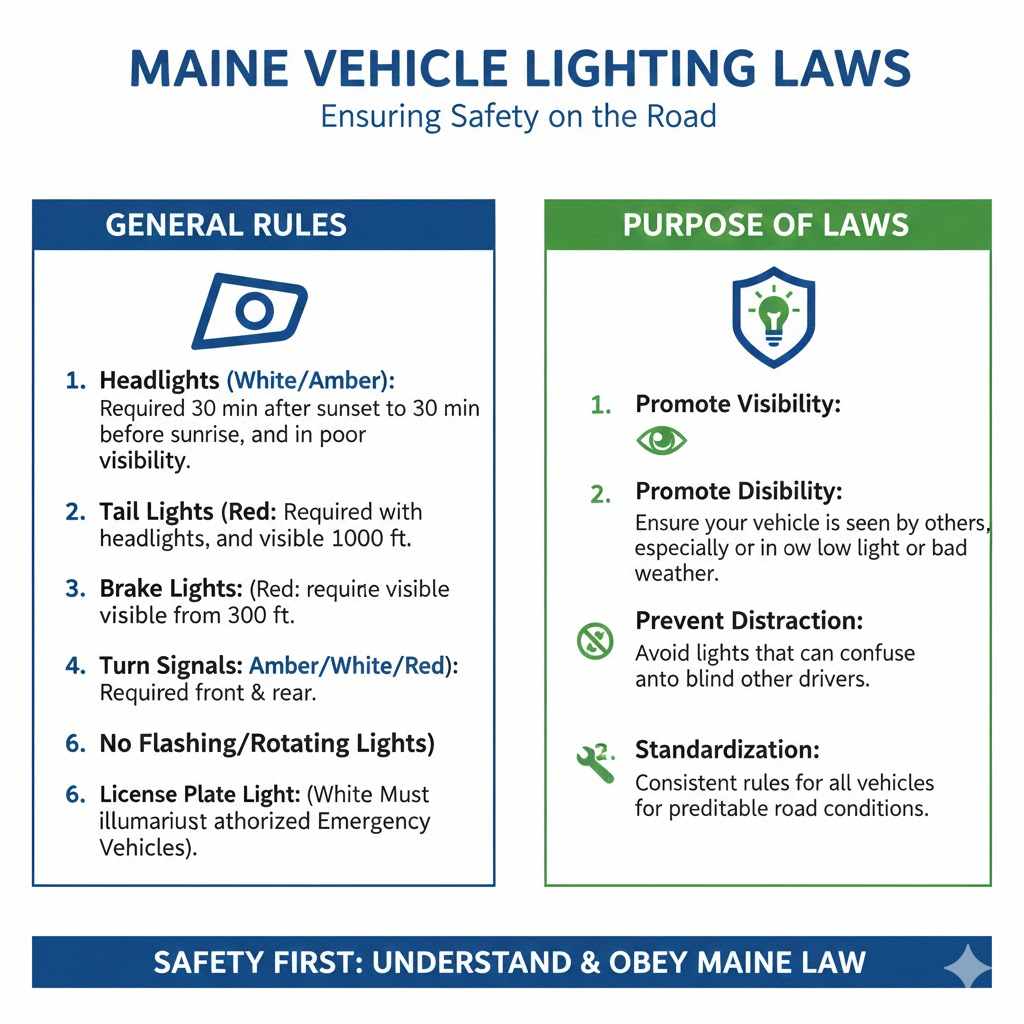
Maine Revised Statutes Title 29-A covers most of what you need to know about vehicle operation and equipment. For lighting, the key idea is that lights should not be overly bright, blinding, or distracting. The law typically focuses on standard headlights, taillights, brake lights, and turn signals, ensuring they function correctly and are the appropriate colors.
Red lights are generally reserved for the rear of the vehicle, while white lights are for the front. Amber and red are often used for signaling.
Any added lights must not interfere with the operation of essential vehicle lights. They should also not impair the vision of other drivers. This means that while decorative lights are often allowed, they must meet certain criteria to be considered legal.
The goal is always to balance personal expression with public safety on the roadways.
The Purpose of Vehicle Lighting Laws
Vehicle lighting laws are not meant to spoil your fun; they have very important purposes. They help ensure that other drivers can see you, especially at night or in bad weather. This includes seeing your headlights, taillights, and brake lights.
Proper lighting also helps others know what you plan to do, like when you are turning or stopping. The rules make sure that no single light is so bright that it blinds other drivers. This is crucial for preventing accidents.
Think of it as a safety net for everyone on the road.
These regulations also dictate the colors of lights allowed. For instance, red lights are generally restricted to the rear of a vehicle to avoid confusion with emergency vehicles. White lights are typically for the front to illuminate the road.
Amber lights are often used for signaling or specific warning purposes. Any deviation from these standards can lead to confusion and potential hazards.
What Lights Are Typically Prohibited
Most states, including Maine, prohibit certain types of lighting on vehicles. These often include flashing or rotating lights that are not authorized for emergency or official vehicles. This is to prevent confusion with law enforcement or emergency services.
Lights that are excessively bright or that cast beams in directions that could blind other drivers are also usually forbidden. Some laws may also restrict the color of lights to specific locations on the vehicle.
For example, using blue or red flashing lights on the front of your car, unless you are an authorized emergency vehicle, is generally illegal. The rationale behind these prohibitions is to maintain order and safety on public roads. It ensures that all road users can clearly distinguish between regular traffic and emergency situations.
Additionally, lights that obstruct the driver’s view or the view of other drivers are not permitted.
Is It Legal to Cover Your Car With Christmas Lights in Maine?
Now, let’s get to the heart of the matter. Is It Legal to Cover Your Car With Christmas Lights in Maine? The general answer is often ‘yes, but with significant restrictions.’ Maine law, like many others, doesn’t specifically outlaw Christmas lights. However, it does have regulations about vehicle lighting that these decorations must follow.
The key is that the lights cannot be a safety hazard or obstruct your vision or that of other drivers.
This means you can likely use battery-operated string lights, for example, as long as they are not a distraction. They shouldn’t be excessively bright, and they can’t cover essential safety equipment like headlights, taillights, or license plates. It’s all about responsible decoration that doesn’t compromise road safety.
Specific Maine Statutes to Consider
While there isn’t a statute that directly says “no Christmas lights on cars,” we need to look at the broader regulations. Maine Revised Statutes Title 29-A, Chapter 17, covers vehicle equipment. Specifically, section 1912 addresses “Color of light.” It states that vehicle lights must be visible from a distance but not interfere with others.
Section 1913 discusses “Lighting devices” and requires that all lights must be in good working order.
The crucial part is that any added lights, including decorative ones, must not be red in the front and must not be white or amber in the rear, unless it’s a standard approved light. They also cannot be blinding. So, while you can decorate, you must ensure your festive additions comply with these general safety and visibility requirements.
It’s important to check the exact wording of these statutes or consult with local law enforcement if you have specific concerns about your decorations.
How to Decorate Safely and Legally
Decorating your car with Christmas lights in Maine can be done safely and legally if you follow a few common-sense rules. The most important guideline is to ensure your decorations do not interfere with your vehicle’s essential functions or the safety of others. This means your headlights, taillights, brake lights, and turn signals must always be clearly visible and operational.
Choose battery-operated lights whenever possible to avoid complex wiring issues and potential interference with your car’s electrical system. Make sure the lights are securely attached and won’t fall off while you’re driving. Avoid placing any lights directly in front of or behind your vehicle where they might be confused with official signals or obscure your car’s presence.
Also, ensure the lights are not so bright that they distract other drivers or impair your own visibility.
Common Scenarios and Potential Issues
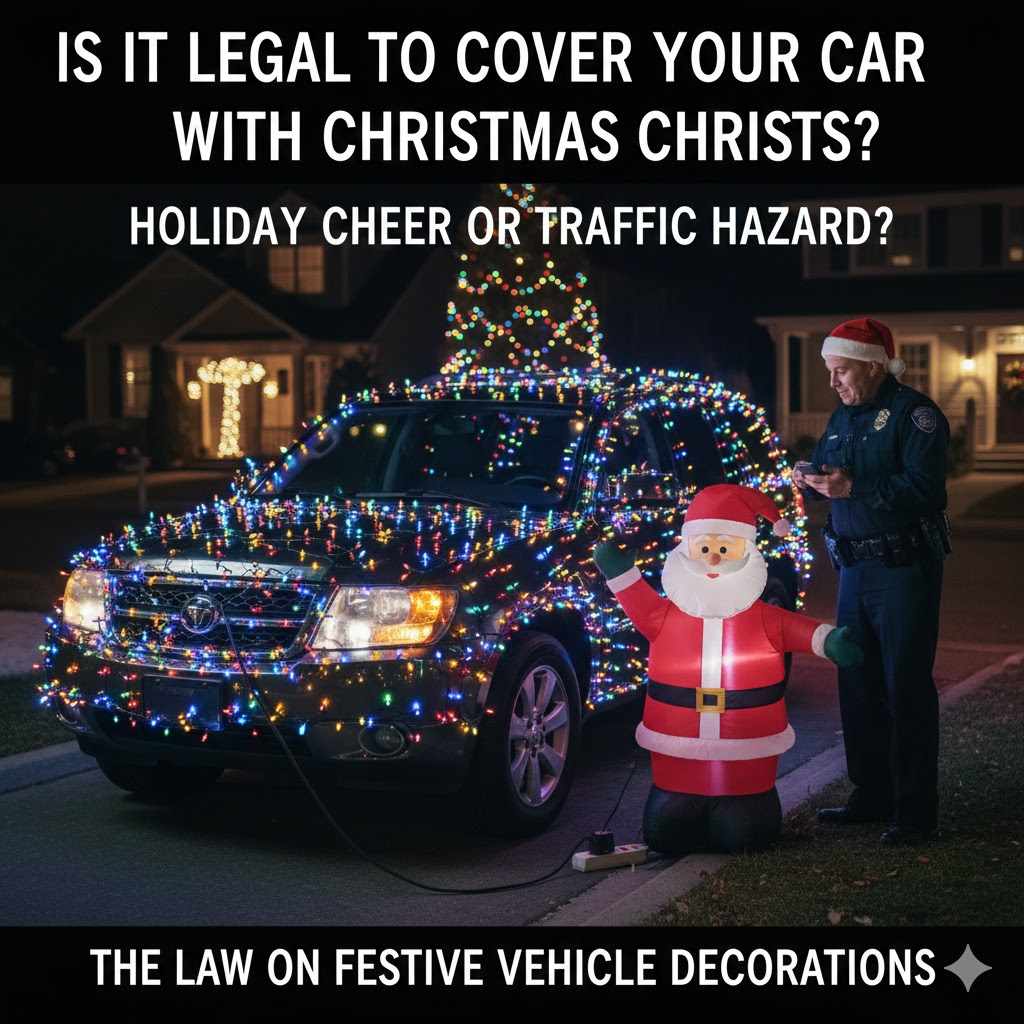
Imagine driving down a street lit up with holiday cheer. You see a car completely covered, inside and out, with blinking, multicolored Christmas lights. While it looks festive, it raises questions.
What if those lights cover a brake light? Or what if they are so bright they make it hard for other drivers to see traffic signals? These are common scenarios where decorations can cross the line from festive to problematic.
Another issue could be with the power source. If the lights are wired into the car’s electrical system without proper knowledge, they could cause shorts or drain the battery. This is not only illegal but also a safety risk.
Similarly, if decorations obstruct the driver’s view of the road, mirrors, or windows, it’s a clear violation of safety regulations.
Best Practices for Festive Car Decorations
When you’re aiming to make your car a holiday standout, thinking about best practices is key. This ensures your car looks great without causing any trouble. The goal is to add cheer, not to create a traffic hazard.
Following some simple guidelines will help you achieve this balance beautifully.
Using Battery-Operated Lights
The easiest and safest way to decorate your car with lights is by using battery-operated string lights. These don’t require you to tap into your car’s electrical system. This means you avoid potential electrical problems and make installation and removal much simpler.
They also give you flexibility in placement, as you don’t need to worry about finding an outlet or running wires.
When choosing battery-operated lights, look for durable outdoor versions that can withstand different weather conditions. Make sure the battery packs are securely fastened and accessible for battery changes. It’s also a good idea to have extra batteries on hand.
Using these lights ensures that you are not interfering with your vehicle’s critical electrical components, which is a common concern for safety and legality.
Placement and Visibility Guidelines
When decorating your car, pay close attention to where you place the lights. Lights should never obstruct your headlights, taillights, brake lights, turn signals, or license plate. These are essential for your safety and the safety of others.
Your car needs to be seen clearly by other drivers, especially when you are braking or turning.
Consider decorating areas like the roofline, grille (without blocking airflow or lights), or the interior of your windows. Avoid placing lights on the windshield or side windows where they might impair your vision. The lights should also not be so bright or distracting that they take attention away from the road.
A good rule of thumb is to ask yourself if the lights would bother you if you were driving behind or in front of your car.
Securing Decorations Properly
It’s vital to make sure all your festive decorations are securely attached to your car. Loose decorations can become a hazard if they fall off while you are driving. They could end up on the road, potentially causing an accident for other vehicles.
This includes the lights themselves, any wires, and any other festive items you might attach.
Use strong, weather-resistant tape, suction cups, or clips designed for outdoor use to secure your lights and decorations. Double-check that everything is firmly in place before you start driving. It might be a good idea to have a co-pilot do a quick walk-around inspection before you hit the road.
This attention to detail ensures your holiday display stays put and keeps everyone safe.
Potential Legal Ramifications
While decorating your car for the holidays is fun, it’s important to be aware of the potential legal consequences if your decorations violate traffic laws. Understanding these risks can help you avoid fines or other issues.
Fines and Citations
If law enforcement officers determine that your car’s Christmas light decorations are unsafe or illegal, you could receive a ticket. These citations might be for equipment violations, such as having non-compliant lighting or obstructed signals. The cost of these fines can vary depending on the specific violation and local ordinances.
It’s always better to err on the side of caution and ensure your decorations are legal.
These tickets aren’t just a financial burden; they can also impact your driving record. Accumulating multiple violations can lead to higher insurance premiums or even license suspension. Therefore, taking the time to understand and follow the rules is a small price to pay for peace of mind and legal compliance.
Safety Hazards and Accidents
Beyond fines, the most serious consequence of improper car decorations is the potential for accidents. Lights that are too bright can blind other drivers, leading to collisions. Decorations that fall off can cause other vehicles to swerve or brake suddenly.
Obstructions to visibility, whether for yourself or other drivers, are extremely dangerous.
In the event of an accident caused by your car’s decorations, you could be held liable for damages and injuries. This could lead to significant financial and legal repercussions. Prioritizing safety in your decoration choices is therefore not just about following the law but also about preventing harm to yourself and others.
Example Scenario: The Overly Bright Display
Consider a car covered in a dense array of bright, flashing LED lights. While visually striking, these lights might be so intense that they make it difficult for drivers behind to see the car’s actual brake lights. If this car suddenly stops, the driver behind might not react in time, leading to a rear-end collision.
The flashing nature can also be a serious distraction for oncoming traffic.
In this situation, the driver could be cited for violating laws related to vehicle lighting and distracted driving. The bright lights are a clear safety hazard, potentially causing an accident. The legal ramifications could include fines and being responsible for any damages if a collision occurs.
This highlights the importance of moderation and awareness when decorating.
When to Consult Legal or Official Resources
While this guide provides general information, specific situations might require more detailed advice. It’s always a good idea to know where to turn if you have further questions or concerns.
Contacting Maine Law Enforcement
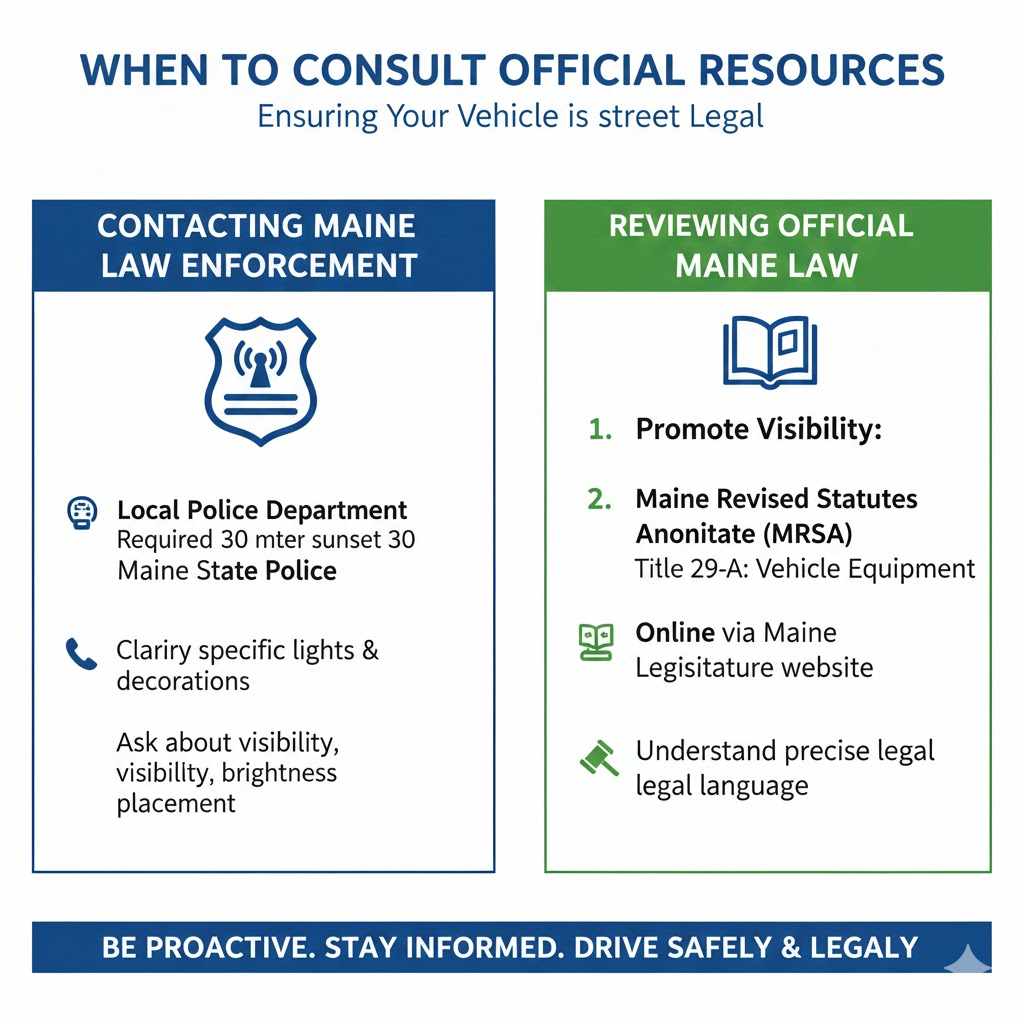
For the most accurate and up-to-date information regarding vehicle decorations and lighting laws in Maine, your best resource is local law enforcement. You can contact your local police department or the Maine State Police. They can clarify any doubts you have about specific types of lights or decorations you plan to use.
When you call, be prepared to describe your planned decorations. Asking specific questions about visibility, brightness, and placement can help you get precise answers. This proactive approach can save you from potential trouble down the road and ensure your holiday spirit shines legally.
Reviewing Maine’s Official Vehicle Code
You can always refer to the official Maine Revised Statutes Annotated (MRSA) for the precise legal language. Title 29-A of the MRSA contains detailed information on vehicle equipment and operation. While reading legal texts can be dry, it offers the definitive rules.
Websites for the Maine Legislature often provide public access to these statutes.
Looking at the relevant sections, like those pertaining to vehicle lighting, will give you a clear understanding of what is permitted and what is not. Remember, ignorance of the law is generally not a valid defense, so understanding the rules is essential for responsible vehicle modification.
Frequently Asked Questions
Question: Can I put Christmas lights on the outside of my car in Maine?
Answer: Generally, yes, as long as the lights do not obstruct your essential vehicle lights (headlights, taillights, brake lights, turn signals) and are not a safety hazard to other drivers. They should not be excessively bright or distracting.
Question: Are battery-powered Christmas lights legal on a car in Maine?
Answer: Battery-powered lights are often a good choice because they don’t interfere with your car’s electrical system. They are legal as long as they meet the same safety and visibility requirements as any other decoration.
Question: What if my car lights are covered by decorations?
Answer: Covering essential lights like headlights, taillights, brake lights, or turn signals is illegal. These must remain visible and functional at all times for safety and legal compliance.
Question: Can I use colored Christmas lights on my car in Maine?
Answer: You can use colored lights for decoration, but they should not mimic emergency vehicle lights. Also, be mindful of placement; red lights are typically reserved for the rear of the vehicle, and white for the front, unless they are standard vehicle lights.
Question: Will I get a ticket for having Christmas lights on my car in Maine?
Answer: You could receive a ticket if your Christmas lights are found to be a safety hazard, obstruct visibility, or violate specific vehicle equipment laws. It’s best to keep decorations modest and safe.
Summary
Decorating your car with Christmas lights in Maine can be a fun way to share holiday spirit. Just remember to keep them safe and legal. Ensure your essential lights are always visible and functional.
Use battery-operated lights and secure them well. Avoid any decorations that are too bright or distracting to other drivers. Follow these simple tips, and you can enjoy a festive ride without any worries.