Christmas Lights for Car: 3 Safe Picks Compared
For Christmas lights on a car, battery-powered LED strings fit parked displays, low-voltage magnetic rope lights suit parade cars, and no exterior lighting is the safest choice for daily driving. Bad mounting, weak weather sealing, or overloading the electrical system can damage paint, drain the battery, or create a road-safety issue. This guide compares those three setups by use case and shows which one fits a parked display, a parade car, or a daily driver.
Best car light setups


The three practical buckets are 12V car LED string lights, battery-powered Christmas lights, and USB-powered Christmas lights. For most readers, the decision comes down to where the car will sit, how long the lights need to stay on, and whether the wiring can stay clear of doors, hinges, wheels, and heat.
12V car LED string lights
These plug into a standard vehicle cigarette lighter or power outlet, so they are the most plug-and-play option for a car. A common fit range is about 32.8 to 66 ft, and that length matters: a compact sedan usually needs far less coverage than an SUV, van, or parade float-style setup.
Aurelema’s car light set runs 66 feet with 200 multicolor bulbs, uses a standard 12V outlet or cigarette lighter, and is listed with IP44 waterproof construction. That combination suits a parked display or a slow-moving parade vehicle better than an everyday road setup.
Battery-powered Christmas lights
Battery-powered Christmas lights make sense when you need portable placement and no plug. Offroaders Guild recommends battery-operated strings as a car option, and My Road News highlights Honoson with 197 feet and 600 LEDs using three AA batteries per string. That length sounds generous, but runtime is the tradeoff.
These lights are best for short events, tailgates, photo stops, or a parked display where you can swap batteries. Timer and remote options are useful, but long events can burn through cells faster than expected, especially if the set stays on for hours.
USB-powered Christmas lights
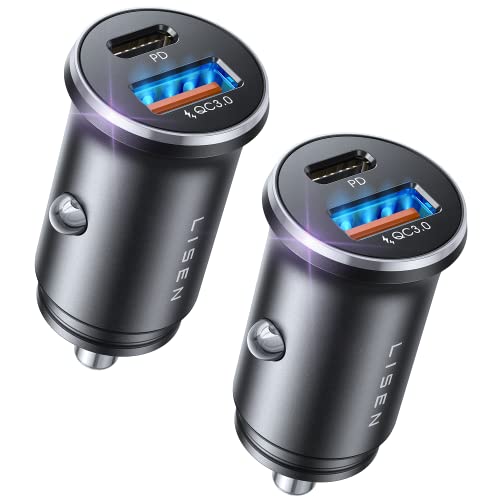
USB-powered Christmas lights need a compatible source such as a car charger or power bank. They are a good middle ground for people who want a cleaner power setup than loose batteries, but they still depend on the right adapter, cable length, and a stable 5V source.
Dazzle Bright uses a 98-foot lighted strand with 300 RGB LEDs, offers 16 million color options, and includes a Bluetooth app plus a 44-key remote. That type of feature set works well for a show car or a display that stays parked long enough to manage power from a charger or power bank.
Christmas lights car decision table
This table is the quickest way to match vehicle size, power source, weather exposure, installation method, and legal risk to the right setup. The goal is simple: pick the option that fits the car and the event, not the option with the biggest bulb count.
| Vehicle or use case | Best pick | Power source | Weather exposure | Installation method | Legal risk |
|---|---|---|---|---|---|
| Compact sedan, parked display | Battery-powered Christmas lights | AA batteries | Light rain or snow only if rated | Clips or removable adhesive | Low when parked; higher if driven lit |
| SUV or van, driveway display | 12V car LED string lights | Vehicle 12V outlet | IP44-rated setups handle typical outdoor exposure | Zip ties, clips, or routed along trim | Moderate if lights remain exterior on public roads |
| Parade car or slow procession vehicle | USB-powered Christmas lights | USB charger or power bank | Best for short events and dry-to-mild conditions | Clips, removable adhesive, or interior mounting | Moderate to high depending on local rules and placement |
| Golf cart or float-style display | 12V or battery-powered lights | 12V outlet or AA batteries | Depends on product rating and exposure time | Zip ties, clips, and temporary mounts | High if used on public streets without approval |
| Daily driver | No exterior lighting | None | Best choice for all conditions | None | Lowest |
Which power source fits your car?
For most drivers, the power source decides the whole project. A 12V outlet gives the cleanest plug-in setup, AA batteries are best for short temporary use, and USB is the most flexible if you already have a charger or power bank. Each one brings different runtime, cost, and convenience tradeoffs.
12V outlet use cases
Choose 12V if the car already has a working accessory outlet and the lights are meant to stay on while the vehicle is parked or moving slowly. This is the simplest route for a plug-and-play build, especially with 12V car LED string lights in the 32.8 to 66 ft range.
AA battery use cases
Choose AA batteries for short, temporary displays where you cannot rely on a vehicle outlet. Battery power is useful for a tailgate, a quick neighborhood event, or a parked car in a spot where wiring to the cabin would be awkward. Runtime is the limit, not portability.
USB charger and power bank use cases
Choose USB if you want remote control, multi-mode lighting, and the option to run from a car charger or a power bank. USB works best when the source is already on hand, because the lights themselves do not create power; they just use the compatible source you provide.
How safe are these lights outdoors?
IP44 is a common water-resistance claim on car light sets, and it usually indicates the product is intended for indoor or outdoor use with rain and snow exposure in mind. It does not mean the lights belong in standing water, nor does it remove the need for careful routing and secure mounting.
IP44 and weather exposure
Yiqu lights were tested in rain and around 20°F weather, and Yiqu lights have eight lighting modes. That kind of real-world claim helps with confidence in mild winter exposure, but it still does not turn a light set into a sealed automotive part. Water resistance and abuse resistance are not the same thing.
Heat, wiring, and moving parts
Keep bulbs and wire out of door seams, wheel wells, hood gaps, and hatch hinges. Pinched wire can fail fast, and bundled bulbs can build heat if wrapped too tightly. A common first-timer mistake is tightening a string around a mirror stem or grille bar until the wire cannot move at all.
Say your hatchback has a rear door that closes against the trim. If a light strand crosses that seal, the door can pinch the insulation and create a short or a dead section after just a few openings. The fix is simple: reroute the wire and leave slack at every moving joint.
Night visibility and road use
Road legality depends on placement and color, and local rules can be strict. Exterior festive lighting is much safer when the car is parked on private property or in a parade with permission. Once the vehicle is moving on public roads, bright colors, flashing patterns, or lights near required lamps can become a problem.
How do you attach them safely?
The safest attachment depends on the surface and on whether the car will move. Magnets work on steel panels, clips work well for trim edges, zip ties are good for temporary routing points, and adhesive can work on smooth surfaces if it is removable and paint-safe. Avoid any mount that leaves wire loose.
Magnets, clips, zip ties, adhesive
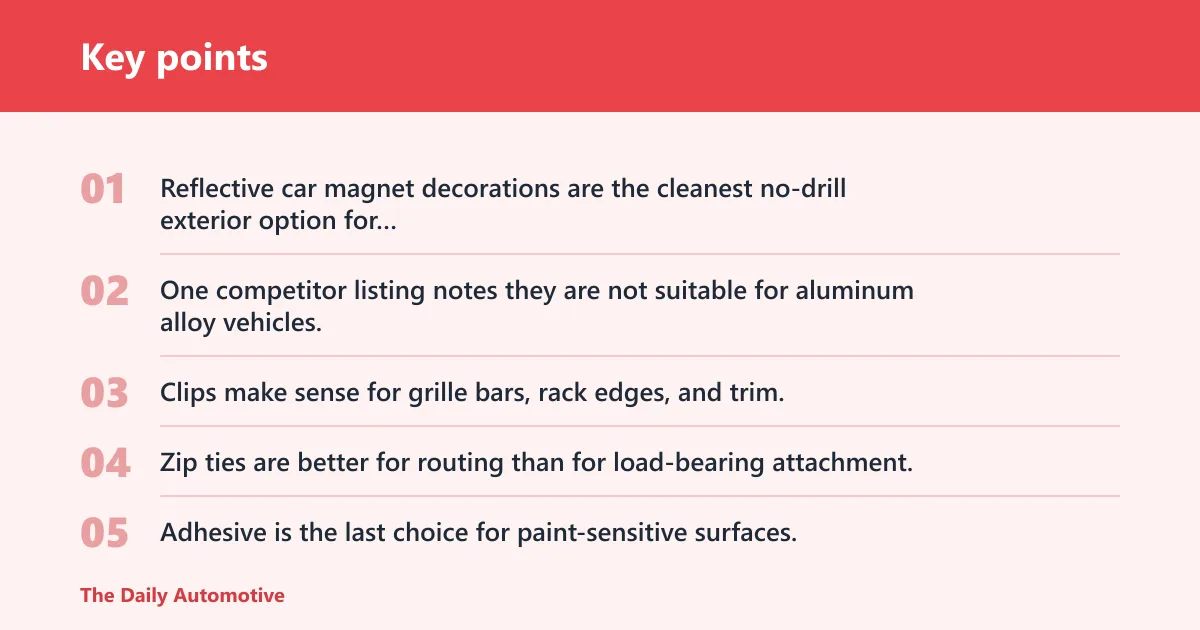
Reflective car magnet decorations are the cleanest no-drill exterior option for temporary use, and they are useful for night visibility on steel body panels. One competitor listing notes they are not suitable for aluminum alloy vehicles, so magnet fit is not universal. Check the panel material before you buy.
Clips make sense for grille bars, rack edges, and trim. Zip ties are better for routing than for load-bearing attachment. Adhesive is the last choice for paint-sensitive surfaces, and it should be reserved for short-term displays where removal matters more than a perfect hidden look.
Wire color and concealment
Green wire blends better with trim, garlands, and faux tree elements. Black wire disappears more easily against dark paint, tires, and shadowed wheel-arch areas. The right color improves the look, but it also helps you see where the strand runs so you can keep it away from pinch points.
What not to run through doors or wheels
Do not run wire through closed doors, around spinning wheels, under the car, or across steering and suspension movement paths. If the strand must cross a gap, leave a visible service loop and secure both ends outside the pinch zone. That extra slack is cheaper than repainting a door edge.
Will they fit your vehicle?
Fit changes with vehicle size and with how much of the body you want to outline. A sedan can use shorter, simpler runs. SUVs and vans often need longer strands and more attachment points. Golf carts and parade displays are the easiest place to use decorative length, because the pace is low and the layout is open.
Sedans and hatchbacks
A compact or midsize car usually works best with battery-powered lights or a shorter 12V strand. The goal is to outline a grille, roofline, or rear deck without creating extra wire length that has nowhere clean to go. Smaller cars also make it easier to hide the power source.
SUVs, trucks, and vans
Larger vehicles suit the longer end of the 12V range, especially when the goal is perimeter lighting rather than a small accent. This is where length matters most: a 32.8 ft set may cover only part of the vehicle, while a 66 ft set can give a more complete outline.
Golf carts and parade displays
Golf carts, parade cars, and float-style setups can use the most visible lighting because they are usually slower and more controlled. That makes them a better match for 8-mode sets, remotes, and longer strands. A common use case is a parade car with a battery or USB source and a fully temporary mount.
Seasonal cost and runtime
Battery replacement is usually the most expensive path over a season if the lights run often. 12V power is usually the cheapest to operate, because it draws from the vehicle electrical system instead of disposable cells. USB sits in the middle, because the cost depends on whether you use a charger or a power bank.
Battery replacement cost
Honoson uses three AA batteries per string, so the operating cost depends on how many sets you run and how long they stay lit. If you use multiple strings for several evenings, replacement batteries can add up quickly. Timer settings help, but they do not eliminate the cost of fresh cells.
12V operating cost
12V sets usually have the lowest seasonal operating cost because they plug into the car’s accessory circuit. The expense shifts from batteries to vehicle power use, which is typically small for LED strands. The bigger risk is not cost; it is leaving the vehicle on long enough to drain the starting battery.
USB power-bank cost
USB power-bank use depends on the size of the bank and the current draw of the lights. If the bank is already owned for other devices, the seasonal cost is mainly recharge energy. If you buy a larger power bank just for the lights, the upfront cost can exceed the price of the light set itself.
Frequently asked questions
What are the best Christmas lights for a car?
The best choice depends on the use case. For parked displays, battery-powered LED strings are the easiest. For parade cars, USB or low-voltage 12V sets make more sense. For daily driving, the safest answer is no exterior lights at all, because road legality and mounting risk rise quickly.
Are battery-powered or 12V Christmas lights better for cars?
Battery-powered lights are better when you need portability and short runtime is acceptable. 12V lights are better when you want a longer event, a cleaner plug-in setup, and less battery swapping. For parked cars and short displays, batteries win on flexibility. For larger vehicles, 12V usually wins on convenience.
Can I use regular Christmas lights on my car?
Regular household Christmas lights are not the same as automotive-ready sets. They may lack the right mounting options, weather tolerance, or power compatibility for a vehicle exterior. For a car, use a set designed for 12V, battery, or USB operation, and route every wire away from moving parts.
Will Christmas lights drain my car battery?
Yes, they can if they run from the vehicle outlet for too long with the engine off. LED strings use less power than older bulb sets, but any accessory draw can drain a weak battery over time. If the car will sit parked, a timer or an external battery is safer.
Are car Christmas lights waterproof?
Some are weather-resistant, not fully waterproof. IP44 is a common rating and generally covers rain and snow exposure, but it does not mean submersion or careless wiring is safe. Check the label, then keep connectors, splices, and power sources protected from direct pooling water.
Do Christmas light magnets work on all cars?
No. Magnet-mounted decorations need a compatible metal panel, and one competitor listing specifically notes they are not suitable for aluminum alloy vehicles. They also work best on clean, flat surfaces. If your car uses nonmagnetic body panels or curved trim, clips or removable adhesive are better choices.
Products related to this article
Sponsored / affiliate links. As an Amazon Associate I earn from qualifying purchases. I may earn additional commission from eligible campaigns.