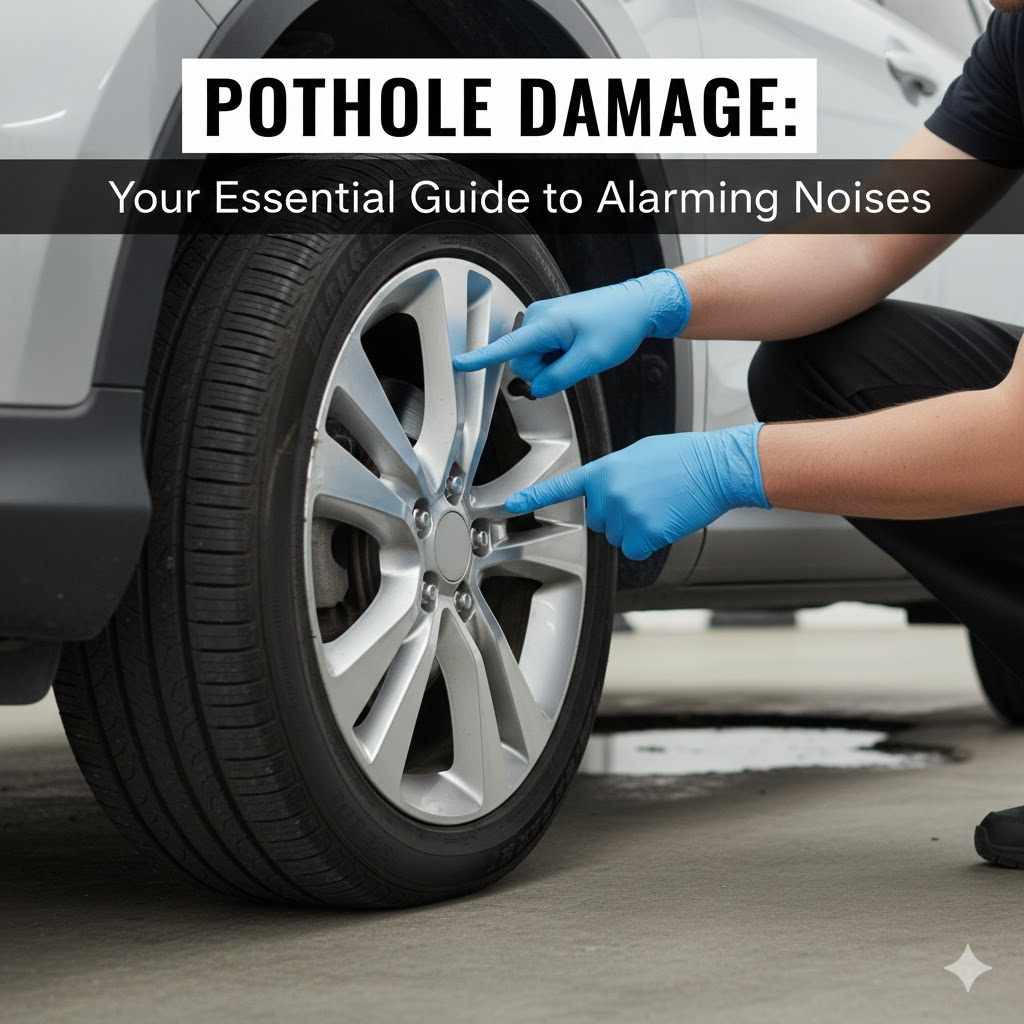
Pothole Damage: Your Essential Guide to Alarming Noises
If your car makes noises after hitting a pothole, the problem is likely damage to your suspension, tires, wheels, or alignment. Common sounds include clunking from bad struts, hissing from a punctured tire, or grinding from brake issues. A quick visual check is smart, but a mechanic should diagnose any persistent noise to ensure safety.
We’ve all been there. You’re driving along, and suddenly—BAM! That jarring, tooth-rattling crash as your wheel drops into a pothole you didn’t see. Your heart sinks, and then you hear it: a new, unfamiliar noise. A clunk, a rattle, or a hiss that definitely wasn’t there before. It’s a frustrating and scary moment for any driver.
Don’t worry. You are not alone, and figuring this out is easier than you think. Those strange sounds are your car’s way of telling you exactly what’s wrong. This guide is here to help you become a car-noise detective. We’ll break down what each sound means, what you should look for, and what to do next. Let’s get you back on the road with confidence!
Why Potholes Are a Car’s Worst Enemy
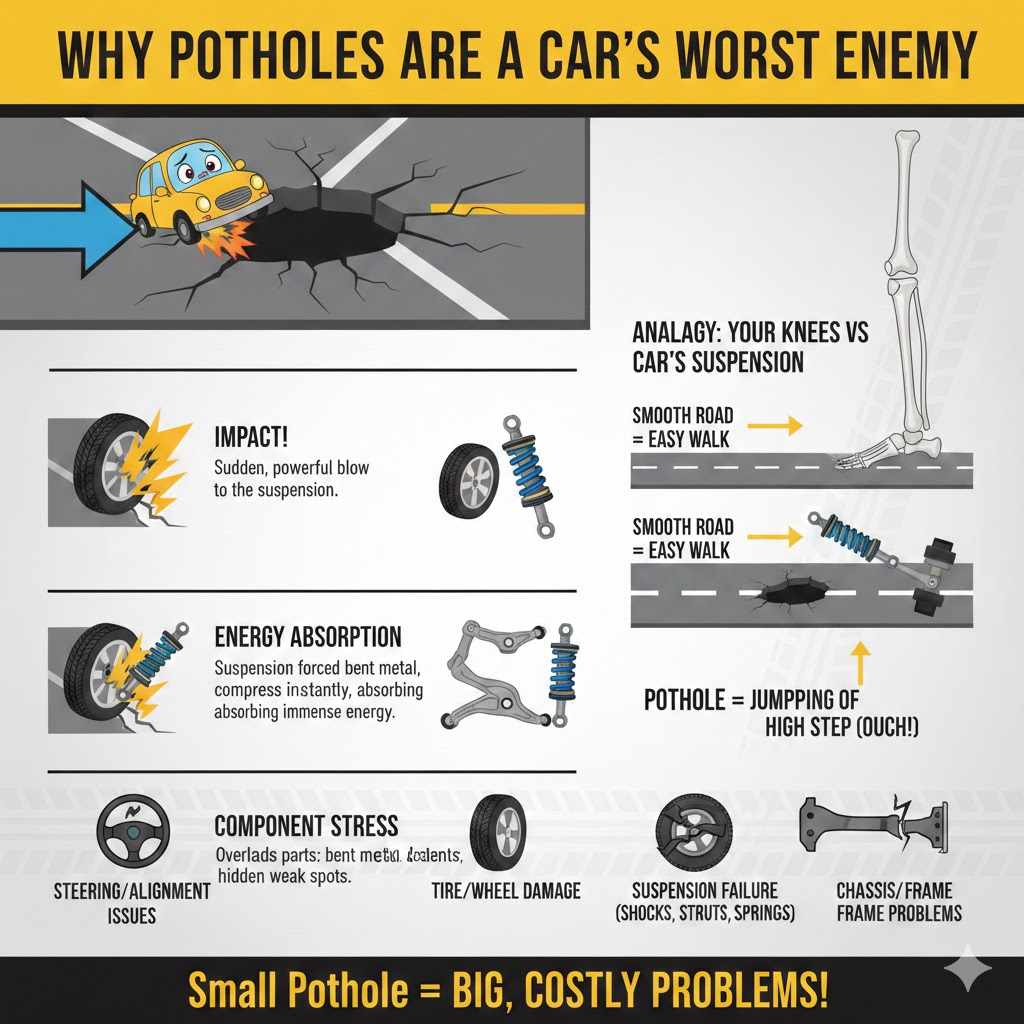
Potholes are more than just an annoyance; they deliver a powerful, destructive blow to your vehicle. When your tire hits the sharp edge of a pothole, it forces your car’s suspension to compress and absorb an incredible amount of energy in a split second. This sudden impact can overload and damage many critical parts that are designed for smooth roads, not sudden shocks.
Think of it like this: your car’s suspension is like your own knees. Walking on a smooth sidewalk is easy, but jumping off a high step can be jarring and painful. A pothole is that high step for your car. The force can bend metal, knock components out of place, and create weak spots that lead to failure down the road. That’s why a seemingly small pothole can cause such big, and noisy, problems.
Decoding the Noises: What Your Car Is Trying to Tell You
After a nasty pothole encounter, your first clue to the damage is often a new sound. Listening carefully can help you pinpoint the problem. Let’s break down the most common noises and what they likely mean.
Clunking or Rattling Noises
A clunking, knocking, or rattling sound, especially when you go over smaller bumps, is a classic sign of suspension damage. Your suspension system is a complex network of parts that connect your wheels to your car’s frame, absorbing bumps and keeping your ride smooth.
- Possible Cause: Damaged Struts or Shock Absorbers. These are the primary components that absorb bumps. When damaged, they can no longer control the spring’s movement, causing a heavy clunk as the suspension bottoms out or a rattle over uneven surfaces.
- Possible Cause: Broken Ball Joints or Tie Rods. These are crucial pivot points that connect your steering and suspension. A damaged ball joint can create a clunking noise when you turn or go over a bump. This is a serious safety issue, as a complete failure can cause you to lose steering control.
- Possible Cause: Damaged Sway Bar Links. These small rods help prevent your car from rolling too much on turns. If one is broken or loose, you might hear a clunking or rattling sound, particularly when turning or driving on uneven pavement.
What to do: Suspension issues should be checked by a professional immediately. While the car might still be drivable, damaged components can affect your steering and handling, making it unsafe.
Scraping or Grinding Sounds
A harsh scraping or grinding noise is an urgent warning sign. This sound often indicates that metal is rubbing against metal, which can cause serious damage quickly. It usually gets louder or changes pitch when you apply the brakes or turn the wheel.
- Possible Cause: Damaged Brake Components. The impact from a pothole can knock a brake caliper loose or damage the brake rotor’s dust shield, pushing it into the rotor. This creates a high-pitched scraping or grinding sound as the wheel turns.
- Possible Cause: Worn or Damaged Wheel Bearing. A wheel bearing allows your wheel to spin freely. A hard impact can damage the delicate bearings inside, leading to a grinding or humming noise that often gets louder with speed.
- Possible Cause: Undercarriage Damage. If you hit a particularly deep pothole, you might have scraped the bottom of your car. This could damage your exhaust system, a heat shield, or other components underneath, causing them to drag or scrape on the road.
What to do: Pull over as soon as it is safe to do so. A grinding noise related to your brakes or wheels is a major safety concern. Do not continue driving. It’s best to have your vehicle towed to a repair shop.
Hissing Sounds
A hissing sound is almost always related to a tire issue. It’s the sound of air escaping, and it’s a clear signal that you need to stop and inspect your tires right away.
- Possible Cause: Tire Puncture. The sharp edge of a pothole can easily cut or puncture your tire’s tread, causing a slow or rapid leak.
- Possible Cause: Sidewall Damage. A pothole can pinch the tire’s sidewall against the wheel rim, creating a bulge or bubble. This is extremely dangerous. A sidewall bubble indicates internal damage to the tire’s structure, and it could lead to a sudden and catastrophic blowout.
- Possible Cause: Bent or Cracked Wheel Rim. The impact can bend the metal lip of your wheel (rim), breaking the airtight seal between the tire and the wheel. This allows air to hiss out. In severe cases, the wheel itself can crack.
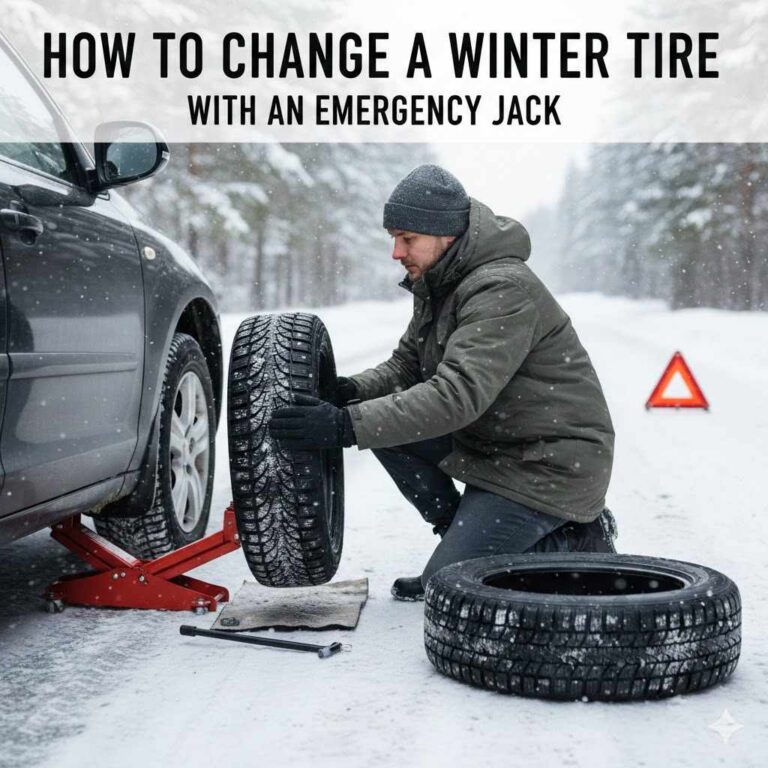
What to do: Pull over immediately in a safe location. A hissing tire is a flat tire waiting to happen. Driving on a flat or damaged tire can destroy the wheel and cause you to lose control of the vehicle. Check your tire pressure and prepare to change to your spare.
Vibrating or Shuddering Sensations
If your steering wheel is shaking or you feel a new vibration through the floor or seats, the pothole likely knocked your wheels out of sorts. This can be subtle at low speeds but often becomes much more noticeable as you accelerate.
- Possible Cause: Wheel Alignment is Off. The force of the impact can easily throw off your car’s alignment, which is the precise angle of your wheels. When misaligned, your car might pull to one side, and you may feel a vibration through the steering wheel. Proper alignment is key for tire longevity and safe handling.
- Possible Cause: Tire is Out of Balance. Small weights are attached to your wheels to ensure they spin smoothly. A hard pothole hit can knock one of these weights off, causing the wheel to be unbalanced. This creates a distinct vibration that usually gets worse at highway speeds.
- Possible Cause: Bent Wheel Rim. Even a slight bend in the rim can cause a noticeable wobble or vibration as the wheel rotates. This is because the wheel is no longer perfectly round.
What to do: While not as immediately dangerous as a grinding noise, a vibration should be addressed soon. Poor alignment and balance will cause your tires to wear out unevenly and prematurely, costing you money and compromising your car’s handling.
Your 5-Step Pothole Damage Inspection Checklist
If you hit a pothole and notice a new noise or feeling, pull over when it’s safe and perform this quick visual inspection. It can help you decide if your car is safe to drive to a mechanic or if you need to call for a tow.
- Find a Safe Spot. Pull over to a level, stable surface far away from traffic. Turn on your hazard lights. Your safety is the number one priority.
- Inspect the Tires. Carefully look at the tire that hit the pothole. Check for any obvious punctures, cuts, or bulges on the sidewall. A bulge looks like a bubble sticking out from the side of the tire and is a sign of internal damage. According to the National Highway Traffic Safety Administration (NHTSA), maintaining your tires is critical for vehicle safety.
- Examine the Wheels (Rims). Look closely at the metal wheel itself. Do you see any cracks, chips, or dents? Pay special attention to the outer lip of the rim where it meets the tire. A bent rim can cause air leaks and vibrations.
- Look Under the Car. Use a flashlight if you have one. Look for any parts hanging down, scraping the ground, or obvious damage to the plastic shields under the engine. Also, check for any fluid leaking, such as oil, coolant, or brake fluid.
- Listen and Feel as You Drive Slowly. If you don’t see any major damage, drive slowly in a safe area like an empty parking lot. Listen for any persistent noises. Does the car pull to one side? Does the steering wheel shake? If anything feels or sounds wrong, it’s best not to risk it.
Quick Reference: Pothole Noises and Their Likely Causes
Here’s a simple table to help you quickly identify the problem based on the noise you’re hearing.
| Alarming Noise | Most Likely Cause | Recommended Action |
|---|---|---|
| Clunking / Rattling | Suspension damage (struts, ball joints, sway bar links) | Schedule a professional inspection soon. Avoid hard bumps. |
| Grinding / Scraping | Brake damage, wheel bearing failure, or undercarriage damage | Stop driving immediately. This is a major safety risk. Call for a tow. |
| Hissing | Tire puncture, sidewall damage, or a bent wheel rim | Pull over immediately. Change to your spare tire. Do not drive on a damaged tire. |
| Vibrating / Shuddering | Wheel alignment is off, tire out of balance, or a bent rim | Get it checked by a tire shop or mechanic. Driving with bad alignment wears out tires quickly. |
| Whining / Humming | Damaged wheel bearing or, less commonly, transmission issues | Have a mechanic diagnose it. A failing wheel bearing can be dangerous. |
What Could Pothole Repairs Cost?
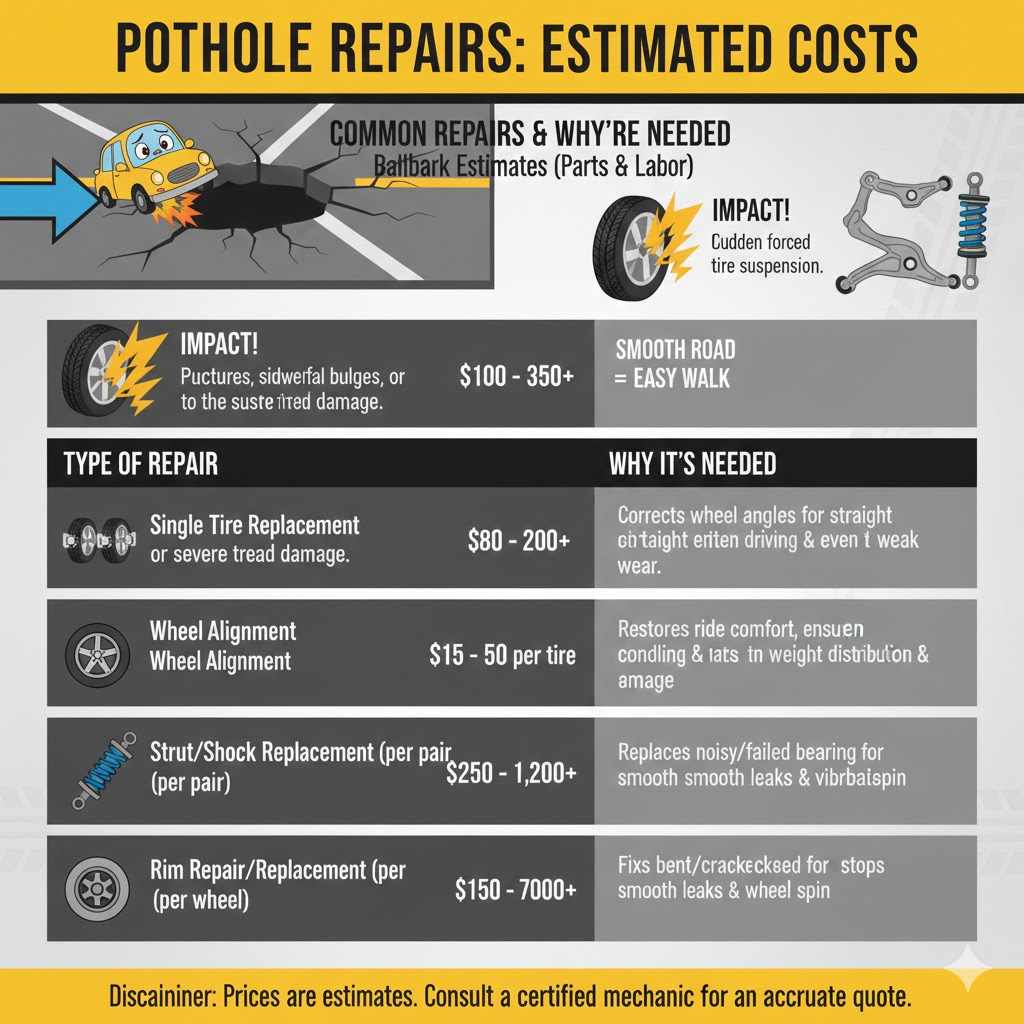
Repair costs can vary widely depending on your car’s make and model, your location, and the extent of the damage. However, having a general idea can help you prepare. Here are some ballpark estimates for common pothole-related repairs.
| Type of Repair | Estimated Cost Range (Parts & Labor) | Why It’s Needed |
|---|---|---|
| Single Tire Replacement | $100 – $350+ | Needed for punctures, sidewall bulges, or severe tread damage. |
| Wheel Alignment | $80 – $200 | Corrects the wheel angles to ensure straight driving and prevent uneven tire wear. |
| Tire Balancing | $15 – $50 per tire | Fixes vibrations by ensuring the tire and wheel weight is evenly distributed. |
| Strut or Shock Replacement (per pair) | $400 – $1,200+ | Restores ride comfort and handling after a suspension component is damaged. |
| Wheel Bearing Replacement (per wheel) | $250 – $600+ | Replaces a noisy or failed bearing to allow the wheel to spin smoothly and safely. |
| Rim Repair or Replacement (per wheel) | $150 – $700+ | Fixes or replaces a bent or cracked wheel to stop air leaks and vibrations. |
Disclaimer: These prices are estimates only. For an accurate quote, you should always consult a certified mechanic.
Frequently Asked Questions (FAQ)
Can I keep driving my car after hitting a big pothole?
It depends on the symptoms. If you hear a loud grinding or hissing noise, see a tire bulge, or feel the car pulling severely to one side, you should pull over immediately and call for a tow. If the symptoms are mild, like a slight vibration, you may be able to drive cautiously to a nearby repair shop, but it’s always safest to get it checked out.
How can I tell if my wheel alignment is off?
The most common signs of poor alignment are your car pulling to the left or right when you try to drive straight, or your steering wheel being crooked even when you are on a straight road. Uneven tire wear is another long-term symptom.
Is pothole damage covered by car insurance?
In many cases, yes. Pothole damage is typically covered if you have collision coverage on your auto insurance policy. You will have to pay your deductible, so you’ll need to decide if the cost of the repair is worth filing a claim. Contact your insurance provider to understand your specific coverage.
How can I prevent pothole damage?
Prevention is key! Keep your tires properly inflated, as underinflated tires are more susceptible to damage. Leave plenty of space between you and the car ahead to see road hazards. Avoid driving through puddles, as they can hide deep potholes. And, if you can’t avoid a pothole, slow down as much as possible before you hit it, but do not brake during the impact.
What’s the difference between a strut and a shock absorber?
Both help absorb bumps, but a strut is a structural part of the suspension system, while a shock absorber is not. A strut supports the vehicle’s weight, whereas a shock absorber only controls the spring’s movement. Many modern cars use struts on the front wheels and shocks on the rear.
Can a pothole damage my car’s engine?
It’s very unlikely. The engine is well-protected high up in the engine bay. The parts most vulnerable to pothole damage are the tires, wheels, suspension, and steering components. The only way an engine would be damaged is if the pothole was so severe that it cracked the oil pan underneath, causing all the oil to leak out.
Why is my steering wheel shaking after hitting a pothole?
A shaking steering wheel is a direct symptom of a problem with your front wheels. The most common causes are a bent wheel rim, a tire that has been knocked out of balance, or significant suspension damage like a bad tie rod end. This should be inspected immediately, as it directly affects your control of the vehicle.
Your Next Steps to a Safe and Quiet Ride
That sudden, jarring impact from a pothole can be unnerving, but now you have the knowledge to understand what those new noises mean. Remember, these sounds are not something to ignore. They are important clues your car is giving you about its health and safety.
Your first step is always to perform a safe visual inspection. Look at your tires and wheels for obvious signs of damage. If you hear any loud grinding, scraping, or hissing, your journey should end there with a call to a tow truck. For clunks, rattles, and vibrations, the next best move is a visit to a trusted mechanic. They have the tools and expertise to properly diagnose the issue and ensure your car is safe to drive.
Taking care of these issues promptly doesn’t just silence the noise; it protects you, your passengers, and your wallet from more expensive repairs down the road. Stay alert, listen to your car, and drive safely!