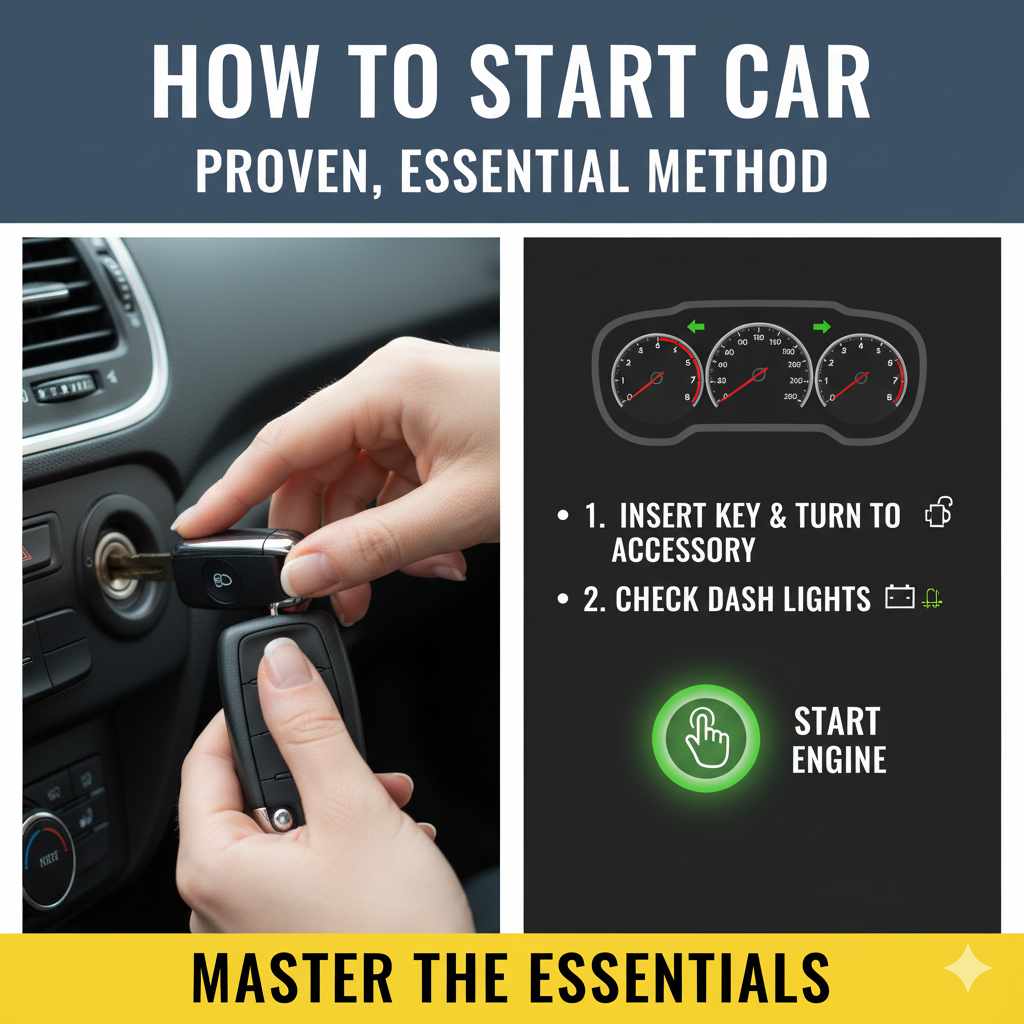
How to Start a Car: Step-by-Step Guide for Key, Push-Button & Manual
Starting a car takes four steps: put the transmission in Park (automatic) or Neutral (manual), press the brake pedal (or clutch for manual), turn the key to START or press the start button, and release as soon as the engine fires. If it doesn’t start within 10–15 seconds, let go and wait 30 seconds before trying again to avoid overheating the starter motor.
Understanding the Basics: What Happens When You Turn the Key?
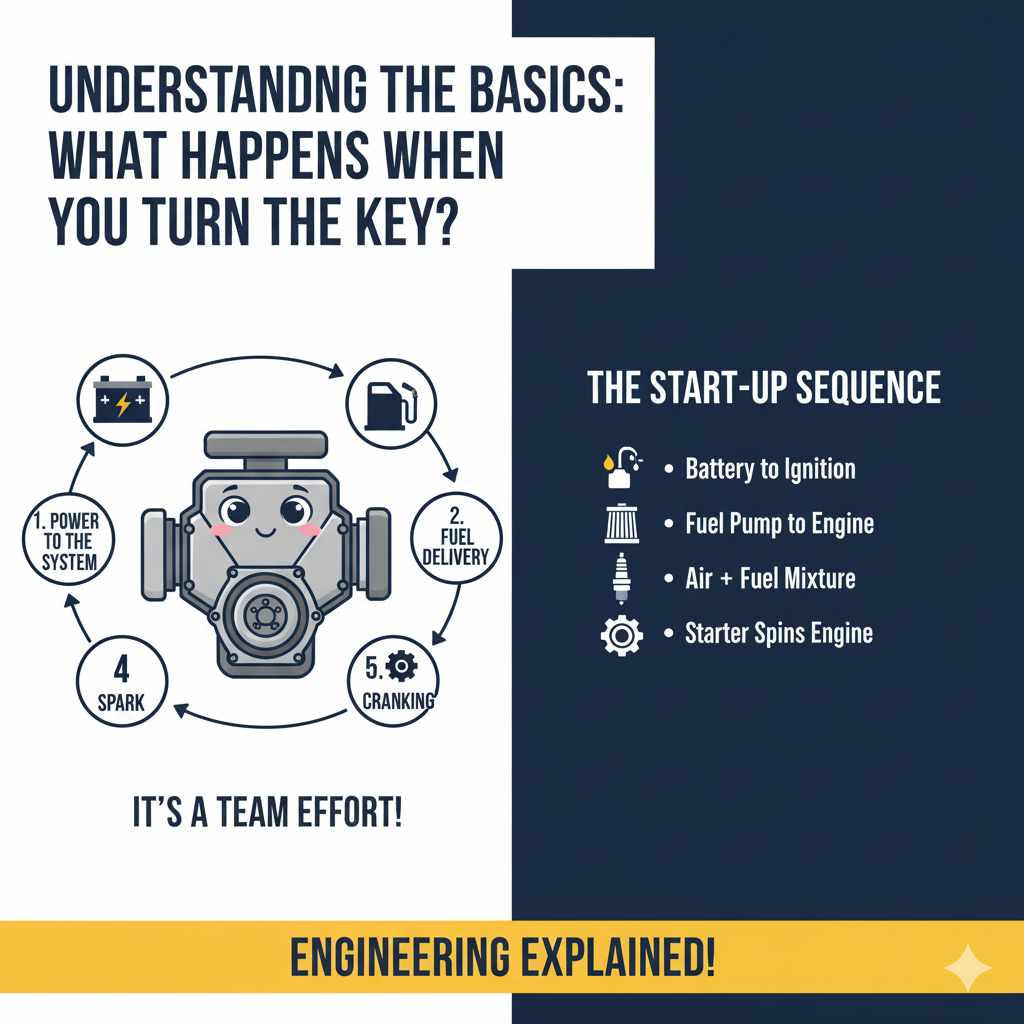
When you turn the ignition key or press the start button, a precise sequence of events must happen in order for the engine to fire:
- Power to the System: The battery sends power to the ignition system, fuel pump, and engine control module.
- Fuel Delivery: The fuel pump pressurizes the fuel rail and delivers gasoline to the injectors.
- Air Intake: The throttle body opens to allow air into the intake manifold.
- Spark: The spark plugs fire in the correct sequence to ignite the compressed fuel-air mixture.
- Cranking: The starter motor (powered by the battery) spins the engine until combustion takes over and the engine runs on its own.
If any one of these steps fails — dead battery, weak fuel pressure, fouled spark plugs — the engine won’t start. The troubleshooting section below identifies which failure produces which symptom.
The Essential Method: Step-by-Step Guide to Starting Your Car
This method works for the vast majority of gasoline-powered cars with automatic transmission and key ignition — the most common setup on the road today.
Step 1: Ensure You’re in Park or Neutral
This is a safety-critical step. Modern cars have a neutral safety switch that physically prevents the starter from engaging unless the transmission is in Park or Neutral.
- Automatic Transmission: Move the gear selector firmly to “P” (Park). If the selector feels stuck, gently press the brake pedal while wiggling the shifter — this releases the shift lock.
- Manual Transmission: Move the gear stick to “N” (Neutral) and press the clutch pedal fully to the floor. Most manual cars also require the clutch to be depressed to start as an additional safety measure.
Step 2: Check Your Foot Placement
- Automatic Transmission: Press the brake pedal firmly. Keep your foot off the accelerator — pressing the gas while starting can flood modern fuel-injected engines with excess fuel.
- Manual Transmission: Press the clutch pedal fully to the floor. Keep your foot off the gas pedal.
Step 3: Turn the Key (or Push the Button)
The ignition switch has three positions:
- ACC (Accessory): Powers radio and accessories without the engine running
- ON/RUN: Powers dashboard instruments, fuel pump, and electronics — warning lights illuminate briefly for a systems check
- START/CRANK: Engages the starter motor to crank the engine
For Key Ignition:
- Turn the key to the ON position. Watch the dashboard warning lights illuminate, then go out — this is the system self-check running.
- Turn the key further to START. Hold it only until the engine fires (typically 2–5 seconds).
- Release the key immediately once the engine starts. It springs back to ON automatically. Do not hold the key in START after the engine is running — this forces the starter motor to spin against an already-running engine and damages it.
For Push-Button Start:
- Ensure your foot is on the brake (or clutch if manual) and the key fob is inside the vehicle.
- Press the START/STOP button once — the dashboard illuminates (ON position).
- Press and hold the START/STOP button. The engine will crank and start.
- Release the button immediately when the engine fires.
If the engine doesn’t start immediately: Release after 10–15 seconds. Wait 30 seconds before trying again. Repeated continuous cranking overheats the starter motor.
Step 4: Listen and Observe
Once the engine is running, pay attention to these signals:
- Engine sound: Should settle into a smooth, stable idle within 10–20 seconds of starting. A cold engine may idle slightly higher and rough for a few seconds before smoothing out — this is normal.
- Dashboard warning lights: All warning lights should extinguish after the initial system check. If the oil pressure light, check engine light, or battery light stays illuminated, it indicates a fault that needs diagnosis.
- RPM gauge: Typically reads 600–1000 RPM at idle. Cold starts may show slightly higher RPMs temporarily.
How to Start a Manual Transmission Car
Starting a manual (stick shift) car has a few additional steps compared to an automatic. The clutch pedal replaces the brake pedal in the starting sequence, and the gear position is critical for safety.
- Sit in the driver’s seat and locate the three pedals: from left to right — clutch, brake, gas.
- Press the clutch pedal fully to the floor with your left foot. Keep it pressed throughout the starting process.
- Move the gear stick to Neutral. Wiggle the stick side to side — if it moves freely without resistance, it’s in Neutral.
- Press the brake pedal with your right foot (optional but recommended on a hill or when starting in traffic).
- Turn the key to START (or press the start button) and release immediately when the engine fires.
- Let the engine warm up for 15–30 seconds before engaging a gear and driving.
- To move off: press the clutch fully, select first gear, slowly release the clutch until you feel the “bite point,” and gently press the gas pedal as you release the clutch the rest of the way.
Common mistake: Releasing the clutch too quickly before the engine is fully engaged — the engine stalls and you have to restart. Practice the bite point in a flat, empty area until the sequence feels natural.
What to Do If Your Car Doesn’t Start: Troubleshooting for Beginners
The symptom when you try to start the car tells you a lot about what’s actually wrong. Here are the three most common failure patterns and what they mean.
The “Clicking” Sound
Rapid clicking when turning the key means the battery doesn’t have enough charge to spin the starter motor fully. The solenoid is engaging but the motor can’t turn over the engine.
Potential Causes & Solutions:
- Dead or weak battery: Jump-start the car using jumper cables and a working vehicle. If it starts after a jump, have the battery tested — it may need replacement. Learn about how to check car battery health before committing to a new one.
- Corroded battery terminals: White or blue-green powder on the terminals blocks current. Clean with a wire brush and baking soda/water solution (disconnect negative terminal first, then positive).
- Faulty starter solenoid or motor: If clicking persists with a known-good battery, the starter motor itself needs professional diagnosis.
The Engine Cranks But Doesn’t Start
The starter motor is working (you hear/feel the engine turning over), but combustion never happens. This points to a fuel, spark, or immobilizer problem.
Potential Causes & Solutions:
- Empty fuel tank: The fuel gauge may be inaccurate. Add at least one gallon and try again.
- Clogged fuel filter: Restricts fuel flow to the injectors. Replace the fuel filter per your owner’s manual schedule (typically every 30,000–60,000 miles).
- Worn spark plugs: Plugs that are fouled or worn beyond their service life won’t ignite the fuel-air mixture reliably. Replacement is typically every 30,000–100,000 miles depending on plug type.
- Immobilizer issue: Modern cars won’t start if the ECU doesn’t recognize the key’s transponder chip. Try the spare key — if it works, the primary key’s chip may be damaged. A dead key fob battery on push-button cars can also prevent recognition; replace the fob battery first.
The Engine Doesn’t Crank At All (No Sound)
Complete silence when turning the key means no power is reaching the starter — a total power or connection failure.
Potential Causes & Solutions:
- Completely dead battery: No charge at all. Jump-start or replace the battery. A battery charger can recover a fully discharged battery if the cells aren’t damaged.
- Loose or corroded battery connections: Even slight looseness at the terminal can prevent sufficient current flow. Check that both terminals are tight and clean.
- Faulty ignition switch: The switch itself may be worn and not sending the start signal. Requires professional replacement.
- Neutral safety switch (auto) or clutch switch (manual): These prevent starting unless in Park/Neutral or with clutch depressed. Try wiggling the gear shifter (auto) or pressing the clutch harder (manual) and trying again. If neither helps, the switch may need replacement.
Preventative Maintenance: Keeping Your Car Ready to Start
Most no-start situations are preventable with routine maintenance. Here are the components most directly related to reliable starting:
Key Maintenance Checks
| Maintenance Item | Frequency | Why It Matters for Starting | DIY Friendly? |
|---|---|---|---|
| Battery health check | Annually or every 2–3 years | A weak battery is the #1 cause of no-start situations | Yes (visual check; free testing at most auto parts stores) |
| Battery terminal cleaning | Every 6 months or when corrosion appears | Corrosion blocks current to the starter | Yes |
| Spark plug replacement | Every 30,000–100,000 miles depending on plug type | Worn plugs cause misfires or prevent ignition | Moderate |
| Fuel filter replacement | Every 30,000–60,000 miles | A clogged filter starves the engine of fuel | Moderate |
| Oil changes | Per manufacturer schedule (typically every 5,000–7,500 miles) | Clean oil reduces engine friction and prevents hard cold starts | Yes |
Tools You Might Need (For Basic Checks and Minor Fixes)
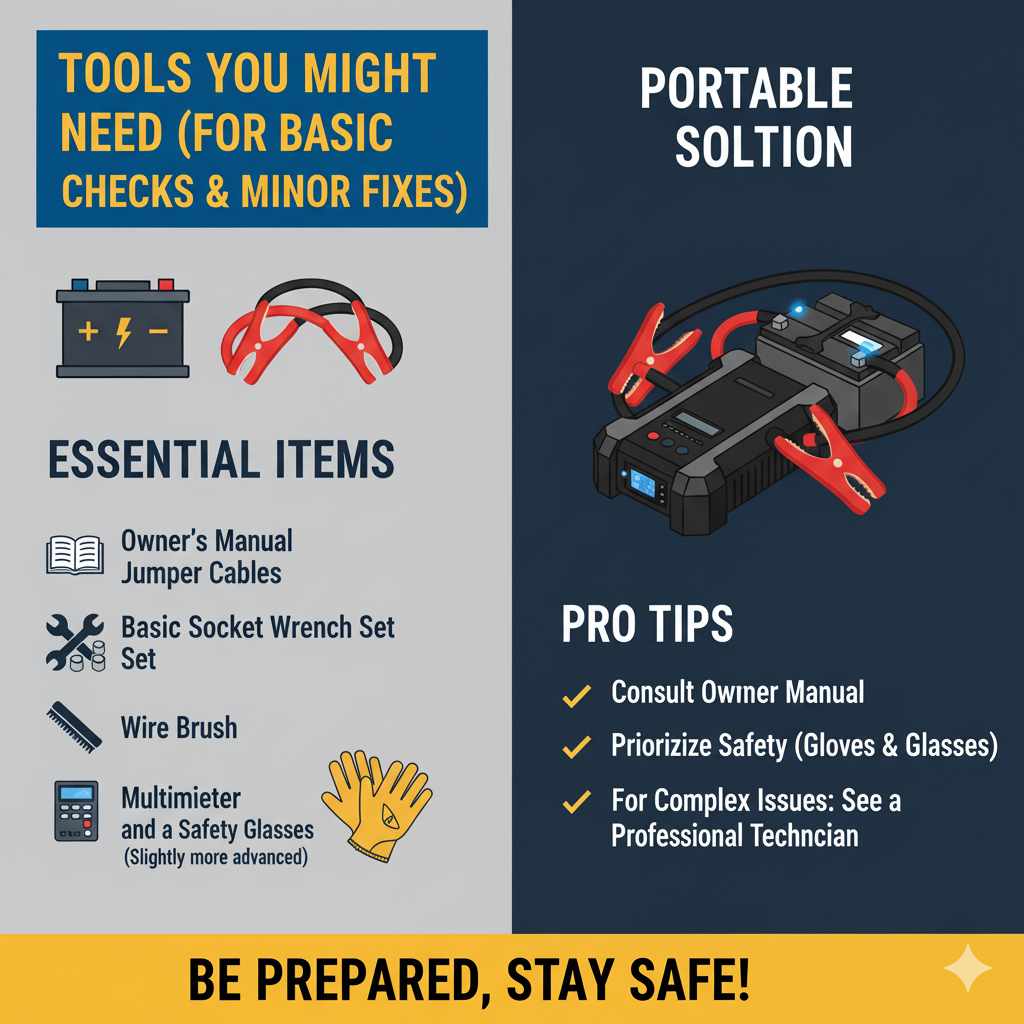
- Owner’s manual: Contains your car’s specific starting procedure, fuse locations, and maintenance schedule
- Jumper cables: Essential for a dead battery — keep a set in the trunk
- Basic socket wrench set: For tightening battery terminals or removing spark plugs
- Wire brush: For cleaning corroded battery terminals
- Gloves and safety glasses: Battery acid and corrosion are hazardous
- Multimeter: Measures battery voltage — a healthy charged battery reads 12.6V or higher
FAQ: Your Beginner Car Starting Questions Answered
Why does my car make a “whirring” sound when I try to start it?
A single whirring sound without the engine cranking means the starter motor is spinning but its pinion gear isn’t engaging with the engine’s flywheel. This indicates a worn starter motor or a failed Bendix drive (the engagement mechanism inside the starter). The starter will need replacement.
My car starts fine sometimes, but not others. What could be wrong?
Intermittent starting issues typically point to a battery with a failing cell (holds charge sometimes but not others), loose electrical connections that make contact intermittently, or a fuel pump that’s beginning to fail and doesn’t always build proper pressure. Have the battery load-tested and the fuel pressure checked before replacing parts blindly.
How long should I hold the key in the “START” position?
Typically 2–5 seconds. Release the key immediately when the engine starts. If it doesn’t start within 10–15 seconds, release the key, wait 30 seconds, and try again. Continuous cranking overheats the starter motor and drains the battery further.
Is it bad for my car if I have to crank it for a long time to start it?
Yes. Extended cranking puts excessive strain on the starter motor, drains the battery, and indicates the engine is struggling to get fuel or spark. If cranking consistently takes more than 3–5 seconds, something needs diagnosis — ignoring it leads to a dead starter motor or a completely dead battery at the worst possible time.
What is the “Check Engine” light, and should I worry if it’s on after starting?
The Check Engine light (amber/yellow) signals that the engine control module has detected a fault code. If it stays on steadily after starting, the car may run normally but has a documented fault — have it scanned with an OBD-II scanner to read the code. If the light is flashing, it indicates an active misfire that can damage the catalytic converter; stop driving and get it checked immediately.
Products related to this article
Sponsored / affiliate links. As an Amazon Associate I earn from qualifying purchases. I may earn additional commission from eligible campaigns.