Wellness Tips for a Balanced Automotive Lifestyle Plan
Build a balanced automotive wellness routine with three rules: stop about every couple of hours, set your seat and mirrors before you drive, and spend around 10 minutes each week on basic maintenance. Skip those steps and fatigue, back strain, stress, and small car problems pile up quickly. This guide covers commute, shift, and road-trip habits that cut strain and keep driving manageable.
What wellness means for drivers



For drivers, wellness means preventive care across physical, mental, emotional, social, spiritual, and environmental dimensions. The Global Wellness Institute defines wellness as an active pursuit of activities, choices and lifestyles, and links it to holistic health. That matters in a car, where routine sitting can quietly strain the body and attention.
Why car-heavy routines need a different plan
Office-day advice often assumes you can stand, refill water, or move without much planning. Drivers cannot. Long periods in one position are linked to cardiovascular and metabolic risk over time, and they also create stiffness, alertness dips, and stress buildup that can make small delays feel larger than they are.
What a driver-focused wellness plan fixes
A driver plan should reduce friction in three places at once: the body, the mind, and the vehicle. That means water within reach, a seat that supports posture, movement breaks that are scheduled instead of improvised, and routine checks that prevent distraction or roadside surprises.
How do I stay healthy if I drive for hours every day?
Use a repeatable system: keep water within reach, set your seat before you roll, stop every 2 hours, and pack food that keeps energy steady instead of sending it up and down. A long driving day is easier to manage when health habits are built into the route, not added after discomfort starts.
How long hours in the car affect your body and focus
Sitting for hours narrows movement choices, slows circulation, and keeps the same muscles under load. That often shows up as hip tightness, low-back pressure, neck tension, and a slower mental reset after traffic or a bad merge. Fatigue then feeds more fatigue.
How to keep driving sustainable
Think in loops, not goals. Start with a pre-drive check, repeat a hydration cue, take a planned break, and finish with a quick reset when you park. That rhythm lowers physical strain and makes it easier to stay alert without relying on sugar or stress.

What should you keep in the car for health support?
Keep a small, fixed in-car wellness kit so healthy choices are available before hunger, thirst, or tension gets loud. At minimum, carry water, a reusable bottle, portable snacks, and a few comfort items for movement, cleaning, and calming down between stops or appointments.
Hydration that fits a driving day
Keep plenty of water within reach, use a reusable water bottle, and limit sugary beverages that can spike and crash energy. Water supports alertness and focus better than a car full of sweet drinks. If you wait until you feel thirsty, you are already behind.
Portable snacks for steady energy
Healthy on-the-road snacks include nuts, seeds, and fruit. Those options travel well, do not need a full meal break, and are easier to pair with steady focus than candy or heavy fast food. For longer routes, pack single-serve portions so eating stays simple.
A simple in-car wellness kit
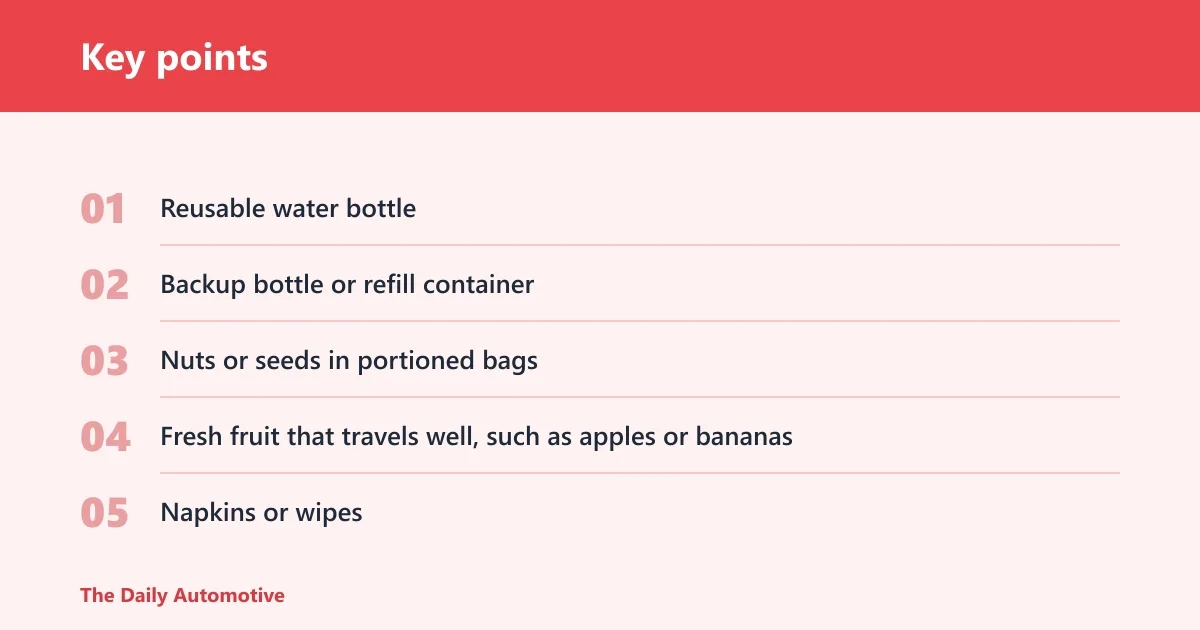
- Reusable water bottle
- Backup bottle or refill container
- Nuts or seeds in portioned bags
- Fresh fruit that travels well, such as apples or bananas
- Napkins or wipes
- Small trash bag
- Phone charger
- Sunglasses for glare reduction
- Window scraper or cloth, as seasonally useful
Say your route is a 9-hour delivery shift with only short curbside stops. A bottle within reach, two snack portions, and wipes in the console can prevent the “I skipped lunch” spiral that leads to poor choices at the last stop.
How should you adjust your seat and posture to reduce pain while driving?
Set the seat so your back is straight and your shoulders stay relaxed, not rounded forward. Keep a clear view of the road and set pedal reach so your knees are not locked or overly bent. A stable setup reduces strain before the trip starts.
Seat position, pedal reach, and road visibility
Your hips should stay planted, the steering wheel should be reachable without leaning, and the pedals should be pressable without stretching the leg. If you have to lift a shoulder or crane your neck to see, the setup needs to change.
Small posture checks before every drive
- Press your lower back into the seat.
- Relax your shoulders down and away from your ears.
- Adjust mirrors before moving.
- Check that both feet can reach the pedals comfortably.
- Look at the road, not at the hood.
A common first-timer mistake is setting the seat too far back because it feels relaxed for two minutes. Ten miles later, that same position often turns into shoulder tension, forward head posture, and sloppy pedal control.
How often should I take movement breaks on long drives?
Take scheduled movement breaks during long drives, with a stop about every couple of hours as a practical baseline. The point is to interrupt stillness before stiffness, numbness, and attention drift build up. Short, regular breaks work better than waiting for pain to demand them.
What breaks and stretches drivers should do
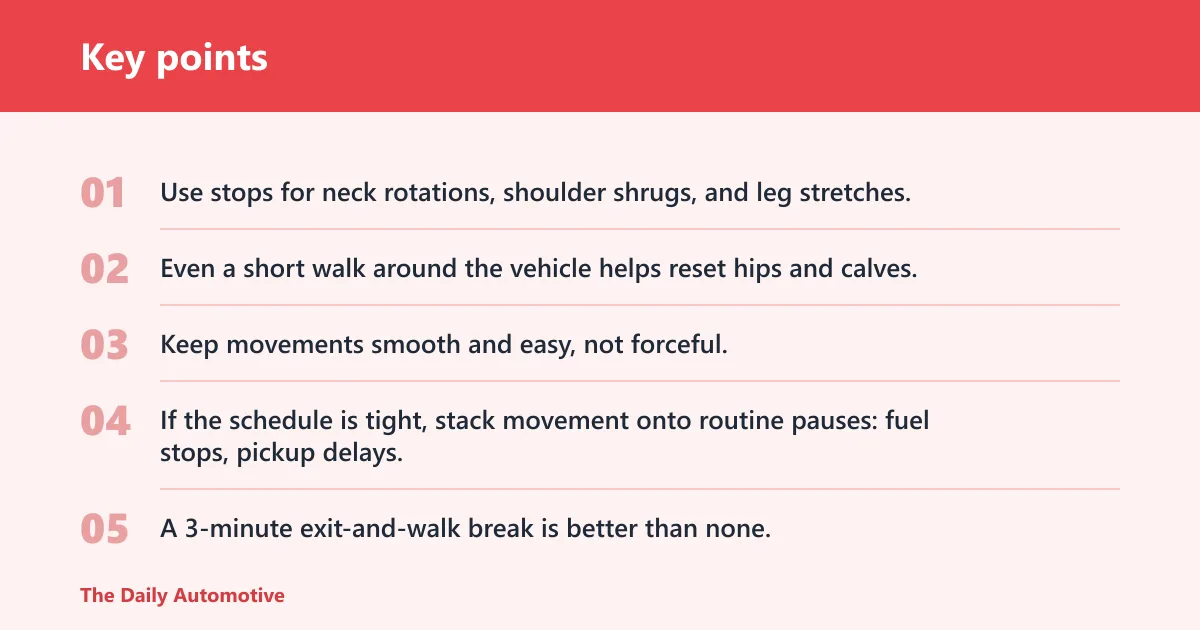
Use stops for neck rotations, shoulder shrugs, and leg stretches. Even a short walk around the vehicle helps reset hips and calves. Keep movements smooth and easy, not forceful, because the goal is circulation and release, not exercise training.
How to fit movement into a tight route
If the schedule is tight, stack movement onto routine pauses: fuel stops, pickup delays, food breaks, or rest-area stops. A 3-minute exit-and-walk break is better than none. The key is to make movement non-negotiable, not optional when time feels generous.
| Trip type | Hydration | Snack | Movement break | Seat adjustment | Vehicle check |
|---|---|---|---|---|---|
| Commute | Fill a reusable bottle before leaving | Small portion of nuts or fruit for the return trip | Walk for 3 to 5 minutes after parking | Check back, mirrors, and pedal reach once | Weekly tire pressure and fluid glance |
| Rideshare shift | Keep water in the front seat | Seeds, fruit, or unsweetened nuts between rides | Stretch at fuel or meal stops every 2 hours | Recheck posture after long idling periods | Headlights, taillights, and cabin cleanliness |
| Road trip | Start full and plan refill stops | Portable fruit, nuts, and seeds | Stop at regular intervals for walking and leg stretches | Adjust for long-haul support before departure | Oil, fluids, tire pressure, wipers, lights |
| Delivery route | Water bottle in the center console | Small portions that do not need a table | Use every loading pause for a neck and shoulder reset | Keep seat upright for repeated exits and entries | Quick tire, light, and wiper check before shift |
How can I manage stress and road rage while commuting?
Use short mental resets before stress turns into unsafe driving. Deep breathing, visualization, and simple mindfulness practices can lower tension in traffic or after delays. The goal is not to erase frustration. It is to keep frustration from taking over the next decision.
Deep breathing and visualization in the car
Take a slow inhale, hold briefly, then exhale longer than the inhale. Repeat a few cycles at a stoplight or parking spot. Visualization can be as simple as seeing the next 10 minutes of the drive going normally, without rehearsing conflict.
Mindfulness during traffic and delays
Notice the steering wheel grip, your jaw, and your shoulders. If they are tight, release them. When traffic slows, use that pause to check posture rather than scan for reasons to get angry. That small reset can keep road rage from stacking up.
Reset habits after a tense drive
After a stressful trip, do not carry the tension into the next errand. Park, breathe, take a short walk if possible, and drink water. That helps separate one difficult drive from the rest of the day.
What vehicle maintenance habits support a healthier driving routine?
Routine vehicle checks support health because car problems create discomfort, distraction, and downtime. A weak tire, dim light, or overdue fluid change can mean more tension at the wheel and more mental load during the trip. Prevention is part of driver wellness.
Tires, fluids, and lighting
Check tire pressure and rotate tires on schedule. Keep an eye on oil and other fluids. Test headlights and taillights so you are not straining to see or straining to be seen. Also check windshield wipers before bad weather, since poor visibility raises stress fast.
Why maintenance affects comfort and focus
When the car pulls, shakes, or runs noisy, the body braces for it. That bracing adds fatigue. When lights fail or wipers streak, the brain spends more attention on risk and less on calm driving. A small weekly check can prevent that cascade.
A weekly 10-minute check
- Look at tire pressure.
- Check oil and other fluids.
- Test headlights and taillights.
- Inspect windshield wipers.
- Clear the cabin of trash and clutter.
- Restock water and snacks.
What eco-friendly driving habits also support wellness?
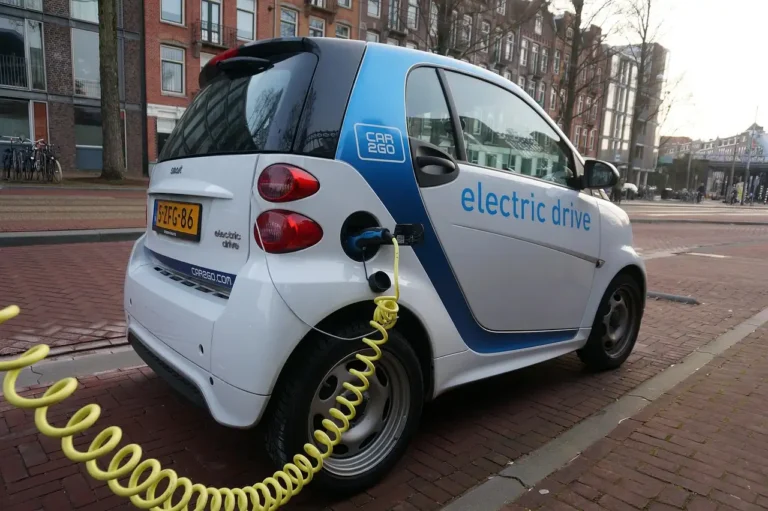
Eco-friendly driving can support wellness because smoother driving reduces stop-and-go stress, cuts fuel use, and lowers emissions. Slow acceleration and avoiding sudden braking are easier on the vehicle and often easier on the driver’s body and nerves. Calm inputs usually mean calmer trips.
Drive smoother, feel less scattered
Gradual acceleration and gentler braking help you keep a steadier rhythm. That can reduce the jerk-and-brace feeling that comes with aggressive starts and stops. It also tends to make long commutes feel less chaotic, especially in dense traffic or delivery zones.
How efficiency supports the full wellness continuum
The environmental side matters too. When driving habits waste less fuel, the trip usually feels less frantic and more predictable. That supports physical comfort, mental clarity, and emotional steadiness at the same time.
Frequently asked questions
What is wellness in a balanced lifestyle?
Wellness is an active pursuit of activities, choices and lifestyles that support holistic health. For drivers, that means paying attention to physical comfort, mental clarity, emotional steadiness, social connection, spiritual calm, and the environmental effects of daily travel choices.
How can I make driving less sedentary and more sustainable?
Break the day into drive, pause, and reset cycles. Stop every 2 hours, walk briefly, change position, and avoid turning the car into a storage bin for snacks, trash, and stress. A predictable routine makes stillness easier to interrupt.
What snacks and drinks are best to keep in the car for long drives?
Choose water, a reusable bottle, nuts, seeds, and fruit. Those options travel well and support steadier energy than sugary drinks or heavy snacks. Keep portions small enough that you can eat without turning the car into a messy meal stop.
Products related to this article
Sponsored / affiliate links. As an Amazon Associate I earn from qualifying purchases. I may earn additional commission from eligible campaigns.